
It seems a strange title for a book, until we understand it is a memoir of adoption, of secrecy, of a love denied, forbidden. And the woman writing it, comes to realise, how very similar the continued secrecy surrounding spending time with her birth mother is, to conducting an illicit affair. So she calls it that. It’s like an unwritten 13th commandment: Thou shalt not have any relation whatsoever with thy illegitimate child.
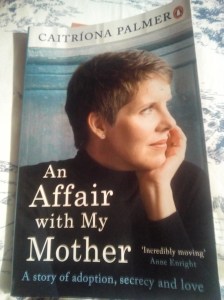 It’s set in Ireland, a country reluctant to let go of old ways, still in throe to a traditional family culture that shamed, blamed and punished young women for being the life-bearers they are – insisting they follow a code of moral behaviour documented by a system of domination, upheld by the church, supported by the state – a system that bore no consequence on men – young or old – who were equally responsible for the predicament of women.
“If there is anger in this book it is anger at the profound and despicable sexual double standard in Ireland. Men walked away without ever having to confront their role in these relationships.”
Eventually women in Ireland were given access to a means of preventing unwanted pregnancy, though not until Feb 20, 1985 when the Irish government defied the powerful Catholic Church, seen until this day as lacking compassion, in approving the sale of contraception, and more recently in a 2018 referendum, repealing its abortion ban (outlawed in 1861 with possible life imprisonment), acknowledged as a dramatic reversal of the Catholic church’s domination of Irish society.
 For years, Ireland created and implemented what is referred to as an architecture of containment, institutions such as the Magdalen laundries (also referred to as asylums) removed morally questionable women from their homes (young women who became pregnant outside of marriage, or whose male family members complained about their behavior). They removed their children if they were pregnant then put them to work, washing ‘the nation’s dirty laundry’, thanks to lucrative state contracts provided to the institutions to fulfill. The last Magdalene laundries closed in Dublin in 1996 and the truth of what happened to those unmarried mothers continues to be investigated through the CLANN project.
Book Review
Caitriona Palmer was born in Dublin, raised in a caring family with two children of their own, the parents adopting after a miscarriage and recommendation Mary (the mother) should have a hysterectomy. If they wanted another child, adoption would be the only path.
She had a happy childhood and grew up in a very happy home, defiantly happy in fact, she would tell people early on she was adopted, almost proud of it she said, in her mind it had had no impact on her life, it didn’t change her or make her who she was, however she was constantly shadowed by a consistent ache, something she refused to confront or admit had anything to do with being separated from her biological mother at birth.
The book opens as Caitriona is about to meet her birth mother Sarah (not her real name) for the first time, a highly anticipated event, and yet as it unfolds, and she hears someone walk up the steps, about to fulfill a desire she has initiated, she becomes filled with dread and as the woman rushes towards her, repeating her name:
I said nothing. I felt nothing.
‘I’ll leave you both to it then,’ I heard Catherine say.
‘Don’t go’, I wanted to scream at her. ‘Please don’t go. Stay. Stay here with me, please. Don’t leave me alone with this woman.’
It is the beginning of the many conflicted feelings she will encounter within herself as that aspect of herself she was born into awakens as an emotional itch deep inside her she can neither locate or explain, at a time in her life when outwardly, living life as the person she was raised to be, she couldn’t have been happier. She was 26 years old, working in a dream job for Physicians for Human Rights in the US, in love and happy. She put her anxiety down to problems with her expiring student visa, though when her employer found a solution by transferring her to Bosnia, it didn’t heal the anxiety, if anything it made it worse.
There, a small team of forensic scientists was overseeing the exhumation of hundreds of mass graves left after the war and attempting to determine the fate of over 7,500 missing men and boys from the UN safe haven of Srebrenica, which had been overrun by Serb forces four years earlier.
After a day when she and a small team broke into an abandoned hospital in search of records, the source of her own anxiety presented itself to her.
In that moment, filling our arms with the dusty paperwork, I felt a sliver of illumination. Driving back to Tuzla later that afternoon, our pilfered medical dossiers on our laps, the mood in the car jovial, I returned again to that moment, massaging the memory, trying to knead to the surface the revelation lurking beneath. What was I doing helping to search for the files of dead strangers when it was plainly obvious that I needed to search for own?
Though there could be no comparison between her loss and that of these families, it was this extreme situation that revealed her own source of anxiety and set her on a path to do something she had denied she would ever do.
She embarks on her search and despite the difficulties many encounter in Ireland, where Irish adoptees have no automatic right to access their adoption files, birth certificate, health, heritage or history information she manages to access information about her birth relatively easily. The agency traces her birth mother and facilitates that first and many subsequent meetings.
Despite the initial shock, they develop a close relationship, but with one significant and ultimately destructive condition, that she remain a secret, for her birth mother continued to harbour great shame and was terrified of the impact this knowledge might have on her current life.
By the close of that year, I had come to detest the power imbalance in our relationship, seeing myself as the cause of Sarah’s shame and paranoia, her sadness and regret. I hated being invisible to her husband, evidently a good man who adored her, and to her three children, half-siblings that I longed to meet.
Palmer digs deep into the history of adoption in Ireland, armed with journalistic skills (now a freelance journalist in Washington DC) she researches archives and interviews her parents and birth mother as if subjects of a news story, to get to the heart of this institution that wrenched families apart and caused such fear and trauma in young Irish women, leaving emotional scars many of them would have all their lives.
Feminism might have been on the march, but the women in Sarah’s world … had conspired to punish her for stepping out of line. ‘If you want to get people to behave, show what happens to those who don’t,’ an Irish historian once said to me about Ireland’s culture of female surveillance and the institutionalization of unmarried mothers. ‘Make them feel part of that punishment.’ Her Aunt’s verdict – “Nobody will ever look at you again. You’re finished.” – echoed constantly in Sarah’s mind.
One couple she researched, were married with more children, but didn’t want to know the child they had parented and given away before marriage.
“What is that? How can this legacy of shame even prevent a couple from accepting their own biological child? Why can they not open the door?
“This book was meant to answer that. But I don’t know why Ireland has let so many people down. I was meant to grow up and be grateful and never want to look at my past. Because things worked out well; I was given a wonderful family and have done well; that’s meant to be enough.”
For an adoptee or a birth mother, it’s both insightful and an extremely painful read, especially given the author’s own awakening from that happy dreamy childhood and early adult life that held no place for her unknown genetic history, or for any other familial bond or connection. She couldn’t recognise what she hadn’t known or experienced and because her adoption was something known, it seemed as if this life could be lived without consequence. In a recent interview post publication, Palmer describes this:
What I didn’t understand was that that primary loss impacted me, it did change me, I’m still grieving her. Despite my wonderful happy life, amazing husband and children… I’m internally grieving, this woman, this ghost, that’s a love that I’ll never regain in a way, memoir is an attempt to grasp at that.
I wanted people to know you can grow up happily adopted and still have this hole, I always feel like there is a hole deep down inside of me that I can’t quite fill, in spite of the abundance of love that surrounds me, this primary loss is profound.
It’s a story that doesn’t end on the last page, and will leave readers like me, curious to know what impact this book had on the relationship. The podcast below, brings us up to date with where things are at since the book was published, including mention of the hundreds of letters that Caitriona has received, the many people who have had similar experiences, heartened to learn that their experience brought solace to some, in their ability to share with her their stories.
Asked, given what has transpired, would she still do what she did, she responds:
I would have done the same, as it was approached ethically and with love – but I wouldn’t allow it to remain a secret so long, the weight of a secret… every human being wants this sense of belonging and yet we are expected to express gratitude and get along, we are a part of each of those things and that’s a beautiful thing…

The big gap in all this, and for this entire process, is the lack of facility for healing, for giving adoptive parents, birth parents and the children affected by adoption, resources to help them understand what they might go through and if they do, how to manage that, how to heal from that, live with that, recognise the characteristics that come with having lived though such trauma.
The world we live in today is a long way from being accomplished at providing that, and some countries are no doubt better than others, hopefully it is coming, it doesn’t take too much digging if one can find tools of well-being that might bring about individual change and healing.
Further Reading/Listening
Caitríona – I’m Still Grieving Her – Podcast – on building a relationship with her birth mother, the heartbreak of being kept a secret and the high cost she’s paid for sharing her story
The State has a duty to tell adoptees the truth Caitríona Palmer: Shadowy adoption system is the last obstacle to a modern Ireland – June 2018
CLANN: IRELAND’S UNMARRIED MOTHERS AND THEIR CHILDREN – establishing the truth of what happened to unmarried mothers and their children in 20th century Ireland, providing free legal assistance
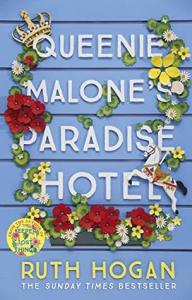 It’s described as a novel of mothers and daughters, families, secrets and the power of friendship. It’s set in Brighton and begins as Tilda returns to clear out her mother’s flat after her death. That precipitates a number of memories of her childhood, which we learn about in the alternate narrative by Tilly, her child self, whose story is told from the moment her father has disappeared, the beginning of her obsession with matches and our realisation that some of the characters she sees and interacts with can’t be seen by others.

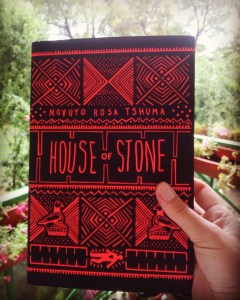
 In an interview, Novuyo Rosa Tshuma when asked about setting her novel amidst the backdrop of this massacre, said:
 It’s an accomplished novel that confronts harsh truths and pursues questions about the reinvention of a nation and the individual. A gifted storyteller who has been able to weave the essence of those personal narratives into richly formed characters that goes some way towards acknowledging a history no-one will talk about. Bereft of redemption, a feeling that pervades the narrative and one that seems to hold many in its grip today worldwide.
 I’ve been looking forward to picking this novel up, because it’s set in and around the streets and coastal inlets of Marseilles (our local city) and even ventures into Aix-en-Provence and Vauvenargues (the scene of a murder in the novel – though known locally because Picasso lived in the château there). It was originally published in French in 1995, when Izzo was 50 years old, a mere five years before his premature passing.


 Jean-Claude Izzo when asked about the phenomenal success of his trilogy, characteristically chose to shine the light on the city he loved:
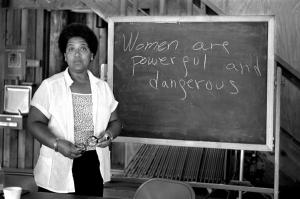
 Audre Lorde was a poet, academic, speaker, feminist activist, sister and mother of two, who grew up in 1930’s Harlem. She wrote 12 books and tragically passed away at the age of 58 from cancer in 1992.
 The collection both begins and ends with essays that focus on her travelling outside the US, a literal perception of her as an outsider, however the main body of work centers around issues within her country of birth, where that feeling of ‘outsider’, arrives because of the way we relate to others, or how they relate to our race, identity, gender, sexual orientation, class.


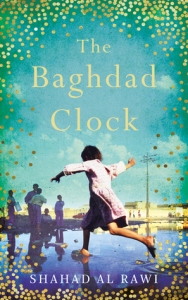 Slightly surreal, nostalgic and deeply philosophic portrayal of a neighbourhood in Baghdad, of a childhood and early youth lived under the shadow of war, shared by a girl, (our unnamed narrator) who refuses to depict her childhood through the lens of suffering and devastation.
 Eileen Battersby (1958-2018) was a renowned literary critic and reviewer, my favourite, probably the only one I knew by name, reputation and avidly followed. It wasn’t just for her excellent reviews, it was because she read so much further outside of the English language and culture than any other, and because she might as easily refer back to ancient myths and classics as she would to contemporary translations in her far-reaching analysis and commentary on literature.


 Teethmarks on My Tongue is a coming-of-age story about teenage Helen, the only child of a wealthy Southern family, who in the opening pages witnesses her mother’s death broadcast on television, shot by a mentally ill lover. Living on an esteemed property in Richmond, Virginia, she passes her free time in the company of horses or immersing herself in her intellectual passion, the science of astronomy, the solar system.

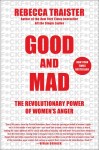 Rebecca’s book Good and Mad will give you a deep and engaging (and sometimes enraging) historical deep dive into the way that women’s anger has been used throughout history to drive social movements, as well as how rage at the inequalities replicated within those social movements has worked to both slow them and make them stronger.
 Brittney’s book invites the question of what it takes to meet Audre Lorde’s challenge: how do we focus our anger with precision? Through a range of personal stories about becoming a feminist, navigating friendships and romance and the white-washed shoals of pop culture, as well as contending with the limits of white feminists and the legacy of white feminism, Brittney demonstrates what it means to harness anger as a superpower.
 As soon as I saw the cover of Sandrine Collette’s Nothing But Dust I wanted to read this book. I didn’t know what genre it was, but it was published by Europa Editions; all the books they choose to publish that I have read have been excellent.
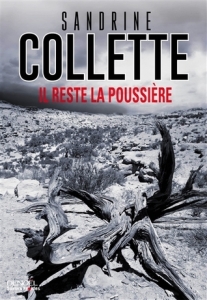 We become immersed in this life on a sheep farm with The Mother, her four sons, a dog named Three and the Criollos they ride, on the arid, infertile steppe they live on in Patagonia. All they’ve known and grown up with is harsh and menacing, reliably so; all they know is work, for her.
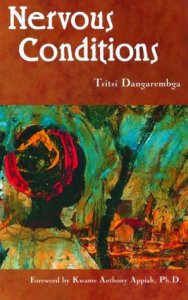 I came across this promising book on a Goodreads group called
  It’s a coming of age story of Tambu, a teenage girl, who in the beginning lives in a small village with her parents and siblings and their days are hard, especially the women, who work in the fields all day, do the laundry at the river, transport water to and fro and cook in a kitchen that lacks modern conveniences and requires skill and tenacity to manage. Despite the hard work Tambu loves her village and even the work and chores equally provide moments of pleasure and companionship.
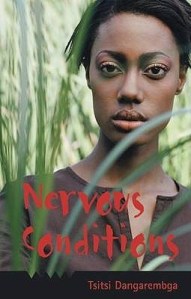 The subtle way her character transitions to greater awareness is adeptly portrayed, her feelings of ambition and regret as she realises it may be impossible to achieve all that she aspires to without losing something of what she had. She observes her cousin rebel and then accept that middle ground, fall victim to it, unable to go back to who she was, becoming alienated from her own, entering into self-destructive territory.
 Word by Word