A Silent Education: Our Quiet Challenge in Provence

Struggling with my latest read, I think about all those people starting out on the NanoWriMo trail and all those old stories gathering dust on the shelf, my finished and unfinished novels, the new one I would love to start and the words of my friend Bernadette, who suggested to me yesterday that I write a story directly into this blog.

It’s an idea with merit and one that will help me overcome another little dilemma, that of a 10-year-old girl who wants her own blog, whose little fingers have occasionally and so she says ‘accidentally’ found their way in here.

So this will be our collaboration, I will write the episodes and she will create the illustrations, which seems appropriate as this story is going to be about her, about an aspect of our journey together that is worth sharing, because I know our experience is already helping others going through something similar.

So, next up Episode One : The Benefits of Insomnia written by me and illustrated by my daughter.

Here is the cover she designed today, there is a colour version, but she wants me to put it up in black and white.

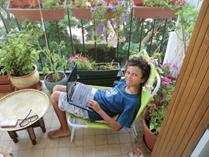
And just to clarify, that’s her on the left and me on the right. (She has used her artistic ability liberty to remove her curls and make herself as tall as me).

Swimming Home

Author, Deborah Levy

This is my first read from the Booker Prize shortlist, a book that fell into my hands during a recent visit to London. I have been aware of Deborah Levy’s work for some years, though outside the mainstream, so seeing it being nominated in the Booker list, it was one title I felt a definite connection to, there being only two degrees of separation between Deborah and I.

Hers is an interesting story in light of recent perceptions that much literary fiction is or has fallen out of favour now with pressure on publishers to go with titles that are likely to make significant if not mass profits. Her previous publishers neglected to take on this title because, as she said:

‘the fear among those who admired it was that Swimming Home was too literary to prosper in a tough economy … to be fair, there was quite a bit of agonising, but in the end Marketing and Sales won the argument.’

Titles published by ‘And Other Stories’

In my earlier post What is Really Harming Literature, I mention the commodification of literature, something the publisher of Levy’s latest book And Other Stories developed in response to. For a set fee, members subscribe to the publisher, kind of like a club and elect whether to receive two or all four of the titles they will publish during the year. You won’t know who the authors or the books are until published, except that they are international fiction, either in English or translated, and of the type the publisher believes is being ignored by mainstream corporations.

The selection of titles passes through an open consultative process which agents, interested members of the public, writers, friends, colleagues contribute to, so as a subscriber you are invited to contribute to the choice of future books to be published. The first copies are limited edition, so all subscribers receive not only a potentially excellent book, but something of a collector’s item as well.

Swimming Home for all that, I found a relatively easy, medium paced accessible read, with enough story to keep the reader intrigued, while delving into the various characters, two families staying in a French villa on holiday; Joe the home based poet, his war reporting and frequently absent wife Isabel, their teenage daughter Nina and their friends who own a struggling shop in Euston, Mitchell and Laura.

Their relative tranquillity is disturbed by the unexpected arrival of Kitty Finch, a young woman due to rent the villa a week later, whom they allow to stay, despite her collection of Joe’s poetry books on display in her room, her tendency for skinny dipping and resistance to taking a prescribed medicine.

It’s a story of repression and denial, all the characters appear to be hiding something, carrying unspoken baggage, whether a problem, resentment or obsession which Levy somehow with her brilliant but sparse use of language gifts the reader with an understanding that is more than the sum of words on the page.

I was struck on the very first page by an example of this and realised this was a book I would likely need to read twice, because there is much to discover in the way she is able to capture so much in one sentence.  Here is the opening line of the book and the second sentence from the third paragraph. We already have a strong sense of Kitty, who though perhaps the least repressed character, is the most dangerous.

When Kitty Finch took her hand off the steering wheel and told him she loved him, he no longer knew if she was threatening him or having a conversation…

She asked him to open his window so she could hear the insects calling to each other in the forest. He wound down the window and asked her, gently, to keep her eyes on the road.

Even the author herself only shares parts of conversations in dialogue, the rest narrated by a character adding an element of unreliability as we dip into multiple perspectives and have to rely on the thoughts of characters all of whom have some kind of hidden agenda.

During seven days we learn more about each of the characters as we watch them interact and ponder the significance of that body found floating in the pool at the beginning of the story and wonder how all this silent yet volcanic like tension is going to erupt.

*

Yesterday he had watched her free some bees trapped in the glass of a lantern as if it were she who was held captive. She was as receptive as it was possible to be, an explorer, an adventurer, a nightmare. Every moment with her was a kind of emergency, her words always too direct, too raw, too truthful.

There was nothing for it but to lie.

Who or what is really harming literature?

All the hoopla created by Booker judge and TLS Editor Peter Stothard’s untimely comments in The Independent suggesting that book bloggers are harming literature, reminded me that I have yet to post a review of Deborah Levy’s Swimming Home, which I finished a short while ago and shall rectify shortly. (now done)

While posting a rant isn’t one of the objectives of this blog, since I’ve been commenting on the issue elsewhere, I decided to do something a little different and turn our eyes away from the culpability of book bloggers for a moment – who if you’ve read anything I’ve written in the last 24 hours you will know I think do a marvellous job – and instead suggest some other groups or individuals who it might also be said are harming literature today.

Voila, the list:

  1. Governments – I’m referring more to the British government whose budget cuts in the culture sector have had a crushing effect on many cultural and literary organisations (and libraries!!) who relied on funding to keep their operations and artists/writers supported. Sadly, either the government doesn’t appreciate the cultural value and importance of the Arts or hopes it will turn itself into a more commercial business model, if it can’t earn a living, either the private sector will save it, or it will cease to exist.
  2. Literacy – there had been a significant increase in the percentage of non-readers, an alarming trend and certainly harmful to all literature however, a recent survey in the US has shown that for the first time in a quarter century, literary reading has increased among American adults.

    A decline in both reading and reading ability was clearly documented in the first generation of teenagers and young adults raised in a society full of videogames, cell phones, iPods, laptops, and other electronic devices.

  3. Technology – the quote above says it all; technology has affected the leisure and entertainment options of children and young people, who might otherwise have picked up a book. However, this cloud may have a silver lining if the same people then hear about books via social networks and get reading on their gadgets. The book industry is going to have to get pretty creative to capture the attention of young people. Bloggers are the first step in that direction, right?
  4. Parents – Yes. Parents. Are we encouraging our kids to read by reading to them, taking them to the library, buying books or engaging in animated storytelling? All kids love being read to or told made-up stories and while they are young, books also assist them to undercover their passions and interests! Not a new problem, but one that can be detrimental to our beloved literature.
  5. Artists and Book Sculptors – Well, really this is an excuse to show you the extraordinary, exquisite, mysterious sculptures created by an unknown sculptor in Edinburgh late last year, which also sets out to prove that sometimes great literature actually needs to be harmed in order to generate support, awareness and appreciation.
  6. Libraries – both a victim and a culprit, the poor old library is being phased out in many cities, but libraries have also been known to be engaged in selling off and destroying the old to make room for the shiny new things that want to steal the limelight!

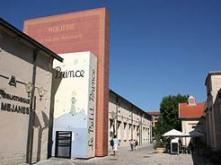
    Cité du livre Bibliothèque Méjanes Aix-en-Provence

  7. Social Networking – it may be having an adverse effect on some writers as they navigate the fine line between having a public profile to assist with promotion of their titles and the distraction of random communications and information that keeps them from writing. Not surprising that some enterprising company has come up with an app you pay for that restricts your internet access, we can now purchase discipline for the undisciplined!
  8. E-books – so you think e-books are good for literature? I’m not so sure, I think that e-books have turned literature into a much more accessible and easy to purchase commodity, with an associated risk that many people are consuming books and not actually reading them. So good for the writer’s pocket and for the estates of classics and at least the bookshelves aren’t suffering, but are we at risk of becoming collectors rather than readers.
  9. Telephones – I’ve mentioned technology already, but I have to register my concern at lugging my brick of a book, Murakami’s 1Q84 on holiday and a quick glance around the beach suggested I was one the very few doing that old fashioned thing, reading a book. Everyone else was doing the finger tapping dance on their teeny gadgets – alas, the mobile telephone has replaced the beach read, at least in St Tropez this summer!
  10. Steve Jobs & the Apple team – when computer hard drives required an entire office to house them and technology was beige, boring and you had to be a geek to operate it, literature was in no way threatened – now that it’s sleek, sexy and can facilitate a music, film, or other visual experience, a whole new level of entertainment has captured our imaginations, to the detriment of the more passive, noiseless book.
  11. The iGen – the baby boomers are becoming grandparents, the X generation are coping with being older parents and the new generation have been dubbed the iGen. They are going to create and imagine a whole new way of doing things. We don’t yet know what kind of literature they will want to read or create and they will decide which of our contemporary writers become future classics. Perhaps books are going to become more of an interactive experience?

The point being, there are a good many things out there and I am sure you can think up more of them, that could be said to be harming literature. But at least it stimulates a good debate and brings out those who are passionate about reading, writing, reviewing, critiquing.

Ok, back to writing that review then.

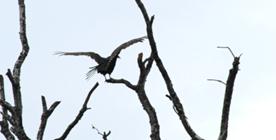
Buzzard

Friday Fictioneers is the brainchild of Madison Woods who posts a photo prompt each Friday to inspire followers to write a piece of flash fiction. After observing Rich participate I decided before I read his work, to see if anything was lurking in the depths of my imagination that wanted out, and Voila here it is, slightly longer at 150 words, but I’m ok with that.


A Man’s Best Friend

What’s she called?
Buzzard.

Buzzard? As in bird?
Yeh mate, Buzzard.

Bit strange for a dog don’t you think?

If I thought it was strange I’d have called her Bud, wouldn’t I?

Yeh, I guess.
Come on then, you gonna give me a hand or not. You get the front and take it slow down them stairs, I got the back. And no chat, I don’t want nosy neighbours asking stuff ‘ll give us more to do.

The two men lifted the long rectangular box off the table and walked towards the front door of the near empty apartment. Descending the stairs, they kept the deadweight container level until they got outside then slid it into the back of the waiting yute.

But where did you get Buzzard from?

Easy, wasn’t it. Last thing I saw before I picked up the body. That and the dog. So you gonna drive or me?

A Piece of the Mosaic

Thank you to inspirational talent Kimberly Sullivan who lives in Rome and has written ‘In the Shadow of the Apennines’ set in the mountains of Abruzzo. She tagged me in the ‘Be Inspired’ blog hop hosted by ‘Page After Page’:

All of our stories come from somewhere, whether it be a dream, another book, a life event…So, I thought why not give people the chance to talk about their inspirations as well as their stories?

To participate, I should answer 10 questions about my novel and then tag 5 writer’s:

1. What is the name of your book?

‘A Piece of the Mosaic’

2. Where did the idea of your book come from?

It started with a prompt in a creative writing class at the Groucho Club in Soho; the tutor asked us to spend 5 minutes writing about a character. It was the scariest part of the class, that compulsory, time limited plunge into the unknown with others furiously scribbling away.

Paralysed, I had a vision of the back of a young man standing on a pier smoking a cigarette, gazing out to sea . He was wearing black trousers and a black leather jacket, observed by two schoolgirls giggling on a bench. After the class finished, I could not get that man out of my head.

3. In what genre would you classify your book?

I hate labels, I hope this book crosses as many genres as possible, but if I had to guess I would say it is contemporary, cross cultural fiction.

4. If you had to pick actors to play your characters in a movie rendition, who would you choose?

I don’t know any current Italian actors, so I would suggest a young man of Mediterranean origin to play Alfredo and because this question is too hard, I’m going to adapt it and say I dream of music composed by Ennio Morricone and the film directed by Giuseppe Tornatore director of Cinema Paradiso and Ba’aria. Authentic it must be.

5. Provide a brief synopsis.

Alfredo’s home village – Liguria

Angry with his father after his mother’s death, young Italian chef Alfredo, abandons the fishing village he has lived in all his life and travels to England, eventually finding a job in the seaside town on the South Coast. In return for low rent, he agrees to an unorthodox request from his spinster landlady Claudette, to help her find the sister she has not seen for 30 years since she and her husband immigrated to New Zealand.

Alfredo discovers more than a long-lost sister and the search soon becomes his own, to find Claudette’s niece Amber; the journey leading him towards everything he has tried to avoid in order to learn the truth.

6. Is your book already published/represented?

The synopsis and first three chapters have been read by 3 agents in London, with encouraging responses but declining representation and the full manuscript was requested by the fiction editor at Penguin NZ, who enjoyed it and suggested I seek representation in the UK.

 In order to establish some credibility with my writing, I decided to write a blog before I send it out again, so here I am blogging away, sharing my passion for the written word.

7. How long did it take you to write your book?

The actual writing part probably took about a year, but I wrote it in two bursts, the first half when I lived in London and on a whim travelled to Liguria to spend a week in a fishing village imagining and writing of lives other than my own.

I finished it in the first six months of arriving in France unable to speak French – the best excuse in the world not to have a proper job and to finish a first novel.

8. What other books within your genre would you compare it to? Or readers of which books would enjoy yours?

There are many books about people from the English-speaking world going to live in a non-English speaking country, both fiction and non-fiction, Alfredo isn’t leaving to see the world, he is escaping.  It is a story that questions identity and confronts issues of adoption and family.

I think it will appeal to people who like books that take them to places they dream of visiting and that introduce them to issues from different cultural perspectives, if anyone has any suggestions as to any other book this sounds like, let me know.

9. Which authors inspired you to write this book?
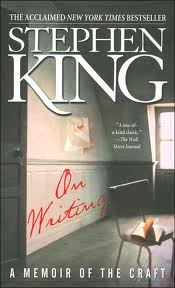
Two authors come to mind immediately, ironically Stephen King influenced this book, because I read his excellent slim masterpiece ‘On Writing’ midway through writing.  After reading it I changed a few things, I stopped writing longhand, I set a 1000 words/day word count (his is 2,000 words/day) and I stopped editing as I was writing, I just wrote it out until the end – terrified it would be crap, but discovered how to create pace.

The other author who spent some time residing in my subconscious was Italo Calvino, it took me a while to figure out what he wanted; now I know – but it’s a secret.

10. Tell us anything that might pique interest in your book?

Here are two extracts that survived that very first writing exercise, sitting in the Groucho Club in London, searching the recesses of my mind for inspiration.

Looking out over the swollen sea, Alfredo smiled knowingly at how her moods changed, one moment bright and sparkling in her refinery, phosphorescence glittering like sequins in the moonlight, the next as she was now, irascible, dark and brooding, like a young lover scorned, beauty transformed into bitterness. He watched a fish jump momentarily from her clutch, as if trying to escape her volatile and uncompromising mood, then witnessed the force of gravity, the sea’s ever-trusting accomplice, toss the cold-blooded vertebrae back into the maelstrom from which it had tried valiantly to escape.

He threw his half-finished cigarette into the sea and she hissed at him in reply. He had never been a regular smoker in Italy and wished he could kick the habit, cigarettes had become a comfort since he came to England, he liked to roll them as much as he liked to smoke them, it gave his hands something to do when his mind was restless. Thoughts extinguished, he walked down the length of the pier, eyes front, not looking at two giggling teenage girls to his right but sensing their eyes following his footsteps, over the wooden planks, where if one’s gaze was concentrated enough, you could see the pregnant swell of the waves below, as the tidal ebb carried them to and from the shore.

And now to tag 5 writers, all of whom are an inspiration to me:

  1. Brenda Moguez – Passionate Pursuits
    – Brenda is a prolific, unique and inspirational blogger with a rich family and personal history to draw on, not to mention a gigantic imagination, it’s just a matter of time before we will be reading her novel, now doing the rounds of agents.
  2. Juliet GreenwoodJulietGreenwoodAuthor – Juliet lives in a traditional Welsh cottage between the romantic Isle of Anglesey and the majestic mountains and ruined castles of Snowdonia, she is living the dream, a published writer and avid gardener; she is an inspiration.
  3. Patricia SandsEveryone Has a Story to Tell
    – Patricia has published a book about friendship, fun and the complexities of relationships among women, drawing inspiration from her own experiences. Every Friday she blogs about France and her current WIP (work in progress) is set here.
  4. Julie Christine Chalk the Sun
    – Julie is a Francophile, she is a reading writer, travels often and writes a fantastic book review. Just waiting for her to plunge right into writing that novel, a WWII star-crossed romance between a young French girl and a German POW, inspired by true events.
  5. Jen ThompsonChronicles of Jen
    – Jen is another writer who loves to read and shares her thoughts when she does, she’s a talented writer, lives in a caravan and is out there observing characters and seeking inspiration while serving hotdogs and popcorn. She may not be able to participate because her idea is so great, someone might steal it J
  6. Nelle NelleWritesI’m going to add one more, because I couldn’t have a list of writers without including Nelle, who not only is a great writer, but is a loyal follower and comments on all my reviews, even though her book budget is severely restricted.

Wild Horses and Flash Fiction

Its National Flash Fiction Day today in the United Kingdom, celebrating the short, short form of fiction, the art of telling a story in less than 1,000 words and more often only 150 words.

David Gaffney shares his experience of writing and being published in the form and offers these tips:

  1. Start in the middle
  2. Don’t use too many characters
  3. Make sure the ending isn’t at the end
  4. Sweat your title
  5. Make your last line ring like a bell
  6. Write long, then go short

He goes on to explain each tip, click here to reveal his words of wisdom.

And here is my attempt to tell a story in 150 words, word by word.

*

The Muster

*

I ride bareback with just a halter and lead into the midst of the herd, gently coaxing them out from under the trees. My mount quivers beneath me; fear pervades the damp atmosphere and I exhale deeply to expel it.

The sound of a gunshot spooks the stallion and the horses move. Bright sunlight extinguishes shadows as they bolt, branches cracking beneath the drum of hooves.

My father is in position. The herd veers to the right. At the river bank there is a two metre drop into the water and we do not hesitate. I grip hard with my knees and feel muscle ripple beneath me bracing itself for the jump. Something knocks my shoulder and I cry out as we plunge head first into the torrent.

“Wake up son, we’re mustering that herd of wild horses today” my father says as I open my eyes.

A Love of Words and Music

I have been struggling a little to finish ‘The Maid and the Queen’, what with school holidays, the French presidential elections (which I voted in for the first time), working on promoting my Aromatherapy business and socialising more than usual, including attending an excellent concert of the cult singer/artist ‘Camille’ at Le Silo in Marseille on Friday.

Camille

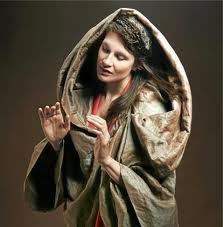
No one song can possibly represent what a performance by this artist represents, she sings, uses her voice and body as an instrument, dances barefoot in her sacking dress and easily extracted volunteers from the audience to participate.  She is total inspiration, if you would like listen, here is a sample ‘Mars is no Fun’.

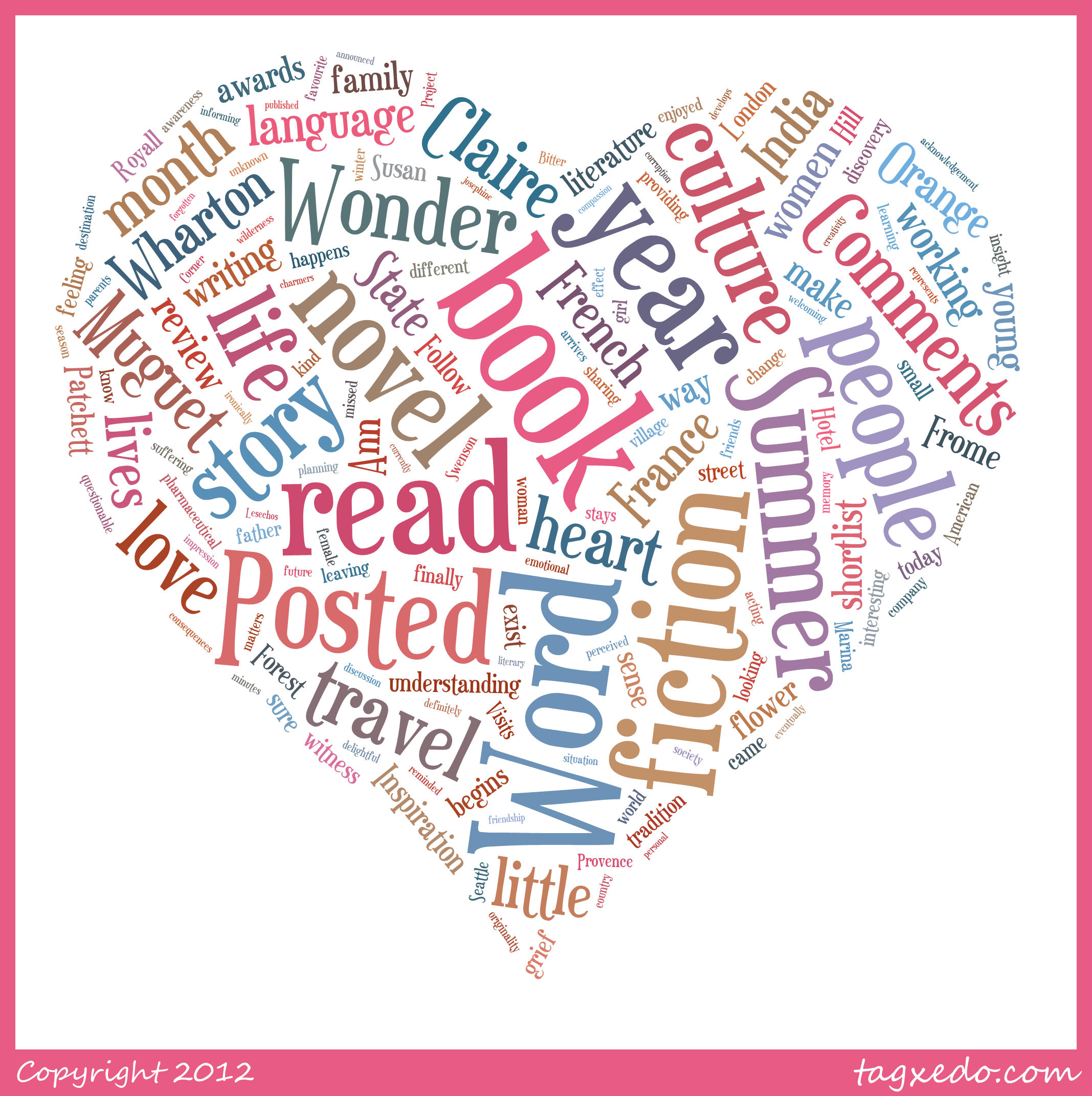
So no book chat today, instead I will share a fun word cloud tool that I discovered thanks to Elodie at  ‘Commuting Girl’ called Tagxedo into which you can copy any text or enter your blog or website name and the tool will analyse the content and show you which are the most popular words and how often they are used.

So Voila! For this blog ‘Word by Word’, here is an image of the most common words used and I am delighted that the word ‘Word’ is indeed such a dominant feature.

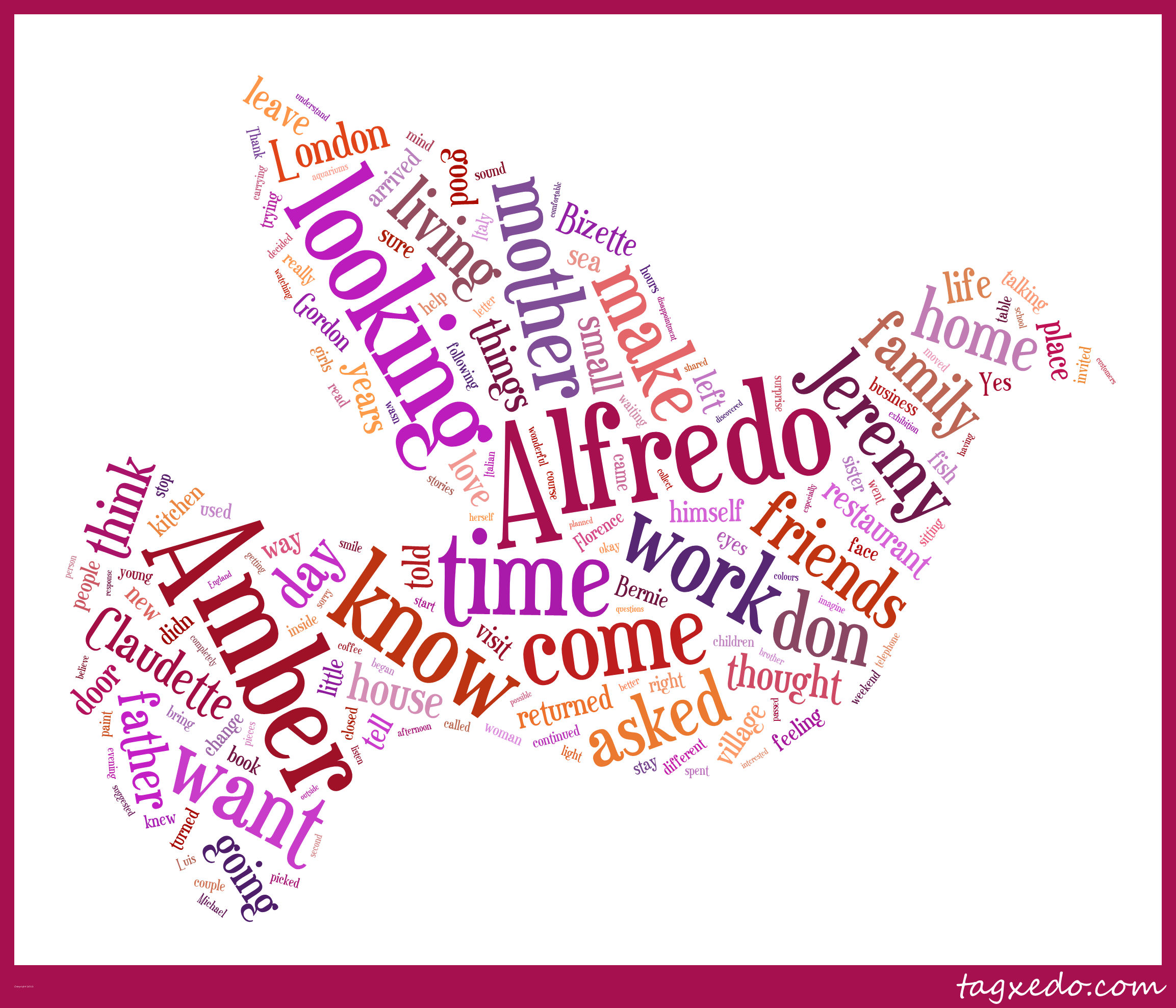
Intrigued, I decided to put the text of my ‘sitting on the shelf’ novel as I have always wondered which words I might be over using.  So I am not going to say anything more about the novel, except that it is called ‘A Piece of the Mosaic’ and here is a clue to what lies within.

So what does your blog, novel, poem,story look like?