The Colony by Audrey Magee

Reading Ireland Month

March is Reading Ireland Month, run by Cathy over at 746books.

An island of approximately 7 million people, it has a successful and supportive literary culture, including four nobel prize winners (George Bernard Shaw, William Butler Yeats, Samuel Beckett, Seamus Heaney) and six Booker Prize winners (Iris Murdoch, John Banville, Roddy Doyle, Anne Enright, Anna Burns, Paul Lynch), plus an honorable mention for William Trevor, who never won, but was shortlisted five times.

Language and Life Intertwined

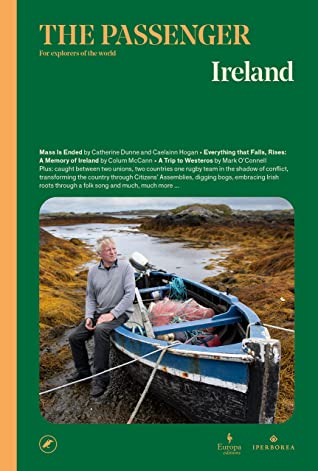
If you’re interested in a contemporary insight into Irish culture, literature and history, I highly recommend The Passenger – Ireland (reviewed here), which features long form essays, investigative journalism, literary reportage and visual narratives. It takes us beyond the familiar stereotypes to portray the country’s shifting culture and identity, public debates, sensibilities of its people, its burning issues, pleasures and pain. It was published by Europa Editions in March 2022.

One of the essays, An Ocean of Wisdom by Manchan Magnan, a man fascinated by the Irish language and its connection to fishing, tells of his travels to three Gaeltachtai (Irish speaking) areas uncovering local words and phrases that expressed aspects of the sea, weather and coastal life. He captured linguistic nuances that described a way of life fast disappearing and shared the complex reasons behind it.

More Ireland Island Literature, The Colony

My first book for reading Ireland 2025 is the excellent novel The Colony by Audrey Magee. This had rave reviews everywhere and I have long been wishing to read it. It did not disappoint, it has many thought provoking themes, yet can be read at quite a pace.

Mr Lloyd, an English man has come to an island, a rock three miles long and half a mile wide to paint the cliffs and have an authentic experience. He is trying to find inspiration and revive his career (and life).

We get to know his type immediately in the sardonic opening pages, which are illustrated on the cover of the copy I read. A man being rowed across the water to the rock where he will spend the summer, wants to recreate an authentic experience he’s seen a picture of somewhere. Reality, nothing like a still-life.

He looked down again, at his backpack, his easel, his chest of paints bound already to the journey across the sea in a handmade boat. He dropped his right leg, then his left, but clung to the ladder.
self-portrait I: falling
self-portrait II: drowning
self-portrait III: disappearing
self-portrait IV: under the water
self-portrait V:the disappeared
Let go, Mr Lloyd.
I can’t.
You’ll be grand.

The people on the island cater to his needs while fifteen-year-old James is curious about painting and drawing. He begins to learn, to practice, to observe what My Lloyd is incapable of seeing. The islanders have asked My Lloyd to respect certain privacy’s, lines he doesn’t take long to cross.

Rival outsiders on a mission

A while later, another man will arrive for the summer, Mr Jean-Pierre Masson, a Frenchman, returning for his fourth summer.

You speak the language Mr Masson?
Yes, I study Irish, or Gaelic, as you prefer to call it.
I have no preference.
Then we’ll go with Irish.
Masson drank from his cup.
I’m a linguist, Mr Lloyd, and I specialise in languages threatened with extinction.
And you’re here to save Gaelic?

The novel observes the effect these two outsiders have on the islanders, the rivalry and antagonism between them and the inability of the islanders to stop the change these two herald.

Lest We Forget

Interspersed between the chapters, single pages in short paragraphs, recount acts of terrorism, the names and details of those who are victims, targeted by different sides of the Irish divide. Thus the novel depicts the external colonising forces and the internal country conflict on the people.

Alexander Gore is a full-time member of the Ulster Defence Regiment standing outside his barracks on Belfast’s Malone Rod just after eleven on Wednesday morning, June 6th. He is twenty-three years of age, Protestant and has been married for four months. His nineteen-year-old wife is pregnant with their first child.
A truck drives down the Malone Road towards the barracks. Two IRA men in the truck open fire and kill Alexander Gore.

In addition to the islanders, there is the ghostly presence of the three fishermen who drowned, their absence keeping some endlessly waiting, anchored to that rocky outcrop, as if expecting them still to return.

Three good men lost on an autumn day. My son-in-law, my grandson and my grand-daughter’s husband. Gone. Never to come home. Not even for their own funerals. That was a hard time, JP. But as I say, you get hard times wherever you are. They have a great way of following people. Though it took a long time for the island to recover.

The Painter and the Academic, neocolonialism at work

Both visitors have backstories that reveal more about them and question their motives. They discover they can take more than what they initially came for and neither hesitates to expand their remit, because it serves them, it takes them away from looking at themselves, at their own story.

The islanders see all, some stuck in their ways, others with more freedom to slip in and out of what is expected and others have the desire to rebel or seek opportunity. As the visitors time on the island comes to an end, true colours are revealed, change is challenged by the old order and young James weighs up his options.

I very much enjoyed the reading experience and the delving into the different motivations of all the characters. The dialogue was excellent, the humour biting, the prose sometimes poetic and spaced out on the page, other times fluid like the incoming and outgoing tides, occasionally dense when it delved into the political and linguistic aspects and violent when those extracts are shared.

Highly Recommended!

Have you read The Colony? Are you reading any Irish literature this month? Let me know in the comments below.

Further Reading

Guardian review: The Colony by Audrey Magee review – island life at a distance by Jonathan Myerson

Read rave reviews of The Colony by Jacqui at JacquieWine’s Journal, Kim at Reading Matters (her favourite book of the year 2023), Susan at A Life of Books, Sue at Whispering Gums and Lisa at ANZ LitLovers.

Audrey Magee, Author

Audrey Magee was born in Ireland and lives in Wicklow. She worked for twelve years as a journalist.

Her first novel, The Undertaking, was shortlisted for the Women’s Prize for Fiction, for France’s Festival du Premier Roman and for the Irish Book Awards. It was also nominated for the Dublin Literary Award and the Water Scott Prize for Historical FictionThe Undertaking has been translated into ten languages and is being adapted for film.

Her second novel, The Colony was longlisted for the Booker Prize 2022 and shortlisted for the Orwell Prize for Political Fiction (2022).

Reading Ireland Month 2025

March is Reading Ireland month, an initiative created by Cathy at 746 Books and it is simply a way of being in community, while reading anything written by Irish authors or that relates to Ireland, there are no fixed rules, just the intention to Read Ireland, whatever that means to you! There’s even a Spotify playlist if you’re interested in a bit of musical culture.

Getting a Jump Start

For me that means reading more Irish authors from my bookshelves. I did read two in January, in fact my first read of 2025 was Donal Ryan’s Irish Book Award 2024 winning, heart, be at peace, a novel about multiple characters in a rural town in County Tipperary facing the different issues that face them a decade or so on from his debut novel The Spinning Heart.

Then I picked up a beautiful second hand hardback Water by John Boyne on holiday, and read it on my flight home. It is the first of four novellas in his The Elements series and now I want to read the next three, Earth, Fire and the final one Air due out in May 2025. But not yet, I’m prioritising what I already have!

Reading From the Shelves

A selection of books to read during Reading Ireland month of March

So here is the pile from my bookshelves, from which I will be choosing what to read in March 2025.

There are also three titles languishing on my kindle, which doesn’t get as much attention as it should, because out of sight is out of mind when it comes to reading. So I’m jogging my memory and will try to read at least one of these e-books.

On the kindle I have Listening Still by Anne Griffin, The Quiet Whispers Never Stop by Olivia Fitzsimons and Quickly, While They Still Have Horses by Jan Carson. In physical print I have another Carson The Raptures, that I picked up at the annual Ansouis vide grenier in September 2024.

Audrey Magee’s The Colony (2022) was longlisted for the Booker Prize, shortlisted for the Orwell Prize for political fiction and the Kerry Group Irish Novel award, so it gained a lot of attention and I have been keen to read it.

When Fiction Reminds Us of Those Who’ve Passed

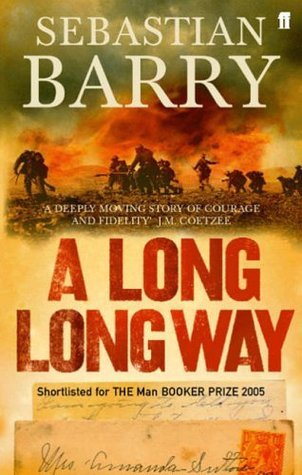
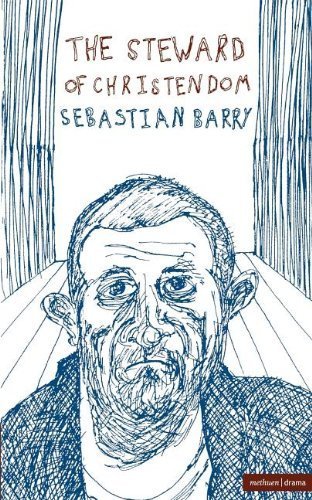
I really enjoyed Sebastian Barry’s Old God’s Time (2023) and want to read more of his work, so I chose his Dunne Family trio of books, Annie Dunne (2002), A Long Long Way (2005) and On Canaan’s Side (2011) to delve more into his storytelling. I am part way through reading these now.

I love that this collection of novels and the play that was the first in the series, were all inspired by characters from his own ancestral lineage. That inspired me too.

After reading A Long Long Way, I became curious, as I too have an ancestor, born in the same year as his character Willie Dunne (1896), who like Willie, went to France in World War I, was in an Irish regiment and did not return. My ancestor Edmund Costley died on 9 April 1916, in Ypres, West Flanders, Belgium at the age of 19. I’ll be writing a post about him in April.

Historical Re-Imaginings, True Crime, Women’s Lot

I have read two novels by Mary Morrissey, Mother of Pearl (1995) and Penelope Unbound (2023). Morrissey tends to take historical stories and/or characters and re-imagine their lives. Mother of Pearl was inspired by a notorious baby-snatching case in 1950’s Ireland, that she chose to fictionalise, having said that the truth would have come across to readers as unbelievable; while Penelope Unbound re-imagines the life of Nora Barnacle, if in Trieste, Italy, when James Joyce made her wait all day outside a train station for him, she decides to leave.

This year I’m going to read her imagined autobiography, The Rising of Bella Casey (2013); she was the sister of the acclaimed playwright Sean O’Casey, and it is set at the turn of the century Dublin, a social commentary on the lives of women in that era.

Then there is Maggie O’Farrell’s The Marriage Portrait (2022), another historical re-imagining, this time of the short life of Lucrezia de’ Medici, a sixteenth century member of the renowned aristocratic House of Medici in Italy. I enjoyed O’Farrell’s riveting memoir I Am, I Am, I Am – Seventeen Brushes With Death (2017), the first of her works I read, and then the multiple award-winning, Hamnet (2020) and The Hand That First Held Mine (2010), so I’m looking forward to immersing in this one.

Irish Non-Fiction

missing persons or my grandmothers secrets unmarried mothers in ireland nonfiction memoir that excavates the truth about silence

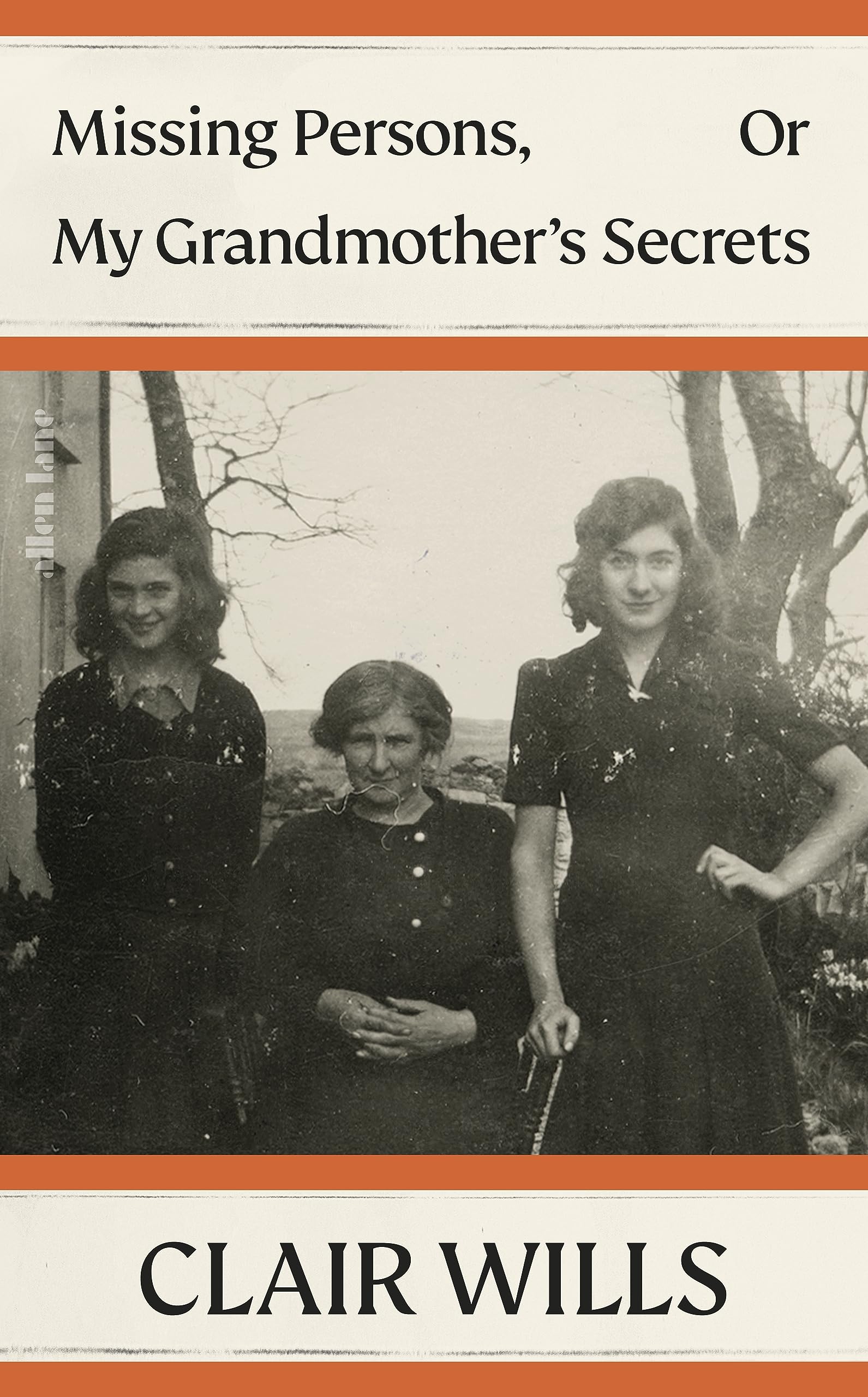
There are two non-fiction titles on my pile, Missing Persons, Or My Grandmother’s Secrets by Claire Wills, author, critic and cultural historian, winner of the Irish Book Award for non-fiction, who has written a family history that blends memoir with social history. She explores the gaps in that history, brought about by Ireland’s brutal treatment of unmarried mother’s and their babies, and a culture of not caring, not looking into or asking questions, rolling back a dark period of its history of loss and forgetting.

The second non-fiction title is the candid Fierce Appetiteslessons from my year of untamed thinking, also subtitled, Loving, Losing and Living to Excess in my Present and in the Writings of the Past by medieval historian Elizabeth Boyle.

The title is a reference to Vivian Gornick’s memoir Fierce Attachments, which is part of what intrigued me, but also the uniqueness of someone finding sense of three dramatic events in their life through medieval literature.

Every day a beloved father dies. Every day a lover departs. Every day a woman turns forty.All three happening together brings a moment of reckoning.

Boyle writes on grief, addiction, family breakdown, the complexities of motherhood, love and sex, memory, class, education, travel (and staying put), with unflinching honesty,deep compassion and occasional dark humour.

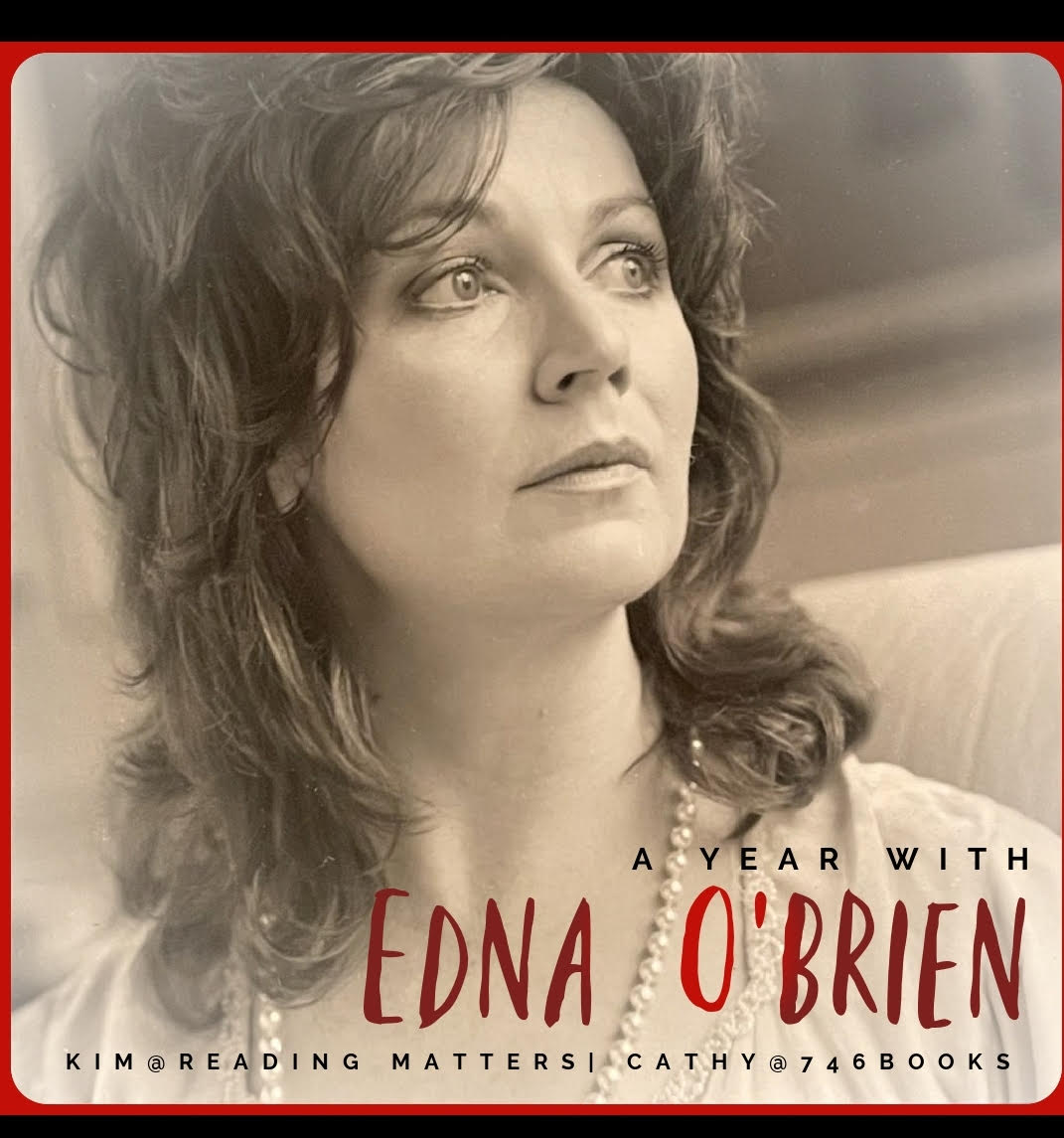
Remembering Edna O’Brien (15 December 1930 – 27 July 2024)

Edna O'Brien The Country Girls The House of Splendid Isolation

I couldn’t read Ireland without adding a title from Edna O’Brien, who died in 2024 at the age of 93. In 2023, I read The Country Girls trilogy, made up of three stories The Country Girls (1960), The Lonely Girl (1962), and Girls in Their Married Bliss (1964) released in 1986 in a convenient single volume.

Credited with breaking the silence on issues young girls faced growing up in Ireland, it was a subject she would often return to. She was punished for it, but lead the way for others to eventually follow.

O’Brien described her work in this way:

I have depicted women in lonely, desperate, and often humiliated situations, very often the butt of men and almost always searching for an emotional catharsis that does not come. This is my territory and one that I know from hard-earned experience. Edna O’Brien (Roth, 1984, p. 6)

Cathy at 746 Books and Kim at Reading Matters are spending a year reading Edna O’Brien and are reading Country Girls in February, you can see their reading schedule for the year if you go to their blog.

I have decided to read one my shelf, The House of Splendid Isolation (1991), the first book in her Modern Ireland trilogy, a political novel, depicting the relations of an Irish Republican Army terrorist and his hostage, an ageing Irish widow, in a house that represents the troubled nation.

Suggestions, Recommendations?

That’s the selection I have made, no guarantees on what I’ll get through, but I’m looking forward to the immersion. Have you read and enjoyed of the titles I mention above?

Are you going to read any Irish literature in March? Let me know in the comments below.

heart, be at peace by Donal Ryan

It has been 10 years since The Spinning Heart (my review), and in this small town in rural Ireland, County Tipperary, not a lot seems to have changed, or maybe it has. Previously it was economic collapse, lack of employment, toxic masculinity and how the actions of one man affected a community.

In Donal Ryan’s heart, be at peace we meet many of the cast from the past, another 21 voices some years further on, with a new set of troubles affecting the community.

Some are faring rather well financially, but not everyone is happy about the activities they are involved in and their loved ones who might be affected. Suspicion, mistrust, grief, regret prevail and all manner of connections have been formed and remade.

Births, Deaths and Estrangements

One of the most intriguing characters that I could have happily read a novel on and one of the few characters that does stand out was Lily, described as a witch by training and a whore by inclination, estranged from her son, then made up over her granddaughter Millicent who turns up at her door one day.

Having the gift of insight, she can see her granddaughter will find little solace with the boy she’s seeing. When she asks her granny for a spell to bind him always to her for fear of losing him, she knows there will be trouble ahead.

I explained to her again that the spells weren’t real magic, that the power of them was already inside the people who wanted them, the spells just allowed them the use of it, that the magic was in their faith that the magic would work and she screamed at me then, That’s what I want, Granny, that’s what I want, to have faith that he’ll always love me, that he’ll never leave me. I can’t bear the thought of losing him, of some other bitch touching him. He’s MINE, Granny, he’s mine.

A Chorus of Voices

The way the novel is written with short chapters from multiple character viewpoints, we can only discern what happens next to some of those we meet along the way, as we imagine the implications of all that is revealed. It is a novel that might be better understood after multiple readings, as it takes some work to connect and reconnect the different voices. It’s a kind of fly-on-the-wall polyphonic chorus.

In a way, the novel reading experience is like being in the presence of a community but not really knowing them, observing for a while reveals some connections but not others.

Some men can lie with such ease that they quickly begin to believe themselves, and so in a way their lies become truth and their sin is expunged.

21 voices a community in Tipperary follow up to The Spinning Heart

I have a few of Donal Ryan’s novels and I do recall having a little difficulty with his Booker longlisted debut mentioned above, and then absolutely loving All We Shall Know (reviewed here), then not being impressed at all by Strange Flowers. So a bit hit and miss for me, but one I’ll keep reading as he seems to have his finger on the pulse of contemporary community issues.

I enjoyed heart, be at peace and its themes, but it is a novel that is unlikely to stay with me due to the vast cast of character voices that too often became indiscernable for me.

Author, Donal Ryan

Donal Ryan is an award winning author from Nenagh, County Tipperary where this latest novel is set. His work has been published in over twenty languages to critical acclaim.

heart, be at peace won Novel of the Year and the Overall Grand Prize of Book of the Year at the An Irish Book Awards in 2024, described by the Irish Times an “absorbing, emphatic story of a community in trouble”

Maria Dickenson, Chair of the Judging Panel, said:

“Heart, Be at Peace was the unanimous choice of the judges from among the fantastic array of titles shortlisted this year. Donal Ryan’s writing has earned him a place among the greatest names in Irish literature and this lyrical novel speaks to the very heart of modern Irish society. Weaving twenty one voices together, Ryan portrays the passions, frailties and sorrows of one Irish town with compassion and clarity. Heart, Be at Peace is a masterful achievement and we congratulate Donal warmly on winning this award.”

The Hand That First Held Mine (2010) by Maggie O’Farrell

And we forget because we must. Matthew Arnold

The Hand That First Held Mine by Maggie O’Farrell was the winner of the former Costa Novel Award in 2010.

I read and really enjoyed O’Farrell’s memoir I Am, I Am, I Am – Seventeen Brushes With Death, the first of her books I encountered and Hamnet, which won the Women’s Prize for Fiction (2020).

I have The Marriage Portrait still to read, however I was curious to discover more of her earlier work and decided to read this one next.

Dual Narrative, Dual Timeline

This novel is narrated as two stories of two couples, one set in 1950’s/60’s that centres around Lexie, a rebellious university graduate who has been asked to apologise for using a door for men, before receiving her degree.

At home in Devon with her parents, she is about to abandon them all, the academic institution and her family for London, after Innes, a 34 yr old sports car driving art dealer, journalist, critic and self-confessed hedonist, breaks down not far from the field where she is sulking.

Innes has been in St Ives, visiting the studio of an artist whose work he’d been hoping to buy. He had found the artist rather drunk and the work far from completion. The whole excursion had been a raging disaster. And now this.

Lexie will move to London, creating an unconventional life and career in 1950’s Soho guided by her pleasure seeking lover, but with the spiteful eye of one who wishes her harm. Inne’s past will come to haunt Lexie’s future, and she will throw herself into her career, doing what she can to maintain her independence.

His father, he tells her, was English, but his mother was a mestizo from colonial Chile. Half Chilean, half Scottish, he explains, hence his Hibernian Christian name and also his black hair.

There’s much more to Lexie’s story, but to share any more of it would spoil the discovery for new readers of this compelling mystery. It is one of those novels where you know the narrative threads are going to connect and so each revelation keeps you guessing, until it eventually becomes clear.

Present Day London, Forgetting

Photo S. Chai Pexels.com

In the present day (2010) Elina, a Finnish woman in London and her boyfriend Ted, have just had a baby boy and she recalls nothing about the birth or the 3 days spent in hospital.

She tests herself, scans her mind. Has she remembered anything? Has it come back to her while she was sleeping? The birth, the birth, the birth, she intones to herself, you must remember, you have to remember. But no. She can recall being pregnant. She can see the baby here, lying in her lap. But how it got there is a mystery.

Not only has their life been turned upside down, but Ted is having memory flashes of childhood, but the images he is seeing are not like what his parents have told him. He knows what happened to Elina, but for now he is not sharing it.

Four days ago, she’d almost died.

The thought has a physical effect on him. One of disorientation and nausea, like seasickness or looking down from a high building. He has to lean his head in his hands and breathe deeply, and he feels the earlier tears crowding into his throat.

Slowly, the two of them begin to piece together the missing elements from their stories. Ted confronts his mother and finds her unhelpful. But since the birth of his son, the flashes of scenes from the past revisit him with increasing frequency.

‘Do you remember…?’ he asks, then has to break off to think. ‘A man came to the house once. And you … you sent him away. I think. I’m sure you did.’

‘When?’

‘Years ago. When I was small. A man in a brown jacket. Sort of untidy hair. I was upstairs. You were arguing with him. You said – I remember this – you said, “No, you can’t come in, you have to leave.” Do you remember that?

When Traumatic Events Awaken the Past

Everyone is being confronted with challenges and O’Farrell deftly carries the reader through them all, and keeps us puzzling over the mysteries underpinning each of their lives.

There is a level of unease and intrigue that is present throughout the narrative, that quickens the pace of readings, as we realise that not all characters are being honest or have good intentions.

Secrets, lies, infidelities, manipulative jealousies, tragedy and the unconditional love of true motherhood. The novel has emotional depth and psychological insight, while keeping up a well thought our plot.

An absolutely riveting read with brilliant storytelling and just enough withholding to allow the slow reveal of mystery and deception.

Highly Recommended.

Further Reading

The Guardian/Observer review: The Hand That First Held Mine by Maggie O’FarrellElizabeth Day enjoys a compelling novel of memory and motherhood, 25 Apr 2010

NPR review: A Moving Look At The Bonds Of Motherhood by Jessa Crispin, 27 Apr 2010

Author, Maggie O’Farrell

Hamnet The Marriage Portrait Shakespeares Wife The Hand That First Held Mine

Maggie O’Farrell is a Northern Irish novelist, now one of Britain’s most acclaimed and popular contemporary fiction authors whose work has been translated into over 30 languages.

Her debut novel After You’d Gone won the Betty Trask Award and The Hand That First Held Mine the Costa Novel Award (2010). She is the author of Hamnet, winner of the Women’s Prize for Fiction 2020, and the memoir I AM, I AM, I AM, both Sunday Times no. 1 bestsellers.

Her novels include After You’d Gone, My Lover’s Lover, The Distance Betwees US, which won a Somerset Maugham Award, The Vanishing Act of Esme Lennox, The Hand That First Held Mine, which won the 2010 Costa Novel Award, Instructions for a Heatwave, This Must Be the Place and The Marriage Portrait, shortlisted for the Women’s Prize. She lives in Edinburgh.

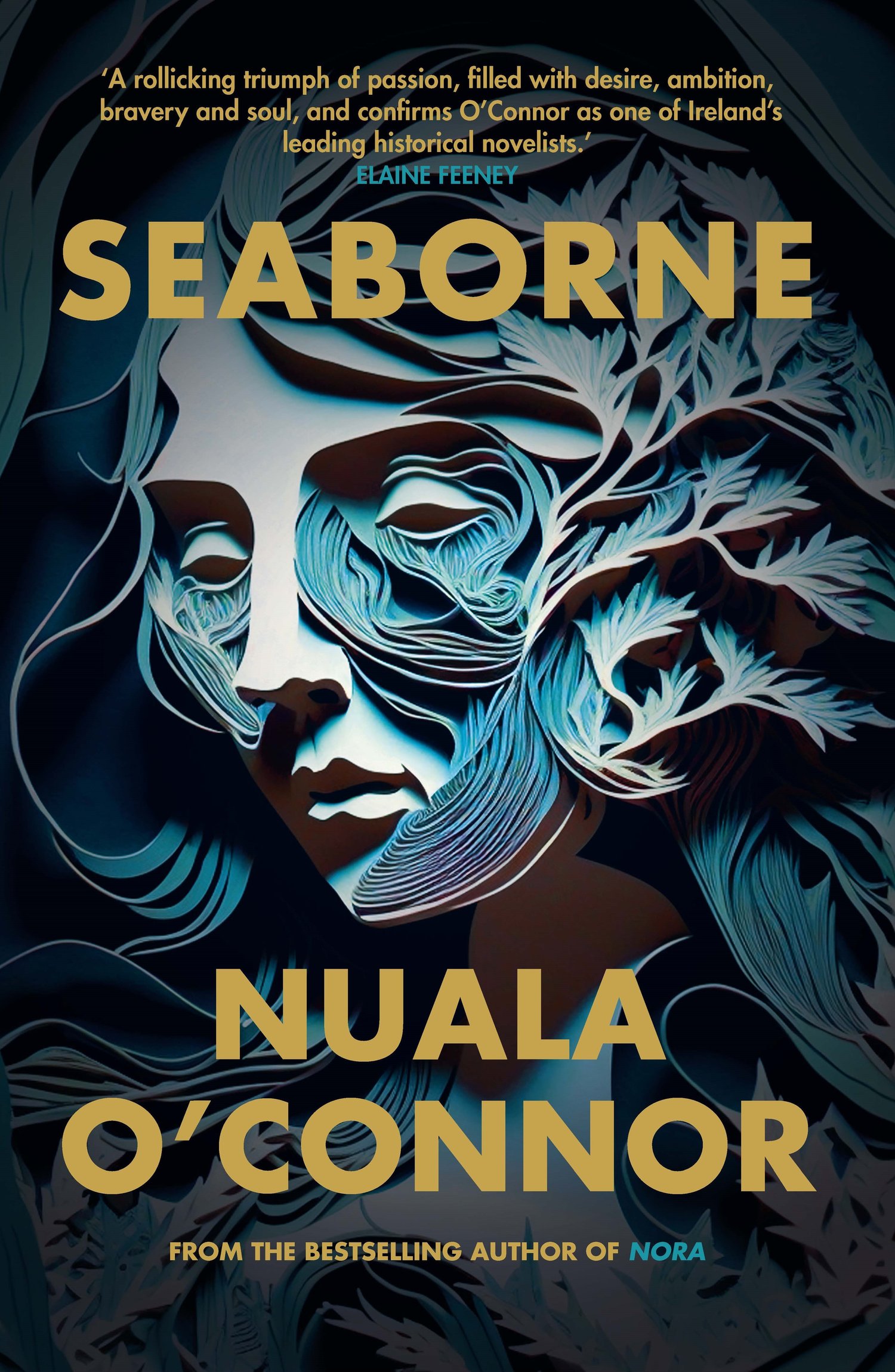
Seaborne by Nuala O’Connor

Formative Years Bring a Taste of Freedom

rebel pirate woman adventure Irish literature

Seaborne is an adventure story about a young girl born in Kinsale, Cork to a maid, who, in order to keep her with her, styles her as a boy growing up, so she can stay in her father’s house (a local lawyer) and be apprenticed to him.

Anne becomes Anthony in her childhood and loves nothing more than going out on the boat with her father, being at sea.

Eventually, in order that her parents can be together, the man abandons his wife and family, and travels with Anne and her mother to the Carolina’s where he will run a plantation.

Life As A Girl is Restricted

But Anne having had significant freedom as a boy is none too pleased by the restrictions and rules that presenting as a girl puts upon her.

‘Three times trouble, girl, with your red hair, and your forward manner, and your obsession with water and boats. For a lady, one is ill luck and the others are ill conduct. The three do not match well.’

And I give my ever honest reply. ‘They match the finest with me, Father.’

Finding a Way to Seascape

She finds solace and much more, with her friend and servant Bedelia and finds a way to have the occasional sea journey thanks to a young man they hear of, Gabriel Bonny, who for a few coins will take a person to sea. At first he declines to take her, she will visit a tailor and have a set of clothes made, more suitable for seafaring, eventually she wins him over, he can not refuse her.

I woke this day knowing only one thing: I wanted to hire a boat, row it out, and feel saltwind about my face and hair. I desired to have nothing but the sway of the sea under my body and I determined to make that happen.

Seeing him as a way to escape her destiny and to a life at or near the sea, she elopes with him, taking Bedelia with her.

Passion, Piracy and Plunder

Photo by brenoanp on Pexels.com

In the town where they settle Anne discovers that her husband isn’t so keen to let her pursue her dream to be at sea. She becomes restless and rebels against the wifely life and in her restless wanderings, she comes across someone who will.

Captain Calico Jack will allow her to follow him and his crew into dangerous territory and a life she had never imagined but finds passion and excitement in.

I crave a chance to wave my sword, to fire a shot. I want to know how it feels to own such power. And I think of the riches that await us, and the wandering sea-life Jack and I will have when we have plenty of money.

They will sail around the islands of the Caribbean, looking for opportunity, trying to avoid those in service to Governor Rogers, a man with a mission to suppress piracy and protect trade, who was hell bent on apprehending the infamous pirate and his men.

A Maverick Maiden

Set in the 1700’s, Anne Bonny is a real character, though much about her is legendary and not easily verifiable. Nuala O’Connor has familiarised herself with facts and read the fictions and re-imagined a version of a deeply unconventional life for Anny Bonny, told in a lilting, of its era prose.

It is narrated in a way that allows the reader to easily visualise the life and surroundings she inhabits and the high sea adventures she participates in, even if they are shortlived. It’s a fun, imaginative read, of a woman before her time, who gave herself freedoms and lived fearlessly, despite the era she lived in and the culture she came from.

Further Reading

Irish Daily Mail: I’m Always Willing to follow a historical female maverick to see where her story leads me

RTE Radio 1 Interview: 39th Cúirt International Festival of Literature

Author, Nuala O’Connor

Nuala O’Connor is a novelist, short story writer and poet, and lives in County Galway with her family.

She is the author of four previous novels, including Nora: A Love Story of Nora and James Joyce (2021), Becoming Belle (2018) and Miss Emily (2015), a reimagining of the life of Emily Dickinson, and six short story collections, her most recent being Joyride to Jupiter (2017) and Birdie (2020).

She has won many prizes for her short fiction including the Francis MacManus Award, the James Joyce Quarterly Fiction Contest and the UK’s Short Fiction Journal Prize and been nominated for numerous prizes including the Edge Hill Short Story Prize, the Kerry Group Irish Novel of the Year Award, the Irish Book Awards Novel of the Year and the International Dublin Literary Award. Nora was shortlisted for the 2021 An Post Irish Book Awards RTÉ Audience voice Award. She is editor-in-chief at flash e-zine Splonk.

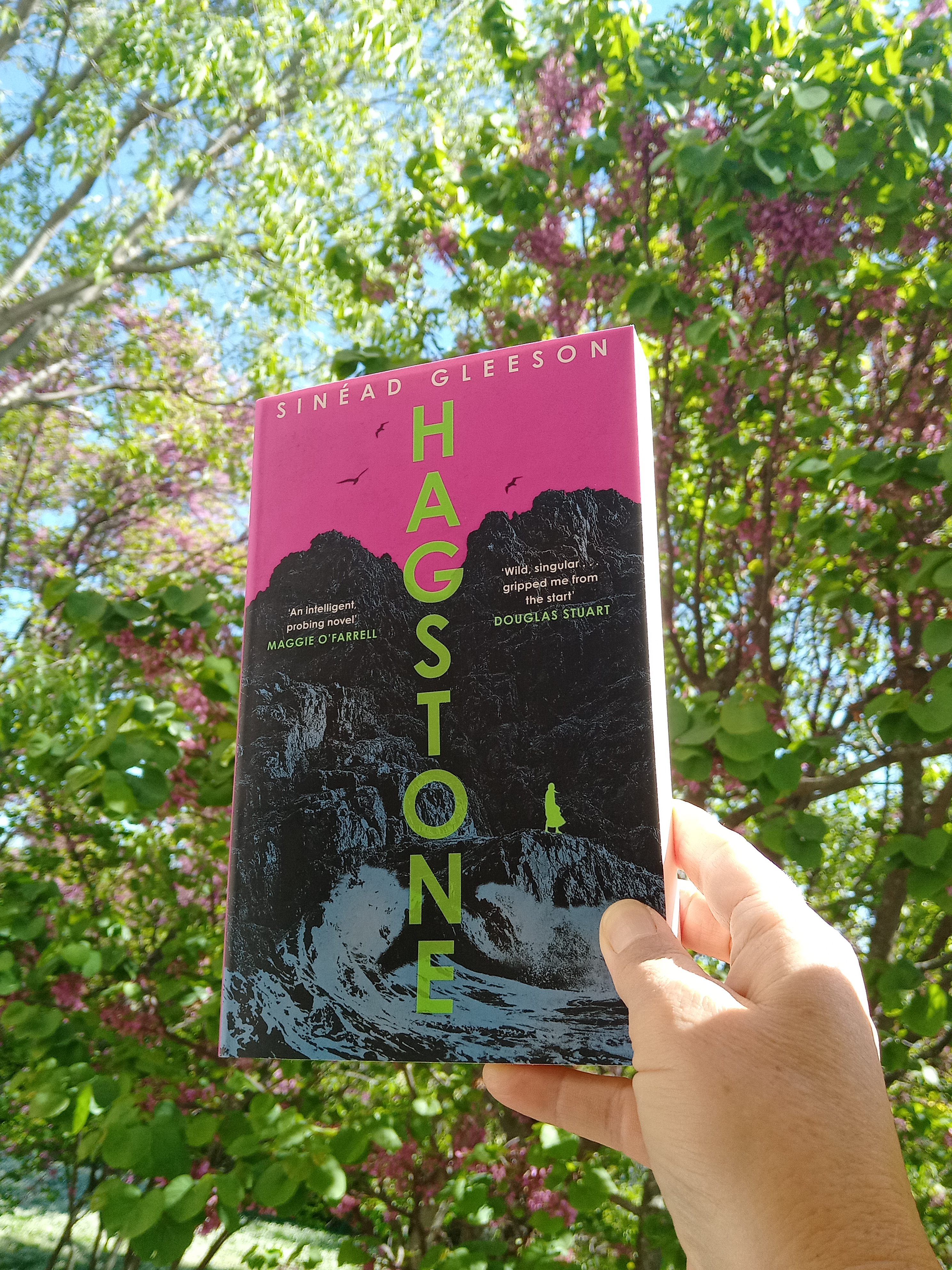
Hagstone by Sinead Gleeson

I was intrigued to read this debut novel Hagstone having enjoyed Sinéad Gleeson’s voice in her nonfiction narrative essay collection Constellations (reviewed here).

Island Culture and Art

On a wild and rugged island, artist Nell feels at home. It is the source of inspiration for her art, rooted in the landscape, local superstitions and the feminine.

The island has a way of tethering people to the soil, despite high watermarks of loss. Even when people leave, stories survive.

The mysterious Inions, a commune of women who have travelled there from all over the world, consider it a place of refuge and safety, of solace in nature. They have barely any contact with anyone outside of the convent where they reside.

wild woman Island literature Irish commune of women refuge in nature waves crash on rocks silhouette of a woman standing on a rock pink sky birds circling

Hagstone centres around the life of Nell, living alone in a cottage on the island (putting me in mind of Sophie White’s Where I End) where she tries to eek out a living doing tours of the island and changeovers in holiday rentals, to support her preferred activity, making ‘durational art’.

Up on a hill lies an old convent named Rathglas, inhabited by the group of women (not nuns, though they live in a very nun-like fashion) who have opted out of society, headed by a woman they refer to as Maman.

Given its gynocratic nature, Rathglas attracted activists and agitators, though you couldn’t help but wonder if some were drawn there by the sound.

A clever use of the French word for Mother and the title of French artist Louise Bourgeois’s most famous sculpture, an enormous bronze, stainless steel, and marble sculpture of a spider, found in several locations, representative of the protective and nurturing nature of her mother.

A Commission For Samhain, Rogue Elements

Louise Bourgeois art installation Maman, A Crouching Spider in an infinity pool reflected in the water Chateau La Coste Puy Sainte Reparade near Aix en Provence

One day Nell receives a letter, an invitation to create an artwork for the thirtieth anniversary since the Inions arrived, to coincide with the festival of Samhain.

Then there is Cleary, a man recently returned to the island, a subject of intrigue and attraction, the two of them seeking to fill some void, craving each other’s company while avoiding attachment.

And the rich actor, Nick, a man everyone recognises but no one knows. Nell takes him on a tour and his inquisitive questioning unsettles her.

Haunting Sounds That Not All Can Hear

Photo by Oliver S. Pexels.com

There is a strange sound that emits from the island, that only women can hear and not only hear, but it has a strange effect on them. Birds fall out of the sky.

It was impossible to exactly predict the arrival of the sound. The canonball rumble of it. It paid no heed to scientific forecasts.Storm warnings in traffic light colours. Some felt it in advance, like a tingle on the skin. Others said the air felt heavier. Last night it arrived along with a new moon. The result was something never seen before.

I never quite understood what this was, was it an element of magic realism or something else. It was one of the threads left to the reader’s imagination, a missed opportunity or perhaps I missed something?

It all leads up to the night of Samhain, after which nothing will be the same.

Hagstone started out really well and drew me in and had a strong first half, introducing the different characters, elements of intrigue and clever satirical humour, that wasn’t sustained in the latter half where it lost opportunities to delve deeper into the intentions behind some of its characters and tie up some unfinished threads.

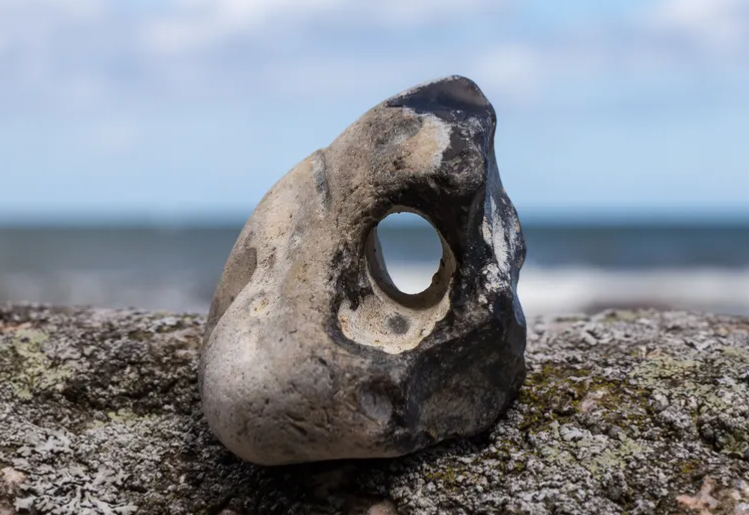
– A hagstone – I have a thing for them! Thank you.

– For years I just thought they were battered stones with holes in them, until Sile set me right. About the fact they’re lucky, and fishermen tie them to their boats to ward off evil.

– And that if you look through the hole, you’re meant to see a different view of the world. I think that’s why I collect them.Looking, seeing, an artist thing.

Further Reading

The Guardian: Hagstone by Sinéad Gleeson review – portrait of an artist by Jessie Greengrass

Author, Sinéad Gleeson

Sinéad Gleeson is an Irish author and artist.

Her essay collection, Constellations: Reflections from Life, won Non-Fiction Book of the Year at 2019 Irish Book Awards and the Dalkey Literary Award for Emerging Writer. It was shortlisted for the Rathbones Folio Prize and the James Tait Black Memorial Prize and the Michel Déon Prize.

Penelope Unbound by Mary Morrissy (2023)

I bought this in anticipation of learning more about the life of Norah Barnacle, the wife of James Joyce, having already enjoyed the experience that Nuala O’Connor created in her wonderful novel Nora: A Love Story of Nora and James Joyce. O’Connor succeeds in creating a well rounded character and depicts the precarious situation this young couple endure, trying to survive on meagre freelance writings living as expats in a tumultuous Europe.

I knew that this would be different, because Mary Morrissy takes a significant turning point in their relationship and changes everything that happens to them beyond that day. After they have left/eloped from Dublin, been to Paris and now arriving in Trieste, Italy to begin their lives anew. This reimagined period in their lives covers a mere ten years, from their arrival in Trieste on 20 October, 1904 to their return to Dublin on 15 June 1915.

A Sliding Doors Moment

Norah Barnacle James Joyce Irish literature

Norah has enough experience to know what she doesn’t want and had already given Jim (the way she refers to James) a few ultimatums, one of them is not to leave her stranded, having been stood up before. So how long will a young woman wait, suitcase in hand, in a foreign country before deciding that she has been left?

This is the point where the author diverges from historical fact and after more than 9 hours waiting at the station, allows Nora to depart with someone other than the man she refers to as her husband Jim.

She’d thought of telling him how she waited for Jim, ten whole hours outside the railway station in Trieste, like a fool, the darkness falling and she weak from hunger, and still no sign of him. And not a farthing on her. Abandoned.

The novel begins four years later, in June 1916, back in Dublin; a day when we learn she is the owner of a boarding house and she leaves to go and wait outside a concert hall. We learn that the day before a man has come calling for her. Before the details of what this is about or who it is that visited – was it Jim or was it a foreign man she is clearly no longer with? It takes 40 pages, with many, many flashbacks – for her to descend the stairs to learn who is/was waiting for her, a clue to why she was waiting outside the concert hall. Snippets of the present, long swathes of memory.

She was Mrs Norah Smith now – that’s how she’d signed the contracts of sale, with the H back in her name that Jim Joyce had made her drop. She was Norah, after Hanorah, her grand-aunt. And she wasn’t going to let anyone from her past put her down.

Train approaching station tracks red light
Photo by Jerry Wang on Pexels.com

The novel then goes back 10 years to the train station in Trieste and the intervening story unfolds. Despite having not waited for him, Jim is never far from her thoughts and much about her new life causes her to relive episodes of their short time together.

Penelope ‘Unbound‘ did create an expectation that she might therefore create a life where she acquired some independence, perhaps some may perceive that she did. She remains bound to a household, perhaps even more so, due to her inability to speak the language and never entirely accepted by its inhabitants, apart from the one who rescued her.

Empowerment or Good Fortune?

The fact that it takes that many pages for the reader to learn what happens to Norah is the reason I don’t go into detail here, because that is the mystery at the centre of the story and the only true departure from historical fact. That realisation is for the prospective reader to wonder about and to discover themselves.

Her predicament in being tied to one person and household, dependent on him for everything, will ultimately provide her her liberty, because he will have created an unsustainable predicament for himself. But did Norah take charge of her destiny, or was she left with no choice?

She doesn’t know why but she finds her temper flaring. These men and their principles. With the Other Fella, it was marriage and how he couldn’t put a ring on her finger because of Mother Church, for crying out loud. But it was less of the church and more of the mother, if you asked Norah. His own poor ma was afflicted by that wastrel she married, and Jim said he had the same streak in him, and he’d only do the same to her. And why couldn’t you just stop yourself, she asked him, but she got no reply.

A Season or a Lifetime

The Paris Wife Norah Barnacle James Joyce

For me, the most significant decision she would make, was at the moment the second man abandons her, leaving her with some means. What she decides to do from that moment forward, is the true moment of ‘Penelope Unbound’, however it marks the end of the novel, not the beginning of her story.

As too often happens (I remember a similar feeling reading Hadley Richardson’s story in The Paris Wife), when the significant other (the famous writer, the man) exits the narrative, the story ends. Is the story more interesting learning how she came to obtain her independence, or what she might do, once she gets it?

And after all those years apart, we will wonder, do soulmates always find each in the end, even when they can not be together?

Further Reading

Guardian Review: Penelope Unbound by Mary Morrissy, masterly alternative life of Norah Barnacle by John Banville

My review of Mother of Pearl by Mary Morrissy

Author, Mary Morrissy

Dublin born Mary Morrissy is the author of three novels, Mother of Pearl, The Pretender and The Rising of Bella Casey, and two collections of stories, Lazy Eye and Prosperity Drive. Her short fiction has been anthologized widely and two of her novels have been nominated for the Dublin Literary Award. Her debut, Mother of Pearl was shortlisted for the Whitbread Award and she is the recipient of a Hennessy Literary Award.

She is a journalist, a teacher of creative writing and a literary mentor. She blogs on art, fiction and history at marymorrissy.com

Girl in the Tunnel: My Story of Love and Loss as a Survivor of the Magdalene Laundries by Maureen Sullivan (2023)

This excellent memoir for me, was the anti-dote to the shortcomings I had with Claire Keegan’s Small Things Like These.

My Story of Love and Loss as a Survivor of the Magdalene Laundries

Keegan’s novel does everything except go inside the establishment to find out who is in there, why and how they are being treated. Instead it focuses on one man who is portrayed as kindly and empathetic. That man will make a righteous action, whereas the author commits the sin of omission, maintaining a societal silence that continues to bind, in neglecting to shift the narrative gaze towards anything related to those unjustly incarcerated inside. Like standing to one side at the scene of a car accident, choosing to gaze at the sheep in the fields opposite.

Girl in the Tunnel is a memoir of childhood. Of a girl from a large blended family, who is removed from abuse and sent to one of Ireland’s notorious Magdalene laundries. Maureen Sullivan’s second paragraph of her Author’s Note in the front of the book speaks volumes.

It might surprise you, or it might not, to know that there are people still pushing me to stay silent. There are people who want this book kept from your hands. People who say to me in the street, ‘Would you not get over it?’ People who tell me to shut up about it – they defend men and they defend the Catholic Church.
But this is my story to tell and this is how I remember it.

Maureen was not even a teenager when she was taken from her school, from her family, from her loving Granny, without being told where she was going, only that she was to attend a new school and would have to live there. None of her questions were ever answered. She would be deposited at the Magdalene laundry in New Ross, County Wexford run by the Order of the Good Shepherd nuns. Stripped of her possessions including the new pencil case her mother bought her as she was leaving, she was thrown into forced labour, washing clothes, pressing linens and scrubbing floors, forbidden an education or contact with any of the children who attended the school there.

I changed most of the names in this book – my abuser, relatives, locals and the nuns – because I’m not out to hurt or for revenge. I wrote this book because I was silenced as a child when I was the victim of abuse and I was silenced by society when I left the laundry. I want people to know what happened. This is my history, but it’s also the history of this country.

Someone recently said to me that a great opening line of a book can foreshadow the entire story. When I go back and read the first line of Maureen’s memoir, I find so many of the reasons for what happened to her, there in that line.

I never knew my father, John L. Sullivan, but there was a photograph of him on the wall in my grandmother’s house.

Maureen’s mother was married, nineteen and pregnant with Maureen when her father died suddenly leaving two young sons and an unborn daughter. They lived with her Granny, her father’s mother, the only person in her life who ever spoke of the father she never knew. But her Granny was poor and her mother quickly married and created a new family with another man, Marty Murphy, who from very early on took out all his frustrations on the dead man’s children.

My brother’s and I were terrified of Marty from day one. He didn’t restrain himself and lost his temper in a second, sometimes for nothing you could place, and he would go for you, even in his boots, and his kicks would hurt for days. He really hated us. Or he hated himself, maybe, for what he couldn’t stop doing to us, but either way living with Marty was like living with the devil himself. We suffered every single day.

Photo T. Miroshnichenko Pexels.com

Maureen describes their lives in incredible and evocative detail. Being so poor and having so little, when she describes the few tender and joyous moments, they stand out in the narrative, as they clearly did in her mind as that child.

The way it is written is absolutely captivating, not because of the misery or injustices, but because of the emotional intelligence exhibited. It is so honest and evocative of the way a child would experience things, except that Maureen has grown up and is able to express the questions and thoughts she had as a child. But she does so, with an understanding of where her country and society is today and how it was then. Nevertheless, there is no excuse for the cruelty and lack of basic human rights she experienced. There is a lot that remains hidden and denied to this day.

It’s hard to imagine the reasons for people behaving as they did, given how fast Ireland has progressed, and it’s hard to imagine how my mother thought things through. I know now she had no choices – women were the property of their husbands. Their bodies belonged to the men they married, their children did too.

When Maureen responds to the kind voice of her favourite teacher at school and opens up to her questions, she believes that she is going to rescued, perhaps even go to live with her Granny. This idea of being with her Granny was so powerful, she told her everything.

So I told on him. I told on Marty. I sat there in that room with a chocolate in my mouth and an open heart and talked about it.

When her mother arrives after being called in by the school and sees Maureen sitting in the hallway, she asks her why she is not in class. And worse.

As she went by me, she turned and said, ‘Oh Maureen, what have you done?’ She knocked on the office door and disappeared through it.
What had I done?

That same day she would be removed and taken to the laundry. She would also be told that she had a new name. They all did.

For years I couldn’t figure out why our names were changed in the Magdalene laundries. What reason had they? A number would have made more sense to me if they wanted us to be nothing and nobody. But a number is a way to trace us, and it would have been unique. It would have been remembered and displayed somewhere. By changing our names they made sure, not that we struggled on the inside, but that on the outside we had no way to identify or find each other. And how could we stand as a witness to what went on there if there was nothing to say we had been there at all? We didn’t exist.

Magdalene laundries rosary factory
Photo Trac Vu on Pexels.com

Maureen describes all the work they do in the laundry by day and then the work they must do at night, in the tin boxes. It is revelatory and will not leave any reader unaffected.

Merely describing the day to day activities and routine of their lives, and who they were not – (at the time she was in New Ross none of the women there were pregnant), is captivating. A 1911 census referred to them as “inmates”, at New Ross they were referred to as penitents.

It means a person who seeks forgiveness for their sins. There were no sinners in New Ross. Just victims, victims of the patriarchy, victims of misogyny.

The tunnel was the long corridor that separated the sleeping area and the children’s school from the laundry. Every so often she would be locked in there. When the men in suits arrived.

Photo by R. Asmussen Pexels.com

Those men in suits were likely state inspectors. They were sent around to all of the Magdalene laundries in Ireland to check on conditions.

People like Maureen were not supposed to be in the laundry being used as child labour, so they were hidden.

Maureen’s story is an important record of the historical treatment of girls and young women in Ireland, and a testament to the proliferation of abuses in households and the historic risk of speaking out.

Sharing their stories can change things. Last year, one of the best books I read was another memoir Poor: Grit, courage, and the life-changing value of self-belief by Katriona O’Sullivan. That book has had and continues to have a significant impact in changing societal attitudes.

Perhaps more tellingly, as Justice for Magdalenes Research’s book notes, there were never any Magdalene laundries for men. There were no corresponding church-run rehabs for the men who abandoned their families, nor for those who put girls and women in those situations that landed them in institutions. RENÉ OSTBERG, National Catholic Reporter

Highly Recommended.

Further Reading

Book: Ireland and the Magdalene Laundries: A Campaign for Justice – the long battle for justice

Essays: A Dublin Magdalene Laundry: Donnybrook and Church-State Power in Ireland

Article: National Catholic Reporter: Book details long battle to get justice for Ireland’s Magdalene survivors by René Ostberg, April 30, 2022

Resources: Justice for Magdalene Research : A Resource for People Affected by and Interested in Ireland’s Magdalene Institutions

Resource: One In Four, Ending the Trauma of Childhood Sexual Abuse – Programs for Adult survivors

In Ordinary Time, Fragments of a Family History by Carmel McMahon #ReadingIrelandMonth24

In Ordinary Time is one of those wonderful finds, when a number of your own disparate interests collide and someone has managed to put together a work that spans years, across two countries, reflecting on different events in their own life and the background of a country and culture’s history, with these continuous threads running through it, that make it almost seamless.

In a hybrid memoir, Carmel McMahon has written fragments of a family history, structuring them into four parts of three chapters, beginning with Part One: Imbolc: February, The Feast of Saint Brigid and ending in Part Four Samhain: January, Notes on A Return where the story comes full circle.

There are 21 black and white illustrations scattered throughout the text, ordinary photos that amplify the message and create a sense of travel through time. I looked back at the index page for each photo and scribbled my penciled note underneath it, such was the joy of words meeting image.

Full circle feels appropriate to describe a work that despite that linear structure of months and parts, is not that. Rather, it represents points on the spiral of life that goes through cycles; repeating cycles, short cycles, long cycles, interconnected and intergenerational cycles.

Each of the events that she describes in her family history have a shadow history in the culture and while she reflects on her own situation, she finds resonance in the voices of others who have gone before, in particular those whose story we might not have heard, or if we have, might not have been aware of the full picture.

Her story begins somewhere in the middle of her own self-imposed exile, living in New York City. It voyages through her experience with addiction, denial and recovery and ends with the heroine’s return, the learning and this book.

The city had not yet woken on the frigid Sunday morning of February 20, 2011, when the body of a young Irish woman was found outside St. Brigid’s Church in Manhattan’s East Village. The news reports cited alcoholism, homelessness, and hypothermia as contributing factors in her death. They said that earlier that month, on St. Brigid’s feast day she had turned thirty-five years old. They said she wanted to be an artist. They said her name was Grace Farrell.

Photo by C1 Superstar on Pexels.com

She questions whether it begins here, or in 1937 when the new Irish state ratified its constitution to reflect a strengthened church-state partnership, that would have a devastating effect on thousands of lives of girls and women and their children, and the unborn future generations who might inherit that affected DNA. All those sent to the Magdalene laundries.

In 1966, her mother would live a version of the shame that surrounded pregnancy out of wedlock, managing to avoid institutional incarceration by disappearing for a while.

Women and children were not afforded the rights of citizenship, of subjecthood, of being. They lived under threat of being erased, hidden, buried. This is why my mother tells me – halting, hesitating – that in her day it was the worst thing in the world for a girl to find herself pregnant, but worse still was for her to talk about it.

That first sister Michelle, born in London, would be knocked down outside her primary school, three months before Carmel was born. Six more children arrived after her and Michelle’s name was never spoken in their house. The legacy of silence she had been born into continued, was passed on, but not forgotten.

Or did the story begin when she had her first drink at the age of ten, at a family gathering? Feelings of inferiority and shame, dulled by the dregs of the adults drinks that replaced that unwanted feeling with one of warmth, of a circle of golden light.

McMahon left Ireland in the 1990’s and did not return permanently until the pandemic era, 2021. Ironically, it seems to this reader, the return has allowed the distance to reflect on the journey and the learning and to piece the interconnectivity of so many people’s lives past, present and future into this text.

Science has proven and is now able to show how stress and trauma can be passed on biologically from one generation to the next, we read.

We know that now. Vehicles of transportation include, according to the scholar of memory studies Marianne Hirsch, “narratives, actions and symptoms.” The stories we tell and don’t tell, the actions we take and don’t take, the symptoms expressed by a mother holding the trauma tightly to herself, because she refused to burden her children with it.

Listening to the podcast On Being, she hears Dr. Rachel Yehuda reminds listeners that:

…we are not in biological prison: experiences and events in our environment can also make positive changes to our programming. We can consciously move towards healing.

These intertwined fragments thus reveal the events, experiences and the slow realisation of all that is working on her, the understanding and the aspects that will aid the healing.

Photo by Jessie Crettenden on Pexels.com

There are the endless jobs she tries to hold down, while numbing herself nightly; the visits back home precipitated by tragedy, the road trip across America, an escape that brings her closer to understanding loss and aloneness.

The industrial ghost towns, the late spring rain, the wide, low skies. The old sadness rising. An excess of black bile, they used to say, made the melancholic personality. Freud said that mourning and melancholia are akin in that they are both responses to loss. Mourning is a conscious and healthy response to the loss of a love object. Melancholia is more complicated. It operates on a subconscious level. All the feelings of loss are present, but for what? The melancholic cannot say. This, Freud says, is a pathology.

McMahon reads and shares anecdotes and reflections on the lives of other women who immigrated before her; the young Irish immigrant Maeve Brennan who was a staff writer at the New Yorker before the disease of alcoholism colonized her life; Mary Smith, one of many Irish women used for gynecological experiments in New York hospitals in the mid nineteenth century; Grace Farrell.

After a family tragedy, she reads Anne Carson’s Nox, a book of poems created from the notebook she recorded memories and impressions of her brother, in the decade after he died.

She did this, she tells us, because a brother does not end. He goes on.

She reflects on the Famine, on the role of church and state, on the complicit silences and forgetting, on the advances that were made at the expense of the vulnerable, the now removed statues, the little known memorials of the unnamed. She acknowledges the collective impact of a nation’s traumas on individuals and families with brief insights (her own and Carl Jung’s) into a way forward, towards speaking up, sharing stories, creating meaning, allowing space for healing, for moving towards the light, to enable the passing on of a lighter legacy to future generations.

Sharing her story is part of that, not just for the writer herself, but for those who might find resonance in her journey, towards their own. And to remember the forgotten, the ordinary women like Mary Smith.

I could not put this book down, despite wishing to make it last. Though it is a collection of essays, some of which have been previously published, the threads that run through it make it read like a memoir, perfectly balancing the personal stories with the background history, questioning the effect of both on a young woman’s psyche.

Highly Recommended.

Further Reading

Guardian Review: In Ordinary Times: the trials of inherited trauma, Carmel Mc Mahon uses her own story of emigration, uncertainty and alcoholism as one thread in a wider historical tapestry

RTE Radio1 Interview: Carmel McMahon on The Ryan Tubridy Show – (18 mins) – on New York, family tragedy, drinking and the legacy of ‘pidgin emotion’

Guardian Books: Anne Enright: In search of the real Maeve Brennan

JSTOR: Owens, Deidre Cooper, Irish Immigrant Women and American Gynecology: In Medical Bondage: Race, Gender, and the Origins of American Gynecology, 89–107. University of Georgia Press, 2017. 

Carmel Mc Mahon, Author

Carmel Mc Mahon grew up in County Meath, and lived in New York City from 1993 – 2021, when she returned with her partner to renovate a house on Ireland’s west coast.

A graduate of CUNY, her writing has been published in the Irish Times, Humanities Review, Roanoke Review, Longreads and shortlisted for the Hennessy Literary Award.

Where I End by Sophie White

March is Reading Ireland month and I have been in an early spring mode since mid Feb, attending to other activities, nature excursions, writing and editing projects, reading and listening to texts while reflecting elsewhere. There is a new energy present that demands it of me and I follow it contentedly.

I did write some notes on one Irish book I have read this month. I love to participate in Cathy’s March reading month, so here it is. I will continue (intend) to read Irish literature this year, although I am making writing and editing more of a priority, so there may be fewer reviews here.

Review

This was an unusual read for me, not the kind of novel I usually choose, one I selected because I admire the Irish publisher Tramp Press, who publish Doireann Ní Griofa and Sara Baume.

Where I End might be horror, but I’m not even sure since I’ve never read that genre before. It was described by the Irish Independent as

‘a truly different Irish novel. One that entwines Irish myth, the reality of human bodies, life and death, and traditional gothic horror in a macabrely beautiful and, in the end, redemptive dance.’

The novel won the Shirley Jackson Award (2023), an award that recognises ‘outstanding achievement in the literature of psychological suspense, horror, and the dark fantastic’, voted on by writers, critics, editors, and academics.

It depicts a short period in the life of a teenage daughter caring for a mute, incapacitated mother, who appears to have been that way since she was a baby. Her paternal grandmother, who also lives with them is about to start a job that will absent her from the house, allowing Aoileann a freedom and recklessness she has not until now experienced.

It reminded me of the experience of reading another Irish author, Jan Carson’s The Firecatchers because it depicts a character who has no faculty for empathy. But the feeling that it evoked was different, White’s character Aoileann compels the reader to want to stay with her and find out if there will be a transformation, a redemption, despite all the signs of foreboding.

The decision to end this thing comes on slowly, like light filling a room after a fathomless night. It began like this:

The opening line of the first chapter. We observe her as carer of ‘the thing’ which I ask myself, is that her mother? And when she occasionally uses that word, I realise, yes it is.

There is a question I have never asked. On the nights that we find her far from her bed, her ragged hands reaching towards nothing, the idea prods me. Is the bedthing trying to get away? Are we doing this to her?

This the mystery is seeded. Why does this young woman who daily cares for her immobile mother refer to her in such a way? What happened that this situation should have come about and why doesn’t anyone know what goes on here? Why do people look at her strangely and spit as she passes by?

In the opening pages before chapter one, she describes the three things that describe her limited world. My mother. My home. My house. A woman trapped inside a body, a small insular community living on an island, three women living in a house no one visits, except the man.

The islanders all share a similar look, the result of genetic material passed back and forth for so many generations – it has distilled into a distinct, unpleasant appearance. Móraí has it too. Me, less so as my mother is from the outside; Dad is the same as me – a little watered down because his father was also a mainlander.

It is a disturbing read that the arrival of a visitor, an artist with a young baby at first seems like an opportunity for growth and healing, but increasingly becomes another avenue of dysfunction, a creeping fear of what is in danger of happening.

It speaks to both the fear and allure of the outsider, of the extremes of dysfunction that a lack of maternal nurturing and love can bring and the desire to overcome and escape all of that.

The writing and descriptions were brilliant, moving between enticing literary prowess and elements of the macabre. Somehow this is balanced out in a way that made me both wary of what was coming but unable to stop turning the pages.

Very well portrayed, a haunting, compelling read.

Further Reading

Irish Times Interview, Sophie White, Where I End – a horror about a young woman’s attempts to find motherly love, and to get to the bottom of family secrets that made her who she is. Niamh Donnelly

Sophie White, Author

SOPHIE WHITE is a writer and podcaster from Dublin. Her first four books, Recipes for a Nervous Breakdown (Gill, 2016), Filter This (Hachette, 2019), Unfiltered (Hachette, 2020) and The Snag List (Hachette, 2022), have been bestsellers and award nominees. Her fifth book, the bestselling memoir Corpsing: My Body and Other Horror Shows (Tramp Press, 2021), was shortlisted for an Irish Book Award and the Michel Déon Prize for non-fiction.

Sophie writes a weekly column ‘Nobody Tells You’ for the Sunday Independent LIFE magazine and she has been nominated for Journalist of the Year at the Irish Magazine Awards, Columnist of the Year at the Irish Newspaper Awards and for a Special Recognition Award at the Headline Mental Health Media Awards.

TV adaptations of her first two novels are in development and she is co-host of the comedy podcasts Mother of Pod and The Creep Dive. In addition to writing literary horror, Sophie has written commercial fiction titles for Hachette, such as the recent My Hot Friend.