Moloka’i by Alan Brennert

molokaiBorn in Honolulu, Rachel’s Kalama’s memory of childhood with her mother, sister and two brothers is limited to her first six years, a time when life was full of simple joys and memorable returns, the homecomings of her father Henry, who was away at sea for months on end, his return always marked for Rachel by an anticipated gift, a doll he never failed to present to her, from one of the places he had recently visited.

The last doll she received from him was a nesting doll from Russia that he’d bought in Japan, the matryoshka.

Things started to change when her Uncle Pono fell sick and not only were they not allowed to see him, they weren’t to speak of him to anyone.

After a fight with her sister Sarah, which resulted in scratches on her legs, her mother notices a patch of pink skin with a nasty gash in the middle, one that doesn’t cause Rachel to flinch, something that worries her mother and causes her to become paranoid with fear, fear of leprosy, a disease that carries not only a terrible social stigma, but a life sentence if discovered by the authorities, and they will hunt you down at the first hint of suspicion.

It is the beginning of the end of childhood as Rachel has known it when the Health Inspector calls.

Brennert’s novel, largely based on historical fact, follows Rachel through the quarantine process of those suspected of carrying leprosy (Hansen’s disease) and on to life in Kalaupapa on the island of Moloka’i, allowing a glimpse into the community of sufferers and carers, of the pain of isolation and the irony of the freedom of this close-knit, albeit closed community.

“Love, marriage, divorce, infidelity… life was the same here as anywhere else, wasn’t? She realized now wrong she’d been; the pali wasn’t a headstone and Kalaupapa wasn’t a grave. It was a community like any other, bound by ties deeper than most, and people here went to their deaths as people did anywhere: with great reluctance, dragging the messy jumble of their lives behind them.”

It follows the life of a girl raised by Franciscan nuns, befriended by lepers, loved by her Uncle and an adopted Aunty, coming of age, finding one true love, deprived of maternal love and healing both physical and emotional wounds.

Brennert said of his novel:

“I wanted to tell the story of ordinary people who had to make such heartbreaking sacrifices…”

And one his main characters, Sister Catherine:

“I’ve come to believe that how we choose to live with pain, or injustice, or death is the true measure of the Divine within us…I use to wonder, why did God give children leprosy? Now I believe God doesn’t give anyone leprosy. He gives us, if we choose to use it, the spirit to live with leprosy, and with the imminence of death.”

Not just a tale of their suffering and coming to terms with life and death, it is a clash of cultures as a local population is forced to accept the beliefs and rituals of outsiders, a colonial and christian inheritance, where to stay true to one’s own traditions was seen as an act of rebellion or work of the devil even.

Recommended if you enjoy historical fiction based on real events and enjoy literature set in the islands of the Pacific.

End of an Island Era

A mere 16 leprosy patients remain today in this isolated community of Kalaupapa, a place through whom thousands of sufferers have passed since the 19th century. At present, the youngest member of the colony is 73-years-old. Although mandatory exile was lifted by the state in 1969, a number of patients voluntarily decided to stay. They were offered lifetime housing, amenities and healthcare and did not wish to open their community and environment to uninvited visitors. This may change however, when the colony’s last patient dies.

In an interesting article written by Philip Ross in the International Business Times on 5 May, 2015, he mentions:

Kalaupapa’s history is a tragic tale. In 1866, the Hawaiian government banished anyone diagnosed with leprosy, a chronic bacterial infection also known as Hansen’s disease, to Kalaupapa. More than 8,000 lepers were forced to relocate to the island at a time when there was no cure for the infection.

Men, women and children who had the disease were stigmatized and shunned as outcasts out of fear that their condition was highly contagious. The disease, however, cannot easily be passed from one person to another. Leprosy is caused by a bacterium called Mycobacterium leprae that grows slowly and affects the skin and nerves. Symptoms of leprosy include skin sores, and lumps and bumps that disfigure the body and can last for several weeks or months.

Read the entire article and see some incredible pictures here:

Further Reading:

Philip Ross, International Business Times Article: Kalaupapa, Hawaii Leper Colony: A Look Inside The Remote Island Home For The State’s Few Surviving Leprosy Patients


Kalaupapa leper colony, Moloka'i, circa 1870: Creative Commons

Kalaupapa leper colony, Moloka’i, circa 1870:
Creative Commons


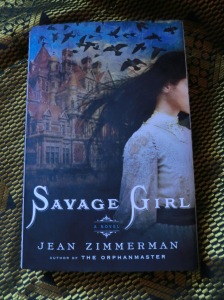
Savage Girl by Jean Zimmerman

Nevada Mine

Drilling in a Nevada Silver Mine

Set in 1875, Savage Girl begins when the wealthy socialite Delegate family are on a tour of the American West, having travelled to Nevada by private train to visit family mining concerns.

The son, Hugo, a 22-year-old anatomy student at Harvard, who keeps taking time out from his studies due to undiagnosed mental health issues, visits a back alley sideshow attraction with his mother entitled ‘Savage Girl’, allegedly a wild, mute 18-year-old girl raised by wolves. It is a popular attraction, attracting many of the mining community and the Delegate family are interested in her, for much more than entertainment purposes.

They have something of an obsession with the feral child phenomena and the nature versus nurture debate and enter into negotiations with the keeper of the girl in their hope of bringing her to into their family, to civilise her and prove a philosophical point.

The Coming Out Season

The Coming Out Season

They succeed in bringing her back to New York, dressing her and teaching her all that is necessary to make her debut into high society. While the parents are pleased with her progress, their son Hugo isn’t so certain.

Torn between what might be a growing love for his savage sister and a wary suspicion of her, he isn’t sure whether to admire her achievements or to be afraid of her influence, as there is a trail of violent murder that follows in her wake. Only Hugo seems to be aware that these unexplained deaths all have one thing in common, they are men that had recently had contact with their protégé.

Savage Girl (2)Hugo knows she has a night life that his parents aren’t aware of and begins to follow her to try to discover where she goes and what she does. He is equally  afraid, given his own history of instability and wonders if it may be himself who is responsible and though he cannot prove it, it is to hear his confession and description of what he found at the scene of the murder of one of his friends, that opens the first pages of the novel. It is Hugo who narrates this story of how the savage girl came into their lives and all the events that followed.
The novel follows ‘Savage Girl’s’ progress, Hugo’s paranoia and reasoning within the context of Manhattan’s Gilded Age (late 1800’s) where only those who know the rules, befriend the right people and come from socially acceptable families will make it.

It is an intriguing story, wrapped around a puzzling, violent mystery containing a dark, barely legible heartbeat of early feminist activism and that nature versus nurture debate. As historical fiction goes, it has all the elements, pure, entertaining escapism.


Note: This book was an ARC (Advance Reader Copy) kindly provided by the publisher.

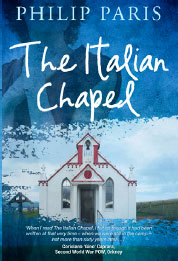
The Italian Chapel by Philip Paris

They were brought to the island as ‘the enemy’ and by the time they left they would have developed relationships and connections that continue to endure today between the inhabitants of the Orkney Islands and Moena, the Italian mountain village where the artist and decorator Domenico Chiocchetti originally came from and where he returned after the war.

the_italian_chapelPhilip Paris has written both a non-fiction account of the short history of the Italian Chapel on Lamb Holm and this book, the novel I have just read and adored. The fictional form allows the author to imagine some of the relationships for which there is little detail and create others that may have been.

It is a war-time story without guns, battles and tragedy, it could even be said it depicts what war purports to be all about, a strategy to create peace and establish tolerance and what better conduit to promote acceptance than to build a chapel, whose sole purpose is for prayer and reflection, a sanctuary from the day-to-day reality.

550 Italian soldiers are captured during WW2 in Egypt and sent to Camp 60 on Lamb Holm, Orkney Islands where they live in ramshackle Nissen huts and are used as free labour to build barriers between the islands to prevent entry to the mainland from invading forces.

“The nearest land is mainland Orkney, which is also an island. You will know from your journey that we are a long way from Italy. You’re all here to do a job, to help build a unique set of barriers between mainland Orkney to the north and between the islands to the south of Glimps Holm, Burray and South Ronaldsay. Four barriers in all.”

In the opening pages, bulldozers arrive with instructions to raze camp 60 to the ground, leaving no trace of the former POW camp. The Italian Chapel sits there beside the Nissen huts awaiting its fate. We then learn the story of how it came to be there.

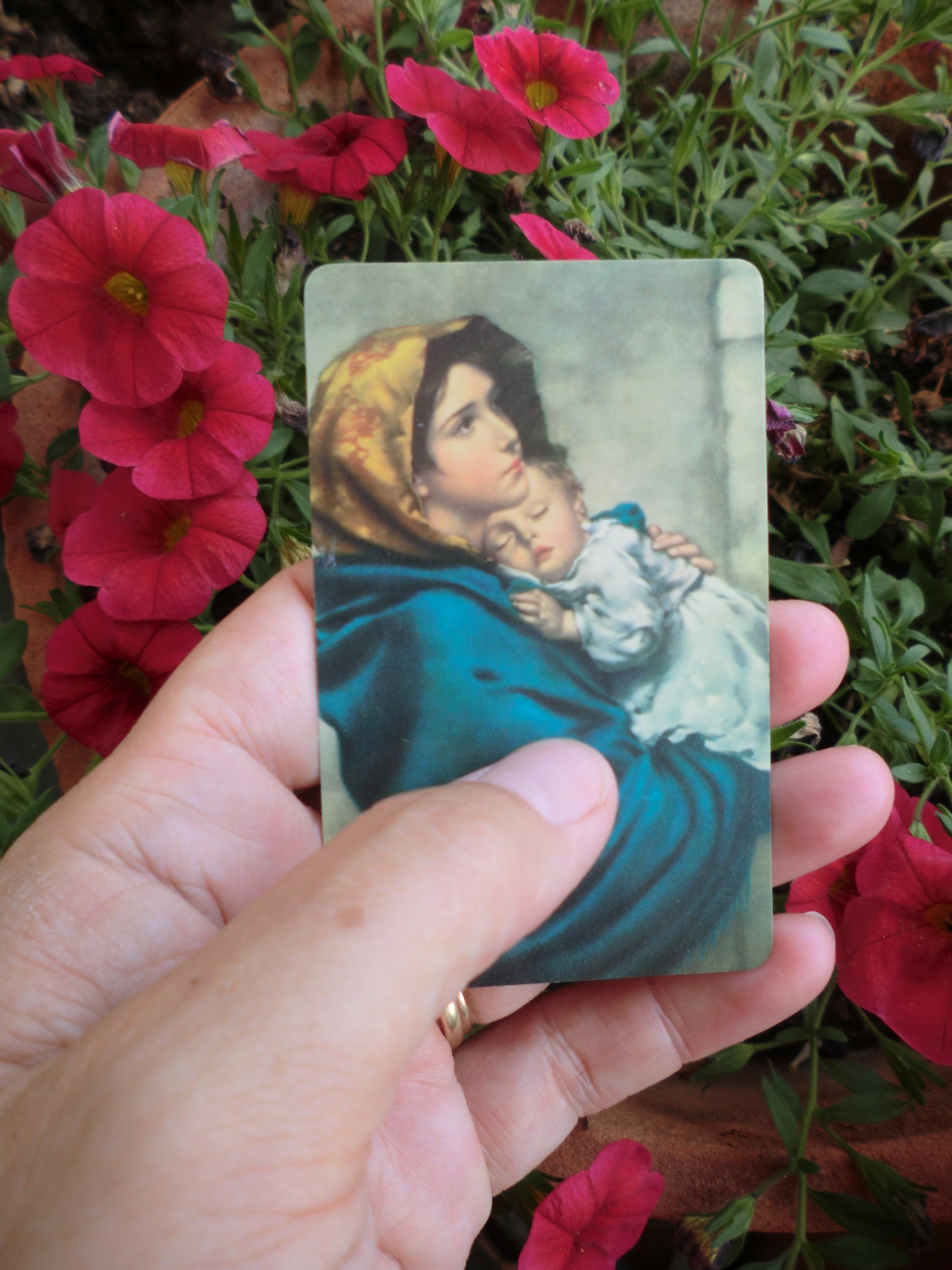
Image of the Madonna

Image of the Madonna

The novel introduces us to key characters in the camp, the artist Domenico Chiocchetti from the northern Italian village of Moena who keeps a small prayer card his mother gave him, with the image of the Madonna’s face in his pocket throughout the war, retrieving it at moments when he needed to escape the present, or remember the past and whose image will become a symbol of the thing he leaves behind, the only physical reminder that there was a POW camp on the Scottish island during the war.

We meet Aldo, who doesn’t talk about his family, but can source anything the men require, Buttapasta, a cement and stone artist, Giuseppe the romantic who had been a foundry worker in the US, they will all become instrumental in the project that occupies the men when the causeway barriers are complete and their status changes after Mussolini is sacked and the Italians are no longer the enemy. The men decide to create a chapel out of two unused Nissen huts and scraps from shipwrecks and whatever their captors can source.

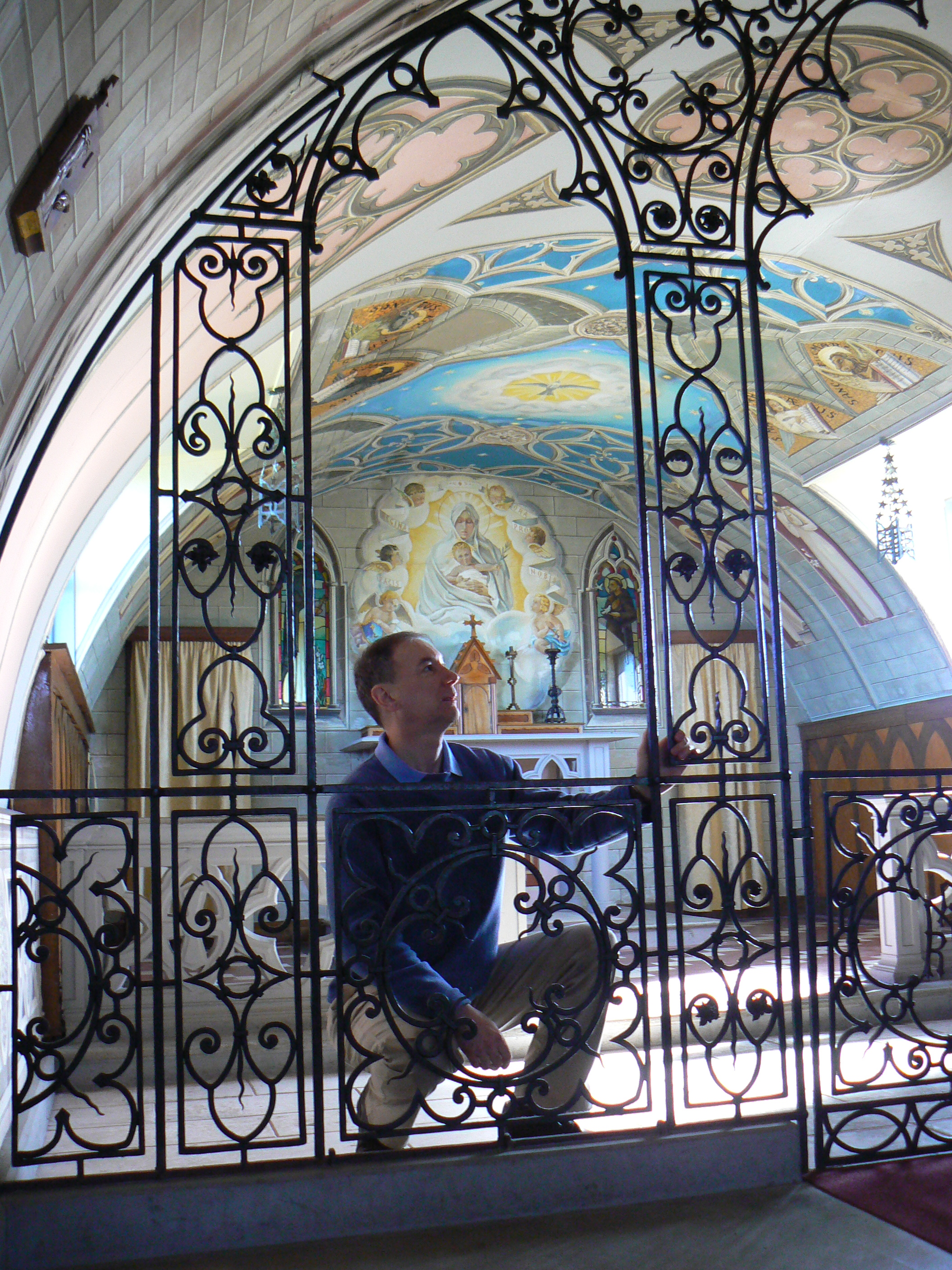
The prayer card becomes the inspiration for Chiocchetti’s portrait of the Madonna and child, painted on plasterboard behind the altar.  An altar is made from concrete left over from building the Barriers, tiles are rescued from a sunken blockship ( a ship deliberately sunk to prevent access to a channel) and wood salvaged from a shipwreck is transformed into a tabernacle. Carved lanterns are created from Bully Beef tins and candlesticks made from the brass stair rods, all contributing to create a beautiful and peaceful interior.

Philip Paris author observing the Rood Screen built by Italian POW soliders

Philip Paris author observing the Rood Screen built by Italian POW soliders

It is a story of optimism, incredible resourcefulness and the things men do to keep their spirits up when the circumstances are against them. It is an easy, light read and moving without being overly sentimental and knowing this wonderful refuge actually exists made it all the more meaningful and special for me as a reader.

Philip Paris has researched this period in history and tried to track down those who were on the island or their relatives and creates a memorable and heartfelt story of tough times that are lightened by a mutual desire to build not just a chapel, but a refuge of incredible beauty that can still be visited today.

“It was the prisoner’s escape, a tunnel to spiritual and cultural freedom, while their bodies remained in captivity.”

The Invention of Wings by Sue Monk Kidd

Although Sue Monk Kidd will be a name familiar to many, it was only a few years ago that her book The Secret Life of Bees was recommended to me by a dear and special friend who always went out of his way to visit and spend a few days with us when making his 10 yearly pilgrimage to Rome. We always had wonderful discussions about books, about life, the situation in Palestine, our mutual family connections and much more. So when I saw that the author had published another novel, I wanted to read it, to remember that stories continue to be told and memories passed on, even when those who told them and recommended them are no longer with us. He would have loved this story I am sure.

Invention of WingsThe Invention of Wings is a work of historical fiction, inspired when the author came across their names at an exhibit at the Brooklyn Museum. The discovery of two sisters Sarah and Angelina Grimké, abolitionists whose story was little known outside academic circles was all the more poignant for Sue Monk Kidd, when she learned they came from Charleston, South Carolina, the town she was living in at the time.

The story is a work of fiction, but the work of Sarah Grimké and her sister was real and her writing and achievements are receiving the recognition they deserve, representing as they did, an era when even a life of privilege did not give women the right to express a public opinion and especially one that challenged the status of individuals in a society.

In her novel, Sue Monk Kidd tells a story of two girls growing up in an urban slave-holding family in Charleston, South Carolina. Sarah is the daughter of a wealthy, aristocratic family and Hetty, or Handful as she is referred to, is gifted to her on her 11th birthday, an event that Sarah actively attempts to reject and does so in writing. She is refused her request, just as she is also denied and mocked for her desire to pursue a professional career, her punishment to be banned from her father’s library and from reading books.

For many years she accepts her fate, although as retribution and in response to a promise made to Charlotte (Handful’s mother), she teaches Handful to read, not only a forbidden act, but against the law. Certain events eventually shake off her complacency and after one particular episode, despite the risk of rejection and ostracism by her family and community she becomes wedded to her new vocation and dares not only to voice her outrage but with the support of her sister begins to take a more active and dangerous role in standing against slavery and advocating equal rights for women.

WingsThe slave Hetty also possesses a rebellious streak, more dangerous in someone of her stature, where any small infraction can result in violent and damaging consequences, as she will discover. Denied an education, she and her mother Charlotte become talented seamstresses, Charlotte narrating her life story through the quilted squares she creates in her own time, each one representing a significant event in her life, images that speak the words she could not read or write, a reminder of who they are, where they have been, stories continually passed from mother to daughter. It was a way to subvert the system and to preserve her story.

In a sense both Sarah and Hetty are enslaved and Hetty articulates it in a scene that haunts Sarah long after.

“I’m twenty-seven-years old, Handful, and this is my life now.” She looked around the room, up at the chandelier, and back at me. “This is my life. Right here for the rest of my days.” Her voice broke as she covered her mouth with her hand.

She was trapped same as me, but she was trapped by her mind, by the minds of people around her, not by the law. At the African church, Mr Vesey used to say, Be careful, you can get enslaved twice, once in your body and once in your mind.

I tried to tell her that. I said, “My body might be a slave, but not my mind. For you, it’s the other way round.”

Wings are a metaphor for freedom from oppression but they also represent the ability to soar, not only to be able to choose what we want to do and how to live a life, but to do it to the best of one’s ability, to step beyond the expectations of family, community, society.

Sarah Grimké (1792-1873)

Sarah Grimké (1792-1873)

I thought this book was excellent and I like it all the more for having understood subsequently how it came about. The female characters are particularly vivid, especially Handful and her mother Charlotte and though Sarah took time to come to terms with her own vocation and to shed the trappings of her upbringing, she is an incredibly courageous character given society had rather dismissed her given her disappointment in not being able to pursue a career or attracting the right kind of husband.

When asked about writing from the perspective of an enslaved character, Sue Monk Kidd mentioned that while writing this book she read an interview with Alice Walker in which she says “She was all over my heart, so why shouldn’t she be in literature”, exactly how she felt about Handful.

I also wondered about the author’s reasons for embracing such a story, her own connections to America’s history in the South and in the links below is a Reader’s Guide in which she speaks of her own upbringing in the South in the fifties and sixties, where she was witness to many terrible racial injustices and divides, which has had the effect of drawing her towards writing about them.

“I’ve been drawn to write about racial themes because they are part of me, and also because they matter deeply to me. I can’t help but feel a social responsibility about it as a writer. Racism is the great wound and sin of the South and indeed, the great wound and original sin of America. Two hundred and forty-six years of slavery was an American holocaust, and its legacy is racism. I don’t think we’ve fully healed the wound or eradicated the sin. For all the great strides we’ve made, that legacy still lingers.” Sue Monk Kidd

Additional Links

A Readers Guide – Q & A with Sue Monk Kidd

Interview with Oprah – Sue Monk Kidd chats with Oprah and takes Reader’s Questions

Note: This book was provided by the publisher Viking, an imprint of the Penguin Group.