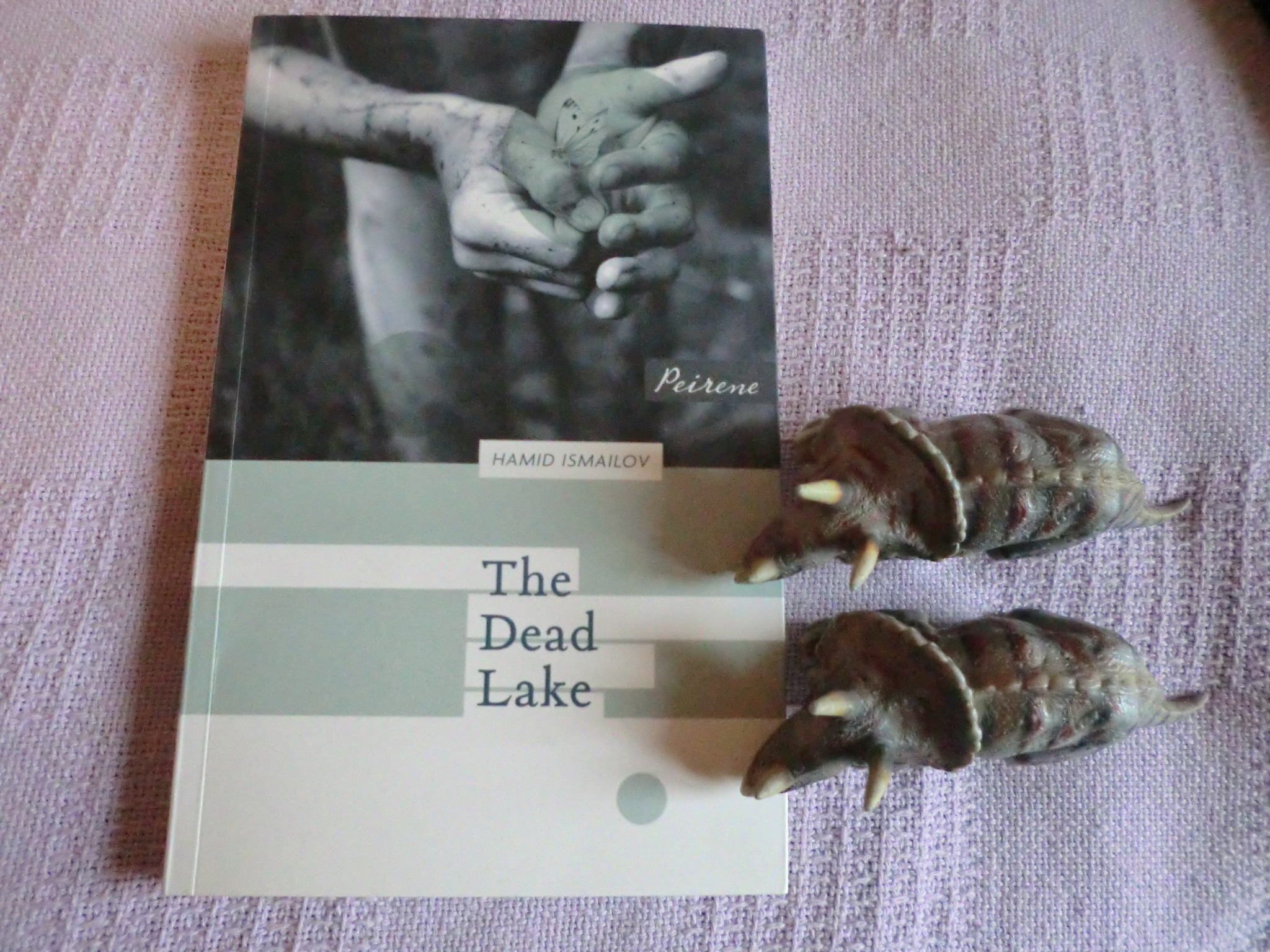
The Dead Lake by Hamid Ismailov, tr. Andrew Bromfield

Dead Lake 2An astonishing tale tinged with sadness, as recounted by the protagonist Yerzhan to a stranger on a train journey across the steppes of Soviet Kazakhstan, that in part continues to be imagined by the listener as from time to time, the young narrator sleeps.

The story begins when the boy enters the carriage playing Brahms on his violin in a manner that causes everyone to stop and look at him, not believing it possible that a boy who looks about ten to twelve-years-old could play to such perfection and with such awe-inspiring panache.

“Then, just as he had the entire carriage gaping after him open-mouthed, he broke off in mid-note. He slung the violin back over his shoulder like a rifle.

‘Wholesome local beverage – entirely organic!’ he exclaimed in a thick, adult voice. He swung a canvas sack down off his other shoulder and pulled out an immense plastic bottle of a yoghurt drink, either ayran or kumis. I approached him, without even knowing why.”

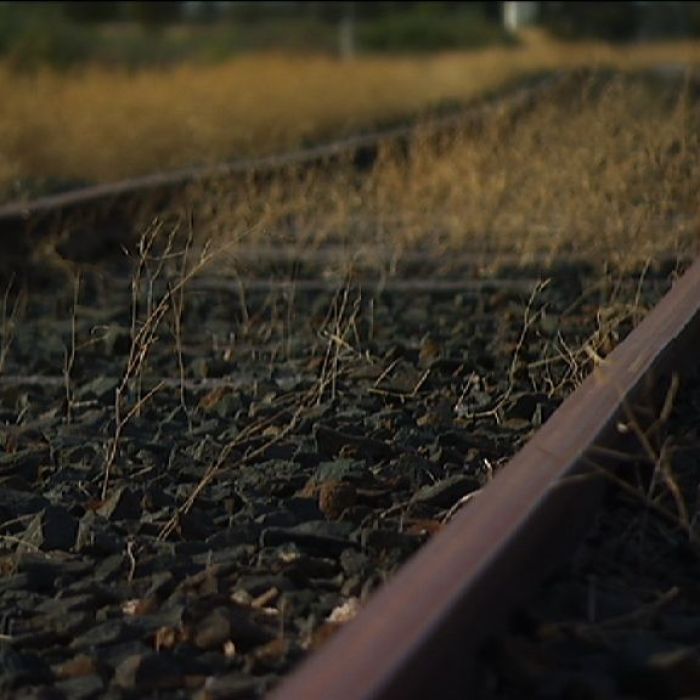
train trackYerzhan grows up at a remote railway siding in a part of the country where atomic weapons are tested. Two families live near each other, their lives more intertwined than appears on the surface.

Yerzhan and the neighbour’s daughter Aisulu travel many miles by donkey to go to school and many more miles to see the strange but talented bachelor, Petko, a Bulgarian violin teacher.

Every so often the ground shakes, another sun rises and everything is still. Then there is the Zone, that area where it is so silent, his ears ring.

“And the thing that loomed over him like a visceral fear could happen in the middle of the sweltering summer, when sheep suddenly started bleating as if they were under the knife and went dashing in all directions, cows dug their horns into the ground and the donkey squealed and rolled around in the dust…

And a slight rumble would run through the ground, Yerzhan’s legs would start trembling, and then his whole body, and the fear would rise up from his shaking knees to his stomach and freeze there in a heavy ache, until the sky cracked over his head and shattered into pieces, crushing him completely, reducing him to dust, to sand, to scraps of grass and wool. And the black whirlwind hurtled past above him with a wild howl.”

A young boy playing the dombra

A boy plays the dombra

His friend Aisulu’s Granny tells him a story of his conception and birth, intertwined with local legend; not knowing who his father is, he often replays the story in his mind, trying to understand it, and who he is.

“Granny Ulbarsyn’s story  wasn’t the only thing that had sunk deep into Yerzhan’s heart.  Grandad’s dombra playing stayed with him too. When no one was looking the boy took the instrument down from its nail high up on the wall. And while his grandfather tapped with the hammer on railway carriages, Yerzhan strummed the dombra secretly, imitating the old man’s knitted brows and hoarse voice. It didn’t take long before he picked out a few familiar melodies and then, with the keen eye he used to keep watch on Uncle Kapek’s behaviour, he followed and memorised  his granddad’s finger movements.”

Dead LakeYerzhan learns the dombra and violin and is bright, but the real light in his life is Aisulu, a light that gradually fades upon his reaching the age of 12, when he walks into the forbidden, radioactive Dead Lake to impress her and from that day on stops growing, destined to watch her pass him by.

“Other people noticed it too and wanted to help. Granny Ulbarsyn fed him with the livers of new born spring lambs, Grandad Daulet ordered carrots from the city through his  friend Tolegen,  and Uncle Shaken brought disgusting fish oil back from his shift. But that only produced a foul-smelling burp! Yerzhan ate it all. But he had stopped growing.”

Another of Peirene Press’s excellent novella’s, this really is an afternoon read, but so rich in the telling, it is a pleasure to go back and reread passages with the familiarity of having read the story. It is a tale tinged with  inevitable sadness as people live with the invisible terrors that are an environmental legacy of the Cold War.

If you want to read more contemporary European literature outside the English language, you can do no better than take out a fabulous subscription with Peirene Press. Three novellas a year and the kind you’ll rarely find in most bookshops.

Note: The author Hamid Ismailov was born in Kyrgyzstan and moved to Uzbekistan as a young man. He writes in both Russian and Uzbek and his novels have been translated into many European languages. Sadly his work is banned in Uzbekistan today and he has had to flee the country due to his ‘unacceptable democratic tendencies’.

The Closet of Savage Mementos by Nuala Ní Chonchúir & A Peek at What the Irish are Reading

After seeing her list of Books of the Year for 2014 published in the Irish Times, I remembered how much I admire Eileen Battersby’s articles and her choice of books to read and review.

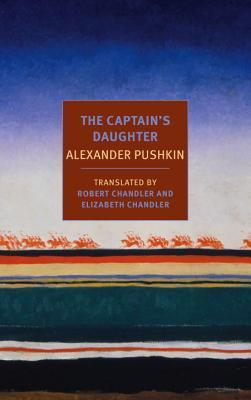
The Captain's DaughterEven today, when I skim the reviews featured by the Irish Times, the one I click on, sure enough, is written by Eileen Battersby and reading it makes me think perhaps I could start 2015 the same way I started 2014, with Alexander Pushkin, here she describes his novel The Captain’s Daughter, republished in September 2014 in the NYRB Classic series, as a masterclass in storytelling.

Wednesday's Child

The critically acclaimed Number 1 Bestseller I’d never heard of!

So back when her Books of the Year came out, I had a look around the rest of the Books Section of the Irish Times, in part intrigued recalling a family member visiting via a short stopover in Ireland last summer and bringing bestselling books I had never heard of.

A History of LonelinessI was interested to read about their new book club and experience of reading John Boynes novel of a priest, A History of Loneliness and the intelligent, respectful way their readers are able to discuss and disagree in comments without resorting to the kind of insulting rhetoric that stops me from reading comments on most other mainstream media.

This month they are reading Nuala Ní Chonchúir’s The Closet of Savage Mementos, an author and a book I had not heard of, so after reading the blurb which sounded appealing and said to be inspired in part by the authors own experiences, I jumped right in.Irish Times Book Club

The Blurb

Lillis takes a summer job working at a lodge in a small lochside village in the Scottish Highlands. Leaving home is a way to escape her sorrow and despair following the death of her boyfriend and a testy relationship with her mother, Verity.

In Scotland she encounters love and excitement but when a series of unexpected events turn her new found life on its head, she is forced to make a life-changing decision, one that will stay with her for her whole life.

My Review

Divided into two parts, Book One takes place in 1991 when Lillis is almost 21-years-old and in the throes of grief, after the death of her close childhood friend Donal, early on New Year’s Day.

She had already made plans to leave Dublin and take up a waitressing job in Kinlochbrack, a fishing village in Scotland and it is while living there, that she moves through the phases of grief and denial, falling quickly into a new relationship with her boss, 51-year-old Struan Torrance.

Lillis was ready to leave Dublin, her mother Verity a constant source of irritating worry, her father relatively inaccessible, having remarried and busy working and raising two small boys with his new wife; her brother responding reluctantly to her requests for help when asked, otherwise living a somewhat selfish, disinterested existence.

Here is their conversation when he tells Lillis he’s thinking of going to San Francisco, where all the girls wear flowers in their hair, and the boys too, hopefully, he added.

‘Shut up. You’re just pissed off because you’ll be stuck here forever.’ Robin flipped open his lighter.

‘I won’t, you know. I’ve got a summer job lined up in Scotland.’ I put down my glass.

‘You sneaky bitch. How did you get that? We can’t both go away.’

‘Look, at the moment I need your help with Verity. Promise me you’ll go to the house and talk to her. We can head out together.’

‘Lord, you’re so bossy. Is that why you arranged to meet me, to bully me into being our mother’s saviour?’

In Scotland Lillis has her job, her new boyfriend, instant friends at work, hills to climb and roam, the loch to visit; in her head she often revisits her enduring friendship with Donal, he becomes a resting place in her mind she constantly retreats to, as if waiting for the present to overtake these thoughts yet wondering if that will ever be the case.

It is about the unconscious effect of grief and shows how Lillis fulfills the need that arises from it, trying to fill the gaping hole left by the death of someone so familiar, mixed with the separation from family, a father who is elsewhere. She does things unconsciously and in Book Two, she will awaken from her emotional slumber with an earth shattering jolt.

Things end badly for Lillis in Scotland and after a short spell in Glasgow she returns to Dublin. We don’t learn what happened until she is a 40-year-old woman reflecting on the past, as it suddenly is brought into her present by events.

I don’t wish to reveal what happened in case you decide to read the book, an excellent reason for this to have been chosen as a book club book, as it prompts some very interesting questions about so many issues that will make it an interesting discussion.

“Just like when Donal died, I was pulled tight between forgetting and remembering. Any sense of myself as a competent human being, with things to do and achieve, had left me.”

Book two begins 20 years later, Lillis is pregnant and about to give birth to a daughter, her supportive and loving husband at her side. The pregnancy, birth and raising of the child induce a form of post natal depression and bring back memories and force her to address issues she had chosen to bury deep within her for the last twenty years. Much of it to do with being a mother, believing she had come from a long line of woman who were bad mothers.

“It occurs to me that I might be like Verity – exasperation was her fallback position, her natural state as a parent. Everything Robin and I did irritated her. She roared at us from one end of the day to the other….

Verity held the neglect she learned as a daughter to her heart and carried it forward to her own parenting. I do not want to be the mother that Verity was to me.”

It is a realistic novel with much to discuss and reflect on, both the decisions we make as individuals and those that we make due to the pressures of family and society.

Nuala Ní Chonchúir writes in a style that makes the reader feel right there in the room with her characters, the voices are authentic, the emotions vivid and sometimes disturbing, it’s like being in the front row of a theatrical production, even though the characters are over there, we feel the force of every word uttered and action taken and will likely need to talk about the experience with a friend when it’s over.

If you read it between now and mid-January you can join in or follow the book club discussion at The Irish Times (see the link below).

Miss EmilyMiss Emily

To be published under her original birth name, Nuala O’Connor, (Nuala Ní Chonchúir) has a novel due out in May 2015 called Miss Emilya dual narrative story told alternately from the point of view of Ada (the maid) and Emily Dickinson, the film rights of which have already been acquired.

An author to watch out for!

Links

The Irish Times Book Club

The History of Loneliness

Migrating Voids by David H Walker

Migrating VoidsMigrating Voids is at its heart a coming-of-age story of 18-year-old Gideon Bradshaw, a young man who lives with his mother and stepfather, who at the beginning of the story remains in the latter stage of adolescence, remote and disconnected from his family and unwilling to view them from any other perspective that that of indifference and mild resentment.

“Two A levels and a place on an HND course at Technical College should have boosted his confidence, but no: he still felt that people were judging him and finding him wanting.”

Ambivalent about his studies, he takes up a part-time job at the local pub, where a chance encounter with an inebriated out-of-town pharmacist, opens his eyes to pathways he had not considered, a change in direction that once he decides upon it, resonates within him and ignites his interest in his future studies and the local area.

“Then he took a weekend job waiting-on at the Knott Arms, and discovered something he could do well. Not that he was the world’s best waiter; he simply found that he slipped into the role with an ease that surprised him.”

Granville is an older man, who owns a chemist’s shop in Manchester and often visits his sister, the widow who owns Harkcliffe Hall.  When he falls asleep in his chair after another solo drinking session, the Bar Manager gets him to surrender his keys and asks Gideon to drive the loner home.

After delivering him safely to his sister, the widow Judith also known as Lady Leybourne, invites Gideon to visit again and proposes alternative work for him, to assist her in the organisation and indexing  of her late husband’s business papers so that they can be passed on in time to the appropriate beneficiary.

Salt formation

Salt caverns, subsidence and sinkholes

In doing so Gideon develops an interest in the documentation which reveals the history of the estate and the area, the business that supported it and the controversy surrounding the underground salt mines that lead to the demise of the business.

Granville too, takes Gideon under his wing, inviting him to walk around the land, taking him to a somewhat clandestine dinner, leaving the reader questioning the older man’s motives. Gideon is appreciative of both the siblings attentions and doesn’t wish to undermine his good fortune having found an interesting job and a generous employer, however there is an air of unease that makes him watchful and ever more curious despite the growing disquiet that lurks on the edge of his consciousness.

Lady Leybourne is childless, thus the question of an heir hangs over the Estate and Gideon, a motiveless outsider, becomes drawn into a complex web of secrets and intentions that bring an air of menace to the surface of the dreamy existence he has been dwelling within.

“He had envisaged the possibility of entering their lives, but invisible chasms had opened up between him and them. Of course he was sharing secrets separately with Judith and Granville, but was bound to each in a complicity that excluded the other.”

It is something we take for granted, that the ground beneath us is solid and immovable and as Gideon walks with Granville across the land and listens to him speak, he too becomes aware of the falsity of that notion, as events of the past that no one ever speaks about are brought into the present, the land form around them seen in a new light as their secret history is unveiled.

“Gideon was becoming increasingly aware that the world he knew and had lived in up to now was a thin veil on the surface of the real world.”

dolyna-salt-mineThe presence of “voids” has both a physical and psychological aspect, representing that which exists and that which is unknown or hidden, be it the physical landscape and its brutal history, the people who live within it, their past and the secrets they harbour, voids that threaten destruction regardless of their form or origin.

Just as with Gideon’s coming of age, the novel is about noticing what was already there, that which is hidden from view and will remain so until we scratch beneath the surface, unless we are open to suggestion, to ideas, to understanding how what came before has an effect on what we see and understand now.

Migrating Voids is a brilliantly conceived story that starts at a leisurely literary pace, then surprises with its shocking, tidal revelation keeping the reader captivated and interested until its climatic end.

Unearthing its mystery, the reader can’t help being curious about its historical origin, the story inspired by real landscapes and historical fact, the book dedicated to the Project Wyre Group, a campaign of opposition to the storage of up to 900 million cubic metres of natural gas in 19 underground salt caverns at Preesall Saltfield.

All those sinkholes suddenly appearing all over England? This story could not have been better timed, than to have appeared at the same time as those other voids are opening up in the urban landscape.

Vatican Cellars Note: Thank you to the author Professor David H Walker, an expert on French literature and culture, whom I met at a lecture he gave on André Gide’s The Vatican Cellars. I noted he’d recently published a novel and was delighted to be offered a copy after having the opportunity to meet him and discuss common literary interests.  His recent excellent review of the newly translated The Vatican Cellars appeared in The Times Literary Supplement on 10 December 2014.


The Bees by Laline Paull

I came across this book The Bees by Laline Paull during the Literary Bloghop giveaway. Deb from The Book Stop was offering it as one of her giveaways and I was intrigued by the premise as it is narrated from the point of view of Flora 717, a worker bee!

Bees2The story begins with Flora’s awakening as she becomes conscious of her surroundings and who she is and what she is capable of doing. For not all bees are born equal in The Hive. Flora is a sanitation bee, one of the lowest kin and perceived by others as the most ugly, neither are they capable of speech. Except Flora. She has characteristics that are not like her kin and is fortunate being a mutant bee that she has been allowed to live.

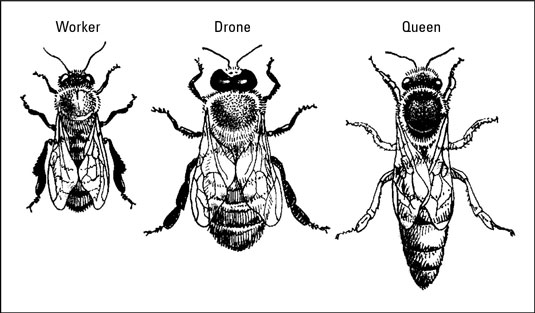
The majority of the bees in the hive are female, except the Drones, the only male bees and the only kin who don’t work. The bee kins have names like Clover, Sage,  Thistle. They mutter a mantra ACCEPT OBEY SERVE around the more senior sisters and priestesses, they do Devotions, are punished with Kindness, communicate what they have learned on the outside in the Dance Hall, including information about the dangers of the Myriad.

“The golden fragrance drew Flora on, until to her shock she realised she had passed unscathed through the scent-gates on the staircase to the highest level of the hive.”

Their talents and work include cleaning the hive, feeding the newborns with Flow, a substance some bees are able to regurgitate, foraging to collect nectar and pollen, working in the Patisserie, grooming the Drones and tending to the Queen.

Bee Castes

The bees possess a collective consciousness and through it they can receive information from the Hive Mind and Energy and Love from their Queen; their thoughts are able to be read by others through their antennae, unless they close them down, which Flora begins to do increasingly as she crosses boundaries and experiences thoughts she knows could endanger her life and others, should any of the  kin-sisters read them.

“Flora tucked her antennae sleek down her back as she advanced her speed. Never again would she leave her channels open in the hive, for any bee to grab and read. Sister Teasel was old and  could no longer work efficiently – but Flora’s wings beat with a new strength. She felt she could fly a hundred leagues  to serve her hive, and the sky streamed with all the scents rising from the wet earth – including mesmerisingly delicious nectar. Flora locked onto it.”

There are threats both within the Hive and outside.  The beehive is like a cult, its members know their place, their role and their boundaries, however everywhere there are risks and dangers both outside and more dangerously, within. ACCEPT, OBEY, SERVE. They live in a symbiotic relationship that ensures the safe function and progression of the hive. When something threatens that relationship, their safe haven is no longer assured.

Laline Paull has channelled an incredible and yet what read like a totally credible life and universe within a beehive, from the perspective of Flora 717. I know little about the bee world, but the environment the author creates is fascinating, intriguing and imaginative with references to monarchy, spiritual devotion, universal instinct and power. It also contains a subtle environmental reference, one that will be recognised by nature lovers everywhere, without compromising the essence of great storytelling.

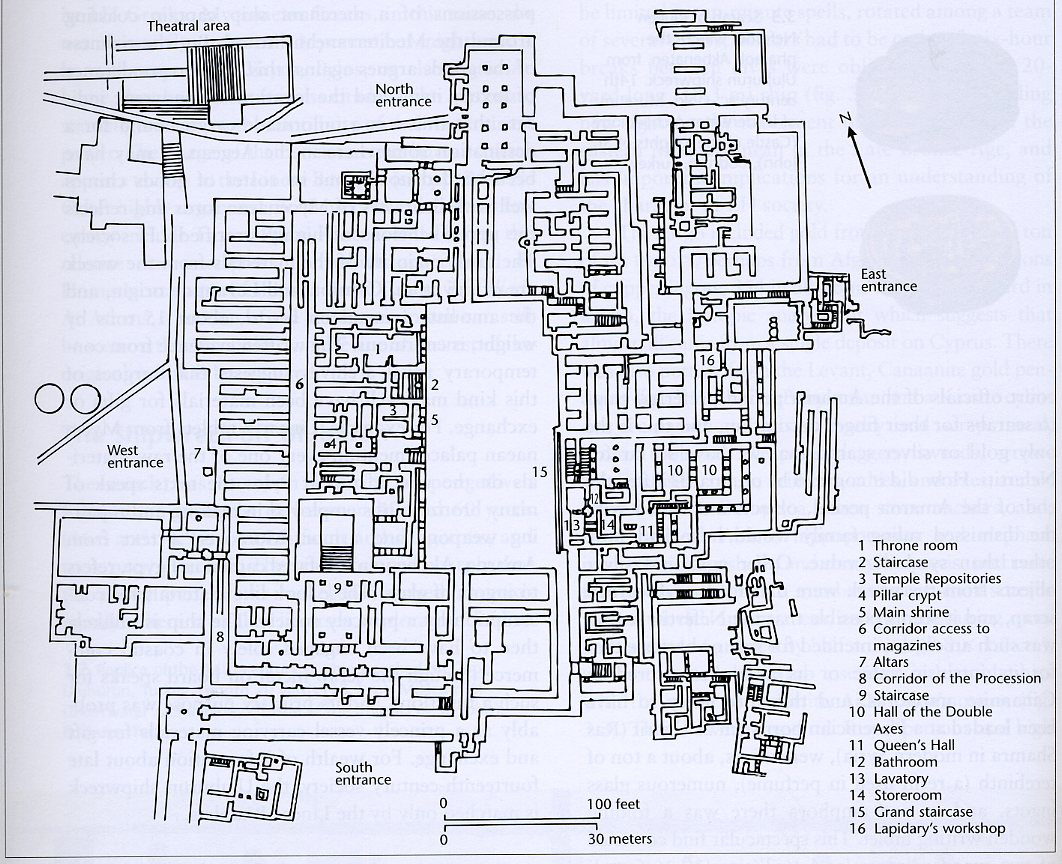
Labyrinthe of Knossos, Crete

Labyrinth of Knossos, Crete

Intrigued by the book, I was also interested to learn that Laline Paull was inspired by a Bronze Age Minoan Palace.

“The Cretan Minoan civilization dates from 1700BC, and was very sophisticated and sexually egalitarian, if not biased towards women. It was an inspiration for translating a real beehive into a fictional landscape.” Laline Paull

This description of the Labyrinth at Knossos, the largest of the Minoan palaces, gives you an idea of the influence on Flora’s world.

“Knossos is the largest of the Minoan palaces, and like others it is an agglomeration of rooms clustered around a long, rectangular central court. Only the ruins of its foundations have survived, but these reveal a vast interconnected complex of small corridors, staircases and private rooms containing residential quarters, workshops, administrative areas and many different cult centres.” Christopher Berg, Amazeing Art: Wonders of the Ancient World

The Bees is an utterly captivating read and a masterful feat of the imagination, Laline Paull has the reader on a knife-edge, knowing the dangers Flora 717 faces, yet her discretions feel necessary and we will her to continue, to survive and overcome all the challenges she faces.

I started it slowly and have since read others did find it is a slow start, however once into it, I could not put it down, it has been one of the best and most original reads of 2014 for me.

Ignoring Gravity by Sandra Danby

Ignoring Gravity by Sandra DanbyRose Haldane is a feature writer for a popular newspaper. She spends her days chasing stories, researching popular subjects for features and occasionally interviewing high flyers that later on turn up at her house. Well, at least one, a guy named Nick who is the Managing Director of Biocare Beauty who she appears disinterested in, but is actually quite attracted to to, even though its against company protocol to get involved with interview subjects.

Rose was born in 1968 and her sister Lily not long after. Sometime after the death of their mother from cancer, when it appears their father hasn’t cleared anything away and is having a low patch, they decide to go through her belongings and clear things out. While doing so they discover among her possession a set of diaries. In a shocking revelation, Rose discovers her mother is not her biological mother and that members of her family have been concealing the truth from her. Using her well honed research skills, she sets to, to unravel the mystery surrounding her birth.

“At the beginning of the twentieth century, it was accepted that the best thing for the adopted child was a clean break with no contact with their birth parents, and no rights to search for them when the child was grown up. Then in 1953 a government report recommended that adopted children be told they were adopted or chosen.”

uman Rights Child

United Nations Article 7 – Children’s Human Rights

Her sister Lily is married to William and has a part time job, but is pining for a child and partaking all kinds of remedies to try to make it happen. Her neurotic obsession with becoming pregnant masks something lurking in her subconscious that will eventually force her to face up to the truth. She too, reads her mothers diaries to be sure of her origins and discovers other revelations that set her mind racing.

“His bowl contained organic fair trade muesli with honey and extra-chopped Brazil nuts (selenium for protection against cancer and heart disease; she was determined that William would not have a heart attack like Granddad Howard), soya milk (low cholesterol), and chopped apple from Kent followed by plain bio-yoghurt from Dorset cows.”

Simultaneously to Rose’s search, there is the love interest Nick, who seems to arrive just when she needs him despite her having forgotten to turn up to their first date, he is a pretty loyal and supportive catch, considering their brief acquaintance, and he is the perfect complement to Rose, accompanying her at the tricky stages of her investigation.

premature-menopauseAnd then there is the feature she must write on premature menopause, the more she finds out, the more concerned she becomes on behalf of her sister.

Ignoring Gravity is a fast paced novel, following the investigative skills of Rose to unearth the mystery of her birth and deal with the impact of receiving such knowledge without any prior warning, although it immediately explained in her eyes, the difficult relationship she had with her mother.

It was perhaps a little too fast paced for me, not in terms of reading the book, but in terms of how quickly she makes progress and takes significant steps to find out more about her origins, steps that by necessity mean prying into the private lives of others who have long let sleeping dogs lie.

I couldn’t believe that anyone would be able to absorb and assimilate that knowledge and move on to the next steps as quickly as she does. In reality it is a long, slow, reflective process, however the revelations when they do come are quite brilliantly conceived and although Rose doesn’t spend too much time imagining how the circumstances might have come about, she provides sufficient detail for the reader to ponder the situation and to wonder how we might react to such information and confront those who kept it secret.

As someone who was adopted in the same year as the protagonist of this book and been through the process of unravelling the mystery, there were many moments in the book that provoked familiar memories, although naturally everyone’s experience is different. It is certainly a book that will invite reflection and discussion, as it is a fascinating and oftentimes controversial subject within our society and within other cultures and how they perceive it.

Sometimes it is the little things, like those words “a chosen daughter”, which were used in place of simply “a son, or a daughter” in the birth announcements. And that detached feeling when being advised by well intended counsellors, knowing that you will find out in your own way and share it with no one until you can answer all the questions that are unknown at the outset.

An intriguing read, perfect for the holiday season and watch out for a follow up novel as Rose puts her investigative skills to the test in Spain.

Note: Thank you to the author Sandra Danby for providing me with the kindle version of the book for review.


Those Who Leave and Those Who Stay by Elena Ferrante tr. Ann Goldstein #FerranteFever

Those Who StayThis is the third book in Elena Ferrante’s Neapolitan tetralogy about two friends Elena and Lila, growing up in an impoverished neighbourhood of Naples.

It follows on from Book One, My Brilliant Friend and Book Two, The Story of a New Name (click on the titles to read earlier reviews).

Lila has married, had a child, reformed her husband’s business, strayed and finally separated from her husband and moved to another area outside the neighbourhood to live with Enzo, a childhood friend. She gets a job in a sausage factory, working under oppressive conditions that attract the interest of social activists and harsh threats from the ‘fascists’.

“Can you imagine what it means to go in and out of refrigerated rooms at twenty degrees below zero, and get ten lire more an hour – ten lire – for cold compensation? If you imagine this, what do you think you can learn from people who are forced to live like that?”

In Pisa, Elena has remoulded herself, no longer referring or comparing herself to Lila. She observes how people from her type of neighbourhood and class are perceived outside it, among the bourgeois, those raised within the milieu of intellectuals and achievers, those with access to money, social connections, many of whom are gifted with a presence she can only dream of. Elena finishes her university studies and becomes engaged to Pietro, who was raised within that other world; coming from a well-known academic family, he too will become a university professor, teaching and writing academic works like his father.

As she is concluding her studies, Elena writes a fictional story drawn from aspects of her past, though never admitting it is anything but fiction. She gifts the story to Pietro on an impulse, hoping he will read it. He passes the manuscript to his well-connected mother Adele, thus Elena treads the path laid in front of her, towards becoming an author. Adele introduces her to contacts that will result in her first book being published, establishing her career as a writer.

“I spoke of the necessity of recounting frankly every human experience, including – I said emphatically – what seems unsayable and what we do not speak of even to ourselves.”

Though Elena does her best to avoid it, Pietro finally meets her family and though he insists on a civil ceremony for their marriage, a decision that stuns and terribly disappoints her mother, he wishes to do the traditional thing by asking her father for her hand. Her father is calm and accepting, however her mother’s thoughts insist on an airing and she lectures the young professor unabashedly.

  “When at last she was silent, he said that he knew very well how precious I was and that he was grateful to her for having brought me up as I was.”

Through marriage, Elena succeeds in elevating herself above her roots, though finds herself stranded in not quite belonging to either her future role or her past. They are like roles she assumes outside herself, taking care not to stand out when she returns to the neighbourhood and paying attention to how she should behave in her new role as the wife of a professor.

“As soon as I got off the train, I moved cautiously in the places where I had grown up, always careful to speak in dialect, as if to indicate I am one of yours, don’t hurt me.”

However, marrying the young professor, writing the story that turns into a successful novel, moving to Florence and becoming a mother leave her little time to play any other role than that of housewife.

Lila leaves the neighbourhood, escaping her marriage and taking on a job in a sausage factory owned by a friend of Nino Sarratore, whom the girls met one summer. Her job leaves her little time to spend with her son. Unwillingly, she becomes connected with worker’s rights activists and discovers the dirty arm of the neighbourhood loan sharks who are leaning on her employer, while continuing to try to lure her back into their realm.

Lila and Elena’s worlds drift further apart and although they are aware of the need to share with the other, they each possess the instinct to soldier on without admitting their struggle or need for support or encouragement. Elena will receive both her mother-in-law and her mother at different times so that she can write and Lila will return to the neighbourhood to ease her difficulties. Both have opportunities within their reach, yet both are susceptible to self-destruction.

“Too many bad things, and some terrible, had happened over the years, and to regain our old intimacy we would have had to speak our secret thoughts, but I didn’t have the strength to find the words and she, who perhaps had the strength didn’t have the desire, didn’t see the use.”

Those Who Leave and Those Who Stay is a compelling story of the lives of two women and those around them, and a penetrative observation on the creation and consequence of decisions women make, how they live with those decisions and the often destructive way they bring about change. It narrates a journey of moving away from one’s origins and the sacrifice the attainment of that desire requires.

Elena leaves her past and a life she didn’t want, behind her, however in attaining a new life, she loses sight of who she really is and what drives her. She is just coming to the point of realising that when her world spins out of control. And thankfully for us all the fourth book is being translated. I expect the wheel may come full circle.

Italian Screenwriter Francesco Piccolo

Italian Screenwriter Francesco Piccolo

Note:  It has been announced that My Brilliant Friend will be made into a television series in Italy. The author/screenwriter Francesco Piccolo, winner of the esteemed Italian literary Strega Prize 2014 (with his bittersweet memoir of life on the Italian Left, ‘Il desiderio di essere come tutti’ (The Desire To Be Like Everyone) will work on the screenplay.

Next Book in the Series: The Story of the Lost Child

The Narrow Road to the Deep North by Richard Flanagan

Flanagan

A novel of the cruelty of war, the tenuousness of life and the impossibility of love.

I started reading this in July/August 2014, during the summer and to begin with I was fine with reading it, but by halfway I found myself not wanting to pick it up, the scenes described, horrific, grueling, they went on for too long, they were so vivid, my insides contracted each time I picked it up.

I read reviews, entered into discussions and debate about the necessity of being so exposed to such scenes as a way of understanding what men went through in war and I am not one to avoid that, but I couldn’t balance that intellectual point of view with the sickness I felt on reading this.

I was reading it on the kindle and at 50% I decided to stop and I picked up Vera Brittain’s Testament of Youth which I reviewed here, the true story of her wartime experience, some distance from the war but dealing with the effect of it, both in the hospitals where she volunteered and the letters from her fiance, brother and friends who were all fighting and who would all lose their lives.

Vera’s story brought meaning and understanding, empathy and insight, but it didn’t make me feel sick. Her life afterwards was affected by her experience in a positive way, it is a grand testament to a woman’s work and need to more than understand, but to make a contribution to try to change the world and our violent, destructive tendencies.

Richard Flanagan’s book then won the Booker Prize, so I tried again. I sped through the next 100 pages and had to pause again as that sick feeling refused to go away. So I stopped.

Today for the third and last time I picked the book up once again, but by now I could almost feel the pages of horror coming, whether it was Dorrigo trying to sew up his friends leg or watching the beating of a friend. And now I say enough. This book has many, many fans and has brought the author immense and deserved success, however, it doesn’t need my contribution and I don’t need to continue to torture myself by trying to read it, in the hope of some kind of enlightenment.

I read 65% and I am sure I missed out the redeeming parts of the book.

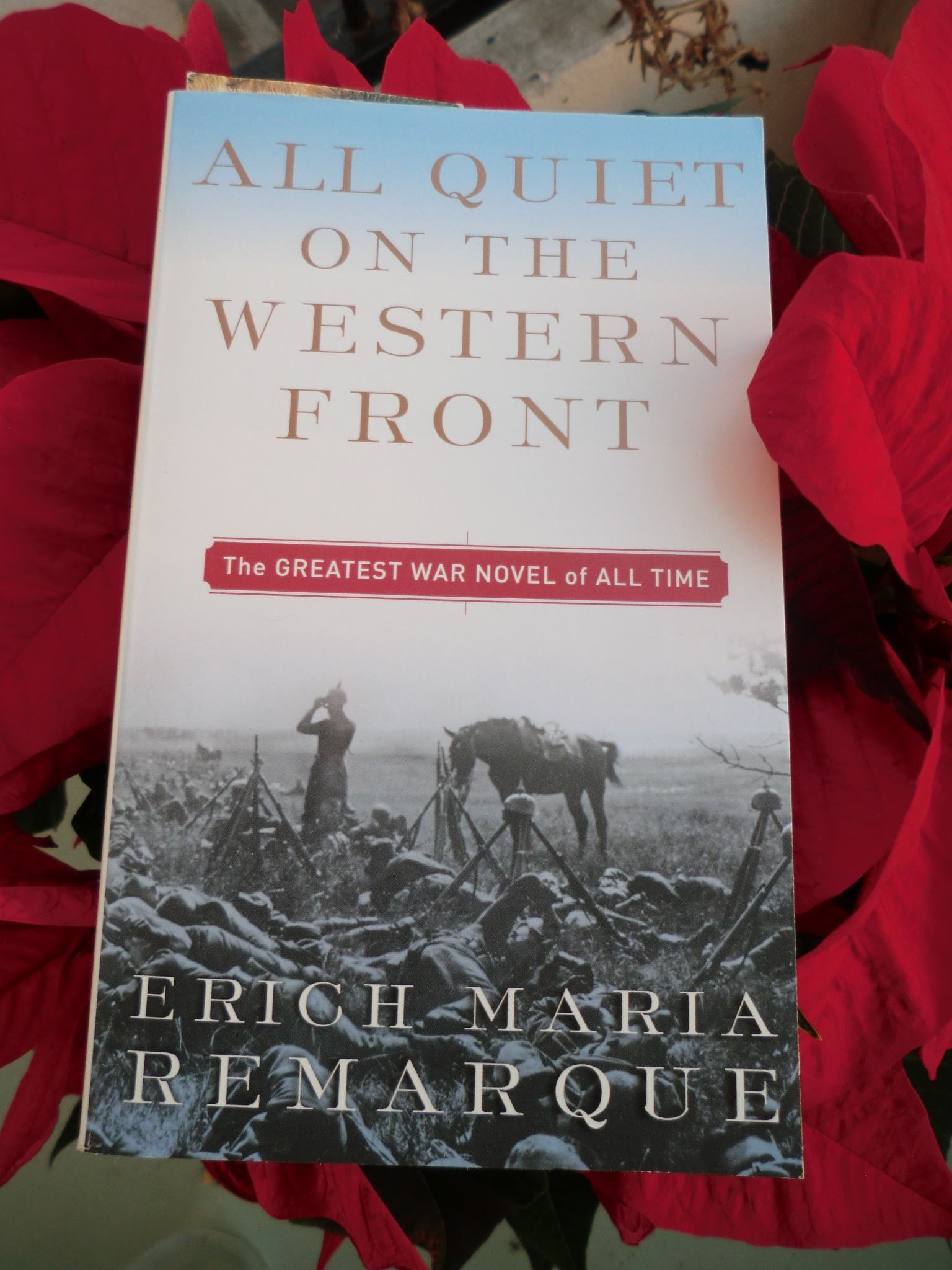
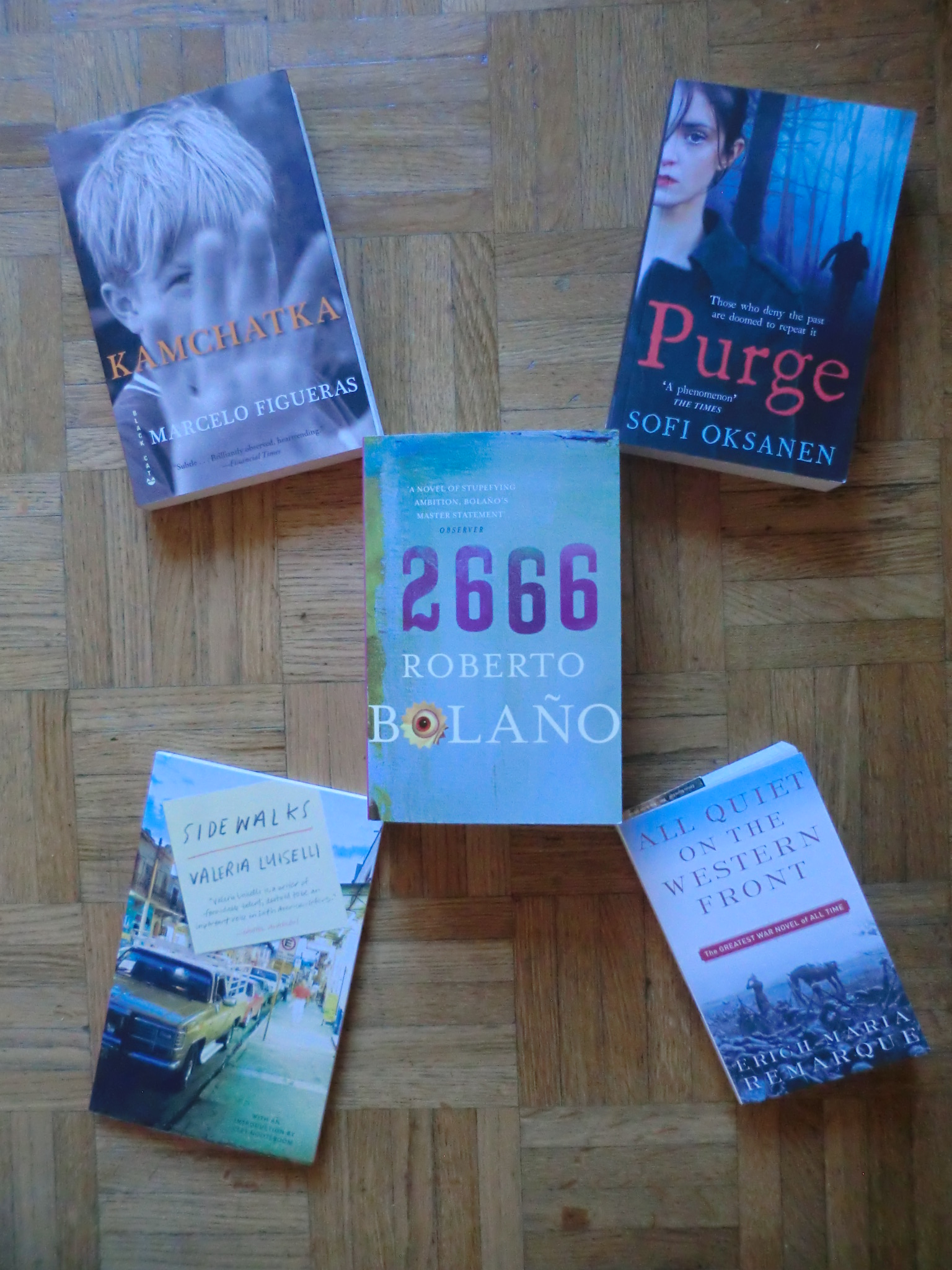
All QuietI leave it there and will turn to Erich Maria Remarque’s All Quiet on the Western Front instead to conclude a year of anniversary reads for WWI.

Note: This was an ARC (Advance Reader Copy) kindly provided by the publisher via NetGalley.

Literary Blog Hop Winner of My Brilliant Friend

Thank you to everyone who participated in and entered the Literary Blog Hop to win this excellent book, My Brilliant Friend, originally written in Italian by Elena Ferrante.

My Brilliant Friend

And thank you for all the wonderful comments and book recommendations of your favourite translation or book written in a language other than English. As you can see, my TBR is growing!

My New Book Haul

And the winner of the draw is…..

Michelle Willms

Congratulations Michelle! I’ll send you an email to ask you for your address details. Please answer this by Sunday 9th November.

Thanks again to everyone who commented and participated and shared such wonderful book recommendations.

Happy Reading All!

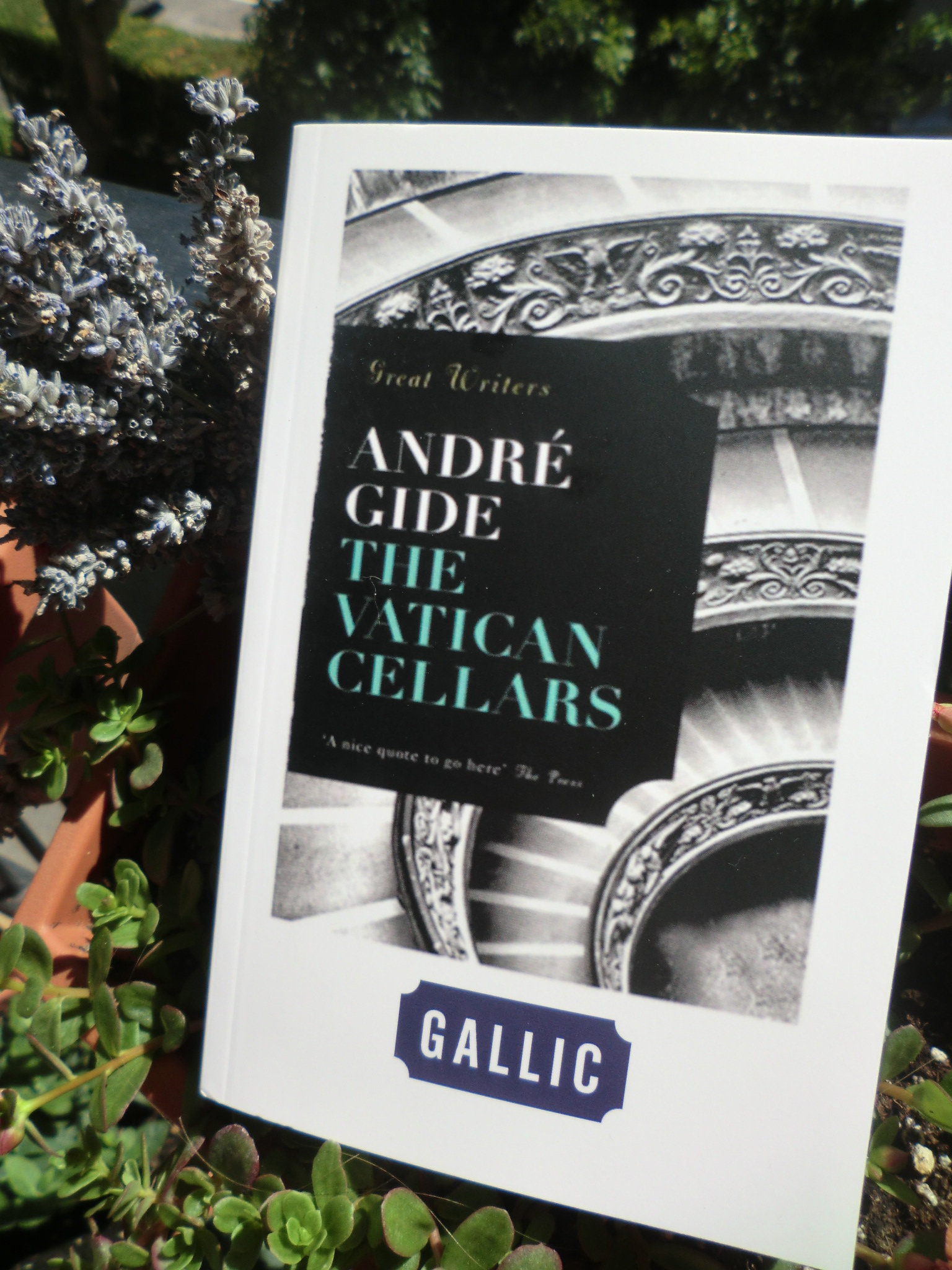
“All Paths Lead to Rome” – The Vatican Cellars by André Gide tr. by Julian Evans

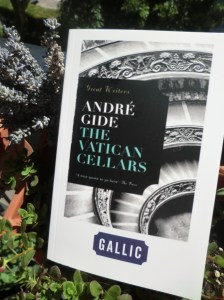
Vatican CellarsOriginally published in the summer of 1914, this year is the 100th anniversary of André Gide’s Les Caves du Vatican otherwise known as The Vatican Cellars and sometimes as Lafcadio’s Adventures in English.

André Gide had quite a reputation and was adored and detested in equal measure in the French literary community during his time. He was a provocative writer, not sensationalist by today’s standards, but he rocked the foundations of robust entities in the early 1900’s and tested some of his friendships with his provocative, satirical works, that challenged the solemnity of the novelistic form and bourgeois attitudes of the time.

He declared the book not to be a novel, but a sotie, a medieval farce in which the players freely mock the powers that be, more often than not, the Church.

“Even in the authentic soties of the Middle Ages there was the attempt to demonstrate the madness of the real world by showing it capsized and lead by fools.” Wallace Fowlie, Andre Gide: His Life and Art

He did this to stand apart from that tradition of European fiction, characterised by its extreme seriousness. Many chose to judge it at face value, or to apply an interpretation that wasn’t his own and cause him to be ostracized by some.

A Young Gide Source: Center for Gidean Studies andregide.org

A Young Gide
Source: Center for Gidean Studies
andregide.org

He wasn’t looking for recognition or accolades, but he was a writer who wasn’t afraid to take on a subject and look at it through a symbolic, metaphorical lens even if it did court contempt in some quarters. Though still highly controversial in France, he was awarded the Nobel Prize in Literature in 1947, he died in 1951 and a year later his works were placed on the Vatican’s list of banned books.

That act was certainly provocative and no doubt helped to heighten the author’s popularity as negative publicity tends to do. So when this book arrived unsolicited in my mailbox, I was curious to find out more, not just about the story, but André Gide, a writer previously unknown to me. In a strange coincidence, this week I see that Papal controversy – or is it just rumour, continue, when I read this headline in The Independent.

God isn’t a magician with a magic wand according to the pope and there are non-believing vicars 

The basic premise of The Vatican Cellars centres around the members of one family, whose connections are slowly revealed, whether by blood or marriage, the first three books (more like parts as the book is only 300 pages) are portrayed from each of the main characters point of view and running throughout the narrative is the effect of a rumoured plot that a gang has kidnapped the Pope and placed him in the Vatican cellars, an imposter installed in his place. The fourth book introduces us to the gang, referred to as The Millipede and the final book is dedicated to the young man Lafcadio and brings all the characters to Rome.

Book One introduces us to Anthime Armand-Dubois, a crippled freemason devoted to scientific research, an atheist who leaves France to settle in Rome to be near a specialist in rheumatic diseases. His departure causes his brother-in-law Julius De Baraglioul great sorrow and his wife Véronique small joy.

“As one of those people who fill their flat disappointed lives with countless small devotions, in her sterility she offered up to the Lord every attention that a baby would have demanded from her. Sadly she entertained almost no hope of leading her Anthime back to Him. She had known for a long time how much stubbornness that broad brow, knitted in perpetual denial, was capable of. Father Flons had warned her.”

Julius, his wife (Véronique’s sister) and their 9-year-old daughter Julie visit, during which Anthime experiences an apparition of the Virgin Mary and the miraculous healing of his affliction. He converts, but loses his freemason and lucrative research contacts and must move to Milan to await compensation promised by the Vatican.

André Gide Source: Centre for Gidean Studies andregide.org

André Gide
Source: Centre for Gidean Studies
andregide.org

Book Two is Julius De Baraglioul, a novelist who arriving back in Paris receives a letter from his father, who is on his deathbed and wishes him to anonymously make the acquaintance of a certain Lafcadio Wluiki to check out his ambitions and character. Julius visits the Lafcadio’s lodgings, meets Carola Venitequa and snoops around his things reading a private notebook since the room is unlocked and uninhabited. He eventually meets him and gives him a copy of his latest novel, one that has been panned by critics. Recognising the book is based on the author’s father, Lafcadio eyes the dying man as a potential new “Uncle” and goes to see him.

In Book Three we meet Amédée Fleurissoire, debated by some to be the true hero of this story; within these pages the entire plot to kidnap the Pope is unveiled. A priest calls on the widow Countess de Guy de Saint-Prix, Julius’s younger sister just after her return from her father’s funeral in Paris and regales her with the extraordinary tale of the Pope’s demise. And here there is an author interjection, a sidestep of the story plot to tell of the factual plot, as the story was inspired by real events that occurred in 1893 by a gang of fraudsters, taking advantage of the Pope’s sympathies toward the French Revolution.

“Whether God’s representative on earth could have been abducted from the Holy See and, by the intervention of the Quirinal, stolen from all of Christendom as it were, is an excessively thorny problem which I do not have the temerity to raise in these pages. But it is a historical fact that, around the end of 1893, rumours were circulating to that effect. It goes without saying that numerous devoted souls became deeply agitated. A pamphlet on the subject appeared in Saint-Malo and was suppressed. …There is no doubt that countless pious souls made financial sacrifices, but it was dubious whether all those who received donations were genuine campaigners, or whether some were perhaps fraudsters.”

The priest wishes the Countess to make a significant donation, so she rushes off to see Madame Fleurissoire, the younger sister of Véronique and Marguerite and wife of our genuine hero Monsieur Amédée Fleurissoire. Hearing about all the fuss Fleurissoire decides he must leave Pau and travel to Rome himself to see what can be done.

Book Four is The Millipede (the centipede) which continues to follow the travels of Amédée, the presence of the gang undetected. He is intercepted at the station and brought to slovenly rooms, where we again meet Carola and he is taken on a bit of a wild goose chase to Naples and back, bumping into Julius who has also appeared in Rome.

Then Book Five brings us back to Lafcadio, raised by his mother and five uncles, across different European countries, he is at home everywhere, but belongs nowhere. After his encounter with Julius’s dying father, he too decides to take the train south, but he is heading for adventure, his destination Borneo. He is the anti-hero, the free spirit, parentless, he lives without obligation or restraint, he can do as he pleases, provided he has the means. His charm takes care of that.

And what happens when they all find themselves in Rome? For that you’ll need to read the book.

As the literary critic Albert Guerard said:

“Perhaps only the maligned casual reader sees that les Caves du Vatican is above all a very funny book.”

It is a book that Gide had in the back of his mind for 20 years before writing it and many of the scenes were inspired from aspects of his own life or those close to him. For example, Anthime’s conversion is said to be based on Emile Zola’s Freemason cousin, who abjured his atheism in a public ceremony at a church in Rome.

The Vatican Cellars is an entertaining, easy read and can be intellectually stimulating if you are interested to analyse it further. I enjoyed it very much and all the more for having read around it, dipping into some of the published literary essays to understand the intentions of the author and the responses of the critics.

He was a humble author with a fascinating intellect who refused to accept literary prizes and acknowledgement at home, until it came to the Nobel, which he felt would have gone to Paul Valéry, if not for his untimely death and accepted it without reserve, though he was too ill to receive it in person.

In an open letter to several leading Swedish newspapers which had sought interviews, Gide confessed that he had received the Nobel Prize:

“with deep emotion, with tears in my eyes, like a schoolboy who has won a prize.”

I leave you with this very funny anecdote that I picked up from an essay by the critic George D.Painter.

“On 7 January 1930 Gide was returning by train from Toulon to Paris with Jacques de Lacretelle. At the opposite table, which was covered with flowers, sat a honeymoon couple, the husband engrossed in The Vatican Swindle. It was the first time Gide had ever seen a stranger reading himself. ‘Here’s your chance,’ said Lacretelle, ‘Tell him who you are – write him a dedication!’ But to do this, Gide would have had to feel sure that the unknown liked the book. Suddenly the young man pulled out a penknife. Good heavens, was he about, like Lafcadio, to plunge it in his thigh? But no, worse still, he seemed to intend to cut the book itself in pieces, and Lacretelle was seized with a fou rire. With great care the bridegroom cut the threads of the binding, detached the part he had read, handed it to his young wife; and both buried themselves in their reading.”

train reading

Note: Thank you most kindly to Gallic Books for sending me a copy of the book.

Literary Blog Hop … Book #Giveaway

From now until Wednesday November 5th Word by Word is participating along with other international bloggers in a Literary Blog Hop Giveaway hosted by Judith at Leeswamme’s Blog, an avid reader and reviewer from the Netherlands.

literarybloghopnovember

The blog hop offers you the opportunity to win a book here and you can visit other blogs listed below, each one offering a book of literary merit as a giveaway.

Just leave a comment below to enter the draw and on Thursday 6 November I will notify the winner.  And seriously,  even if you don’t win, you must read this book!

The book is Elena Ferrante’s My Brilliant Friend and the giveaway is open worldwide.

Win a copy of

My Brilliant Friend!

My Brilliant Friend

This entire series is definitely one of my Top Reads of 2014.

Elena Ferrante is an Italian author from Naples, where the books are set. We know little about her as she doesn’t accept interviews and uses a pen name, however that hasn’t prevented her books from becoming a word of mouth sensation. You can read my review of My Brilliant Friend here.

My Brilliant Friend is the story of two friends Elena and Lila growing up in an impoverished neighbourhood of Naples and their efforts to escape the inevitability of their fate, as members of a lower class community.

I found it a compelling read and loved the second book The Story of  New Name (reviewed here), as much as the first.

There are three books available in English (I’m reading Book 3 ) and a fourth book due out in 2015. (It was published in Italian on Oct 29 2014).

To Enter:

1. Leave a comment and tell me whether you have ever read a book in a language other than English, or a translated book. If you have, do you have a favourite? (1 entry)

2. Follow this blog. Mention in the comments if you already do. (2 entries)

3. Follow @clairewords on twitter (3 entries)

Then click on the links below to visit other blogs participating in the giveaway.

Make sure to visit the author Juliet Greenwood, whose two books Eden’s Garden and We That Are Left are excellent reads and also reviewed here at Word by WordClick on the titles to read the reviews.

Linky List:

  1. Leeswammes
  2. Read Her Like an Open Book (US/CA)
  3. My Book Self (N. Am.)
  4. The Book Stop
  5. My Book Retreat (US)
  6. Books in the Burbs (US)
  7. Guiltless Reading
  8. Word by Word
  9. Juliet Greenwood
  10. BooksandLiliane
  11. Words for Worms (US)
  12. The Relentless Reader
  13. The Misfortune of Knowing
  14. The Friday Morning Bookclub (US)
  15. Readerbuzz
  16. Lavender Likes, Loves, Finds and Dreams
  17. The Emerald City Book Review
  18. Wensend
  1. Laurie Here
  2. A Cup Of Tea, A Friend, And A Book (US)
  3. Moon Shine Art Spot (US)
  4. I’d Rather Be Reading At The Beach (US)
  5. Lost Generation Reader
  6. Books Speak Volumes
  7. Mom’s Small Victories (US)
  8. Books on the Table (US)
  9. Orange Pekoe Reviews
  10. Lavender Likes, Loves, Finds and Dreams
  11. Words And Peace (US)
  12. Booklover Book Reviews
  13. Inside the Secret World of Allison Bruning (US)

Note: Thank you to Daniela at Europa Editions for organising a copy of the book.