Mother to Mother by Sindiwe Magona

Mother to Mother is the second novel in my reading about the complexity of motherhood from three different perspectives, from within London’s Caribbean diaspora in The Mother by Yvvette Edwards, apartheid-era South Africa in Mother to Mother, and contemporary Black America in Brit Bennett’s The Mothers.

Making Sense of a Tragedy
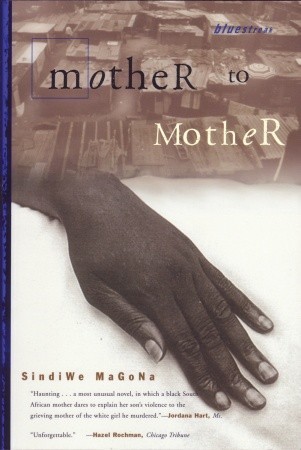
 Sindiwe Magona decided to write this novel when she discovered that Fulbright Scholar Amy Biehl, who was set upon and killed by a mob of black youth in August 1993, died just a few yards away from her own permanent residence in Guguletu, Capetown.

She then learned that one of the boys held responsible for the killing was in fact her neighbor’s son. Magona began to imagine how easily it might have been her own son caught up in the wave of violence that day.

The outpouring of grief, outrage, and support for the Biehl family was unprecedented in the history of the country. Amy, a white American, had gone to South Africa to help black people prepare for the country’s first truly democratic elections. Ironically, therefore, those who killed her were precisely the people for whom, by all subsequent accounts, she held a huge compassion, understanding the deprivations they had suffered.

Mother to Mother, A Novel

When there are tragedies such as what happened here, usually and rightly, a lot is heard about the world of the victim, their family, friends, achievements and aspirations. The Biehl case was no exception.
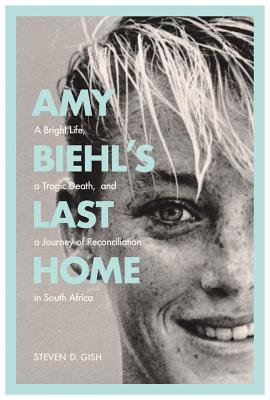
Amy Biehl’s Last Home: A Bright Life, a Tragic Death, and a Journey of Reconciliation in South Africa by Steven D. Gish

Sindiwe Magona reflects and asks; are there no lessons to be had from knowing something of that other world, the opposite environments to those that grow and nurture the likes of Amy Biehl; to grow up under the legacy of apartheid, a society where you were born a second-class citizen, a system that relegated black people to the periphery and treated them as sub-human.

What was the world of this young woman’s killers, the world of those, young as she was young, whose environment failed to nurture them to the higher ideals of humanity and who, instead, became lost creatures of malice and destruction?

In reality, there were four young men, in the novel there is just one. Through the mother’s narrative of her life raising her children in this oppressive environment, through her memories, we come to understand a number of factors that contributed to the continuing dehumanisation of a population that became more and agitated as the little they had was taken from them, destroyed, bulldozed over and opportunities few and far between and one race of privileged people responsible.

Mandisa’s Lament

Mandisa, bewildered and grief-stricken, on learning the news of her son’s involvement in this terrible tragedy, mines her memory and reflects on the life her son has lived, that brought them to this moment. In looking for answers she paints a vision of her son and his world, the world she has inhabited and done her best to navigate and lead her children through, as if in conversation with that other mother, the one who has lost a daughter, forever.

Forced Removals

What began as a rumour, that the government was going to forcibly remove all Africans from numerous settlements to a common area set aside for them all was initially laughed off, not believed. Everyone talked about it, but not with concern, it was impossible.

There were so many of us in Blouvlei, a tin-shack location where I grew up, Millions and millions. Where would the government start? Who could believe such a thing?

The sea of tin shacks lying lazily in the flats, surrounded by gentle white hills, sandy hills dotted with scrub, gave us (all of us, parents and children alike) such a fantastic feeling of security we could not conceive of its ever ceasing to exist. This, convinced of the inviolability offered by our tremendous numbers, the size of our settlement, the belief that our dwelling places, our homes, and our burial places were sacred, we laughed at the absurdity of the rumour.
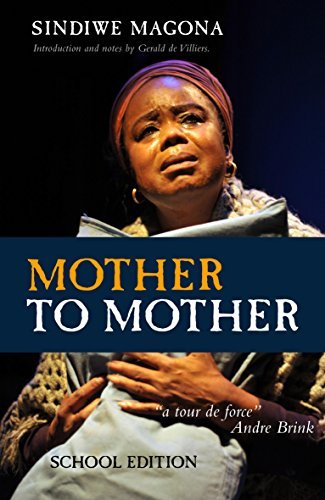
Mother to Mother by Sindiwe Magona "a tour de force" Andre Brink

But the government was not laughing. When the rumour paled and was all but forgotten, one day if returned with a deafening roar, as an aeroplane dropped flyers warning them all of the impending deadline, that they would be forcibly removed. To Guguletu.

A grey, unending mass of squatting structures. Ugly. Impersonal. Cold to the eye. Most with their doors closed. Afraid.

Oppressed by all that surrounds them…by all that is stuffed into them…by the very manner of their conception. And, in turn, pressing down hard on those whom, shameless pretence stated, they were to protect and shelter.

Segregation was enforced and black people were removed from their settlements, from suburbs where only white people would now live, pushed into a place and among people they did not know, in challenging conditions and the need to find work.

On A Dark Day, Resentments Build

The narrative is written in two timelines, the day of the protest, when Mandisa is sent home early from her job as a cleaner in a white woman’s home, due to the unrest – interspersed with memories of how their lives came to arrive at this point. She waits and waits for her son to come home and becomes increasingly concerned at his lack of appearance.

10.05 PM – Wednesday 25 August 1993

…where was Mxolisi? Not for the first time, I asked myself what it was that made him so different from the other two children… What had made Mxolisi stop confiding in me? And when had that wall of silence sprung between us? I couldn’t remember. He used to tell me everything…and then, one day I woke up to find I knew almost nothing about his activities or his friends.

As the family circumstances are shared and the life of this mother is revealed, I am reminded of the two autobiographies I have read, of the similarly challenging life and raising of her own children the author in similar circumstances. Although this is fiction, there is resemblance to her own circumstances, no doubt the reason why she understands this could so easily have been any one of those mothers in their neighbourhood.

The story leads up to the actual event, to what occurred on that day, the clash, the terrible crossing of paths, of being in the wrong pace at the wrong time, the burning hatred of an oppressor, the innocent face of one who looked like them, the dark desire of a race seeking revenge, the deep resentment of decades expressing itself in rage.

My son, the blind but sharpened arrow of the wrath of his race.

Your daughter, the sacrifice of hers. Blindly chosen. Flung towards her sad fate by fortune’s cruellest slings.

It is a courageous attempt to present a community in the grip of violent rage, to allow the voice of a mother to speak and share the growth of a family, the intense pain of all touched by a tragedy, to consider a path of redemption, to learn something from it. There may not be any conclusions, but perhaps we are all, all the better for being open to listen to the mothers, to find empathy for people doing the best they can in challenging circumstances. A thought provoking, powerful read.

Restorative Justice

In a final end piece to the story of Amy Biehl, after four men were convicted and given 18 -year prison sentences, there was in July 1987, an appearance before the Truth and Reconciliation Commission’s amnesty committee to argue for their release from prison, due to the politically motivated nature of the crime.

The parents, the Biehl’s attended the trial and shook hands with the parents of all four men. They understood the context of the South African struggle better than many South Africans.
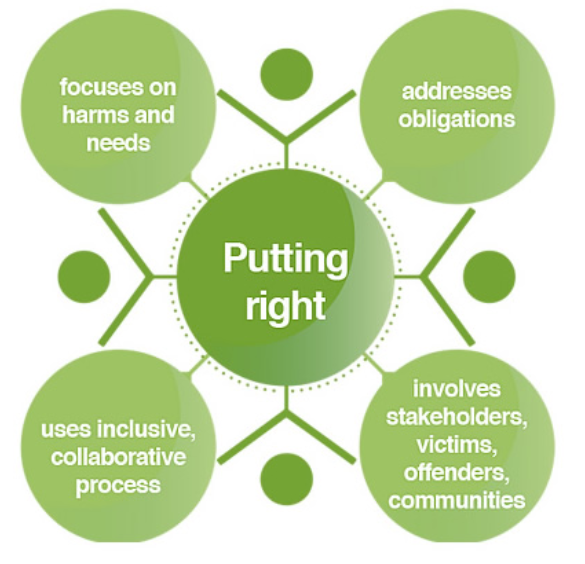
Restorative justice communities of care and reconciliation, victim reparation, offender responsibility and accountability

The men spoke and asked for forgiveness. After consideration, all four were pardoned and the Biehl family supported their release.

Linda and Peter Biehl created a humanitarian organisation, the Amy Biehl Foundation Trust to develop and empower youth in the townships, in order to discourage further violence.

Two of the men who had been convicted of her murder went on to work for the foundation as part of its programs.

Further Reading

Amy Biehl’s Last Home: A Bright Life, a Tragic Death, and a Journey of Reconciliation in South Africa by Steven D. Gish

South African Press Association: Excerpts from SAPA Coverage of Biehl Amnesty Trials

Author, Sindiwe Magona
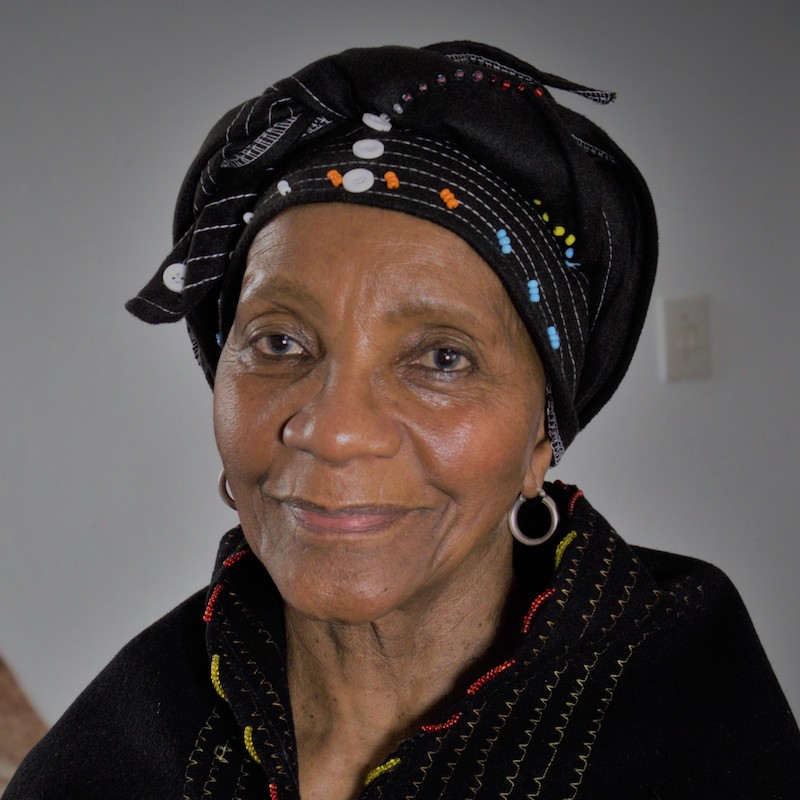
Sindiwe Magona (born.1943) a graduate of Columbia University, is an author, poet, playwright, storyteller, actor, and inspirational speaker. Magona retired from the United Nations, where she worked in the Anti-Apartheid Radio Programmes until June 1994 and UN Film Archives till her retirement. After twenty-five years in New York, she relocated to her home country, South Africa.

Her writings include To My Children’s Children and Forced to Grow (autobiography); Living, Loving, and Lying Awake at Night and Push-Push and Other Stories (short stories).

Her novels are When the Village Sleeps, Mother to MotherBeauty’s GiftLife is a Hard but Beautiful Thing (YA) and Chasing the Tails of My Father’s Cattle! Please, take photographs! a book of poetry, Modjaji Books and Awam Ngqo,(short stories) and Twelve Books of Folktales – written in both English and Xhosa.

Magona has written over a 120 children’s books, including: The Best Meal Ever and Skin We Are In and Her awards include include Honorary Doctorates from Hartwick College, USA; Rhodes University; and Nelson Mandela University; and the Order of iKhamanga.

My writing, on the whole, is my response to current social ills, injustice, misrepresentation, deception – the whole catastrophe that is the human existence. Sindiwe Magona

Next Up, the third novel : The Mothers by Brit Bennett

Madame Sosostris & the Festival for the Broken-Hearted by Ben Okri

I haven’t read a Ben Okri novel for a long time. He is well known for his third novel, the 1991 Booker Prize winning The Famished Road, the story of Azaro, a spirit child around the time of Nigerian independence; a challenging novel to read as it slips in and out of reality, and one the writer recalls being spooked by, as those spirits he wrote about crashed into his dreams.

There were times, writing at night, when the story I was telling would spook me. Those where nights when I feared for my sanity. I couldn’t shake the feeling that when people read the novel they’d think something was wrong with me. It must have taken a species of madness to write The Famished Road. It certainly took a stronger psyche than I realised I had to work on that taboo-breaking material, and to withstand the horrors involved. Writing about the spirit world at night, for a long period, is dangerous if you come from a land that believes in them. Spirit children, born several times to the same mother, have a special mythology about them, part dread, part magic.

Booker Prize Winner 1991 for The Famished Road Ben Okri Madame Sosostris homage to T.S. Eliot The Waste Land she  can be perceived as the central consciousness of the tale

There is something alluring about Ben Okri’s work, the way he seeks to portray a cultural inner authenticity that embraces the ordinary, the mythical, the poetic and the mysterious. It can feel slightly beyond reach, and then there are moments of universal resonance. A wonderful, considered author, who embraces all literature and forms.

For some time I had known that there is no objective reality that is true for everyone. There is only the reality perceived through culture, traditions, education, consciousness. We don’t see what is there. We see what we are taught to see. Our reality is a product of culture and consciousness. 

After the challenge of The Famished Road, I remember picking up the slimmer Astonishing the Gods, a beautiful fable-like story about being invisible and having the courage to go forth anyway; a man finds himself among invisible beings who live by one principle ‘to repeat or suffer every incident until we experience it properly or fully’ – the sort of book that was ideal to read in youth, one I loved for its magical element and transformative power when I read it in my 20’s.

Madame So So Sad, Sorceress or Alter Ego

ASo where does Madame Sosostris and the Festival for the Broken-Hearted fit? More along the lines of Astonishing the Gods for sure, with a nod in homage to T.S. Eliot’s (1888-1965) character in his epic poem The Waste Land, who may be perceived as this tale’s central consciousness. She comes from the first phase of that poem ‘The Burial of the Dead’, with its themes of sorrow and disappointment, of April and the cruelty in the coming of Spring. Eliot too, is said to have been referencing a character from Aldous Huxley’s Crome Yellow.

Madame Sosostris, famous clairvoyante,

Had a bad cold, nevertheless

Is known to be the wisest woman in Europe,

With a wicked pack of cards. 

The Novel

Okri’s Madame Sosostris is a modern fable, with a touch of cynisism and humour, it is about two upper-class power couples, one of the women has the idea to create a festival for those who have suffered loss but are never acknowledged, the brokenhearted. It has been 20 years since her own major heartbreak.

A Touch of Theatre

Much of this novella length story is dialogue and I couldn’t help but feel like I was watching a play, even the voices seemed louder as if projected out to an audience more so than to each other. We get the feeling that these people don’t much like each other and have long ago left their more authentic aspects of themselves behind.

We spend our lives trying to become ourselves. Few people ever succeed.

Photo by G. PITOIS Pexels.com

The festival will be a masked, costumed event, an idea they hope will allow people to reconnect with something more authentic, since no one will know who they are. This will prove strange to Viv, a member of the House of Lords, who is not used to being encountered by people who do not who she is or the position she holds in society.

But she soon realised that the things they were saying were genuine, that they wanted nothing from her, and had no idea who she was. This was disquieting and charming in equal measure. Disquieting because she was used to people reacting to her because of her money. She was used to the influence of her position in society, the power it gave her. Being liked without that power was new to her. But it did not alter her anxiety.

A Sacred Space in Nature to Unmask

A sacred forest in the south of France, Sainte Baume

It will be for one night only, abroad, in a sacred forest in the south of France. The special invitee is Madame Sosostris, whom they have come across once in the House of Lords (where one of the women works) who will do readings for each guest.

They had come to her weighed down with the dark burdens of their unendurable agonies. They left with a streak of light in their eyes. They were people who had chewed their innards and devoured their own hearts. They were locked in the narrow space of their beings. They were imprisoned for long periods of time in the hell of their own minds, turning over their agonies till they grew and filled their world. What most of them needed was a glimpse beyond themselves, a glimpse of something real, something with the texture of dry bone, the fragrance of a dead beetle, the roughness of a cement wall.

When plans go awry, it becomes necessary to adapt and step out of comfort zones. Some will rise to the occasion, others will be destabilised by it. Ultimately, the couples all experience moments of consciousness raising and are changed in some way by their encounter.

The novel explores identity and personality and how society reinforces these constructs which move further and further away from the authentic, creating a mirage masking the true self. It demonstrates how a shift in perspective and stepping outside oneself can be beneficial to the psyche.

It’s an entertaining read, that plays around with what is real, what is seen and unseen, thought provoking in a theatrical sense and ready for the stage in my humble opinion.

Further Reading/Listening

An Interview: Ben Okri – How The Famished Road was Written on a Magic Tide of Freedom

Listen To: Ben Okri Talking About T.S. ELiot and The Waste Land (16mins)

Guardian: Madame Sosostris & the Festival for the Broken-Hearted by Ben Okri review – a slender fable

Ben Okri, Author

Sir Ben Okri was born in Minna, Nigeria. His childhood was divided between Nigeria, where he saw first-hand the consequences of war, and London.

His writing has used magic realism to convey the social and political chaos in the country of his birth, however no two books are the same exploring themes of reality, unreality, society, storytelling, freedom, magic, consciousness, history, politics, justice.

His books include The Last Gift of the Master Artists (2022), The Freedom Artist (2019); the short story collection Prayer for the Living (2019); the prose-poetry hybrids Tales of Freedom (2009) and A Time for New Dreams (2011); the long poem Mental Fight (1999); the essay collection A Way of Being Free (1997); the poetry collection An African Elegy (1992); and the Booker Prize-winning novel The Famished Road (Anchor, 1991).

He has won many awards over the years, including the Booker Prize for Fiction and is also an acclaimed essayist, playwright, and poet. In 2019 Astonishing the Gods was named as one of the BBC’s 100 Novels That Shaped the World. In June 2023 he was awarded a knighthood in the King’s official birthday honours.

Booker Prize 2025

The longlist for the Booker Prize 2025 will be announced on Tuesday, 29 July 2025. The shortlist of six books will be announced on 23 September and the winner will be announced on 10 November.

Have you read any Ben Okri books? Let us know in the comments below?

N.B. This book was an ARC (Advance Reader Copy) kindly provided by the publisher via NetGalley.

By the Sea (2001) by Abdulrazak Gurnah

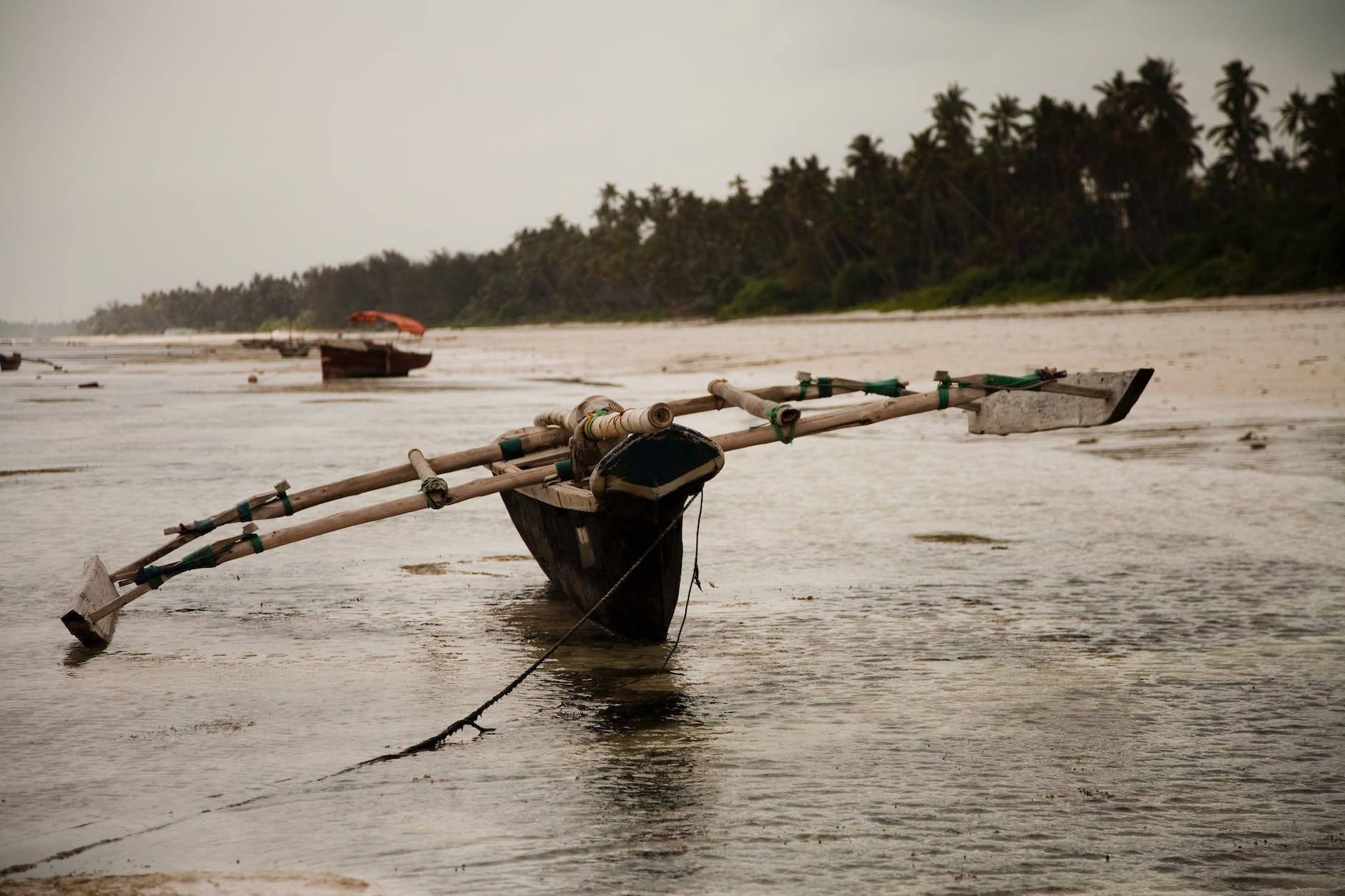
By the Sea begins as a compelling narrative and mystery of a man who arrives at Gatwick airport from Zanzibar without a visa and refuses to speak English, until the crucial moment where he is about to be deported and he utters the words that will change his trajectory.

Refugee. Asylum.

Old Scores Revisited

Nobel Prize for Literature 2021 Zanzibar Tanzania witing about immigration culture refugees requesting asylum

In trying to locate someone to translate for him, Latif is contacted and the two men realise there is a connection, a history that has perpetuated with major gaps on either side of their understanding, voids often filled by those wishing them ill.

Their story began by the sea and concerned a fragrance Ud-al-qamari, and would be retold far away where few understood the nature of their feuds and punishment, of corruption and power, petty rivalries over debts, possessions, and influences that could drive a man to flee for his life.

The man I obtained the ud-al-qamari from was a Persian trader from Bahrain who had come to our part of the world with the musim, the winds of the monsoons, he and thousands of other traders from Arabia, the Gulf, India and Sind, and the Horn of Africa. They had been doing this every year for at least a thousand years. In the last months of the year, the winds blow steadily across the Indian Ocean towards the coast of Africa, where the currents obligingly provide a channel to harbour. Then in the early months of the new year, the winds turn around and blow in the opposite direction, ready to speed the traders home.

Time Dismembers, Perceptions Unremembered

Told in three parts, the first two focus on each of these characters and their early life in Zanibar and something of their present, while the third part is a kind of oral storytelling as the two meet and their intertwined story is retold from start to finish until a different connection emerges, as they find themselves newly isolated in this place around people uninterested in their journey.

So time dismembers the images of our time. Or to put it in an archaeological way, it is as if the details of our lives have accumulated in layers, and now some layers have been displaced by the friction of other events, and bits of contingent pieces still remain, accidentally tumbled about.

A drama of disappointment, self-deception and renewal, the novel explores both the double bind of the known culture that entraps, and the unknown culture that frees but isolates the individual, for their betterment, yet never quite attaining an imagined, desired status.

Like Admiring Silence, an excellent, astute read by an accomplished author.

Further reading

My review of Admiring Silence (1996)

Nobel Prize Interview with Abdulrazak Gurnah

Article Guardian on Winning the Nobel Prize

New York Times: Abdulrazak Gurnah Refuses to Be Boxed In: ‘I Represent Me’

Abdulrazak Gurnah, Author

Abdulrazak Gurnah was the Winner of the Nobel Prize for Literature in 2021 for

‘his uncompromising and compassionate penetration of the effects of colonialism and the fate of the refugee in the gulf between cultures and continents’,

He was born in 1948 and grew up on the island of Zanzibar in the Indian Ocean, arriving in England as a refugee at the end of the 1960s. After the liberation from British colonial rule in December 1963 Zanzibar went through a revolution which led to oppression and persecution of citizens of Arab origin; massacres occurred. Gurnah belonged to the victimised ethnic group and after finishing school was forced to leave his family and flee the country, by then the newly formed Republic of Tanzania. He was eighteen years old. Not until 1984 was it possible for him to return to Zanzibar, allowing him to see his family shortly before the father’s death.

Themes of Refugee Disruption

Gurnah’s writing is from his time in exile but pertains to his relationship with the place he had left, which means that memory is of vital importance for the genesis of his work. 

The theme of the refugee’s disruption runs throughout his work. His novels depict a culturally diversified East Africa. His dedication to truth and aversion to simplification are striking. It can make the work bleak and uncompromising, however he follows the fates of characters with great compassion and unbending commitment.

His novels include Paradise (1994), which was shortlisted for both the Booker and the Whitbread Prize; By the Sea (2001), which was longlisted for the Booker and shortlisted for the Los Angeles Times Book Prize; and Desertion (2005), shortlisted for the Commonwealth Writers’ Prize. His most recent novel Theft (2025) is the story of the intertwined lives of three young people coming-of-age in postcolonial East Africa, selected as a book to look out for in 2025 by the GuardianObserverIrish Times and BBC.

Until his retirement he had been Professor of English and Postcolonial Literatures at the University of Kent in Canterbury, focusing principally on writers such as Wole Soyinka, Ngũgĩ wa Thiong’o and Salman Rushdie.

Small Worlds by Caleb Azumah Nelson

Cover of Small worlds by Caleb azumah nelson bestselling author of Open Water. The book sits on a piece of yellow, green gold Nigerian wedding fabric

What a brilliant novel this was. I loved it.

It might even be my Outstanding Read of 2025.

A meandering story-line, spanning 3 years, the introspective excavating of a young British-Ghanaian man’s soul and the situations he will encounter and confront, as he matures and grows into a version of himself that he likes.

I highlighted SO many passages.

Moments of Bliss, Small Worlds

Small worlds describes the way Stephen has learned to see things. It is his way of identifying and capturing certain moments, especially the loving, the poignant, the fleeting, the good.

A coming-of-age story set mostly in Peckham, London, it follows Stephen as he navigates the period in his life when he is separating from friends and his parents, from all that he knows. Simultaneously, he is moving from letting things happen to him and suffering, towards sitting with what is, reflecting, rejecting, embracing, understanding. A journey the evolves over three years.

the beats, the rhythm, the soul – A trio

Photo by Victor Freitas Pexels.com

Introspective and sensitive, music plays a large role in his mood, his management of his emotions, his friendships and the collective memory of Ghana, a country he is connected to but did not grow up in, a place that separates him from his family as much as it is a part of them all.

The novel is set over three years, written in three parts, like a jazz trio of piano, bass and drummer.

Part One – Two Young People in the Summertime (2010)

The summer after Stephen and all his friends have finished school and they are deciding what comes next. Stephen and his long-known friend Del are both applying to study music. This summer they start to look at each in a different way, to feel something, they are light-footed, beach going, feeling like something good is coming.

When Stephen’s path changes course, he deals with isolation and separation, unable to even find solace in his instrument, the trumpet, or music. His emotions run deep and he withdraws from them.

Part Two – A Brief Intimacy (2011)

Stephen is working with his friend Nam, training to become a chef. The owner Femi has split allegiances, a Ghanaian mother and Nigerian father mean they serve Ghanaian food and play Nigerian music, and they all know about the 1983 Nigerian Presidential executive order, the mandate of Ghana Must Go that affected an estimated 2 million people living in the country.

Rhythm returns to his life and he feels it everywhere. The observations of bits of daily life, poetic, vibrant, rhythmic and upbeat.

Back in Peckham, it’s here too, this rhythm happening everywhere, as I take my time to wander home: in the dash of four boys dressed in black, trying to beat the bus round the curve, soft socks in sliders slapping the ground. The song of a passing car, distant bass finding a home in my ears, the low, slow rumble calling attention the way thunder might ask you to check the sky for rain. The haggling taking place at the butcher’s and the grocer’s, the disbelief that it’s now three plantain for a pound, not four. In the sadness as I pass the spot where Auntie Yaa’s shop used to be, where she would make sure everyone was looked after. In the joyful surprise when I run into Uncle T, his mouth full of gold like its own sunshine. The couple I pass in the park, holding each other close, her head turned away from his, a smile on his face even as he pleads with her, babe, I didn’t mean it. In the distance she holds him, to see if he’ll come closer, because sometimes it’s not enough to say it, you have to show it too. In the conviction I share with many that this stretch, from Rye Lane to Commercial Way, is where our small world begins and ends. There’s rhythm happening, everywhere; all of us like instruments, making our own music.

But expectations, old trauma and shame linger and until they can be addressed, they undermine relationships, cause rupture, rigidity and regret. So much still to recognise, dismantle, overcome and heal. And Stephen explores it all.

I’m slowly taking myself apart, so I might build myself up once more. And as part of this undoing, I want to ask him, why?And then there are those aspects of the outside world, not so far away, that seethe with unresolved anger and hatred, that threaten to close in on them. A raising of public consciousness and a shift in perception.

Part Three – Free (2012)

Photo by Kh-ali-l i on Pexels.com

Stephen takes time off after the turn of events and pays a visit to Ghana. His trip heralds a reckoning.

Still, of late I’ve felt the urge for more. I’ve always had a decent grasp on who I am, or where I might find myself, but I’ve never really known where I’ve come from. This trip has started a shift. There are gaps which my father might fill, with his own story. I want him to tell me who he is, or who he was. I want to know who he was when he was twenty. I want to know what he dreams of, where he finds freedom.

Melody, discord, harmony and triumph – a story through music

As we read, there are songs Stephen chooses to accompany him. Often as I read, I stop to listen and look up the artist, reminding me of the enjoyment I had reading Bernice McFadden’s The Book of Harlan (reviewed here). It can add so much more to the experience, when music with a cultural influence is present, calibrating the reader’s imagination with the mood of the story.

The way the story comes full circle, when by the end, Stephen’s father accepts his son’s invitation to come with him, to share a meal, to listen to ‘Abrentsie’ by Gyedu-Blay Ambrolley, the book morphed into scenes of a wonderful film that I was simultaneously watching and reading. I wished I weren’t on the last pages, because it felt so good to witness the transmutation of emotion into a new way forward, that was something like the old, but different; accepted, something they will be able to nourish and grow from.

Highly Recommended.

I’m happy knowing I have still to read his debut, Open Water now being made into a BBC 8 part series.

Further Reading

Interview Guardian – Novelist Caleb Azumah Nelson: ‘there is a wholeness in living life not always afforded to black people’ – Apr 2023

Afreada – Caleb Azumah Nelson In Conversation – Interviewed by Nancy Adimora and Amanda Kingsley

Author Interview – 21 Questions with Caleb

Caleb Azumah Nelson, Author

Caleb Azumah Nelson is a British-Ghanaian writer and photographer living in south-east London.

His first novel, Open Water, won the Costa First Novel Award, Debut of the Year at the British Book Awards, and was a number-one Times bestseller. It was shortlisted for the Dylan Thomas Prize, the Sunday Times Young Writer of the Year Award, Waterstones Book of the Year, and longlisted for the Gordon Burn Prize and Desmond Elliott Prize. He was selected as a National Book Foundation ‘5 under 35’ honoree by Brit Bennett.

Small Worlds, his second novel won the Dylan Thomas Prize (2024) (a prize that celebrates exceptional literary talent aged 39 or under), cementing the 30-year-old British-Ghanaian author as a rising star in literary fiction. The judges had this to say:

 “Amid a hugely impressive shortlist that showcased a breadth of genres and exciting new voices, we were unanimous in our praise for this viscerally moving, heartfelt novel. There is a musicality to Caleb Azumah Nelson’s writing, in a book equally designed to be read quietly and listened aloud. Images and ideas recur to beautiful effect, lending the symphonic nature of Small Worlds an anthemic quality, where the reader feels swept away by deeply realised characters as they traverse between Ghana and South London, trying to find some semblance of a home. Emotionally challenging yet exceptionally healing, Small Worlds feels like a balm: honest as it is about the riches and the immense difficulties of living away from your culture.”

The Girl With the Louding Voice by Abi Daré

Back in September 2024, I visited the small Provençal village of Ansouis for their annual vide grenier which included a corner of tables where the local French library sell second hand books in French and English. I like to donate a couple of boxes of books and try not to be too tempted by what I find.

Nigerian Literature and Storytelling

The Girl With the Louding Voice was one of the titles that jumped out at me that I couldn’t resist picking up.

I enjoy Nigerian literature and storytelling, all more so because I visited Lagos for a friend’s wedding many years ago and writing like Abi Daré’s evokes all the senses that bring back memories of being in that place and time.

Not only the location, but the descriptions of people’s lives sounded familiar, those that have been educated outside and come back, the self-made women entrepreneurs who just get on and create businesses as well as raise families and those that you know have never been outside of their country, trying to make their way.

Loss of a Mother Changes Everything

A young girl from a Nigerian village whose life changes multiple times, but a desire for an education, never

14 year old Adunni’s life changes after the death of her mother, who had been keeping the family afloat. Despite the husband having made promises to his dying wife not to marry off his only daughter, he’s unable to keep up with paying the rent and soon his daughter has been promised as the 3rd wife of a much older man.

Why will Morufu pay our community rent? What was he wanting? Or is he owing Papa money from before in the past? I look my papa, my eyes filling with hope that it is not the thing I am thinking. ‘Papa?’

‘Yes.’ Papa, wait, swallow spit and wipe his front head sweat. ‘The rent money is … is among your owo-ori.’

‘My owo-ori? You mean my bride price?’ My heart is starting to break because I am only fourteen years going on fifteen and I am not marrying any foolish stupid old man because I am wanting to go back to school and learn teacher work and become a adult woman and have moneys to be driving car and living in fine house with cushion sofa and be helping my papa and my two brothers.

Marrying Morofu puts Adunni into an environment where a woman’s value is defined by her ability to bear male babies and one where she is in competition with other wives. Adunni doesn’t wish to bring more children into the world with no chance at an education, or voice.

Education is Key

Adunni has held aspirations of continuing her education ever since it was cut short and it is one element of belief and resilience that carries her through the challenges that confront her when a sudden tragedy causes her to flee her situation.

When she finds herself in the busy city of Lagos, working for the self-made Big Madam, she hopes her luck might change. She manages to steal time in the library where she comes across a dictionary and a book of Nigerian facts, in which are written things like:

Fact: Nigerians are known for their love of parties and events. In 2012 alone, Nigerians spent over $59 million on champagne.

Cover of the girl with the louding voice against a blue winter sku

Adunni learns facts about her country, dictionary definitions and new vocabulary and tries to keep herself safe and true to her ideal. Fortunately she also meets one or two characters who look out for her, however Big Madam seems intent on crushing her spirit.

As the novel ends, it feels like a new chapter of her life is beginning and that we may not have heard the last of Adunni.

It’s an excellent read that is very evocative of place, the descriptions of Lagos put you right there, as were the descriptions of the contrasting lives of the haves and the have nots. It highlights that fact that despite the patriarchal society, many households and entrepreneurial businesses are run by women and much of the fragment of society is kept together by their determined contribution and drive.

‘My mama say education will give me a voice. I want more than just a voice, Ms Tia. I want a louding voice,’ I say. ‘I want to enter a room and people will hear me even before I open mout to be speaking. I want to live in this life and help many people so that when I grow old and die, I will still be living through the people I am helping.’

Highly Recommended.

If You Like This Book

Reading The Girl With the Louding Voice reminded me of the equally excellent novels Nervous Conditions (my review here) (the first in a trilogy) by Tsitsi Dangarembga (Zimbabwe) and The Son of the House (reviewed here) by Cheluchi Onyemelukwe-Onuobia (Nigerian/Canadian), which was shortlisted for the Scotiabank Giller Prize (2021).

Author, Abi Daré

Abimbola (Abi) Daré grew up in Lagos, Nigeria and has lived in the UK for eighteen years. She studied law at the University of Wolverhampton and has an M.Sc. in International Project Management from Glasgow Caledonian University as well as an MA in Creative Writing at Birkbeck University of London.

The Girl with the Louding Voice won The Bath Novel Award for unpublished manuscripts in 2018 and was selected as a finalist in 2018 The Literary Consultancy Pen Factor competition. It has been translated into 20 languages.

Her second novel And So I Roar follows Adunni’s and Ms Tia’s journey and was published in 2024. Listen here to Abi Daré talk about the new novel and some of the interesting people who reached out to her after reading her debut, in this 90 second summary of And So I Roar.

In 2023, she established the Louding Voice Educational and Empowerment Foundation in Nigeria, a nonprofit dedicated to providing scholarships to young girls in rural Nigeria.  It exists as a testament to the belief that education and empowerment can be a beacon of change for girls trapped in the shadows of domestic labor and gender-based violence in Nigeria.

Abi lives in Essex with her husband and two daughters, who inspired her to write her debut novel.

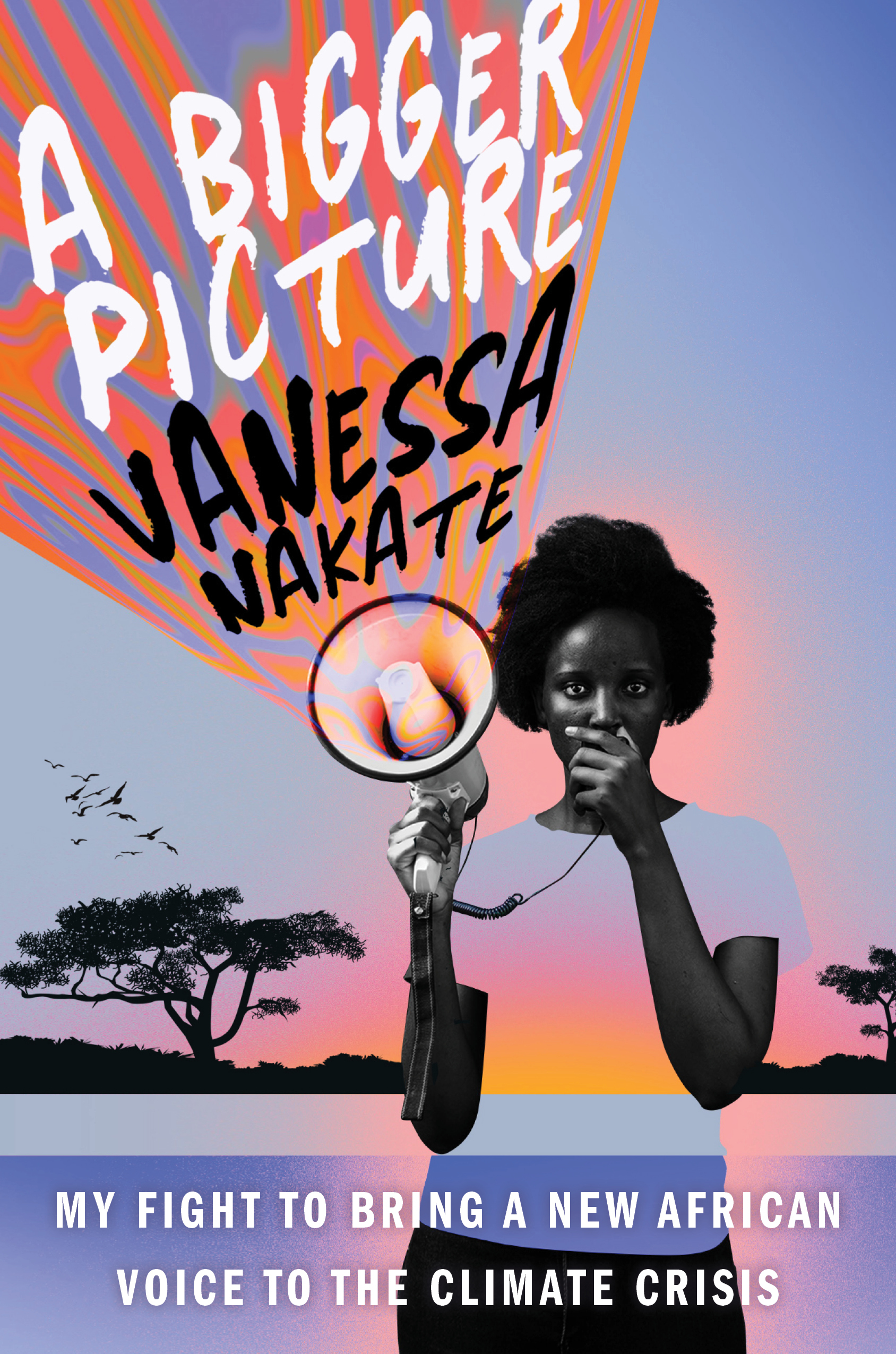
A Bigger Picture by Vanessa Nakate

My Fight To Bring A New African Voice To The Climate Crisis

Vanessa Nakate is a young Ugandan woman who became concerned about the effect of climatic conditions and change on her country and in particular the knock on effect floods, crop destruction would have on women and girls, disproportionately affected, as explained in her book.

Alternative Learning Experiences for Children

climate change literature Kenya African Voices

She decided to organise a strike, just herself, her two younger brothers (14 & 10), two visiting cousins (11 &9) and another cousin her age. It would be the six of them, holding up a few placards they made, and they would stand in four busy locations in Kampala, moving from each place after 30 minutes when her alarm went off.

“What shall we write?” Varak, the nine-year-old asked.
I wanted us to express something positive, and to ensure that my younger family members held placards they themselves would understand. We decided to pick slogans we thought wouldn’t be too threatening, and so wrote several, in English.
Trees Are Important For Us
Nature Is Life
When You Plant A Tree, You Plant A Forest
Thanks For The Global Warming (that was our sarcastic one) and
Climate Strike Now
We also drew some trees next to the letters.

Nothing dramatic happened, no one told to stop, but it was the beginning of an interest, of a young woman finding her cause and taking an action, that would lead her to learning and discovering more, to connecting with others, to finding local solutions and developing a presence and a new voice, on an international stage.

One woman stopped and told them of some trees being cut down to make way for a school, that they should be stopped. Each time Nakate went out and had the opportunity to engage or had a response on social media, it would often lead her to the next idea, it would put her in touch with others who genuinely wanted something to be done, their voices to be heard.

How One Exclusion Can Lead to Greater Inclusion

It is an excellent read, because it follows her personal journey, as a young person with little knowledge about activism and from this small spark of quiet daring (despite her anxieties, insecurities and fear of judgement), she shares her perseverance, her growing knowledge, the first invitations to attend international conferences and events, to a tipping point, when many more (including me) would hear about her – after she was cropped out of a photograph of young climate change activists including Greta Thunberg at Davos, Switzerland during the WEF (World Economic Forum) in January 2020.

My message was, and is, straightforward: People in Uganda, in Africa, and across what’s called the Global South, are losing their homes, their harvests, their incomes, even their lives, and any hopes of a livable future right now.

The Quiet Methodical, Cooperative Approach

What makes her message and her actions all the more interesting is that she takes a quiet methodical approach to doing things in her own authentic way, in a country where she is aware of both dangers and expectations, so does nothing foolhardy, acting responsibly.

However, when there is the opportunity for advancement of her cause and for manageable solutions she can implement herself, she steps up to those and has helped make life more amenable for many families already, while continuing to pursue the wider message, especially to young people, future leaders, for whom it will be better if they encounter this knowledge through their early education, than as adults already fixed in their opinions or influenced by position or power.

Since I’m always looking for solutions that reflect reality and the need to get the message out, I decided that instead of suggesting that students walk out of classes, I’d try to take the climate strikes into schools – where they could form part of the curriculum in a way that I’d wished climate change had been when I was a young girl.

The first school she approached in this way was open to this collaboration, the teachers assembled 100 students inside the compound, Vanessa Nakate gave a short speech explaining what the strike was about, in a way that could relate to and then lead them in a chant, the teachers encouraging the children to chant even louder.

What do we want? Climate justice. When do we want it? Now.

Genuine Efforts and Action Do Get Noticed

In 2019 she received an email from the UN Secretary General’s office in New York, an invitation to attend the Youth Climate Summit. Understandably, she and her parents didn’t think it was real, but it was, she would be the first person in her family to travel outside of Uganda and that would signify a new beginning in her self-appointed role.

The first half of the book is about the development of her role, the logistics of trying to attend events and to becoming involved in meaningful solutions at home, such as the Vash Green Schools Project (supports the installation of solar panels and building clean cooking stoves in primary schools) and to realising the need for self-care due to overwhelm.

Role Models and Inspiration, Making Connections

The second half gives a bigger picture of the wider issues, sharing information from others she interviewed and has been inspired by, including the late Wangari Maathai, the inspiring Kenyan woman who created the Green Belt Movement and made much progress (often hindered by men in power) who was the first African woman to win the Nobel Peace Prize in 2004 for ‘her contribution to sustainable development, democracy and peace’. Read my review of her autobiography Unbowed here.

Coincidentally COP28 is happening right now in Dubai and Vanessa Natake is there with others trying to get their message across to world leaders who have the power to phase out fossil fuels and support equitable and safe renewable energies. Her article appearing in today’s Guardian below.

I really enjoyed reading this book and learning more about how Vanessa Natake became a voice for her country and continent and inspired so many youth and adults to both learn and do more to try and halt the destruction that is affecting them all.

Highly Recommended.

Further Reading

The Guardian Opinion: At Cop28 it feels as if humanity’s shared lifeboat is sinking by Vanessa Nakate

Author & Activist, Vanessa Nakate

Vanessa Nakate is a Ugandan climate justice activist. She grew up in Kampala and started her activism in December 2018 after becoming concerned about the unusually high temperatures in her country. Inspired by Greta Thunberg to start her own climate movement in Uganda, Vanessa Nakate began a solitary strike against inaction on the climate crisis in January 2019. She founded the Youth for Future Africa and the Africa-based Rise Up Movement and spearheaded the Save Congo Rainforest campaign.

She has addressed world leaders at multiple climate summits and appeared on the cover of TIME magazine in 2021 (featuring on the Time100 Next list in 2021). She was appointed a UNICEF Goodwill Ambassador in 2022.

Nakate and her work have been featured in the New York Times, the Guardian,Yes!,Vox, Vogue, the Huffington Post, the International Women’s Forum, and the Global Landscapes Forum, and on globalcitizen.org, greenpeace.org, CNN, the BBC, PBS, and United Nations media. She lives in Kampala, Uganda.

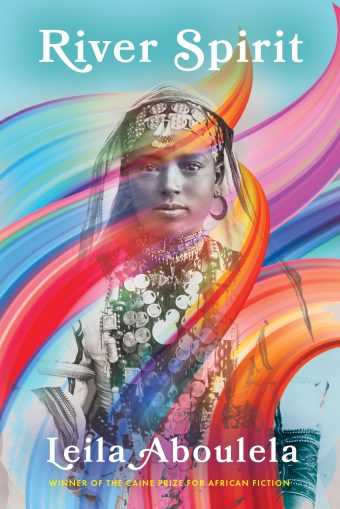
River Spirit by Leila Aboulela

I have now read three novels by Leila Aboulela and enjoyed them all, her historical fiction has taken me into parts of history that I’ve known nothing about and she brings a fresh, unique perspective, thanks to her cross-cultural life experience, at the intersection of being a Muslim woman of Sudanese origin living in Scotland.

I was very much looking forward to this latest novel as she returns within it to her country of origin and tells us a story that begins in a village and moves to the city of Khartoum, Sudan, intertwining the crossover histories of two occupying Empires against a uprising local population, at the very place where two grand rivers meet.

Grandiose Empires and A False Prophet

White Nile Blue Nile Khartoum Sudan conflictRiver Spirit is a unique work of historical fiction set in 1890’s Sudan, at a turning point in the country’s history, as its population began to mount a challenge against the ruling Ottoman Empire, only the people were not united, due to the opposition leadership coming from a self-proclaimed “Mahdi” – a religious figure that many Muslims believe will appear at the end of time to spread justice and peace.
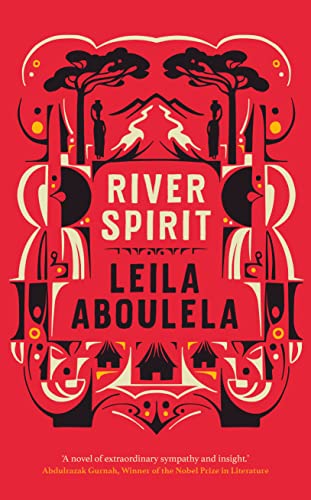
The appearance of ‘the Mahdi’ or ‘the false Mahdi’ created a division in the population and provided a gateway for the British to further a desire to expand their own Empire, under the guise of ousting this false prophet. However for a brief period, this charismatic leader would unite many who had felt repressed by their circumstances, inspiring them to oust their foreign occupiers by whatever means necessary, even if it also set them against their own brothers and kinsmen.

Orphans, A Merchant, A Promise

Against this background, Leila Aboulela tells the story of orphan siblings, Akuany and Bol, and their young merchant friend Yaseen, a friend of their father; their parents were killed in a slave raid on the village, the merchant made a promise to protect these two youngsters, forever connecting them to his life.

The story is told through multiple perspectives, mostly in the third person perspective, from Akuany (who becomes enslaved to both an Ottoman officer and a Scottish painter at various points and is renamed Zamzam) and Yaseen’s point of view, as well as one of the fighters of the Mahdi, Musa.

Leila Aboulela Sudan 1890s historical fictionThe change in perspective and the lack of a first person narrative keeps the characters at a slight distance to the reader as we follow the trials of Zamzam’s life and her dedication to being a part of Yaseen’s life. Like other readers, I wished at times that the story was told in the first person from her point of view, but the story is too important to be limited to one perspective.

So the reader is taken on a journey through the shifting viewpoints of all parties implicated and affected by the approaching conflict, those of fervent belief, the skeptical, outsiders with ulterior motives, and the innocent, the women and children trying to live ordinary family lives amid the power struggles of patriarchal dominance and colonial selfishness.

Yaseen decides to become a scholar, a decision that changes his life and opportunities; he meets the Mahdi and is unconvinced, an opinion that will become dangerous and have repercussions for him and his family.

As the revolutionary Mahdi leader grew in popularity and his followers in confidence, Sudan began to slip from the grasp of Ottoman rule and everyone was forced to choose a side, whether for personal, political or religious reasons. The (religious) confusion created by the implication of accepting this new leader ,became a strategic opportunity for British colonial interests to gain access to natural resources and secure control of the Nile ahead of other European interests was well as protecting their interests in Egypt. The real threat for both the Ottoman and British Empires, was the potential for the creation of a new independent power, one that came from within Sudan. That, clearly, they were likely to undermine.

What has changed is that this is now a massive rebellion against a major power. The fake Mahdi has coalesced the nation’s sense of injustice.

Two Rivers Entwine, the Nile

River Spirit The Nile Leila Aboulela SudanOnce Akuany and her brother leave the family village, most of the story takes place in Khartoum, a city that is at the confluence of the Blue Nile and the White Nile, two major rivers that join to become the Nile proper, the longest river in the world, that continues on through Egypt to the Mediterranean.

The river is part of Akuany’s story, part of her being and a symbol of her twin selves, one free, one enslaved, of twin occupying forces, the Ottoman and British Empires, of the many aspects in the story where twin forces clash, mix and become something new. It represents her devotion to her brother and to the merchant Yaseen, to a focus that drives her forward through the changing circumstances of her life. The two rivers arrive from different sources in a city that is full of many coming from elsewhere, where agendas often clash and local people get caught on the crossfire of inevitable conflict.

She was not one of them, but she was like them. She was also one of the lowly rising, one of the poor benefiting, one of the featherweight children of this land, thrust up by this shake-up, loosened and made free to stand up and grab what was there on offer, what she had always wanted.

One of the things I particularly enjoyed about the story, was the focus of the story coming from characters within the population, that we witness things from within, through the eyes of both a simple, loyal but marginalised, servant girl and through a young educated man, both of whom are from Sudan. They are living in turbulent times and are witness to the effect various powerful influences have on their city and in the case of ZamZam the effect on her person, treated as an object of ownership.

Cycles of Conflict, Khartoum Today

The novel was published on March 7th, 2023, a mere month before two Generals again plunged Sudan into armed conflict with devastating consequences for civilians and civilian infrastructure, especially in Khartoum and Darfur. At least 676 people have been killed and 5,576 injured, since the fighting began. (14 May, UN source)

Over 936,000 people have been newly displaced by the conflict since 15 April, including about 736,200 people displaced internally since the conflict began, and about 200,000 people who have crossed into neighbouring countries, including at least 450,000 children who have been forced to flee their homes.

“Fanatics can never draw out the good in people. They will go to war I predict. They will raise armies, invade, and pillage because it is only aggression that will keep their cause alive. Fighting an enemy is always easier than governing human complexity.”

Further Reading

New York Times: Amid Conflict and Cruelty, a Love Story That Endures by Megha Majumdar, March 7, 2023
Brittle Paper: A Compelling Tale of Love and Anti-Colonialism in 19th Century Sudan by Ainehi Adoro, May 16, 2023

The Scotsman, Book Review by Joyce McMillan

Brittle Paper, Interview: “We Need to Hear the Stories of Africa’s Encounter with Europe from Africans Themselves” | A Conversation with Leila Aboulela

Africa in Words (AiW) Interview: Review and Q&A: Leila Abouleila’s ‘River Spirit’ – Rewriting the Footnotes of Sudanese Colonial History by Ellen Addis

Leila Aboulela, Author

River Spirit Sudanese historical fiction MahdiLeila Aboulela is a fiction writer, essayist, and playwright of Sudanese origin. Born in Cairo, she grew up in Khartoum and moved in her mid-twenties to Aberdeen, Scotland. Her work has received critical recognition and a high profile for its depiction of the interior lives of Muslim women and its distinctive exploration of identity, migration and Islamic spirituality.
She is the author of six novels: River Spirit (2023), Bird Summons (), Minaret (2005), The Translator (1999), a Muslim retelling of Jane Eyre, it was a New York Times 100 Notable Books of the Year, The Kindness of Enemies (2015) and Lyrics Alley (2010), Fiction Winner of the Scottish Book Awards. Leila Aboulela was the first winner of the Caine Prize for African Writing and her latest story collection, Elsewhere, Home (2018) won the Saltire Fiction Book of the Year Award.

Her work has been translated into fifteen languages and she was long-listed three times for the Orange Prize, (now the Women’s Prize for Fiction).

“We need to hear the stories of Africa’s encounter with Europe from Africans themselves. Mainstream colonial history has been viewed and written through the lens of Europe. This is insufficient for us in these contemporary times and as Africans we need to write our own history. ” Leila Aboulela, interview with Brittle Paper.

Things They Lost by Okwiri Oduor

A Focus on World Literature

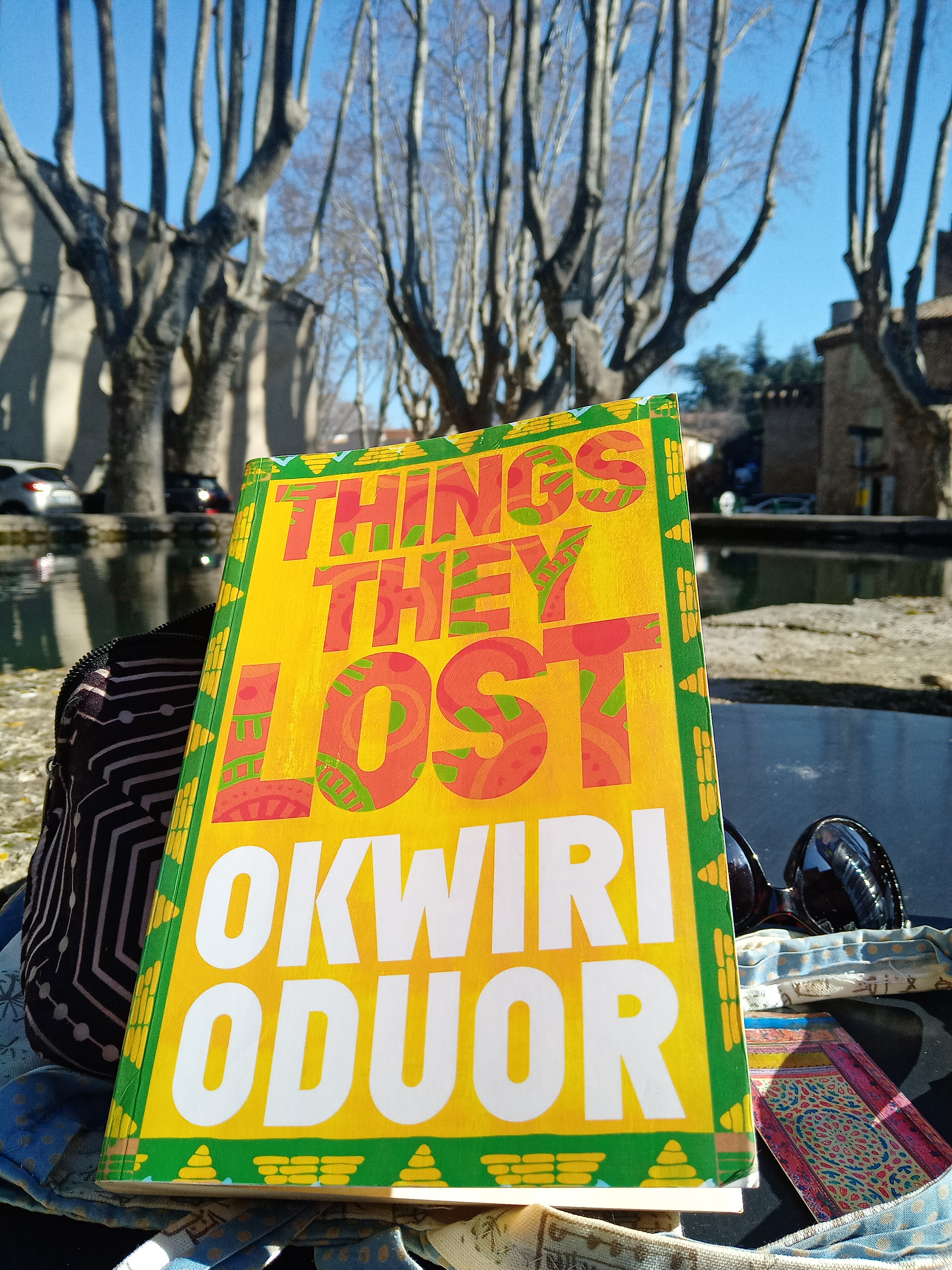
I came across Kenyan author, Okwiri Oduor’s Things They Lost in 2022 while perusing OneWorld Publications, one of my favourite indie publishers. Their books are described as:

“emotionally engaging stories with strong narratives and distinctive voices. In addition to being beautifully written, we hope our novels play their part in introducing the reader to a different culture or an interesting historical period/event, and deeply explore the human condition in all its vagaries”

Some of the wonderful books they have published that I have read and reviewed are Ugandan author, Jennifer Nansubuga Makumbi’s Kintu and The First Woman, Russian author Guzel Yakhina’s Zuleikha, Lebanese author Hoda Barakat’s Voices of the Lost, Iraqi author Shahad Al Rawi’s The Baghdad Clock and Korean author Sun-mi Hwang’s The Hen Who Dreamed She Could Fly.

Otherworldly Surrealism that Feels Real

Kenyan literary fiction Dylan Thomas Award 2023Things They Lost is a coming-of-age tale of a young girl who is highly intuitive and sensitive to other spiritual dimensions. She has always been aware of the presence of entities that may not be apparent to others, although some of the women around her also have perceptive abilities.
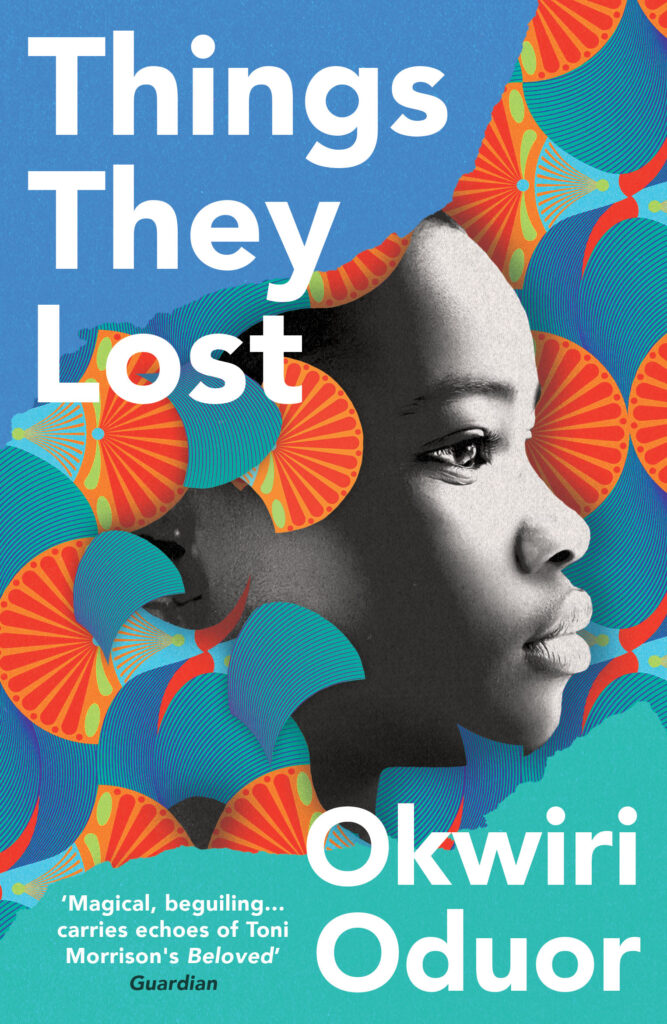
I absolutely loved this novel and was pulled in by the narrative voice immediately. It was one that gave me a frisson of excitement very early on, that feeling of having encountered an author that might become a favourite, their assured use of language above and beyond the norm.

Ayosa Ataraxis Brown is a character that is going to stay with me for a long time. She is 12 years old and lives virtually alone in a large house that has passed down the family since the English woman Mabel Brown first arrived and built a house and employed enough people to call the surrounding area Mabel Town. It has now evolved into the more aptly named Mapeli Town.

It was not so much a deformation as an emancipation, for the name had softened, and could wedge itself better in the townspeople’s mouths. Mabel Town had belonged to the Englishwoman, but Mapeli Town was theirs.

Poetry, Death News, Snatchers

Ayosa, the great grand daughter of Mabel now lives in the big house. Her expanded awareness is a necessary trait for her survival, when it is difficult to tell whether the person standing in front of you is real and kind, or a wraith that has sussed out your innermost desire, used as a lure to snatch you. The Fatunas who dwell upstairs keep her company and at times make the whole house shake.

The radio keeps her and the townsfolk company. Radio man reads the death news while Ms. Temperance recites a daily poem;  violence has been known to occur when she missed a day, so important is the daily poem to the welfare of this community. It helps them deal with the things that have happened.

She also keeps a notebook and jots things down, about what it’s like for her as a girl. Of memories, things remembered from the Yonder Days.

She said, I wish it were true.

You wish what were true?
That you could remember me as a girl. There are things I cannot tell you with my own mouth. I wish you could have been there to see them yourself.

Ayosa said nothing. In her notebook, she wrote, I was there.

Jolly anna ha-ha-ha

The prose is magical, how to even describe it, reading Okwiri Obuor is to enter into another world, her rich, vibrant, incantatory prose doesn’t just shine, it is deeply invested in portraying the day to day presence and effect of abandonment by the mother.

Certain repetitions of phrases and words create the girls own vernacular and familiarise the reader with their linguistic world. There is mystery throughout, we are at the edge of knowing, the more we read, the more questions we have, trying to understand and interpret through these young all seeing eyes.

Her mama had an outside life and an inside life. In the outside life, she was Nabumbo Promise Brown. Daughter of Lola Freedom. Sister of Rosette Brown. Granddaughter of Mabel Brown. But in the inside life she was none of those things. She was Another Person. She lived in a tree hollow, inside a red city. She was a beggar and a thief. She robbed and plundered and murdered.

Things They Lost Dylan ThomasThere but Not There, A Peculiar Absence

It is never entirely clear what ails her mother, sometimes absent, sometimes there, but not there. Ayosa has been aware of her mother since before she was born, when she was a mere wriggling thing. She is able to remember things that happened before.

That was how it was. Mamas left. Daughters waited. Was that why Mamas birthed daughters – so there would always be someone in the world devastated with desire for them?

Ayosa is one in a line of daughters who have been abandoned, of those who have continued the pattern; this is her coming-of-age story, this all-seeing girl, how she lives, what she sees, what nurtures and nourishes her in the absence of mother.

Along the way, we meet a host of entertaining characters, woman who stand in on occasion for the absent mother, the reliable Madame Apothecary and her granddaughter Temerity, the mysterious Sindano in her empty cafe, so while we are concerned for Ayosa, it is reassuring to know there is a community nearby.

Friendship and Sisterhood

Through her burgeoning friendship and connection with Mbiu – with her horse Magnolia, that pulls a pockmarked Volkswagon – she has the opportunity to break free of her self-imposed entrapment, despite the maternal protectiveness that has developed in her as a result of all she has experienced until now.

Okwiri Oyuor succeeds in making the reader see through the perspective of young protagonist, we are forced to let go of our own version of reality and accept Ayosa’s, to see and understand as she does. Some will read this and interpret it as magic realism, but for me it felt realistic, like stepping into the mind of a well-developed and highly sensitive imagination, attuned to their local environment and cultural heritage, their ancestral connections, to realms beyond the physical – it seems that the absence of one (the mother) creates the opportunity for the elevated development of the other.

This is a journey of the soul, of the many lives already lived, of those met along the way in this one precious life, of overcoming challenges and learning to stand up to what is no longer acceptable. Written in mesmerizing poetic prose, that pulls you into a magical, if somewhat fearful world, until the devotion of female friendship liberates all.

Highly Recommended.  Will Be One of My Favourites of 2023.

Okwiri Oduor, Author

Things They Lost Dylan Thomas awardOkwiri Oduor was born in Nairobi, Kenya. At the age of 25, she won the Caine Prize for African Writing 2014 for her story ‘My Father’s Head’. Later that year, she was named on the Hay Festival’s Africa39 list of 39 African writers under 40 who would define trends in African literature.
She has been a MacDowell Colony fellow, and she received her MFA from the Iowa Writers’ Workshop. She has a story forthcoming in Granta.

Things They Lost is her debut novel and was long listed for the Dylan Thomas Award 2023. She currently lives in Germany.

Further Reading

Interview, Guernica Magazine: “What is your specific lonely like?” Okwiri Oduor on her debut novel, Things They Lost By Carey Baraka

A Profile: breathless babbling and blathering about Okwiri Oduor By Aaron Bady

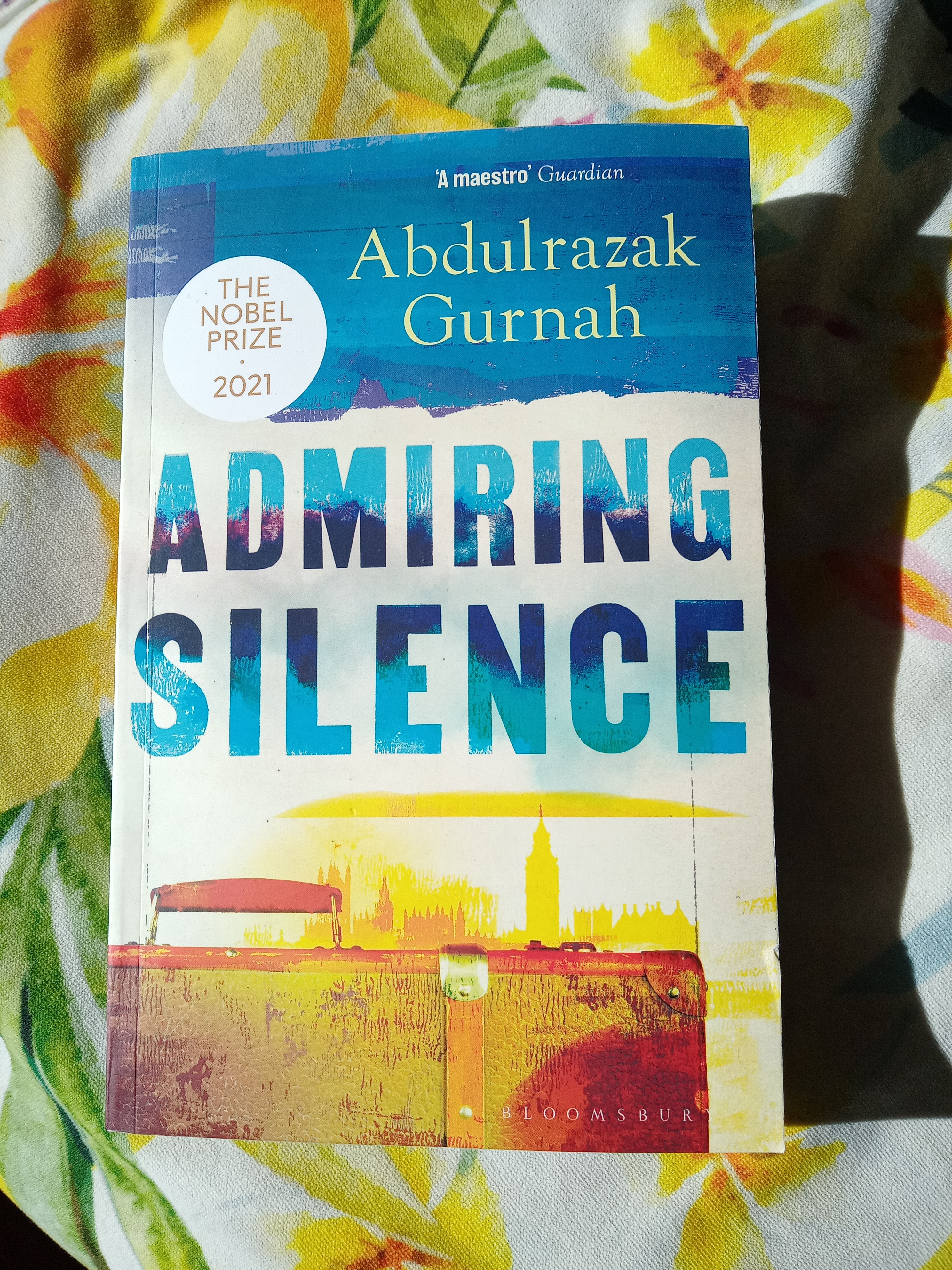
Admiring Silence by Abdulrazak Gurnah

 A young man grows up with his mother on the island of Zanzibar, without knowing his father.

Nobel Prize Literature 2021 fictionSome years later he is given a chance to study in England, by a family friend who is a strict disciplinarian, ensuring he succeeds in his studies. He discovers how much more difficult life can be when he becomes independent and no longer has the encouragement of his fellow countryman to push him.
“I began to understand how Ahmed had protected me, and how frightening England really was…In no time at all after I moved, I was overcome by the enormity of my abandonment, like someone weeping in a crowd. 

I was astonished by the sudden surge of loneliness and terror I felt when I realized how stranded I was in this hostile place, that I did not know how to speak to people and win them over to me,that the bank, the canteen, the supermarket,  the dark streets seemed so intimidating, and that I could not return from where I came – that, as I then thought, I had lost everything.Then Emma came and filled my life. I can’t describe that.”

The novel opens with the following lines that say much about our protagonist and are a reference to twin themes of memory and identity that thread throughout the narrative and an ever present silence, his accomplice.

“I have found myself leaning heavily on this pain. At first I tried to silence it, thinking it would go and leave me to my agitated content. That it would linger for a season, a firm reminder of the disquiet that lurks and coils below the surface of the stubbornly self-gratifying vision of our lives. Far from going, it became more clear, more precisely located, concrete, an object that occupied space within me, cockroachy, dark and intimate, emitting thick, stinking fumes that reeked of loneliness and terror. When I woke up in the morning, I groped for it, then sighed with plunging recognition as I felt it stirring inside me, alive and well.”

We meet him in middle age, when he is sensing this pain; the doctor will tell him his heart is buggered, informing him of the susceptibility of Afro-Caribbean’s to numerous complaints. And so to the first of his many silences, to the proliferation of thoughts never spoken, used as a tool to protect himself from racism and prejudice.

“Of course, after all this drama I did not have the heart to tell him that I was not Afro-Caribbean, or any kind of Caribbean, not even anything to do with the Atlantic – strictly an Indian ocean lad, Muslim, orthodox Sunni by upbringing, Wahhabi by association and still unable to escape the consequences of those early constructions.”

He had been surprised by Emma’s interest in him. They had become a couple and a had a child together. Amelia, now a teenager whom he is barely able to relate to. He has become a disappointment to her without understanding why.

Due to Emma’s rebelliousness against her middle class, conventional parents, they had never married. Our unnamed narrator never complained about this situation, he was beyond the reproach of his own culture, a place she had never visited, a culture his daughter knew nothing of.

Encounters with Emma’s parents predictably demonstrated racism, ignorance and insensitivity, as might be expected from an older generation when one culture or race encountered another, having had little or nothing to do them in the past – or worse – having lived and worked in a way where they had deemed themselves superior, as if it were an accepted fact. 

“Murmur audibly, smile brightly, say nothing. In general that did not seem to me at the time to be a contemptible philosophy, and there were many occasions when I rebuked myself for failing to live by it more consistently. I felt Emma watching me, waiting for me to take offence about something. I had been well primed for this, to expect to be offended by something her parents were bound to say, or imply, or disguise in an apparently innocent commonplace.”

Our narrator observes everything with a mild sense of detachment, he is curious but not judgmental. He often thinks of things he could have said, should have said, but didn’t. His silence will have consequences. He uses them as a pause or space between the past and present, a void that sets him on a collision course with reality, resulting in disappointment and self-deception.

The narrative voice comes across like he is explaining things to to the uninitiated, to others also not from England, to the outsider; perhaps as a warning, not to do as he has done.

“So I went to see my doctor in the end. I became afraid for my pitiful life and went to see my doctor. You can say that in England. My doctor. Here everyone has a doctor all to themselves.”

His observations of the nuances of the cross-cultural, inter-racial relationship are bittersweet. Following fond memories of a holiday in the lake district where they read poetry and take long walks, he ponders the moment things changed with his daughter.

I have photographs of that time and I know I don’t imagine the impossible contentment they portray.

Then she grew up, I suppose. She spoke to her mother about things that she must have thought I would not be able to help her with.It was predictable, but it was also oddly painful. She wanted to do things differently, in ways that seemed strange to me, and when I said this to her I felt a distance growing between us. I suppose I was slow to realize that she did not want to be treated as a beloved child any more, who would listen avidly to my wise thoughts and advice and then change her plans accordingly. So the first time she shouted angrily at me, I cried. I remember her distress then, but perhaps there was nothing either of us knew how to do to prevent the distance growing. Maybe it was more my fault then hers, because I was slow to learn to make room for her, to withdraw gracefully and with affection. And the distance grew into a habit, with only moments of fondness breaking into the hurtful watchfulness.

Admiring Silence Abdulrazak Gurnah

Photo by Charl Durand on Pexels.com

Due to the political situation in Zanzibar, it is 20 years before he returns. He has not told his family about his personal life in England. His relationship with Emma is increasingly difficult, as they fall into patterns they seem not to be able to extract themselves from.

When he returns home, he finds that little has changed. His family set about doing what they have always done, intervening. Though he knows he probably won’t go along with anything they are arranging for him, he allows situations to progress further than they should, given his circumstance. It will require him to be more present and to do more than just observe what is happening around him, he ought to take action he tells himself, before things get out of control.

It is a recognition of heightened awareness, the consequence of which is a loss, an understanding, whose price is to live in the ‘in-between’, to make one continually ponder who they really are, to where they belong.

Brilliantly told, observed and felt. Gurnah’s portrayal of the unnamed narrator is insightful, and realistic, capturing what it might feel like to be trapped between two cultures, with a foot in each camp, neither quite belonging to one or other, seeing through them both, existing in a kind of no man’s land, a threshold that many occupy, though rarely under the exact same circumstance.

The way the novel ends feels realistic, it leaves some of the story to the reader’s imagination, it reminds us of how many different combinations of circumstances exist with people being born and/or raised in cultures not of their parents, or marrying across cultures. 

“Gurnah’s dedication to truth and his aversion to simplification are striking. This can make him bleak and uncompromising, at the same time as he follows the fates of individuals with great compassion and unbending commitment. His novels recoil from stereotypical descriptions and open our gaze to a culturally diversified East Africa unfamiliar to many in other parts of the world. In Gurnah’s literary universe, everything is shifting – memories, names, identities.” Anders Olsson, Chairman of the Nobel Committee

I loved the novel, it was a 5 star read for me, highly recommended, I hope to read By The Sea  next.

Abdulrazak Gurnah, Author

Abdulrazak-Gurnah-Nobel-Prize-LiteratureAbdulrazak Gurnah is a Tanzanian-born British novelist and academic. He was born in the Sultanate of Zanzibar and moved to the UK in the 1960s as a refugee during the Zanzibar Revolution. 

After liberation from British colonial rule in December 1963, Zanzibar went through a revolution which led to oppression and persecution of citizens of Arab origin; massacres occurred. Gurnah belonged to the victimised ethnic group and after finishing school was forced to leave his family and flee the country, by then the newly formed Republic of Tanzania. He was eighteen years old. He did not return until 1984. 

Gurnah has published ten novels and a number of short stories. He was awarded the Nobel Prize for Literature in 2021 “for his uncompromising and compassionate penetration of the effects of colonialism and the fate of the refugee in the gulf between cultures and continents”.

The theme of the refugee’s disruption runs throughout his work. He began writing as a 21-year-old in English exile, and even though Swahili was his first language, English became his literary tool. In his work, he consciously breaks with convention, upending the colonial perspective to highlight that of the indigenous populations. 

Memory of Departure (1987) Pilgrims Way (1988) Dottie (1990) Paradise (1994) Admiring Silence (1996) By the Sea (2001) Desertion (2005) The Last Gift (2011) Gravel Heart (2017) Afterlives (2020)

Further Reading

Biography + Bibliography of Gurnah’s WorksNobel Prize for Literature Committee

Interview with Abdulrazak Gurnah

Dear Senthuran, A Black Spirit Memoir by Akwaeke Emezi

This was an interesting follow up to the fiction/auto-fiction debut novel Freshwater by Akwaeke Emezi, which I thought was a stunning and original book, an unforgettable read.

A Black Spirit Memoir OgbanjeDear Senthuran is a collection of letters to what we might call Emezi’s inner circle, past and present.
Emezi was raised in Nigeria and is of Nigerian/Malaysian heritage; they are an ogbanje, a non-human Black spirit being, currently incarnated in human form.

If you read Freshwater, you understand the basis from which this comes from, the overlapping realities they inhabit.

I live there, inhabiting simultaneous realities that are usually considered mutually exclusive. What can we call the dysphoria experienced by spirits who find themselves embodied in human form?

The memoir is thus a record of the period in their life leading up to the publication of that debut novel, of a year spent in an MFA program and both the highs and lows of that experience. It is about world-bending, living in a way that is true to who they are, thus rather than being flexible to how the world works, it is like the opposite, bending the world to meet them.

Emezi lives in America but is not of that culture and it shows in this work, in how confident and fearless they come across, which is one of the reasons it was difficult to align with their student peers, many of whom held much self-doubt regarding their writing ability and expectations, common to their culture of origin.

I call this a culture because that’s what it was. I’ve seen it in several places: people bonding over insecurities and self-deprecation, constantly saying they didn’t think their work was good, looking to the faculty for validation, someone to tell them they were real writers, to give them direction and guidance and a map to where they wanted to go. Institutions love that, I think. It makes you need them. And all those feelings are valid, but the resentment and hostility when you don’t play along, when you don’t shit on your own work, when you don’t wear doubt like a blanket around your shoulders? That’s the part I have a problem with. It reminds me of that thing back home where people want you to “humble yourself” and sometimes their demand is quiet, sometimes it’s blatant, but either way, they make sure you feel it.

Akwaeke Emezi Black Spirit MemoirEmezi writes about the experience and feelings of being unsupported during some of the challenges they faced and about their determination not to compromise when it became clear the debut novel was going to sell.

There is much reflection on writing, the work, they are prolific, determined and have achieved success in a relatively short period of time, despite numerous challenges. They create and share a spell for storytellers, for those trying to create books. Clearly it worked!

With my spell, I drew a map of the future I wanted, then I took those defined lines and pulled them across time, dragging them into the present. Time bends very easily; you can fold it like this with little trouble.

Most of the letters are in appreciation and record events they do not wish to forget, that mark the rise.

f3toni morrison

Toni Morrison

One of the more memorable letters is to the late, great inspirational Toni Morrison. Emezi shares a quote, words she heard her speak in an interview after winning the Nobel Prize for literature. She remembers how Morrison’s work agitated many of the students, ‘because you wrote people who did horrific things, but you didn’t tell the reader how to feel about these people‘ and how delighted they were to discover you could ‘just show a terrible thing and let the showing be the strength of it’.

The words that changed everything for Emezi though were these:

“I stood at the border, stood at the edge, and claimed it as central, claimed it as central and let the rest of the world move over to where I was.”

It is another of the spells they are using to become free.

Throughout the letters, there are references to ‘the magician’, at a certain point the reader asks who or what this presence is: a lover, a boyfriend and if one of those, is it going to endure for the duration of the book? It is a little mystery that eventually becomes a more direct subject of one or two of the letters, another record of events that transpire, of growth that occurs, of pain and hurt, of revenge even. Nothing is exempt in pursuit of the dream, to be the successful writer they desire.

A couple of the letters are to friends who are also human, non-humans, those in their life who totally get it without needing explanation, who accept their reality, with whom they can speak openly, fearlessly.

These humans are so loud in how they press down, in how they enforce their realities…It’s actually impressive, how someone can work so hard to crush a thing they can’t see.

Friendship provides a balm, and many of the letters, while they show the pain and suffering of someone growing into their adult self, lack the mature self-awareness that comes with age and wisdom. They demonstrate the importance of friendship and acceptance along the way.

In a letter To Kathleen on the subject of Worldbending they write:

The last time we texted, you wrote, I need you and our time this break. I know what you mean. The world can be a grit that sands away at us, and love can be a shelter from that…We are safer with each other. We see the world’s we’re trying to make, and we lend our power to each other’s spells.

Shiny Akwaeke Emezi Godhouse

Photo by Thgusstavo Santana on Pexels.com

After the publication of Freshwater, Emezi buys a house in New Orleans and names it Shiny. It is part of the plan, part of the future they are dreaming into being. Not everything in their lives is how they want it, but fortunately there is now a therapist in their lives, some of the reflections come from the raised consciousness of being in that process.

The house felt too big for me; it felt wrong, like I should have bought it years into my career, not thirteen months after my first book. For weeks, I didn’t sleep well there, worried that God would punish me for being so bold, for bending the world like this. It was Ann who talked me down, who told me that the house was oversized precisely so I could grow into it, so I could have the space to learn to unfurl. I needed that much room, as vast as it felt.

Writing To Jahra, another human/non-human entity, in Home, Emezi describes a return to her birth country, on a pilgrimage to a shrine of their deity, Ala. At the site, they feel seen, the entity nourished.

In a letter To Ann, called Anointing they write of the power of naming themselves, a form of disempowerment of those who want to label, categorise, bully by naming.

People want to be the ones drawing the lines, building the boxes, making the names. Maybe because stories live inside all those structures, and if you’re the one controlling the stories, then you’re the one in power. So they get really angry when you name yourself, especially if you’re the type of thing they were expecting to name. You know how it works: they form a circle around you, point, and call you a name you’re supposed to flinch from, a name you’re supposed to deny and be afraid of. That way, their naming becomes a weapon and what you are becomes a shame, a sentence, a tire around your neck rich with fire. Witch. Demon. Ogbanje. When you name yourself, however, you take the power from the wet, foaming flesh of their mouths and mold it in your hand as if it’s nothing, swallow waiting to slide down your throat, slickened with the soup of your self-knowing.
I thought about this a lot with Freshwater – what it meant, first of all, to publicly name myself ogbanje.

Emezi writes for people like them, for people who might think themselves in the margins, as an example of how to live when that perspective is shifted, when the centre is moved. There are costs when you choose or move a centre, costs they are willing to bear. They have been taught how aggressive they need to be with their wellness in order to survive.

Let the world move over, you said, and I obeyed.

It is an astonishing memoir, written from a frank perspective that doesn’t care whether the reader understands or not, it is for those who understand or are curious, the open-minded. And while it may appear self-indulgent, at times arrogant, narcissistic even, their work is making a splash.

I gave a talk at Yale recently, and at the reception afterward, a woman told me about a paper she wrote on Freshwater, how she was taking it to a medical conference to argue for recognising indigenous realities in treating people. It made me so happy, because it felt like a ripple, you know? You make one thing, and someone makes something else from that, and from there the world is changed, one fraction at a time.

Further Reading

My review of Freshwater

My review of The Death of Vivek Oji

NPR: Letters Reveal Author’s Strength In A World Of Destructive Noise by Hope Wabuke, June 9, 2021

New York Times: Akwaeke Emezi: ‘Imagine Being Ogbanje, Like Me’ by Kim Tran, June 7, 2021