Soundings, Journeys in the Company of Whales by Doreen Cunningham

Soundings is a dual narrative memoir, that recounts two journeys a woman makes, pursuing her dream to see the grey whales that migrate up the coast from Mexico where her journey begins, to the northernmost Arctic town of Utqiagvik.

The Iñupiat have thrived there, in a place periodically engulfed in ice and darkness, for thousands of years, bound closely together by their ancient culture and their relationships with the animals they hunt, most notably the magnificent and mysterious bowhead whale. I hadn’t just seen the whales there, I’d joined a family hunting crew, travelling with them in a landscape of astonishing beauty and danger.

Doreen Cunningham Whales memoir nonfiction

The book is structured so that each chapter alternates the twin journeys, the first one when she is a young BBC journalist on a sabbatical – the trip isn’t a job assignment, she is winging it, not knowing ahead of time where she might stay, or that she might join an indigenous whale hunt – to be in a position to observe the whales.

She is going there to listen, observe and with luck, participate.

The idea was that you could immerse yourself in a place and absorb more than if you were questioning people as a reporter and narrowing the world down into stories. I was supposed to take thinking time away from the relentless news cycle, open my mind and return bursting with creativity and new ideas.

The second trip is more of an escape from her current reality, that of a young single mother awarded sole custody, who can not afford to live in her home (due to high mortgage payments), reluctantly returned to her parents home in Jersey – who then decides she wants to make a return trip and provide her two-year-old son a formative experience of travel and whale watching.

I’d felt so alive then, so connected to other people and to the natural world. If only I could feel that way again and give that feeling to Max.

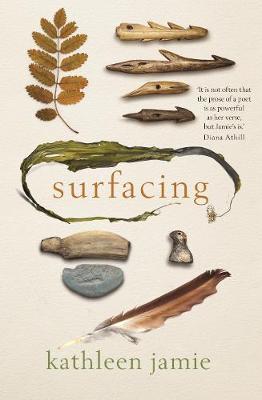
I recalled reading Scottish poet and nature essay writer Kathleen Jamie’s Surfacing, where she visits and brings alive an archaeological site Nunallaq, in the Yup’ik village in Quinhagak, Southern Alaska.

Kathleen Jamie Essays Surfacing Nature Writing

Doreen Cunnningham’s interest in whales and the environment inclines more towards the science, research and a personal desire for a sense of belonging and a large dose of wishful thinking, than the more poetic and philosophical Jamie, who went towards the tundra in search of surfaces that might reconnect us to the past. However, the two books together make informative and astonishing reading.

I told myself I would relearn from the whales how to mother, how to endure, how to live.
Beneath the surface, secretly, I longed to get back to northernmost Alaska, to the community who’d kept me safe in the harsh beauty of the Arctic and to Billy, the whale hunter who’d loved me.

Once you realise that the narrative goes back and forth, it becomes easier to stick with it, the chapters in the more recent past focus as much on the logistics of trying to travel with a child, car seat and stroller, finding kindred spirits who might assist getting her on a boat to see the whales, while doing her best to avoid those fellow travellers who look askance at a young mother, attempting the extraordinary.

As they travel, she also shares something of the challenges in the past of reporting on climate change, the reluctance to report on the environment and the habit many broadcasters had of always finding a sceptic to present an alternative view to the facts.

What was going on was that media all over the world had regularly been allowing sceptics o misrepresent science without adequately challenging them, and presenting them as though they carried equal scientific weight to mainstream climate researchers…This ‘insistence on bringing in dissident voices into what are in effect settled debates’ created what the report called ‘false balance’.

In her earlier visit, she takes time to listen to their stories, of the first ships that came in, bringing equipment, alcohol and disease. She hears of the social problems of another indigenous people, of children sent away, of PTSD, of a sense of rage and powerlessness, of a need to educate themselves in order to better represent and protect their culture and ways.

She also hears of the effect of the warming of the ocean first hand, its impact on animals, on the ice, on patterns of behaviours, of the risk to their livelihood and comes to understand the importance differences between a people who live in harmony with their environment and depend on it and those who came intent on exploiting it.

We also learn a little of her childhood experiences, of her wild pony Bramble, of an Irish granny and the songs she still sings that the whales seem to respond to. She injects enough of the personal story to keep the pace going, as the flow risks at times being overwhelmed by the facts and background research. However, as I go back and reread the passages I highlighted, I find it interesting to encounter some of this information a second time around, now that I’ve removed the expectation of a flowing narrative.

There is a something in this book for everyone, it defies genre and shows the gentle, yet vulnerable courage of a young mother persevering against the odds, seizing the reins of her life, following her intuition and going on a grand adventure with a small boy, who is perhaps more likely the greater teacher to her than the elusive whales, on motherhood.

Doreen Cunningham, Author

Doreen Cunningham is an Irish-British writer born in Wales. After studying engineering she worked briefly in climate related research at NERC and in storm modelling at Newcastle University, before turning to journalism. She worked for the BBC World Service for twenty years as an international news presenter, editor, producer and reporter.

She won the RSL Giles St Aubyn Award 2020 and was shortlisted for the Eccles Centre and Hay Festival Writers Award 2021 for Soundings, her first book.

This Plague of Souls by Mike McCormack

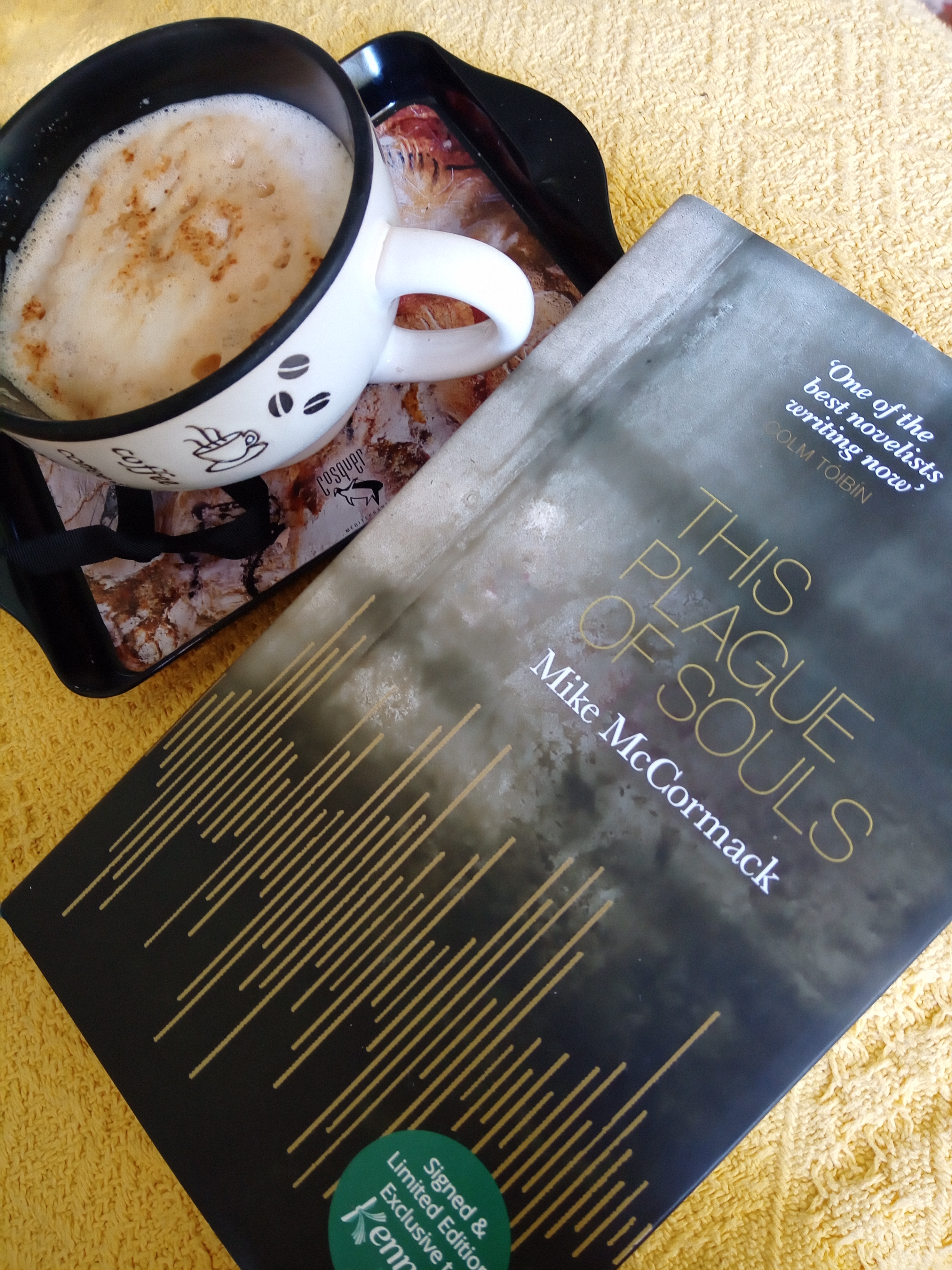
Well, that wasn’t what I was expecting. Perhaps the first half, which felt like a different novel, one that felt familiar in an Irish rural novel kind of way, featuring a lonesome protagonist, Nealon, who has returned to the abandoned home and found it empty of his wife Olwyn and child Cuan, who hadn’t waited to hear the outcome of the charges that have kept him in prison the last 10 months.

An Old Irish Cottage of Memories

As he wanders about the house, certain objects awaken memories, of his parents, now long dead and more recently his wife Olwyn, who removed everything in the house that had belonged to them and did him a favour by cleaning and renovating it single-handedly. In protest he drags their old couch into the back lawn and just sits there.

We don’t know why he was imprisoned, what he was charged with, who his wife was, where she is.

Solar Bones Tramp Press Irish experimental fiction

The only evidence of a life or connection outside this empty cottage, is a persistent caller, who calls every day and seems to know everything about his life.

He conveniently repeats to Nealon everything he knows about him, though we don’t know if any of it is true, because the protagonist rejects everything he says, neither accepts or denies and even in the thoughts shared on the page, chooses not to think about (or the writer chooses not to share) any thoughts relating to the activities he describes.

I do not highlight one single passage until page 64 and then it is this I note, words exchanged in one of their cryptic telephone conversations:

‘I’ll tell you this: there is a great shortage of imagination out there, you couldn’t underestimate it.’
‘I wouldn’t know about that. I have noticed that there is no shortage of foolishness.’

An Alternate Reality or A Spark of Imagination?

Finally they will meet and the story becomes more surreal, at this point I thought, this is actually going to be revealed as science fiction, there is probably an alternative reality going on here – isn’t there? Because it’s starting to get kind of frustrating almost boring; but clever yes, the writing is polished, it’s relatively easy to read, but for this reader, there is nothing meaningful or all that intriguing about it, I feel the edge of disappointment ahead of me, as there are so few pages left to read. I start theorising and make up my own story about what is going on (I won’t bore you with that).

As the man says himself articulating both his conundrum and my own :

‘So I understand the architecture of the whole thing, the grandeur and ambition of the entire construct. But not the motive behind it. What is it all about? What does it hope to achieve? Is it some noble enterprise – as I hope it is – or something else entirely? Something squalid and rotten to the core.’

Scattered throughout the text are occasional sentences that hint at Nealon’s understanding, words that come from his ‘now’ wherever that is.

It took him a long time to recognise it as chaos and he wonders now how he could have mistaken it as anything else.

We have learned that in prison there was a complete lack of mind-sharpening engagement that threatened to turn in on itself and close him down, however nothing about the character thus far indicates his capability. He is a loner, just as his name indicates, Nealon – a.l.o.n.e with a capital N.

Curiosity Can Kill the Cat

Ultimately, despite his better judgement, out of curiosity or nothing better to do, or perhaps he really is interested in finding out where his wife and child are, he is lured into meeting the man, and while focusing on not really saying anything, he may have talked himself into a trap.

Photo by Jack Redgate on Pexels.com

As he travels from the West of Ireland towards the city, he becomes aware of some kind of threat looming over the country.

On the edge of insight, when it comes it may be too late. This constant feeling that he is about to realise something drives the novel forward and creates a sort of tension.

In a way, it reminded of the book I just read Margarita Garcia Robayo’s The Delivery, she uses a similar introspective technique to keep the reader from knowing exactly what is going on, however throughout the course of novel, there are many more morsels of humanity, she too is a loner, but life and love push their way in on her – you can’t escape the community.

The author who describes the novel as ‘part metaphysical thriller, part roman noir’ did ask himself the question and was aware he may alienate some readers, as he says in an interview with the Irish Times.

Would it be possible to write a book of which it would be impossible to speak, where I don’t know what happens, and how to make that artistically credible and skilful without it coming across as clueless, as an authorial failure?

Why Did I Read This?

I chose to read this book because of all the good reviews of Solar Bones, which I will still read, and also because Mike McCormack was picked up by Tramp Press, one of my favourite Irish publishers, who also publish my top two Irish authors, Sara Baume and Doireann Ni Ghriofa.

Author, Lisa McInerney’s blurb on the back cover was closest to my reading experience, when she says:

‘A darkly marvellous novel: at once intimate, domestic, and poignant, then speculative and hard-boiled and wild’

Mike McCormack, Author

Mike McCormack’s previous work includes Getting it in the Head (1995), Crowe’s Requiem (1998), Notes from a Coma (2005), which was shortlisted for the Irish Book of the Year Award, and Forensic Songs (2012).

In 1996 he was awarded the Rooney Prize for Irish Literature and in 2007 he was awarded a Civitella Ranieri Fellowship. Solar Bones (Tramp Press, 2016) won the Goldsmiths Prize, the Bord Gáis Energy Irish Book Award for Best Novel and Best Book, and the Dublin International Literary Award (previously known as the IMPAC), and was nominated for the Booker Prize.

Mike McCormack lives in Galway with his family.

The Delivery by Margarita Garcia Robayo tr. Megan McDowell

The Delivery was next up to read from my 2023 Charco Press bundle and was published on 24 October. This year’s books have been so great, I couldn’t wait to get to this one. I haven’t read her previous translated book Fish Soup, but I had heard good things about it too.

Charco Press and Latin American Fiction On a Roll

One of the earlier Charco novellas I read this year, The Remains (see my review) by Mexican author Margo Glantz (translated by Ellen Jones) just made the longlist of the Warwick Prize for Women in Translation 2023. In the same week Two Sherpas (see my review) by Sebastian Martinez Daniell translated by Jennifer Croft was longlisted for the 2024 ALA Carnegie Medals for Excellence in Fiction and Ana Paula Maia’s Of Cattle And Men, translated from the Portuguese by Zoë Perry made the 2023 Cercador Prize Finalists ( a bookseller-led prize for literature in translation).

Warning: Don’t Ignore Your Packages – The Review

A young, unapologetically self-absorbed woman lives alone, away from her family. Though loathe to form attachments, she is hyper observant of all that goes on around her; the neighbour into whose apartment she sees, the doorman sweeping below, the mother with her young son, the unreliable babysitter.

A large package arrives from her sister who told her via one of their infrequent video-calls, that she was leaving with her family on a cruise. The sisters have a complicated relationship, one she ponders.

When she notices my silence she goes quiet and sighs. I guess she, too, gets fed up with the weight of incomprehension. I guess that on top of seeming like a sister who is detached, dejected and discourteous, I also come off as an arrogant person. Kinship isn’t enough for her, either, of course it isn’t. In cases like ours, getting along isn’t a question of magic or chemistry or affinity, but of tenacity, toughness and torturous toiling.

The package, the size of a large crate stays in the hallway for two days until neighbours complain, knock on the door and push it into her seventh floor apartment. She continues to ignore it.

It’s noon; my sister must be aboard her cruise ship by now. I can just see her gazing excitedly at the array of interactive screens showing maps of the ship marked with little flags: ‘…over twenty stations of international food.’
I wonder: When my sister isn’t there, who takes care of my mother?

Farming Cows Personality Animals The Delivery On Writing
Photo by Flickr on Pexels.com

Working from home as a freelance copy writer, she meets her boss once a week. Currently working on a piece about a cow, while procrastinating over completing a grant for a writer’s residency in Holland. Here she questions whether her choice to be a writer is another act of avoidance.

And although writing is something I have done every day for years now, I again get the feeling that this thing I call ‘my job’ is nothing but another avoidance strategy. Compared to all other professions, writing is like the effort a tick makes to feed and survive among predators. I climb onto a branch, wait a long time until the herd passes, calculate the least risky distance to drop onto a fluffy mass and drink a minuscule ration of blood, which will allow me to maintain this limited but sufficient life.

Her attempts to avoid human contact threaten to overwhelm her, as increasingly she is drawn in to life around her and made to be present.

I felt I had the right to not be a trustworthy person. It was good to make that clear, even if it worked against my professional future; from now on you should be aware that assigning me a job includes the possibility that I’ll quit halfway through. That was more or less how I put it. It was the closest I would come in this business to an outburst of dignity.

The novel follows a week or so in her life and the people (and a cat) with whom she interacts, both willingly and unwillingly. Encounters that awaken memories, that cause her to explore her own responses and thoughts on them all, she avoids closeness but each situation contributes to the growing relationships between them all.

Her efforts to keep a distance stall, fail and slowly make her see her own role in running from herself, the inclination to self-sabotage.

Sometimes I feel like two people live inside me, and one of those people (the good one) keeps the other in check, but sometimes she gets tired and lowers her guard and then the other (evil) one stealthily emerges, with a mad desire to wound just for the sake of it.

It’s both introspective and funny, as her avoidance and inattention to things leads to consequences that surprise her and because we see everything from her perspective, we too have a somewhat clouded view of reality.

Her philosophical considerations and snippets of conversation give pause for thought. It’s entertaining in a surreal yet banal way, knowing that life’s reality is likely to burst the bubble she lives in eventually, yet it doesn’t stop her from continuing to ponder and escape from it.

How quickly the shell of a routine is shattered.
Any routine, however solid it may be, is obliterated by the unexpected.

Margarita García Robayo, Author

Margarita García Robayo was born in 1980 in Cartagena, Colombia, and now lives in Buenos Aires where she teaches creative writing and works as a journalist and scriptwriter.

She is the author of several novels, including Hasta que pase un huracán (Waiting for a Hurricane) and Educación Sexual (Sexual Education, both included in Fish Soup), Holiday Heart, and Lo que no aprendí (The Things I have Not Learnt). She is also the author of a book of autobiographical essays Primera Persona (First Person, forthcoming with Charco Press) and several collections of short stories, including Worse Things, which obtained the prestigious Casa de las Américas Prize in 2014 (also included in Fish Soup).

Her books have been published widely and praised in Latin America and Spain and have been translated into several languages, including Chinese, Hebrew, French, Danish and Turkish. The Delivery is her third book to appear in English after the very successful Fish Soup (selected by the TLS as one of the best fiction titles of 2018) and Holiday Heart (Winner of the English PEN Award).

Warwick Prize for Women in Translation longlist 2023

16 titles have been longlisted for the seventh annual award of the Warwick Prize for Women in Translation.

The prize was established by the University of Warwick in 2017 to address the gender imbalance in translated literature and to increase the number of international women’s voices accessible to a British and Irish readership.

This year, there were 153 nominations representing 32 languages. The longlist spans 11 languages and for the first time includes a title translated from Vietnamese.  Arabic, Chinese, Hungarian and Italian language books are represented more than once.

A Long Line of Classics by Women Coming into Translation

Knowing how few women authors have been translated into English until now, only confirms how many great books sitting waiting to be discovered and rediscovered, as the demand to read literature from elsewhere increases exponentially. Yes, we have been and are, starved for other voices, for universal connections, stories imagined and conceived in other languages.

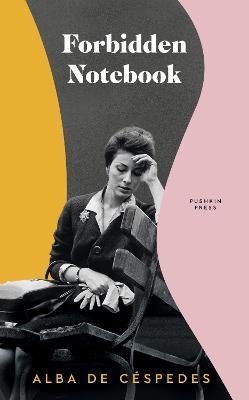
I have read two from the list, both excellent novels that I recommend, click on the titles to read my earlier reviews. Forbidden Notebook by Italian-Cuban author Alba de Cespédes translated by Ann Goldstein is a rediscovered classic from 1952, a highly compelling read about a woman’s self discovery through the transgressive act (find out why) of writing in a notebook.

The Remains by Mexican author Margo Glantz translated from Spanish by Ellen Jones is an extraordinary novella of a woman who returns for the funeral of her ex-husband and relives aspects of their relationship while navigating the audience of mourners, uncertain to whom they should pass on their condolences.

The judges said of the 2023 longlist:

“From an exceptionally rich field of submissions we have chosen 16 remarkable books in first-rate translations. All of them deserve to find delighted readers everywhere.

Our contemporary picks span a dazzling rainbow of genres, cultures and voices – from an Egyptian graphic novel to a Vietnamese vision of migrant life in France; a Chinese fable of an alternative Hong Kong to a comic-epic Swedish novel of ideas; a Mexican musical elegy to a Yemeni documentary testament to the human costs of war.

But this year’s long list also honours a formidable cache of rediscovered gems from major 20th-century women writers: classic works given new life by the translator’s time-defying art.”

The full list of longlisted titles, in alphabetical order, with a summaries, is as follows:

Dorthe NorsA Line in the WorldA Year on the North Sea Coast (nonfiction) translated from Danish by Caroline Waight (Pushkin Press) – a year travelling along the North Sea coast—from the northern tip of Denmark to the Frisian Islands.

In 14 essays, it traces the history, geography, and culture of the places she visits while reflecting on her childhood and her family and ancestors’ ties to the region. She writes of the ritual burning of witch effigies on Midsummer’s Eve; the environmental activist who opposed a chemical factory in the 1950s; the quiet fishing villages surfers transformed into an area known as Cold Hawaii in the 1970s. She connects wind turbines to Viking ships, 13th century church frescoes to her mother’s unrealised dreams. She describes strong waves, sand drifts, storm surges, shipwrecks; nature asserting its power over human attempts to ignore or control it.

Lalla RomanoA Silence Shared (historical fiction, WWII) translated from Italian by Brian Robert Moore (Pushkin Press) – Italian classic about the mysterious relationships between two partisan couples in German-occupied Italy in the wintry mountains of Piemonte.

Sheltering from the war in a provincial town outside of Turin, Giulia and her husband Stefano feel an instant affinity with Ada and Paolo: she a spontaneous, vibrant young woman, he a sickly intellectual, a teacher and partisan in hiding. As the Germans occupy Italy, a subtle dance of attractions between the couples begins, intensified by their shared isolation and the hum of threat over a long, hard winter.

Amanda SvenssonA System So Magnificent It Is Blinding (literary fiction) translated from Swedish by Nichola Smalley (Scribe UK) – A joyful family saga about free will, forgiveness, and connectedness that asks if we are free to create our own destinies or are just part of a system beyond our control?

As a set of triplets is born, their father chooses to reveal his affair. Pandemonium ensues. Two decades later, Sebastian has joined a mysterious organisation, the London Institute of Cognitive Science, where he meets Laura, a patient whose inability to see the world in three dimensions intrigues him. Meanwhile, Clara has travelled to Easter Island to join a cult, and the third triplet, Matilda, is in Sweden, trying to escape the colour blue.

An event forces the triplets to reunite. Their mother calls with news: their father has gone missing and she has something to tell them, a twenty-five-year secret that will change all their lives.

Krisztina TóthBarcode (short stories/literary fiction) translated from Hungarian by Peter Sherwood (Jantar) – a first substantial work in prose after 4 volumes of verse, consists of 15 short stories tied together by a poetic sensibility.

Whether about childhood acquaintances, school camps, of love or deceit, all take place against the backdrop of Hungary’s socialist era in its declining years. The stories are strung together, like jewels in a necklace, along metaphorical ‘lines‘, which nearly all include the word for ‘line, bar‘. The losses, disappointments, and tragedies great and small offer nuanced ‘mirrorings’ of the female soul and linger long in the memory.

ThuậnChinatown (literary fiction) translated from Vietnamese by Nguyễn An Lý (Tilted Axis) – An exquisite and intense journey through the labyrinths of Hanoi, Leningrad, and Paris via dreams, memory, and loss

An abandoned package is discovered in the Paris Metro: local workers suspect it’s a terrorist bomb. A Vietnamese woman sitting nearby, her son asleep on her shoulder, waits and begins to reflect on her life, from her childhood in communist Hanoi, to studying in Leningrad during the Gorbachev period, to the Parisian suburbs where she now teaches English. Through it all runs her passion for Thuy, the father of her son, a writer from Saigon’s Chinatown, who, with the shadow of the China-Vietnam border war falling between them, she has not seen for 11 years.

Through her breathless, vertiginous, and moving monologue alongside the train tracks, the narrator attempts to face the past and exorcize the passion that haunts her.

Zhang YueranCocoon (Historical Fiction) translated from Chinese by Jeremy Tiang (World Editions) – a unique voice from a generation of important young writers from China, shedding a different light on the country’s recent past – on the unshakable power of friendship and the existence of hope

Cheng Gong and Li Jiaqi go way back. Both hailing from dysfunctional families, they grew up together in a Chinese provincial capital in the 1980s. Now, many years later, the childhood friends reunite and discover how much they still have in common. Both have always been determined to follow the tracks of their grandparents’ generation to the heart of a mystery that perhaps should have stayed buried. What exactly happened during that rainy night in 1967, in the abandoned water tower?

Alba de CéspedesForbidden Notebook (literary fiction) translated from Italian by Ann Goldstein (Pushkin Press) – a classic domestic novel that centres the inner life of a dissatisfied housewife living in postwar Rome. Exquisitely crafted, Forbidden Notebook recognises the universality of human aspirations.

Italian feminist writing classic 1940s 1950s

Valeria Cossati never suspected how unhappy she had become with the shabby gentility of her bourgeois life – until she begins to jot down her thoughts and feelings in a little black book she keeps hidden in a closet. This new secret activity leads her to scrutinize herself and her life more closely, and she soon realizes that her individuality is being stifled by her devotion and sense of duty toward her husband, daughter, and son.

As the conflicts between parents and children, husband and wife, and friends and lovers intensify, what goes on behind the Cossatis’ facade of middle-class respectability gradually comes to light, tearing the family’s fragile fabric apart.

Dorothy TseOwlish (Science Fiction/Fantasy) translated from Chinese by Natascha Bruce (Fitzcarraldo) – Thrumming with secrets and shape-shifting geographies, this extraordinary debut novel is a boldly inventive exploration of life under repressive conditions.

In the mountainous city of Nevers, there lives a professor of literature called Q. He has a dull marriage and a lacklustre career, but also a scrumptious collection of antique dolls locked away in his cupboard. And soon Q lands his crowning a music box ballerina named Aliss who tantalizingly springs to life. Guided by his mysterious friend Owlish and inspired by an inexplicably familiar painting, Q embarks on an all-consuming love affair with Aliss, oblivious to the sinister forces encroaching on his city and the protests spreading across the university that have left his classrooms all but empty.

Marguerite DurasThe Easy Life (literary fiction) translated from French by Olivia Baes & Emma Ramadan (Bloomsbury) – For the first time in English, a literary icon’s foundational masterpiece about a young woman’s existential breakdown in the deceptively peaceful French countryside.

Francine Veyrenattes, a 25-year-old woman feels like life is passing her by. After witnessing a series of tragedies on her family farm, she alternates between intense grief and staggering boredom as she discovers a curious detachment in herself, an inability to navigate the world as others do. Hoping to be cleansed of whatever ails her, she travels to the coast. But there she finds herself unraveling, uncertain of what is inside her. Lying in the sun with her toes in the sand by day, dissolving in her hotel room by night, she soon reaches the peak of her inner crisis and must grapple with whether and how she can take hold of her own existence.

An extraordinary examination of a young woman’s estrangement from the world, a work of unsettling beauty and insight, a bold, spellbinding journey into the depths of the human heart.

Magda SzabóThe Fawn (literary fiction) translated from Hungarian by Len Rix (Maclehose) – Eszter Encsy, an accomplished actress, ponders her impoverished childhood and path to accomplishment on hearing news of a childhood acquaintance.

A series of internal monologues delve into the depths of the humiliation, isolation, poverty, social and emotional exclusion and despair she experienced, attempting to comprehend her experiences. At first she recalls them with a disturbing calmness and an indifferent detachment, outwardly remaining unperturbed and icy, but soon finds her manner of speaking and her demeanor slowly changing as it becomes more and more difficult for Eszter to choke down the intense feeling of hatred and resentment she has been allowing to ferment for years.

Bianca BellováThe Lake (Science Fiction/Dystopia) translated from Czech by Alex Zucker (Parthian Books) – a dystopian page-turner, the coming of age of a young hero.

A fishing village at the end of the world. A lake that is drying up and, ominously, pushing out its banks. The men have vodka, the women troubles, the children eczema to scratch. Born into this unforgiving environment, Nami, embarks on a journey with nothing but a bundle of nerves, a coat that was once his grandfather’s and the vague idea to search for his mother, who disappeared from his life at a young age. To uncover this mystery, he must sail across and walk around the lake and finally dive to its bottom. A raw account of life in a devastated land and the harsh, primitive circumstances under which people fight to survive.

Grazia DeleddaThe Queen of Darkness (short stories) translated from Italian by Graham Anderson (Dedalus) – The ancient traditions of Sardinia feature heavily in this early collection. The stories collected in The Queen of Darkness, originally published in 1902 shortly after Deledda’s marriage and move to Rome, reflect her transformation from little-known regional writer to an increasingly fêted and successful mainstream author. The two miniature psycho-dramas that open the collection are followed by stories of Sardinian life in the remote hills around her home town of Nuoro. The stark but beautiful countryside is a backdrop to the passions, misadventures and injustices which shape the lives of its rugged but all too human inhabitants.

Margo GlantzThe Remains (literary fiction) translated from Spanish by Ellen Jones (Charco Press) – The way you hold a cello, the way light lands in a Caravaggio, the way the castrati hit notes like no one else could–a lifetime of conversations about art and music and history unfolds for Nora Garcia as she and a crowd of friends and fans send off her recently deceased ex-husband, Juan.

Like any good symphony, there are themes and repetitions and contrapuntal notes. We ping-pong back and forth between Nora’s life with Juan (a renowned pianist and composer, an accomplished raconteur) and the present day, where she sits among familiar things, next to his coffin, breathing in the mix of mildew and lilies that overwhelm this day and her thoughts.

In Glantz’s hands, music and art access our most intimate selves, illustrating and creating our identities, offering us ways to express love, loss and bewilderment when words cannot suffice. As Nora says, “Life is an absurd wound: I think I deserve to be given condolences.”

Hanne Ørstavikti amo (literary fiction based on true life) translated from Norwegian by Martin Aitken (And Other Stories) – a harrowing novel, filled with tenderness, grief, love and loneliness.

A woman is in a deep and real, but relatively new relationship with a man from Milan. She has moved there, they have married, and they are close in every way. Then he is diagnosed with cancer. It’s serious, but they try to go about their lives as best they can. But when the doctor tells the woman that her husband has less than a year to live – without telling the husband – death comes between them. She knows it’s coming, but he doesn’t – and he doesn’t seem to want to know. Delving into the complex emotions of bereavement, it asks how and for whom we can live, when the one we love best is about to die.

Bushra al-MaqtariWhat Have You Left Behind? (nonfiction) translated from Arabic by Sawad Hussain (Fitzcarraldo) – powerfully drawn together civilian accounts of the Yemeni civil war that serves as a vital reminder of the scale of the human tragedy behind the headlines.

In 2015, a year after it started, Bushra al-Maqtari decided to document the suffering of civilians in the Yemeni civil war, which has killed over 200,000 people according to the UN. Inspired by the work of Svetlana Alexievich, she spent 2 years visiting different parts of the country, putting her life at risk by speaking with her compatriots, and gathered over 400 testimonies, a selection of which appear here. 

Purposefully alternating between accounts from the victims of the Houthi militia and those of the Saudi-led coalition, al-Maqtari highlights the disillusionment and anguish felt by civilians trapped in a war outside of their own making. As difficult to read as it is to put down, this unvarnished chronicle of the conflict in Yemen serves as a vital reminder of the scale of the human tragedy behind the headlines, and offers a searing condemnation of the international community’s complicity in the war’s continuation.

Deena MohamedYour Wish Is My Command (graphic novel) translated from Arabic by Deena Mohamed (Granta) – Shubeik Lubeik – a fairytale rhyme meaning ‘Your Wish is My Command’ is the story of three characters navigating a world where wishes are literally for sale; mired in bureaucracy and the familiar prejudices of our world, the more expensive the wish, the more powerful and more likely to work as intended. The novel tell the story of three first class wishes used by Aziza, Nour, and Shokry, each grappling with the challenge inherent in trying to make your most deeply held desire come true.

Deena’s mix of calligraphy and contemporary styles, brings to life a vibrant Cairo neighborhood, and cast of characters whose struggles and triumphs are deeply resonant. Shubeik Lubeik heralds the arrival of a significant new talent and a brave, literary, political, and feminist voice via the graphic novel.

The shortlist for the prize will be published in early November. The winner will be announced in London on Thursday 23 November.

Cacophony of Bone by Kerri Ni Dochartaigh

When I saw that Kerri ní Dochartaigh had a new book out, I was intrigued. I read her debut Thin Places  (reviewed here) in 2022, it was a tough read at times, especially as I went into it thinking it might be nature writing akin to others of the genre I’ve read. It was not. It was much darker.

At that time, nature, more than an observation, provided solace to an ever present dread and those thin places were a kind of magical opening and hint of acceptance that kept her here – just. The book trawled through a sombre northern Irish childhood into young adulthood, as the author attempted to rise out of a grasping fog towards finding their place and way in the world. To feel safe, while railing against the after-effects of trauma. From nightmares to numbness, nature was her nurturer.

Cacophony of Bone Thin Places creative nonfiction

While that book was challenging because of all it makes the reader feel, Cacophony of Bone was proof of a move forward, of a shift out of the rawness of her earlier existence and while still in the process of healing, clear signs of hope and progress and development. A relationship that comes across as more anchored and a commitment to sobriety. New circumstances that hold promise.

It began two days
after the winter solstice,
as all stories begin:
with light.

Essentially, it is a beautifully sculpted 12 month hybrid journal/memoir with splashes of poetry. It begins just as she is making a move to a one room very basic railway cottage in the middle of Ireland with her partner/lover, a couple of months before the country/world is going into lockdown. It becomes a year of noticing, of planting, growing, of collecting objects, abandoned nests, bone remnants…

To notice those things and to hold them, give my furry body over to their coming, to stop hurrying through life like a person shamed, by my female body and its traumas, by my past, by what that body could not have, what its parts could not produce.

At the beginning of each chapter before the brief, dated, diary entries, which are short poetic fragments and thoughts, there is a longer text that contemplates – a navigation of layers of loneliness, grief and gratitude, observations of birds and moths, planning, planting and harvesting a garden, recognising the importance of rituals, appreciating the constant and reliable companionship of another human being, developing connections with amazing women she has never met (yet) and embracing the comfort to be found in lines of language, the soothing power of words, the immense power and wonder of books.

Ritual finds form through the assumption that it is a means of really knowing something. Religious ceremony and personal rites of passage fill my thoughts. The gently, insistent act of repeating. How it creates equilibrium between the small and the vast, the seen and the unseen, the self and other, the part and the whole. We build myths (which are really just houses). Dwelling places built of the bones left behind by stories. We fill the gaps in the walls with ritual. We insulate it with objects.

Dreams arrive and motifs return, the days are spent reaching for meaning, walking them through, collecting and abandoning them anew.

I don’t think I have ever read a book that made me stop so often to look up references to predominantly works of creative nonfiction, poetry and memoir. It was a year of isolation, but Kerri ní Dochartaigh was able to read (and reread) from a bountiful collection of stunning literature. I admit to placing two orders with my new favourite Kenny.ie independent bookshop during the week I read the book.

It was no surprise to see mentioned the works of Doireann Ní Ghríofa and Sara Baume, it felt like these women hail from a similar soul group, literary sirens whose words lure readers not to their deaths, but to their visions and streams of conscious thought.

I find myself searching for the words of others as a means to fill the holes that the actions of (other) others have left in me.

We encounter throughout the pages Alice Oswald, Tove Jannsson, Moya Cannon, Annemarie Ni Churreain, Annie Ernaux, Terry Tempest Williams, Karine Polwart, Sarah Gillespie, Ellena Savage, Elizabeth-Jane Burnett, Rebecca May Johnson, Rebecca Solnit, Kathryn Joseph, Anne Carson, Kathleen Jamie, Anne Lamott, Richelle Kota, Alice Vincent, Lauret Savoy, Rebecca Tamas, Tania Tagaq, Emily Dickinson, Louise Erdrich, Colette Fellous, Sinéad Gleeson, Selva Almada, Katherine Mansfield, Virginia Woolf, Nancy Campbell, Elske Rahill, Octavia Bright, Alice Miller, Maggie O’Farrell, Genevieve Dutton and more…

After being alone for a long time, one starts to listen
differently,
to perceive the organic and the unexpected all around,
to brush against all the incomprehensible beauty of the material. Tove Jansson, ‘The Island’

It’s a book that follows the seasons, that reminded me of reading Alice Tucker’s A Spell in the Wild: A Year (and Six Centuries) of Magic and Sara Baume’s A Line Made By Walking, it takes some skill to keep a reader engaged in a form of nature diary, but the blend of personal story, observations of nature, literary references and the curiosity of seeing where the author will end up after the revelations of Thin Places, all made it a compelling read for me, that became increasingly absorbing the further I read.

It’s a heart laid bare, bruised but beating madly with the joy of being alive.

I’m left intrigued and curious about what will come next, although that might be quite obvious, since the end is in effect the dawn of a new beginning. A work in progress.

Highly recommended.

Further Reading

Interview: Writing Between Two Worlds, An Interview with Kerri Ni Dochartaigh

Review: The Guardian Thin Places by Kerri ní Dochartaigh review – a survivor’s story

Kerri ní Dochartaigh, Author

Kerri ní Dochartaigh’s first book, Thin Places, was published in Spring 2021, for which she was awarded the Butler Literary Award 2022, and highly commended for the Wainwright Prize for Nature Writing 2021.

Cacophony of Bone is her second book. She lives in the west of Ireland with her family.

She writes about nature, literature and place for the Irish Times, Dublin Review of Books, Caught by the River and others. She has also written for the Guardian, BBC, Winter Papers.


These Days by Lucy Caldwell

These Days is set over a period of a week in the life of one family with a young son and two daughters, both of whom are at significant turning points in their relationships, just as the Belfast Blitz is about to destroy much of their city.

The precariousness of life pushes both girls out of their everyday lives into confronting the very depths of who they are and what they want from life and whether or not they are prepared to conform or compromise.

Belfast Blitz World War 2

The tension of living with blacked out windows, with their father being an on-call doctor, who must rush to the hospital to deal with the casualties and Emma, a First Aid volunteer also called into the throng of destruction, heightens the situations both girls are in, creating a unique sense of urgency, and yet…

Audrey’s boyfriend, an only son, is also a doctor and the thought of possibly losing her hastens his own decisions, which Audrey responds to in that same atmosphere of heightened tension. But when she returns to work at the tax office and begins to realise how that decision is likely to change her life, she begins to question how much she really wants it. IS what she feels enough?

…She thinks of the Yeats poem: this tumult in the clouds…in balance with this life, this death…and she thinks how strange, how strange it is, the sides on which we find ourselves, the things we, really, have no choice or say in, the ways we blindly go through a life in which the grooves are already set.

Emma spends less time thinking about her decisions and future life, she is more impulsive, reckless even. Just as she is coming to the realisation of how she wants to love and live, that vision of a future life disappears right in front of her. In a cruel twist of fate, she will experience something that her own mother has long lived with, intertwined feelings of love and grief, of love at its inception, turned in an instant to memory, rather than be allowed to flourish.

Their mother too conceals thoughts of a life not quite embarked on, one cut short that re-enters her imagination now and then, that has caused her to stop believing.

But the times we live through, she thinks, as they turn onto Sydenham Avenue, have bred in us all a grim, stoical sort of endurance. After the Great War, and the civil war, and the shattering Troubles of the twenties, those hundreds of people dead…After the unemployment and the riots of the thirties, the sectarian pogroms, the chaos, the roads blockaded, the burning, only half, a quarter of a mile away…You’re not surprised by anything anymore: you shake your head and press your lips and get on with whatever else there is to be doing, make the most of things, make of what you have – what you’re fortunate, and yes, grateful to have – the best you can.

Her latent grief, a feeling that arises then recedes, removes some of the shock of what is happening around them.

It hasn’t surprised her, over the years, she sometimes secretly thinks, that the city around her should periodically erupt into barricades and flames, doesn’t surprise her that it should be obliterated now from above, because that, sometimes, is how a cold small part of her feels – just take it, take all of it, I want none of it, none of this, because none of it – how can it? – none of it matters.

As these women go about these terrible, historical days, encountering both a physical and emotional toll, they will all come to realise what is most important to them, it will mark them and change them.

It will never go away, she wants to say then. None of it does – the real or the imagined. Once you have seen those images, whether with your eyes or or in your mind’s eye, they are etched there – seared into the body. They are there forever and you can’t pretend otherwise. When they rise up, you need to try not to fight them, try not to push them away. You must just focus on the smallest, most incidental thing you can. You must make yourself breathe, and feel the current of breath through your body.

Meticulously researched, the days of the Belfast Blitz and the consequences of families, are brought to life in the pages of this novel, the lost and homeless, the children evacuated, the trauma these days will instill in the genes of future generations, yet unborn. Those familiar with the streets and surrounds of Belfast will imagine it all the more evocatively.

“My grandma didn’t like to talk about the Belfast Blitz: ‘Ach, sure, what do you want to know about all that for?’ Towards the end of her life, wracked with vascular dementia, all questions became traps, and then she couldn’t talk at all. I still wonder, even after years of researching it, what her stories might have been.” Lucy Caldwell 

The Belfast Blitz

Lucy Caldwell These Days

Due to its capacity for shipbuilding and other manufacturing that supported the Allied war effort, Belfast was considered a strategic target by the German Luftwaffe. It was also the most undefended city in Europe.

That threat became a reality in April and May 1941, with four separate attacks, causing a high number of casualties and destruction of the city and residential areas.

On Easter Tuesday, 15 April 1941, 200 Luftwaffe bombers attacked military and manufacturing targets in the city. Some 900 people died as a result of the bombing and 1,500 were injured. 220,000 people fled from the city.

In total over 1,300 houses were demolished, some 5,000 badly damaged, nearly 30,000 slightly damaged while 20,000 required “first aid repairs”.

Lucy Caldwell, Author

Born in Belfast in 1981, Lucy Caldwell is the award-winning author of four novels, several stage plays and radio dramas, and two collections of short stories: Multitudes (2016) and Intimacies (2021).  

These Days (2022) won the 2023 Walter Scott Prize for Historical Fiction.

Family Lexicon by Natalia Ginzburg tr. Jenny McPhee

Family Lexicon (Lessico Famigliare) is a unique memoir or work of autofiction of family life and by Italian author Natalia Ginzburg. She advises the reader to read it like a novel, the places, events and people are real, recalled in the way she knew them, most often by the way they used language.

This is the first of her books I have read and since life informs fiction, I thought I would meet the characters from her life before reading more of her novels.

Family Sayings & Life Lessons

Rather than speak of her life as a narrative from childhood onwards, of her own exploits, she focuses on the characters around her, building a picture of them through noting their tendencies and favoured expressions. The things they said most often, which creates impressions of attitudes and the force of personality, so that we come to know something of the household, from when they were all together, through the war and beyond.

I had little desire to talk about myself. This is in fact not my story but rather, even with gaps and lacunae, the story of my family.

The character that looms largest in the family is her father, the patriarch. Devoid of sentiment, Ginzburg familiarises us with his brusque ways, his favourite insults, criticisms, judgments and orders. Taking the family on holiday to the mountains was a form of boot camp, compulsory hiking from dawn to dusk. His own mother, though joining them, refused to stay with him, preferring a less regimental nearby hotel. The children complaining of boredom elicited:

‘You lot get bored’, my father said, ‘because you don’t have inner lives.’

Photo by C. Czermak Pexels.com

There were five children in the family, Natalia being the youngest, the quiet observer, the astute note-taker.

Though they live in different cities, countries and rarely see each other, it is the family lexicon that unifies them, that one word or phrase that causes them to fall back into old roles and relationships, into childhood and youth again.

Those phrases are our Latin, the dictionary of our past, they’re like Egyptian or Assyro-Babylonian hieroglyphics, evidence of a vital core that has ceased to exist but that lives on in its texts, saved from the fury of the waters, the corrosion of time. Those phrases are the basis of our family unity and will persist as long as we are in the world, re-created and revived in disparate places on the earth, whenever one of us says, ‘Most eminent Signor Lipmann’, and we immediately hear my father’s impatient voice ringing in our ears; ‘Enough of that story! I’ve heard it far too many times already!’

On her mother, who is the opposite to the father:

But my mother’s affections were as erratic as ever, her relationships inconstant. Either she saw someone every day or she never wanted to see them. She was incapable of cultivating acquaintances just to be polite. She always had a crazy fear of becoming ‘bored’, and she was afraid visitors would come to see her just as she was going out.

Her mother preferred the much younger company of new mothers then those her own age who she referred to as “old biddies”.

Notables or Nobodies, An Extended Family

While much of what she recalls is far from endearing, it resonates loudly as realistic, the phrases that stand and repeat through time, by their nature, they are those that mark in the memory, while others float away like debris.

New characters arrive unbidden and I find myself reading back a few pages to see if they have been mentioned before, knowing their significance, like Leone Ginzburg, the man who will become her husband. He enters the text with his friend Pavese and the publisher they worked for; Pavese wrote poetry, as many we meet on these pages do, while Leone’s true passion was politics, at one time jailed and perceived as a dangerous conspirator.

As time passes and Natalia moves from Turin, to the countryside during the war and eventually to Rome, different people are around or mentioned, connected to the family in some way and again. We see snapshots of them, as she observes or listens to them during a significant event, though never how she feels, it is as if her memory exists only in the face and words of those who witness.

Words: Weapons or Wisdom

When Leone is arrested and doesn’t return home, she is at a loss what to do.

Leone was arrested in a clandestine printer’s shop. We were living in an apartment neat the Piazza Bologna and I was home alone with my children. I waited, and as the hours went by and he failed to come home, I slowly realised that he must have been arrested. The day passed and then the night, and the next morning Adriano came over and told me to leave the lace immediately, because Leone had, in fact, been arrested and the police might show up at any moment.

When she recalls this terrifying moment, the imprint of her memory is all about Adriano, the relief in seeing him a balm to the more terrifying thoughts she must have had for herself and her children.

For the rest of my life, I will never forget the immense solace I took in seeing Adriano’s very familiar figure, one I’d known since childhood, appear before me that morning after so many hours of being alone and afraid, hours in which I thought about my parents far away in the north and wondered if I would ever see them again. I will always remember Adriano hunched over as he went from room to room, leaning down to pick up clothes and the children’s shoes, his movements full of kindness, compassion, humility and patience. And when we fled from that place, he wore on his face the expression that he’d had when he came to our apartment for Turati; it was that breathless, terrified, excited expression he wore whenever he was helping someone.

Poetry as Freedom

During fascism, novelists and poets were silenced, starved of words, forbidden to freely express themselves, having to choose carefully from a slim, censored collection. In the post-war period, there was initial exuberance, followed by a reckoning, as the language of poetry and politics mixed, then separated. Perhaps it is was this experience, as much as being the youngest child, often interrupted, that contributed to her writing style.

At the time there were two ways to write: one was a simple listing of facts outlining a dreary, foul, base reality seen through a lens that peered out over a bleak and mortified landscape; the other was a mixing of facts with violence and a delirium of tears, sobs and sighs…It was necessary if one was a writer, to go back and find your true calling that had been forgotten in the general intoxication. What had followed was like a hangover, nausea, lethargy, tedium. In one way or another, everyone felt deceived and betrayed, both those who lived in reality and those who possessed or thought they possessed a means of describing it. And so everyone went their own way again, alone and dissatisfied.

Tim Parks tells us in the introduction that many of the characters and names mentioned are well-known figures in Italian history, however Ginzburg writes of them all with egality, they are friends and family, ordinary humans, with quirks and foibles, whether they are written about elsewhere under their various labels or not, here they are written about purely in relation to their connection to her family. In the end pages however, there are notes on all the names, foreign language phrases, excerpts that expand on the references casually made in the text.

page 241 my mother said, “Many clothes, much honour!” : a parody of the facist slogan “Many Foes, Much Honour”.

While initially the style feels quite abrupt, direct and unflinching, over time it becomes like a jigsaw puzzle, the family and their friends, acquaintances and situation slowly emerge with greater clarity, depicting something greater than a mere memoir of one member, it becomes an historical document in itself, recording the voices, concerns and passions of a group of people that together gave Natalia Ginzburg a lifetime of writing inspiration.

Natalia Ginzburg Italian literature Family Lexicon

Much is made elsewhere of this period in the 1930’s and 1940’s Italy being a hotbed of anti-Facist activity and this family being in the midst of it. Many of their friends were noted publishers, writers, professors, scientist -known to be anti-Fascist and Jewish.

I enjoyed the book all the more for not being aware of the labels and infamy of the characters while reading it, but it adds another layer of interest to read the end notes which give potted bio’s of those characters and further explanations to some of the phrases used or events written about.

Highly Recommended and I’m looking forward to reading her book of essays The Little Virtues and her debut novel The Dry Heart and more, coming soon!

Further Reading

New Yorker: Rediscovering Natalia Ginzburg by Joan Acocella, July 22, 2019 – In Ginzburg’s time, Italian literature was still largely a men’s club. So she wanted to write like a man.

The guardian: If Ferrante is friend, Ginzburg is a mentor by Lara Feilgel, 25 Feb, 2019 – the complex world of Natalia Ginzburg.

Natalia Ginzburg, Author

Natalia Ginzburg (1916-1991) was born in Palermo, Sicily. She wrote dozens of essays, plays, short stories and novels, including Voices in the EveningAll Our Yesterdays and Family Lexicon, for which she was awarded the prestigious Strega Prize in 1963.

She was the first to translate Marcel Proust’s Du côté de chez Swann into Italian.

Her work explored family relationships, politics and philosophy during and after the Fascist years, World War II. Modest and intensely reserved, Ginzburg never shied away from the traumas of history, whether writing about the Turin of her childhood, the Abruzzi countryside or contemporary Rome—approaching those traumas indirectly, through the mundane details and catastrophes of personal life.

She was involved in political activism throughout her life and served in the Italian parliament between 1983 to 1987. Animated by a profound sense of justice, she engaged with passion in various humanitarian issues, such as the lowering of the price of bread, support for Palestinian children, legal assistance for rape victims and reform of adoption laws. 

She died in Rome in 1991 at the age of seventy-five.