
 If you have never read Italo Calvino this may be a misleading book to start with, it’s certainly not reminiscent of his short stories and I believe it is unlike his other novels, but it has a kind of cult status in that it is was an original and much talked about experimental work.
‘If on a winter’s night a traveller’ starts out as a conversation, Calvino entering and leaving the exchange within the pages of his novel in an unpredictable fashion. This is not a book to lie back and lazily escape into, it requires your attention and concentration to stay with where you are at and to understand what is going on and then just as you are spirited away by his seductive prose and enjoying the ride into the depths of one of his stories, you turn the page and Monsieur Calvino is back.
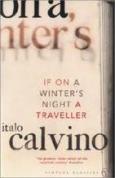 I enjoyed the diversions, although I was disappointed that he was unable to find a way to leave the sex of the reader neutral, having been almost convinced he might well be speaking to me, it becomes clear he is speaking to his male readers, political correctness not in full swing in the early 1980’s when this was published. But I readily forgive him, especially when assured by Lorna Sage, author of the memoir ‘In Bad Blood’ who wrote in the Observer:
‘devastating, wonderfully ingenious parody of all those dreary best-sellers you buy at the airport…It is a “world novel”: take it with you next time you plan to travel in an armchair’
Chapters are interspersed with stories, the titles of which are referenced in each preceding episode, the stories are the beginning of novels and you the protagonist are searching for the rest of the story while listening to Calvino expound on readers, reading, and writing. Best described in an extract from one of the stories themselves, where he writes:
‘I’m producing too many stories at once because what I want is for you to feel, around the story, a saturation of other stories that I could tell and maybe will tell or who knows may already have told on some other occasion…I see something like a forest that extends in all directions and is so thick that it doesn’t allow light to pass…so it is not impossible that the person who follows my story may feel himself a bit cheated, seeing that the stream is dispersed into so many trickles, and that of the essential events only the last echoes and reverberations arrive at him…’
 Playful, impossible to label, is it a…, it is a question, a poem, a collection of stories, a novel and a conversation with Italo Calvino. The author imposes himself and his voice within the pages and we as the reader also become involved in the action as Calvino switches into the second person narrative. If I were an academic I would probably be littering this text with a lot of technical terms describing the literary tools Calvino plays with, literature students are likely to come across it, or at least they did in the past, as David Mitchell, author of ‘Cloud Atlas’ reminisces about here, when he rereads it for a second time.
 It’s an oeuvre that defies categorisation, which plays with the reader and will entertain some while annoying others, myself I am content that it has now stopped taunting me from the bookshelf, my curiosity sated, it can now be talked about with some knowledge of its interior. That curiosity won’t rest long however, no doubt it will soon find another dusty volume to settle on, another book I haven’t read by that author I have often read about but have yet to enter their imagined world.
 In the early 19th century, French psychiatrist Philippe Pinel coined the term ‘manie sans delusion’ referring to the one per cent of the population that appeared normal on the surface but lacked impulse controls and were prone to outbursts of violence. In 1891 it became known as ‘psychopathy‘.
 He presents a look into a field that has had its share of experimental and controversial programs, practices and institutions as well as its staunch adversaries such as the Scientologists, who continue their campaign to discredit the profession and individuals within it to this day.
 It’s an imprecise malady with no known cure and involvement best avoided if one encounters anyone with an overabundance of the suggested characteristics, and while we might think it shouldn’t take a neurologist or a psychiatrist to point that out, to be human is not always to be logical or to follow common sense, especially while under the spell of a charming, manipulative liar.
 Isabel Allende.
 bookish path, just as ‘Island Beneath the Sea’ did recently, spotted on my book buddy’s shelf while feeding her son’s cat Oscar.


 Reading books on writing is a little like panning for gold. Most of what we read washes away, some of it is interesting to consider but doesn’t necessarily gel and then occasionally we find a gem.
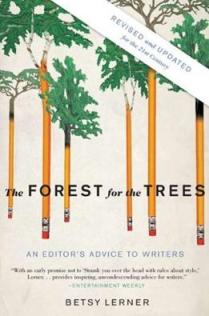 ‘The Forest for the Trees’ was recommended on writer
  If you are looking for a tongue in cheek attempt at writer’s psychological profiles, interesting and funny anecdotes and an inside look at one editor’s career path, then this will entertain. We can also learn much about the industry by keeping up with writer’s blogs and online communities, which without a doubt reflect the situation of writers today, whether persevering towards it or already succeeding to be published.
 I picked up this slim volume of three enticing novellas during one of my scouts of the excellent Oxfam bookshops in London recently. I was intrigued by the cover and the discovery of an international author I had not read before whose credentials intrigue but I was sold by the quote on the cover by Nobel Prize-winning author
 Word by Word