Who or what is really harming literature?

All the hoopla created by Booker judge and TLS Editor Peter Stothard’s untimely comments in The Independent suggesting that book bloggers are harming literature, reminded me that I have yet to post a review of Deborah Levy’s Swimming Home, which I finished a short while ago and shall rectify shortly. (now done)

While posting a rant isn’t one of the objectives of this blog, since I’ve been commenting on the issue elsewhere, I decided to do something a little different and turn our eyes away from the culpability of book bloggers for a moment – who if you’ve read anything I’ve written in the last 24 hours you will know I think do a marvellous job – and instead suggest some other groups or individuals who it might also be said are harming literature today.

Voila, the list:

  1. Governments – I’m referring more to the British government whose budget cuts in the culture sector have had a crushing effect on many cultural and literary organisations (and libraries!!) who relied on funding to keep their operations and artists/writers supported. Sadly, either the government doesn’t appreciate the cultural value and importance of the Arts or hopes it will turn itself into a more commercial business model, if it can’t earn a living, either the private sector will save it, or it will cease to exist.
  2. Literacy – there had been a significant increase in the percentage of non-readers, an alarming trend and certainly harmful to all literature however, a recent survey in the US has shown that for the first time in a quarter century, literary reading has increased among American adults.

    A decline in both reading and reading ability was clearly documented in the first generation of teenagers and young adults raised in a society full of videogames, cell phones, iPods, laptops, and other electronic devices.

  3. Technology – the quote above says it all; technology has affected the leisure and entertainment options of children and young people, who might otherwise have picked up a book. However, this cloud may have a silver lining if the same people then hear about books via social networks and get reading on their gadgets. The book industry is going to have to get pretty creative to capture the attention of young people. Bloggers are the first step in that direction, right?
  4. Parents – Yes. Parents. Are we encouraging our kids to read by reading to them, taking them to the library, buying books or engaging in animated storytelling? All kids love being read to or told made-up stories and while they are young, books also assist them to undercover their passions and interests! Not a new problem, but one that can be detrimental to our beloved literature.
  5. Artists and Book Sculptors – Well, really this is an excuse to show you the extraordinary, exquisite, mysterious sculptures created by an unknown sculptor in Edinburgh late last year, which also sets out to prove that sometimes great literature actually needs to be harmed in order to generate support, awareness and appreciation.
  6. Libraries – both a victim and a culprit, the poor old library is being phased out in many cities, but libraries have also been known to be engaged in selling off and destroying the old to make room for the shiny new things that want to steal the limelight!
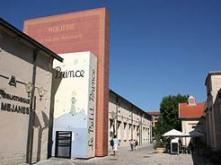
    Cité du livre Bibliothèque Méjanes Aix-en-Provence

  7. Social Networking – it may be having an adverse effect on some writers as they navigate the fine line between having a public profile to assist with promotion of their titles and the distraction of random communications and information that keeps them from writing. Not surprising that some enterprising company has come up with an app you pay for that restricts your internet access, we can now purchase discipline for the undisciplined!
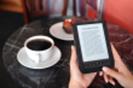
  8. E-books – so you think e-books are good for literature? I’m not so sure, I think that e-books have turned literature into a much more accessible and easy to purchase commodity, with an associated risk that many people are consuming books and not actually reading them. So good for the writer’s pocket and for the estates of classics and at least the bookshelves aren’t suffering, but are we at risk of becoming collectors rather than readers.
  9. Telephones – I’ve mentioned technology already, but I have to register my concern at lugging my brick of a book, Murakami’s 1Q84 on holiday and a quick glance around the beach suggested I was one the very few doing that old fashioned thing, reading a book. Everyone else was doing the finger tapping dance on their teeny gadgets – alas, the mobile telephone has replaced the beach read, at least in St Tropez this summer!
  10. Steve Jobs & the Apple team – when computer hard drives required an entire office to house them and technology was beige, boring and you had to be a geek to operate it, literature was in no way threatened – now that it’s sleek, sexy and can facilitate a music, film, or other visual experience, a whole new level of entertainment has captured our imaginations, to the detriment of the more passive, noiseless book.
  11. The iGen – the baby boomers are becoming grandparents, the X generation are coping with being older parents and the new generation have been dubbed the iGen. They are going to create and imagine a whole new way of doing things. We don’t yet know what kind of literature they will want to read or create and they will decide which of our contemporary writers become future classics. Perhaps books are going to become more of an interactive experience?
The point being, there are a good many things out there and I am sure you can think up more of them, that could be said to be harming literature. But at least it stimulates a good debate and brings out those who are passionate about reading, writing, reviewing, critiquing.

Ok, back to writing that review then.

The Coward’s Tale

Laddy Merridew comes to spend time with his Gran in an old Welsh mining town in Vanessa Gebbie’s ‘A Coward’s Tale’. Not happy with his lot, lost in the in-between, here where he doesn’t feel like he belongs so starts skipping school and there, the home he has come from that is breaking apart and will never be as it was and what’s worse, is requiring him to make decisions he feels incapable of making.

Laddy comes to the town statue outside the public library to listen to the local beggar Ianto Jenkins tell and trade stories for a coffee or a bite to eat and this part of his day passes pleasantly for hearing and learning about the descendants and ancestors of the town, all of whom have in some way been touched by the tragedy at the Kindly Light coalmine one September morning back then.

 ‘We’re meant to be doing coal mines in history.’

‘History, now, is it?’

‘They make it boring though. Not like your stories. You make it like it is still happening, in your head anyway.’

And the beggar shakes that head. ‘It is. And sometimes Maggot, I wish it wasn’t.’

Ianto Passchendaele Jenkins narrates the stories that link present day inhabitants back to their ancestors, two generations previous, showing that one is rarely ever completely free of the past and the sins of the fathers are often witnessed albeit in a new form, in the actions of those living today. From Baker Bowen to the Woodwork Teacher, Halfwit and the Deputy Bank Manager, the Deputy Librarian and the Undertaker and the Piano Tuner, Ianto shares their tales with warmth and compassion until finally one of his characters, the Collier, Peter Edwards share’s the beggar’s story, ‘The Coward’s Tale’.

Like young Laddy who no longer knows whether what his parents say is true or not, so too with the beggar’s tales, which captivate cinemagoers waiting in the queue, keeping him talking by topping up his coffee supply, the author making use of the words may and will to imagine what people may do and if so what that means they will do. Only Laddy searches for clarification, the others are happy to be mesmerised and encourage him with edible gifts.

‘For my breakfast? I will tell a story for breakfast? An egg. How about a nice egg?’

Once I got into the tales and understood the framework, I enjoyed the book, but I admit it took three attempts before the stories managed to carry me away with their rhythmic, poetic prose. However they are splendid tales and told with a unique captivating voice that puts the reader right in that square with all the other listeners, empathizing with each of the characters that the adored Ianto Jenkins brings to life for them.
Finally I am reminded of another set of tales of life in a small French village in Julia Stuart’s The Matchmaker of Perigord, which was a favourite a few years back, which I also recommend as a compelling, humorous summer read.

Note:This book was an Advanced Reader Copy (ARC), provided by the publisher via NetGalley.

Buzzard

Friday Fictioneers is the brainchild of Madison Woods who posts a photo prompt each Friday to inspire followers to write a piece of flash fiction. After observing Rich participate I decided before I read his work, to see if anything was lurking in the depths of my imagination that wanted out, and Voila here it is, slightly longer at 150 words, but I’m ok with that.


A Man’s Best Friend

What’s she called?
Buzzard.

Buzzard? As in bird?
Yeh mate, Buzzard.

Bit strange for a dog don’t you think?

If I thought it was strange I’d have called her Bud, wouldn’t I?

Yeh, I guess.
Come on then, you gonna give me a hand or not. You get the front and take it slow down them stairs, I got the back. And no chat, I don’t want nosy neighbours asking stuff ‘ll give us more to do.

The two men lifted the long rectangular box off the table and walked towards the front door of the near empty apartment. Descending the stairs, they kept the deadweight container level until they got outside then slid it into the back of the waiting yute.

But where did you get Buzzard from?

Easy, wasn’t it. Last thing I saw before I picked up the body. That and the dog. So you gonna drive or me?

A Piece of the Mosaic

Thank you to inspirational talent Kimberly Sullivan who lives in Rome and has written ‘In the Shadow of the Apennines’ set in the mountains of Abruzzo. She tagged me in the ‘Be Inspired’ blog hop hosted by ‘Page After Page’:

All of our stories come from somewhere, whether it be a dream, another book, a life event…So, I thought why not give people the chance to talk about their inspirations as well as their stories?

To participate, I should answer 10 questions about my novel and then tag 5 writer’s:

1. What is the name of your book?

‘A Piece of the Mosaic’

2. Where did the idea of your book come from?

It started with a prompt in a creative writing class at the Groucho Club in Soho; the tutor asked us to spend 5 minutes writing about a character. It was the scariest part of the class, that compulsory, time limited plunge into the unknown with others furiously scribbling away.

Paralysed, I had a vision of the back of a young man standing on a pier smoking a cigarette, gazing out to sea . He was wearing black trousers and a black leather jacket, observed by two schoolgirls giggling on a bench. After the class finished, I could not get that man out of my head.

3. In what genre would you classify your book?

I hate labels, I hope this book crosses as many genres as possible, but if I had to guess I would say it is contemporary, cross cultural fiction.

4. If you had to pick actors to play your characters in a movie rendition, who would you choose?

I don’t know any current Italian actors, so I would suggest a young man of Mediterranean origin to play Alfredo and because this question is too hard, I’m going to adapt it and say I dream of music composed by Ennio Morricone and the film directed by Giuseppe Tornatore director of Cinema Paradiso and Ba’aria. Authentic it must be.

5. Provide a brief synopsis.

Alfredo’s home village – Liguria

Angry with his father after his mother’s death, young Italian chef Alfredo, abandons the fishing village he has lived in all his life and travels to England, eventually finding a job in the seaside town on the South Coast. In return for low rent, he agrees to an unorthodox request from his spinster landlady Claudette, to help her find the sister she has not seen for 30 years since she and her husband immigrated to New Zealand.

Alfredo discovers more than a long-lost sister and the search soon becomes his own, to find Claudette’s niece Amber; the journey leading him towards everything he has tried to avoid in order to learn the truth.

6. Is your book already published/represented?

The synopsis and first three chapters have been read by 3 agents in London, with encouraging responses but declining representation and the full manuscript was requested by the fiction editor at Penguin NZ, who enjoyed it and suggested I seek representation in the UK.

 In order to establish some credibility with my writing, I decided to write a blog before I send it out again, so here I am blogging away, sharing my passion for the written word.

7. How long did it take you to write your book?

The actual writing part probably took about a year, but I wrote it in two bursts, the first half when I lived in London and on a whim travelled to Liguria to spend a week in a fishing village imagining and writing of lives other than my own.

I finished it in the first six months of arriving in France unable to speak French – the best excuse in the world not to have a proper job and to finish a first novel.

8. What other books within your genre would you compare it to? Or readers of which books would enjoy yours?

There are many books about people from the English-speaking world going to live in a non-English speaking country, both fiction and non-fiction, Alfredo isn’t leaving to see the world, he is escaping.  It is a story that questions identity and confronts issues of adoption and family.

I think it will appeal to people who like books that take them to places they dream of visiting and that introduce them to issues from different cultural perspectives, if anyone has any suggestions as to any other book this sounds like, let me know.

9. Which authors inspired you to write this book?

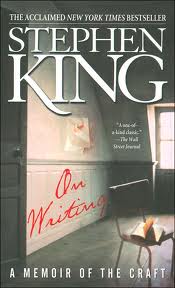
Two authors come to mind immediately, ironically Stephen King influenced this book, because I read his excellent slim masterpiece ‘On Writing’ midway through writing.  After reading it I changed a few things, I stopped writing longhand, I set a 1000 words/day word count (his is 2,000 words/day) and I stopped editing as I was writing, I just wrote it out until the end – terrified it would be crap, but discovered how to create pace.

The other author who spent some time residing in my subconscious was Italo Calvino, it took me a while to figure out what he wanted; now I know – but it’s a secret.

10. Tell us anything that might pique interest in your book?

Here are two extracts that survived that very first writing exercise, sitting in the Groucho Club in London, searching the recesses of my mind for inspiration.

Looking out over the swollen sea, Alfredo smiled knowingly at how her moods changed, one moment bright and sparkling in her refinery, phosphorescence glittering like sequins in the moonlight, the next as she was now, irascible, dark and brooding, like a young lover scorned, beauty transformed into bitterness. He watched a fish jump momentarily from her clutch, as if trying to escape her volatile and uncompromising mood, then witnessed the force of gravity, the sea’s ever-trusting accomplice, toss the cold-blooded vertebrae back into the maelstrom from which it had tried valiantly to escape.

He threw his half-finished cigarette into the sea and she hissed at him in reply. He had never been a regular smoker in Italy and wished he could kick the habit, cigarettes had become a comfort since he came to England, he liked to roll them as much as he liked to smoke them, it gave his hands something to do when his mind was restless. Thoughts extinguished, he walked down the length of the pier, eyes front, not looking at two giggling teenage girls to his right but sensing their eyes following his footsteps, over the wooden planks, where if one’s gaze was concentrated enough, you could see the pregnant swell of the waves below, as the tidal ebb carried them to and from the shore.

And now to tag 5 writers, all of whom are an inspiration to me:

  1. Brenda Moguez – Passionate Pursuits
    – Brenda is a prolific, unique and inspirational blogger with a rich family and personal history to draw on, not to mention a gigantic imagination, it’s just a matter of time before we will be reading her novel, now doing the rounds of agents.
  2. Juliet GreenwoodJulietGreenwoodAuthor – Juliet lives in a traditional Welsh cottage between the romantic Isle of Anglesey and the majestic mountains and ruined castles of Snowdonia, she is living the dream, a published writer and avid gardener; she is an inspiration.
  3. Patricia SandsEveryone Has a Story to Tell
    – Patricia has published a book about friendship, fun and the complexities of relationships among women, drawing inspiration from her own experiences. Every Friday she blogs about France and her current WIP (work in progress) is set here.
  4. Julie Christine Chalk the Sun
    – Julie is a Francophile, she is a reading writer, travels often and writes a fantastic book review. Just waiting for her to plunge right into writing that novel, a WWII star-crossed romance between a young French girl and a German POW, inspired by true events.
  5. Jen ThompsonChronicles of Jen
    – Jen is another writer who loves to read and shares her thoughts when she does, she’s a talented writer, lives in a caravan and is out there observing characters and seeking inspiration while serving hotdogs and popcorn. She may not be able to participate because her idea is so great, someone might steal it J
  6. Nelle NelleWritesI’m going to add one more, because I couldn’t have a list of writers without including Nelle, who not only is a great writer, but is a loyal follower and comments on all my reviews, even though her book budget is severely restricted.

Wild Horses and Flash Fiction

Its National Flash Fiction Day today in the United Kingdom, celebrating the short, short form of fiction, the art of telling a story in less than 1,000 words and more often only 150 words.

David Gaffney shares his experience of writing and being published in the form and offers these tips:

  1. Start in the middle
  2. Don’t use too many characters
  3. Make sure the ending isn’t at the end
  4. Sweat your title
  5. Make your last line ring like a bell
  6. Write long, then go short

He goes on to explain each tip, click here to reveal his words of wisdom.

And here is my attempt to tell a story in 150 words, word by word.

*

The Muster

*

I ride bareback with just a halter and lead into the midst of the herd, gently coaxing them out from under the trees. My mount quivers beneath me; fear pervades the damp atmosphere and I exhale deeply to expel it.

The sound of a gunshot spooks the stallion and the horses move. Bright sunlight extinguishes shadows as they bolt, branches cracking beneath the drum of hooves.

My father is in position. The herd veers to the right. At the river bank there is a two metre drop into the water and we do not hesitate. I grip hard with my knees and feel muscle ripple beneath me bracing itself for the jump. Something knocks my shoulder and I cry out as we plunge head first into the torrent.

“Wake up son, we’re mustering that herd of wild horses today” my father says as I open my eyes.

Orange Prize Shortlist

From the longlist of 20 books, today a shortlist of five has been announced, for the 17th annual Orange Prize for women’s writing.

Set up to acknowledge and celebrate women’s contribution to storytelling the Award celebrates excellence, originality and accessibility in women’s writing throughout the world. It is awarded to a novel written by a woman in the English language.

Last year the award was won by Téa Obreht for The Tiger’s Wife and previous winners have included Barbara Kingsolver for The Lacuna, Andrea Levy’s A Small Island and Chimamanda Ngozi Adichie for Half of a Yellow Sun, which is currently being made into a film.

This year the shortlist includes:

Esi Edugyan                 ‘Half Blood Blues’           Canadian      2nd Novel

Anne Enright               ‘The Forgotten’                Irish             5th Novel

Georgina Harding      ‘Painter of Silence’             British         3rd Novel

Madeline Miller         ‘The Song of Achilles’         American      1st Novel

Cynthia Ozick              ‘Foreign Bodies’              American      7th Novel

Ann Patchett              ‘State of Wonder’             American      6th Novel

Short Synopses and Biographies can be read here.

The winner will be announced at an awards ceremony to be held at the Royal Festival Hall in London on 30 May 2012.

I haven’t read any on the list yet, but I have Ann Patchett’s ‘State of Wonder’ on the shelf and I have been eyeing up ‘Half Blood Blues’ for some time.

And you? Have you read any of the titles from either the short or the long list yet, or planning to?

The Versatile Blogger Award

Blogging awards make excellent writing prompts and get me writing about something other than books as well as encouraging good blogging etiquette; i.e. visiting other blogs, commenting and being supportive.
This lovely award has been passed on to me most recently via Fi’s Magical Writing Haven whose exquisite river of stones vignettes are a joy to indulge in.

However, I must also say thank you to a few others who have also mentioned this blog.  So ‘Merci beaucoup’ Elizabeth, medieval historian at Lapidary Prose who used her award to acknowledge her gratitude to family, followers and supportive writers and Subtle Kate from Sydney and Liz Shaw who offers creativity prompts for writers, journalers and artists at The Writing Reader.

Ok, 7 things you may not know about me:

  1. I am an Aquarian.
  2. The 1600 acre hill country sheep farm where I spent my childhood was one of the Middle Earth locations in the film ‘Lord of the Rings’.
  3. Golden Plover, Whitsunday Islands

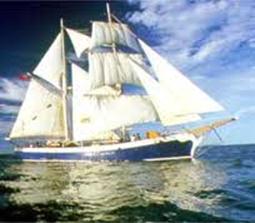
    I once worked on the 104 foot (30m) tall ship ‘The Golden Plover’; I was employed as a hydro ceramic engineer (dishwasher), except when the Captain or 1stmate shouted “all hands on deck”.

  4. I have visited more than 30 countries.
  5. I was a bridesmaid at a traditional African wedding in Lagos, Nigeria.
  6. I am married to a man who was born in a manger refugee camp in Bethlehem whose name starts with J.
  7. I like to read Buddhist philosophy.

And a few more blogs I recommend:

Arabic Literature (in English) – I don’t travel as much these days, so I love to read translations, experience different cultures and travel through books.

Books & Bowel Movements – Cassie’s enthusiasm for books and the way she writes about them is contagious and I love that she loved ‘The Bone People’.

Tomcat in the Red Room – he doesn’t post very often, but writes the most amazing reviews and has a natural vocabulary I envy.

Nexus –A humanities teacher and an artist sharing wonderful moments in the classroom and elsewhere.

Hooked – One woman at Sea, Trolling for truth – when I need to go to sea I watch one of her video posts; the writing is exquisite and I hope she publishes a book soon.

Memorable Reads in 2011

It has been a memorable 2011 both in reading and sharing, one of my aspirations this year having been to learn how to create a blog.

What joy it has brought, the creation, the writing, the reading, the sharing and the community of readers and wonderful like-minded souls who comment and share and have opened their worlds to me. I didn’t expect or foresee all the joy and wonderful interaction that would come from creating a virtual entry into my world of books and reading and that this would lead me to so many others.

So thank you to all those who follow this blog, my wish for 2012 is that the inspiration and motivation we provide each other will long continue.

To rank anything would be torturous, and even to list favourites is near impossible, so I will mention some memorable reads in no particular order and no doubt regret those I have left out later.

muze 62

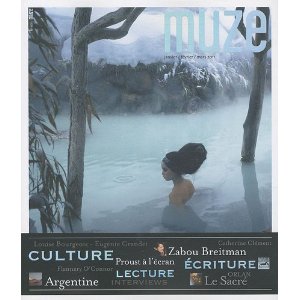
1. Muze No.62    ҉   not a big consumer of magazines, in February I discovered this volume at Le Mans TGV station. The words CULTURE, ECRITURE, LECTURE jumped out at me, then Louise Bourgeois – Eugénie Grandet, Proust à l’écran, Flannery O’Connor, Argentine and Le Sacré excited me and the cover just melted my heart. It did not disappoint, I now have another favourite magazine (and a most enjoyable way to improve my French).

2. Fear and Trembling by Amélie Nothomb    ҉   Recommended by mon amie B, this was my first foray into popular French fiction. A hilarious account, said to be based on the author’s experience of a year working in Japan, you end up thinking she’s either a saint or a masochist as she fails to integrate into the work environment.

3. The Children’s Book by A.S.Byatt   ҉   having not read her work for a long time, I was pulled into this Edwardian world of potters, ceramics, the Victoria & Albert museum and the varying sensitivities of children. A mesmerising and colourful journey.

4. Seven Days to Tell You by Ruby Soames   ҉   will remain with me always as a turning point, the first book I read prior to publication, fear and delight combining to produce this review.

5. The Diving Pool, The Housekeeper + The Professor by Yoko Ogawa   ҉   I will remember 2011 for discovering Yoko Ogawa’s short story collection in Oxfam, introducing me to her gripping and evocative style, followed by the poignant and memorable novella ‘The Housekeeper and Professor’.

6. Gift from the Sea by Anne Morrow Lindbergh   ҉   this classic collection of ‘coming of middle age’ essays published in 1955, stays with me because it arrived the day my daughter was admitted to hospital and was one of my choices of books to accompany me during those challenging two weeks.

7. The Lacuna by Barbara Kingsolver   ҉   the ten year wait club, I recall awaiting Louis de Berniere’s ‘Bird without Wings’, one of my all-time favourite books and this year there was Jeffery Eugenide’s long awaited ‘The Marriage Plot’ and Kingsolver’s ‘The Lacuna’ which I loved and review here.

8. A Kind Man by Susan Hill   ҉   shortly after reading an author’s interview in Mslexia and a subsequent visit to Daunt Books in Marylebone, I couldn’t help but be tempted (and indulged, thank you G) by Susan Hill’s ‘A Kind Man’. I respected her attitude and perspective in the interview and instinctively savoured each page of this fable-like novella. I then read ‘The Beacon’ confirming Hill as a writer I know I will continue to read, happy there is a lengthy backlist.

9. The Many Lives & Secret Sorrows of Josephine B by Sandra Gulland    ҉    my first blog review and wonderful memories of two trilogies shared with my best book reading buddies C and M.

And finally, no memorable list could be complete without mentioning the companionship of:

10. Mslexia   ҉   the quarterly magazine for women who write and more often women who juggle at least one or more jobs, a family and numerous responsibilities but who find 2, 5, 10, or just any hours to dedicate to writing, they are all an inspiration to me and I love to read all those who succeed in becoming published through its pages. An inspiration, a writing prompt and always a great read.

Happy New Year Everyone!

Time Passes, Reality Bites – A Visit from the Goon Squad

‘A Visit from the Goon Squad’ by Jennifer Egan (winner of the Pulitzer prize for fiction 2011) was recommended in a comment on my post ‘Why People don’t read short stories’ and I then had the good fortune to swap books with a book buddy and was delighted to discover that this was the treasure she was trading.

There has been much discussion already about the title; what exactly is a ‘goon’ and is this even a relevant question? I decided not to search for an answer and instead to come up with my instinctive response at the end, I prefer to hazard a wild guess although the cynic in me did wonder if it wasn’t just a gimmick.

A novel or a set of stories, each chapter is separate yet connected by the barest of threads to the previous, sufficient to surmise a pattern, although like many creations, the complete picture does not become clear until the work is finished. It reminds me of six degrees of separation, that we are all connected and that even when we are, there are gaps in history’s, we only ever know part of a person’s story.
It is a testament to Egan’s writing  and one of its strengths that her book reads like a novel because we are immediately drawn into and engaged within the world of her well cast characters, mentioned briefly in one chapter, discovered in depth in the next, it is not like starting a completely different story, more like starting an abstract jigsaw puzzle in opposite corners knowing that eventually the pieces should add up. We read and make the connections, searching for them, perhaps even creating them ourselves. I wonder, is that my imagination at work or the writer’s – or both working in unison?

We encounter this in Italo Calvino’s ‘If on a Winter Night a Traveller’ and also in Alice Hoffman’s ‘Blackbird House’, a slim thread enough to spur the reader on in the quest for enlightenment.

In Egan’s novel we meet Sacha who works for Bennie in the music industry, Bennie himself, his wife Stephanie, her ex-convict journalist brother Jules, Dolly who used to be Stephanie’s boss, Ted, Sacha’s Uncle and others whose lives have interacted at some point. We meet them at different periods in time, during particular episodes in their lives where even the young seem to have already lived numerous lives and carry a burdensome past that haunts their present. There is an underlying dissatisfaction with how things have turned out, the inevitability of time passing and taking with it something vital and essential.

Which reminds me, the goon squad; as Bosco says on page 134 ‘Time’s a goon, right?’ and so too I believe that a visit from the goon squad is just this, time passing and the oft harshness of reality.

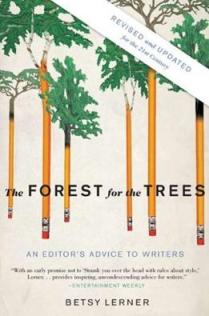
The Forest for the Trees – An Editor’s Advice

Reading books on writing is a little like panning for gold. Most of what we read washes away, some of it is interesting to consider but doesn’t necessarily gel and then occasionally we find a gem.
Unlike gold, one woman’s gem doesn’t necessarily guarantee universal approval and when I recall the books I thought were fantastic ten years ago, I realise now how far I have moved on, now those same inspirational pages from yesteryear elicit nothing more than nostalgic fondness, no longer capturing the thinking place I am at today.

I remember with absolute clarity coming across Dorothea Brande’s 1934 classic ‘Becoming a Writer’ during the period I enrolled in my first creative writing class with writers Maggie Hamand and Henrietta Soames at the Groucho Club in London and how it seemed to speak to me and contain all the questions and doubts I had at the time. There is definitely gold in this book for someone starting out on the writing path, though I have given my volume wings and allowed its pages an airing by passing it on rather than let it languish on the shelf unread.

‘The Forest for the Trees’ was recommended on writer Sandra Gulland’s blog and I’d just finished reading the Josephine Bonaparte trilogy, so I jumped in and bought it on impulse. Divided into two sections Writing and Publishing, is a little misleading, the first half reading more like a psychological analysis of writer behaviours, who are the ambivalent, the natural, the wicked child, the self-promoter, the neurotic or touching fire, along with numerous anecdotes to validate these suppositions. Whilst I have no doubt, the author has come across each of these stereotypes, I found the labelling patronising and found myself wondering about the hidden majority who don’t fit so clearly into these headings – or do I just need to get out more to meet these people? Tell me writers, do you identify with one of these labels?
The frequent references to Truman Capote created a distance that was difficult to bridge and too many of the examples seemed like exceptions; I admit I was searching for the paragraph that I could identify with, an example of someone who seemed like an ordinary person, the kind that might convince the reader that to write successfully and be published is possible. It’s the cult of the celebrity factor again, with hindsight one can look back and select anecdotes about writers who were the exception rather than the rule. Disillusioned, I blame my market research background where the anecdote has little credibility and witnessing the propensity of politicians and tabloids to use them in the place of verifiable evidence.

The main message in the second half was: be respectful and patient with your editor and publicist, they’re all juggling multiple balls, you don’t really understand what goes on behind the scenes, if you did, you’d leave us to get on with the job. This debate is likely to continue with the advent of electronic publishing and the industry having to redefine its role and prove its value, however I found this section more insightful and it did highlight many of the strengths and weaknesses of the publishing process.

If you are looking for a tongue in cheek attempt at writer’s psychological profiles, interesting and funny anecdotes and an inside look at one editor’s career path, then this will entertain. We can also learn much about the industry by keeping up with writer’s blogs and online communities, which without a doubt reflect the situation of writers today, whether persevering towards it or already succeeding to be published.