Brotherless Night by V.V. Ganeshananthan

I became aware of Brotherless Night when it was shortlisted for the Women’s Prize for Fiction 2024, the winner of which will be announced at 6.45pm GMT on June 13th, 2024.

When I read that it was about a young woman in Sri Lanka, in the time of approaching civil war, I recalled reading Nayomi Munaweera’s excellent Island of a Thousand Mirrors (my review here), a book about families and divisions, as well as belonging – how human beings continue to perpetuate separation and difference and make it dangerous, fearful and forbidden to pursue union and friendship, due to backgrounds and ethnic differences. Two families from different ethnic origins, living up and downstairs from each other…and so the story will unfold, as another generation is compromised.

Long simmering ethnic tensions and perceptions of injustice against the government lead to a civil war that pitted one group of people against the other, Buddhist Singhalese and Hindu Tamil.

A Family and A Country Set to Lose
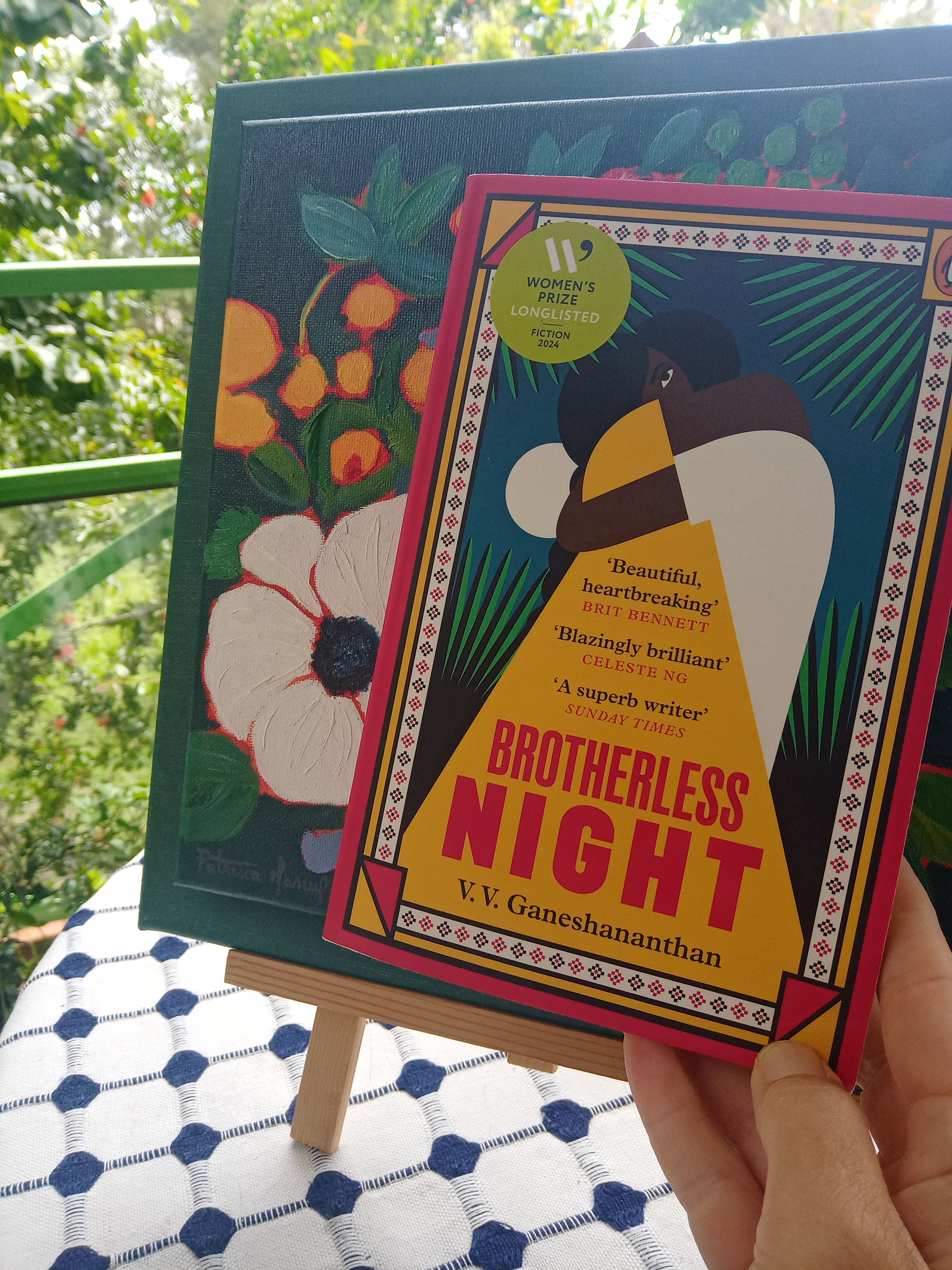
Sri Lanka civil war 1981 -1989 a sister who wants to become a doctor, four brother, Tamil militant recruiters, governments using ethnic differences to punish

Brotherless Night is narrated from the perspective of Sashi, from 1981-1989, the long, tumultuous, violent years of the civil war, fought between the Sinhalese-dominated state and Tamil separatist groups (bookended by chapters set in New York 2009).

It is mainly set in the city of Jaffna, where the young protagonist of a Tamil family lives, with some chapters set in the capital Colombo.

At sixteen, Sashi wants to become a doctor like her older brother. She has four brothers, all with different ambitions, three older and one younger. Their father Appa, a government surveyor, is travelling and rarely at home unless given leave.

The story opens when one of their friends K, hears Sashi’s screams as she spills hot water on herself and drops his bicycle and comes inside and tends to her burn. He is in her third brother Seelan’s class, also destined for medical school. His life will take a different direction, becoming further entwined with hers and her brothers.

Awakening to Irreparable Adult Conflict

The novel traces the beginnings of their pursuit of their dreams and the slow unravelling as the country erupts and young Tamil men are both recruited and sometimes snatched to join “the cause”.

A book sat on her brother’s shelf, an old bestseller about the 1958 anti-Tamil riots, one he read after being present at an international conference on Tamil language and culture where police had fired into the audience.

At sixteen I still hadn’t touched Emergency ’58 but I knew it was a brutal testimony to Sri Lanka’s willingness to slaughter its own Tamil citizens. My father’s slim, battered copy of the book had taken on the aura of something forbidden and terrifying. Did I need to read it to know that because we were ethnic minorities, Tamils were considered expendable?

It follows the effect on this particular family of the different choices people make, including the absent father and the daring mother. When two of the brothers join one of the militant groups, Sashi’s mother does everything to try and save the youngest son from becoming lost to them. When disaster arrives, she rallies ‘the mothers’ in one unforgettable episode that does make a difference, but won’t save them from what is coming.

The boys are challenged by their mother on a rare visit home, but are unable to provide responses to her unanswerable questions.

The Twisted Turns of Stunted Dreams

It is about the disruption of the dreams and the way they can swerve when disasters occur; about the effect on families and youth of political ideologies and both the difficulty and dangers of resisting; the futility of judgement, of regret.

I did not wait. Neither did the war. It was with us now. Since Dayalan and Seelan would not tell us, I went out and asked my friends what they had heard or knew, and in that way began to collect information about the new lives people were choosing. Were they responding to the war or were they making it? Boys joined in droves; the ranks of the militant groups swelled. Almost every week now one of our neighbours told Amma about those they knew who were going. People spoke about it more and more freely. Some of the parents were proud. “What did we expect them to do, after all,” said Jega Uncle, Saras Aunty’s husband. His nephew had joined. “After what they did in Colombo, how did they expect us to react?”

How to Survive

Perhaps education is one of the few ways that youth can escape a world in turmoil, but even that is no guarantee. So many have little choice or are made to choose between life and death, no choice at all.

Stories that involve families, their experiences, their losses, their small wins, their deep hurts, their bravery and failures perhaps tell us more than what media news stories depict, where money, power and political influence dictate. The lives of families, of mothers and sons and daughters come from the heart, from a desire to want them to survive and thrive.

Thoroughly researched and humanely presented, while not holding back from expressing its fury, this novel will make many readers grateful for the simplicity of their own lives and realise the ease with which they are able to pursue it and the banality of our own carefree decision-making, compared to the complicated conflict too many today are born into.

Highly Recommended.

“I was interested in writing about the gray space between militarized societies and questions of choice and coercion,” V.V. Ganeshananthan, in an interview with Here & Now‘s Deepa Fernandes

Further Reading

wbur Interview: ‘Brotherless Night’ explores Sri Lanka’s civil war through stories of family by Deepa Fernandes

NPR: ‘Brotherless Night,’ an ambitious novel about Sri Lankan civil war, wins $150K Carol Shields prize

The Guardian: Brotherless Night by V.V Ganeshananthan review – heartbreak in war-torn Sri Lanka by Yagnishsing Dawoor – excerpt below.

The novel has the intimacy of a memoir, the urgency of reportage, and the sweep and scale of the epic. It occasionally employs the second person to address the reader. In this, it sits somewhere between plea and testimony. And while the revelations are distressing, the narration itself is buoyed up by a rare and robust emotional force. Ganeshananthan’s prose is rich, eloquent, utterly unsparing. “The war,” Sashi tells us, “offered us only tight quarters.”

Women’s Prize for Fiction Shortlist 2024

The Women’s Prize for Fiction have announced their shortlist of six novels. You can view the entire longlist here.

Identity, Resilience, Migrant Experiences, Family Relationships

Many of the books depict characters who are navigating seismic changes in their identity, undergoing a process of self-reckoning and self-acceptance, with several dealing with the inheritance of trauma and the resilience of women overcoming the weight of the past.

Half of the books in this year’s shortlist explore the migrant experience through different lenses, offering moving, distinct, explorations of race, identity and family, of the West’s false promise and the magnetism of home.

The shortlist encompasses stories that both focus on intimate family relationships, as well as those that convey a sweep of history, always with an eye on the particularity of women’s experience, whether in the home or in the context of war and political upheaval.

The Shortlist

Below are descriptions of the individual titles, along with a quote from a judge, to help you discern if they might be of interest:

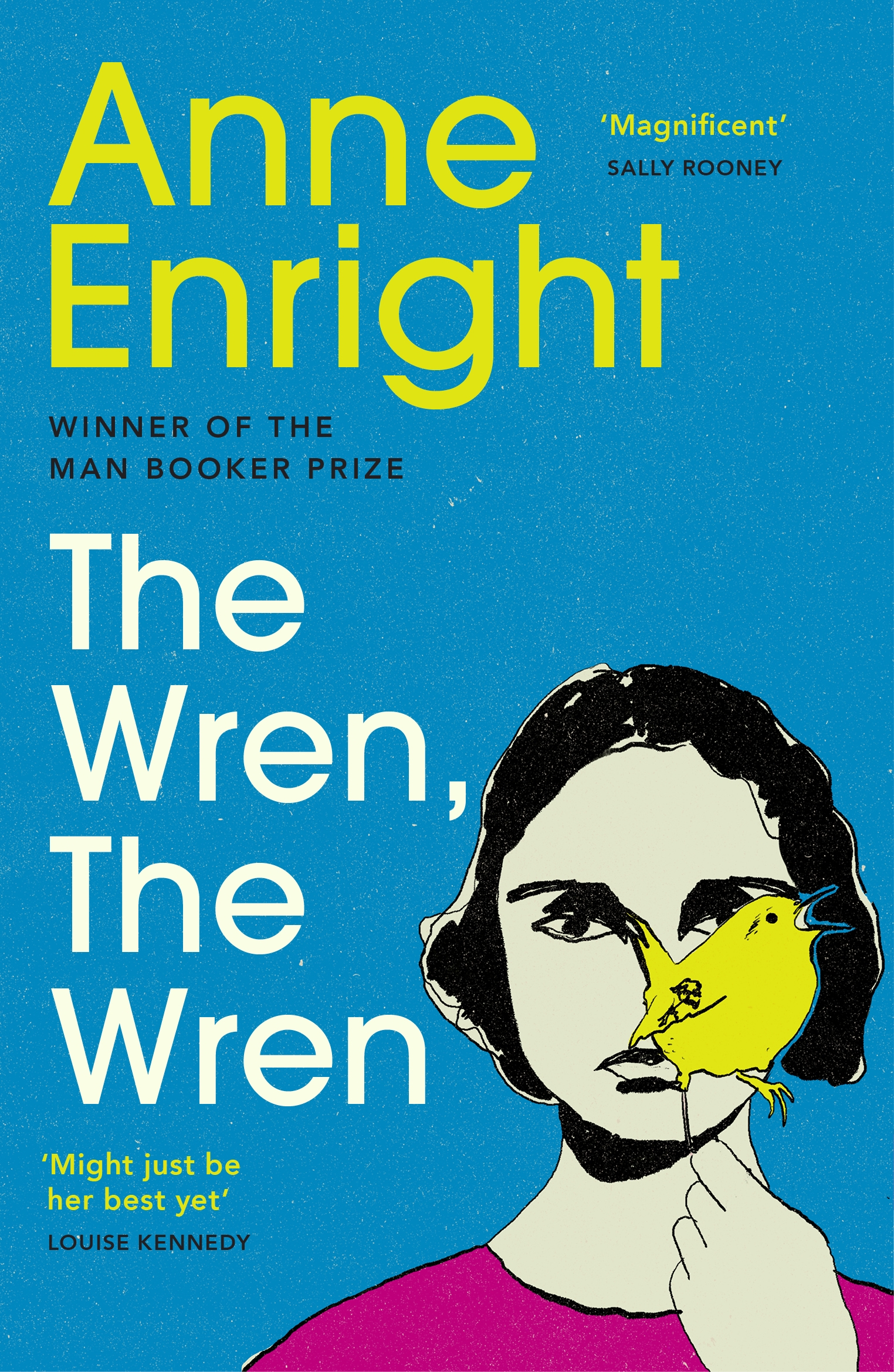
The Wren, The Wren by Anne Enright (Ireland) published by Jonathan Cape, 283 pgs

A psychologically astute examination of family dynamics and the nature of memory. Enright’s prose is gorgeous and evocative and scalpel sharp.

Nell – funny, brave and much loved – is a young woman with adventure on her mind. As she sets out into the world, she finds her family history hard to escape. For her mother, Carmel, Nell’s leaving home opens a space in her heart, where the turmoil of a lifetime begins to churn. Across the generations falls the long shadow of Carmel’s famous father, an Irish poet of beautiful words and brutal actions.

A consideration of love: spiritual, romantic, darkly sexual or genetic. A generational saga tracing the inheritance of trauma and wonder, it is a testament to the resilience of women in the face of promises, false and true. An exploration of the love between a mother and daughter – sometimes fierce, often painful, always transcendent.

Brotherless Night by V. V. Ganeshananthan (Sri Lanka), published by Viking, 348 pgs (see my review here)

Visceral, historical, emotional. It is 300 pages of must-read prose. A powerful book that has the intimacy of memoir, the range and ambition of an epic, and tells a truly unforgettable story about the Sri Lankan civil war.

Sixteen-year-old Sashi wants to become a doctor. But over the next decade, as a vicious civil war subsumes Sri Lanka, her dream takes her on a different path as she watches those around her, including her four beloved brothers and their best friend, get swept up in violent political ideologies and their consequences. She must ask herself: is it possible for anyone to move through life without doing harm?

Restless Dolly Maunder by Kate Grenville (Australia), published by Canongate Books, 256 pgs

[It] follows the life of Dolly, who really is restless. It begins in the 1880s in rural Australia, and it follows Dolly’s ambitions to live a bigger life than the one she’s been given.

Dolly Maunder is born at the end of the 19th century, when society’s long-locked doors are just starting to creak ajar for determined women. Growing up in a poor farming family in rural New South Wales, Dolly spends her life doggedly pushing at those doors. A husband and two children do not deter her from searching for love and independence.

Restless Dolly Maunder is a subversive, triumphant tale of a pioneering woman working her way through a world of limits and obstacles, who is able – despite the cost – to make a life she could call her own.

Enter Ghost by Isabella Hammad (Britain/Palestine), published by Jonathan Cape, 336 pgs (see my review here)

How can a production of Hamlet in the West Bank resonate with the residents’ existential issues? Enter Ghost is a beautiful, profound meditation on the role of art in our society and our lives.

After years away from her family’s homeland, and reeling from a disastrous love affair, actress Sonia Nasir returns to Haifa to visit her sister Haneen. While Haneen made a life here commuting to Tel Aviv to teach at the university, Sonia remained in London to focus on her acting career and now dissolute marriage. On her return, she finds her relationship to Palestine is fragile, both bone-deep and new.

When Sonia meets the charismatic, candid Mariam, a local director, she joins a production of Hamlet in the West Bank. Soon, Sonia is rehearsing Gertrude’s lines in classical Arabic with a dedicated group of men who, in spite of competing egos and priorities, all want to bring Shakespeare to that side of the wall. As opening night draws closer and the warring intensifies, it becomes clear just how many obstacles stand before the troupe. Amidst it all, the life Sonia once knew starts to give way to the daunting, exhilarating possibility of finding a new self in her ancestral home.

Timely, thoughtful, and passionate, Isabella Hammad’s highly anticipated second novel is an exquisite story of the connection to be found in family and shared resistance.

Soldier Sailor by Claire Kilroy (Ireland), published by Faber & Faber, 233 pgs (my review)

A full-bodied, remorseless, visceral deep dive into the maternal mind. It is ultimately a love story between Soldier, the mother, and Sailor, the son.

In her acclaimed new novel, Claire Kilroy creates an unforgettable heroine, whose fierce love for her young son clashes with the seismic change to her own identity.
As her marriage strains, and she struggles with questions of autonomy, creativity and the passing of time, an old friend makes a welcome return – but can he really offer her a lifeline to the woman she used to be?

River East, River West by Aube Rey Lescure (France/China), published by Duckworth, 352 pgs

Set in Shanghai in the 2000s, it’s a novel about reinvention. It’s original, it’s funny, and it’s sometimes heartbreaking as well.

A mesmerising reversal of the east–west immigrant narrative set against China’s economic boom, River East, River West is an exploration of race, identity and family, of capitalism’s false promise and private dreams.

Shanghai, 2007: feeling betrayed by her American mother’s engagement to their rich landlord Lu Fang, fourteen-year-old Alva begins plotting her escape. But the exclusive American School – a potential ticket out – is not what she imagined.

Qingdao, 1985: newlywed Lu Fang works as a lowly shipping clerk. Though he aspires to a bright future, he is one of many casualties of harsh political reforms. Then China opens up to foreigners and capital, and Lu Fang meets a woman who makes him question what he should settle for.

The 2024 Winners

The winner of both the Women’s Prize for Fiction and the inaugural Women’s Prize for Non Fiction will be announced on June 13th, 2024.

I have only read one from the list, Claire Kilroy’s excellent Soldier, Sailor. I’m most interested in reading V.V. Ganeshananthan’s Brotherless Night and Isabella Hammad’s Enter Ghost and am reminded that a friend recommended her debut The Parisian back in 2019 (but you know, 700+ pages).

Have you read any of these from the shortlist? Let us know what you thought in the comments below.