Over the long weekend I read the lengthy ‘Shantaram’ by David Gregory Roberts set in Mumbai (Bombay). I have never been to Bombay, but I did spend a month travelling in India in 1995 and the experience remains imprinted in my heart and memory, for me the country and its people have no equal. I love it. It is at the very top of my list of destinations, experiences and insights.
The first pages of this extraordinary story are reminiscent of many travellers’ journeys to India, the assault on all the senses, the welcoming committee, the brick of rupees, the taxi rides.
“the glimpse of the suffering street brought a hot shame to my healthy face.”
“The street at the front of the building was crammed with people and vehicles, and the sound of voices, car horns, and commerce was like a storm of rain on wood and metal roofs.”
“there were beggars, jugglers, snake charmers, musicians, astrologers, palmists and pimps and pushers”
 India is where you are introduced to your wits. Until I travelled there, it was a mere expression ‘make sure you have your wits about you’. In India, they rise up within you from some deep, slumbering place inside and become a living, breathing extra sensory force, providing a necessary equanimity and alert, their reward, insight.
‘Shantaram’ is the story of an Australian fugitive, posing as a New Zealand traveller who arrives in Bombay and unlike most travellers who stay only long enough to experience the city and plan their next destination, he stays.
Without exception, those who stay are escaping something and what that is, seems to have a direct relationship to how deep they become involved in the city’s underworld activities. Roberts stays out of trouble to begin with and provides a delightful insight into his blossoming friendship with Prabaker, who truly does represent India’s heart. Due to misfortune he moves to a slum where he spends his days working from his well-stocked first aid kit, providing rudimentary medical treatment to the inhabitants as he becomes part of the fabric of the slum community.
The two friends spend some months in Prabaker’s home village with his family and these are chapters are my favourite, portrayed with humour, a sensitive understanding and compassion. It is the calm before the storm and a period that I didn’t want to end.
“Prabaker told me that family and his neighbours were concerned that I would be lonely, that I must be lonely, in a strange place, without my own family. They decided to sit with me on that first night, mounting a vigil in the dark until they were sure that I was peacefully deep in sleep. After all, the little guide remarked, people in my country, in my village, would do the same for him, if he went there and missed his family, wouldn’t they?”
 However Robert’s luck changes when he is arrested one night and discovers he has unknown enemies with unknown motives and the experience of prison will unleash the darkest aspect of his character. When he is finally released he goes to work with the Bombay mafia, delving into the world of black market drug, currency and false document dealings all the while awaiting that future moment where he can exact revenge against his enemy.
This book draws you into a frightening and fascinating world that I am not sure whether we are better off knowing of or remaining in blissful ignorance of. I guess it is no worse than being subjected to the news media every evening with its plethora of images and reports of violence, oppression, corruption and greed, something I waver between wishing to avoid (and often do) and needing to have a balanced and informed awareness of.
What I perceive is the oft dreadful consequence of a genetic predisposition combined with early life tragic event that leads to a kind of corruption of the soul, I am reminded of Jonathan Ronson’s dip into the characteristics of a psychopath in ‘The Psychopath Test‘ which describes someone  charming and influential who lacks empathy, and has an intense need to be liked. I don’t think the character in this story is a psychopath, but many in his circle survive precisely because they are not beleaguered by the emotional constraints of sympathy or empathy whether they were born like that or have become that.
Chilling indeed, though more than offset by that other extreme, a city of people whose smiles are in the eyes which broaden to encompass their whole face and being to cross that divide between people of different cultures and leave us with a warm, perplexed feeling. How is it that among such poverty, despair and ruthlessness exist the happiest people on earth?
And to know the answer to that one can only go there, experience it and ponder it oneself.

43.529742
5.447427

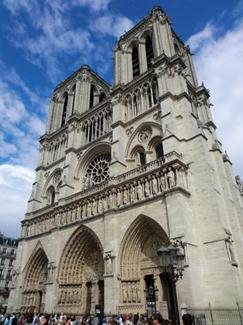
 If you need any more proof that Paris is indeed the city of love, check out this superb photo I took of that beautiful feminine monument ‘La Tour Eiffel’, is that not a beautiful heart shining down on the population?
 We took an evening stroll up to the Sacre Cœur cathedral, two minutes from where we were staying. In fact I was babysitting that evening while friends from New Zealand were at a Bruce Springsteen concert, I have to say it was the best night looking after 3 children ever, practicing french phrases during dinner and an impressive after dinner promenade to one of the city’s marvels.
 However, something that only Paris can offer, her history of monarchs, uprisings, revolutions and battles and 60,000 square metres of art works in one museum alone and then there’s the people watching, all chairs facing the street for the best view, it’s amazing what you observe and overhear during the downing of une noisette (small coffee with a dash of milk).


 Whether we are conscious of it or not, we all grow up seeking to affirm our sense of personal and group identity, absorbing those questions of Who am I? Where do I belong? Traditionally, the family and the community reflect that notion and it is not until we step outside those comfort zones that we might question it. But for children growing up among worlds and between cultures the awareness comes much earlier.
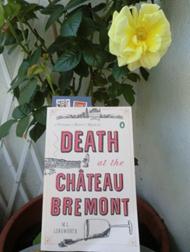 fiction travelogues such as Sarah Turnbull’s ‘Almost French’ or David Sedaris’ vignettes in ‘Me Talk Pretty One Day’, funny, true, yet never denigrating the country that has become like a second home to him. You will also find English translations of popular French authors like


 He wears a badge his father gave him that reads ‘I am Chinese’, what it really means is ‘I am NOT Japanese’ for it is 1942 in Seattle and anyone who looks Japanese is being sent away to a special ‘camp’.


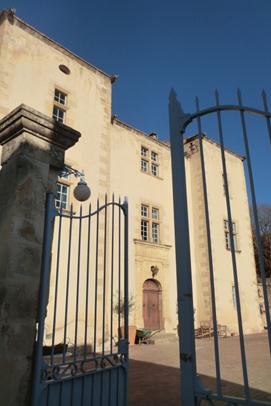
 I finish William Maxwell’s 1961 classic on the last day of our two week séjour at the 16th century
  experimental nature and writes as he pleases.



 Word by Word