The Hypocrite (2024) by Jo Hamya

I came across The Hypocrite randomly and was intrigued firstly by the Sicilian setting and secondly by its premise of being a clash of generational perspectives.

I was also intrigued, having recently read Enter Ghost by Isabella Hammad, to discover another novel with a theatre setting. It is a thought provoking novel about the family dynamics of a daughter and her parents, played out one afternoon as she lunches with her mother, while her father watches the play downstairs. It is an awakening of sorts for them all.

A Daughter Creates

A young woman Sophia, has written a play. It is set in a summer holiday house on one of the Aeolian islands of Sicily, a place she spent a month with her father, typing his dictated novel, mostly hanging out alone, quietly observing the women he bedded nightly. That was 10 years ago.

The Father Watches

literary fiction a daughter writes a play about her fathers generation referencing a holiday in Sicily

Today, her father, the (in)famous author, attends a matinee showing of his daughter’s work for the first time. He knows nothing about the play prior to being seated in the theatre. He swiftly realises that much of the set and characters are familiar to him. This might even be about him. About that holiday. He begins to feel uncomfortable.

No stories are entirely imaginary, cherub, he’d said then. Everything is always a little bit real. Sometimes you steal things from other stories and change them until they work how you like.

He wonders if the people sitting either side of him know who he is. He begins to prepare defences in his mind. He decides to interact with the young woman who had been seated next to him.

He thinks, I have never been any good at arguing. I have only ever said what is on my mind. So he asks her, without malice, whether she dislikes him because of what they’ve both watched; does his best to keep his breathing steady in the interval between his question and her answer.

Round Glasses is blunt. She disliked him before, she says. And the play is no great shakes.

The Mother Bitches

a mother and daughter eat in a theatre restaurant
Photo by Rene Terp on Pexels.com

Upstairs in the theatre restaurant, the daughter dines with her mother. She spends most of the meal talking about her ex-husband. She has re-experienced living with him for a period during lockdown. Unaware, she begins to create a scene.

The narrative shifts between the father observing the play unfold, the daughter listening to the mother complain of him and that month long holiday in the past that inspired her to write the play.

In Sicily, Sophia had looked forward to spending the longest uninterrupted time with her father she had ever had. She did not realise that she would spend most of the time alone or in the company of Anto, the nephew of the woman who cleaned the house. Her father would be absent to her, except when dictating his chauvinistic novel. She would observe and learn things.

We Are all Products of Them and Ourselves

The novel explores the unmet expectations of each character in the family trio, their deafness to each other’s desire and the clash of generational perspectives.

The contradiction of the time had been the heightened moral obligation to consider other people as a means to keeping one’s own self-interest afloat. Showing other people care meant avoiding them.

theatre stage play audience in a theatre red curtain
Photo by Monica Silvestre on Pexels.com

The scenes pass in a kind of circumambulation, one after the other, progressing onward.

Revelation comes slowly to the father seeing himself from another’s perspective, through actor’s on a stage, where he cannot interrupt or change the narrative, he is forced to bear witness.

Held To Account, Punished and Portrayed

The mother is witnessed by both the daughter and the waiter, who forces her to account for her deteriorating behaviour. This is not the family home, no dsyfunction permitted.

The daughter equally will be challenged by a random stranger in a public place.

It is not quite a reckoning, but a challenge to each of them to see what they are not seeing, to pause from the habit of inflicting a perspective on others.

The novel puts on stage personal power, public perception and creative potential and asks it audience to consider the responsibility and ambiguity of creating art, mining lives and the sanctity or not (for art) of relationships.

So who is the hypocrite?

Everyone it seems.

Further Reading

The Guardian Review: The Hypocrite by Jo Hamya review – sharp generational shame game by Miriam Balanescu, 12 May, 2024

The Guardian Interview: Jo Hamya ‘Could I just write one massive grey area?’ by Hephzibah Anderson 20 Apr, 2024

Jo Hamya, Author

Jo Hamya was born in London. After living in Miami some years, she completed an English degree at King’s College London and a Masters in contemporary literature and culture at Oxford University. She has worked as a copyeditor for Tatler, edited manuscripts published by Edinburgh University Press and Doubleday UK.

She has written for the New York Times, Guardian and Financial Times. Currently, she works as an in-house writer and archivist for the Booker Prizes and its authors and is a PhD candidate at King’s College London.

Her debut novel was Three Rooms (2021). She lives in London.

Women’s Prize for Fiction Shortlist 2024

The Women’s Prize for Fiction have announced their shortlist of six novels. You can view the entire longlist here.

Identity, Resilience, Migrant Experiences, Family Relationships

Many of the books depict characters who are navigating seismic changes in their identity, undergoing a process of self-reckoning and self-acceptance, with several dealing with the inheritance of trauma and the resilience of women overcoming the weight of the past.

Half of the books in this year’s shortlist explore the migrant experience through different lenses, offering moving, distinct, explorations of race, identity and family, of the West’s false promise and the magnetism of home.

The shortlist encompasses stories that both focus on intimate family relationships, as well as those that convey a sweep of history, always with an eye on the particularity of women’s experience, whether in the home or in the context of war and political upheaval.

The Shortlist

Below are descriptions of the individual titles, along with a quote from a judge, to help you discern if they might be of interest:

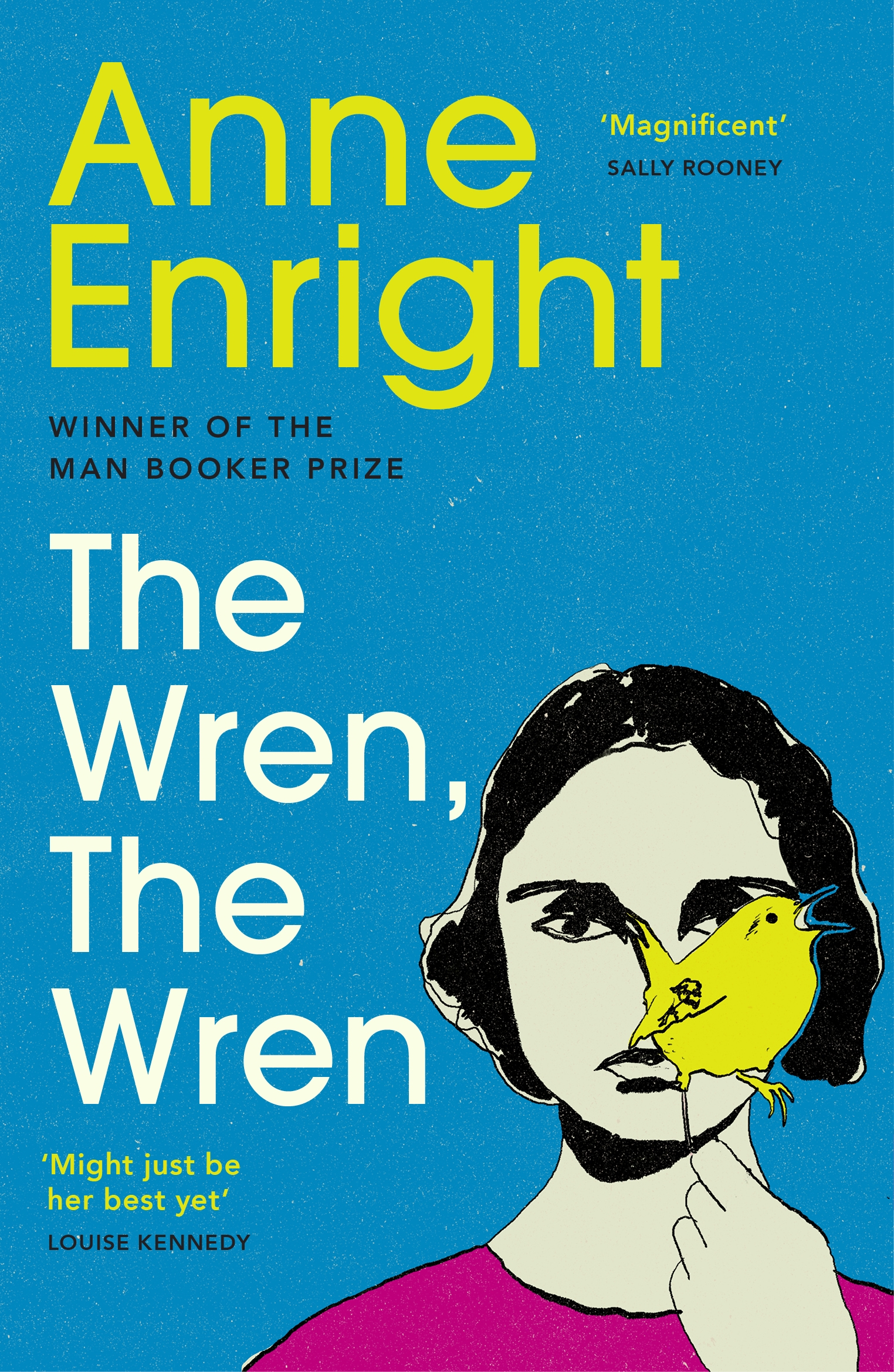
The Wren, The Wren by Anne Enright (Ireland) published by Jonathan Cape, 283 pgs

A psychologically astute examination of family dynamics and the nature of memory. Enright’s prose is gorgeous and evocative and scalpel sharp.

Nell – funny, brave and much loved – is a young woman with adventure on her mind. As she sets out into the world, she finds her family history hard to escape. For her mother, Carmel, Nell’s leaving home opens a space in her heart, where the turmoil of a lifetime begins to churn. Across the generations falls the long shadow of Carmel’s famous father, an Irish poet of beautiful words and brutal actions.

A consideration of love: spiritual, romantic, darkly sexual or genetic. A generational saga tracing the inheritance of trauma and wonder, it is a testament to the resilience of women in the face of promises, false and true. An exploration of the love between a mother and daughter – sometimes fierce, often painful, always transcendent.

Brotherless Night by V. V. Ganeshananthan (Sri Lanka), published by Viking, 348 pgs (see my review here)

Visceral, historical, emotional. It is 300 pages of must-read prose. A powerful book that has the intimacy of memoir, the range and ambition of an epic, and tells a truly unforgettable story about the Sri Lankan civil war.

Sixteen-year-old Sashi wants to become a doctor. But over the next decade, as a vicious civil war subsumes Sri Lanka, her dream takes her on a different path as she watches those around her, including her four beloved brothers and their best friend, get swept up in violent political ideologies and their consequences. She must ask herself: is it possible for anyone to move through life without doing harm?

Restless Dolly Maunder by Kate Grenville (Australia), published by Canongate Books, 256 pgs

[It] follows the life of Dolly, who really is restless. It begins in the 1880s in rural Australia, and it follows Dolly’s ambitions to live a bigger life than the one she’s been given.

Dolly Maunder is born at the end of the 19th century, when society’s long-locked doors are just starting to creak ajar for determined women. Growing up in a poor farming family in rural New South Wales, Dolly spends her life doggedly pushing at those doors. A husband and two children do not deter her from searching for love and independence.

Restless Dolly Maunder is a subversive, triumphant tale of a pioneering woman working her way through a world of limits and obstacles, who is able – despite the cost – to make a life she could call her own.

Enter Ghost by Isabella Hammad (Britain/Palestine), published by Jonathan Cape, 336 pgs (see my review here)

How can a production of Hamlet in the West Bank resonate with the residents’ existential issues? Enter Ghost is a beautiful, profound meditation on the role of art in our society and our lives.

After years away from her family’s homeland, and reeling from a disastrous love affair, actress Sonia Nasir returns to Haifa to visit her sister Haneen. While Haneen made a life here commuting to Tel Aviv to teach at the university, Sonia remained in London to focus on her acting career and now dissolute marriage. On her return, she finds her relationship to Palestine is fragile, both bone-deep and new.

When Sonia meets the charismatic, candid Mariam, a local director, she joins a production of Hamlet in the West Bank. Soon, Sonia is rehearsing Gertrude’s lines in classical Arabic with a dedicated group of men who, in spite of competing egos and priorities, all want to bring Shakespeare to that side of the wall. As opening night draws closer and the warring intensifies, it becomes clear just how many obstacles stand before the troupe. Amidst it all, the life Sonia once knew starts to give way to the daunting, exhilarating possibility of finding a new self in her ancestral home.

Timely, thoughtful, and passionate, Isabella Hammad’s highly anticipated second novel is an exquisite story of the connection to be found in family and shared resistance.

Soldier Sailor by Claire Kilroy (Ireland), published by Faber & Faber, 233 pgs (my review)

A full-bodied, remorseless, visceral deep dive into the maternal mind. It is ultimately a love story between Soldier, the mother, and Sailor, the son.

In her acclaimed new novel, Claire Kilroy creates an unforgettable heroine, whose fierce love for her young son clashes with the seismic change to her own identity.
As her marriage strains, and she struggles with questions of autonomy, creativity and the passing of time, an old friend makes a welcome return – but can he really offer her a lifeline to the woman she used to be?

River East, River West by Aube Rey Lescure (France/China), published by Duckworth, 352 pgs

Set in Shanghai in the 2000s, it’s a novel about reinvention. It’s original, it’s funny, and it’s sometimes heartbreaking as well.

A mesmerising reversal of the east–west immigrant narrative set against China’s economic boom, River East, River West is an exploration of race, identity and family, of capitalism’s false promise and private dreams.

Shanghai, 2007: feeling betrayed by her American mother’s engagement to their rich landlord Lu Fang, fourteen-year-old Alva begins plotting her escape. But the exclusive American School – a potential ticket out – is not what she imagined.

Qingdao, 1985: newlywed Lu Fang works as a lowly shipping clerk. Though he aspires to a bright future, he is one of many casualties of harsh political reforms. Then China opens up to foreigners and capital, and Lu Fang meets a woman who makes him question what he should settle for.

The 2024 Winners

The winner of both the Women’s Prize for Fiction and the inaugural Women’s Prize for Non Fiction will be announced on June 13th, 2024.

I have only read one from the list, Claire Kilroy’s excellent Soldier, Sailor. I’m most interested in reading V.V. Ganeshananthan’s Brotherless Night and Isabella Hammad’s Enter Ghost and am reminded that a friend recommended her debut The Parisian back in 2019 (but you know, 700+ pages).

Have you read any of these from the shortlist? Let us know what you thought in the comments below.

The Woman in Black

Long awaited and much anticipated (by me), Susan Hill’s ghost story ‘The Woman in Black’, though first published in 1983, is experiencing something of a revival with the film premiering this month and the ghost story genre currently ‘à la mode’.

Adapted to the stage in 1987, the play has been running continuously since then (it is the second longest-running play in the history of the West End of London), thus I have been eager to discover what lies between the slim covers of this intriguing book myself, since reading ‘A Kind Man’ and ‘The Beacon’ last year and becoming a fan of her books.

Knowing that Susan Hill is one of those writer’s whose work and combination of words I like to savour, I take my time and let the language wash over me, as I come to know Arthur Kipps, while he sits by the fire on Christmas Eve listening to his stepchildren narrate ghost stories. Though it is a festive occasion, a grain of discomfort winds itself between the lines on the page and there is a flicker of an unwelcome presence, a glimmer of something he does not wish to recall, despite being far removed from his past now.

The story unfolds as we are taken back to his early days as a young solicitor, journeying to the cold, misty, windswept marshes of Crythin Gifford where he must wind up the affairs of the recently deceased Mrs Alice Drablow. Ever prosaic, he takes the responsibility in his stride and tries to ignore the reluctance of locals to engage with him or have anything to do with the matters of the deceased widow and the eerie Eel Marsh House.

While I very much doubt that I will be seeing the film, though I am sure it is excellent and well-made, utilising known techniques to ensure viewers experience ever heightened tension, heartstopping anticipation and chilling unease to elicit that emotionally wrung out feeling – I say this if like me, you have an acute sensitivity to music which accentuates all those senses (I succeed in scaring those who weren’t scared by the movie), I do love how Susan Hill uses details of nature and the physical environment to keep the reader and her protagonist grounded in reality.

There is no music accompanying the reading of this book and so I too hang on to that ambiguous reality. When Arthur visits Eel Marsh House and for practical purposes stays the night (yes, he is rather stubborn), he reassures himself and us by opening all the windows, understanding the layout of the house, going for a walk, venturing out in the dark against his better instinct only to be confronted with something that may or may not be able to be explained. And it’s not just him, even Spider the companionable dog responds to the lure of noises that sound familiar but could indeed be sinister.

It’s the perfect ghost story, because so much is left up to the interpretation of the reader, you can be a believer or a non-believer and regardless come away from this story feeling intrigued, satisfied and wanting to talk to someone about how you understood it. I am already looking forward to the next Susan Hill book that comes my way.