On Canaan’s Side by Sebastian Barry

Continuing Reading Ireland Month 25 I finish the last of the three novels about the Dunne Family.

The final novel in the 4 book collection about the Dunne Family, first being the play about the Dad Thomas, the last superintendent of the Dublin Police, then his children Annie Dunne and Willie’s stories A Long Long Way and now Dolly, who we knew left Ireland for America as a young woman, but we never knew why.

Interestingly she too is based on a real ancestor, the Great Aunt of the author, whose true story only came out to him in recent years.

One Grievance Too Many

We meet her as Lily, a grieving octogenarian during the 2 weeks – each day a chapter – following the death of her grandson Bill, the boy she raised alone from 2 yrs of age, as she did her son.

I am so terrified by grief that there is solace in nothing. I carry in my skull a sort of molten sphere instead of a brain, and I am burning there, with horror, and misery.

So while in the present she is grieving and finding it difficult to find reason for still being alive, the novel is a form of her confession, an ode to herself, to all that has passed; so we are taken back to Dublin, to Wicklow, to what happened after the war, after the loss of Willie, to her meeting his young friend, the solider Tadg Bere and how their destinies become entwined.

A Fateful Meeting

‘The thing about Willie was,’ Tadg Bere was saying, ‘it wasn’t just you could be depending on him, you knew he was keeping a weather eye out for you, like you might a brother. So I was always thinking, that was a sorta compliment to his family, that they had reared him up in that frame of mind.’

Her father helps him find a job in the police force. Lily isn’t too sure about her feelings for him, their relationship has barely begun, when it reaches a significant turning point.

He was proud to be working, at something akin to soldiering, and something that would allow him to serve his country. He felt he was making a new beginning. He did not believe in any new Ireland, he devoutly loved the old one. The new force paid decently, but was otherwise poorly funded and put together in great haste. They barely had uniforms, and in the beginning wore bits and bobs of various forces, half army and half police, which is why they were dubbed the Black and Tans.

Ultimately the thing she desires, she can never truly embrace, as her life is lived always looking over her shoulder, always somewhat in fear.

Absence and Loss, Refuge in Cleveland

There are patterns in her life of men departing for war, her brother, her son, her grandson, and how it affected them all. And the departure of husbands, the losses she has borne, the perseverance, the continued service to others she has willingly offered, until the last revelation, the one that undoes her.

The title On Canaan’s Side is a reference to a bible story, to a song, about leaving a place of incertitude or danger to travel to a place of refuge. In the bible it is the “promised land”, in Irish history, it is to America they look as a place they ought to be safe and happy. It represents humbleness and receptivity, values that Lily has honoured, only to have encountered its curse, an inability to rise above her station.

Barry had this reference in mind too, after hearing it was mentioned by a newsreader in relation to the death of Martin Luther King, the tragedy of his killing, to be on Canaan’s side. There is a scene where King visits the house where Lily cooks, it seems out of place in the novel, but perhaps it is a nod to this reference.

Interestingly, Barry’s Canaan is Cleveland, Ohio, where Lily ends up; a place he developed an interest in due to the building of the Ohio Canal, a work of civil engineering designed to invigorate the northern territories up into Canada, already destroyed by the great flood in 1913.

The novel brilliantly portrays the struggle of making a new life, the lack of choices, the nostalgia of what has been left behind, the inability to prevent certain tragedies that arrive unbidden.

“I do believe writing for a writer is as natural as birdsong to a robin. I do believe you can ferry back a lost heart and soul in the small boat of a novel or a play. That plays and novels are a version of the afterlife, a more likely one maybe than that extravagant notion of heaven we were reared on. That true lives can nest in the actual syntax of language. Maybe this is daft, but it does the trick for me. I write because I can’t resist the sound of the engine of a book, the adventure of beginning, and the possible glimpses of new landscapes as one goes through. Not to mention the excitement of breaking a toe in the potholes.” Interview with Sebastian Barry, Words With Writers, 2011

Further Reading Listening

Talking About “On Canaan’s Side” with author Sebastian Barry, CBC Radio

Guardian review: On Canaan’s Side by Sebastian Barry – Sebastian Barry’s fifth novel is a lyrical evocation of trauma and exile, bearing a seemingly endless series of potent images

Author, Sebastian Barry

The 2018-21 Laureate for Irish Fiction, Barry had two consecutive novels shortlisted for the Booker PrizeA Long Long Way (2005) and the top ten bestseller The Secret Scripture (2008), before Old God’s Time was longlisted for the Booker Prize in 2023. He has also won the Kerry Group Irish Fiction Prize, the Irish Book Awards Novel of the Year and the James Tait Black Memorial Prize.

His novels have twice won the Costa Book of the Year award, the Independent Booksellers Award and the Walter Scott Prize. Barry was born in Dublin in 1955, and now lives in County Wicklow.  
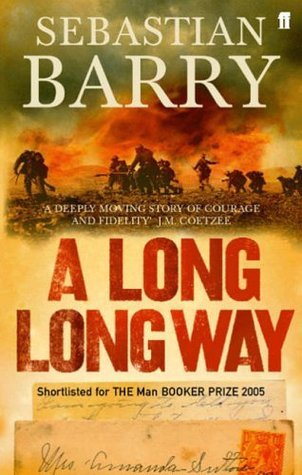
A Long Long Way by Sebastian Barry

Continuing with the Dunne Family trilogy, after the play and the first novel Annie Dunne, comes a World War I novel, one that was shortlisted for the Booker Prize in 2005.

It is about the short life of Annie’s brother William Dunne, the harsh realities of the Great War and the conflicting loyalties of Irish men at war fighting for the British Army, while others at home were fighting for freedom, putting these men at a crossroads in history, during this revolutionary shift towards Irish independence.

Dunne Family #3 Willie Dunne

The Dunne Family #2 A Long Long Way, World War 1 and the Easter Rising, Home Rule promised for Irish men volunteering

Willie Dunne was born in the withering days of 1896, named after an Uncle and the long-dead Orange King, because his father took an interest in such matters.

The only son in a family of four children, he couldn’t be held responsible for not meeting the first expectation his six foot six father held of him, to join the police force like himself.

For his growing slowed to a snail’s pace, and his father stopped putting him against the wallpaper, such was both their grief, for it was as clear as day that Willie Dunne would never reach six feet, the regulation height for a recruit.

Rather, he would join that group of young men:

piled up in history in great ruined heaps, with a loud and broken music, human stories told for nothing, for ashes, for death’s amusement, flung on the mighty scrapheap of souls, all those million boys in all their humours to be milled by the mill-stones of a coming war.

Conflicting Loyalties, In Love and War

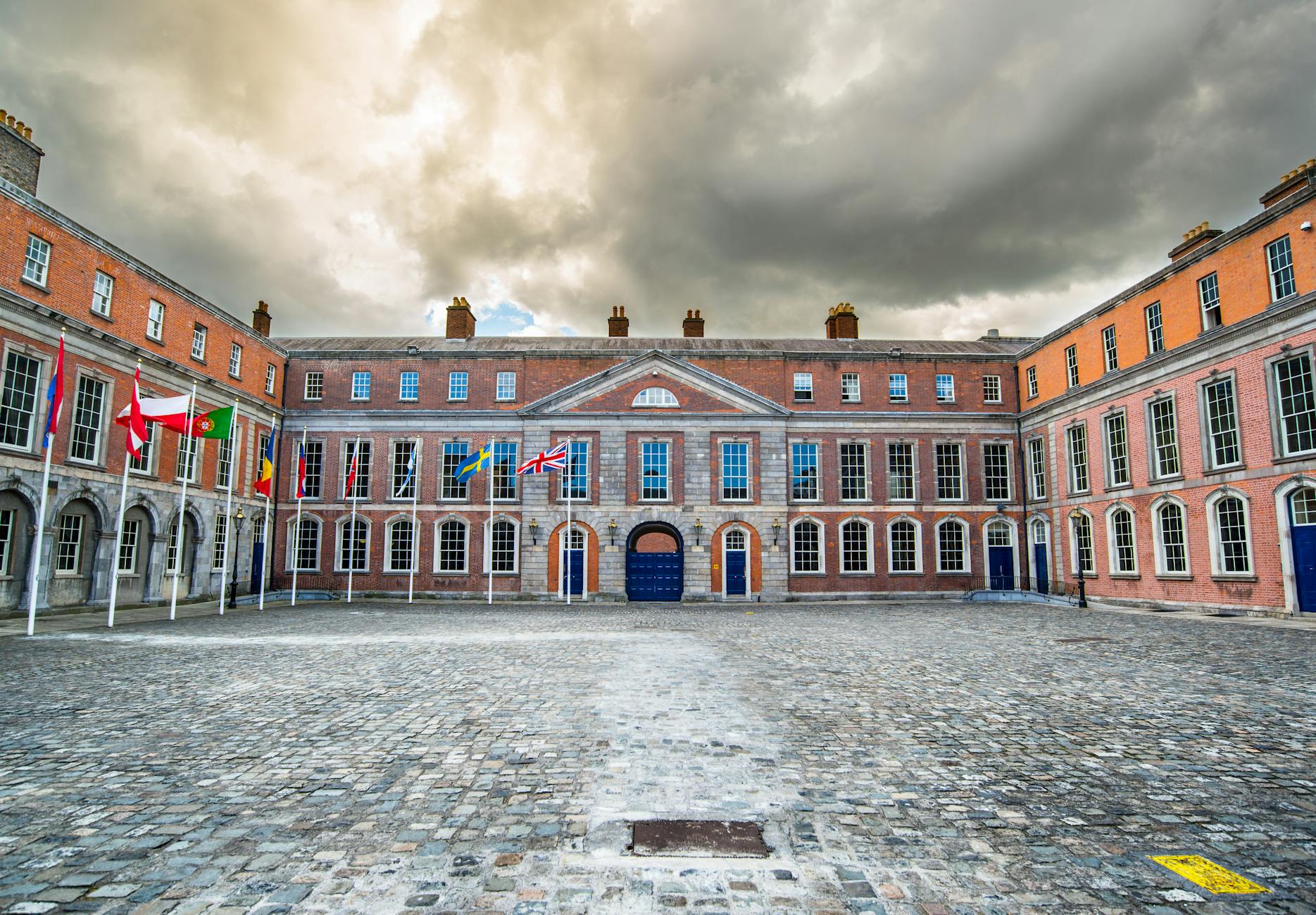
Photo by ClickerHappy on Pexels.com

Losing their mother when Willie was twelve, after the birth of the youngest daughter Dolly, they would move with their father into Dublin Castle in 1912.

During the unrest after a lock out his father, now high up in the Dublin Metropolitan Police lead a charge against the crowd that brutalised some citizens, including a man named Lawlor he wished to make amends to. Which is how Willie met the man’s daughter, Gretta, a secret he kept from his father, a desire he would carry with him throughout the coming war.

The Promise of Home Rule, Just Send Us Your Boys

Though the Ulstermen joined the same army, it was for an opposite reason, to prevent home rule, so Willie’s father said, wholely approving. A Catholic and a Mason, it was for King and country and Empire he said a man should go and fight for, never expecting that his son would depart as soon as he did.

The Parliament in London had said there would be Home Rule for Ireland at the end of the war, therefore, said John Redmond, Ireland was for the first time in seven hundred years in effect a country. So she could go to war as a nation at last – nearly – in the sure and solemnly given promise of self-rule. The British would keep their promise and Ireland must shed her blood generously.

Willie joins the Royal Dublin Fusiliers in 1914 and is soon in the trenches in Belgium, thinking of home and Gretta, disappointed that she doesn’t reply to any of his letters, but remembering that she had not been able to give her word that she would marry him. He would write to her as if she had.

Dirt, Death and Ditties

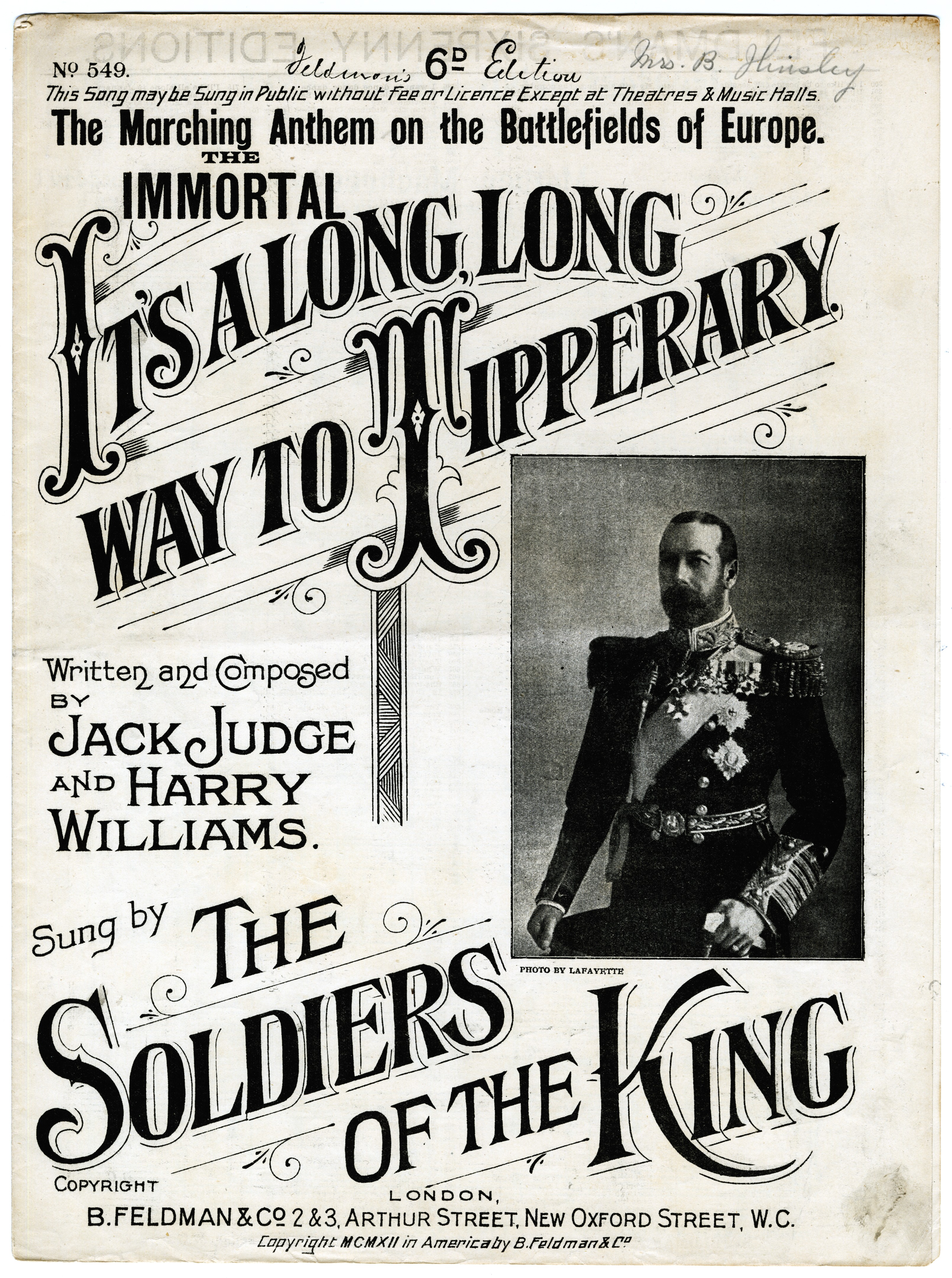
Jack Judge and Harry Williams Its a long way to Tipperary sung by soliders in world war one

Days at war were tough, dirty and relentless. As they marched between locations, the men would sing songs, most of which not everyone knew, but there was one that had everyone singing and learning, making them all feel a little better as they bawled out the lyrics.

Every man Jack of them knew ‘Tipperary’ and sang it as if most of them weren’t city-boys but hailed from the verdant fields of that country. Probably every man in the army knew it, whether he was from Aberdeen or Lahore.

But 1915-1916 was a complicated time to be fighting for King and country in Ireland. That used to indicate the same allegiances, but no longer, and for those young boys at the front, facing assault after assault, the thought of being perceived as an enemy by some back home became too confusing for them to handle.

An Uprising Confuses Irish Soliders

On his first leave in April 1916, all is well and Gretta seems to have softened towards him being away but as they are returning to the boat, they get called off and marched back towards the city to Mount Street, where they are confused by the sound of shots being fired. When a citizen offers a printed sheet to him to read, it provokes a violent reaction.

‘Step back in, Private,’ called the Captain. ‘Don’t parley with the enemy.’

‘What enemy?’ said Willie Dunne. ‘What enemy, sir?’

‘Keep back away or I will shoot him.’

When the Captain puts his gun against the citizen’s temple, Willie steps back, but none of them are given any explanation as to what the conflict was about. They are ordered to fight and in an interaction with a man who gets shot, Willie learns who the enemy are, his own countrymen, Irishmen fighting for Ireland, for freedom.

No Empathy in Judgement

When they return to the front in Flanders, thoughts and images of that Easter day won’t leave him.

Nothing had changed just here where he found himself – utter change was just across the plains. Nothing had changed. But something had changed in Willie Dunne.

Unable to reconcile what he had witnessed, Willie writes to his father of his feelings, not realising the storm erupting at home and the hardened position his father has taken, after the armed Easter Rebellion, a violent revolt against British rule. The soliders are kept deliberately vague about what is going on, for Willie saw only one of his fellow countrymen, not an enemy.

Despondency Destroys

They continue to fight on losing more and more of their compatriots and wondering what it is all for given what is happening back home in Ireland, where rows rage over conscription, Ireland no longer is willing to send their sons. Yet those who are there fight on, for each other, and for the memories of the many they have already lost.

Mothers in Ireland said they would stand in front of their sons and be shot before they would let them go…the Nationalists wouldn’t stand for it. Said King George could find lambs for the slaughter in his own green fields from now on.

From the loss of his mother, to his height and the brutality of war, Willie’s young life is beset with hardship, made all the worse by his father’s lack of understanding and other betrayals he will encounter. He finds solace and loyalty in his comrades, when his family and others disappoints him.

It’s not an easy read, but it evokes the comradary of Irish soliders during war time, the terror, cruelty and degradation of humanity war brings about.

Fiction and Storytelling Inform Us of History

Although it is not a history of Irish independence or the events that lead to it, it prompted me to read up about the Easter Rising and better understand the compromising situation those young Irish men fighting in the Great War would have been in.

It is a subject, the author said in an interview, that was not taught in schools, the focus being on the Easter Rising, than the tens of thousands of men fighting in Flanders.

In Remembrance

Reading about Willie’s experience in the Great War made me think of who in our own families was affected by World War 1. As I mentioned in my summary planning post Reading Ireland Month 2025, I discovered that my ancestor Edmund Costley, like Willie Dunne was born in 1896, and one of that decimated generation of youth born around then, who perished by the thousands.

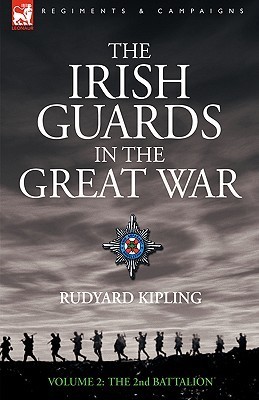
Edmund was in the Irish Guards Second Battalion, the same regiment as John Kipling, son of Rudyard Kipling. John was killed within three months of going to the front and his father in 1917, committed to write a chronicle of what the Irish Guards did during the war. That book, The Irish Guards In The Great War: The Second Battalion: Edited and Compiled from Their Diaries and Papers is an incredible of information in which to understand how it was for these young men.

Further Reading

Article: The Easter Rising 1916: the catalyst to becoming a Republic by Sinead Murphy, My Real Ireland

An Interview with Sebastian Barry About A Long Long Way by Mark Harkin

50 Facts About Ireland’s 1916 Easter Rising by Matt Keough, Irish Central

My review of: Old God’s Time (2023) by Sebastian Barry

Author, Sebastian Barry

The 2018-21 Laureate for Irish Fiction, Barry had two consecutive novels shortlisted for the Booker PrizeA Long Long Way (2005) and the top ten bestseller The Secret Scripture (2008), before Old God’s Time was longlisted for the Booker Prize in 2023. He has also won the Kerry Group Irish Fiction Prize, the Irish Book Awards Novel of the Year and the James Tait Black Memorial Prize.

His novels have twice won the Costa Book of the Year award, the Independent Booksellers Award and the Walter Scott Prize. Barry was born in Dublin in 1955, and now lives in County Wicklow.  
Annie Dunne by Sebastian Barry

For Reading Ireland Month 25, I am reading Sebastian Barry’s three novels that are part of the Dunne Family series. Here, I introduce the four works and review the first novel Annie Dunne.

Three novels and a play

Humewood Castle Kiltegan County Wicklow Sebastian Barry The Dunne Family novels and play

Sebastian Barry wrote a series of four literary works about one strand of the fictional Dunne family (inspired in parts by his own ancestral lineage), who for seven generations were stewards of Humewood Estate, 470 acres of parkland and a castle in Kiltegan, County Wicklow.

Originally built in the 15th century, the property was sold by the last of that continuous line of family, Catherine Marie-Madeleine (Mimi) in 1992 and she would present most of the estate cottages to the sitting tenants. The castle is now owned by an American billionaire.

Barry says he did have some “inkling” that he might want to explore other family stories. “But I had absolutely no idea that 20 years later these people would still be with me. I’m in a book of quotations saying that, as our ancestors hide in our DNA, so do their stories. I don’t remember saying that, but over the years I’ve come to believe it. It’s as if these hidden people sometimes demand that their stories are told.” The Guardian

The Dunne Family Tetralogy

The play is about the first son Thomas, who did not become a steward, the next Annie Dunne (2002) is about one of his daughters Annie, then A Long Long Way (2005) is the story of his only son Willie Dunne, who joins the Dublin Fusiliers and goes to the Great War (WWI), and the final novel On Canaan’s Side (2011) is about Lily Bere (or Dolly as we know her), the youngest of the three sisters, who left Ireland for America.

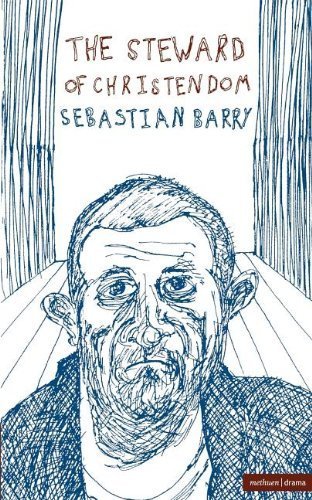
Dunne Family #1 The Steward of Christendom

The play The Steward of Christendom (1995) centres around Thomas Dunne, the high-ranking, ex-chief superintendent of the Dublin Metropolitan police, looking back on his career built during the latter years of Queen Victoria’s empire, from his home in Baltinglass in Dublin in 1932.

He was Catholic, and loyally in service to both the British King, and his country (Ireland), however those twin loyalties collided in the period leading up to the Irish War of Independence (1919-1921), when he found himself on the ‘wrong’ side of history to his countrymen, culminating in a sense of failure, including the recurring memory of the handover of Dublin Castle to Michael Collins.

I haven’t read the play, but I know that he becomes a broken man, committed to an asylum, unable to reconcile what had happened, as if it were the downfall and undoing of himself, his family and lineage.

Dunne Family #2 Annie Dunne

Following the play, he wrote the novel Annie Dunne (2002), about the unmarried middle daughter of the superintendent, which takes place over one summer in her early sixties, when she is staying at her cousin Sarah’s cottage and small acreage in Kelsha, “a distant place, over the mountains from everywhere”, having found herself homeless after the premature death of her sister Maud and the downfall of her family.

Seven Generations of Caretakers, Coppicers, Caterers and a Cop

Dunne Family tetralogy 5 children hold hands playing ring a ring a rosy, a whitewash irish cottage in the background

In the opening pages of Annie Dunne, we learn a little about that family history, the prestige of the line of stewards of Humewood Estate, the different direction her father took and his demise, having to put him in an asylum. The guilt over the end of her once regular visits, his lonely death.

Compared to her childhood in Dublin Castle and that long line of important roles that sheltered her, she too is now alone in these latter years, grateful to her cousin for taking her in. Their glory days behind them, she senses eyes on her without sympathy, in that way people regard someone perceived as having been superior, then find themselves without a safety net.

Those days are gone and blasted forever, like the old oak forests of Ireland felled by greedy merchants years ago.

A New Purpose, Another Marital Threat

When her sister Maud was dying, Annie tended her and the children. Now one of those boys is going to London with his wife, while his two children, four and six will stay under Annie’s care for the summer.

Words are spoken and I sense the great respect Sarah has for their father Trevor, my fine nephew, magnificent in his Bohemian green suit, his odd, English sounding name, his big read beard and his sleeked black hair like a Parisian intellectual, good-looking with deep brown angry eyes. He is handing her some notes of money, to help us bring the children through the summer. I am proud of her regard for him and proud of him, because in the old days of my sister’s madness I reared him.

Billy Kerr, a local man who does odd jobs, arrives unexpectedly early two mornings in a row to share a tea, Annie wonders why. And how her life became like this. The attention he gives Sarah unnerves her, “it is the air of the man”, and much of the novel delves into Annie’s inner world and outer efforts to secure her place.

At the mercy of influences outside her realm of control, she struggles to remain calm, and fears what she might be capable of. She must defend what she sees as her last refuge, her last stand.

Poor Annie Dunne, they must say, if they are kind. They will find other things to say, if they are not. Well, if we were something then, I am nothing now, as if to balance such magnificence with a handful of ashes.

A Strange Innocence, New Understanding

Annie is a complex character, she worries for the children, tries to care for them, observes behaviours that disturb her, jumps to conclusions, looks for support and doesn’t find it, fears herself and her reactions most of all. Her insecurities have made her paranoid, her need to blame risks falling on the innocent. Her desire to harm frightens her.

Her words are so simple, small, and low. Whispery. I feel myself the greater criminal by far than Billy Kerr. I should have kept my own opinions to myself, and let this story take its course, as I have always allowed every story that has come to me. She is open and raw to my wounds. That is why I have wounded her.

Taking place over that summer, the first half is rather mundane, the second half more dramatic as events occur that Annie is implicated in or threatened by, in which she takes some action, some thought out and calculated, other times over-reactive and hysterical. We wonder if she is becoming unravelled like her father, nothing is ever certain in a world that is constantly changing.

The summer comes to an end and none of them will be the same again; changed by their experience, further along in their understanding of themselves and others.

Even the halves of songs I know, our way of talking, our very work and ways of work, will be forgotten. Now I understand it has always been so, a fact which seemed to heal my father’s wound, and now my own.

I enjoyed the novel, but I admit I started it some time ago and set it aside, then went back to start again. It’s more of a winter read when you set more time to pushing through when a novel isn’t quite gripping you. The second time I started it felt very different and I had no trouble continuing on, but by then I also knew I was going to read all three and get the bigger picture.

There are issues in Annie Dunne that are not fully explored, and Annie represents that past characteristic of the Irish to knowingly suppress certain issues, lest it disturb their current situation, however over the course of the summer, she has transformed.

Further Reading

Article, The Guardian: ‘As our ancestors hide in our DNA, so do their stories’ by Nicholas Wroe, 2008

Article, The Atlantic: You Should Be Reading Sebastian Barry by Adam Begley

Read reviews of Annie Dunne by Kim at Reading Matters,

Author, Sebastian Barry

Sebastian Barry was born in Dublin in 1955. The 2018-2011 Laureate for Irish fiction, his novels have twice won the Costa Book of the Year award, the Independent Booksellers award and the Walter Scott Prize.

He had two consecutive novels shortlisted for the Booker Prize, A Long Long Way and The Secret Scripture and has also won the Kerry Group Irish Fiction Prize, the Irish Book Awards Novel of the Year and the James Tait Black Memorial Prize. He lives in County Wicklow.

Reading Ireland Month 2025

March is Reading Ireland month, an initiative created by Cathy at 746 Books and it is simply a way of being in community, while reading anything written by Irish authors or that relates to Ireland, there are no fixed rules, just the intention to Read Ireland, whatever that means to you! There’s even a Spotify playlist if you’re interested in a bit of musical culture.

Getting a Jump Start

For me that means reading more Irish authors from my bookshelves. I did read two in January, in fact my first read of 2025 was Donal Ryan’s Irish Book Award 2024 winning, heart, be at peace, a novel about multiple characters in a rural town in County Tipperary facing the different issues that face them a decade or so on from his debut novel The Spinning Heart.

Then I picked up a beautiful second hand hardback Water by John Boyne on holiday, and read it on my flight home. It is the first of four novellas in his The Elements series and now I want to read the next three, Earth, Fire and the final one Air due out in May 2025. But not yet, I’m prioritising what I already have!

Reading From the Shelves

A selection of books to read during Reading Ireland month of March

So here is the pile from my bookshelves, from which I will be choosing what to read in March 2025.

There are also three titles languishing on my kindle, which doesn’t get as much attention as it should, because out of sight is out of mind when it comes to reading. So I’m jogging my memory and will try to read at least one of these e-books.

On the kindle I have Listening Still by Anne Griffin, The Quiet Whispers Never Stop by Olivia Fitzsimons and Quickly, While They Still Have Horses by Jan Carson. In physical print I have another Carson The Raptures, that I picked up at the annual Ansouis vide grenier in September 2024.

Audrey Magee’s The Colony (2022) was longlisted for the Booker Prize, shortlisted for the Orwell Prize for political fiction and the Kerry Group Irish Novel award, so it gained a lot of attention and I have been keen to read it.

When Fiction Reminds Us of Those Who’ve Passed

I really enjoyed Sebastian Barry’s Old God’s Time (2023) and want to read more of his work, so I chose his Dunne Family trio of books, Annie Dunne (2002), A Long Long Way (2005) and On Canaan’s Side (2011) to delve more into his storytelling. I am part way through reading these now.

I love that this collection of novels and the play that was the first in the series, were all inspired by characters from his own ancestral lineage. That inspired me too.

After reading A Long Long Way, I became curious, as I too have an ancestor, born in the same year as his character Willie Dunne (1896), who like Willie, went to France in World War I, was in an Irish regiment and did not return. My ancestor Edmund Costley died on 9 April 1916, in Ypres, West Flanders, Belgium at the age of 19. I’ll be writing a post about him in April.

Historical Re-Imaginings, True Crime, Women’s Lot

I have read two novels by Mary Morrissey, Mother of Pearl (1995) and Penelope Unbound (2023). Morrissey tends to take historical stories and/or characters and re-imagine their lives. Mother of Pearl was inspired by a notorious baby-snatching case in 1950’s Ireland, that she chose to fictionalise, having said that the truth would have come across to readers as unbelievable; while Penelope Unbound re-imagines the life of Nora Barnacle, if in Trieste, Italy, when James Joyce made her wait all day outside a train station for him, she decides to leave.

This year I’m going to read her imagined autobiography, The Rising of Bella Casey (2013); she was the sister of the acclaimed playwright Sean O’Casey, and it is set at the turn of the century Dublin, a social commentary on the lives of women in that era.

Then there is Maggie O’Farrell’s The Marriage Portrait (2022), another historical re-imagining, this time of the short life of Lucrezia de’ Medici, a sixteenth century member of the renowned aristocratic House of Medici in Italy. I enjoyed O’Farrell’s riveting memoir I Am, I Am, I Am – Seventeen Brushes With Death (2017), the first of her works I read, and then the multiple award-winning, Hamnet (2020) and The Hand That First Held Mine (2010), so I’m looking forward to immersing in this one.

Irish Non-Fiction

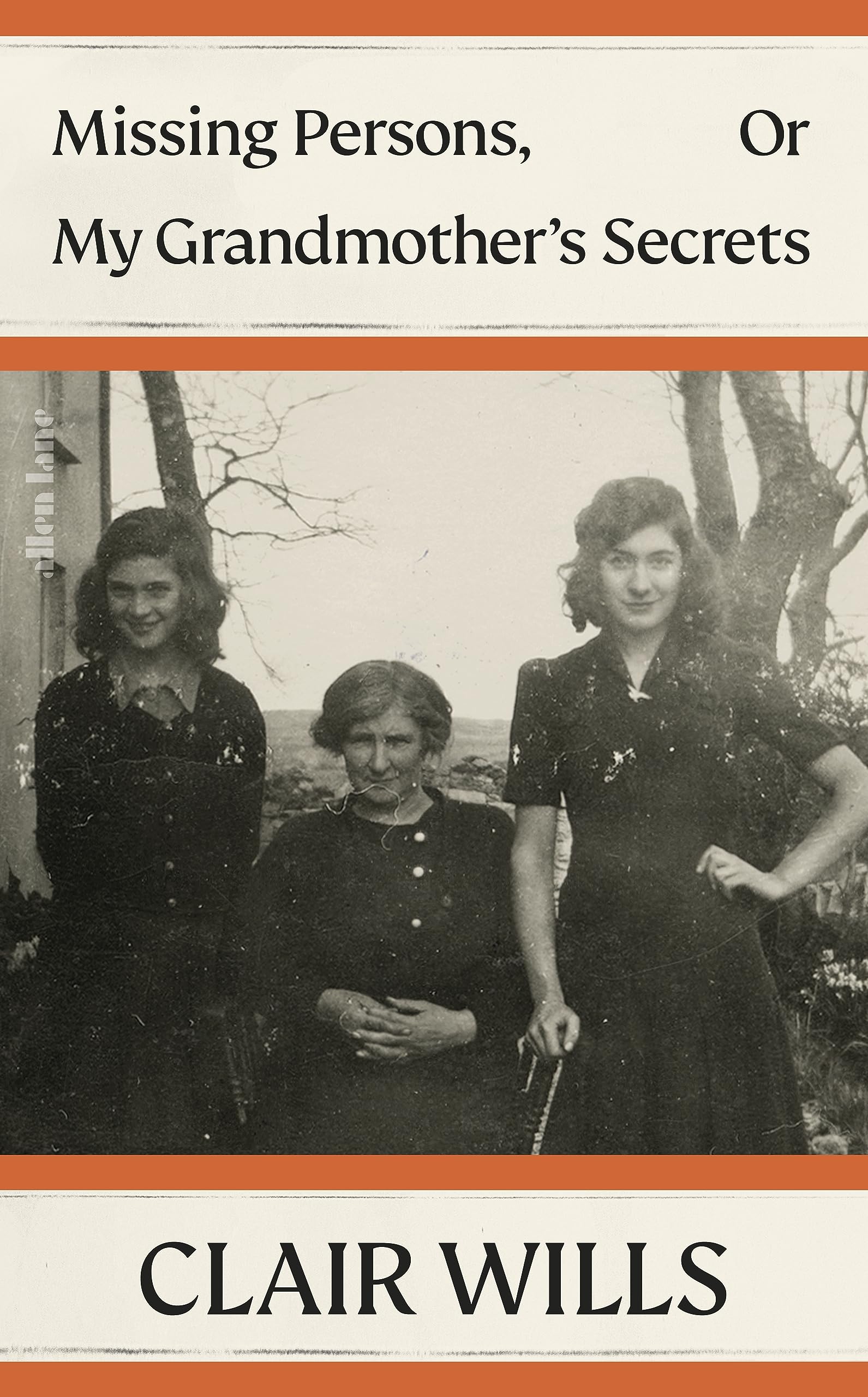
missing persons or my grandmothers secrets unmarried mothers in ireland nonfiction memoir that excavates the truth about silence

There are two non-fiction titles on my pile, Missing Persons, Or My Grandmother’s Secrets by Claire Wills, author, critic and cultural historian, winner of the Irish Book Award for non-fiction, who has written a family history that blends memoir with social history. She explores the gaps in that history, brought about by Ireland’s brutal treatment of unmarried mother’s and their babies, and a culture of not caring, not looking into or asking questions, rolling back a dark period of its history of loss and forgetting.

The second non-fiction title is the candid Fierce Appetiteslessons from my year of untamed thinking, also subtitled, Loving, Losing and Living to Excess in my Present and in the Writings of the Past by medieval historian Elizabeth Boyle.

The title is a reference to Vivian Gornick’s memoir Fierce Attachments, which is part of what intrigued me, but also the uniqueness of someone finding sense of three dramatic events in their life through medieval literature.

Every day a beloved father dies. Every day a lover departs. Every day a woman turns forty.All three happening together brings a moment of reckoning.

Boyle writes on grief, addiction, family breakdown, the complexities of motherhood, love and sex, memory, class, education, travel (and staying put), with unflinching honesty,deep compassion and occasional dark humour.

Remembering Edna O’Brien (15 December 1930 – 27 July 2024)

Edna O'Brien The Country Girls The House of Splendid Isolation

I couldn’t read Ireland without adding a title from Edna O’Brien, who died in 2024 at the age of 93. In 2023, I read The Country Girls trilogy, made up of three stories The Country Girls (1960), The Lonely Girl (1962), and Girls in Their Married Bliss (1964) released in 1986 in a convenient single volume.

Credited with breaking the silence on issues young girls faced growing up in Ireland, it was a subject she would often return to. She was punished for it, but lead the way for others to eventually follow.

O’Brien described her work in this way:

I have depicted women in lonely, desperate, and often humiliated situations, very often the butt of men and almost always searching for an emotional catharsis that does not come. This is my territory and one that I know from hard-earned experience. Edna O’Brien (Roth, 1984, p. 6)

Cathy at 746 Books and Kim at Reading Matters are spending a year reading Edna O’Brien and are reading Country Girls in February, you can see their reading schedule for the year if you go to their blog.

I have decided to read one my shelf, The House of Splendid Isolation (1991), the first book in her Modern Ireland trilogy, a political novel, depicting the relations of an Irish Republican Army terrorist and his hostage, an ageing Irish widow, in a house that represents the troubled nation.

Suggestions, Recommendations?

That’s the selection I have made, no guarantees on what I’ll get through, but I’m looking forward to the immersion. Have you read and enjoyed of the titles I mention above?

Are you going to read any Irish literature in March? Let me know in the comments below.

Old God’s Time by Sebastian Barry

I’ve long wished to read a novel by Sebastian Barry and somehow not got to one until now.

Old God’s Time was longlisted for the Booker Prize 2023 and shortlisted for the 2023 Irish Book Awards, Novel of the Year (winner announced 22 Nov).

literary fiction Irish
Book Toothbrush for Livia

This is a slow burn, introspective, literary read, of a man in decline, in the 9th month of his retirement from the Irish police force, now in his late 60’s. He has relocated to the annex of an old castle-like building overlooking the Irish sea and rarely has contact with anyone, though he is aware of his elderly landlord weeding the garden, a young woman with a child in the turret of the same building and a lone, trigger happy cellist.

His thoughts are of his wicker chair, his view, his peaceful existence and the joy of the privilege he has had to love his wife June, who he believed loved him in equal measure.

Over the course of the next week or so he relives memories of being with his wife and we develop a sense that this good fortune was not something either of them expected from life, given their rough beginnings, both abandoned as babies or small children.

His nostalgic meanderings are disturbed by a visit by two young policemen working a case against a priest, and looking into the cold case of another murdered 20 years ago. They want to know what he remembers from that time, as it was a case he worked on. Their arrival also coincides with the beginning of tentative relationships with his neighbours.

What a thing to bring to your old friend’s door. A new peril of cold cases that he had never foreseen. Enough time goes by and it is as if old things never happened. Things once fresh, immediate, terrible, receding away into old God’s time, like the walkers walking so far along Killiney Strand that, as you watch them, there is a moment when they are only a black speck, and then they’re gone. Maybe old God’s time longs for the time when it was only time, the stuff of the clockface and the wristwatch.

old god's time cormorant
Photo by Sindre Fs on Pexels.com

The visits disturb and awaken old memories and feelings, going all the way back to his early days in the army, a year in Palestine and then in Malaya, where he was a sniper and other dark shadows of memories long buried.

The slow revelation of his past, of his job and family, his son and daughter, his wife and their experiences as children create intrigue as he alludes to disturbing events that take time to unveil.

His often-time confused mind sometimes makes those memories feel like events happening in real-time around him; people appear to him who are no longer here. Figments of imagination or angelic attendants preparing him?

Sometimes he awakens and realises it was a dream, other times he realises it was a form of hallucination.

But he was obliged to believe it. Because in the first instance a witness should be believed. A lot of mischief and mischance had arisen from not believing witnesses. Rejecting out of hand. Poor soul standing in front of you, spilling the dreadful beans, and it not sounding likely. But oftentimes the unlikely was the truth, as you might find out, in the end, when it was too late. He felt he should believe – believe himself.

We read and we are in his mind trying to decipher what is real and what is imagined or desired. At a certain point it doesn’t really matter, except that the two young policemen may suspect he is implicated in something.

Far from being depressing or exhausting, given the burden of what he has lived through, there is a sense of gratitude for the gift of a shared love he had with June and pride he has in his children.

Behind the plot is a seething rage at the years long refusal to follow up with child abuses nor charge priests suspected of child abuse, men covering the despicable deeds of other men, of one type of power enabling another, predators against the weak and helpless and the long term psychological distress this trauma has inflicted on hundreds of thousands of children, not talked about but passed on through their own DNA, becoming a form of collective trauma of a generation(s).

The lack of redemption for victims, the theft of their freedom, of their peace of mind, the deep wounds that remain, that continue to fester, to destroy souls.

It was up to him now to know less about times and details and more about the moiling mysteries of the human heart. Things happened to people, and some people were required to life great weights that crushed you if you faltered just for a moment. It was his job not to falter. But every day he faltered. Every day he was crushed, and rose again the following morn like a cartoon figure.

Setting the novel in this man’s twilight years takes a dramatic subject and allows it to be reflected on in slow paced, methodical way that combines the experiences people go through and witness, the effects and consequences that they continue to live with and attempt to overcome or heal from, or take revenge for and the aftermath, what survives.

Brilliantly written and rendered, thought provoking, holding its threads of hope and faith in the power of genuine love. It is a book that is worth immersing in due to its dream-like reality, an ideal weekend read.

Highly Recommended. Have you read any Sebastian Barry novels? Do you have a favourite?

Sebastian Barry, Author

Sebastian Barry is an Irish novelist, playwright and poet, one of a small group of authors to have been nominated for the Booker Prize five times.

The 2018-21 Laureate for Irish Fiction, Barry had two consecutive novels shortlisted for the Booker Prize, A Long Long Way (2005) and the top ten bestseller The Secret Scripture (2008), before Old God’s Time was longlisted for the Booker Prize in 2023.

He has also won the Kerry Group Irish Fiction Prize, the Irish Book Awards Novel of the Year and the James Tait Black Memorial Prize. His novels have twice won the Costa Book of the Year award, the Independent Booksellers Award and the Walter Scott Prize.

Barry was born in Dublin in 1955, and now lives in County Wicklow.