
Freedom to Write, Freedom to Read

Leila Aboulela, the Sudanese author who now lives in Scotland has won the English PEN Award 2025, a prize established in homage to Harold Pinter, the British playwright, screenwriter, director and actor and the 2005 Nobel Laureate for Literature:
“who in his plays uncovers the precipice under everyday prattle and forces entry into oppression’s closed rooms”
Judges praised Aboulela, the author of six novels, for her ‘nuanced and rich perspectives on themes that are vital in our contemporary world: faith, migration, and displacement’, calling her writing ‘a balm, a shelter, and an inspiration’.
The author responded:
‘I am honoured to win a prize established in memory of Harold Pinter, a great writer who continues to inspire so much loyalty and consistent high regard. For someone like me, a Muslim Sudanese immigrant who writes from a religious perspective probing the limits of secular tolerance, this recognition feels truly significant. It brings expansion and depth to the meaning of freedom of expression and whose stories get heard.’
One of the judges, novelist Nadifa Mohamed added:
‘Leila Aboulela is an important voice in literature, and in a career spanning more than three decades her work has had a unique place in examining the interior lives of migrants who chose to settle in Britain. In novels, short stories and radio plays she has navigated the global and local, the political with the spiritual, and the nostalgia for a past home with the concurrent curiosity and desire for survival in a new one. Aboulela’s work is marked by a commitment to make the lives and decisions of Muslim women central to her fiction, and to examine their struggles and pleasures with dignity. In a world seemingly on fire, and with immense suffering unmarked and little mourned in Sudan, Gaza, and beyond, her writing is a balm, a shelter, and an inspiration.’
The prize is awarded annually to writers resident in the UK, Ireland, the Commonwealth or the former Commonwealth.
Former winners of the PEN Pinter Prize are Arundhati Roy (2024), Michael Rosen (2023), Malorie Blackman (2022), Tsitsi Dangarembga (2021), Linton Kwesi Johnson (2020), Lemn Sissay (2019), Chimamanda Ngozie Adichie (2018), Michael Longley (2017), Margaret Atwood (2016), James Fenton (2015), Salman Rushdie (2014), Tom Stoppard (2013), Carol Ann Duffy (2012), David Hare (2011), Hanif Kureishi (2010) and Tony Harrison (2009).
Three Novels By Leila Aboulela I Recommend

Bird Summons (2019)
Bird Summons is an excellent novel about three Muslim immigrant women living in Scotland, from different countries, who set off on a short holiday in the Scottish Highlands, to pay homage to Lady Evelyn Murray Cobbold, the first British woman convert to Islam who performed Hajj, the spiritual pilgrimage to Mecca.
Taken further outside of their comfort zones, the trip is a kind of reckoning for each of the women, a little like a road trip novel, they are stuck with each other, their forced isolation in the Highlands brings out the best and worst in each other and will leave them each transformed by the experience.
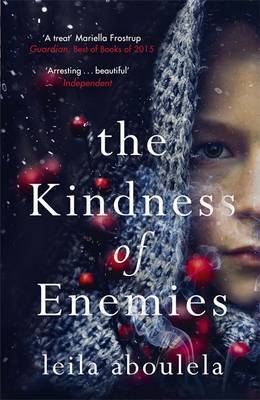
The Kindness of Enemies (2015)
The Kindness of Enemies, is a dual narrative set in modern day Scotland and mid 1800’s Russia and the Caucasus. The contemporary character is Natasha Wilson (born to a Russian mother and Sudanese father, whose mother marries a Scot), a Scottish university lecturer whose research concerns the life of Caucasian Highlander, Shamil Imam.
The novel moves between the issues facing Natasha in her life, and the ancient conflict between Highlander mountain men lead by Shamil Imam as they resisted Tsarist Russia from expanding into their territory.
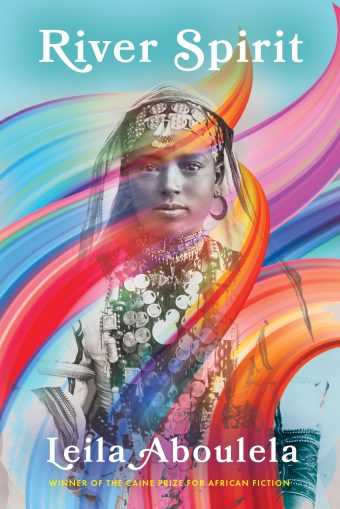
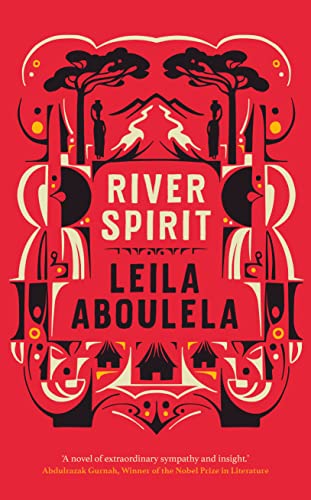
River Spirit (2023)
River Spirit is historical fiction set in 1890’s Sudan, at a turning point in the country’s history, as its population began to mount a challenge against the ruling Ottoman Empire, only the people were not united, due to the opposition leadership coming from a self-proclaimed “Mahdi” – a religious figure that many Muslims believe will appear at the end of time to spread justice and peace.
The novel tells the story of orphan siblings, Akuany and Bol, and their young merchant friend Yaseen, the friend of their father who made a promise to protect them, forever connecting them to his life. It is also a story of the Nile, of the White Nile and the Blue Nile, a symbol of twin selves, one free, one enslaved, of twin occupying forces, the Ottoman and British Empires and of the many aspects in the story where twin forces clash, mix and become something new.
Aboulela’s other novels are The Translator (1999), Minaret (2005), Lyrics Alley (2010) all three of which were longlisted for the Women’s Prize for Fiction (Orange Prize) and she has also published a short story collection Elsewhere, Home (2018).
Have you read any works by Leila Aboulela? Let us know in the comments below.

Further Reading
World Literature Today Interview: Writing as Spiritual Offering: A Conversation with Leila Aboulela by Keija Parssinen
Guardian article: Leila Aboulela wins PEN Pinter prize for writing on migration and faith
JSTOR: Leila Aboulela and the Ideology of Muslim Immigrant Fiction by Waïl S. Hassan
Leila Aboulela, Author
Leila Aboulela grew up in Khartoum and has been living in Aberdeen since 1990. She is the author of six novels among them River Spirit, The Translator, Minaret and Lyrics Alley, Fiction Winner of the Scottish Book Awards. Leila was the first ever winner of the Caine Prize for African Writing and her story collection, Elsewhere, Home won the Saltire Fiction Book of the Year Award.
Her books have been translated into fifteen languages, and she has also written numerous plays for BBC Radio. She is Honorary Professor of the WORD Centre at the University of Aberdeen and a Fellow of the Royal Society of Literature.
 The change in perspective and the lack of a first person narrative keeps the characters at a slight distance to the reader as we follow the trials of Zamzam’s life and her dedication to being a part of Yaseen’s life. Like other readers, I wished at times that the story was told in the first person from her point of view, but the story is too important to be limited to one perspective.
 Once Akuany and her brother leave the family village, most of the story takes place in Khartoum, a city that is at the confluence of the Blue Nile and the White Nile, two major rivers that join to become the Nile proper, the longest river in the world, that continues on through Egypt to the Mediterranean.
 Leila Aboulela is a fiction writer, essayist, and playwright of Sudanese origin. Born in Cairo, she grew up in Khartoum and moved in her mid-twenties to Aberdeen, Scotland. Her work has received critical recognition and a high profile for its depiction of the interior lives of Muslim women and its distinctive exploration of identity, migration and Islamic spirituality.
 Word by Word