The Little Virtues by Natalia Ginzburg tr. Dick Davis

essays on parenting italian literature women in translation memoir

The Little Virtues is a collection of 11 short essays by the Italian author Natalia Ginzburg, written between 1944 and 1960, originally published in 1962 as Le Piccole Virtú.

Some of the reflections were previously published in Italian newspapers and magazines. Being spread over twenty years, they span her life post-war from her late twenties until her mid 40’s, through motherhood, widowhood and her growth as a writer.

They capture reflections on life in different places she lived and visited, like the Italian countryside where she and her husband spent time while Italy was under fascist rule, to her visits to London, which she can’t help but see through a critical cultural lens and the more accepting memories of Rome and Turin.

In a way, these essays are more revealing of the character of Ginzburg than Family Lexicon (my review) her autobiography, in which she plays a lesser role to that of the greater family, one overshadowed by an opinionated father. The youngest in the family, a quiet observer and astute note-taker, Natalia once out of the shadow of that household, finds her voice and unique style, seen changing from the bucolic monotony of an Abruzzi winter, the last season of wonder before the terrible death of her husband at the age of 34 years in Rome, to her more confident final essay on those little virtues and the education of children.

An Italian Voice of Note Rediscovered

Natalia Ginzburg Italian literature Family Lexicon

Natalia Ginzburg wrote dozens of essays, plays, short stories and novels, including Voices in the EveningAll Our Yesterdays and the autobiographical Family Lexicon, for which she was awarded the prestigious Strega Prize in 1963.

Though popular in Italy, her work was under the radar in the UK, until Daunt Books reissued this 1962 collection of essays and her autobiography, and subsequently her novels.

Her work explored family relationships, politics and philosophy during and after the Fascist years, World War II. Modest and intensely reserved, Ginzburg never shied away from the traumas of history, whether writing about the Turin of her childhood, the Abruzzi countryside or contemporary Rome—approaching those traumas indirectly, through the mundane details and catastrophes of personal life.

She was involved in political activism throughout her life and served in the Italian parliament between 1983 to 1987. Animated by a profound sense of justice, she engaged with passion in various humanitarian issues, such as the lowering of the price of bread, support for Palestinian children, legal assistance for rape victims and reform of adoption laws.

She died in Rome in 1991 at the age of seventy-five.

Notes and Quotes From A Few Essays

I read this collection back in April, as a group read, always enjoying the knowledge that others are reading the same book at the same time and sharing their feedback. I had a bit of a lull in posting reviews as I was working on another writing project, but I kept a few notes and quotes, that I’ll share here, that give a flavour of the collection.

Winter in the Abruzzi (1944) and Worn Out Shoes (1945)

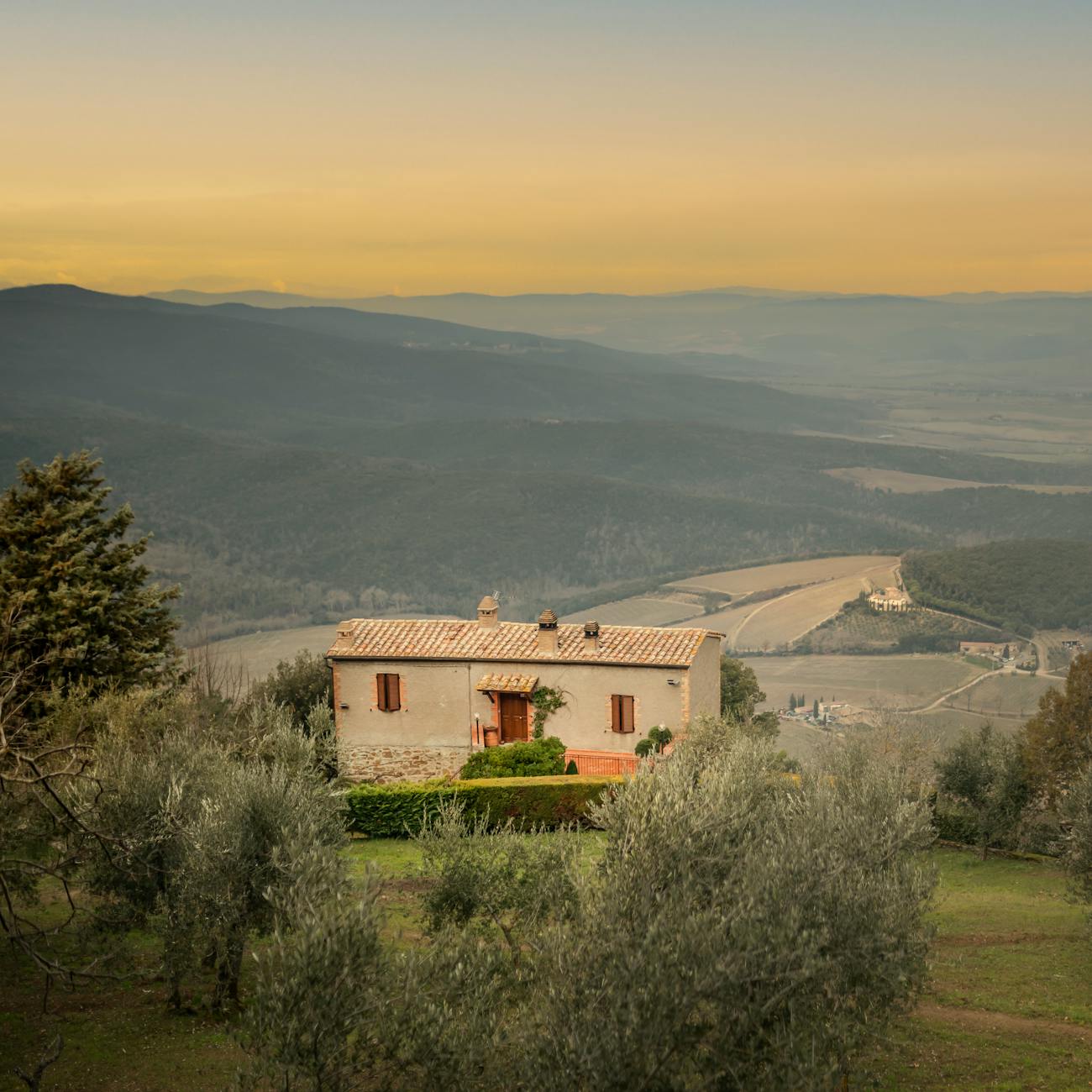
Photo by Chris F Pexels.com

It’s hard not to read these essays without considering the context, that time in Abruzzi before her husband made a prisoner of war by the Nazi’s, not knowing the beauty of that exile, these essays published in the wake of his death in February 1944. That significant absence in some way replaced by her dedication to writing and her three young children.

There is a kind of uniform monotony in the fate of man. Our lives unfold according to ancient, unchangeable laws, according to an invariable and ancient rhythm. Our dreams are never realised and as soon as we see them betrayed we realise that the intensest joys of our life have nothing to do with reality. No sooner do we see them betrayed than we are consumed with regret for the time when they glowed within us. And in this succession of hopes and regrets our life slips by.

On England, Eulogy & Lament (1960, 1961)

Eulogy and Lament (1961) is an interesting observation of cultural and geographic differences seen from the author’s Italian perspective. Some are poignant, like a tree in blossom on a street that reveals a precise plan versus the memory of a surprising random tree in Italy. Others tell of a sense of melancholy, sadness, conventionality, lack of surprise, desolation. A lack of the familiar, present in Italy, that kind of impression that one often hears from anyone visiting another country for the first time, a heightened sense of difference, of what is missing.

A timid person stays timid, an unsociable person stays unsociable. And over this initial timidity and unsociableness spreads the great, English melancholy, like an endless moor in which the eyes can find no landmark.
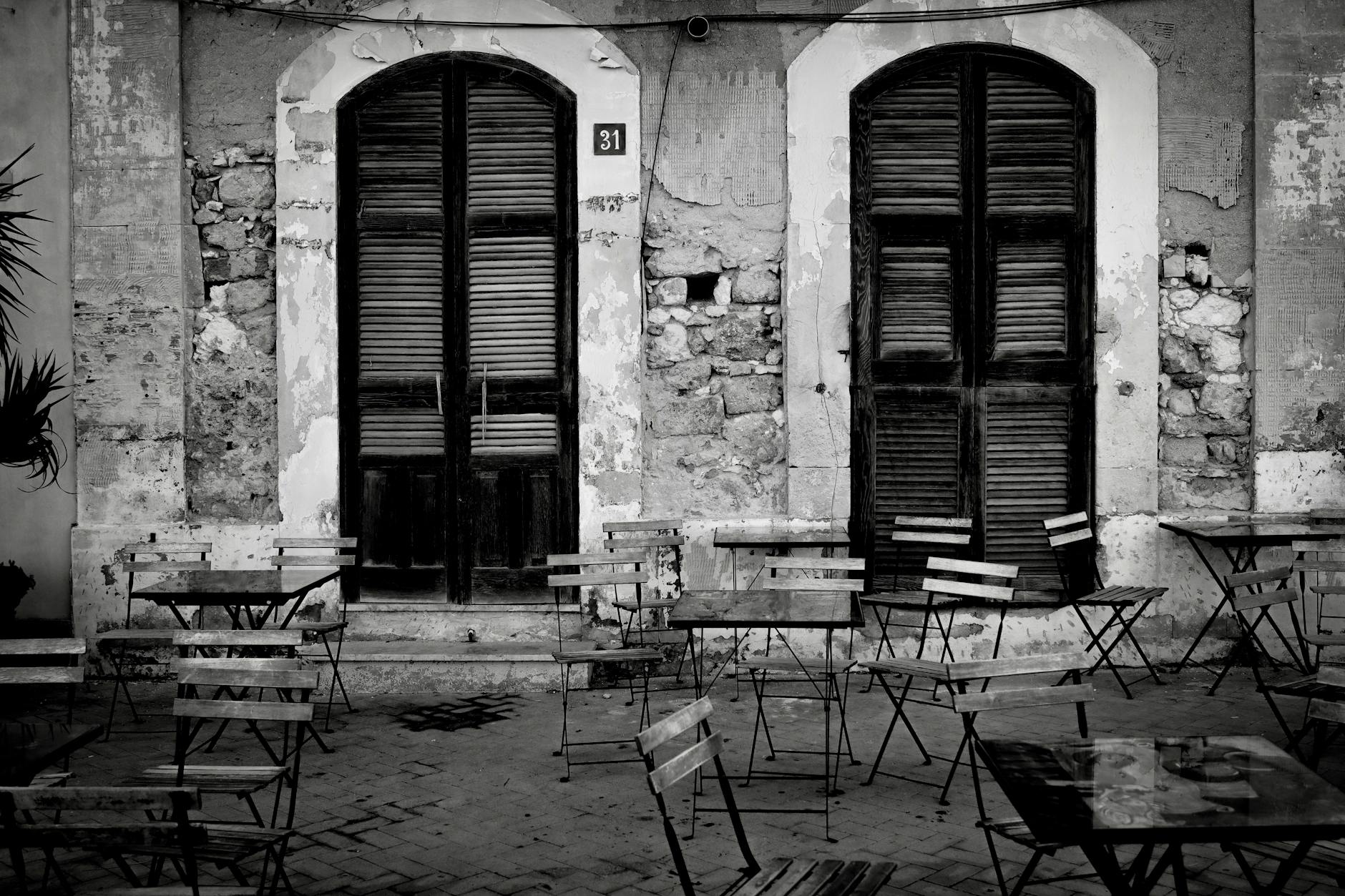
Photo by Efrem Efre Pexels.com

La Maison Volpé (1960): An abandoned place in London that doesn’t reveal its past, so the author imagines what it might have been and remembers other places that offer temptation, yet disappoint within. Of restaurants, food, lack of inspiration.

I have a feeling that when I remember London and the time I have spent here, those syllables will echo in my ear, and all London will be summed up for me in that Parisian name.

Human Relationships

Portrait of a Friend (1957) is a beautiful, sad, reflection and honour to their friend from Turin, the poet and translator Cesare Pavese, who took his own life in 1950.

And now it occurs to us that our city resembles the friend whom we have lost and who loved it; it is, as he was, industrious, stamped with a frown of stubborn, feverish activity; and it is simultaneously listless and inclined to spend its time idly dreaming. Wherever we go in the city that resembles him we feel that our friend lives again; on every corner and at every turning it seems that we could see his tall figure in its dark half-belted coat, his face hidden by the collar, his hat pulled down over his eyes.

He and I (1962): to me this reads as a portrait of an ill-fitted relationship. A collection of characteristics of two opposite people that shows their interests and lack of, and how they manage them. She relents, he insists. He travels, she follows. He gets what he wants, she compromises. A singular memory of a conversation long ago. An ironic portrayal of a second marriage that leaves a bitter taste.

My tidiness and untidiness are full of complicated feelings of regret and sadness. His untidiness is triumphant.

On Writing

My Vocation Contemplating “writing” as the one thing she is truly good at, she recalls how it developed from childhood observations and the earliest stories. The lack inherent in being happy when it comes to writing, how suffering brand mood affect the process. A contempt for the vocation when children enter her life, then the carving out of space and place for it. Transition from wanting to write like a man, the vocation as cruel master, one that has no sympathy.

My vocation has always rejected me, it does not want to know about me. Because this vocation is never a consolation or a way of passing the time. It is not a companion.

The Little Virtues (1960)

“As far as the education of children is concerned I think they should be taught not the little virtues but the great ones. Not thrift but generosity and an indifference to money; not caution but courage and a contempt for danger; not shrewdness but frankness and a love of truth; not tact but love for one’s neighbor and self-denial; not a desire for success but a desire to be and to know.”

Photo by Pixabay Pexels.com

This is how the essay opens and in it she takes on the little virtues and the great virtues and the effect of authoritarian parenting on the next generation of parents, the relationship to money that causes scarcity consciousness, an invitation to indifference, reward and punishment, homework and daydreaming, resisting hope and embracing what is, a balance between silence and words.

“And if we ourselves have a vocation, if we have not betrayed it, if over the years we have continued to love it, to serve it passionately, we are able to keep all sense of ownership out of our love for our children. But if on the other hand we do not have a vocation, or if we have abandoned it or betrayed it out of cynicism or a fear of life, or because of mistaken parental love, or because of some little virtue that exists within us, then we cling to our children as a shipwrecked mariner clings to a tree trunk.”

Overall, it is a remarkable collection that drops in on these passages of time throughout those two decades, showing us a little of how life was, what perceptions were held and charting the growth of an extraordinary writer who thought herself most ordinary.

Further Reading

My reviews of the novels The Dry Heart (1947), Valentino (1957), Sagittarius (1957).

Jacqui’s Review of The Little Virtues

Reading Women In Translation

August is the annual Women in Translation month, and I have one more novel by Natalia Ginzburg on my shelf, All Our Yesterdays, which I hope to read then.

Do you have a favourite Natalia Ginzburg or any sitting unread on your shelf to read in August? Let us know in the comments below.
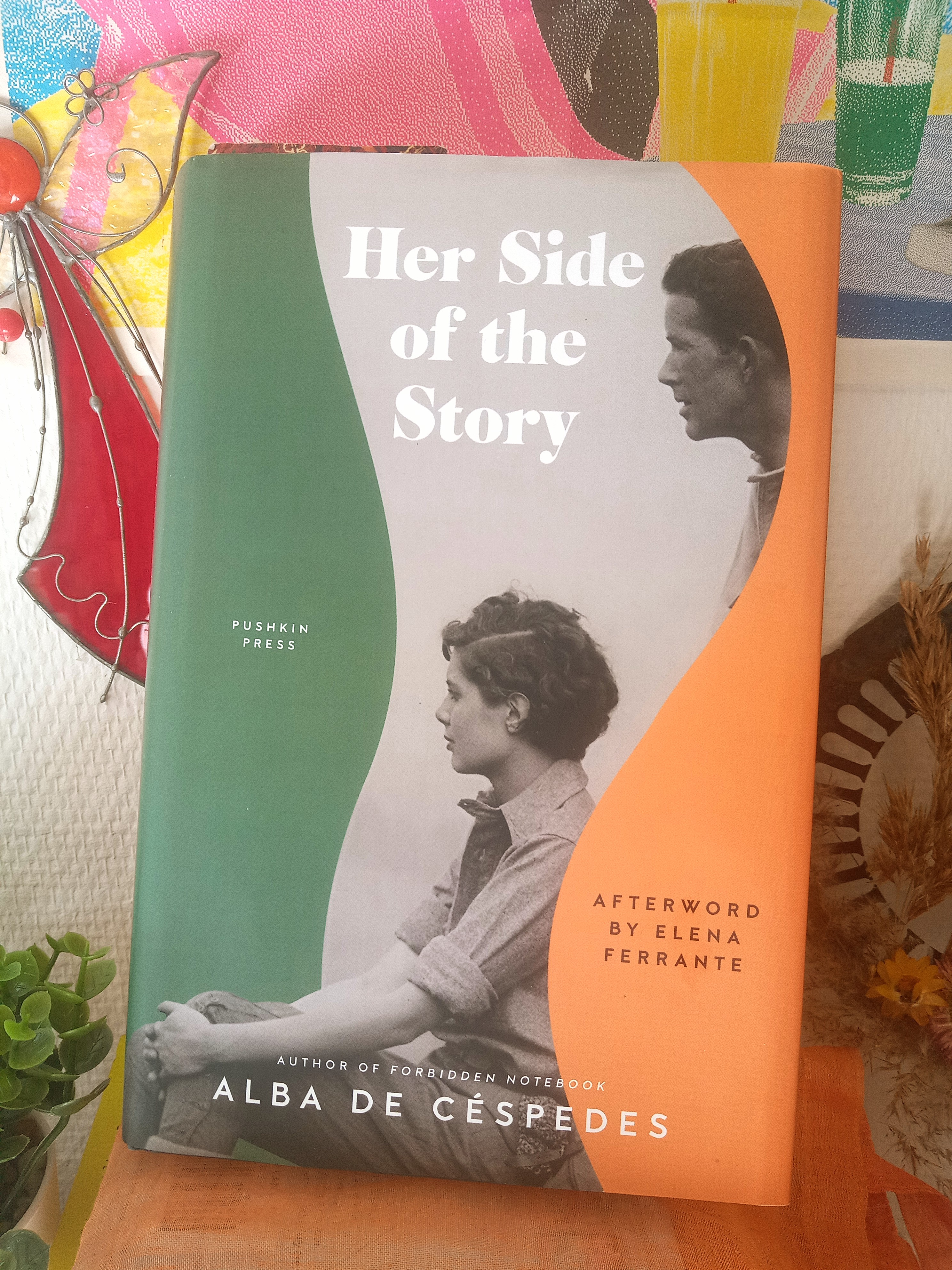
Her Side of the Story by Alba de Céspedes tr. Jill Foulston

Stunning.

I thought The Forbidden Notebook which I read in 2023 was excellent, but this novel is in a category of its own. This is probably the title in 2024 I was looking forward to the most and it exceeded my expectations.

Originally published in Italian in 1949 as Dalla parte de lei, this captivating new English translation by Jill Foulston was published by Pushkin Press in 2024.

Women’s Partisan Struggle in 1930’s -1940’s Italy

Alba de Céspedes (1911-1997) was a bestselling Italian-Cuban novelist, poet and screenwriter who worked as a journalist throughout the 1930’s while also taking an active part in the Italian partisan struggle and was twice jailed for her anti-fascist activities.

After the fall of fascism – Rome, considered the heart of fascism under Mussolini, was liberated in June 1944 and many felt the country had lost its basic values after 20 years of fascist government – Alba de Céspedes founded a literary journal called Mercurio, publishing many great names of Italian literature and politics, as well as Katherine Mansfield, Jean-Paul Satre, Ernest Hemingway.

Due to a lack of funding it would close in 1948, and in its final issue she published an essay by Natalia Ginzburg entitled ‘On Woman’, alongside a letter she was inspired to write in response to it. Certainly, she would have been working on the novel Her Side of The Story, at the time this essay (discussed below), was published.

Women Writing From the ‘Well’

Photo by ArtHouse Studio on Pexels.com

Ginzburg had written of an affliction unique to women – at a time when they were often confined to the home and not considered equal under the law – that she described as “a continuous falling down a deep dark well“, a terrible melancholy typical of feminine disposition that likely originated from the age-long tradition of subjection and subjugation.

In her open letter, de Céspedes confesses that she also writes from the ‘well’ Ginzburg theorises. Despite that, de Céspedes believed women’s freedom consisted of being able to go down those emotional and psychological wells, which were for her a strength, rather than a curse. ‘Every time we fall down a well’, de Céspedes wrote, ‘we descend to the deepest roots of our being human; when we come back to the surface, we carry such experiences with us that enable us to understand everything men never will — since they never fall into any well’.

In the same issue of Mercurio, de Céspedes published La donna magistrato’ (‘The Woman Magistrate’), an essay by Maria Bassino, one of the most important criminal defense lawyers at the time, addressing women’s rights to become magistrates. In her letter to Ginzburg, de Céspedes explained that those two essays were published together to denounce the injustice done to women when they were tried by magistrates who cannot understand women’s reasons to ‘kill, steal, and commit other humiliating actions’; referring to men who never experienced the depth of wells.

If we are not sure of the depth and character of the mid twentieth century well, then by the time we finish reading Her Side of The Story, we most certainly have a greater understanding of it.

The Review: Her Side of the Story

Photo via Pexels.com

An expansive coming of age tale of love and resistance, this feminist, social novel explores a young woman’s attempt to break free from society’s expectations and live life on her own terms. Amid great storytelling, it is a fearless condemnation of patriarchy and rejection of fascist ideals in a society on the cusp of witnessing social change for women.

Alessandra grows up in a bustling apartment block in 1930’s Rome with a shared courtyard, where everyone knows everyone, spending most of her time alone in the apartment in the care of Sista, while her father is at his office and her mother is out teaching piano lessons. She adores her quiet, delicate mother, who keeps to herself and treats her daughter like a friend, while despising a father she believes doesn’t deserve an elegant, cultured woman like her mother.

The women felt at ease in the courtyard, with the familiarity that unites people in a boarding school or a prison. That sort of confidence, however, sprang not so much from living under a common roof as from shared knowledge of the harsh lives they lived: though unaware of it, they felt bound by an affectionate tolerance born of difficulty, deprivation, and habit. Away from the male gaze, they were able to demonstrate who they really were, with no need to play out some tedious farce.

Alessandra looks back and recounts her childhood, adolescence and marriage, describing her experience of them all, her inner world view and how it was shaped by what she observed happening around her, everything she thought and how she responded to it all.

Though she spends much time alone, she rarely keeps her thoughts to herself, allowing the deepest parts of herself to be exposed, challenging what she does not agree with, determined to take charge of her life and live it according to her own desire, against convention.

A Rare and Faultless Admiration of Mother

The first section is focused on the mother-daughter relationship, on Alessandra’s blind faith in everything her mother is and does, including her obsession with the Pierce family, their friendship with Lydia and her daughter Fulvia upstairs and sessions with the medium Ottavia who visits the apartment block on Fridays. Invited to play at a private concert with the Pierce son Hervey joining on violin, the celebratory event witnessed by her husband, becomes a turning point.

The depictions of life in the apartments, the details of the women’s lives, the absent husbands, the affairs, the way daughter’s follow mother’s examples, the witnessing of each other’s lives, the door porter who sees and knows all, the desire for privacy and impossibility of it are all brilliantly depicted. Alessandra’s mother is a romantic with dignity, she is not interested in an affair, but is vulnerable to kind attention.

After a near expulsion from school for hitting a boy for his psychological cruelty towards another girl, she confesses what happened to her mother and worries about her father’s response.

“We can’t tell him everything. Men don’t understand these things Sandi. They don’t weigh every word or gesture; they look for concrete facts. And women are always in the wrong when they come up against concrete facts. It’s not their fault. We’re on two different planets; and each one rotates on its own axis – inevitably. There are a few brief encounters – seconds, perhaps – after which each person returns to shut him- or herself away in solitude.”

Alessandra spends a lot of time reflecting, examining the depths of her thoughts, actions and observations and how they may have come about. From her parents certainly, but she recognises something restless in herself, that seeks retribution.

I could reproach her for having subjected me to that climate of perpetual exaltation, which, above all, made me completely devoted to the myth of the Great Love and thus unintentionally led to the painful situation I find myself in today. I could reproach her, perhaps, if she hadn’t already paid for her ambitions. And now that I am forced to write about her and look into the most intimate and dramatic moments of our life together, it’s not really to accuse her of having made me what I am but to explain those of my actions which would otherwise be clear only to me.

Allesandra, sono io, I am Alessandra

Photo by Piotr Arnoldes on Pexels.com

It is Sandi’s story but it is also the story of many ordinary lives of girls and women, growing up in discordant families, with the weight of expectations, the allure and (false) promise of love, the desire to be educated, to participate in something greater than ‘the home‘, to be heard, respected and taken seriously.

“…Alba de Céspedes intended to act as the defender of women. Like Flaubert, she could say of her protagonist: Alessandra, sono io, I am Alessandra.

Rural Idealism Enforced by The Matriarch

In the second section, Alessandra is sent to live on a farm with her paternal grandmother Nonna, a grand matriarch of a traditional, religious family who surround her with examples of duties expected of her and demonstrate how they will act to facilitate them. She enjoys the natural environment and complies to a certain point, but insists on her right to further her studies, rejecting the suggestion of a well aligned matrimony.

Though this section was originally cut from the first English translation (1952) of the novel, it is restored here. The rural setting represents tradition and a connection to the land, the roots of family, hard work and lineage. Mussolini’s regime focused on rural regions to uphold goals of self-sufficiency, free Italy from “the slavery of foreign bread” and control the agricultural sector. Propaganda praised this lifestyle, much of it targeted at women and upheld by women. Nonna exemplifies and encourages the virtues of sacrifice for the greater good and giving up one’s selfish desires.

Bewildered, I observed these grave, taciturn people who had been strangers to me a few hours before, but who now embraced me within a mechanism so robust I sensed it could easily overwhelm a person.

War breaks out, she returns to Rome, to her studies, to employment, to living again with her father and meeting Francesco, the man she would truly love and believe she could have a different kind of life with. And it might be said that that is where her troubles really begin.

Love, Marriage, War – the struggle

There is so much that could be said about Alessandra’s wartime and matrimonial experience, that is better left for the reader to discover.

There is no stone left unturned in her dissection of the relationship she has with the older anti-fascist Professor, a charismatic man with a sense of justice who stands up for his beliefs, the only man she will ever truly love and her attempts to talk to him about the things that unsettle her, that she feels could be easily resolved, if only he took the time to listen. Once married, he is barely aware of or able to respond to her feelings, while she continues to try to make him understand, slowly unravelling in her persistent attempt.

The most misleading virtue of marriage is the ease with which one forgets, in the morning, everything that happened the night before. Encouraged by the clear colour of the sun’s first rays and the energy and rhythm of everyday gestures, I was always the first to turn back towards Francesco.

The novel tracks the attempt to rise above expectation and the subsequent decline into acceptance, focusing on the effect of this repression, the mental deterioration of generations of women for whom the burden of that ordinary life, of a woman’s limited lot, and the inaccessibility of how (here) she imagines it might have been, become too much to bear. She wants the reader to understand this very well, effectively making you live it alongside her.

Intense, compelling and set against that backdrop of wartime Rome and Italy coming out of a long repressed fascist era, I found it utterly riveting. Her Side of the Story is a powerful, intimate and insightful exploration of the female psyche, of the desire to be, and do, more than meet long outdated representations of women in families, society and relationships. Unputdownable, one of the best of 2024 for sure. Fans of Natalia Ginzburg and Elena Ferrante will likely enjoy this. Expect to feel unsettled.

There’s No Turning Back

Delighted to learn that her debut novel There’s No Turning Back translated by Ann Goldstein will be published in February 2025.

Highly Recommended.

Further Reading

Natalia Ginzburg’s essay ‘Discorso sulle donne‘On Women’ translated by Nicoletta Asciuto, The Fortnightly Review

Jacqui’s Review at JaquiWine’s Journal, April 2024

Chicago Review of Books: The Prescience of Alba De Céspedes’s “Her Side of The Story” by Margarita Diaz November 24, 2023

Author, Alba de Céspedes

Feminism Journal writing Womens Rights Italian Literature

Alba de Céspedes (1911-97) was a bestselling Italian-Cuban novelist, poet and screenwriter.

The granddaughter of the first President of Cuba, de Céspedes was raised in Rome. Married at 15 and a mother by 16, she began her writing career after her divorce at the age of 20. She worked as a journalist throughout the 1930s while also taking an active part in the Italian partisan struggle, and was twice jailed for her anti-fascist activities. After the fall of fascism, she founded the literary journal Mercurio and went on to become one of Italy’s most successful and most widely translated authors.

After the war, she accompanied her husband, a diplomat to the United States and the Soviet Union. She would later move to Paris, where she would publish her last two books in French and where she spent the rest of her life. She died in 1997.

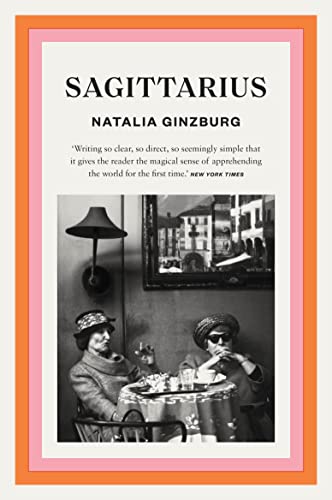
Sagittarius by Natalia Ginzburg (1957) tr. Avril Bardoni

After just finishing Domenico Starnone’s The House on Via Gemito (my review here) featuring a domineering father, it felt appropriate to read another Italian author Natalia Ginzburg and her fictional account of a domineering mother.

The Interfering Parent

However, Ginzburg’s parent in the novella Sagittarius might be considered timid compared to Starnone’s Federico. While she is over invested in the lives of her two daughters, they seem able to pursue their own desires in spite of her interference.

Fed up with life in a small town she moves to the suburb of a city to be closer to her sisters, who run a china shop and her student daughter (who narrates the story), then demands that her second daughter and husband move with her, she has promised to give him money to set up a practice.

What he needed was a practice of his own in a good central location. My mother had promised to give him the money for this as soon as she had won a certain lawsuit against the local council in Dronero, concerning a property dispute; she had made the promise lightly, finding it easy to part with money that was so far away and so unlikely ever to be hers; the litigation had already dragged on for more than three years, and Cousin Teresa’s husband, a solicitor, had told us that our chances of winning were nil.

Photo by Ylanite Koppens on Pexels.com

We learn she disapproves of the husband Chaim, a Jewish Polish Doctor with only one brother left in his family, having lost his family in wartime. She was initially distraught over the one that got away, – a rich, blond, young man her daughter met on holiday, until she became ill and her mother arrived – not realising that her overbearing parental behaviour might have had something to do with it. She had done everything to ensure her daughter would marry well.

Every time she thought about the boy with the blond crew cut my mother became enraged. Not one spark of generosity had he shown! No crumb of comfort had he offered! And to think he had disappeared without even saying goodbye! Without a single word of any kind: The very memory of the blond crew cut and of the afternoon spent with is family now filled her with disgust.

There were days when my mother was almost as bored in town as she had been in Dronero. She already knew the central shopping district like the back of her hand, having walked the length and breadth of it looking for suitable premises, small but attractive, for her art gallery; but the rents were all extremely high and, besides; another problem was beginning to occur to her, that of finding painters willing to show in her gallery. She knew nobody.

Making Friends in the City

Finding it more lonely and isolating than she imagined, she is happy when she meets Pricilla (call me Scilla), a woman who (eventually) listens to her dreams and desires and seems in tune with them and even willing to partner with her on her project to open an art gallery.

My mother was now anxious to talk about her gallery project but was unable to get a word in edgeways because Signora Fontana never stopped chattering for an instant.

In her dogged pursuit of ambition, and desperate desire for a true friend, she overlooks important signs that perhaps all is not as it should be and naively keeps her plans to herself, avoiding criticism or advice from any of her family members that might have lead her to question her association – though probably not.

A Greek Mythology Warning

Photo by Damir on Pexels.com

It is no coincidence that Ginzburg names her character Scilla, that name immediately conjured up for me the creature Scylla lurking in the sea that enticed ships onto the rocks. She is adept at luring men into a perilous and rocky waterway, thus as I read, every person that Scilla was connected to, became for me, a potential villain or obstacle in her path, some perhaps by accident, others by design.

Scilla convinces her friend to wait on the art gallery project and invites her in on another shop idea. They will decide on a name, Scilla’s zodiac sign, Sagittarius, one that could easily be transferred to an art gallery.

Ultimately she will be confronted with her own poor judgement, both those she put her trust in that she should not have and those who she neglected and would be there for her in her downfall.

This novella is often read with the excellent Valentino which I read earlier in the year and loved. Sagittarius is a little more predictable, whereas for me, Valentino was exceptional, my favourite of the two, but I highly recommend them both and look forward to reading more Ginzburg this year.

Further Reading

My reviews of other Natalia Ginzburg works: Family Lexicon (memoir), The Dry Heart (debut novel), Valentino (novella)

JacquiWine’s Journal reviews Valentino and Sagittarius

Author, Natalia Ginzburg

Natalia Ginzburg (1916-1991) was born in Palermo, Sicily. She wrote dozens of essays, plays, short stories and novels, including Voices in the EveningAll Our Yesterdays and Family Lexicon, for which she was awarded the prestigious Strega Prize in 1963.

Her work explored family relationships, politics and philosophy during and after the Fascist years, World War II. Modest and intensely reserved, Ginzburg never shied away from the traumas of history, whether writing about the Turin of her childhood, the Abruzzi countryside or contemporary Rome—approaching those traumas indirectly, through the mundane details and catastrophes of personal life.

She was involved in political activism throughout her life and served in the Italian parliament between 1983 to 1987. Animated by a profound sense of justice, she engaged with passion in various humanitarian issues, such as the lowering of the price of bread, support for Palestinian children, legal assistance for rape victims and reform of adoption laws. 

She died in Rome in 1991 at the age of seventy-five.

Valentino (1957) by Natalia Ginzburg tr. Avril Bardoni (Italian), Intro by Alexander Chee

The more I read of the Italian author Natalia Ginzburg, the more I am hooked.

Valentino leads the reader along, thinking you are reading a straight forward story, until you arrive at the point of realising that your reactions are judgements and the book holds up a mirror to our own conditioning. And that is how it feels reading it in 2024. I can’t even imagine the storm it likely raised when published in 1957.

Little Sense or Sensibility

novella Italy parody fiction gender conditioning

Valentino is a short novella narrated by Caterina, who is training to become a teacher. She lives with her father, a retired schoolteacher, her mother, who used to give piano lessons and her brother, Valentino who does very little, but whose medicine studies and equipment cost a lot.

we had to help my sister who was married to a commercial traveller and had three children and a pitifully inadequate income, and we also had to support my student brother who my father believed was destined to become a man of consequence. There was little enough reason to believe this, but he believed it all the same and had done ever since Valentino was a small boy and perhaps found it difficult to break the habit.

Valentino spends his time playing with a kitten, making toys out of scraps of material, dressing up and admiring himself. A string of engagements to teenagers raise false hopes and always end the same way – broken. So when he announces he will be married within the month, naturally the family expect the pattern to continue.

What a Wife Can Be or Not to Be

So when he turned up with his new fiancée we were amazed to the point of speechlessness. She was quite unlike anything we had ever imagined.

We learn of all the family members reactions to this new fiancée, with the exception of the father.

he was about to launch into a long speech about what was the main consideration but my mother interrupted him. My mother always interrupted his speeches, leaving him choking on a half-finished sentence, puffing with frustration.

A Man of Consequence, The Weight of Expectation

Photo by W R on Pexels.com

Valentino is oblivious to the reactions and judgements of his family and continues to act and communicate as he always has, holding nothing back, expecting everyone to be happy for him.

Is he fearless? A truth teller who doesn’t hide things or worry about what others think of him? Is he a narcissist? He is a wonderful character because he is like the mystery at the centre of the story. Who don’t quite know who he is because he isn’t acting as everyone including the reader might expect him to.

His father lost for words, does not understand that what he is witnessing is the incarnation of his desire, his son is indeed becoming a man of consequence, just not in the way he had expected.

Valentino is captivated by his wife, by her look, her intelligence, her culture. She showers him in gifts, he has upended social convention, insulted the patriarchy and all who prop it up.

My father said he would go to have a talk with Valentino’s fiancée, but my mother was opposed to this, partly because my father had a weak heart and was supposed to avoid any excitement, partly because she thought his arguments would be completely ineffectual. My father never said anything sensible; perhaps what he meant to say was sensible enough, but he never managed to express what he meant, getting bogged down in empty words, digressions and childhood memories, stumbling and gesticulating. So at home he was never allowed to finish what he was saying because we were all too impatient, and he would hark back wistfully to his teaching days when he could talk as much as he wanted and nobody humiliated him.

Out of Place

Once they are married, it is his family that feels out of place, ill at ease. Valentino is easily able to be among his wife’s friends and family as well as his own. He does not feel undeserving or unworthy of their company or his newfound social status. Neither is he aware of the dilemmas facing his family.

It is best not to share too much of the storyline, but to discover it yourself, because every page is a wonderful discovery, of thought provoking insights into the human condition and the reaction of those around us when one defies convention and how they too can be displaced when set down inside an unfamiliar environment.

When Caterina finishes her diploma and gets a job, we observe how Maddalena’s offer to house and feed her, though on the surface seems attractive, acts to disempower her, denying her independence and supporting a selfish desire. Through the unconventional marriage, we see the ridiculousness of gender conditioning all the more clearly.

I thought it was absolutely brilliant, the way Ginzburg has created these two characters, upending societal norms and inverting typical behaviours.

Highly recommended.

Author, Natalia Ginzburg

Natalia Ginzburg (1916-1991) was born in Palermo, Sicily. She wrote dozens of essays, plays, short stories and novels, including Voices in the EveningAll Our Yesterdays and Family Lexicon, for which she was awarded the prestigious Strega Prize in 1963.

Her work explored family relationships, politics and philosophy during and after the Fascist years, World War II. Modest and intensely reserved, Ginzburg never shied away from the traumas of history, whether writing about the Turin of her childhood, the Abruzzi countryside or contemporary Rome—approaching those traumas indirectly, through the mundane details and catastrophes of personal life.

She was involved in political activism throughout her life and served in the Italian parliament between 1983 to 1987. Animated by a profound sense of justice, she engaged with passion in various humanitarian issues, such as the lowering of the price of bread, support for Palestinian children, legal assistance for rape victims and reform of adoption laws. 

She died in Rome in 1991 at the age of seventy-five.

Further Reading

My review of Ginzburg’s memoir, Family Lexicon (1963)

My review of Ginzburg’s debut novel The Dry Heart (1947)

Interview with Alexander Chee: On Natalia Ginzburg’s Valentino by Sander Pleij, 6 May 2023

The Dry Heart by Natalia Ginzburg tr. Frances Frenaye

I’m planning on reading a few books by the Italian writer Natalia Ginzburg, as mentioned on reviewing her excellent memoir Family Lexicon which I chose to start with, before diving into her fiction.

I start her fiction at the beginning with this brilliant, page turning feminist classic, originally penned in 1947, The Dry Heart.

Captivating right from the opening lines,

“Tell me the truth,” I said.
“What truth?” he echoed…
I shot him between the eyes.

novella Italian Literature

Natalia Ginzburg’s debut novella starts with a shot and then goes into the domestic detail that preceded that moment.

Those first lines begin halfway down the page, just a couple of paragraphs before you turn the page, where not only is the husband shot, but in the last sentence before we turn the page, she tells us,

But for a long time already I had known that sooner or later I should do something of the sort.

She then leaves the house and over the course of the day, she recalls in minute detail how she met Alberto, her husband of four years, their long drawn out courtship, her wavering feelings for him that seesaw between love and hate but never indifference, before deciding what she ought to do now.

I put on my raincoat and gloves and went out. I drank a cup of coffee at the counter of a café and walked haphazardly around the city. It was a chilly day and a damp wind was blowing. I sat down on a bench in the park, took off my gloves and looked at my hands. Then I slipped off my wedding ring and put it in my pocket.

A school teacher living in a boarding house, surrounded by different characters on the periphery of her life, she had a vivid imagination and had fantasized about marriage. Alberto hadn’t fit that image but over time that had changed.

When a girl is very much alone and leads a tiresome and monotonous existence, with worn gloves and very little spending money, she may let her imagination run wild and find herself defenceless before all the errors and pitfalls which imagination has devised to deceive her.

The novel vivdly portrays the roller coaster of her young imagination, the frustration and desire she feels, the willingness to compromise and accept a less than perfect situation, the significant step forward their marriage takes when a child comes into it, until the day she snaps.

There is no mystery, all is laid bare in captivating, enticing prose, that is direct and insistent while exploring the dark aspect of a relationship that can’t be controlled, of characters who are ill-suited yet drawn towards one another, until that spontaneous combustion of their marriage.

It’s a novella, just over 100 pages, one to dive right in, highly recommended. A feminist classic.

Brilliant.

Also reviewed earlier this year by Jacqui at JacquiWine’s Journal and Kim at Reading Matters Blog.

Natalia Ginzburg Italian literature Family Lexicon

Natalia Ginzburg, Author

Natalia Ginzburg (1916-1991) was born in Palermo, Sicily. She wrote dozens of essays, plays, short stories and novels, including Voices in the EveningAll Our Yesterdays and Family Lexicon, for which she was awarded the prestigious Strega Prize in 1963.

She was the first to translate Marcel Proust’s Du côté de chez Swann into Italian.

Her work explored family relationships, politics and philosophy during and after the Fascist years, World War II. Modest and intensely reserved, Ginzburg never shied away from the traumas of history, whether writing about the Turin of her childhood, the Abruzzi countryside or contemporary Rome—approaching those traumas indirectly, through the mundane details and catastrophes of personal life.

She was involved in political activism throughout her life and served in the Italian parliament between 1983 to 1987. Animated by a profound sense of justice, she engaged with passion in various humanitarian issues, such as the lowering of the price of bread, support for Palestinian children, legal assistance for rape victims and reform of adoption laws. 

She died in Rome in 1991 at the age of seventy-five.

Family Lexicon by Natalia Ginzburg tr. Jenny McPhee

Family Lexicon (Lessico Famigliare) is a unique memoir or work of autofiction of family life and by Italian author Natalia Ginzburg. She advises the reader to read it like a novel, the places, events and people are real, recalled in the way she knew them, most often by the way they used language.

This is the first of her books I have read and since life informs fiction, I thought I would meet the characters from her life before reading more of her novels.

Family Sayings & Life Lessons

Rather than speak of her life as a narrative from childhood onwards, of her own exploits, she focuses on the characters around her, building a picture of them through noting their tendencies and favoured expressions. The things they said most often, which creates impressions of attitudes and the force of personality, so that we come to know something of the household, from when they were all together, through the war and beyond.

I had little desire to talk about myself. This is in fact not my story but rather, even with gaps and lacunae, the story of my family.

The character that looms largest in the family is her father, the patriarch. Devoid of sentiment, Ginzburg familiarises us with his brusque ways, his favourite insults, criticisms, judgments and orders. Taking the family on holiday to the mountains was a form of boot camp, compulsory hiking from dawn to dusk. His own mother, though joining them, refused to stay with him, preferring a less regimental nearby hotel. The children complaining of boredom elicited:

‘You lot get bored’, my father said, ‘because you don’t have inner lives.’

Photo by C. Czermak Pexels.com

There were five children in the family, Natalia being the youngest, the quiet observer, the astute note-taker.

Though they live in different cities, countries and rarely see each other, it is the family lexicon that unifies them, that one word or phrase that causes them to fall back into old roles and relationships, into childhood and youth again.

Those phrases are our Latin, the dictionary of our past, they’re like Egyptian or Assyro-Babylonian hieroglyphics, evidence of a vital core that has ceased to exist but that lives on in its texts, saved from the fury of the waters, the corrosion of time. Those phrases are the basis of our family unity and will persist as long as we are in the world, re-created and revived in disparate places on the earth, whenever one of us says, ‘Most eminent Signor Lipmann’, and we immediately hear my father’s impatient voice ringing in our ears; ‘Enough of that story! I’ve heard it far too many times already!’

On her mother, who is the opposite to the father:

But my mother’s affections were as erratic as ever, her relationships inconstant. Either she saw someone every day or she never wanted to see them. She was incapable of cultivating acquaintances just to be polite. She always had a crazy fear of becoming ‘bored’, and she was afraid visitors would come to see her just as she was going out.

Her mother preferred the much younger company of new mothers then those her own age who she referred to as “old biddies”.

Notables or Nobodies, An Extended Family

While much of what she recalls is far from endearing, it resonates loudly as realistic, the phrases that stand and repeat through time, by their nature, they are those that mark in the memory, while others float away like debris.

New characters arrive unbidden and I find myself reading back a few pages to see if they have been mentioned before, knowing their significance, like Leone Ginzburg, the man who will become her husband. He enters the text with his friend Pavese and the publisher they worked for; Pavese wrote poetry, as many we meet on these pages do, while Leone’s true passion was politics, at one time jailed and perceived as a dangerous conspirator.

As time passes and Natalia moves from Turin, to the countryside during the war and eventually to Rome, different people are around or mentioned, connected to the family in some way and again. We see snapshots of them, as she observes or listens to them during a significant event, though never how she feels, it is as if her memory exists only in the face and words of those who witness.

Words: Weapons or Wisdom

When Leone is arrested and doesn’t return home, she is at a loss what to do.

Leone was arrested in a clandestine printer’s shop. We were living in an apartment neat the Piazza Bologna and I was home alone with my children. I waited, and as the hours went by and he failed to come home, I slowly realised that he must have been arrested. The day passed and then the night, and the next morning Adriano came over and told me to leave the lace immediately, because Leone had, in fact, been arrested and the police might show up at any moment.

When she recalls this terrifying moment, the imprint of her memory is all about Adriano, the relief in seeing him a balm to the more terrifying thoughts she must have had for herself and her children.

For the rest of my life, I will never forget the immense solace I took in seeing Adriano’s very familiar figure, one I’d known since childhood, appear before me that morning after so many hours of being alone and afraid, hours in which I thought about my parents far away in the north and wondered if I would ever see them again. I will always remember Adriano hunched over as he went from room to room, leaning down to pick up clothes and the children’s shoes, his movements full of kindness, compassion, humility and patience. And when we fled from that place, he wore on his face the expression that he’d had when he came to our apartment for Turati; it was that breathless, terrified, excited expression he wore whenever he was helping someone.

Poetry as Freedom

During fascism, novelists and poets were silenced, starved of words, forbidden to freely express themselves, having to choose carefully from a slim, censored collection. In the post-war period, there was initial exuberance, followed by a reckoning, as the language of poetry and politics mixed, then separated. Perhaps it is was this experience, as much as being the youngest child, often interrupted, that contributed to her writing style.

At the time there were two ways to write: one was a simple listing of facts outlining a dreary, foul, base reality seen through a lens that peered out over a bleak and mortified landscape; the other was a mixing of facts with violence and a delirium of tears, sobs and sighs…It was necessary if one was a writer, to go back and find your true calling that had been forgotten in the general intoxication. What had followed was like a hangover, nausea, lethargy, tedium. In one way or another, everyone felt deceived and betrayed, both those who lived in reality and those who possessed or thought they possessed a means of describing it. And so everyone went their own way again, alone and dissatisfied.

Tim Parks tells us in the introduction that many of the characters and names mentioned are well-known figures in Italian history, however Ginzburg writes of them all with egality, they are friends and family, ordinary humans, with quirks and foibles, whether they are written about elsewhere under their various labels or not, here they are written about purely in relation to their connection to her family. In the end pages however, there are notes on all the names, foreign language phrases, excerpts that expand on the references casually made in the text.

page 241 my mother said, “Many clothes, much honour!” : a parody of the facist slogan “Many Foes, Much Honour”.

While initially the style feels quite abrupt, direct and unflinching, over time it becomes like a jigsaw puzzle, the family and their friends, acquaintances and situation slowly emerge with greater clarity, depicting something greater than a mere memoir of one member, it becomes an historical document in itself, recording the voices, concerns and passions of a group of people that together gave Natalia Ginzburg a lifetime of writing inspiration.

Natalia Ginzburg Italian literature Family Lexicon

Much is made elsewhere of this period in the 1930’s and 1940’s Italy being a hotbed of anti-Facist activity and this family being in the midst of it. Many of their friends were noted publishers, writers, professors, scientist -known to be anti-Fascist and Jewish.

I enjoyed the book all the more for not being aware of the labels and infamy of the characters while reading it, but it adds another layer of interest to read the end notes which give potted bio’s of those characters and further explanations to some of the phrases used or events written about.

Highly Recommended and I’m looking forward to reading her book of essays The Little Virtues and her debut novel The Dry Heart and more, coming soon!

Further Reading

New Yorker: Rediscovering Natalia Ginzburg by Joan Acocella, July 22, 2019 – In Ginzburg’s time, Italian literature was still largely a men’s club. So she wanted to write like a man.

The guardian: If Ferrante is friend, Ginzburg is a mentor by Lara Feilgel, 25 Feb, 2019 – the complex world of Natalia Ginzburg.

Natalia Ginzburg, Author

Natalia Ginzburg (1916-1991) was born in Palermo, Sicily. She wrote dozens of essays, plays, short stories and novels, including Voices in the EveningAll Our Yesterdays and Family Lexicon, for which she was awarded the prestigious Strega Prize in 1963.

She was the first to translate Marcel Proust’s Du côté de chez Swann into Italian.

Her work explored family relationships, politics and philosophy during and after the Fascist years, World War II. Modest and intensely reserved, Ginzburg never shied away from the traumas of history, whether writing about the Turin of her childhood, the Abruzzi countryside or contemporary Rome—approaching those traumas indirectly, through the mundane details and catastrophes of personal life.

She was involved in political activism throughout her life and served in the Italian parliament between 1983 to 1987. Animated by a profound sense of justice, she engaged with passion in various humanitarian issues, such as the lowering of the price of bread, support for Palestinian children, legal assistance for rape victims and reform of adoption laws. 

She died in Rome in 1991 at the age of seventy-five.