
I read this with a feeling of mild apprehension throughout, which grew by the end and had me staying up late to finish it, to move beyond that feeling that something bad was going to happen. Now I can say, yes, it’s okay, step outside the comfort zone and read it. It’s brilliant.
Ockham New Zealand Book Awards 2020
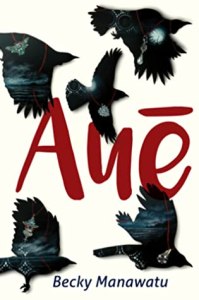 Auē has just won the annual NZ Book Award for fiction. I read last year’s winner Fiona Kidman’s This Mortal Boy, inspired by the true story of a young Northern Irish man who travelled to NZ in the 1950’s seeking employment opportunities and a future only to meet a tragic, unjust end.
I saw that Becky Manawatu had written a personal essay about her sister, so I read The novelist whose sister married into the Mongrel Mob.
It made me think of that dark television series I didn’t like, created by Jane Campion Top of the Lake; Auē too is set in the South Island, a land of extreme beauty and few humans – I thought, do I really want to read this?
Despite the current of fear created by the essay and that TV series, something about it felt unique and standalone, the heartfelt reviews on Goodreads ultimately convinced me, like this line from Kayla Polamalu:and her publisher, who described her as ‘a writer to her bones — such a talent, such a heart.’
“This book has created an ache in my chest that I’ll carry with me for a long time. It is awful in such a way that it is brilliant, sentences so visceral my breath would stop.
It is triumphant too – the spades of sorrow matched by spades of hope.”
Having read and enjoyed Big Girl, Small Town by Michelle Gallen with it’s Irish vernacular, I was interested to read something with a connection to Māori, a language and culture I learned and adored from the age of 5 until 12, I hoped it wasn’t going to be too visceral.
Review of Auē
Auē – to cry, howl, groan, wail, bawl
The story is told from three narrative perspectives, with chapters highlighting either Ārama (an 8 year old boy Ari), Taukiri (his older brother) and Jade & Toko (a couple).
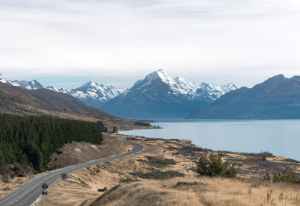
Photo by Tyler Lastovich on Pexels.com
It begins with Ari being dropped off at his Aunty Kat’s home by his brother Taukiri, who then departs and drives north, severing contact with everyone as he crosses the channel on the ferry to the North Island jetting his ringing telephone into the tide.
Sitting on his own on a beach on Christmas day, eating Marmite sandwiches Taukiri thinks about his little brother. It’s the first time he’s been close to the sea since Bones Bay. A place whose story has yet to be revealed.
One year Ari got a box of chocolates, and when the box was empty, he cut out photos of me and him, pictures of waves and surfboards and a guitar and glued them to the box to give to me for my birthday. That empty chocolate box was the best present I’d ever been given.
It becomes clear that the narratives of the two boys are set in the present and that of the couple in the past. The novel moves forward fleshing out its main characters who we grow more and more attached to, building tension and slowly revealing the connection between them all.
Despite Taukiri’s desperation to remove the past, it continues to haunt him, memories mix with things he sees and hears, a kaleidoscope of confused images assault him.
I guessed it would be this way for me and Ari. We would look for pieces of everyone we’d lost, in mirrors and crowds.
That’s how Ari would come to feel about me – that he’d lost me and had to search for me in places where I wasn’t.
He’d get over that though. It’d get easier.
Occasionally there is an italicized voice of someone not present, a lyrical incantation of the wind, or the presence of a spirit, observing – familiar and yet just outside of reach, pushing the reader on towards clarification.
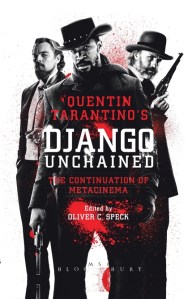 Ari befriends the neighbours daughter Beth, she lives with her Dad and Ari prefers the atmosphere over there, even though some of the things Beth likes scare him. Beth is brilliant, a little kid with a whole lot of attitude, the confidence of being reassuring well-loved, if dangerously naive due to a little parental inattentiveness. And those drop-dead, three words she utters that steal or perhaps save the narrative.
‘Let’s go to my place and watch Django.’
‘Why do you like that movie so much?’
‘It’s a dog-eat-dog world and we gotta stay ahead of the game.’
‘That’s not how the world really is.’
‘Isn’t it? Like I said that rabbit was probably an orphan, like you are. Like I sort of am.’
Jade is the child who grew up in a House like the one from Top of the Lake. A scary place. Her parents are no longer there, but she was reclaimed by the new inhabitants. Reading her chapters is unsettling, she seems not to possess a mind of her own and every time she almost breaks free, trauma arrives unbidden. Used to it, she blames herself for existing, the inherited trauma of past generations.
his soft hand as he spoke of the violence that ended her father’s life reminded her of something. The only type of love she knew. Fury then remorse and forgiveness.
It’s a compelling, riveting story that feels likes riding the waves, moments of joy at the heights, the threat of doom as they crash. And the poetry of the in-between, the goodness inherent within the young and those who have been loved, the healing that can happen when families reconnect, the ceaseless drama of life. The characterisation is so well done, unsentimental but deeply empathetic, the vulnerability of some sits in deep contrast to the brutal nature of others, the tension almost unbearable.
A 5 star read – extraordinary literary fiction.
Three Words – Read this Book
Mākaro Press is named after a nearby island, Mākaro was the niece of the legendary great Maori explorer Kupe, who discovered Aotearoa (New Zealand) around the 10th century and named two islands after his nieces Mākaro and Matiu. Like their uncle they are considered imaginative, curious and courageous, like this indie press. Publishing literary fiction and run by Mary McCallum and her son Paul Stewart, I leave you with the publisher’s words on this extraordinary book:

I published Auē because it is a deeply powerful, very real and beautifully written book about New Zealanders living hard-scrabble lives. Māori who carry generations of trauma in their bones that spills out here in one family in a small town.
The characters are compelling and the story holds the reader tightly as it winds through the interconnected lives of Ārama and Beth, Taukiri, Toko and Jade, and another who watches and weeps.
There is darkness, yes, but there is elation too in the beauty of the writing, and in the telling of the story at the micro level with the two children, and in the incredible moment when the tide turns … I’ve read the climax of the book so many times because it is so damned good. Mary McCallum, Mākaro Press
If you’re interested in reading this book and having trouble finding a copy, it’s currently available as an ebook direct from the indie publisher Mākaro Press.
Further Reading
Read the First Chapter – the beautiful, shocking first chapter of Auē
Personal Essay – A Day’s Grace by Becky Manawatu
Article by Mary McCallum, The Spinoff – The rise and triumphant rise of Makaro Press
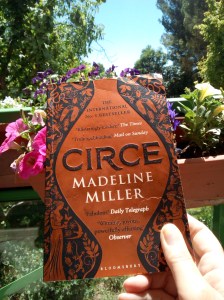 Originally published in 2018, Circe is a reimagined version of one of the ancient Greek myths, which have been variously retold through the ages, but possibly never quite in a voice like Madeline Miller’s that brings a feminine perspective and knowing, to fill in the gaps and flesh out a story that reconsiders some of the motivations the exiled protagonist Circe might have operated under.
 It starts off slowly as Circe is living in the Halls of the Gods, she is the daughter of
 Along with the Iliad and the


 1865, in the city of Bath, a young woman renowned for her nursing skills is convinced another destiny will one day present itself. When she finds herself torn between a dangerous affair and the promise of a conventional marriage to an apparently respectable doctor, her desires lead her towards a future she never imagined.
 Thoughts On A Novel
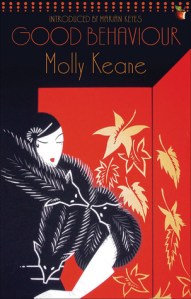 The protagonist of Good Behaviour is Iris Aroon St Charles, daughter of an aristocratic Anglo-Irish family, who grows up with her brother Hubert in ‘Temple Alice’ one of the ‘Big Houses’, built by an ancestor as his temporary residence until inheriting his titles and estates.
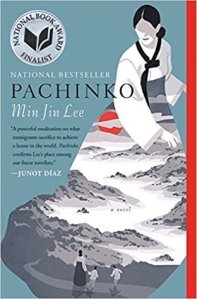 A New York Times Bestseller, Pachinko is a work of historical fiction set in Korea and Japan that follows the lives of one family and how their circumstances and choices continue to reverberate through the generations.


 It is not until page 142 that we come across ‘pachinko’, the Japanese name for pinball, a huge industry in Japan at the entry into the workforce of Sunja’s son Mozasu.
 Mrs Palfrey at the Claremont was named by the Guardian as one of ‘the 100 best novels,‘ and shortlisted for the Booker Prize in 1971. It is a humorous and compassionate look at friendship between an old woman and a young man at a time in her life when she has little to look forward to.

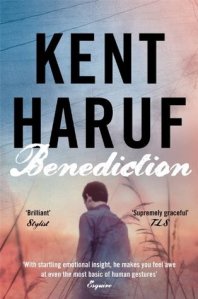


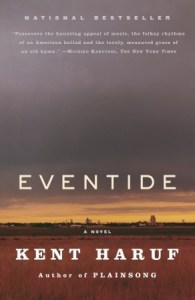 In Eventide, the second book in the Plainsong trilogy, we meet some of the same characters and a few more from the community of Holt, Colarado. There are again the quiet observations of the lives of people in this town, seeing them from the inside, the different challenges they each face and how they cope (or not) with them.
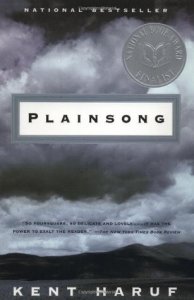 Plainsong is a what I’d call rural town domestic fiction, it reminds me of reading Anne Tyler, they’re like the yin and yang of small town America storytelling.
 I loved listened to Ocean Vuong talking about writing, he’s an incredibly articulate speaker and an accomplished poet, his writing sophorific and it is easy to be lulled into it’s cadence and rhythm. I am the kind of reader who often prefers a poet’s prose to their poetry, easily swayed by the poet’s promise of enrapture in the long form.
 Word by Word