Reading Ireland Month 2025

March is Reading Ireland month, an initiative created by Cathy at 746 Books and it is simply a way of being in community, while reading anything written by Irish authors or that relates to Ireland, there are no fixed rules, just the intention to Read Ireland, whatever that means to you! There’s even a Spotify playlist if you’re interested in a bit of musical culture.

Getting a Jump Start

For me that means reading more Irish authors from my bookshelves. I did read two in January, in fact my first read of 2025 was Donal Ryan’s Irish Book Award 2024 winning, heart, be at peace, a novel about multiple characters in a rural town in County Tipperary facing the different issues that face them a decade or so on from his debut novel The Spinning Heart.

Then I picked up a beautiful second hand hardback Water by John Boyne on holiday, and read it on my flight home. It is the first of four novellas in his The Elements series and now I want to read the next three, Earth, Fire and the final one Air due out in May 2025. But not yet, I’m prioritising what I already have!

Reading From the Shelves

A selection of books to read during Reading Ireland month of March

So here is the pile from my bookshelves, from which I will be choosing what to read in March 2025.

There are also three titles languishing on my kindle, which doesn’t get as much attention as it should, because out of sight is out of mind when it comes to reading. So I’m jogging my memory and will try to read at least one of these e-books.

On the kindle I have Listening Still by Anne Griffin, The Quiet Whispers Never Stop by Olivia Fitzsimons and Quickly, While They Still Have Horses by Jan Carson. In physical print I have another Carson The Raptures, that I picked up at the annual Ansouis vide grenier in September 2024.

Audrey Magee’s The Colony (2022) was longlisted for the Booker Prize, shortlisted for the Orwell Prize for political fiction and the Kerry Group Irish Novel award, so it gained a lot of attention and I have been keen to read it.

When Fiction Reminds Us of Those Who’ve Passed

I really enjoyed Sebastian Barry’s Old God’s Time (2023) and want to read more of his work, so I chose his Dunne Family trio of books, Annie Dunne (2002), A Long Long Way (2005) and On Canaan’s Side (2011) to delve more into his storytelling. I am part way through reading these now.

I love that this collection of novels and the play that was the first in the series, were all inspired by characters from his own ancestral lineage. That inspired me too.

After reading A Long Long Way, I became curious, as I too have an ancestor, born in the same year as his character Willie Dunne (1896), who like Willie, went to France in World War I, was in an Irish regiment and did not return. My ancestor Edmund Costley died on 9 April 1916, in Ypres, West Flanders, Belgium at the age of 19. I’ll be writing a post about him in April.

Historical Re-Imaginings, True Crime, Women’s Lot

I have read two novels by Mary Morrissey, Mother of Pearl (1995) and Penelope Unbound (2023). Morrissey tends to take historical stories and/or characters and re-imagine their lives. Mother of Pearl was inspired by a notorious baby-snatching case in 1950’s Ireland, that she chose to fictionalise, having said that the truth would have come across to readers as unbelievable; while Penelope Unbound re-imagines the life of Nora Barnacle, if in Trieste, Italy, when James Joyce made her wait all day outside a train station for him, she decides to leave.

This year I’m going to read her imagined autobiography, The Rising of Bella Casey (2013); she was the sister of the acclaimed playwright Sean O’Casey, and it is set at the turn of the century Dublin, a social commentary on the lives of women in that era.

Then there is Maggie O’Farrell’s The Marriage Portrait (2022), another historical re-imagining, this time of the short life of Lucrezia de’ Medici, a sixteenth century member of the renowned aristocratic House of Medici in Italy. I enjoyed O’Farrell’s riveting memoir I Am, I Am, I Am – Seventeen Brushes With Death (2017), the first of her works I read, and then the multiple award-winning, Hamnet (2020) and The Hand That First Held Mine (2010), so I’m looking forward to immersing in this one.

Irish Non-Fiction
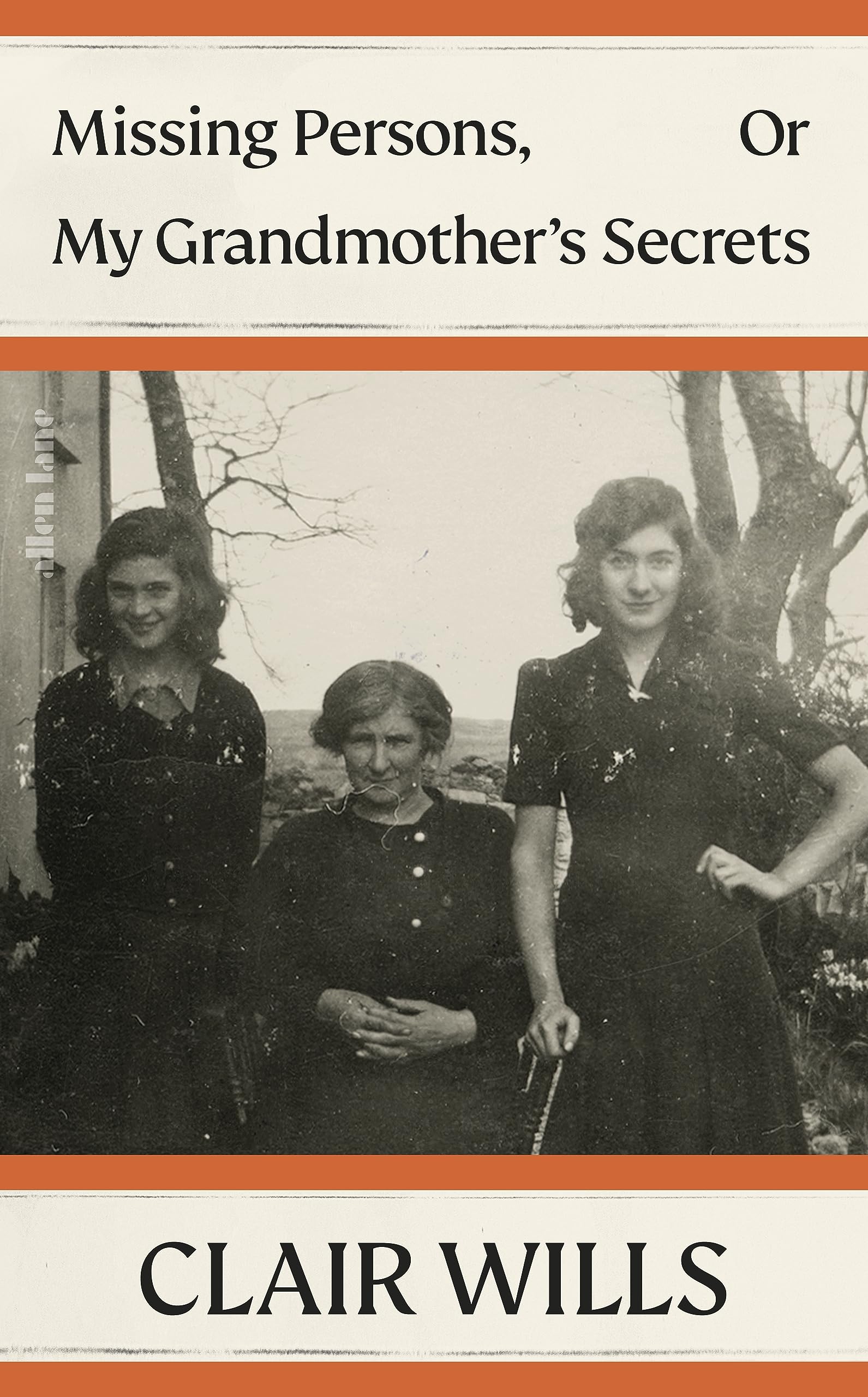
missing persons or my grandmothers secrets unmarried mothers in ireland nonfiction memoir that excavates the truth about silence

There are two non-fiction titles on my pile, Missing Persons, Or My Grandmother’s Secrets by Claire Wills, author, critic and cultural historian, winner of the Irish Book Award for non-fiction, who has written a family history that blends memoir with social history. She explores the gaps in that history, brought about by Ireland’s brutal treatment of unmarried mother’s and their babies, and a culture of not caring, not looking into or asking questions, rolling back a dark period of its history of loss and forgetting.

The second non-fiction title is the candid Fierce Appetiteslessons from my year of untamed thinking, also subtitled, Loving, Losing and Living to Excess in my Present and in the Writings of the Past by medieval historian Elizabeth Boyle.

The title is a reference to Vivian Gornick’s memoir Fierce Attachments, which is part of what intrigued me, but also the uniqueness of someone finding sense of three dramatic events in their life through medieval literature.

Every day a beloved father dies. Every day a lover departs. Every day a woman turns forty.All three happening together brings a moment of reckoning.

Boyle writes on grief, addiction, family breakdown, the complexities of motherhood, love and sex, memory, class, education, travel (and staying put), with unflinching honesty,deep compassion and occasional dark humour.

Remembering Edna O’Brien (15 December 1930 – 27 July 2024)
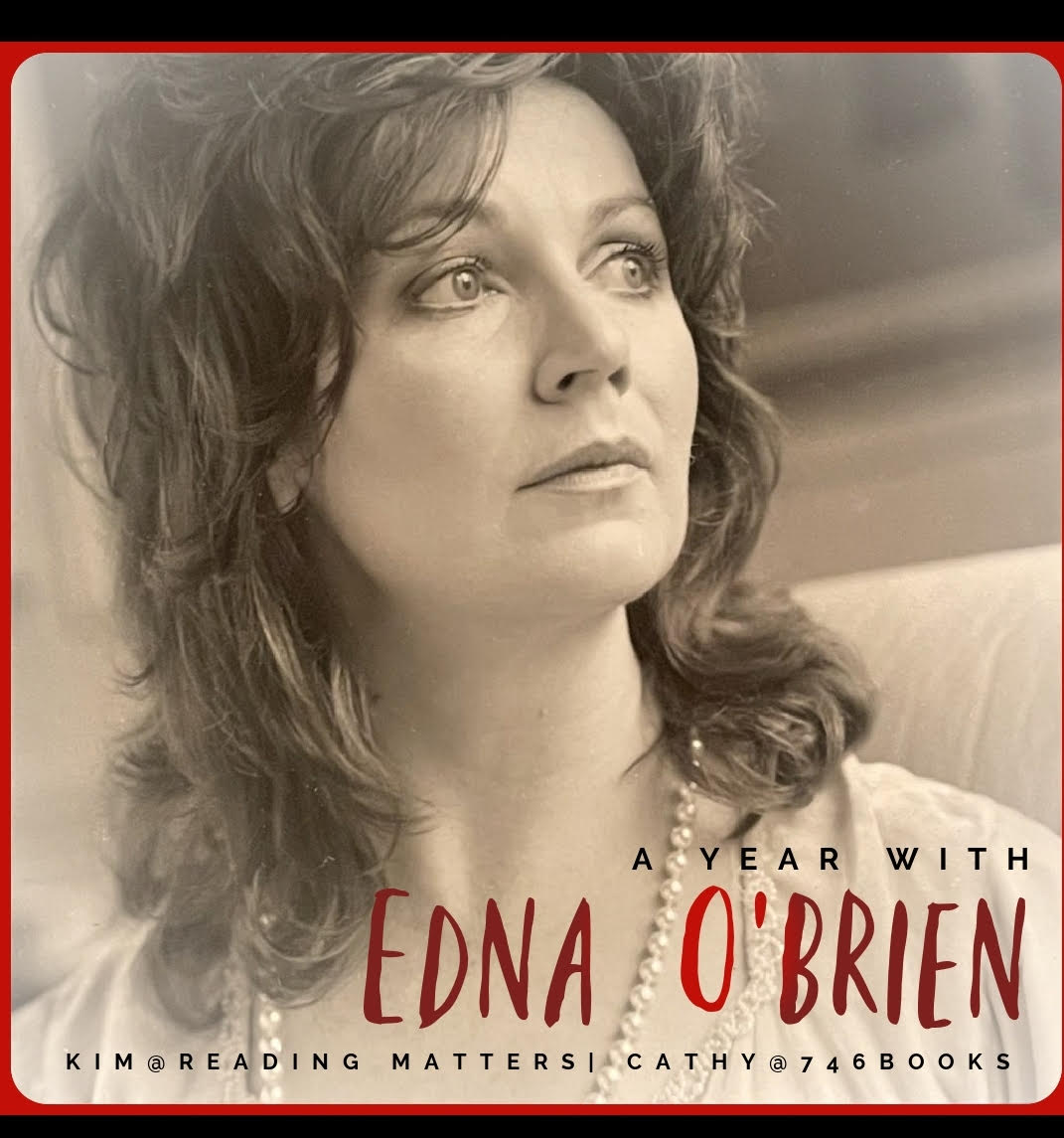
Edna O'Brien The Country Girls The House of Splendid Isolation

I couldn’t read Ireland without adding a title from Edna O’Brien, who died in 2024 at the age of 93. In 2023, I read The Country Girls trilogy, made up of three stories The Country Girls (1960), The Lonely Girl (1962), and Girls in Their Married Bliss (1964) released in 1986 in a convenient single volume.

Credited with breaking the silence on issues young girls faced growing up in Ireland, it was a subject she would often return to. She was punished for it, but lead the way for others to eventually follow.

O’Brien described her work in this way:

I have depicted women in lonely, desperate, and often humiliated situations, very often the butt of men and almost always searching for an emotional catharsis that does not come. This is my territory and one that I know from hard-earned experience. Edna O’Brien (Roth, 1984, p. 6)

Cathy at 746 Books and Kim at Reading Matters are spending a year reading Edna O’Brien and are reading Country Girls in February, you can see their reading schedule for the year if you go to their blog.

I have decided to read one my shelf, The House of Splendid Isolation (1991), the first book in her Modern Ireland trilogy, a political novel, depicting the relations of an Irish Republican Army terrorist and his hostage, an ageing Irish widow, in a house that represents the troubled nation.

Suggestions, Recommendations?

That’s the selection I have made, no guarantees on what I’ll get through, but I’m looking forward to the immersion. Have you read and enjoyed of the titles I mention above?

Are you going to read any Irish literature in March? Let me know in the comments below.
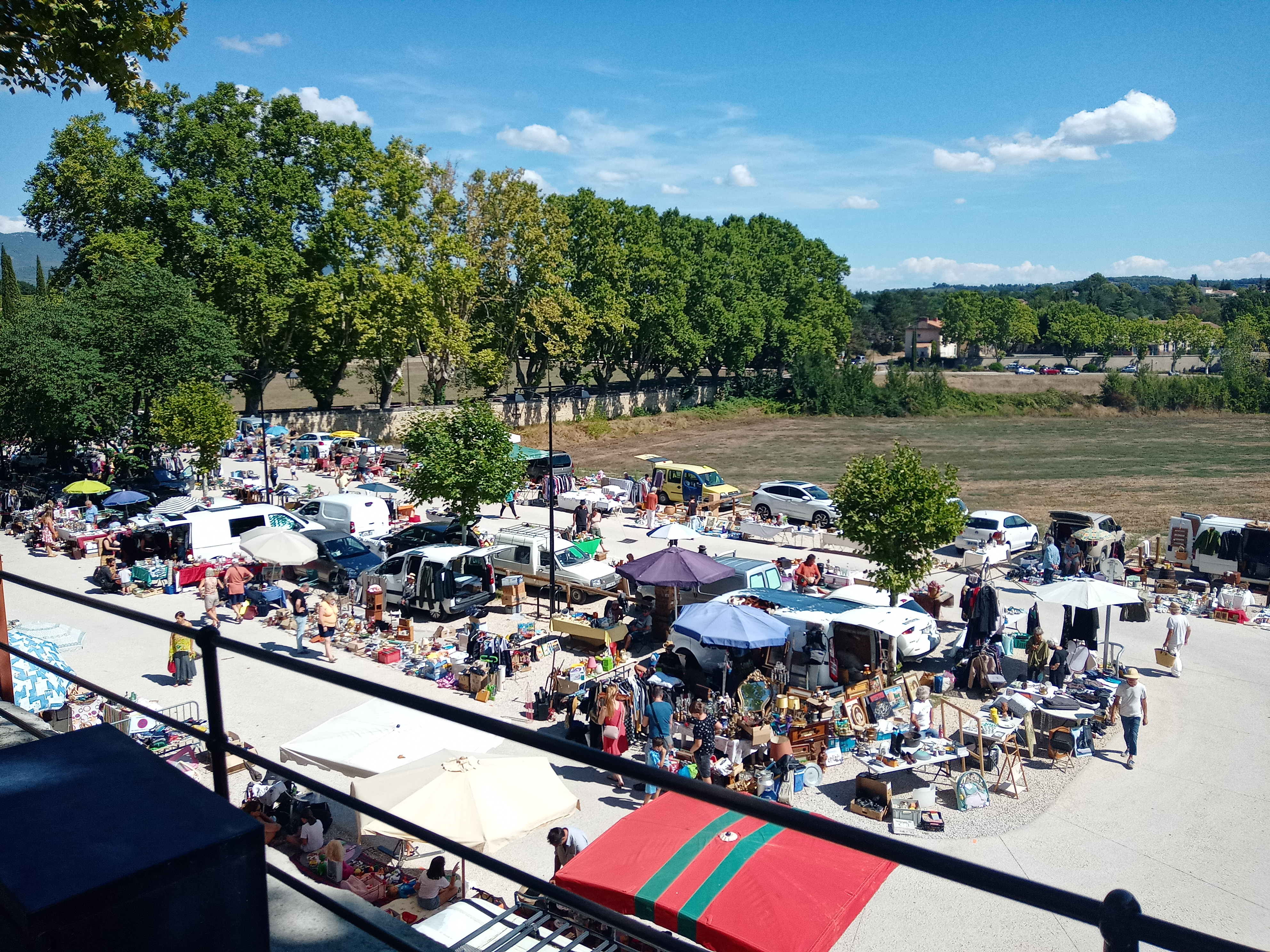
Ansouis Village Annual Book Sale

Yesterday (Sunday) was the annual ‘vide grenier‘ (garage sale) in the medieval village of Ansouis in the South Luberon area of the region Vaucluse. It’s a village I drive through at least once or twice a week for work. It’s a nice place to stop for a while.

The village has a population of around 1,000 people and is dominated by the fortress like Château d’Ansouis, sitting on a rocky perch overlooking the village and valley all around.

Every year the local French library has a few tables, where they sell second hand books, in both English and French.

It’s my favourite book sale, because it’s set up in this beautiful location, there’s easy parking and it’s always on a sunny day in mid September. If you arrive early, you are guaranteed to be rewarded.

I like to cull the bookshelves every year and donate to this market, and then try not to buy back too many. However this year I arrived just as another woman was depositing her donation and I saw those two Booker Prize winning novels that I haven’t read yet, Bernadine Evaristo’s Girl, Woman, Other and Sri Lankan author Shehan Karunatilaka’s The Seven Moons of Maali Almeida.

And then there were more…

In addition to the other impulsive purchases you can see in the image above, I found Northern Irish author Jan Carson’s The Raptures, a signed copy of Kamila Shamsie’s Best of Friends, Japanese author Mieko Kawakami’s Breasts and Eggs translated from Japanese and more. Oops. 12 books later…

Often these are books I have seen reviewed and I’m interested in, but not enough to rush out and purchase a copy, however they are the kind of books I would borrow from a library, so I guess this is like an annual library visit. Isn’t it?

I had heard about the Cazalet Chronicles Quintet by British author Elizabeth Jane Howard and couldn’t pass up the opportunity when I saw all four of them sitting in a box waiting to be claimed. Anyone keen for a buddy read?

There are lots of other things that people are selling, old china and glass, cutlery, clothes, old linens, the contents of workshops, old music albums – brocante. A treasure trove of things we don’t need, but definitely fun to look at.

The only other thing I look out for are old postcards, like these of Marseille’s Le Palais Longchamp, the Route de la Corniche and Le Parc Borely, all of which I found in Ansouis a couple of years ago. And all places I connect with and have fond memories of.

Even though they have already been used and written on (many many years ago), I like to give them a second life, sending them as bookmarks, to friends who also know and remember these places.

I didn’t find any today, well, there were some very small but beautiful old black and white photos of Berlin, but I didn’t connect with them in the same way as I do with the southern French locations.

Have you read the Cazalet Chronicles or any others from this haul that you recommend?

The Last Resort by Jan Carson

The only downside in reading The Last Resort is that it was so short!

Northern Irish Literature short storiesThis is the novel I have been waiting for Jan Carson to write, for here is a writer who in her ordinary life as an arts facilitator has brought together people from opposite sides in their way of thinking, encouraging them to sit down and write little stories, enabling them to imagine from within the shoes of an(other) – teaching the practice of empathy.

Her novel The Fire Starters comes from that place of darkness and indifference, when there is no empathy. I found it disturbing. I’ve since realised gothic novels aren’t my thing.

Here, Carson digs deeper into the psyche of the many that make up their community and finds a common thread that connects them, something that both pushes them forward and holds them back and shows it in its many guises, through a kaleidoscope of colourful characters. Everyone has their own mini drama and troubling perspective, that coming together might create a shift away from.

Set in a fictional Seacliff caravan park in Ballycastle on the North Coast of Ireland, as the book opens we meet Pete, who now (reluctantly) runs the caravan park and Frankie, who has gathered a few friends for the 50th anniversary of Lynette, for whom they will place a memorial bench with a brass plaque at the top of the cliff.

A caravan on the North Coast was the height of luxury, somewhere you could escape to at the weekend. They felt safe here. Or they did until that bomb went off in the car park.

the last resort ballycastle jan carson ireland

Photo Y. ShuraevPexels.com

It’s the first day of the holiday season and most of these people have been coming here for years, though for some this may be their last visit. Not everyone is happy to be here, like Alma and her two siblings, especially when they wake up one morning to discover their phones and her iPad are missing.

Alma is into Agatha Christie and when she discovers they are not the only family that has something missing she decides to investigate, even if there hasn’t been a murder. Yet. No really, there’s no murder.

It’d be easy to push someone over that cliff. It’s so crumbly. You could make it look like an accident. I can think of at least three different times Agatha Christie killed somebody by shoving them off a cliff. If my iPad wasn’t gone I’d google to see if there were more. I’m raging about losing my iPad. Now I have to run my investigation the old-fashioned way. Snooping around. Observing suspects. Taking notes on my jotter. Maybe it’s better like this. Poirot never looked anything up on Wikipedia or checked suspects’ alibis on Facebook. If Poirot was here, he’d say, forget the iPad, Alma. Use your leetle grey cells. I’m doing my best. I’m watching everyone, even Mum. It’s always the person you least suspect.

Alma’s Mum Lois has a PhD in mythology and her thing is sea monsters. Monsters, wizards and demons, that’s her parents thing, Harry Potter is for kids, Alma likes the real world, way scarier.

Seacliff Northern Ireland The Last Resort

Photo by Tatiana on Pexels.com

Each chapter is narrated by one of 10 characters in the caravan park and about each family we learn what is holding them back, what consumes their minds. And while there is not a murder, no smoking gun, there is the cliff – and from the beginning you sense its ominous presence, the way it draws everyone to its apex.

We meet Alma again (my favourite character) as she trails around the caravan park interrogating her disapproving adult suspects. She’s brilliant.

Richard is a complete empath, hiding it from his family as if it were a sign of weakness, a position likely to be exposed given he has used his father’s caravan to house sixteen homeless men, many of them immigrants.

I couldn’t tell Dad about them. I’ve never really told him what I really do. He wouldn’t understand. In his world, you work hard, and you do well. There’s no reason to end up on the street, hawking The Big Issue, unless you’ve brought it on yourself.

Kathleen struggles to accept her daughter for who she is, because of societal expectations, but finds it hard to follow through with her disapproval because she desperately wants a relationship with her grandson Max. She finds Alma strange, intense and curious.

Lois answers all her questions. She talks to her weans like they’re adults. When she split up with her husband, Alma was fit to tell me the ins and outs of the whole divorce. She was only ten. You have to protect a child that age. They’re not old enough to know everything. Still, I have to say I envy them – calearied as they are – at least they talk to each other, really properly talk. We’re all adults in this caravan but we’ll spend the whole weekend talking about nothing. The weather. The baby. Whether or not to put the kettle on. Avoiding the elephant in the room because nobody wants to cause a scene.

So many great lines, so much humour, angst, regret, camaraderie as the story leads to its wild denouement on the seacliff, as the thing that’s been holding them all together, holding them back, demands to be released.

Just brilliant. Highly Recommended.

Further Reading

Best Caravans in Fiction (A List in Progress), Jan Carson

Jan Carson, Author

Northern Ireland Author Fiction

Jan Carson by ©Jonathan Ryder

Jan Carson is a writer and community arts facilitator based in Belfast. Her debut novel Malcom Orange Disappears (2014) was published to critical acclaim, followed by a short-story collection, Children’s Children (2016), and two flash fiction anthologies Postcard Stories (2017) and Postcard Stories 2 (2020).

Her second novel The Fire Starters (2019) translated into French by Dominique Goy-Blanquet as Les Lanceurs de Feu, won the EU Prize for Literature, was shortlisted for two prestigious French literary awards the Prix Femina and Prix Médicis in 2021 and was also shortlisted for the Dalkey Novel of the Year Award.

Her third novel The Raptures was released in Jan 2022.

Postcard Stories by Jan Carson

Epistolary Treasures

Jan Carson Author Northern Ireland FictionI just love the concept of these works of flash fiction, postcard size stories, that have a geographic connection to a street or location in Northern Ireland, that originated as a story written on the back of a postcard – an alternative restriction to the usual one when writing flash fiction, of keeping it to 100 -150 words – and that the postcard was both sent and retained, a gift and an accumulated collection.

This not quite Ireland proper/ is not the Mainland/ is certainly not Europe in the Continental sense.

When I first picked it up, a little while ago now, I looked at the contents and went to read a few entries from the locations that were familiar to me, Belfast International Airport, Newtownards Road, Holywood Road, Linenhall Street, Holywood, Ormeau Road, but of course that was me thinking of my own story, so it didn’t make much sense. I was looking for something that wasn’t there.

Removing Expectations

So now I read it again, this time from the beginning and just allow it to tell me its own story, its bite sized exercise in writing, the awakening of imagination, the sharing of the craft, its way of thinking of others while being in the act of creation.

The book is thoughtfully illustrated by Benjamin Phillips. You can view the images from the book via the link provided through his name. They are truly evocative.

Postcard Stories Jan Carson Ireland

Photo by Ylanite Koppens on Pexels.com

I read, am entertained and wonder what it must have been like to receive one of these. Is there a connection between the story and the recipient, is it random, did they reply, did they understand the motivation of the author, did it matter? How did you get to be one of the recipients? Does she really have that many friends whose addresses she knows, a database perhaps, or is the postcard sending a fiction in itself?

Here she is practicing using the second person narrative voice from Week 6, February 5th, 2015, Cathedral Quarter, Belfast from a postcard sent to Claire Buswell.

When you were seven years old you threw a dart at a black-haired girl, running away in the garden. The dart lodged and stuck just below her shoulder blade. She fell forward in the grass. The flight on the dart was red and black and white. These were also the colours of the duvet cover in your parents’ bedroom. This was the 80’s. Afterwards the dart came away clean as needles. No harm done. You did not tell and neither did she.

I’ve read Jan Carson’s novel The Fire Starters, I know she is a fan of absurdist fiction. I also know that she works in the community arts sector and has taught creative writing skills to people to help build empathy, using storytelling to show how we can imagine being in the shoes of another. I remember being reassured by this knowledge, because the protagonist in her novel completely lacks empathy, and that is a frightening thing.

Cafés and Markets, Happiness or Disappointment

Susan Picken receives Week 45’s November story from Victoria Square, Belfast:

‘If your drink doesn’t make you happy, we’ll make you another,’ I read aloud, pointing to the sign above the barista’s head. It’s been there, right behind him, with the toastie machine and the coffee syrups, for so long now that he’s forgotten all about it.

melancholy free coffee happy unhappyIt turns out there are only so many free coffees a person can drink before realising a hot beverage cannot cure loneliness, grief or melancholy.

The collection ends in Week 52  at St George’s Market on a sorrowful note, that makes me think I ought to take my own aromatherapy potions to the Christmas market, offering an antidote to the melancholy nature of some of this population.

Every year during the month leading up to Christmas, Eleanor takes a stall at St George’s Market and sells disappointment in small, hand-made bottles…She stocks any number of different disappointments: the disappointment of an unsupportive parent, the disappointment of a homely child, the disappointment of being alone or not nearly alone enough, the disappointment of cats, good wine, box sets and religion, the dry disappointment of Christmas Day evening which is easily the most popular product on her stall.

I have Postcard Stories 2, so I will be hoping that perhaps, as we wander more streets in the year that followed Postcard Stories, there might be reason for more optimism and perhaps we might learn how to get on the postcard list.

Further Reading

Irish Times Interview: Jan Carson – girl from the north country by Ruth McKee

Jan Carson, Author

Northern Ireland Author Fiction

Jan Carson by ©Jonathan Ryder

Jan Carson is a writer and community arts facilitator based in Belfast. Her debut novel Malcom Orange Disappears (2014) was published to critical acclaim, followed by a short-story collection, Children’s Children (2016), and two flash fiction anthologies Postcard Stories (2017) and Postcard Stories 2 (2020).

Her second novel The Fire Starters (2019) translated into French by Dominique Goy-Blanquet as Les Lanceurs de Feu, won the EU Prize for Literature, was shortlisted for two prestigious French literary awards the Prix Femina and Prix Médicis in 2021 and was also shortlisted for the Dalkey Novel of the Year Award.

The most recent book The Last Resort, a collection of ten linked short stories set in a fictional caravan park, was published in April 2021.

Her work has appeared in numerous journals and on BBC Radio 3 & 4. She runs arts projects and events with older people especially those living with dementia.

The Fire Starters by Jan Carson

Having recently read another novel without realising it was of the gothic genre, I think I’ve gone and done it again, this time, a contemporary Belfast gothic novel, because right from the first chapter, there is the overwhelming sense of something sinister going to happen, and it’s not the series of summer fires that are plaguing the city though they are equally troubling. I discovered having finished the book that Jan Carson is also a fan of absurdist fiction. Another clue.

Contemporary Irish Fiction Empathy EU Prize for LiteratureIn that first chapter we meet a father, Jonathan, who has a strange perception of his baby daughter, who he is caring for alone. He desperately wants to care for her, but he feels that part of his role in doing that is to remove the aspect of her that she has inherited from her mother, who he believes is a siren.

His own childhood was one of being provided for, but unloved, his parents (who never wanted children or grandchildren) abandoning him at the age of 16 to a boarding school, leaving the country. He becomes a Doctor, and of no surprise, lacks any form of empathy.

We meet Sammy, also a father, an ex loyalist paramilitary, who is becoming increasingly anxious, having reason to suspect that his son Mark, who lives in their attic and rarely comes out, may be involved in sinister activities, fearing he has inherited his own thirst for violence, a tendency he had no control over in youth and even today, has to quell the feeling inside.

I found the depictions of both these men terrifying, both are planning some kind of intervention and up until the last pages, we can’t quite believe that they may follow through, and they too wrestle with their instinct and question, whether they ought to proceed.

Then there is the background of a hot summer and the approach of the Orange parades of the Eleventh Night on every 12th of July, an Ulster Protestant tradition where large, towering bonfires are lit, accompanied by street parties and loyalist marching bands.

The bonfires are lit to celebrate (1688) the victory of Protestant King William (Billy) of Orange over Catholic king James II at the Battle of the Boyne (1690), which began the Protestant Ascendancy in Ireland. – Wikipedia

When the rain finally arrives, people begin to smile, there are fewer angry people on the streets, they no longer have the numbers for a decent riot, the air of festivity is extinguished. Protesting soon makes way for the football season.

This is how it has been in Belfast every summer since the Agreement. The same hot anger rises at the end of June and and goes stamping up and down the little streets. Stamping and shouting and raising Cain all the way through July until, by August’s end, the energy’s gone right out of it.

My Truth is Not Your Truth

And the various versions and perceptions of truth and history that exist, depending on who is doing the telling, where they live, what day it is, demonstrated in this opening chapter This is Belfast.

This is Belfast. This is not Belfast.
Better to avoid calling anything a spade in this city. Better to avoid names and places, dates and second names. In this city names are like points on a map or words worked in ink. They are trying too hard to pass for truth. In this city truth is a circle from one side and a square from the other. It is possible to go blind staring at the shape of it. Even now, sixteen years after the Troubles, it is much safer to stand back and say with conviction, ‘It all looks the same to me.’

And following this are two paragraphs, one that begins with ‘The Troubles are over now’ and the other begins with ‘The Troubles have only just begun.’

Deidre Sullivan Tangleweed and Brine Jan Carson The Fire Starters

Sirens from Deidre Sullivan’s Tangleweed and Brine

Jonathan (Dr Murray) is obsessed with silencing his daughter, and even employs a deaf nanny to look after her. She is a loving, nurturing soul, providing one of the few notes of relief in an otherwise tense narrative, as these men ponder their responsibility as fathers and fear of what their children may become.

There is a third brief narrative, an omniscient voice that shares the story of a few of the Unfortunate Children of Belfast, children of parents who belong to a support group, that Jonathan attends once, they are children born with deformities and powers and it is here, that I realise there is an element of magic realism in this tale, that perhaps his perception of his daughter as a siren isn’t an aspect of his own mental health problem.

The novel is a blend of politically charged social and magic realism, though it feels realistic in its reading; dealing with the trauma of legacy’s, a parent’s legacy to a child and the community’s complicated legacy of the political troubles of Northern Ireland. It is set in East Belfast, where the author lives and from listening to the interview, I learn that she is an accomplished eavesdropper, that many of the words in these pages have been inspired by overheard conversations.

On Developing Empathy for Those Living Segregated Lives

Interested to understand the motivation behind the novel, I listened to an excellent interview with Nicky Bull in which she shares something of her role as a community arts facilitator and the role this can play in healing rifts, bringing people together, using the creative process to help develop empathy, she talks about the ability of storytelling to help develop this.

The community arts sector in Northern Ireland has played a huge role in the peace and reconciliation process. Primarily it brings people from both communities together into a shared space but I also think it has also taught people soft skills that have been missing from Northern Irish culture.

It’s very, very hard for people here to practice empathy because quite often we grow up segregated, so how are you supposed to understand what life is like if you don’t have any friends who aren’t from the same background as you, the skill system is still largely segregated,and government housing and things.

So these conversations around learning how to empathise, which I think the creative act, particularly writing fiction, you’re putting yourself in the shoes of another character, even when you read, it’s an act of empathy, those skills can be taught and then transferred into the social realms that we’re working in Northern Ireland at the moment, that people can imagine a life that isn’t theirs, it’s much more difficult to hate and to segregate when you have the ability to empathise with other people.

It’s an incredible and deeply disturbing novel, yet despite the discomfort I learned a lot from reading it and especially from taking the opportunity to listen to the author speak, that helped me understand the motivation behind it and that incredible candour around the very real problem of how the creation of segregated community’s causes a lack empathy and how the creative arts can help provide a practical humanist solution.

It’s Saint Patrick’s Day and #ReadingIrelandMonth21, have you read a good Irish book this month?