Factory Girls by Michelle Gallen

It’s the first day of March and the beginning of Reading Ireland Month 2023, which I am kicking off with a review of a work of comedy by Michelle Gallen originally published in 2022.

Women Writing Comedy

I was completely charmed by Big Girl, Small Town with its comic Northern Irish vernacular, so I was looking forward to this next novel which I picked up on seeing that she has again been shortlisted for the Comedy Women in Print Prize UK/Ireland.

She is a writer that makes me laugh out loud while reading, a rare quality indeed.

A Summer Job, Awaiting Results

Irish Literature Comedy Women in PrintFactory Girls is a story that takes place over the summer of 1994, while three friends, living in an unnamed northern Irish town, await their exam results and confirmed university placements, and therefore the trajectory of their future lives.
They have taken a job in a shirt factory, and two of the girls Maeve and Caroline have rented a small two bedroom apartment opposite. Maeve, who is the main protagonist of the novel, aspires to study journalism in London, Aoife has her sights on Cambridge and Caroline, Magee.

Maeve has studied hard to ensure she attains the results that will enable her to escape her suffocating home life, the empty bed and stifling sadness surrounding her sister’s premature death and the continued menace of simmering violence that pervades the divided community they live in.

Family Dynamics and Social Standing

Though they attended the same school, they each come from different family dynamics and these differences over the course of the summer begin to play into how they perceive and respond to the various situations that will arise.

They receive a different kind of education over the next two months as they enter a rare ‘mixed’ workplace, where Catholics and Protestants work side by side, despite the overhanging external threat of sectarian violence. The girls learn how to navigate an adult work environment, discover what they miss when living independently and witness how life plans can change drastically overnight.

“Maeve hated how women’s clothes came in extra small, small, medium and large

while men’s shirts came in medium, large and extra-large

– like there was no such thing as a small man.”

All three of the girls will be confronted with the need to adapt their expectations, in this humorous yet serious and insightful look at Northern Irish society on the cusp of peacetime.

Perpetuating the Divide

It is an interesting work that reads simply on the surface, but exposes various minute behaviours that contribute to creating a sense of the divide and how it is perpetuated by members of the community. For all that Maeve wishes to escape it, she views the ‘Prods‘ with suspicion, uncertainty and denial of her feelings. It makes for strange reading, as the separation between the groups feels illogical to a reader from outside. To her credit, Maeve has learned that the two sides do have a couple of things in common – they both got excited about payday and liked talking about the weather.

It reminded me of an episode in series 2 of Derry Girls – The Difference Between Protestants and Catholics when a group of Catholic school girls go on a supervised weekend retreat with a group of Protestant school boys and they were asked to brainstorm things the two groups had in common. All anyone could suggest were differences. At the end of the exercise one side of the blackboard was empty and the other full.

Literally, I was so intrigued, I rewound and put the screen on pause, so I could learn how they perceived themselves to be so different – because it is such a mystery to the outside world. The blackboard scene is already considered a television classic and the recreated blackboard went on display in the Ulster museum in Belfast. It also gave rise to the soundbite of the season, according to The Irish Times: ‘Protestants keep toasters in cupboards’.

The Difference Between Protestants and Catholics

In Factory Girls, there is language they use to describe each other, like ‘Prods‘ and ‘Taigs‘ and referring to the Republic of Ireland as the ‘Free State‘; there is Maeve’s suppression of the sexual chemistry between her and the English boss Andy, relationships let alone attraction to the other side is forbidden; the subtle labeling of venues, which are deemed okay for one side or the other, making it difficult when the boss wants to treat his employees to celebratory drinks after work – it seems there is no place where all can be comfortable.

Overall, an entertaining read that somehow manages to bring humour to a not very comical situation, something that the Irish excel at and Michelle Gallen most definitely. I can well imagine both her novels on the small screen and they both lend themselves to potential sequels!

Michelle Gallen, Author

Michelle Gallen Big Girl Small Town Irish Fiction

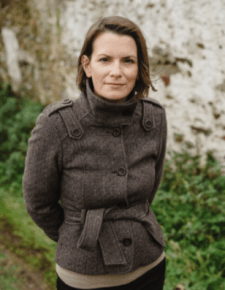
Photo: Brideen Baxter & Deci Gallen/Simpletapestry.com

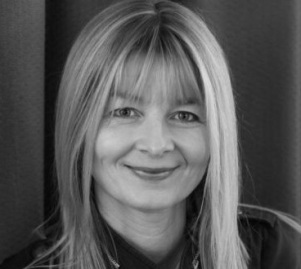
Michelle Gallen was born in County Tyrone in the mid 70’s and grew up during the Troubles a few miles from the border between the ‘Free State’ and the ‘United Kingdom’.

“The border between these territories dominated all our lives. In the late 1960s, 19 roads criss-crossed Donegal and Tyrone in our local area. By the 1970s, just one ‘official’ road was left usable after the British Army blew up and barricaded the ‘unapproved’ roads and bridges. This campaign dramatically impacted communities on both sides of the border throughout my childhood and teens.”

Her debut, Big Girl Small Town was shortlisted for the Costa First Novel Award, the Comedy Women In Print award, an Irish Book Award and the Kate O’Brien Award. Factory Girls has been shortlisted for the Comedy Women In Print award, the winner will be announced on 17 April 2023. She currently lives in Dublin with her husband and children.

You can discover her favourite books and reading influences here.

Irish Literature Classic Contemporary Nonfiction

Reading Ireland Month 2023, A Wish List

Looking ahead, March is Reading Ireland month over at Cathy746Books, so I’m putting together what is currently on my shelf and what is lurking in the depths of my kindle, which I seem to have been more reluctant to read from lately, so a month of focusing on Irish literature should help.

Irish Literature Classic Contemporary Nonfiction
Cathy has set out a program below for the five weeks that focuses on classics, contemporary works (where most of my titles sit), short stories and non fiction.

Eager Anticipation

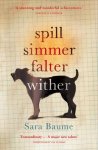
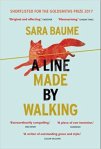
I had been looking forward to reading Sara Baume’s Seven Steeples, having read her excellent nonfiction title Handiwork, and two other novels, Spill Simmer Falter Wither and A Line Made by Walking – however I couldn’t wait and read it earlier this month. Highly recommended literary fiction, with a strong tendency toward poetic prose.

Intro Week:    1 – 5 March

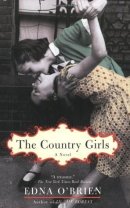
I’m going to try and read the Edna O’Brien trilogy The Country Girls in the first week, which I have in one volume, but I will post as the three separate books. Originally published in 1960, 1962 and 1964, they are a portrait of youth, marriage, friendship, love and loss and I’m very excited to read this author for the first time and to begin here. She is hailed as one of the great chroniclers of the female experience in the twentieth century.

I managed to acquire a hardback of her 1994 novel, House of Splendid Isolation, which would be great to read if time allows.

Irish Classics Week: 6 -12 March

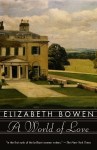
I have the novella A World of Love (1954) by Elisabeth Bowen, which should be possible to read in week 2.

I’m putting Brian Moore into this category, I have 3 of his novels on my shelf, a continuation, having read five of his novels for the 100th centenary in 2021.  A previously neglected Irish author, he lived most of his adult life in Canada and the U.S., thus his literary output was created from the perspective of an outsider, looking back at his own culture, and occasionally at other cultures where he spent time, such as The Statement (1995), a political thriller set in France and The Magician’s Wife (1997), historical fiction set in France and Algeria, both of which take an aspect of French history that he found fascinating, turning them into compelling stories.

I have The Temptation of Eileen Hughes (1981), a Belfast love triangle, Black Robe (1985), a Jesuit missionary in North America in the 17th century, and The Mangan Inheritance (1979), a recently widowed man in Canada journeys to track down an Irish ancestor.

Contemporary Irish Week: 13 – 19 March

In this 3rd week, I shall attempt one or two of these novels from the kindle.

Trespasses by Louise Kennedy – this novel has garnered much praise since publication, set in Northern Ireland during the Troubles, a shattering novel about a young woman caught between allegiance to community and a dangerous passion.

Factory Girls by Michelle Gallen – I loved her novel Big Girl, Small Town and this latest has just been shortlisted for the Comedy Women in Print Award 2022/23 UK/Ireland. This is a definite, she makes me laugh out loud!

The Quiet Whispers Never Stop Olivia Fitzsimons – a dual narrative set in 1982 & 1994 Ireland, exploring the mother-daughter relationship; described as “A story of love, obsession and escape, an uncompromising, lyrical tour-de-force that marks the arrival of an extraordinary new voice in Irish fiction”.

Listening Still Anne Griffin – her debut When All is Said was a runaway international success, a book I enjoyed about a man who toasts 5 friends of importance to him. Her second book is about a young woman who can hear the last words of the dead, though it hasn’t made the same impact on readers; she has a new book due out on 27 Apr 2023 The Island of Longing about the disappearance of a daughter and a mother’s difficulty in accepting her loss, not knowing whether she is alive or dead. This latest is getting many 5 star reviews (from those reading an advance copy), one to watch.

A Traveller at the Gates of Wisdom John Boyne – an unknown man leads the reader through 2000 years of human and family history, slipping through time and space with slightly different identities, continuing on the same path, from Palestine in AD 1 to the year 2080 in a space colony. An ambitious and epic concept, a story that has had mixed reviews.

#ReadingIreland2023

Short Story Week: 20 – 26 March

I have this one collection that I shall try to get to read:

Dance Move by Wendy Erskine – stories set in Northern Ireland, where we meet characters looking to wrest control of their lives, only to find themselves defined by a moment in their past that marked them. In these stories – as in real life – the funny, the tender and the devastating go hand in hand. Full of warmth, the familiar and the strange, they are about what it means to live in the world, how far you can end up from where you came from, and what it means to look back.

Non- Fiction Week: 27 – 31 March

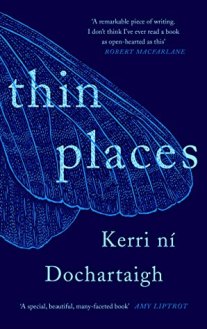
Cacophony of Bone Kerri ni dochartaighI don’t have any Irish nonfiction left unread on my shelf, but I have noted that creative nonfiction author Kerri ní Dochartaigh, whose debut Thin Places I read in 2021 and enjoyed immensely, has a follow up book due out in April 2023, Cacophony of Bones.

It maps the circle of a year – a journey from one place to another, field notes of a life – from one winter, to the next. It is a telling of a changed life, in a changed world – and it is about all that does not change, that which simply keeps on – living and breathing, nesting and dying – in spite of it all.

I would also recommend in this category, the excellent collection of essays The Passenger Ireland – one of my Top Reads in 2022

Literary Inspiration

Dublin One City One Read Irish LiteratureIf you are looking for inspiration, check out Cathy’s blog, where she shares a list of 100 Irish Novels from Gulliver’s Travels by Jonathan Swift (1726) to Here Are The Young Men by Rob Doyle (2014) and 100 Novels by Irish Women Writers from the Memoirs of Miss Sidney Bidulph by Frances Sheridan (1761) to Conversations with Friends by Sally Rooney (2017).

You can check out the One Dublin, One Book challenge – each year an invitation to read an Irish book in April. Last year, I joined in and read the excellent Nora, A Love Story of Nora and James Joyce by Nuala O’Connor.

In April 2023, they will be reading The Coroner’s Daughter by Andrew Hughes.

Alternatively, check out my posts:

My Year of Irish Literature – 2021 Highlights

My Top 5 Irish Fiction & Nonfiction Books

Have you read and enjoyed any of the titles here? Are you planning on reading any Irish literature in March? If so, what are you looking forward to reading? Do you have a favourite Irish author or book? Let me know in the comments below.

Happy Reading Ireland if you join in!

Seven Steeples by Sara Baume

Call It Baumish Prose

There’s a kind of magic in the poetic prose of Irish author Sara Baume, something uniquely identifiable, that you know you are in the presence of within a few pages.

Irish literary fiction poetic proseMy first encounter was her nonfiction title Handiwork, one I highly recommend as a starting place to her work and style. This title is like a spring board into her fiction, an introduction to the visual artist, the poet, the keen observer and storyteller.

Seven Steeples feels like a levelling up in confidence, it casts aside the idea that a novel requires a plot; if there is one, it might be the ever present question, addressed in the first sentence of each chapter, of another passing year, will the mountain be climbed?

The Irony – A Misanthropic Romantic Encounter

Bell and Sigh meet at an outing with mutual friends and fall into step together. Soon they are moving out of their respective lodgings to a house in the country, in the south-west of Ireland; flanked by a mountain, near the sea, opposite a field where bullocks roam, neighbours to a dairy farmer and his black and white cows. They have a dog each, Voss and Pip. There is a van. A tree in the backyard.

They say there is a wild goat who lives up there, the landlord said, the last surviving member of an indigenous flock.
They say that from the top, the landlord said,
you can see
seven standing stones, seven schools,
and seven steeples.

Bell and Sigh avoid humankind as much as possible, letting go of social and family ties, of obligations, of convention. They are creatures of routine, as are their animals.

It Was Windy

wind instrument music nature champ harmoniqueBaume describes everything about them, about the house, its character, its creaks and groans, its smallest inhabitants, the habits of all those who dwell within its walls, inside its walls, outside its walls in her multiple adjective, poetic prose, that skips across the page to a rhythmic beat.

Discovering a blue rope clothes line in the overgrown grass, they string it up between the tree and the house.

Without knowing it, they had fashioned  a wind instrument. There was the flapping of wet fabric, the dull jangle of the wooden pegs, the ping of weathered springs as they came apart, the thud of timber pincers against sod.

The tree was an instrument too. The tips of its branches rapped the plaster skin of the house like drumsticks.

The house was an orchestra – of pipes and whistles, of cymbals and chimes,  of missing keys and broken reeds. All January the elements played its planes  and lax panes, its slates and flutes.  Sometimes its music was a kind of keening , other times, a spontaneous round of applause.

I had the feeling I was reading a prose poem, one that celebrated and played with words, that painted a picture of two people who’d stepped outside of the ordinary life that had become too onerous and sought another kind of ordinary; a slower, quieter more insular version, that fostered simplicity and ignored conformity, that sacrificed the greater community for being at one with the immediate surrounds.

The Hybrid Poet & Spiders

Sara Baume is hands down one of my favourite authors; I love it when a poet rises above that conventional form to create something more akin to storytelling, without losing their adeptness at poetic flow. She is the hybrid poet, one who can take a skill in one area and apply it to another and create something unique, a singular recognisable, assured voice.

In this text she surpasses what was one of my favourite ever literary descriptions of a spider, until now that prize belonged to Martin Booth in his stunning novel The Industry of Souls, for years my favorite novel.

Here is a glimpse at what Sara Baume can do with the common household spider, while subtly acknowledging their insistence in inhabiting various places, in this unconventional life:

wp-1675248154796First we meet the spider that lives behind the wing mirror of their van, who takes refuge behind the glass.

After every journey, it mended the damage done to its tenuous web by the forcing of rushing air and whipping briars.

And then we meet more, these passages delighted me not just for their linguistic beauty, but due to the familiar feeling of having observed and got to know the habits of certain household spiders, to the point of almost thinking of them as free-ranging pets. When they become something your son wants to show people who visit, who begins to trap insects himself to feed the arachnid.

A different, less industrious spider took up residence in the hollow bars of the steel gate. Another lived in the rubber hollows of the welcome mat. And there were dozens distributed throughout the house –
in alcoves, cupboards, inglenooks,
in open spaces and plain sight.

The largest house spider kept to a cranny beneath the bathroom radiator by day. By night it crawled into the folds of the towels or slid down the gently-slanting sides of the bathtub. In the morning, Bell or Sigh – whoever happened to discover it first – had to dangle a corner of the bathmat down like a rope ladder;
like a lifebuoy.

To the spider, the tub was a snowy fjord, a glacial valley – vast, unmarred, arresting. It knew this was an unsafe place. Still it could not quell a desire to summit the tub’s outer edge. Each time it was blinded by a white glare,
and lost its footing, all eight of its footings,
and skied.

Language skips, pauses, ponders, leaves gaps, creates shapes on the page, carries the reader along on a repetitive yet spellbinding journey that never moves outside a 20 mile radius of their humble abode.

The narrative passes through the months, the seasons, and seven years as they learn about the patterns of their environment and each other, about how to live in harmony with their surroundings, until these humans and their dogs are no longer separate entities, they are as if one.

Highly Recommended.

Sara Baume, Author

Irish literature Poetry Visual artistSara Baume’s debut novel, Spill Simmer Falter Wither won the Geoffrey Faber Memorial Prize and has been widely translated. Her second novel, A Line Made by Walking, was shortlisted for the Goldsmiths Prize and her 2020 bestselling non-fiction book, handiwork, was shortlisted for the Rathbones Folio Prize. Seven Steeples, was shortlisted for the Goldsmiths Prize and has just been longlisted for the Dylan Thomas Prize 2023.
Her writing has won the Davy Byrnes Short Story Award, the Hennessy New Irish Writing Award, the Rooney Prize, an Irish Book Award, as well as being nominated for countless others including the Costa and the Dublin Literary Award. She is the recipient of a Lannan Literary Fellowship and lives in West Cork where she works as a visual artist as well as a writer.

Further Reading

My review of Handiwork (Creative Nonfiction)

My review of Spill Simmer Falter Wither

My review of A Line Made By Walking

The Passenger Ireland – including an essay by Sara Baume – Talismans

Interview, Public Libraries Online: “I’m Always Writing in Extremity of My Life” — Sara Baume on Her Gorgeous and Poetic New Novel by Brendan Dowling

Thin Places by Kerri ní Dochartaigh

Northern Irish Literature nonfiction memoir troublThin Places is something of an enigma, when I bought it, I thought it was in the nature writing genre, the inside cover calls it a mix of memoir, history and nature writing – such a simplistic description of the reading experience, which for me was something else.
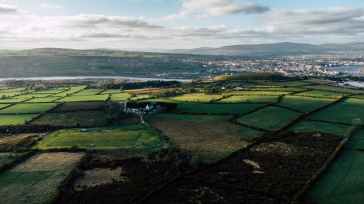
Heaven and earth, the Celtic saying goes, are only three feet apart, but in thin places that distance is even shorter. They are places that make us feel something larger than ourselves, as though we are held in a place between worlds, beyond experience.

This book is a kind of cathartic experience of being inside the experience of someone who has experienced trauma, who has yet to awaken from its implications, or be conscious of its effect – but who by the end will by necessity awaken to it, because it can no longer be contained inside the mind, the body and for the good of the soul, it must be expressed, broken down, if there is to be any change of coming out the other side.

Even as a child, I could see no way of staying in my hometown. The edges of the broken and breaking city never quite held themselves in place, and my own family life mirrored those fractures.

So the first part of the book I can only describe as “being in the fog”. We know Kerri ní Dochartaigh was born in Derry on the border of the North and South of Ireland, at the height of the troubles, that her parents were of mixed heritage, a Protestant father and Catholic mother;  the family existed in the oftentime dangerous in-between, safe in neither space or only temporarily, always moving, never truly belonging.

We have a somewhat difficult relationship with the word ‘tradition’ in Ireland, particularly in the North. The way that religion has latched itself onto the politics of this land has left many people with no desire to look at the imagery of their ancestors; the story of their past. We have lost, broken, murdered, burned, stolen, hidden and undone – all in the false name of tradition. Lives, places and stories have been ripped out by their roots because ‘that’s how it has always been’. I wonder, I wonder so very much these days, what wealth of imagery and meaning was lost when we became so focused on our differences here, that we buried the things that had once tied us together, the things that might still know a way through, for us all.

Though we are told this, the uninitiated reader doesn’t really understand what that means, how it actually manifests on the human level, on a day to day basis – until she arrives at the point where she realises, she needs to confront the reality of the things that happened – because she is losing it – and finding it harder and harder to function in the bubble of denial that allows her to go about her day, to work, to live.

The past, present and future all seemed to blend into one, and every single part of the story held sorrow that I couldn’t get rid of, no matter how deeply I try to bury it. So many different things – situations, times of year, people – made the bad things rise up from inside to bite me again. Triggers, I know that now. It left me feeling scared, hollowed out and with no control over any of it, not really knowing how to make it – any of it – stop.

Derry River Foyle Ireland

Photo by Ducky on Pexels.com

Only after finishing Part 1 Blood and Bone did I comprehend what I was reading, a woman’s life from childhood up to the age of 28 striving to not give in to the effects of trauma, in the opening chapters, she alludes to those things, though is unable to write directly about them, until realising the nightmares will never stop if she doesn’t, the numbing eventually worse than the pain.

And so she begins to share the events. And it’s tough to read, to absorb as we imagine the magnitude of the effect these events must have had on a child, on an adolescent, a young adult. But what courage, to make that decision, to visit that dark place, to express those thoughts, recount those events, relive the disappointments, feel again the sense of abandonment, to trust that writing about it might bring one towards healing.

While there are those moments of how nature and the many metaphors and symbolism of it kept her sane, this is more about the nature of mind and the necessity of finding and/or making meaning in navigating the troubles of life, in order to overcome past hurts, reconcile traumatic events and find a way to live again, to believe in hope, to elevate one’s self-worth and be able to function in a relationship.

thin places between worlds trauma spiritual healing

Photo by Leigh Heasley on Pexels.com

It is a tough and unrelenting read, that at times I needed to take a break from, but it is one that we as readers are privileged to gain insight from, because Kerri ni Dochartaigh could very easily not be here, and yet she is – and I like to believe that in part that is because the sharing of her experience and path to healing are an important part of her soul’s purpose in this life.

This extraordinary book is part of her life’s work, she has found a way to articulate to the many, the terrible destructive effect of divisiveness , prejudice and intolerance on young people, the effect of not feeling safe during childhood and adolescence and the difficulty of becoming something other than what you knew growing up – of learning to trust, to love, of connecting to the natural environment, learning a near lost language that connects the Irish to their environment and dwelling in just being.

Naming things, in the language that should always have been offered to you, is a way to sculpt loss. A way to protect that which we still have.

Hard going at times, but extraordinary, a beating, bleeding heart, ripped open to heal.

Kerri ní Dochartaigh, Author

Born in 1983, in Derry-Londonderry at the border between the North and South of Ireland. She read English Literature and Classical Civilisation at Trinity College Dublin and trained as a Waldorf teacher in Edinburgh. She taught in Edinburgh and Bristol, before returning to Ireland in her early thirties.

She writes about nature, literature and place for the Irish Times, Dublin Review of Books, Caught by the River and others. She has also written for the Guardian, BBC, Winter Papers. Thin Places was highly commended by the Wainwright Prize for Nature Writing 2021.

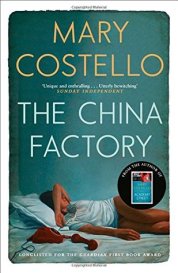
The China Factory by Mary Costello

It’s week three of Reading Ireland Month and today I’m sharing thoughts on a book of short stories by Irish author Mary Costello, The China Factory.

Threads of Inspiration

Irish Literature Reading Ireland MonthI’ve heard many say good things about her debut novel Academy Street and when her most recent novel The River Capture was published, a self-confessed homage to James Joyce’s Ulysses, I decided I would start at the beginning with Costello’s short stories.

I will read The River Capture later, as April is the One Dublin, One Book initiative and their chosen read for 2022 is Nora by Nuala O’Connor another book with a James Joyce connection. It is a bold reimagining of the life of James Joyce’s wife and muse, Nora, the model for his character Molly Bloom in Ulysses.

The Dublin City Libraries initiative encourages people to read a book connected with the capital city during the month of April every year.

Capturing a Voice

The China Factory Mary Costello

Photo by cottonbro Pexels.com

The 12 stories that make up The China Factory create a strong sense of authorial voice. Highly observant, sensitive characters, steeped in melancholy. They are practiced at holding back, trying not to make a ripple in the external world, until unforseen events pitch them into interactions, all the while controlling that emotional seepage.

In the opening story, The China Factory, a young woman works a summer job in a china factory, catching a ride with a quiet man named Gus, who she is distantly related to. She works at the sponger’s station, wiping off lines the moulds leave on clay cups.

I smiled when I passed the other girls those first days, and longed to speak, but feared that words would betray the yearning for friendship that I felt inside.

For a while she becomes closer to the girls, listening to their gossip, they quiz her about Gus, the freak, sharing an overheard story of his childhood that disturbs her. When a wayward man appears with a gun, Gus will surprise them all, and years later the impact of that summer job, his actions and her guilt will continue to haunt her.

dreamy woman with crossed legs sitting near window

Photo by L.SummerPexels.com

In Things I See a woman lies in bed, hyper aware of her husbands movements downstairs, she relays scenes in her mind of being close to him, but even in her imagination she holds back. She fears not growing old, but of growing different.

There is something severe and imperious in Don’s bearing that makes me resist.

She works full time and her husband cares for their six year old child. Her sister Lucy who is visiting, seems more at ease in the family than she does. The things she sees, hears, picks up on, imagines, occupy her mind, creating a distance, a corner from which she has entrapped herself. A witness. Stifled. Knowing she will not change anything, though her indecision will imprint itself on her face and in her demeanour.

And I think this is how things are, and this is how they will remain, and with every new night and every new wind I know that am cornered too, and I will remain, because I can not unlove him.

Drudgery, Dignity and Denial

The stories examine aspects of everyday life and highlight the hidden selves, the thoughts beneath the actions, the things that people hide from each other, from themselves, the cover stories and meaningless conversations that patch over the cracks that might reveal the reality.

In The Patio Man, a gardener knows nothing about his employer, a young frail woman observes him from the window, she struggles to articulate what she requires from him, until the moment she must ask him to drive her to the hospital. Still nothing is ever said, just small talk that takes the mind elsewhere, far from the catastrophic event occurring in the present.

The collection opens with an epigram from Rilke’s poem Autumn:

And night by night, down into solitude,

the heavy earth falls far from every star.

We are all falling. This hand’s falling too –

all have this falling-sickness none withstands.

which sets the tone and theme of falling – into and out of love, of relationships, to one’s death, in and out of the kaleidoscope of emotions, whether expressed or suppressed, no one is immune to the falling-sickness.

While the stories capture that voice particular to the author, that melancholy can wear on the reader, repeated time and again as it does, manifesting in the many losses and unfortunate events each story portrays, the quiet outer acceptance of discordant inner turmoil.

That said, I am looking forward to engaging with a longer story, hoping for the chance of redemption a novel might bring.

Mary Costello, Author

Academy Street The China Factory River CaptureMary Costello is an Irish short story writer and novelist from Galway now living in Dublin.
Her collection of short stories, The China Factory ( 2012), was nominated for the Guardian First Book Award.

Her second book and first novel, Academy Street, was shortlisted for the International Dublin Literary Award, the Costa First Novel Prize and the EU Prize for Literature in 2014. The novel went on to win the Irish Novel of the Year Award as well as the Irish Book of the Year. Her second novel The River Capture was published in 2019.

My Year of Irish Lit – 2021 Highlights

This is the week 2 prompt for Cathy at 746books #ReadingIrelandMonth22 and although much of what I read of Irish Literature in 2021 appears in my previous post Top 5 Irish Fiction and Nonfiction Book, it was a significant year for reading Irish Literature, the second most popular country of the 28 from which I read, so there are more highlights to mention.

week 2 My Year

Cross Genre Belfast Writer in Exile, Brian Moore

Early in the year, when Cathy announced the Brian Moore ReadAlong, in collaboration with the BrianMoore100 project, I decided to join in (for reasons I discuss in the post above).

The project coincided with the centenary of his birth, aiming to critically appraise and revive scholarly and public interest in the work of this neglected and important Belfast-born writer Brian Moore (1921-1999).

There were 12 books scheduled to read throughout the year, and I managed to read the four above, covering a variety of genres, from political thriller to character driven fiction, literary romance to historical fiction. I plan to continue reading more Brian Moore in 2022 – watch this space.

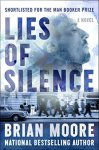
Lies of Silence (1990) is the only novel set in Ireland that directly concerns political events. When simmering unrest in his personal life is upstaged as he and his wife are taken hostage, Michael Dillon is confronted with a terrible dilemma. The story highlights the pressures, the moral decisions, the yearnings to both leave and return, a country and each other. A thought provoking page turner I enjoyed very much.

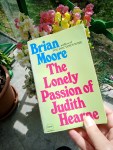
The Lonely Passion of Judith Hearne (1955) was an earlier novel, possibly one of his most well known and a popular read, one that frustrated me enormously. I felt indignant on behalf of this character (he writes from the woman’s perspective), whom the author, overbearingly caricaturises, lessening my ability to believe in either the character or the story, let alone take anything much from it. Most unpopular opinion.

I am sure back in the late 50’s, early 60’s, women friends took him to task over it, because by the time Moore penned the next book I read, also written from a female character viewpoint, the nuance he employed was like day from night, compared to poor old Judith Hearne.

The Doctor’s Wife (1976) takes place in Paris and the south of France, and is a taut, psychological portrait of a woman in her middle years, who, while alone in Paris, reflects on her life, observing others around her and wondering how things might have been different. A hedonistic young man crosses her path at precisely the moment her guard is down and this otherwise conservative wife, crosses the line of convention and upends everything.

What makes it all the more intriguing, is the less predictable nature of Moore’s path for his character, a sign of having learned something from the catastrophe of Judith Hearne.

The Magician’s Wife (1997) was the last novel Moore wrote and is indicative of the varying interests he pursued, being a story set in both France and Algeria, a work of historical fiction around certain actual events concerning Napoleon II and France’s most famous magician, called in to perform an act that might aid the imperialistic ruler in his colonial ambitions. Very interesting, both the story and the actual history.

Memoir Like Essays

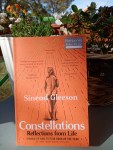
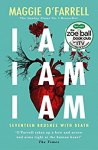
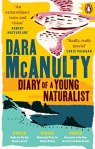
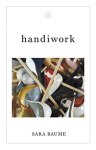
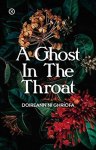
I read three memoir like works of Irish nonfiction in 2021, Constellations by Sinead Gleeson, I Am I Am I Am by Maggie O’Farrell and Diary of a Young Naturalist by Dara McAnulty, which I won’t say much about, as they all featured in my Top 5 Irish Nonfiction post linked above, except to say that after reading two exceptional works of Irish nonfiction in 2020, Sara Baume’s Handiwork and Doireanne Ni Ghriofa’s A Ghost in the Throat, I was definitely on the hunt in 2021 for more of the same. Though none of these titles eclipsed those two stellar reads, they were all equally excellent.

Top Irish Fiction

Again, you can read more about these two excellent works of feature in my Top Irish Fiction Post, but in 2021 I both started the reading year and ended it with two novels by Sara Baume. 

Spill Simmer Falter Wither is a novel of a man who adopts a stray dog and ends up on a reluctant road trip, while harbouring a dangerous secret – a slow moving, brilliant character portrayal and A Line Made by Walking is the story of a young woman returning to her family home to deal with a decline in her mental health, exploring how making and revising art and being in nature and around the familiar help her move on from her lapse.

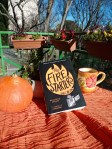
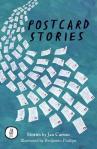
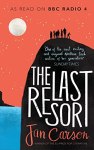
In 2021, in order to read more contemporary Northern Irish fiction, I also read two books by Jan Carson, The Fire Starters and volume 1 of her Postcard Stories. I enjoyed them, but admit I was expecting something else given what I understood of the work the author was involved in facilitating the development of empathy with people, through creative writing. That work I imagined she might write, was published in late 2021 The Last Resort, set in a caravan park in Ballycastle and it’s brilliant.

Mythology

The final highlight of my Irish Lit reading year last year was Deidre Sullivan’s disruptive feminist retellings of classic fairy tales, Tangleweed and Brine, seven tangled tales of earth and six salty tales of water beautifully illustrated by Karen Vaughan.

The author takes these time worn tales and their long suffering heros and heroines and rewrites the previous unrealistic narrative, giving us alternative versions, demanding the reader to reconsider that which we so casually perpetuate and condition generations with, those fairly tale stories that have a lot to answer for.

*  *  *  *  *

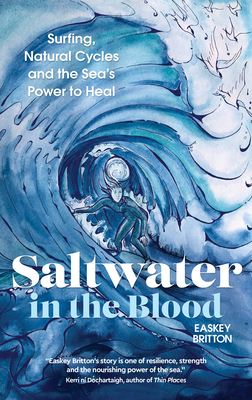
This week I have been reading Irish nonfiction and reviewed Easkey Britton’s Saltwater in the Blood and I’m now reading Kerri ni Dochartaigh’s Thin Places, though I temporarily put that aside when Kalani Pickhart’s excellent I Will Die in a Foreign Land set in Ukraine (2014) landed on my doorstep.

What are you reading this week?

Saltwater in the Blood by Easkey Britton

International Women’s Day

Journée internationale des droits des femmes 2022 UN

Journée internationale des droits des femmes 2022

My calendar tells me that today is the journée internationale des droits des femme (I like that in French it focuses on the rights on women, somewhat lost in translation in English) so  I’ve been thinking about what to share.

As often is the case when I ask myself an open question, my mind responds by connecting various other things I’ve noted recently together, creating a common thread.

An article about women surfing in Sri Lanka prompted me to choose Easkey Britton’s book Saltwater in the Blood to read for Reading Ireland Month and it’s the perfect choice for International Women’s Day.

Women Surfing in Sri Lanka

A couple of days ago there was a wonderful article in the Guardian, ‘When I surf I feel so strong’: Sri Lankan women’s quiet surfing revolution by Hannah Ellis-Peterson about the desire of Shamali Sanjaya who grew up in a fishing village, to experience riding the waves like her brother and father whom she would sit and watch enviously.

Easkey Britton Saltwater in the Blood Surfing Sri Lanka

Photo by K. Gonzalez-Keola Pexels.com

When a friend knocked on her door one day inviting her to go surfing, she could hold it back no more, that longing – like the title of Irish pro surfer Easkey Britton’s book alludes to – was indicative of saltwater in the blood. She was a natural surfer.

“When I surf, it is such a happy feeling for me,” she said. “I am filled with this energy, I feel so strong. Life is full of all these headaches and problems, but as soon as I get into the water, I forget about it all.”

Not content to keep her passion to herself, she persevered through disapproval and in 2018 set up the Arugam Bay Girls Surf Club, members, ranging from ages 13 to 43. Despite having broken through many local taboos amid accusations of trying to change the culture, many women still face a backlash from their families and communities; however their perseverance has also brought a new lease of life and healing to others.

Book Review and An Obsession With the Sea

I bought this book because I am a sea creature, a lover of the sea, its secrets and legends. I grew up on the wild west coast of New Zealand, near the volcanic rock and black sand beaches of Port Waikato and loved nothing more than going out past the breakers into the big swell of the huge waves there, being lifted up and down and eventually body surfing the wave back in. I loved it.

The coastline is notoriously wild and unfriendly, waves break against rugged cliffs, and the sea in some parts is slowly reclaiming the black sand dunes and dwellings that humans built.

There is something mesmerising about the sea and Easkey Britton’s story shares her physical and intellectual pursuit of it, her mindful practice in relation to it, eventually learning how to awaken to the more feminine element of her psyche in her relation to it with others.

The Irish Coast and Big Wave Surfing

Surfing Natural Cycles Sea Power to Heal Irish Literature

Saltwater in the Blood is an account of her lifelong relationship with the sea, surfing and the rugged coastline of Ireland’s western coast. Complimented by her beautiful illustrations, as on the cover, it is perhaps the nearest thing to experiencing surfing without getting in the water!

She writes about surfing, her connection with the sea and the Irish coast, natural cycles, the ebb and flow of life and learning to let go. 

Right from her early school days, if the tide was out far enough the seafront provided a shortcut to school. Her father surfed and painted and she joined the boys in the water, learning to surf at a young age and becoming a pro champion surfer who toured the world catching waves. 

In the first part of the book she shares how she focused on surfing, following a well trodden path, overcoming fear, learning to read the signs, pushing her physical and mental limits as each level of difficulty was conquered, trying to stay grounded and safe, while riding and being tossed by the waves.

Connect Not Conquer

However, over time, she learned to regard the sea in a different way and began the process of letting go of the need to compete and the heightened awareness that being one of the only girls in the water carried with it. She began the process of moving away from competition towards collaboration (a process that Riane Eisler writes about in Nurturing Our Humanity).

Though she recalls the excitement of learning to tow-surf (pulled behind a jet ski in order to access big waves a paddle surfer can’t get to) and the thrill of surfing the giant waves nearby at Mullaghmore (see Conor Maguire riding a 60-foot Monster Wave), an invitation to travel to far flung places to write about surfing in countries and cultures where it is little known, provides her an opportunity to learn more from what the sea offers, and the unique experience of being in the company of women and their shared relationship to the sea.

Surfing in Iran

One of the most interesting chapters in book for me, was the time she spent in Sistan-Baluchistan in Iran, .

It was a land not known for its surf-exposed coastline. A short stretch of coast, about 60 to 80 kilometres, lies in a narrow swell window between Pakistan and the coast of Oman, exposed for a few months of the year during Indian monsoon season. This was a part of Iran that didn’t feature in any travel guides, let alone surf magazines…At first, it was primarily about the waves, like all surf trips -the discovery of waves that maybe no one else had surfed before. But it soon became something much more.

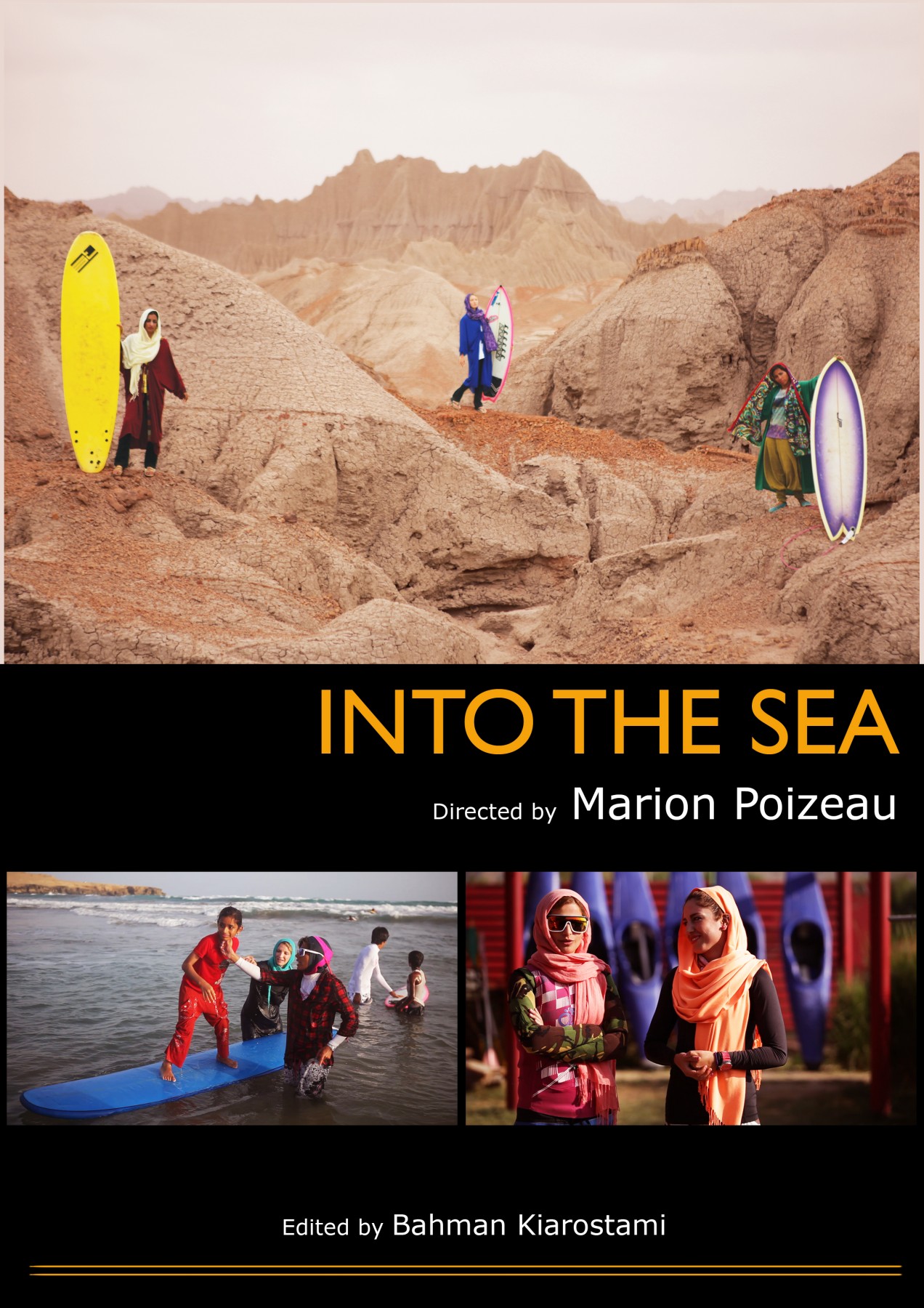
The first trip was captured in a short film by her travelling companion, French filmmaker Marion Poizeau, an effort that she eventually published on YouTube having failed to find a production or TV company to share it. It went viral – MISSION “SURF EN IRAN”! and was the beginning of their adventure, the second time, the story became about connecting with and teaching a local group of Baluch women to surf.

I wanted to understand the challenges and opportunities of being able to do it and how this compared to our notion of surfing as a pursuit that offers a sense of freedom, flow and escapism and how that was translated in the context of somewhere like Iran.

Surfing in Iran Easkey Britton Irish SurferBefore climbing on the surfboards, they would do what in effect were warm up exercises, but not of the traditional sportsman type, they would play in the waves and get a feel for the swell and the breakers, preparing themselves by sensing the sea’s mood, harmonising with each other.
This change of direction, firstly away from the competitive purpose of surfing and even away from the act of discovery and exploration, towards a meaningful exchange, capable of contributing something meaningful to each others lives, is what I was most impressed by, particularly thinking about that in the context of what today is about, empowering women through sharing knowledge.

It was a breakthrough moment for me personally in terms of how my relationship with surfing and my body truly altered and I realized how much more drawn I was to the connective rather than competitive aspects of surfing and the sea.

Joined by Mona Seraji, a snowboarder and Shahla Yasini, a swimmer and diver, this experience would result in the award winning documentary Into The Sea. Through the eyes of these three women, the viewer experiences the journey from a unique and unusual perspective, full of heart and emotion.

Protect the Ocean

The book ends with a message about looking after the ocean and the responsibility we all have to protect our local water sources.

I also enjoyed that there were so many familiar references to other books I’ve read about the sea or the environment, like Rachel Carson’s The Sea Around Us, botanist Robin Kimmerer’s Braiding Sweetgrass, Anne Morrow Lindbherg’s classic Gift From the Sea and many more.

If you like reading books about the sea and particularly from a woman’s perspective, add this one to your list!

Further Reading

Magic Seaweed’s Hannah Bevan Interviews Easkey Britton On the Power of Saltwater Immersion

Oceanographic Magazine: Living By The Tide  by Easkey Britton on Wild Swimming

SilverKris Article, May 2021: The Rise of Sri Lanka’s First Female Surfers by Zinara Rathnayake (with great photos by Tommy Schultz)

Easkey Britton, Author

Saltwater in the Blood Surfing Lighthouse Cottages

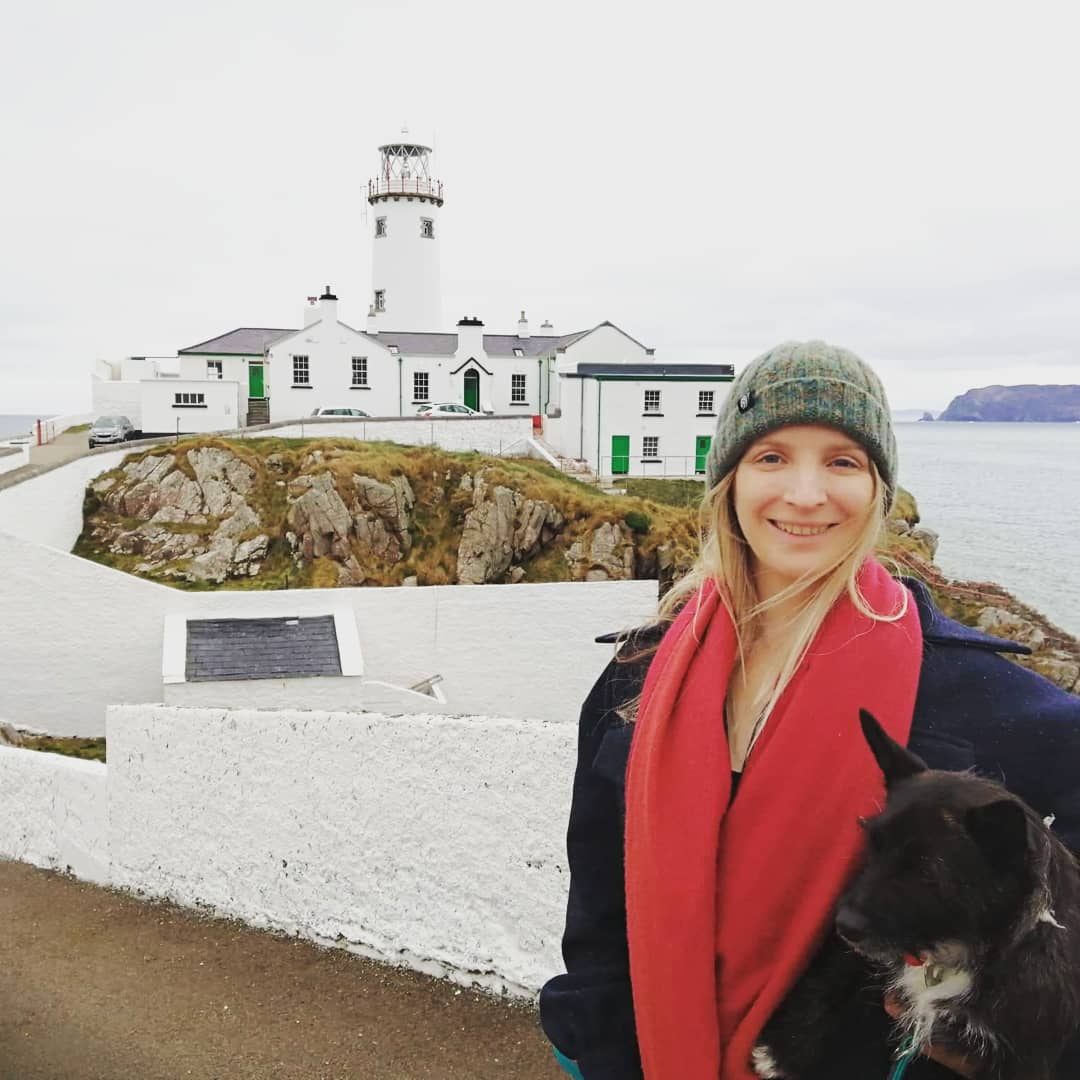
Easkey Britton Working On Her Book at Fanad Lighthouse, one of the ‘Great Lighthouses of Ireland’

Easkey Britton is a world renowned surfer, marine social scientist, activist, writer and artist passionate about the sea. She contributes  her expertise in blue spaces , health and social well-being to national and international research projects.

A life-longer surfer, she channels her passion for surfing and the sea into social change.  Her work is deeply influenced by the ocean and the lessons learned pioneering  women’s big wave surfing in Ireland.

She is the author of 50 Things To Do Beside the Sea, has published numerous peer-reviewed articles and is a regular columnist at Oceanographic Magazine. She lives on the West Coast of Ireland with her partner and their dog Wolfie – however a picture she shared two days ago in a rock pool indicates there are twins on the way!

Reading Ireland logo 2022

The Last Resort by Jan Carson

The only downside in reading The Last Resort is that it was so short!

Northern Irish Literature short storiesThis is the novel I have been waiting for Jan Carson to write, for here is a writer who in her ordinary life as an arts facilitator has brought together people from opposite sides in their way of thinking, encouraging them to sit down and write little stories, enabling them to imagine from within the shoes of an(other) – teaching the practice of empathy.

Her novel The Fire Starters comes from that place of darkness and indifference, when there is no empathy. I found it disturbing. I’ve since realised gothic novels aren’t my thing.

Here, Carson digs deeper into the psyche of the many that make up their community and finds a common thread that connects them, something that both pushes them forward and holds them back and shows it in its many guises, through a kaleidoscope of colourful characters. Everyone has their own mini drama and troubling perspective, that coming together might create a shift away from.

Set in a fictional Seacliff caravan park in Ballycastle on the North Coast of Ireland, as the book opens we meet Pete, who now (reluctantly) runs the caravan park and Frankie, who has gathered a few friends for the 50th anniversary of Lynette, for whom they will place a memorial bench with a brass plaque at the top of the cliff.

A caravan on the North Coast was the height of luxury, somewhere you could escape to at the weekend. They felt safe here. Or they did until that bomb went off in the car park.

the last resort ballycastle jan carson ireland

Photo Y. ShuraevPexels.com

It’s the first day of the holiday season and most of these people have been coming here for years, though for some this may be their last visit. Not everyone is happy to be here, like Alma and her two siblings, especially when they wake up one morning to discover their phones and her iPad are missing.

Alma is into Agatha Christie and when she discovers they are not the only family that has something missing she decides to investigate, even if there hasn’t been a murder. Yet. No really, there’s no murder.

It’d be easy to push someone over that cliff. It’s so crumbly. You could make it look like an accident. I can think of at least three different times Agatha Christie killed somebody by shoving them off a cliff. If my iPad wasn’t gone I’d google to see if there were more. I’m raging about losing my iPad. Now I have to run my investigation the old-fashioned way. Snooping around. Observing suspects. Taking notes on my jotter. Maybe it’s better like this. Poirot never looked anything up on Wikipedia or checked suspects’ alibis on Facebook. If Poirot was here, he’d say, forget the iPad, Alma. Use your leetle grey cells. I’m doing my best. I’m watching everyone, even Mum. It’s always the person you least suspect.

Alma’s Mum Lois has a PhD in mythology and her thing is sea monsters. Monsters, wizards and demons, that’s her parents thing, Harry Potter is for kids, Alma likes the real world, way scarier.

Seacliff Northern Ireland The Last Resort

Photo by Tatiana on Pexels.com

Each chapter is narrated by one of 10 characters in the caravan park and about each family we learn what is holding them back, what consumes their minds. And while there is not a murder, no smoking gun, there is the cliff – and from the beginning you sense its ominous presence, the way it draws everyone to its apex.

We meet Alma again (my favourite character) as she trails around the caravan park interrogating her disapproving adult suspects. She’s brilliant.

Richard is a complete empath, hiding it from his family as if it were a sign of weakness, a position likely to be exposed given he has used his father’s caravan to house sixteen homeless men, many of them immigrants.

I couldn’t tell Dad about them. I’ve never really told him what I really do. He wouldn’t understand. In his world, you work hard, and you do well. There’s no reason to end up on the street, hawking The Big Issue, unless you’ve brought it on yourself.

Kathleen struggles to accept her daughter for who she is, because of societal expectations, but finds it hard to follow through with her disapproval because she desperately wants a relationship with her grandson Max. She finds Alma strange, intense and curious.

Lois answers all her questions. She talks to her weans like they’re adults. When she split up with her husband, Alma was fit to tell me the ins and outs of the whole divorce. She was only ten. You have to protect a child that age. They’re not old enough to know everything. Still, I have to say I envy them – calearied as they are – at least they talk to each other, really properly talk. We’re all adults in this caravan but we’ll spend the whole weekend talking about nothing. The weather. The baby. Whether or not to put the kettle on. Avoiding the elephant in the room because nobody wants to cause a scene.

So many great lines, so much humour, angst, regret, camaraderie as the story leads to its wild denouement on the seacliff, as the thing that’s been holding them all together, holding them back, demands to be released.

Just brilliant. Highly Recommended.

Further Reading

Best Caravans in Fiction (A List in Progress), Jan Carson

Jan Carson, Author

Northern Ireland Author Fiction

Jan Carson by ©Jonathan Ryder

Jan Carson is a writer and community arts facilitator based in Belfast. Her debut novel Malcom Orange Disappears (2014) was published to critical acclaim, followed by a short-story collection, Children’s Children (2016), and two flash fiction anthologies Postcard Stories (2017) and Postcard Stories 2 (2020).

Her second novel The Fire Starters (2019) translated into French by Dominique Goy-Blanquet as Les Lanceurs de Feu, won the EU Prize for Literature, was shortlisted for two prestigious French literary awards the Prix Femina and Prix Médicis in 2021 and was also shortlisted for the Dalkey Novel of the Year Award.

Her third novel The Raptures was released in Jan 2022.

It’s Reading Ireland Month 2022

Irish Culture and Belfast

Cathy over at 746 Books runs an annual Reading Ireland celebration of books and culture every year in March, so I’m going to try and join in a little. Here in Week 1’s prompt, she shares her Top 5 Irish Movies, interest in Irish cinema currently ascending; Kenneth Branagh’s Belfast a hot contender for the Oscar Awards with seven nominations.

There are four weekly themes to explore and plenty of Irish books on my shelf to read, so you can expect to see a few reviews and other Irish related posts this month.

Reading Ireland logo 2022

More of Moore

In 2021, I joined in another of her challenges to celebrate the Northern Irish writer Brian Moore 100 who lived most of life in self-imposed exile abroad.

I read four of his novels throughout the year, Lies of Silence (1990) (a Northern Irish Troubles thriller), The Lonely Passion of Judith Hearne (1955) (frustrating literary fiction), The Doctor’s Wife (1976) (slightly steamy literary fiction) and The Magician’s Wife (1997) (French/Algerian historical fiction).

As you can see below, I have a few more on the TBR to choose from, to read this year. And I’ll be writing more about the highlights of 2021 later in the month.

Reading Ireland Month 2022 TBR

In addition to reading more Moore, I’m planning to read Mary Costello this year, more of Jan Carson, whose novel The Fire Starter’s I read last year, as well as her Postcard Stories.

NonFiction Looks Promising

I’m really looking forward to the two nonfiction titles in my pile, two nature writing memoir type books Thin Places by Kerri ní Dochartaigh and Saltwater in the Blood, Surfing, Natural Cycles and the Sea’s Power to Heal by Easkey Britton, an Irish surfer from County Donegal with a doctorate in Environment and Society.

essays Sara Baume Colum McCann Europa EditionsAnd perhaps most of all, I’m very excited about this upcoming collection of illustrated essays, photography, art and reporting, The Passenger, Ireland by Irish writers and journalists from Catherine Dunne to Colum McCann, Mark O’Connell and Sara Baume writing about their country in modern times. Due for publication on March 17 by Europa Editions, here’s an extract printed on the back cover:

“A country is composed of its people far more than its landscape. Let’s face it. We’re torturously poetic. We’re unbearably self-conscious. We’re awkwardly comic. We’re wilfully ambiguous. We’ll answer a question with another question. We’ll give you directions towards the exact place you don’t want to go. We’ll walk a hundred miles to receive a good insult. We’re blasphemous. We’re contrarian. We never forget a grudge. We address incomprehension. Our war songs are merry. Our love songs are sad. We have half-doors: we are neither in nor out. We make great fun of despair. And we’re marvellous at spouting rubbish about ourselves. (Mea culpa, mea culpa, mea maxima culpa.) But we are also open to change. It is the eternal dream: to keep on becoming something new. The Irish have always had a great sense of humour, none more so than when their backs have been against the wall. The one thing that has never been given up on, in the Irish psyche, is the presumption of hope – and indeed the presumption of home.”

– From ‘Everything That Falls Must Also Rise’ by Colum McCann

Irish Lit Prompts

Finally, the weekly themes for Reading Ireland Month 2022 are:

Week 1: My Top 5 Irish …

  • for this prompt I’m going to choose my Top 5 Irish Fiction & NonFiction Books

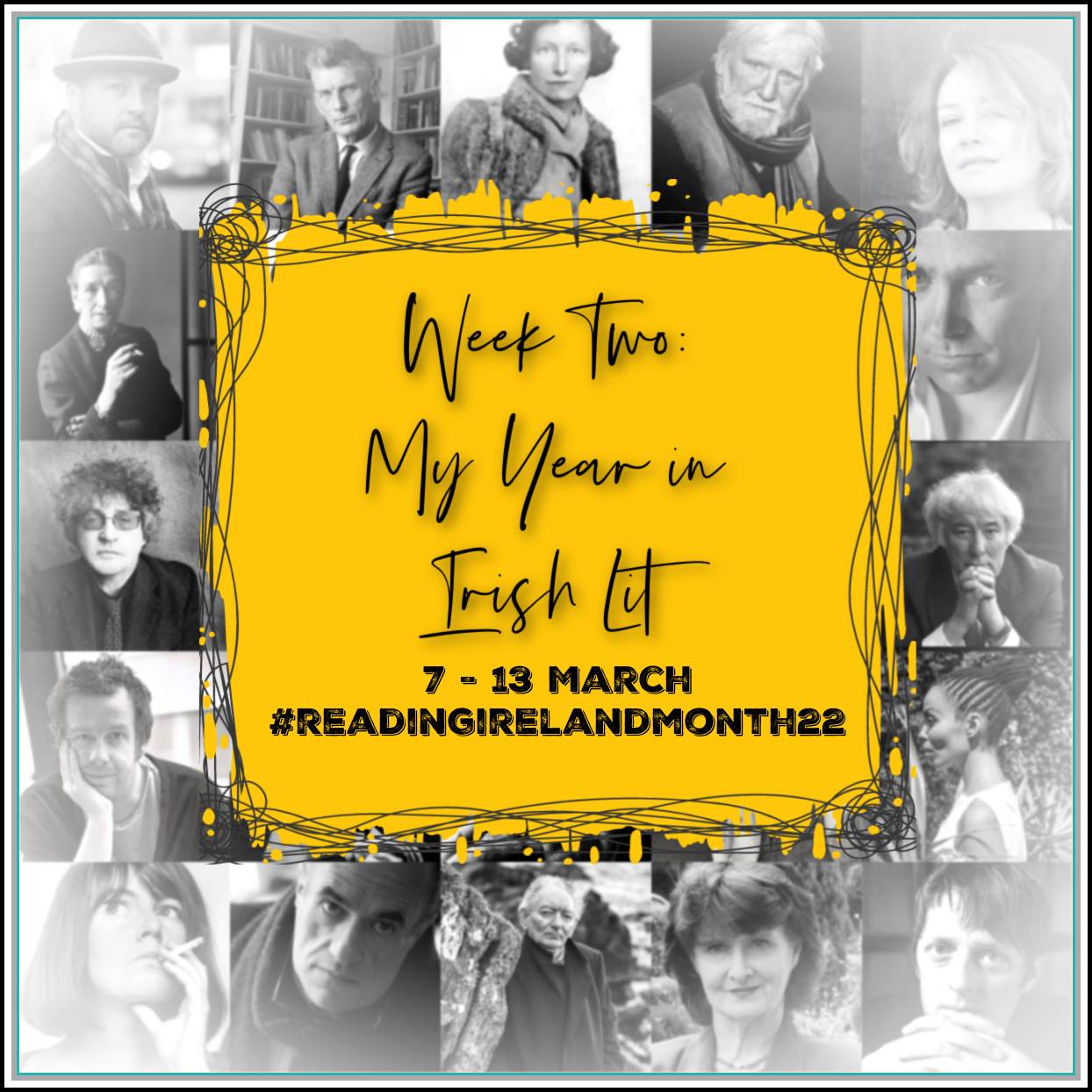
Week 2: My Year in Irish Lit

  • a look at the highlights of reading Irish literature from 2021

Week 3: Irish or Not Irish?

  • Authors you didn’t realise were Irish or those you thought were, but aren’t – Hmm?

Week 4: New To My TBR

  • The punishment for getting involved in this monthly reading celebration, all the temptations to acquire more Irish literature, or how I came to get involved in the Brian Moore thing and all those Mary Costello novels. I’m going to try and resist, but I know I will fail.

So, any recommendations, a favourite Irish novel or book to share? Have you seen Belfast?

Small Things Like These by Claire Keegan

Claire Keegan is an Irish writer who writes atmospheric, slice of life novellas on an aspect of Irish life. I read her novella Foster some years ago, a touching and eerie story of a girl caught between two sets of parents, that is unsettling, though never quite reveals the source of this tension, that is left somewhat to the reader’s imagination.

Small Things Like These is set in an Irish town in 1985 in the lead up Christmas. Bill Furlong, a father of five daughters is a coal merchant, raised by a single mother who was a housemaid for an upper class woman who allowed her to keep her son with her. The story recalls an event that occurs at the nearby convent, when Bill is making his deliveries and we observe different members of the community’s reaction to that.

Irish literature Magdalen laundries shaming mothers religious oppressionI admire the way Claire Keegan creates atmosphere and a sense of place, I could well imagine the small Irish town they lived, the cold, the workplace, the river – although I had to keep reminding myself it was the 1980’s and that there was electricity. Bill’s deliveries of wood and coal and the way the women made it feel like a much earlier era, though I don’t doubt it was freezing then as few could afford to heat their homes by other means.

The character of Bill Furlong was interesting and held potential, both due to the unique circumstance of his upbringing, which made him an empathetic character, and the fact that his wife and other women in the community had a different opinion or perception to his, regarding the situation that he will be confronted with.

The blow was cheap but it was the first he’d heard from her, in all their years together. Something small and hard gathered in his throat then which he tried but felt unable to say or swallow. In the finish, he could neither swallow it down nor find any words to ease what had come between them.

magdalen laundries adoption Ireland patriarchy

Photo by Mikhail Nilov on Pexels.com

Furlong was one of very, very few babies born to a woman out out wedlock who got to stay with his mother, due to the generosity of his mother’s employer.

When we meet him he is a grown married man with daughters, with his own business, though still struggling and not able to imagine a time when that might change. There is something in him that is unsettled despite his circumstance, something slowly revealed that he seeks liberation from.

On making a delivery to the nearby convent, where his daughters are at school, he becomes aware of the fact there are other young women there, who work with the nuns and provide the community with laundry services.

It is a subtly consciousness raising novel yet somewhat ironic and convenient to this reader that the empathetic character is a working man with daughters. While the story conveniently sidesteps the significant issues, it takes a provocative stance in choosing to instill empathy in a character, who represents generally, the one we never look at – the boy involved, the father or brother who punished their daughter/sister, or the decision maker’s of the institutions (church and state) that carried out the punishment of these young women. In this respect, the premise of the novel feels totally unrealistic, a Disney-like fantasy. The reality is that it is very likely no one ever did was Bill purports to do here.

Claire Keegan Small Things Like These Men With EmpathyIt made me recall another character, Albert, from the film Made in Dagenham, who was initially the only man who supported a group of female factory workers fighting for equal rights at the Ford Dagenham factory in 1968 – the reason he supported them was because he had been raised by a single mother – perhaps there is something to be said for the development of a deeper empathy in men who’ve been raised by single mothers.

One of the other things that did stand out was the prevalence and contribution of community gossip to the development of judgement and insinuation. He is warned by the woman running the café where his men eat lunch.

‘Tis no affair of mine, you understand, but you know you’d want to watch over what you’d say about what’s there?’

Those that listen to and contribute to gossip are of a different kind than those who respond to an injustice that was right in front of them, despite it being none of their business. Bill was of the latter.

Overall, I felt like this novel had only just begun and then it was over; it left me with too many questions and felt like it was set in a time that was decades earlier than the 1985. It read more like a promising beginning, than a complete novel. Deliberately provocative perhaps.

N.B. Thank you to the publisher for providing an ARC via NetGalley.

Warning: Likely to trigger adoptees or any woman coerced by society, to give up a child to adoption.

What Were The Magdalene Laundries?

A Campaign for Justice Mothers AdopteesFrom the foundation of the Irish Free State in 1922 until 1996, at least 10,000 girls and women were imprisoned, forced to carry out unpaid labour and subjected to severe psychological and physical maltreatment in Ireland’s Magdalene Institutions. These were carceral, punitive institutions that ran commercial and for-profit businesses primarily laundries and needlework.

After 1922, the Magdalene Laundries were operated by four religious orders (The Sisters of Mercy, The Sisters of Our Lady of Charity, the Sisters of Charity, and the Good Shepherd Sisters) in ten different locations around Ireland. The last Magdalene Laundry ceased operating on 25th October, 1996.

The women and girls who suffered in the Magdalene Laundries included those who were perceived to be ‘promiscuous’, unmarried mothers, the daughters of unmarried mothers, those who were considered a burden on their families or the State, those who had been sexually abused, or had grown up in the care of the Church and State.

Confined for decades on end – and isolated from their families and society at large – many of these women became institutionalised over time and therefore became utterly dependent on the relevant convents and were thus unfit to re-enter society unaided.

Further Reading

Guardian Interview: The acclaimed Irish writer on writing short works, the Magdalene Laundries and her new hobby, horse training by Claire Armistead

Article: How Ireland Turned ‘Fallen Women’ Into Slaves

Book: Ireland and the Magdalene Laundries: A Campaign For Justice by Katherine O’Donnell – Sept 2021 – a devastating and vital account of life behind the high walls of Ireland’s institutions, featuring original research and testimony + the continued campaign for justice for victims and to advance public knowledge and research.