
The winner of this prestigious award nominated by public library’s from around the world, has now been announced.
From an initial longlist of 49 books from 30 countries across 10 languages, they were narrowed down to a shortlist of six by a panel of expert judges and the winner, coming from Mexico, but nominated by the Bibliotecha Vila de Gràcia library of Barcelona is:
Lost Children Archive by Valeria Luiselli.


A road-trip novel of a family driving one summer from New York to Arizona, perspective and voices move from the parents to the children, witnesses, speaking and listening, seeing and observing, the subtle, yet dramatic shift. A story of what happens to the human spirit on a long road journey.
As their journey progresses, countless migrant children are making their way up from Central America to the US border, often alone, separated from their parents. A growing awareness of familial rupture enters the confined vehicle space, as they move closer towards an immigration crisis at the border, as their roads converge.
“Lost Children Archive is a novel about the depths of childhood solitude, about children’s boundless imagination, the fragile intensity of familial ties, about tensions between history and fiction and the complex intersections of political circumstances and personal lives.
But more than anything Lost Children Archive is a novel about the process of making stories, of threading voices and ideas together in an attempt to better understand the world around us.” Valeria Luiselli
Valeria Luiselli
Born in Mexico, but raised and schooled in Costa Rica, South Korea, South Africa and India, she learned early on to inhabit a solitary, liminal and observant space, a childhood she attributes her decision to become a writer to, situated between cultures, spaces and their linguistic bridges or barriers.
Tell Me How It Ends, An Essay in 40 Questions
 In preparation to read Lost Children Archive, I decided to read Valeria Luiselli’s nonfiction narrative essay Tell Me How It Ends which documents her experience as a volunteer translator, assisting child migrants who travelled alone from Latin America to the US, now facing deportation, to fill in the 40 question questionnaire they must respond to within 21 days of arrival.
It’s a sombre read as she and her niece become more and more despondent, discovering they are virtually helpless in terms of changing the outcome for these children, fleeing one bad situation and arriving into another.
I became involved with this kind of work while I was writing the novel, and what happened is I started using the novel as a space in which to pour all my angst and fury and political frustration and emotional sense of stalemate. But I slowly started to realize I wasn’t doing justice to the novel by trying to turn it into that kind of vehicle for my politics, and I wasn’t doing justice to the subject matter itself, either, because I was trying to thread it into this fictional narrative. So I stopped writing the novel. Then, John Freeman, whom I’d worked with as an editor in different projects, suggested I write a non-fiction piece on what I was witnessing in court.
Once I had done that, I was able to go back to the novel and not feel the responsibility of directly covering the crisis. I could focus on other issues and allow the novel to breathe with fictional lungs, so to speak.
Have you read Lost Children Archive or any of Valeria Luiselli’s essays or novels?
Further Reading
Interview : The Social Fabric – An Interview With Valeria Luiselli by Allan Vorda
Dublin Literary Award 2021 Longlist and the Six Shortlisted titles.
Sidewalks, Essays by Valeria Luiselli translated by Christina MacSweeney
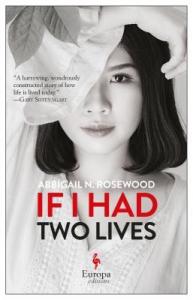 If I Had Two Lives is a story of a child who spends her childhood in Vietnam, her early adulthood in America then makes a return visit to her homeland to confront aspects of her past she wishes to resolve.
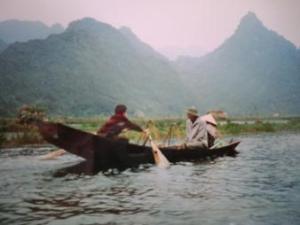 “Try telling them some other tales that don’t fit their presumptions. Vietnam” – he dropped his cigarette and crushed it with the toe of his shoe. “Is a war, not a country. Anything besides is irrelevant.”
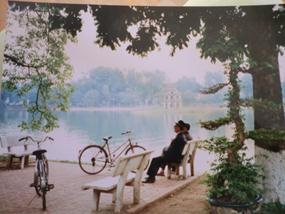 “When you leave the old country at an age not young enough to get adopted into the new and not old enough to know how to reject it, you become this mutant thing: between borders, between languages, between memories.” He pressed his temples. “If you ask me, I think it’s easier to reinvent than to retrace. You’re not the only one, you know. Look at this city and its faces. You’re not the only one with an ungraspable history.”
 Salt Houses is a novel that eventually comes full circle, as it follows the female members of a Palestinian family as they flee, move, marry and cope with constantly being and feeling outside where they belong, including between generations and even between siblings.
 “The porcelain surface of the teacup is white as salt; the landscape of dregs, violent.”
 Hala Alyan is a Palestinian-American author, poet and practicing clinical psychologist living in Brooklyn, who spent her childhood moving between the Middle East and the US. Salt Houses is her debut novel and is inspired by some of her own extended family experiences.
 Word by Word