The Snow Child

I recognise in the first two paragraphs the allure of melodic sentences, the promise of picturesque phrases that almost make music as they fly off the page like dancing quavers to craft pictures in my mind of that breath-taking, wild and unforgiving Alaskan landscape.

“Mabel had known there would be silence.”

“She had imagined that in the Alaska wilderness silence would be peaceful, like snow falling at night, air filled with promise but no sound, but that was not what she found.”

Nature’s beauty and harshness leave me in a perpetual state of wonder with an undercurrent of fear and Eowyn Ivey doesn’t waste any time bringing both these sensations to the reader. A walk across the ice river bristles with tension and though I am sure Mabel will be safe, this is only the first chapter after all, I have to pause momentarily and put the book kindle down, my heart racing as I hear imagine that ominous crack.

Mabel and Jack have left the tame pastures of Pennsylvania and the close-knit support of their child filled families to try and make a success of ‘homesteading’ in the Alaska wilderness. The daughter of a literature professor, from a family of privilege, Mabel is finding her own self-imposed exile and the never-ending grief of a stillborn child that rendered them childless, almost too much to bear.

“We needed to do things for ourselves. Does that make any sense? To break your own ground and know it’s yours free and clear.”

    “Here at the world’s edge, far from everything familiar and safe, they would build a new home in the wilderness and do it as partners, out from the shadow of cultivated orchards and expectant generations.”

On a day when Mabel, a believer who often set fairy traps as a child, was near her lowest, she and her husband Jack build a beautiful snow girl from the first winter snow, lovingly sculpted with childlike features and dressed with a blue scarf and red mittens.

“Such delicate features, formed by his calloused hands, a glimpse at his longing.”

Wakened by the cold, Jack catches a glimpse of something passing through the trees on the edge of the forest, a glimpse of a blue scarf and long blond hair flying behind it, disappearing into the trees.

The next morning the snow child has been reduced to a pile of melting snow, the mittens and scarf are gone; footprints lead from the remnant of their powdery infant, across the yard into the trees.

This is no ghost story, but I couldn’t help but make comparisons with my recent read of Susan Hill’s ‘A Woman in Black’, another character who may or may not have been real, in this story there is a genuine intrigue that carries you through some of most beautiful passages of writing both in the depiction of characters and what they experience, as well as the incredible wilderness within which they live, as we try to grasp what she is, this child of the snow.

Red Fox by John Luke

“A red fox darted among the fallen trees. It disappeared for a minute but popped up again, closer to the forest, running with its fluffy red tail held low to the ground. It stopped and turned its head. For a moment its eyes locked with Jack’s, and there, in its narrowing golden irises, he saw the savagery of the place. Like he was staring wilderness itself straight in the eyes.”

For me this story is an exquisite depiction of humanity living alongside nature and the constant to-ing and fro-ing between the seasons, trying to make progress, the necessity of humanity respecting nature and understanding the nature of fellow human beings. When we cease paying attention to either, suffering will undoubtedly follow.

A magical story that unfolds like an extraordinary dream; a unique blend of the inescapable reality of life in the wilderness, beside the quiet affirming beauty of believing in the imagination and visualising life into being.

Note: This book was an Advanced Reader Copy (ARC), provided by the publisher via NetGalley.

The Versatile Blogger Award

Blogging awards make excellent writing prompts and get me writing about something other than books as well as encouraging good blogging etiquette; i.e. visiting other blogs, commenting and being supportive.
This lovely award has been passed on to me most recently via Fi’s Magical Writing Haven whose exquisite river of stones vignettes are a joy to indulge in.

However, I must also say thank you to a few others who have also mentioned this blog.  So ‘Merci beaucoup’ Elizabeth, medieval historian at Lapidary Prose who used her award to acknowledge her gratitude to family, followers and supportive writers and Subtle Kate from Sydney and Liz Shaw who offers creativity prompts for writers, journalers and artists at The Writing Reader.

Ok, 7 things you may not know about me:

  1. I am an Aquarian.
  2. The 1600 acre hill country sheep farm where I spent my childhood was one of the Middle Earth locations in the film ‘Lord of the Rings’.
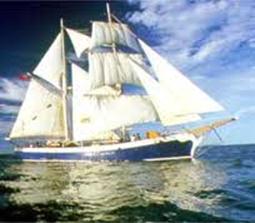
  3. Golden Plover, Whitsunday Islands

    I once worked on the 104 foot (30m) tall ship ‘The Golden Plover’; I was employed as a hydro ceramic engineer (dishwasher), except when the Captain or 1stmate shouted “all hands on deck”.

  4. I have visited more than 30 countries.
  5. I was a bridesmaid at a traditional African wedding in Lagos, Nigeria.
  6. I am married to a man who was born in a manger refugee camp in Bethlehem whose name starts with J.
  7. I like to read Buddhist philosophy.

And a few more blogs I recommend:

Arabic Literature (in English) – I don’t travel as much these days, so I love to read translations, experience different cultures and travel through books.

Books & Bowel Movements – Cassie’s enthusiasm for books and the way she writes about them is contagious and I love that she loved ‘The Bone People’.

Tomcat in the Red Room – he doesn’t post very often, but writes the most amazing reviews and has a natural vocabulary I envy.

Nexus –A humanities teacher and an artist sharing wonderful moments in the classroom and elsewhere.

Hooked – One woman at Sea, Trolling for truth – when I need to go to sea I watch one of her video posts; the writing is exquisite and I hope she publishes a book soon.

Cutting for Stone by Abraham Verghese

Emerging from Abraham Verghese’s Cutting for Stone reminds me what it was like returning home after three months travelling in Asia. Home is familiar, but everything else feels strangely altered by the recent experience.

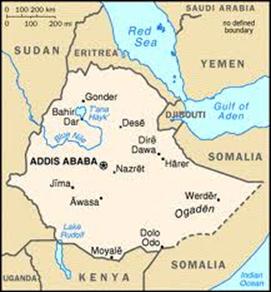
Except it is not Asia I traverse, but reading my way through Addis Ababa in central Ethiopia to a hospital in the Bronx, via the eyes, ears, heart and hands of Marion Stone.

Marion and Shiva are identical twin boys left orphaned when their mother dies during childbirth and their father, unable to cope with the revelations of that day, abandons them for good.

Raised by Hema and Ghosh, doctors in the Mission Missing Hospital, kept running by Matron’s unrelenting pursuance of international donors, they become a close-knit family, often struggling but nearly always overcoming the day to day dramas of the hospital and the equally unpredictable events of a volatile political environment.

Marion and Shiva follow their role models into the medical world and we too enter the operating room with such verisimilitude, it’s almost like watching an episode or ER (the nearest I have come to knowing what trauma surgery might be like).

Ethiopia & the Horn of Africa

Five hundred plus pages of bliss, I don’t recall when I was last so content that a book continued after 400 pages, so happy was I to enter the author’s realistically created world, taking me to those exotic but familiar to him locations, putting me through numerous experiences I will likely never encounter.  

Verghese’s words on the page bring a life-like quality; there is a richness to his prose that is metaphorically beautiful and a perceptive tension that is heart racing mad. It’s a roller coaster ride from start to finish and by page 472 tears of joy were flowing.

Gripping, enticing, compassionately delivered, eye-opening, heart racing, it is an unforgettable journey and a thrill of a read.  I finished it on the first day of 2012 and I can’t imagine reading better than this for a while, it could well become one of my best reads of 2012.

Passionate & Dedicated – Aung San Suu Kyi ‘The Lady’

It seems appropriate in the year that three women won the Nobel Peace prize, that we remember ‘The Lady’, Aung San Suu Kyi, who won this prize twenty years ago in 1991, nominated by the admired leader and humanitarian, former Czech president Václav Havel, who died this month.

It is debatable whether most know Aung San Suu Kyi for her steadfast dedication in promoting the ideals of democracy and metta (a Buddhist term meaning loving kindness) to the people of Burma, or for the longevity of her term as a prisoner of conscience, held under house arrest for 15 of the 21 years from 1989 until her release in November 2010.

Winning the Noble peace prize increased her prominence and brought her cause and the plight of suffering Burmese and hill tribe people to the attention of the international community.  Just this year she was visited with open arms by Hilary Clinton, not long after announcing she would run for election in upcoming byelections.

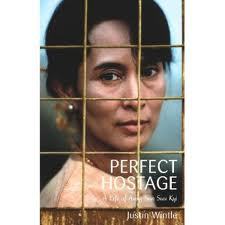
I picked up Justin Wintle’s book ‘Perfect Hostage’ Aung San Suu Kyi, Burma and the Generals, believing it a biography, mislead perhaps by the striking portrait which graces the cover and select testimonials describing it as so. In fact, I would call it a historic treatise of Burma and while of significant interest in itself, I did find it frustrating that it took close to 200 pages to encounter Aung San Suu Kyi within its covers. Though there is depth in the historical account, I found the reverse to be true in terms of the author’s evocation of Aung San Suu Kyi, in fact I found many of his comments patronising and uncomfortable:
Had SLORC not placed Suu Kyi under house arrest, it is improbable that she would have been given the Nobel Prize…‘ and on a tribute she wrote about her father ‘ This, the notion of St Aung San, may have been over-egging the cake’ and ‘When I saw that Aung San Suu Kyi had got a third class degree I let out an involuntary chuckle.

I am certain that the author interviewed many people, that is clear, but as to coming to some understanding and appreciation of Aung San Suu Kyi and her perspective or her personality, the text remains curiously detached.  Dare I say, I detected a hint of what could almost be compared to a colonial attitude, as referred to in George Orwell’s novel ‘Burmese Days’ (himself born in India with unacknowledged Burmese relatives in the family). That would be going too far I am sure, but it frustrated me enormously and made me yearn to read something actually written by Aung San Suu Kyi herself, something this book is remarkably short on.

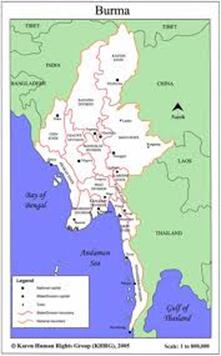
However, letting go of the expectation of an exquisite biography and seen as the historical treatise that it is, I find a thorough and detailed account of a remarkable country and ethnic melting pot of people who have long been subject to tyrannical rule. Sitting between India in the west and China in the east with borders that touch so many countries, Tibet, Laos, Thailand, Bangladesh, it is not surprising that it comprises so many ethnic groupings and hill tribes and has encountered so much conflict.  It has a unique history of rising to great prominence and descending into chaos, as each successive victor sought to impose their will.

It provides an interesting introduction to Aung San Suu Kyi’s father Aung San, his haphazard entrance into politics and the fraught relationship with Japan, set up to assist in the removal of the British, only to find they had replaced one empire seeking power with another.

‘I went to Japan to save my people who were struggling like bullocks under the British. But now we are treated like dogs. We are far from our hope of reaching the human stage, and even to get back to the bullock stage we need to struggle more.’ Aung San, at Maymyo, June 1942

With independence secured, the future looked positive in many respects. Democratic elections in April 1947 elevated Aung San to leadership, until he was betrayed and assassinated by one of his fellow countrymen. The country struggled to take advantage of its newfound independence and while the coup in 1962 was seen by many at the time as a hopeful resolution, it signalled the beginning of torturous dictatorships that have cost many lives, exiled others and kept Burma’s icon for free, democratic choice under arrest.

Aung San Suu Kyi was a reluctant hero; married with two children to the Oxford academic Michael Aris, a leading Western authority on Bhutanese, Tibetan and Himalayan culture, she returned to Burma to nurse her mother after a stroke and found herself sharing the hospital ward with many student victims of the atrocities occurring under the regime.  Astounded, she absorbed the horror of their stories and they listened to her reflections urging her to become actively involved in the struggle.

Just as Buddha gave himself up for the betterment of sentient beings, so Aung San Suu Kyi by offering herself to the people of Burma, was put in such circumstances she had little choice but to leave her family behind, a test the regime continued to dangle in front of her, in their hope she would leave and the people forget her. Her persistence in staying kept the candle of hope burning for millions and perhaps we may now see the fruit of that hope manifesting in their upcoming elections.

How to Spot a Psychopath – A journey through madness or a mad journey?

In the early 19th century, French psychiatrist Philippe Pinel coined the term ‘manie sans delusion’ referring to the one per cent of the population that appeared normal on the surface but lacked impulse controls and were prone to outbursts of violence. In 1891 it became known as ‘psychopathy‘.
I have just finished reading Jon Ronson’s riveting journey into the heart of that difficult to detect but fascinating to read about affliction, in his recently published book ‘The Psychopath Test’.  An extract from the book published in the Guardian piqued my interest as I was 1500 words into writing a short story around the theme of ‘Ego’ and I had a notion that one of the protagonists was a psychopath, or at least had psychopathic tendencies, so I was interested to know more about how to identify and make those behaviours manifest through a character. Through Ronson’s article I followed a trail and found myself eventually consulting Bob Hare’s 20 point checklist and thus had the insight I was looking for.

‘The Psychopath Test’ is no textbook and it shouldn’t be used to do what he did – random analysis of people you know; its part mystery, full of intrigue, with equal doses of curiosity and anxiety as we follow him equipped only with his journalistic tools into a world of charm, deception and manipulation where nothing is as it appears to be, or is it? He uses his tools to excellent effect to present us with investigative stories he pursued which read more like a detective novel than the work of non-fiction it is. Only it’s not a detective novel because ironically you would need more the qualities of a psychopath to be a successful detective than the anxieties and overdose of empathetic feeling the author has. Ronson is very entertaining, he admits and shares his anxieties and self-diagnoses his own mental deficiencies in a playful and identifiable way.

He presents a look into a field that has had its share of experimental and controversial programs, practices and institutions as well as its staunch adversaries such as the Scientologists, who continue their campaign to discredit the profession and individuals within it to this day.
Having tried to solve the initial mystery of uncovering who has sent a group of neurologists and academics copies of the same cryptically puzzling book, Ronson sets out to acquire basic skills in identifying potential psychopaths and arranges interviews with likely candidates, searching for and pleased by anything that seems to fit with his criteria and admitting his disappointment when their responses don’t quite fit the profile.

'How to Spot a Psychopath' by Lo Cole is available as a limited edition print from http://www.etsy.com/listing/76743583/spot-the-psychopath

Fascinating though the extremes are, it is interesting to see how many ordinary people give accounts of behaviour in pursuing high achieving goals at work, which border on psychopathic behaviour, such as detachment, the eradication of empathy and remorse. What’s more the percentage of psychopaths in the corporate sector, while low, is three times above the general population and cause for some concern, although I found myself not entirely surprised by this revelation after watching some of these executives under questioning from government officials and judges in the recent financial crisis, where a lack of empathy, failure to accept responsibility and lack of remorse or guilt seemed to be common traits.

It’s an imprecise malady with no known cure and involvement best avoided if one encounters anyone with an overabundance of the suggested characteristics, and while we might think it shouldn’t take a neurologist or a psychiatrist to point that out, to be human is not always to be logical or to follow common sense, especially while under the spell of a charming, manipulative liar.

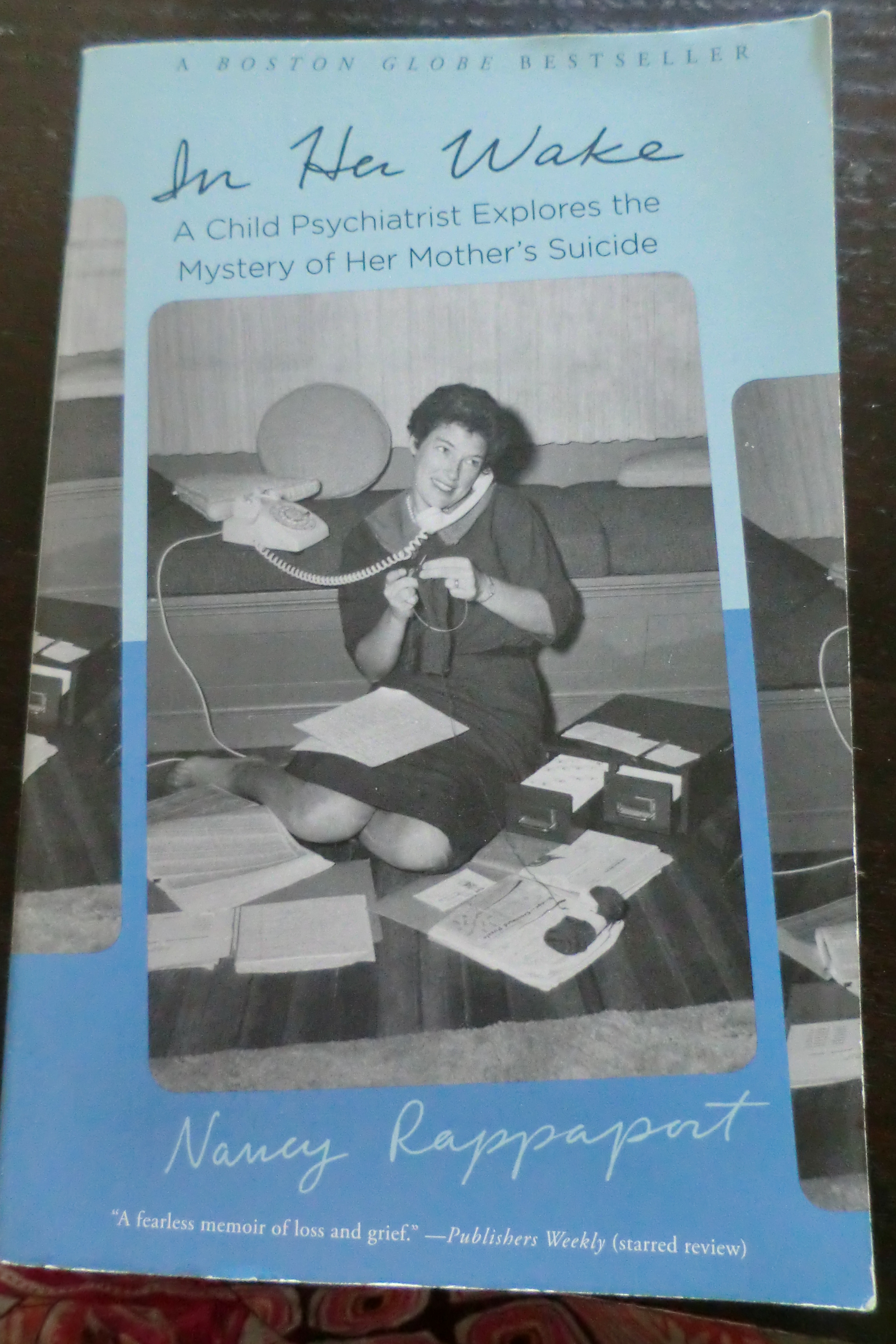
In Her Wake, Nancy Rappaport – exploring the mystery of a mother’s suicide #memoir

In 1963, Nancy Rappaport was 4 years old and the youngest of six children when her mother, an ambitious woman who balanced raising a large family, organising regular society events and political campaigning, committed suicide in the wake of a heart-wrenching custody battle.

Nancy now has three grown children of her own and has written this book both as a daughter needing to find answers and as a professional child psychiatrist, bringing together her education, experience, the wisdom of years and a compassionate perspective to narrate this compelling memoir of an extraordinary life whose end was sad and tragic.

From a childhood in which the nurturing love of a mother was ruptured so abruptly, through adolescence and early adulthood where the subject of her mother appears to have been taboo, it is extraordinary and something of a blessed gift that Nancy comes across a trunk of belongings that has virtually been in hiding or at best forgotten all these years. It is a credit to her father and stepmother that it wasn’t destroyed and so Nancy in her quest to know her mother better, gains access to lists, notes, notebooks, a journal and astonishingly, the manuscript of a complete novel. At last, she begins to gain a first-hand insight into who her mother really was, aside from all that had been written publicly and most importantly she begins to piece together how her mother was thinking in the time leading up to her death.

Rappaport follows leads like a master sleuth hesitating to question herself only briefly in pursuing her mother’s former lover, an estranged best friend and a former confidante of her grandmother, to unearth as much information surrounding the events of that period during her parents’ marriage and subsequent divorce. Little by little, she draws back the carefully drawn veil of secrecy, though not entirely without getting her fingers burnt.

It’s tempting to search for the villain and it could be said that each of the main characters in this true story are tried out and tested in that role, but none endure. Such is the faculty of being human, perhaps we all have the potential if pushed sufficiently but here we find few heroes or villains, just victims, bystanders and those trying to do their best under the circumstances.

It is a bold move to publish a family story when so many are touched by past events and family ties remain tenuous. Nancy suffers the expected consequences to a certain extent though she tries to navigate her way with compassion and empathy as much as she can. It’s a difficult and interesting topic, to write a version of the truth that recalls the faded memories of real life characters, while respecting those who wish to remain silent.

In my reading of this courageous memoir, some of the lessons come not from digging in the past or even from the professional perspective, but from Nancy’s own children, who are a constant reminder of the present that we live in and the role and responsibility of a mother to her children, doing her best, learning as she goes, loving them above all so that they have the best chance to be loving, caring and successful people themselves and that no matter what anyone says or does or whatever the circumstances, a mother will maintain that role whether she is fulltime, part time, at a distance or just a faded memory.

Hankyu Railway – A 15 Minute Miracle

Recently I was on a 12 hour flight contemplating what I thought would be an eternity of reading time which somehow did not come to pass.  I would still recommend Anthony Capella’s ‘Empress of Ice cream’ as good inflight reading, but on this occasion the only thing I could concentrate on, apart from my eight and nine year old companions was the Inflight magazine.

I read that magazine right through, but could I find a film that suited my mood when a book couldn’t?  Well, I admit I was hard-pressed; whether it was a book or a movie – both passive pastimes – what I really wanted was to get horizontal like my sleeping companions had somehow managed.  Nothing Hollywoodesque tempted me, so I found myself scrutinising the blurbs for the Korean, Chinese, Japanese and Singaporean films and found a wonderful gem ‘Hankyu Railway – A 15 Minute Miracle.’

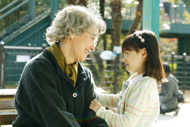
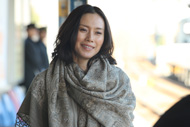
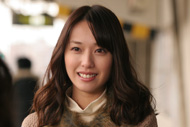
The Hankyu Railway, a 15 minute one way line, is what links the stories of a few characters as they navigate pertinent issues in their respective lives.  A young office worker learns of her fiancés infidelity and exacts revenge while trying to retain her honour; a grandmother with her granddaughter who never encroaches past the accepted boundaries of tolerance, decides to speak the words other have thought but never ventured and brings with it the wisdom and respect of her years.

Much is understood without ever needing to be said, but what is so beautiful about this film and these journeys is that each of these characters does decide to step beyond convention and say something that will make a difference.

The film is based on Hiro Arikawa’s bestselling novel ‘Hankyu Densha’ and it is a tribute to reaching out, to acknowledging another human being, acting on an instinct for the good of humanity.  It is about small acts of kindness, that a few words might somehow change the course of a fellow human being’s life for the better.

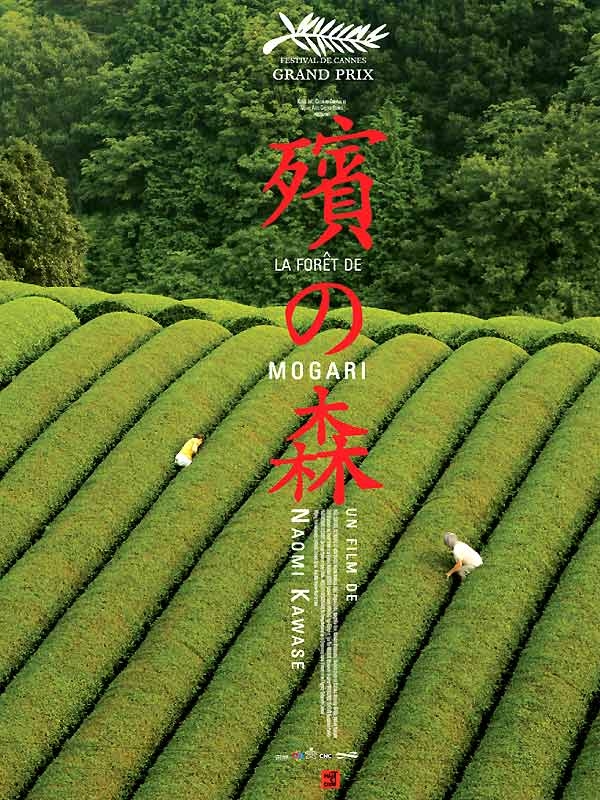
It reminds me of another favourite Japanese film, though they are very different.  ‘The Forest of Mogari’ relies less on dialogue and is a story of the human spirit, a meditation on life, death, grief and the necessity of letting go.