Ockham New Zealand Book Awards Shortlist 2024

Earlier this month the shortlists were announced for the New Zealand Book Awards 2024. All four of the shortlisted authors have won the prize before. You can read my post on the 8 novels that made the longlist here.

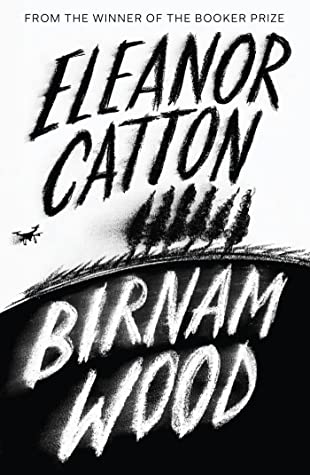
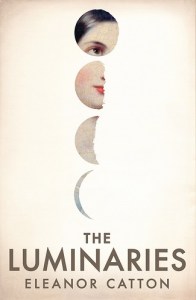
Eleanor Catton, who won the Booker Prize in 2013 for The Luminaries,(my review) is a finalist for her novel Birnam Wood (my review).

Emily Perkins, who won the Montana Medal for Fiction or Poetry in 2009 for Novel About My Wife is shortlisted with Lioness. (I read and enjoyed it, but not reviewed)

Pip Adam, who won the Acorn Foundation Fiction Prize in 2018 for The New Animals (recently read but not reviewed) is in the running with Audition. (On my bookshelf!)

Stephen Daisley, who won the first awarded Acorn Foundation Fiction Prize in 2016 for Coming Rain is a contender this year with A Better Place.

Judge’s Comment

Juliet Blyth, convenor of judges for the Jann Medlicott Acorn Prize for Fiction, says there is much to celebrate among this year’s shortlisted novels, and readers will be rewarded by the richness contained within their pages.

“These four singular and accomplished titles encompass pertinent themes of social justice, violence, activism, capitalism, war, identity, class, and more besides. Variously confronting, hilarious, philosophical, and heart-rending, these impressive works showcase Aotearoa storytellers at the top of their game.”

The Shortlist

The four novels shortlisted for the fiction prize, along with judges’ comments are:

Jann Medlicott Acorn Prize for Fiction

NZ book awards 2024 shortlist

Audition by Pip Adam, Te Herenga Waka University Press – [Science Fiction/Dystopia]

– A spaceship called Audition is hurtling through the cosmos. Squashed immobile into its largest room are three giants: Alba, Stanley and Drew. If they talk, the spaceship keeps moving; if they are silent, they resume growing.

Talk they must, and as they do, Alba, Stanley and Drew recover their shared memory of what has been done to their former selves – experiences of imprisonment, violence and misrecognition, of disempowerment and underprivilege.

A novel, part science fiction, part social realism that asks what happens when systems of power decide someone takes up too much room – about how we imagine new forms of justice, and how we transcend the bodies and selves we are given.

Judges’ Comment

Three giants hurtle through the cosmos in a spacecraft called Audition powered by the sound of their speech. If they are silent, their bodies continue to grow. Often confronting and claustrophobic, but always compelling, Audition asks what happens when systems of power decide someone takes up too much space and what role stories play in mediating truth. A mind-melting, brutalist novel, skillfully told in a collage of science fiction, social realism, and romantic comedy.

A Better Place  by Stephen Daisley, Text – [WWII visceral novel]

– a novel about brothers at war, empathy and the aftermath. Aged 19 in 1939, Roy and his twin brother Tony enlist in the NZ Infantry Brigade. They fight in Crete where Tony dies. Burdened by the loss of his brother, Roy continues to Africa and Europe.

Beautifully written, brutal, tender and visceral, A Better Place is about love in its many forms.

Judges’ Comment

The tragedies of war and prevailing social attitudes are viewed with an unflinching but contemporary eye as Stephen Daisley’s lean, agile prose depicts faceted perspectives on masculinity, fraternity, violence, art, nationhood and queer love in this story about twin brothers fighting in WW2. With its brisk and uncompromising accounts of military action, and deep sensitivity to the plights of its characters, A Better Place is by turns savage and tender, absurd and wry.
eco thriller tech billionaire New Zealand

Birnam Wood  by Eleanor Catton, Te Herenga Waka University Press – [Eco Mystery/Thriller(y)]

– an eco-thriller of sorts that considers intentions, actions, and consequences, an unflinching examination of the human impulse to ensure our own survival. Featuring green activists, politician farmer and his wife, a tech billionaire and the lone wolf investigative journalist with a past.

Judges’ Comment

When Mira Bunting, the force behind guerilla gardening collective Birnam Wood, meets her match in American tech billionaire Robert Lemoine, the stage is set for a tightly plotted and richly imagined psychological thriller. Eleanor Catton’s page-turner gleams with intelligence, hitting the sweet spot between smart and accessible. And like an adrenalised blockbuster grafted on to Shakespearian rootstock, it accelerates towards an epic conclusion that leaves readers’ heads spinning.

Lioness by Emily Perkins, Bloomsbury – [Literary Fiction/Blended Family, Second Wife Drama]

– a novel of a woman’s self doubt and shifting place in second family’s and relationships.

Trevor and Therese are a power couple living in the capital city, he is a developer and she runs a chain of fashion boutiques. That’s the exterior. At home, there is his adult family (issues) to contend with and her uncertain place in a scenario that is rapidly shifting when his deals come under scrutiny and his children make increasing demands. Increasingly, she finds refuge elsewhere, inviting another kind of risk into her precarious existence.

Judges’ Comment

After marrying the older, wealthier Trevor, Teresa Holder has transformed herself into upper-class Therese Thorn, complete with her own homeware business. But when rumours of corruption gather around one of Trevor’s property developments, the fallout is swift, and Therese begins to reevaluate her privileged world. Emily Perkins weaves multiple plotlines and characters with impressive dexterity. Punchy, sophisticated and frequently funny, Lioness is an incisive exploration of wealth, power, class, female rage, and the search for authenticity.

Winner Announced

The winners will be announced on 15 May during the Auckland Writer’s Festival.
Birnam Wood by Eleanor Catton

Hecate and the Three Witches, Shakespeare’s MacBeth

This novel, the first in ten years, since Eleanor Catton won the Booker Prize 2013 for The Luminaries, sounded intriguing and looking up the significance of Birnam Wood in Shakespeare’s MacBeth had me quietly hopeful.

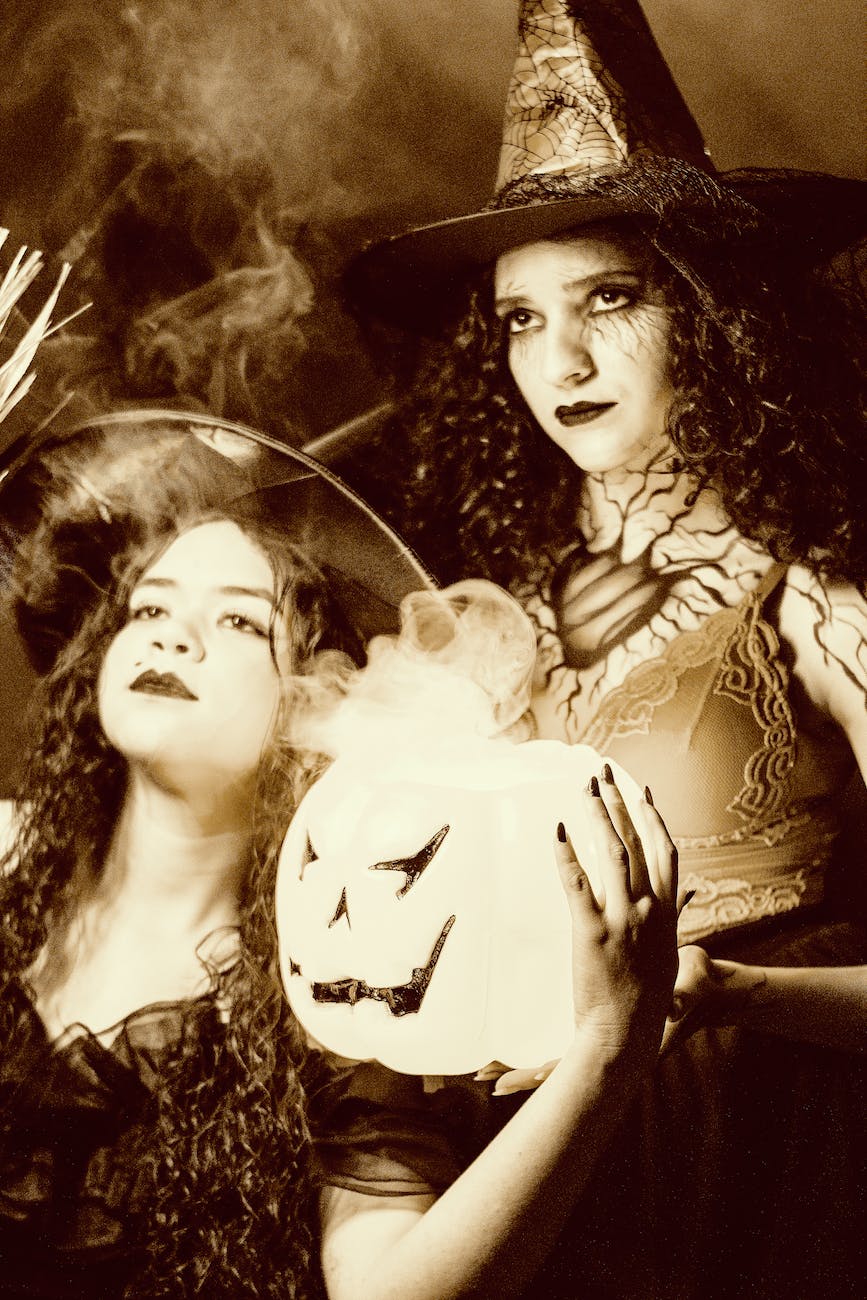
women in witch costumes

Photo by Becca Correia on Pexels.com

Shakespeare’s three witches were women believed to have the ability for foresee events – (intuitives, regarded as supernatural thus often portrayed as old crones with or without pointy hats) – who made cryptic predictions of Macbeth’s ascent to kingship and eventual downfall.

They are women, present, often brushed aside, whose warnings have long been ignored, opinions under-estimated or ridiculed.  Macbeth believed the first prediction and ignored the second, both would come to fruition, the messenger’s long forgotten.

It is interesting that Catton uses the analogy of Birnam Wood and its association with women who speak out, as she too has a little history of having said some things about those in power in her own country and been belittled for it. Will the passage of time demonstrate that those words uttered might too have been a kind of prophecy? Perhaps they were too obvious, and so now we have something a little more cryptic to figure out. A Birnam Wood analogy of New Zealand.

Catton’s Theatre, An Eco-Tech-Thriller(y) Political Maelstrom

Birnam Wood is populated with characters that loosely connect to Shakespeare’s play. Our three women are present, and they appropriately, are not always as they seem on the outside. There are the men with power, twin aspects, one acquired through politics, the other wealth and the MacDuff character, recently returned from his travels, the righteous young freelancer Tony, armed with his pen to combat tyranny and fight against evil, something of a loner, acting independently of the group.

Sadly, the novel suffered from a head spinning beginning, in which the righteous characters dominate the conversation, which read like speeches. Looking back, I can see why that might have been done, but the abundance of proselytising in the opening pages almost had me put it aside. It was not a great start. Characters shared verbose opinions and given space on the page to rant, they were like an unwelcome ambush. Way too theatrical.

Eco-Warriors, A Tech Billionaire, Neo-Liberal Politician

I persevered (a characteristic I associate with reading Catton) and the novel becomes a kind of cat and mouse, eco-warrior-tech suspense story, set in New Zealand’s South Island, in 2017.

eco thriller tech billionaire New ZealandBirnam Wood itself is the name of a gardening collective, a group of people doing gently rebellious activism, planting sustainable gardens in places where they don’t have permission. There is a rivalrous friendship between the founder Mira and her flatmate, sidekick Shelley, who we learn early on has a desire to undermine her friend.

When a past member Tony turns up looking for Mira, the focus of the novel changes and becomes more character and action oriented. Embarrassing himself at the group’s six weekly ‘hui’ (meeting), he maintains a low profile, until he has an idea for an investigative journalism scoop he thinks is going to make his career. No one else knows what he is up to, he becomes something of the lone wolf, loyal to the cause, the avenging hero.

Mira hears about a farm up for sale, that has been cut off due to a landslide and thinks it might be a good location for their next project, she decides to scout the location for suitability.

A Billionaire’s Secret Agenda, Altruistic or Ambitious?

She is unaware that someone else has an idea for the property, with a very different agenda. Lemoine is an American tech mogul billionaire looking to build a bolt hole in an isolated location in New Zealand. Their paths cross and it seems they might be able to coexist, despite the risk of compromising the group’s ideals.

Rotorua Lakes - EditedThe farm, nestled up against a national park, was inherited by Jill Darvish; her husband Owen, a self-made pest-control business man has just been knighted for services to conservation, though he is unsure exactly why.
Everyone pursues their agenda – unaware of being under the watchful eye of the man with the money, while another with few resources, pieces together the larger picture of a potentially damaging conspiracy.

Like the “wood” referred to by Macbeth’s witches, a warning brushed aside, so too Catton’s three women characters provide clues to the demise of the men who hold power in her story.

Catton excels at mining the introspective psychological depths of her characters intentions, behaviours and motivations and once the plot moves to the farm, the pace picks up and it becomes a more engaging read.

An intriguing writer, there is an element of unpredictability, that feeling of not knowing what will come next, given how different all three of her novels have been from each other, crossing genre – a writer experimenting with form, taking her time but unafraid to try something completely different. And so again, who knows what she might write next.

Further Reading

Interview Guardian: Eleanor Catton: ‘I felt so much doubt after winning the Booker’ by Lisa Allardice

Review Guardian: ‘hippies v billionaires’ – The Booker winner captures our collective despair in a thrillerish novel about climate crisis by Kevin Power

Review The SpinOff, NZ: Birnam Wood review: An astounding analysis of human psychology by Claire Mabey

Eleanor Catton, Author

Eleanor Catton was born in 1985 in Ontario, Canada and raised in New Zealand.

Her first novel, The Rehearsal, won the 2007 Adam Award from the International Institute of Modern Letters, and a Betty Trask Award. Her second novel, The Luminaries, was awarded the the 2013 Man Booker Prize and the 2013 Governor General’s Literary Award.

N.B. Thank you to Granta Publications for the ebook Advance Reader Copy, provided via Netgalley. Published 2 March, 2023.

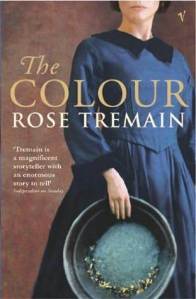
The Colour by Rose Tremain

The Colour

It’s been a long time since I have read a Rose Tremain book; I think Music and Silence was the last one I read, I remember that she is a captivating storyteller and creates interesting characters, as she has done here with The Colour.

I was intrigued to read it too, because it is set in New Zealand (where I am from originally), a location rare to find in literature outside homegrown, Rose Tremain being a British author.

Similarly to Eleanor Catton’s The Luminaries (reviewed here), The Colour is set in the South Island during the gold rush period. TLuminarieshough in contrast to that epic tome that won the Man Booker Prize in 2013, Rose Tremain’s novel features only one man seduced by the gold or and gives us an insight into two women, Harriet his wife and Lilian his mothers, their hopes, achievements and personal struggles in trying to make a life in this untamed country.
Joseph and Harriet Blackstone depart England as newlyweds, arriving in Christchurch, from where they buy land in isolated countryside near a river, signifying a new beginning for them all including Joseph’s mother Lilian, although she quickly begins to make plans in her head about how she might leave her son’s newly constructed Cob House, to return to the more civilised town. 

Harriet had felt stifled in England and was almost resigned to her state as a spinster governess, until Joseph’s surprise engagement and a chance for her to start anew, to create a new life for them in this foreign land, which bore little of the attitudes and social stratification of home.

“Harriet had asked her new husband to take her with him. She clung to him and pleaded – she who never whined or complained, who carried herself so well. But she was a woman who longed for the unfamiliar and the strange. As a child, she’d seen it waiting for her, in dreams or in the colossal darkness of the sky: some wild world which lay outside the realm of everything she knew.”

Joseph and Lilian were also fleeing something, although their memories and associations were a little more shameful and sinister, secrets they keep from others, that continue to haunt them on the other side of the world, distance found insufficient to wipe their conscience clean of the past.

110611_1523_TheForestfo1.jpgThey know it will be a tough existence and they will need to learn from mistakes, as all pioneers do, but they find the challenges of this harsh Canterbury landscape almost soul destroying and Joseph is quickly lured away by the glitter and promise of gold dust he finds in his river and soon sets off to join the other men, also seduced by their lust for “the colour”, in new goldfields over the Southern Alps, leaving the two women to fend for themselves.

‘I must go,’ he said.  ‘I must go before all the gold is gone.’

‘And if there isn’t gold?’

‘Men are not risking their lives for nothing, Harriet.’

‘Men are risking their lives in the hope of something. That is all.”

‘I have dreams about the Grey River. I shall come back with enough…enough gold to transform our world.’

‘What have we been doing for all these months,’ she said, but endeavouring to “transform our world”?’

Harriet befriends a family that is succeeding in making a living as they hope to, a horse ride away at Orchard House, although they too have their share of difficulty with their son Edwin and his longing for the Maori nanny they’d let go after an accident. Edwin has a strong spiritual connection with Pare, something his parents don’t understand and are afraid of, as they believe her enchantment over him is making him I’ll.

Overall, it is an enjoyable, entertaining and quietly gripping read with a well-rounded character whose development and journey captivates the reader.

Its only weakness for me, was the subplot featuring Pare, the Maori nanny, her superstitions and behaviours seemed odd to me, somewhat fantastical, bordering on magical realism, a little patronising in terms of my understanding and experience of the legends, culture and tradition I grew up with, though perhaps reminiscent of the colonial attitude of that era and beyond.

An Auspicious Ascendancy – The Luminaries, Eleanor Catton

LuminariesEleanor Catton’s The Luminaries is an engaging, avant-garde novel, not to be read with the traditional expectations of the form, for it will entertain, intrigue, provoke, infuriate and keep you thinking about why it works, when certain aspects we know and love about stories, suggest that it shouldn’t. The allure of the new.

The Luminaries is a 19th century narrative, set in the gold –digging community of Hokitika ‘place of return‘, on the west coast of New Zealand’s South Island.

In 1866, when the story takes place, it was a thriving community, expanding in the golden glint of its anticipated resource and one of the most populous towns in New Zealand, a far cry from it’s just over 3,000 inhabitants today. While it remains possible for visitors to try their luck at gold panning today, they are more likely to be cycling the West Coast wilderness trail or to taking a helicopter over the Fox and Franz Joseph glaciers.

Hokitika township 1870s

Hokitika township 1870s – source Wikipedia

The story focuses on a group of people living in Hokitika, attracted by the prospects of finding gold or its associated business opportunities. It opens with the newest arrival, a distressed Thomas Moody, who has just disembarked from the barque Godspeed and after checking into the Crown Hotel, happens upon a gathering of 12 men in a bar of the hotel that had been closed for the evening. Already in the hotel, he had not been prevented from entering the room and thus becomes witness to a discussion of events that had occurred two weeks prior, the death of the hermit Crosbie Wells, the disappearance of the gold prospector Emery Staines, the arrest of a whore Anna Wetherell and the discovery of a cache of retorted gold bars.

As any 12 prominent men summoned to a room for a discussion might attempt to garner attention, so too does Catton give over chapters which allow those men to stand in their own limelight and this gathering will invoke a long and divergent narrative of stories, encounters and sharing of perspectives by each of the men present.

Their stories span the first half of the book, introducing a structural device Catton uses to divide the book into 12 parts, each successive part half the length of that before it, where the sequence of events moves about so that we reach the end only to discover we are at the beginning. We realise this is not a plot heading towards its climax, nor a beginning working towards its end, it is a series of revelations that unmask illusions of our own imagination as well as that of the characters portrayed and by the time we reach those last pages, the actual dramatic events that unfold will occupy fewer lines on the pages of this book than the mass of 400 plus ages that has allowed this community of men to discuss, analyse, reveal, conceal and pontificate on what might have occurred.

110611_1523_TheForestfo1.jpgAs fast as one mystery unravels, there arises another as Catton introduces one twist after another and slowly reveals the encounters and connections between characters, including those not present at the meeting.

The use of an omniscient narrator means that no one character plays a lead role, just as the lack of a detective precludes it from unravelling like a conventional mystery. Instead, it reads almost as a series of dramatic episodes, where the various interactions and focus on certain characters help the viewer/reader understand their ambitions and motivations, though like a jigsaw, the whole picture will not become clear until all the missing pieces are joined together.

The IdiotI was reminded at times of reading Dostoevsky’s The Idiot, a novel that is without comparison when it comes to penetrating character analysis, itself a complex web of relationships and associations. Catton’s insights into her characters perhaps owe more to her reading of Jung than Dostoevsky, as she penetrates the psychological depths of each character using lyrical prose. While these insights make pleasant reading, it is the actual interactions and actions of the characters that more ably create a lasting impression. As a consequence, we perceive the entire cast at a slight distance and may yearn for something more from some of them.

Much has been written elsewhere about the astrological structure and intention behind Catton’s writing, and it would be easy to turn this into as essay and begin to analyse twin hemispheres, yin and yang, predestined forces and those luminaries that represent our innermost and outermost selves whom she literalises in characters, however I have chosen to write more on the experience of reading the book, without focusing on the forces at play in their interactions. It is possible to listen to Eleanor Catton speak more on this at the Southbank reading here and in numerous articles in The Guardian and elsewhere.

It is an entertaining read, that despite its length I never wanted to put down and actually found myself wondering about other members of the community that don’t appear in the book, like the families of these characters and other inhabitants of this gold loving town. Perhaps we might get to meet them in a future TV adaptation, since I hear the rights have already been bought by a British production company.

Luminaries Cloud

and the Man Booker Prize winner is…

Catton2

The Luminaries by Eleanor Catton

I have just put it aside on page 508 to watch the presentation and I could not be more pleased!

Congratulations to our young and so talented novelist, from whom we will no doubt see much more.

The book is still alive and rather than cower under the threat of the alternative entertainment available to people today, they are taking the book to the masses.

According to the Man Booker Prize website, there is to be a free event at London’s Regent Street Apple Store, where Eleanor Catton will discuss her book and what it means to win the prize.

I hope Apple are offering the books for sale and not just their own devices to read them.

Ok, a big event is about to take place in the book too, so I’m off back there to find out what’s happening.

Man Booker Prize Shortlist 2013

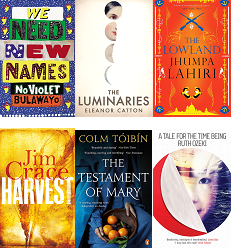
The Man Booker Prize shortlist was announced today and looks like an interesting and diverse offer, with two previous nominees*, four fabulous women writers and stories that will transport us to many far reaches of the world.

One of the judges, Robert Macfarlane had this to say:

‘Global in its reach, this exceptional shortlist demonstrates the vitality and range of the contemporary novel at its finest. These six superb works of fiction take us from gold-rush New Zealand to revolutionary Calcutta, from modern-day Japan to the Holy Land of the Gospels, and from Zimbabwe to the deep English countryside. World-spanning in their concerns, and ambitious in their techniques, they remind us of the possibilities and power of the novel as a form.’

The shortlist comprises:

2013

NoViolet Bulawayo We Need New Names                  my review here

Eleanor Catton The Luminaries

Jim Crace Harvest

Jhumpa Lahiri The Lowland

Ruth Ozeki A Tale for the Time Being

Colm Tóibín The Testament of Mary

I have only read Bulawayo and I’m happy to see her on the list and I’m also ecstatic to see a fellow New Zealander make the list. I can’t help but hope that Eleanor Catton wins and I’m really looking forward to reading her novel The Luminaries, which has had some fantastic reviews.

The judges have one month to re-read the shortlist and the winner will be announced on 15 October 2013 at a ceremony at London’s Guildhall.

So have you read any from the list and any guesses for a winner?

*Colm Tóibín was previously shortlisted for The Blackwater Lightship in 1999 and The Master in 2004 while Jim Crace was shortlisted in 1997 for Quarantine.