
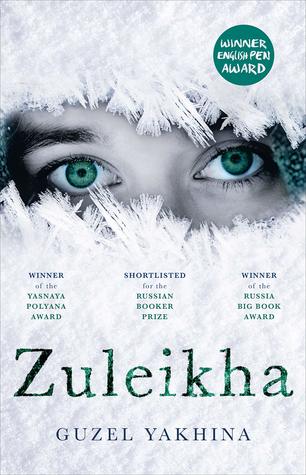
 Last year my favourite read Kintu, by Ugandan author Jennifer Nansubuga Nakumbi was published by OneWorld Publications. This year, I enjoyed another of their award winning titles The Baghdad Clock by Shahad Al-Rawi (Iraq) (tr. Luke Leafgren) and now I am adding to that list, this wonderful historical fiction epic, Zuleikha by Guzel Yakhina (Russia) translated by Lisa Hayden.
The Russian Gulag – Labour Camps
April 2019 is the 100th anniversary of the beginning of the Gulags in Russia. Gulag is an acronym for Glavnoe Upravlenie Lagerei, or Main Camp Administration, they were a system of forced labour camp, a kind of re-education in a prison-like environment.
The Gulag was first established in 1919, and by 1921 the Gulag system had 84 camps. But it wasn’t until Stalin’s rule that the prison population reached significant numbers. From 1929 until Stalin’s death, the Gulag went through a period of rapid expansion.
At its height, the Gulag network included hundreds of labor camps that held anywhere from 2,000 to 10,000 people each. Conditions at the Gulag were brutal: Prisoners could be required to work up to 14 hours a day, often in extreme weather. Many died of starvation, disease or exhaustion— others were simply executed. The atrocities of the Gulag system have had a long-lasting impact that still permeates Russian society today.
Kulaks and Dekulakization
The first people to be interned in these camps were known as kulaks (literal translation – fist, as in tight-fisted) meaning affluent peasants – originally the term referred to independent farmers in the Russian Empire who emerged from the peasantry and became wealthy, but the definition broadened in 1918 to include any peasant who resisted handing over their grain to authorities and under Joseph Stalin’s leadership it came to refer to peasants with a couple of cows or five or six acres more than their neighbors and eventually any intellectual who offended him.
Portrayed as class enemies of the USSR, the process of re-education was dekulakization the campaign of political repressions, including arrests, deportations, and executions of millions of prosperous peasants and their families. It is these people, decreed kulaks in the 1930’s, that are the subject of this novel.
Book Review – Zuleikha
As soon as I read premise of this novel, I wanted to get it, one of my favourite books The Industry of Souls by Martin Booth was set in a Russian gulag, though these are very different books. And there is nothing quite like being swept away by those wonderful character-lead novels such as Dostoevsky’s The Idiot and Tolstoy’s, Anna Karenina and the provocative poetry of Pushkin’s Eugene Onegin that have entertained us and demonstrated important aspects of creating characters in literature, and who could forget one of the highest grossing films of all time, Doctor Zhivago.
While we may not quite reach the heights of the masters, we are offered a refreshing and unique perspective in this compelling novel about a Tartar Muslim woman named Zuleikha, whose independent farmer husband has been accused of not having collectivised his property, resulting in her being sent away to be dekulakized.
They encounter the Red Army and their leader Comrade Ignatov as they return from hiding provisions, a meeting that will forever be etched in the minds of both Zuleikha and Ignatov, the latter becoming an equally important protagonist in the novel, which charts the journey and evolution of both characters.
They travel the same paths in opposite roles, one of the ironies of the novel to see how imprisonment in many ways improves the life of Zuleika, and control of the camp significantly diminishes the life of her captor. Effectively she is rescued from a tyrannical husband and mother-in-law, having been married off at the age of fifteen (he 30 years her senior) where she was little more than a slave in their household, having also given birth and lost all her babies in that period.

Photo by Pixabay on Pexels.com
Unlike some gulag stories, the people in this novel who are sent to be dekulakized are not sent to an existing facility. They spend months on a long train journey, where many will die, some escape, getting to know each other and then just as winter sets in they’re put on a barge, travel up a river and are dumped there. In order to survive, they must build shelter and find food, so their fate also extends to the leader who oversees them, Ignatov.
Although Zuleikha arrives in an emaciated state, she soon attains strong motivation to remain healthy, she finds solace in her role in the kitchen and ultimately strength in her eventual role as a hunter, venturing into the forest every day to set traps and capture wildlife to keep them all from starving.
Whereas Ignatov, who has enjoyed relative freedom and even privilege in his previous role, riding across the country rounding up suspected kulaks, is unhappy with orders to take on the role of Commandant to accompany these people to an unknown destination. His transformation is more of a decline from his lofty position of power, he loses faith and no longer commands the same respect he had, even for himself.
Who was Zuleikha?
On the cover of the book and mentioned throughout the text, are Zuleikha’s intense green eyes, other versions of the novel are entitled “Zuleikha Opens her Eyes“, this transformation of character through having her eyes opened is one of the themes of the novel, she sees beauty as well as suffering, she will experience true love and profound heartbreak. It’s about a woman who comes out from having been defined and used by men, into finding new strength and her own role. It is a form of emancipation, albeit it a preliminary one.

Yusef runs away from Zulaikha
One aspect of the novel I haven’t seen discussed anywhere is the significance of the names, Zuleikha and Yuzuf. I had a sense that those names somehow went together and I discovered an epic poem of the same name written in 1483 AD by the Sufi poet Jami.
It is an allegorical poem about the pursuit of love and of God, which also covers the allure and the suppression of love, the suffering of slavery and in aspects of this poem, I find aspects of three characters in the novel, Zuleikha, Ignatov and Yuzuf and I end my review with an ambiguous extract that may refer to a lover or a son, from the poem that reminds me of the closing pages of the novel.
The novel is unique in that it is written (and translated) by a woman who makes a young woman the centre of such an epic story, in part inspired by the actual memories of her own grandmother. She hasn’t set out to recreate the dire, conditions and cruelty of the camps, we witness a tale of survival, and through the eyes of a woman who already had a dire life, despite being the wife of an affluent peasant.
 Guzel Yakhina’s grandmother was arrested in the 1930’s, taken by horseback to Kazan and then on a long railway journey (over 2,000 miles) to Siberia. She was exiled from the age of 7 until 17 years, returning to her native village in 1947. It was these formative childhood years that were in a large part responsible for her formidable character.
Upon her death at the age of 85 years, the author realised the importance of her early life and thus began her research and determination to understand how her grandmother operated, bringing her back in part through the inspired creation of the extraordinary character Zuleikha.
“I realised it would be impossible to remember the things she said as her stories were not recorded,” Yakhina says. “There was a feeling of guilt.”
A thought-provoking, interesting story and reflection, not at all brutal or hard to read, the author writes with compassion for her characters and brings out something very different from what we have come to expect from stories set in prison-like environments.
Highly Recommended.
Zuleikha and Yusuf – extract from the epic poem
“The one sole wish of my heart,” she replied,
“Is still to be near thee, to sit by thy side;
To have thee by day in my happy sight,
And to lay my cheek on thy foot at night;
To lie in the shade of the cypress and sip
The sugar that lies on thy ruby lip;
To my wounded heart this soft balm to lay;
For naught beyond this can I wish or pray.
The streams of thy love will new life bestow
On the dry thirsty field where its sweet waters flow.”Jami, Sufi poet (tr. Charles Francis Horne)
My Reviews of Novels set in Russia
Eugene Onegin by Pushkin
The Kindness of Enemies by Leila Aboulela
The Industry of Souls by Martin Booth
Further Reading
Review: Lisa Hill’s review of Zuleikha at ANZLitLovers
Article: The Calvert Journal: “Learn to live with it, even forgive.” – Guzel Yakhina on the traumas of Soviet history
Article: Peninsula, Qatar: Russian novel tells story of survival, love in Stalin’s camp
Buy a Copy of Zuleikha via Book Depository
N.B. Thank you to OneWorld Publications for providing me with an advance reader’s copy of this novel.
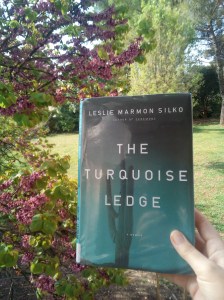 I loved this book. I chose it because I wanted to visit the natural landscape of Tucson through the eyes and insights of a lyrical nature writer. I was also looking for the perfect birthday present for someone who knows that landscape well, to transport them back there, reignite something without having to travel.
 “We learn to ignore the discrepancies between our memory of an event and a sister’s memory. We can’t be certain of anything.
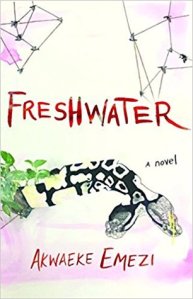 This novel is like nothing else I’ve ever read, it describes an inner world, an occupied mind, from that inside. It puts the reader in a position of imagining, perhaps even to a certain degree understanding, what it might be like to have your subconscious and conscious mind occupied by other entities, entities with a voice, with personality, that from time to time take over the body, affect behaviour, talk to you and through you.
 I wrote Freshwater as an analysis of sorts—the ogbanje figuring out what it is, ascribing legibility to itself. We look at our worlds through a limited range of lenses, and making this book meant choosing a different center to tell the story from, a different lens to look through.
 Kwon added the book to her list based on a recommendation by writer, editor and professor Kiese Laymon, who said he’d “never read a novel that does nearly as much in so few pages,” and that the book is “as narratively beautiful as it is brutal.”
 It is a beautiful, bittersweet cornucopia of blues and reds, colours littered throughout the text alluding to a multitude of contrasts.
 Laskar is first and foremost a poet, so while it may have been described as harrowing, it also illuminates. Her captivating prose and lyrical repetition draw the reader in, creating a desire to unravel the mystery her many literary devices allude to, to step back from the pieces and see the whole. The book’s structure is inspired by one of her favorite poetry forms, the pantoum, a Malayan folk poem or verse form. In a pantoum, a phrase is repeated throughout, subtle changes in meaning occur due to different contexts.
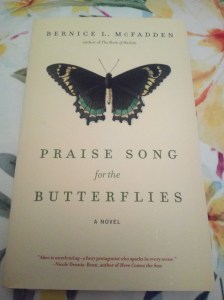 Interested in the inspiration for writing a novel, this one intrigued me; Bernice McFadden visited Ghana in 2007 and while she was there met two women who told her about a rehabilitation centre and a tradition referred to as trokosi, which they explained and suggested she write a book about, an idea she initially laughed at, but after researching the practice, a story began to emerge that she eventually pursued.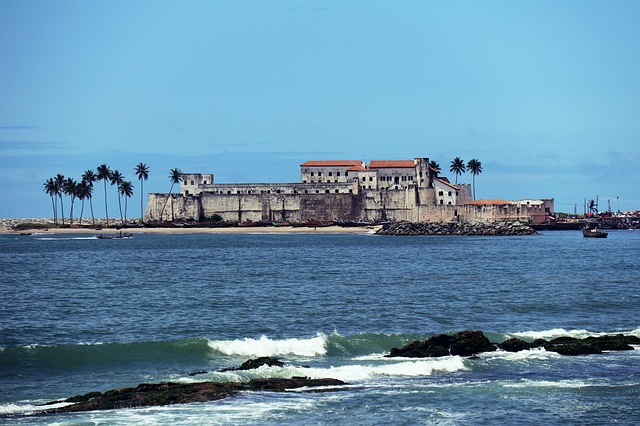
 Interested in the title, I looked up ‘Praise Song’ and learned it is one of the most widely used poetic forms in African literature; described as ‘a series of laudatory epithets applied to gods, men, animals, plants, and towns that capture the essence of the object being praised’.
 Bernice McFadden is the author of nine critically acclaimed novels including Sugar, Loving Donovan, Nowhere is a Place, The Warmest December, Gathering of Waters and The Book of Harlan (winner of American Book Award and NAACP Image Award for Outstanding Literary Work, Fiction). A four-time Hurston/Wright Legacy Award finalist, I’ll definitely be reading more of her work.
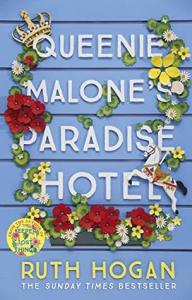 It’s described as a novel of mothers and daughters, families, secrets and the power of friendship. It’s set in Brighton and begins as Tilda returns to clear out her mother’s flat after her death. That precipitates a number of memories of her childhood, which we learn about in the alternate narrative by Tilly, her child self, whose story is told from the moment her father has disappeared, the beginning of her obsession with matches and our realisation that some of the characters she sees and interacts with can’t be seen by others.

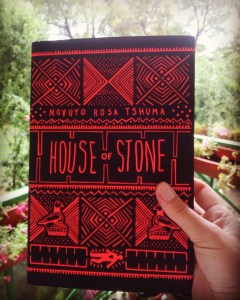
 In an interview, Novuyo Rosa Tshuma when asked about setting her novel amidst the backdrop of this massacre, said:
 It’s an accomplished novel that confronts harsh truths and pursues questions about the reinvention of a nation and the individual. A gifted storyteller who has been able to weave the essence of those personal narratives into richly formed characters that goes some way towards acknowledging a history no-one will talk about. Bereft of redemption, a feeling that pervades the narrative and one that seems to hold many in its grip today worldwide.
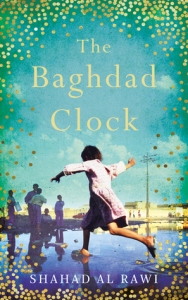 Slightly surreal, nostalgic and deeply philosophic portrayal of a neighbourhood in Baghdad, of a childhood and early youth lived under the shadow of war, shared by a girl, (our unnamed narrator) who refuses to depict her childhood through the lens of suffering and devastation.
 Eileen Battersby (1958-2018) was a renowned literary critic and reviewer, my favourite, probably the only one I knew by name, reputation and avidly followed. It wasn’t just for her excellent reviews, it was because she read so much further outside of the English language and culture than any other, and because she might as easily refer back to ancient myths and classics as she would to contemporary translations in her far-reaching analysis and commentary on literature.


 Teethmarks on My Tongue is a coming-of-age story about teenage Helen, the only child of a wealthy Southern family, who in the opening pages witnesses her mother’s death broadcast on television, shot by a mentally ill lover. Living on an esteemed property in Richmond, Virginia, she passes her free time in the company of horses or immersing herself in her intellectual passion, the science of astronomy, the solar system.
 As soon as I saw the cover of Sandrine Collette’s Nothing But Dust I wanted to read this book. I didn’t know what genre it was, but it was published by Europa Editions; all the books they choose to publish that I have read have been excellent.
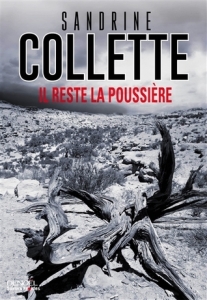 We become immersed in this life on a sheep farm with The Mother, her four sons, a dog named Three and the Criollos they ride, on the arid, infertile steppe they live on in Patagonia. All they’ve known and grown up with is harsh and menacing, reliably so; all they know is work, for her.
 Word by Word