Saltblood by Francesca de Tores

In a rented room outside Plymouth in 1685, a daughter is born as her half-brother is dying. Her mother makes a decision: Mary will become Mark, and Ma will continue to collect his inheritance money.

Girls Initially Raised as Boys

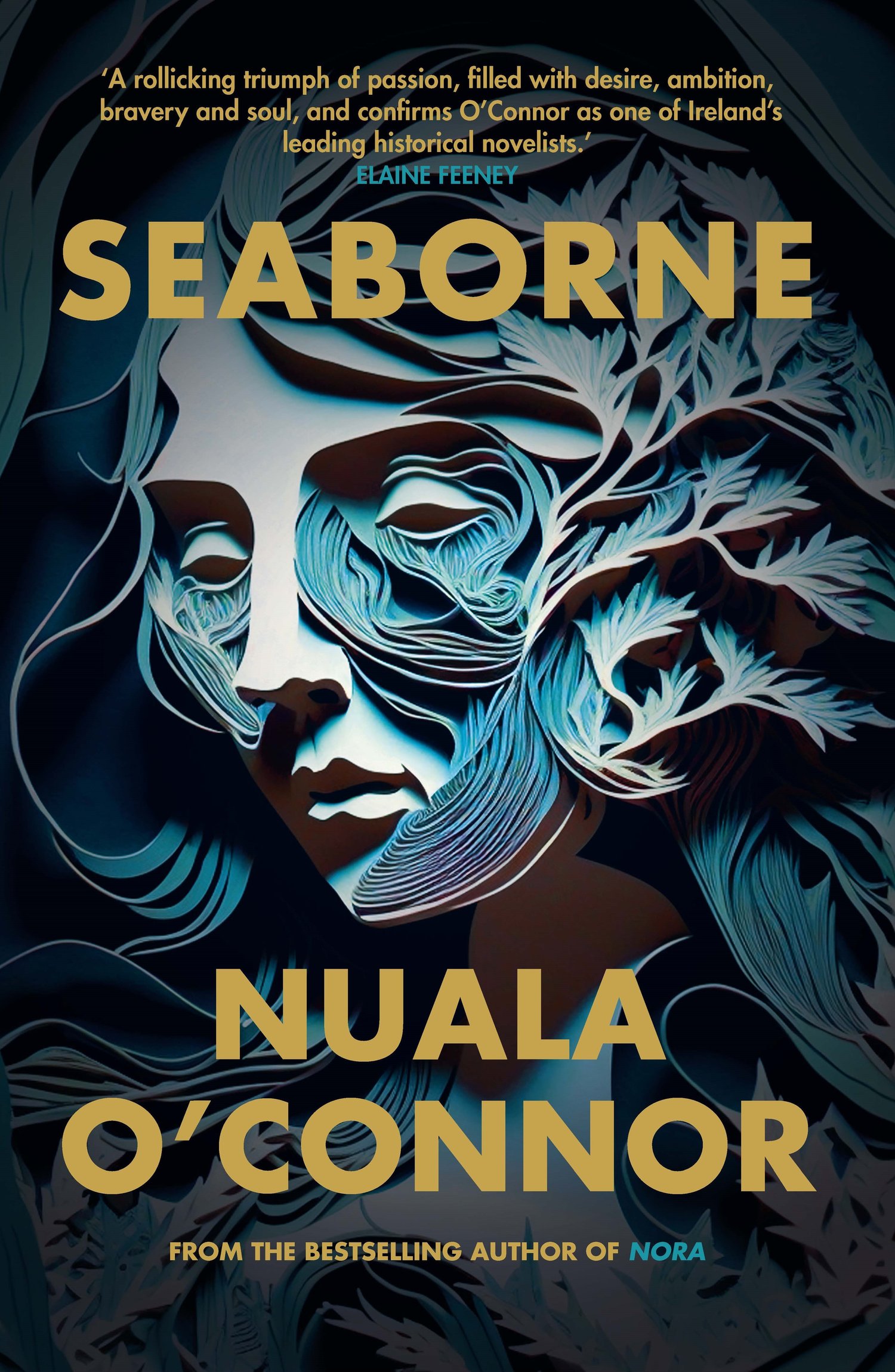
As I began to read about Mary Read in Saltblood by Tasmanian author Francesca de Tores, I had a sense of deja vu. I paused reading and revisited my review of Irish author Nuala O’Connor’s Seaborne, another work of historical fiction, but focused on Kinsale born Anne Bonny.

Stories of Real Female Pirates
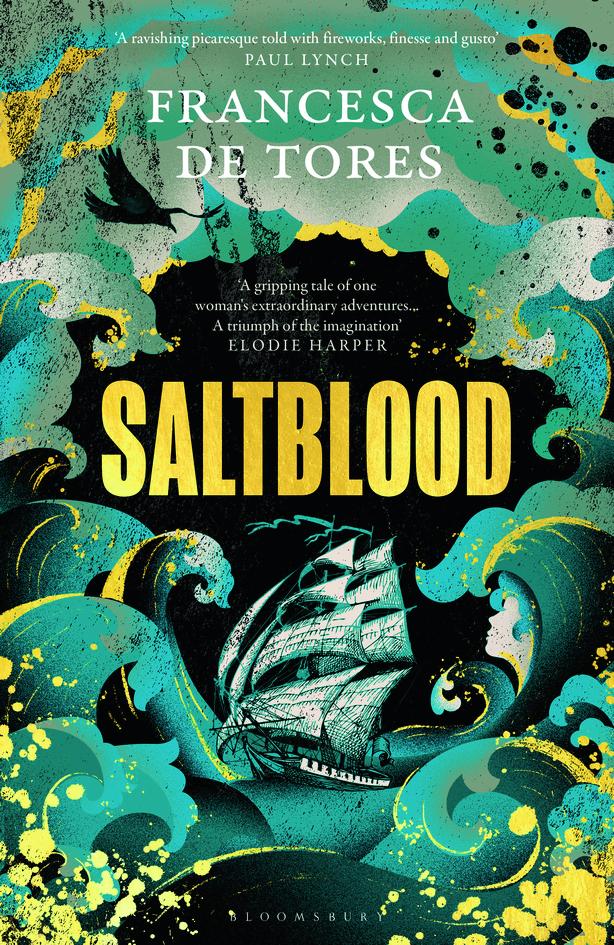
In Saltblood, we meet Mary Read (true historical figure), raised by her mother as Mark, a practical solution to poverty, inheritance laws and social restrictions.

After such a beginning, perhaps not surprisingly, Mary preferred for some years to live as Mark, due to opportunity and freedom. Working in service in a grand house as a man led to her/him enlisting in the Navy, then as the battles moved to land, joining the Army.

From the Military to Piracy
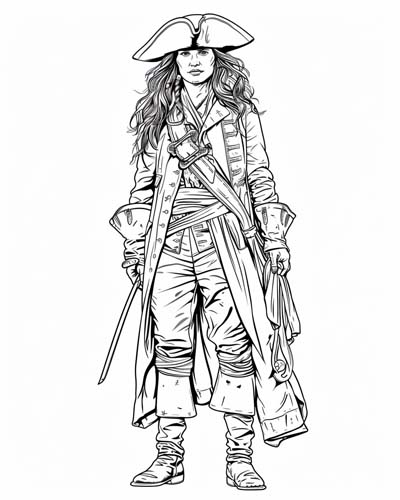
Settling for a short period as a married woman, she would then return to the sea after a tragic loss.

I went to sea a girl dressed as a boy, and I come back as something else entirely. I come back sea-seasoned: watchful of winds, and with an eye on the tides. I do not know if I have come back wiser, or better or perhaps madder. But I am not the same. What the sea takes, it does not return.

Initially working as crew for a privateer ship (authority sanctioned raiders); when they are raided by pirates, she elects to jump ship to escape the overly attentive Captain Payton and joins pirate Captain Jack Rackman. Although in her earlier years in the navy and army she was disguised, her later years at sea she presents as a woman, but is accepted as one of the crew due to her experience and abilities.

Pirating Protocols

Most pirates know the rules: go in fierce and fast, and the captains will beg for quarter, just as Payton did, and the Spaniards now do too.

One of the things the novel does well is really give you an idea of how pirating and raids work, for a start each member of the crew is made to sign a contract ‘articles of conduct’ that state policies around behaviour, pirate behavior (such as drunkenness, fighting, and interaction with women) and disciplinary action should a code be violated. Failing to honour the Articles could get a pirate marooned, whipped, even executed. It was the Captain’s way to maintain order and avoid dissent and ensure loyalty. The articles stated how gains would be shared.

There was a lot less fighting than we might imagine. Pirates preferred their target acquiesce. A black flag signaled to a vessel that they were about to be attacked, but that “quarter” would be given. This meant the pirates would not kill everyone on board if they cooperated and handed over any cargo. Seeing the black flag instilled fear and alerted ships to what was about to happen. If crew members did not fight, they might save their lives, but not their cargo.  Crew sometimes elected to join the pirate ship as Mary did.

A Companion Crow
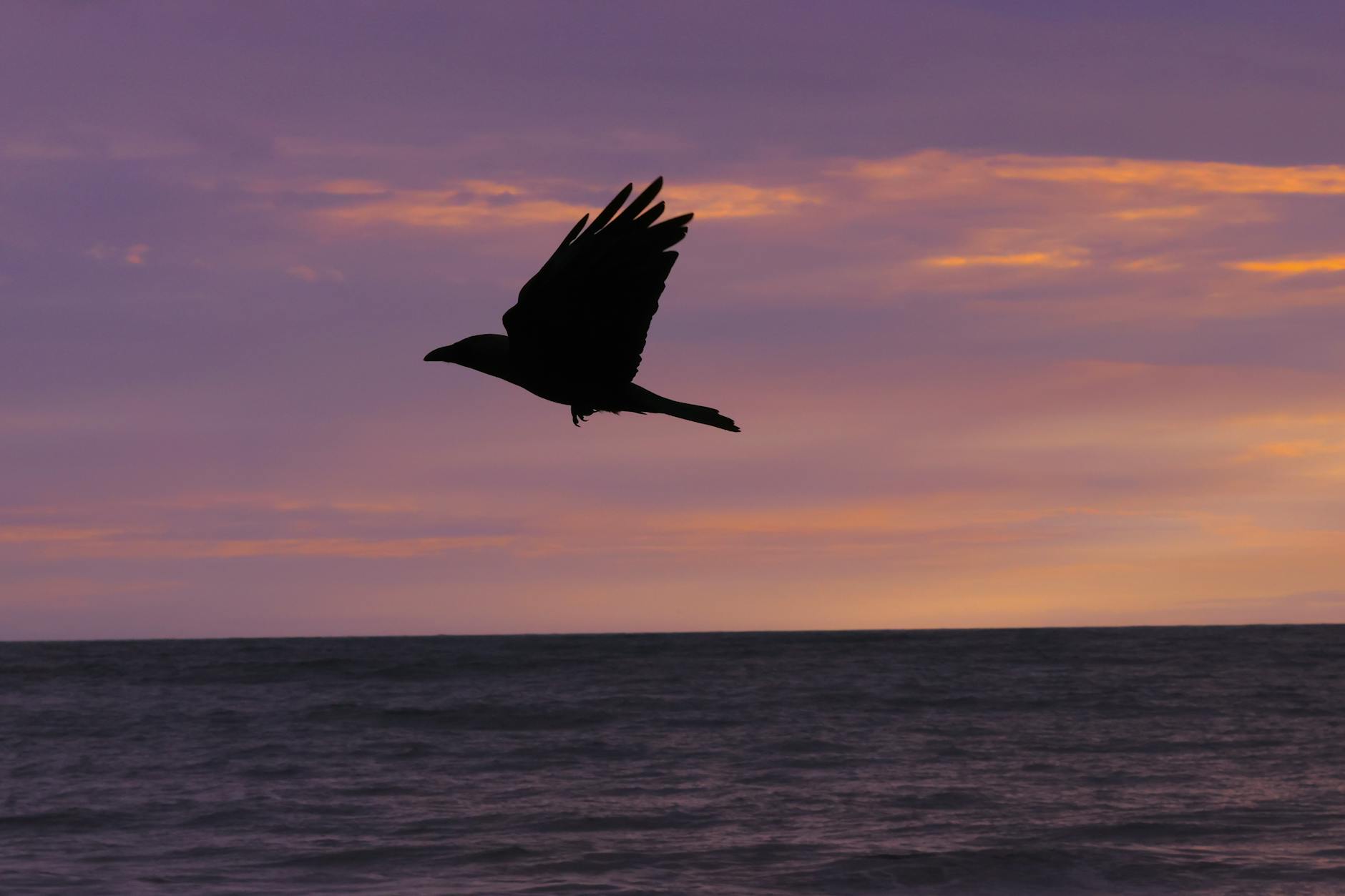
Photo by Alex Jaison on Pexels.com

One of the interesting fictional elements in de Tore’s version of Mary Read’s life is the appearance of a crow that follows Mary on land and out to sea. The crows presence acts as a warning to the men, it is not a good sign to them, but for Mary, it’s presence is reassuring.

A bird that can pounce from the top of the mainmast to skewer a sardine in the water, or snatch a crab from under rock and find out its soft parts, is a bird that sees well, and clear. It counts, this witnessing. To live your life under the vigilance of a crow is a kind of covenant.

A Pirate Nest in the Bahamas

Nassau became the base for English privateers, many of whom became lawless pirates over time. The Bahamas were ideal as a base for pirates as its waters were too shallow for a large man-of-war but deep enough for the fast, shallow vessels favoured by pirates.

It was here that Mary Read eventually met and befriended the much younger (by 15 years), emboldened Anne Bonny, encountered in Seaborne by Nuala O’Connor. The two women became fast friends, though opposite personalities.

Anne falls for Captain Jack and decides to join the crew, deepening her relationship with Mary simultaneously.
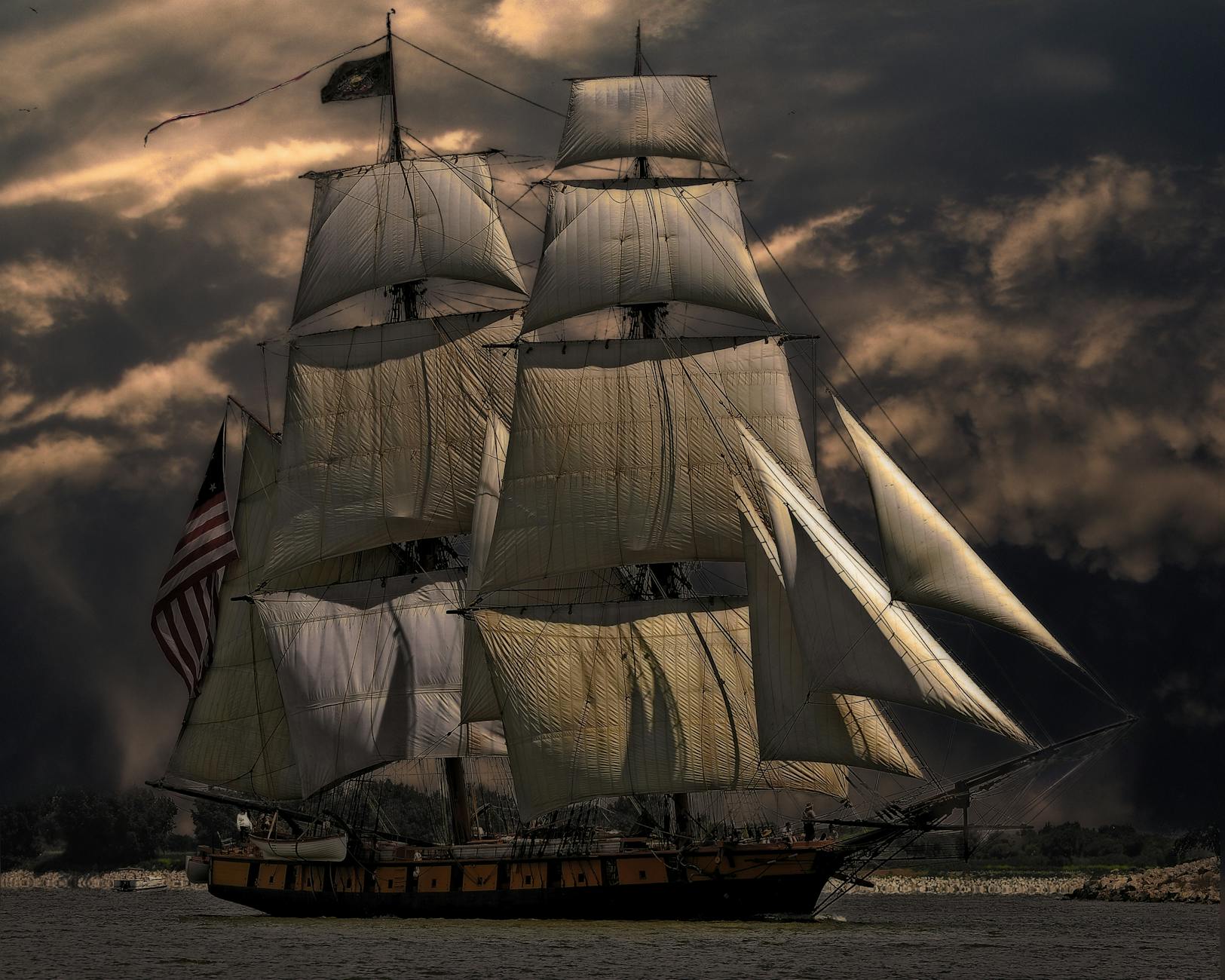
Photo by Pixabay on Pexels.com

Next to Anne Bonny, so bold and notorious, I had thought myself meek and colourless, and my story of little note. Yet she never tires of asking me about my years in the navy, and the army. Even my years on the Walcheren, which to me seem largely drab, fascinate Anne.

A Governor on a Mission

Saltblood continues to narrate the scrapes and adventures these two embark on and the efforts of Captain Rackham to avoid Governor Rogers, an English sea captain, privateer and colonial administrator who governed the Bahamas from 1718 to 1721 and again from 1728 to 1732. He aimed to rid the colony of pirates.

Initially I started then put this aside due to that feeling of having read something too similar, it starts off slowly and didn’t really pull me in, but more recently I picked it up again and continued only to find it much more engaging, as Mary is indeed quite a different character to Anne, and I enjoyed her land adventures as much as those at sea and the way their piracy days end is unforgettable.

After reading this I noticed I had another pirate book on my shelf, a work of history, The Stolen Village: Baltimore and the Barbary Pirates by Des Ekin, review coming soon.

Further Reading

Reviewed by Lisa at ANZ LitLovers

Author, Francesca de Tores

Francesca de Tores is a novelist, poet and academic. She is the author of five previous novels, published in over 20 languages, including Saltblood, which won the 2024 Wilbur Smith Adventure Writing Prize.

In addition to a collection of poems, her poetry is published widely in journals and anthologies. She grew up in Lutruwita/Tasmania and, after fifteen years in England, is now living in Naarm/Melbourne.
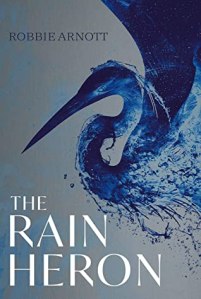
The Rain Heron by Robbie Arnott

I enjoy fable-like stories or those that reference them and when I saw this title, I was captivated and intrigued by the image and concept of a rain heron. It reminded me of reading Patrick Ness’s The Crane Wife and so I thought why not, see what this eco-fable was about.

Tales of Imaginary Birds and Nature

Eco fable The Rain HeronThe first chapter tells what I imagined was the original fable of the rain heron and the unlucky farmer, and from what I can gather, the author has made this story up as well. It’s a story of a woman running a farm, the daughter of generations of farmers, but one who struggles for many reasons no matter what methods she tries.
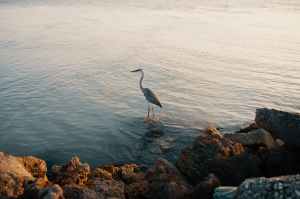
Until one day a big storm comes and destroys nearly everything; at the end of which she is found curiously draped over the branches of an old oak tree.

Even more surprising was the large heron that rose out of the floodwaters, leaving not a ripple behind it, that landed on the branch beside her. The birds blue grey feathers were so light, they were near transparent. When it flew off, water fell from its wings like rain. Its appearance changed the fortune of the unlucky farmer, until the neighbour’s jealous son’s envy caused her bad luck to return.

What is A Fable?

So is it a fable? It’s a tale of someone who has bad luck, who for a period their luck changes, but as with life, good luck causes jealously in others, who have destructive tendencies. And so the bad luck continues.

“I just set out to write a story where real characters or characters that felt real had their lives intertwined with the nature fable.”

Arnott then begins a new story in four parts, in which we meet Ren, a woman who has left her home after a military coup and gone to live in the mountains. She is virtually self-sufficient apart from occasional exchanges with a man named Barlow and his son. The outdoor scenes are vivid and believable, Ren is a really interesting character I wish we’d spent more time with.

The Rain Heron Robbie Arnott Crane

Photo by Josh Sorenson on Pexels.com

We don’t know exactly why she fled or what the coup was about, but the man alerts her to the presence of soldiers searching the mountainside for something, a group of four lead by a young woman referred to as Harker. They are in search of evidence of a myth and they will make Ren suffer until she divulges what she knows and leads them to its source.

In the second part, we go back in time to a seaside settlement on the South  coast and meet Zoe and her Aunt, just as the girl is being initiated into the village tradition of squid ink gathering, a secret trade that is shared with no one. An ambitious Northener arrives seeking knowledge for his ideas and is spurned, he turns towards destructive means and with everything that follows Zoe leaves. This community and environment are really brought alive and I was disappointed when this part ended.

The story returns to Harker and her troops and their journey, here I felt the story waned, a few connections had been made and the interwoven nature of the parts revealed, but neither the landscape nor the characters gain traction, Harker is determined in her mission, but self-destructive in her nature and has lost whatever empathy she ever had. Her previous actions are hard to understand, her transformation(s) not entirely believable.

A Man Writing Women Characters

The Rain Heron A trap

Photo by Pixabay on Pexels.com

Most of Arnott’s characters are women and I did find myself pausing early on and wondering why he chose to inhabit so many lead female characters, the unlucky farmer, the woman surviving in the mountain, the leader of the army group. I made a note when this thought arose, because these women were all acting in ways often attributed to men, and I wondered if anyone else had noted this. Harker uses brutal tactics to change Ren’s mind; Ren has abandoned her son.

In an interview Arnott says it made more sense for him to portray those characters as women, because it required them to demonstrate resilience, something he considered more of a female trait within this story.

Because they were spending a lot of time in the wilderness, he thought writing them as male characters would come across as cliché, referring to woman as having:

“that gentle, firm, methodical way of dealing with problems as opposed to letting anger and frustration rise to the surface”

The author says he wasn’t trying to convey a particular message, but the situations he puts his characters in and the familiarity of some of the climatic events that occur make it a thought provoking story, and I think it’s all the better for not coming to any conclusion or moral, for it exists as a catalyst for discussion of those various controversial situations that arise.

The Anti-Hero

My favourite character and the one we spend too little time with was the rain heron, who spends most of the book hidden away, but listening to Arnott talk about his inspiration behind the bird, who he first imagined as a storm, manifest into a bird that had magical qualities and was a kind of anti-hero, made me wish that the heron had more of a presence.

His point here was that in nature, birds and animals are really not interested in humanity, not in the way humans are interested in them, acting from instinct not from consideration or desire. That said, he has created a creature that readers are indeed likely to be fascinated with!

The Rain Heron (2020) was Tasmanian author Robbie Arnott’s second novel, his debut Flames was published in 2018.

Carrots and Jaffas by Howard Goldenberg

Allia NurseAll quiet on the blogging and reading front recently as life’s dramas intervened and demanded my full attention. Our daughter had a diabetic crisis 2 weeks ago and has been in hospital, she is stable now and happy to be home and said I can use this new picture she created for her Facebook page.

Consequently I have been carrying Carrots and Jaffas around with me and rereading passages, though I finished it more than 2 weeks ago and finally today had time while our son was at hip hop to move my scribbles here. Apologies Howard for taking so long to share your wonderful book.

Carrots and Jaffas is a wonderful example of how the virtual world allows us to come across writing voices that we don’t always find in bookshops or through mainstream publishers, that don’t require one to have publishing connections or be in the know. Just to be open to the random, serendipitous crossing of paths.

We find them when we are curious, someone may write 140 characters on twitter that prompt us to follow them, read their blog, consider their book and Voila, an instinct results in the arrival of a unique and intriguing book and an unforgettable reading experience.

Howard Goldenberg followed me on twitter, and this is what I saw when I considered whether to follow back.

Howard Tweets


Intrigued, I clicked on his blog link and perhaps uncharacteristically, as his posts are quite varied, the first thing I read was a book review for a book called Joyful by Robert Hillman. The author name seemed familiar, so I read on and was captivated by the review, not just Howard’s account of the story, but the homage to the book and its author his review paid. I thought not only does this sound like a wonderful book, but I want to read more of Howard Goldenberg’s writing and continued to read post after enthralling post.

When his novel Carrots and Jaffas arrived I opened the first page and read praise of the book by the author I mention above, Robert Hillman and a few pages further on, I realised why the name had sounded familiar. There on a page of epigrams preceding the first chapter I read the following quote from one of my Top Reads of 2013 The Honey Thief I reviewed here:

“My heart and my mind, my bones and my flesh and all the organs of my body are bound together with the cords of the stories I was told.” From The Honey Thief by Najaf Mazari and Robert Hillman

CarrotsCarrots and Jaffas is a story of twin boys, one of whom will be stolen, the people who surround them and whom they encounter, and how the events that occur change their lives and character.

The boys are the identical sons of Luisa and Bernard, a couple who worked and met in the same hotel. We are witness to their initial encounters and courtship in the opening chapters of the book, Luisa with her unique use of the English language, peppered with old-fashioned biblical words and quotes, charming in her deliverance. Bernard is enraptured by this exotic woman who interprets his comments in ways he could not have imagined, and is curious to understand more.

A month or so into these pleasant outings, an envelope appears on Bernard’s desk. Square in shape, lilac in colour, unbusinesslike, it sits on his keyboard like a question mark. Curious, he picks it up. A hint of gardenia in his nostrils. Bernard, more than curious, hefts the envelope, feels its substance. Fast fingers break the seal and Bernard reads:

La Señorita Luisa Morales

Has pleasure in inviting

El Señor Bernard Wanklyn

To Mate.

The delight and humour encountered in their courtship sits in stark contrast to the first pages in which we are witness to a kidnapping and the deranged thinking of the captor as we understand he justifies his act with thoughts of retribution for an elderly Aborigine lady Greta, who had two sons stolen from her by the authorities many years before, something that pains her still today.

Louisa and Bernard’s family unit is a metaphor for lives changed by tragic disappearance, the intersection of mixed cultures, social classes, politics and dysfunctional families. Luisa is an Argentinian immigrant whose parents were part of the “disappeared” during the time of the generals. After her grandmother took her to the park one day when she was three years, ago, they returned to discover both her parents gone, disappeared. Her grandmother continues to sit with Las Madres of the disappeared, mothers waiting, never giving up hope that their sons and daughters might return.

Separation changes relationship dynamics and Goldenberg deftly handles the effect of passive versus active separation on the identical twins with surprising, thought-provoking results. The experience is unusual and exposes the reader to the positive growth of someone in an otherwise traumatic situation. Observing the separate experiences of the twins exposes the suffering of those left behind, helpless in their efforts to find their son, the brother and yet when we are with Jaffas we are not afraid for him.

Image from the film Rabbit Proof Fence based on book by Doris Pilkington

Image from the film Rabbit Proof Fence based on book by Doris Pilkington

There are so many layers and learnings, such acute observations and joy in language and celebration of storytelling in this novel, it is difficult to describe without spoiling the experience for the reader, the spontaneous humour, the obvious cultural aspects, all round it was a pleasure to read and engaging all the way through. There were perhaps a few too many coincidences that made me pause for consideration, but then we know stranger things happen in real life and certain experiences can tend to gravitate towards people, repeating in history, so I let it pass.

Thoroughly recommend seeking this out and checking out Howard’s blog here. He writes fun poetry too.

Thank you @HelenHelenback for sending me a copy of the book.