The Brittle Age by Donatella Di Pietrantonio tr. Ann Goldstein

Having very much enjoyed her previous two novels translated into English A Girl Returned (my review) and A Sister’s Story (my review), I jumped at the chance to read her latest, winner of the 2024 Strega Prize, a novel inspired by a historic true-crime event in the 90’s, a double femicide in the mountainous region of the Abruzzo Apennines in Italy, a novel dedicated to “all the women who survive”.

Brittle or Fragile, the Impact of Events

l'età fragile The Brittle Age  Donatella Di Pietrantonio Abruzzo Europa Editions winner of the 2024 Strega Prize

When the novel opens, its first three chapters, just over a page each, touch on everything to come, Lucia’s daughter Amanda who has returned from Milan on one of the last trains as the pandemic shuts everything down, she stays in her room, barely eats, doesn’t talk, her phone uncharged under the bed. Lucia worries but can get nothing out of her.

Lucia visits her elderly widowed father, who lives in the house she was born, halfway between the town and the mountain. They walk up there and he reminds her all this will be hers one day too, land he owns that he no longer wants responsibility for.

An alarm signal arises from my stomach to my throat, suffocating me.
“That’s impossible. You sold this land.”
He tried for a long time, he confesses, without success.
I’m silent for a while, in the chorus of birds. At regular intervals the cuckoo solos.
“After what happened no one wanted it, I couldn’t give it away,” he says, as if to justify himself.
“I don’t want it either, it’s a frightening place.”
I’ve raised my voice, the last syllables echo. It will be mine of necessity, I’m his only heir.

Eighteen months before, the excitement of her daughter’s departure for Milan, the city where life would open up and happen for her, a grandfather’s pride. Now in quarantine, returned and nothing like that ambitious young woman that had left.

The Present Awakens the Past

Amanda’s reclusiveness awakens Lucia’s memories of those events of 30 years ago and throughout the novel, we learn not only what happened, but of the guilt Lucia carries for her absence and the heaviness that surviving the tragedy cost her friend, who, to make a better life left the place that held those terrible memories.

She doesn’t want to be seen in the town, people said of her, after the crime. No one mentions her anymore now. They’ve all forgotten Doralice and her story. The young people of Amanda’s age never knew her. Our parents didn’t help us stay connected.

With the memories come scenes that depict generational ways of living, ways of being, some things that stay the same, the things that change, the reasons some stay, while others leave.

Photo by Serafettin on Pexels.com

Lucia recalls trying not to worry about her daughter in the city alone, allowing her her freedom, throwing herself into her work to stop herself taking the train after her. But now she questions whether she underestimated the impact of something that happened to her.

I consoled her as well as I could, from a distance. That time, I really was wrong not to get on a train. Respecting her freedom, I failed her when she needed me. Some boundaries are too subtle for an indecisive mother like me. But do the most stable parents know at every moment the truth of what to do?
“Don’t worry, it will pass,” and I believed her.

Although the story is about a crime, the mystery of what happens sits alongside the portrait of a fractured family and community, all impacted by the past, burying it with silence.

A sacred forest in the south of France, hiking trails in forest mountain areas Italy, France

Our birthplace had protected us for a long time, or maybe that had been a false impression. We grew up in a single night.

The return of Amanda, interest in the mountain property from a developer and a need for resolution, ultimately brings the community together in an act that will work to heal wounds and create momentum for a new era.

The novel is told in five parts: Amanda, The Girls, Dente del Lupo, The Flight, and The Concert in short chapters, going back and forth in time, revealing aspects of the past of Amanda (recent) and her mother (long ago), while witnessing the changed state of their present and their dual need for healing.

The slow reveal of the tragic murders, alongside understanding how it impacted our narrator, plus her own awakening to the effect of that suppressed event, from the safer distance of 30 years in the future, is skillfully blended with the present day psychological suffering of her daughter, as they move towards recovering.

I thought this was so well portrayed, blending the mystery of tragic events, with inter-generational trauma and present day personal struggles, facing the difficulty of breaking through patterns of silence and repression, of deep caring even without understanding, of the need to forgive oneself and the dedicated perseverance of familial maternal love.

Highly Recommended.

N.B. Thank you to Europa Editions UK for sending me a copy of the novel for review.

Author, Donatella Di Pietrantonio

Donatella Di Pietranonio lives in Penne, Abruzzo, where she practices as a pediatric dentist. She began publishing books in 2011, at the age of 49. In the span of a little more than a decade, she has come to the attention of Italian critics and readers, winning the Campiello Prize with her third novel L’Arminuta (A Girl Returned) in 2017. A Sister’s Story was shortlisted for the prestigious Strega Prize and The Brittle Age the 2024 winner of the Strega and Strega Youth Prize. Her short fiction has been published by Granta Italy.

Reading Ireland Month 2025

March is Reading Ireland month, an initiative created by Cathy at 746 Books and it is simply a way of being in community, while reading anything written by Irish authors or that relates to Ireland, there are no fixed rules, just the intention to Read Ireland, whatever that means to you! There’s even a Spotify playlist if you’re interested in a bit of musical culture.

Getting a Jump Start

For me that means reading more Irish authors from my bookshelves. I did read two in January, in fact my first read of 2025 was Donal Ryan’s Irish Book Award 2024 winning, heart, be at peace, a novel about multiple characters in a rural town in County Tipperary facing the different issues that face them a decade or so on from his debut novel The Spinning Heart.

Then I picked up a beautiful second hand hardback Water by John Boyne on holiday, and read it on my flight home. It is the first of four novellas in his The Elements series and now I want to read the next three, Earth, Fire and the final one Air due out in May 2025. But not yet, I’m prioritising what I already have!

Reading From the Shelves

A selection of books to read during Reading Ireland month of March

So here is the pile from my bookshelves, from which I will be choosing what to read in March 2025.

There are also three titles languishing on my kindle, which doesn’t get as much attention as it should, because out of sight is out of mind when it comes to reading. So I’m jogging my memory and will try to read at least one of these e-books.

On the kindle I have Listening Still by Anne Griffin, The Quiet Whispers Never Stop by Olivia Fitzsimons and Quickly, While They Still Have Horses by Jan Carson. In physical print I have another Carson The Raptures, that I picked up at the annual Ansouis vide grenier in September 2024.

Audrey Magee’s The Colony (2022) was longlisted for the Booker Prize, shortlisted for the Orwell Prize for political fiction and the Kerry Group Irish Novel award, so it gained a lot of attention and I have been keen to read it.

When Fiction Reminds Us of Those Who’ve Passed

I really enjoyed Sebastian Barry’s Old God’s Time (2023) and want to read more of his work, so I chose his Dunne Family trio of books, Annie Dunne (2002), A Long Long Way (2005) and On Canaan’s Side (2011) to delve more into his storytelling. I am part way through reading these now.

I love that this collection of novels and the play that was the first in the series, were all inspired by characters from his own ancestral lineage. That inspired me too.

After reading A Long Long Way, I became curious, as I too have an ancestor, born in the same year as his character Willie Dunne (1896), who like Willie, went to France in World War I, was in an Irish regiment and did not return. My ancestor Edmund Costley died on 9 April 1916, in Ypres, West Flanders, Belgium at the age of 19. I’ll be writing a post about him in April.

Historical Re-Imaginings, True Crime, Women’s Lot

I have read two novels by Mary Morrissey, Mother of Pearl (1995) and Penelope Unbound (2023). Morrissey tends to take historical stories and/or characters and re-imagine their lives. Mother of Pearl was inspired by a notorious baby-snatching case in 1950’s Ireland, that she chose to fictionalise, having said that the truth would have come across to readers as unbelievable; while Penelope Unbound re-imagines the life of Nora Barnacle, if in Trieste, Italy, when James Joyce made her wait all day outside a train station for him, she decides to leave.

This year I’m going to read her imagined autobiography, The Rising of Bella Casey (2013); she was the sister of the acclaimed playwright Sean O’Casey, and it is set at the turn of the century Dublin, a social commentary on the lives of women in that era.

Then there is Maggie O’Farrell’s The Marriage Portrait (2022), another historical re-imagining, this time of the short life of Lucrezia de’ Medici, a sixteenth century member of the renowned aristocratic House of Medici in Italy. I enjoyed O’Farrell’s riveting memoir I Am, I Am, I Am – Seventeen Brushes With Death (2017), the first of her works I read, and then the multiple award-winning, Hamnet (2020) and The Hand That First Held Mine (2010), so I’m looking forward to immersing in this one.

Irish Non-Fiction

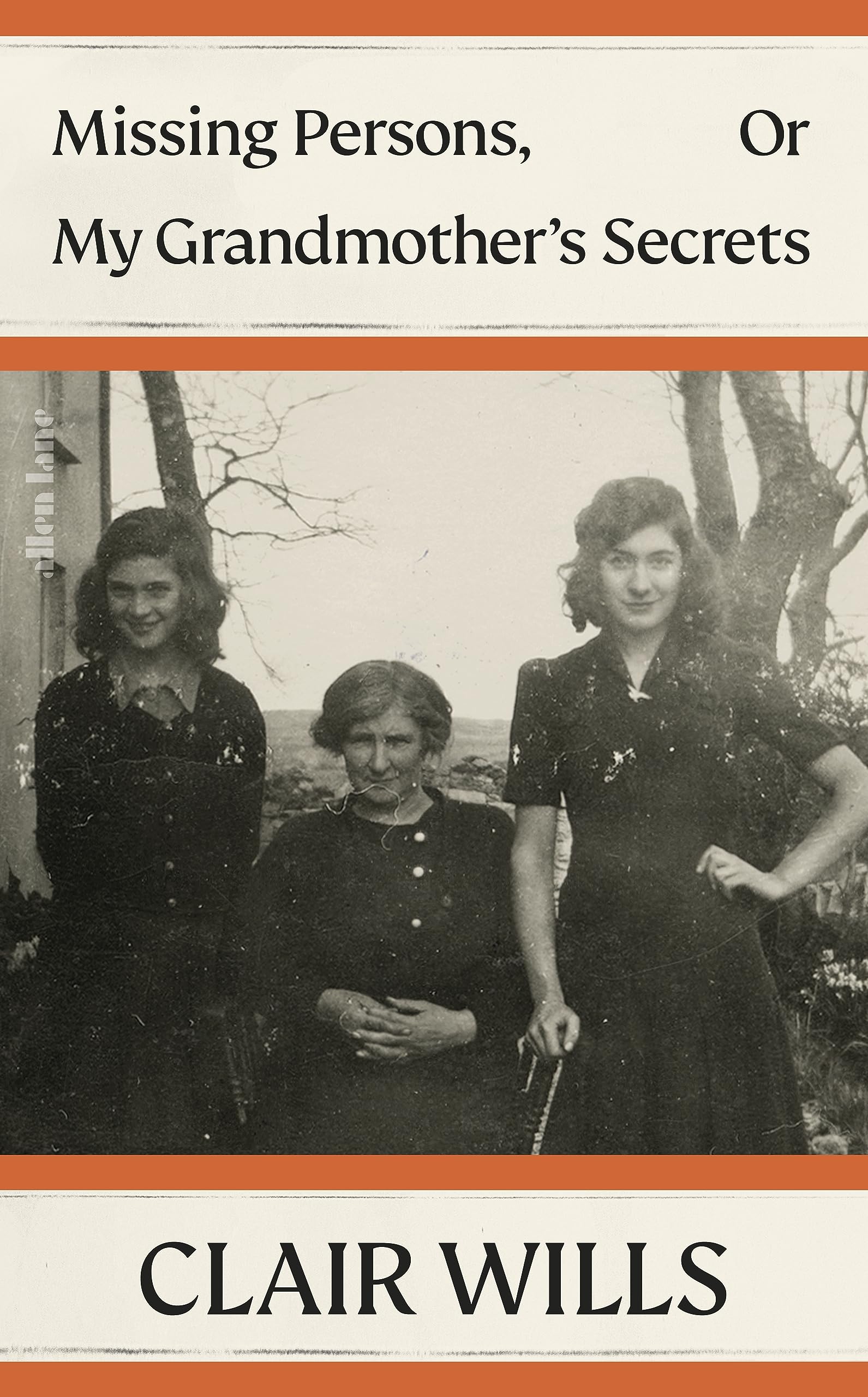
missing persons or my grandmothers secrets unmarried mothers in ireland nonfiction memoir that excavates the truth about silence

There are two non-fiction titles on my pile, Missing Persons, Or My Grandmother’s Secrets by Claire Wills, author, critic and cultural historian, winner of the Irish Book Award for non-fiction, who has written a family history that blends memoir with social history. She explores the gaps in that history, brought about by Ireland’s brutal treatment of unmarried mother’s and their babies, and a culture of not caring, not looking into or asking questions, rolling back a dark period of its history of loss and forgetting.

The second non-fiction title is the candid Fierce Appetiteslessons from my year of untamed thinking, also subtitled, Loving, Losing and Living to Excess in my Present and in the Writings of the Past by medieval historian Elizabeth Boyle.

The title is a reference to Vivian Gornick’s memoir Fierce Attachments, which is part of what intrigued me, but also the uniqueness of someone finding sense of three dramatic events in their life through medieval literature.

Every day a beloved father dies. Every day a lover departs. Every day a woman turns forty.All three happening together brings a moment of reckoning.

Boyle writes on grief, addiction, family breakdown, the complexities of motherhood, love and sex, memory, class, education, travel (and staying put), with unflinching honesty,deep compassion and occasional dark humour.

Remembering Edna O’Brien (15 December 1930 – 27 July 2024)

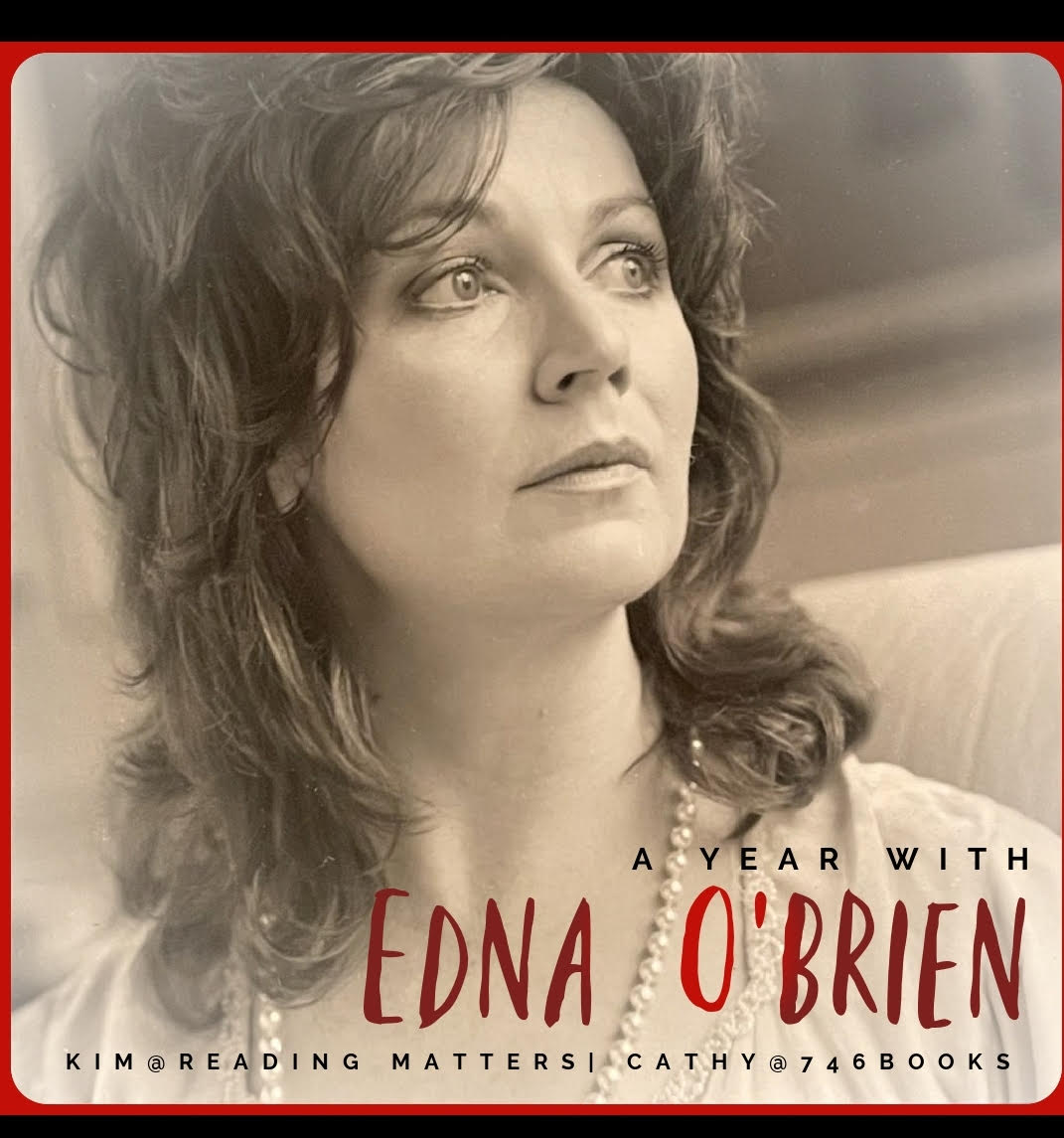
Edna O'Brien The Country Girls The House of Splendid Isolation

I couldn’t read Ireland without adding a title from Edna O’Brien, who died in 2024 at the age of 93. In 2023, I read The Country Girls trilogy, made up of three stories The Country Girls (1960), The Lonely Girl (1962), and Girls in Their Married Bliss (1964) released in 1986 in a convenient single volume.

Credited with breaking the silence on issues young girls faced growing up in Ireland, it was a subject she would often return to. She was punished for it, but lead the way for others to eventually follow.

O’Brien described her work in this way:

I have depicted women in lonely, desperate, and often humiliated situations, very often the butt of men and almost always searching for an emotional catharsis that does not come. This is my territory and one that I know from hard-earned experience. Edna O’Brien (Roth, 1984, p. 6)

Cathy at 746 Books and Kim at Reading Matters are spending a year reading Edna O’Brien and are reading Country Girls in February, you can see their reading schedule for the year if you go to their blog.

I have decided to read one my shelf, The House of Splendid Isolation (1991), the first book in her Modern Ireland trilogy, a political novel, depicting the relations of an Irish Republican Army terrorist and his hostage, an ageing Irish widow, in a house that represents the troubled nation.

Suggestions, Recommendations?

That’s the selection I have made, no guarantees on what I’ll get through, but I’m looking forward to the immersion. Have you read and enjoyed of the titles I mention above?

Are you going to read any Irish literature in March? Let me know in the comments below.

The Woman’s Prize for Nonfiction longlist 2025

Today the Women’s Prize for Nonfiction longlist 2025 was announced.

16 books ranging in matter, style and genre, from agenda-setting reportage on contemporary issues alongside revisionist histories and myth-busting biographies; to memoirs of self-determination and intimate narratives that shine a light on ordinary people combine with real-life criminal cases, notorious and forgotten, whilst others defy genre-classification, weaving multiple disciplines into a compelling narrative work.

The authors nominated are from a range of professional areas and expertise, including a music icon, human rights lawyer, political adviser, marine biologist, NHS palliative care doctor and Pulitzer Prize winner.

What the Judges Said

What unites these diverse titles, that boast so many different disciplines and genres, is the accomplishment of the writing, the originality of the storytelling and the incisiveness of the research. Here are books that provoke debate and discussion, that offer insight into new experiences and perspectives, and that bring overlooked stories back to life and recognition. Amongst this stellar list, there are also reads that expertly steer us through the most pressing issues of our time, show the resilience of the human spirit, alongside others that elucidate the dangers of unchecked power, the consequence of oppression and the need for action and defiance.

Kavita Puri, Chair of Judges

The Longlist of 16 titles

Click on any title to read the longer description of the book on the Women’s Prize website.

Autocracy, Inc.: The Dictators Who Want to Run the World  (Political Science) by Anne Applebaum (Poland/US) – explains the world we live in today and how liberal democracy is currently under threat.

Embers of the Hands: Hidden Histories of the Viking Age (History) by Eleanor Barraclough (UK) – described as an accessible gateway into this period of time, it has great storytelling, it is told with extreme authority and very readable.

The Eagle and the Hart: The Tragedy of Richard II and Henry IV (History) by Helen Castor (UK) – this book is a timely study of political power focused on Kings Richard II and Henry IV who are vividly brought to life in astonishing detail. Not just a personal history but a glimpse into different music and performance.

A Thousand Threads (Memoir) by Neneh Cherry – (Sweden/Sierra Leone) – a unique portrait of a life lifved fully creatively.

The Story of a Heart (Medical Memoir) by Rachel Clarke (UK) – it tells how one family, in the midst of their grief gives the heart of their child so that another human being can survive. It is written with such compassion, it is storytelling at its best.

Raising Hare by Chloe Dalton (UK) – a charming and beguiling book that captures the unusual relationship between the author and the leveret (baby hare) that she rescues.

Ootlin (Memoir) by Jenni Fagan (UK) – moving, enlightening and at times harrowing, a read about growing up in a broke, UK care system, a memoir written like poetry.

Why Fish Don’t Exist: A Story of Loss, Love and the Hidden Order of Life (biography/memoir/science adventure) by Lulu Miller (US) – a book that defies category, combining a personal voyage of discovery with a taxonomy of fish.

Agent Zo: The Untold Story of Fearless WW2 Resistance Fighter Elżbieta Zawacka  (biography/history/WWII) by Clare Mulley (UK) – this is a masterclass of biographical writing, a gripping read, well-researched, about a woman we should know about.

By the Fire We Carry: The Generations-Long Fight for Justice on Native Land (History/True Crime/Social Justice) by Rebecca Nagle (US) – an eye-opening read, the book delves deep into a court case that reveals the forced removal of native Americans onto treaty lands in the nations earliest years.

Wild Thing: A Life of Paul Gauguin (Biography/Art History) by Sue Prideaux ( UK/Norway) – this deep dives into a phenomenal and artistic career, the pages come alive with colour and magic, with incredible storytelling.

What the Wild Sea Can Be: The Future of the World’s Ocean (science/climate/environment) by Helen Scales (UK) – a widely researched, deeply resonant account of our threatened oceans, which strikes a helpful balance between hope and pragmatism.

The Peepshow: The Murders at 10 Rillington Place (true crime/history) by Kate Summerscale (UK) – this is how history should be written, it is evocative, carefully researched and hard to put down.

Sister in Law: Fighting for Justice in a System Designed by Men (social justice/true crime) by Harriet Wistrich (UK) – this is both a harrowing and hopeful account of of Wistrich’s battles to fight injustices against women in the legal system.

Tracker (collective memoir/biography/oral history) by Alexis Wright (Australia) – explores new ways to write biography, challenging the expectations of form, whilst giving a unique glimpse into the life of someone from the stolen generation in Australia.

Private Revolutions: Coming of Age in a New China (history/biography/feminism) by Yuan Yang (China/UK) – a powerful and intimate portrait of life in modern China told through the stories of four young women.

Have You Read Any of These?

Let us know in the comments if you have any of these titles or if there are any that you are particularly looking forward to reading.

I haven’t read any, but I enjoyed Kate Summerscales’s The Suspicions of Mr Whicher, another true crime tale and Mrs Robinson’s Disgrace, so I’m sure her book will be an interesting read.

I like the sound of Private Revolutions, something new, to be delving into the modern lives of young women in today’s China and I can’t help but be interested in Agent Zo, the story of another woman in the resistance, after reading the excellent Madame Fourcade’s Secret War in 2024.

What do you think?

This Mortal Boy by Fiona Kidman

This Mortal Boy is a fictionalised account of a true crime story. A sensitively written account of the life of Albert Black a young man from Belfast, Northern Ireland who arrived in NZ in the 1950’s on a £10 one-way ticket, guaranteed work for 2 years, who never quite fit in and discovered it was a whole lot more expensive to return, if you decided you didn’t want to stay.

His father hadn’t been conscripted but had gone to war anyway, leaving his wife and young son Albert, who survived the Blitz together, an experience that drew mother and son closer than ever. He never attained the same closeness to his father, who returned a different man.

Remembering how it was, the explosions and the fire raids, the people dying or already dead all about their street, the way she had put Albert on a shelf in a closet and held the door shut against him, leaning her body in with all her might, hoping not to be thrown off her feet when the next blast came. He was barely six at the time, still small enough to put in a cupboard and keep him safe.

Belfast had its own problems and New Zealand seemed like an experience that might be good for him, so his parents bought him a ticket and Albert set off dreaming of getting rich and building a fine house for his family.

Some days she looks at her husband and think it is his fault. Then she thinks it is hers for over-loving him, for not wanting to let him go, and her husband seeing that, and thinking he needed the chance to to grow up, to go to a land of opportunity.

Initially he worked in Wellington where he stuck with his new friend Peter, a young man from Liverpool who he met on the boat, they move in as private boarders with a young widow and her children, but the letters from home give Albert  itchy feet; he takes the train to Auckland in search of better paid work to save for his passage home.

He is a gentle, kind lad, one his landlady trusted immediately to take care of her boarding house while she tended to a sick friend. A little lonely he began to frequent a local cafe where he came across a violent young man, who would cause a significant change in his life’s trajectory.

The volatile man called himself Johnny McBride after a character in a Mickey Spillane novel, he was quick to settle any dispute with his fists and feet. Against his better judgement, Albert allowed him to stay a few nights, he overstayed his welcome, their relationship turned sour, ultimately violent, resulting in a death. Albert Black was accused of murder and forced to face a judge and jury unlikely to consider the mitigating circumstances that might have reduced his crime to manslaughter.

Originally meaning ‘fake, false, inferior, worthless’, the term ‘bodgie’ was applied in the 1950s to a male youth distinguished by his conformity to certain fashions and behaviours. The ‘widgie’ was his female counterpart.

A change in government to a more right wing party and its disapproval of youth culture prompted the Mazengarb inquiry into ‘juvenile delinquency’ and the reintroduction of the previously outlawed death penalty. The government took a hard line on what they perceived as immoral youth and its representatives publicly expressed their prejudice against and contempt for outsiders, often blaming them for this wave of moral delinquency.

The offender is not one of ours. It is unfortunate that we got this undesirable from his homeland.

Delivered to every household it also blamed the perceived promiscuity of the nation’s youth on working mothers, the ready availability of contraceptives, and young women enticing men to have sex. Kidman, who was 15 years old at the time, remembers it arriving at her family home and it being quickly removed before it gave them ideas. It is said to have had no observable impact on young people’s behaviour, rather contributing to the sense of moral panic.*

The report, sent to every New Zealand home, blamed lack of parental supervision for juvenile delinquency and advocated a return to Christianity and traditional values. Excessive wages for teenagers, a decline in the quality of family life, the influence of films, comics and American literature all apparently contributed to the problem. The report provided a basis for new legislation that introduced stricter censorship and restrictions on contraceptive advice to young people.

Albert effectively becomes a scapegoat for a violent message they wished to deliver to wayward youth, and with the odds stacked against him, a terrible verdict is delivered.

…in the eyes of God as in those of conscience, what is a crime when individuals do it is no less an offence when society commits the deed. Victor Hugo

It’s a tragic story of a young man caught in a moment of history that came down hard on youth and migrants. His case was sensationalised by the media and there were a number of irregularities that are likely to have contributed to the verdict.

More than just a novel, Fiona Kidman has requested and hopes for a posthumous pardon for Albert Black, hoping for the sake of his family that he can be seen in a different way to how history has portrayed him. This work helps create more of a balanced view of the young man, his hopes, dreams and intentions in his short-lived life.

I began the story of Albert’s short life and death because it illustrated a theme that has run through my mind for a long time, a concern for young people who make one terrible mistake and have not only had their own lives changed forever, but that of theirs and their victim’s families, and of the wider society.

This Mortal Boy won the Ockham New Zealand Book Award for Fiction.

Further Reading

Article by Fiona Kidman, Irish Times – Chasing justice for a Belfast man hanged in New Zealand

* NZ History – Mazengarb report released, 20 September 1954

More reviews of Fiona Kidman novels, The Captive Wife, The Infinite Air, Songs From the Violet Cafe

Buy a Copy of This Mortal Boy via Book Depository

N.B. Thank to the publisher Gallic Books, Aardvark Bureau for an ARC (advance reader copy) of this book.