A Quiet Obsession

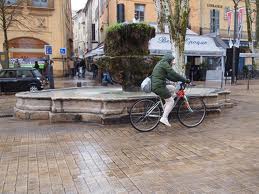
Rain in AixIt’s Saturday in Provence and my elderly neighbour in the apartment downstairs is leaning over her balcony telling me she is depressed and waving her hand skywards. It is spring and it has been raining for a couple of days every week consistently since the end of February.

With a smile I can’t suppress, I tell her it feels like home to me, the home I knew as a child anyway, that country down under where it rains every week but where there is sun every week too, and everything looks clean and green and grows constantly. But our residents in Aix-en-Provence aren’t used to it and the grey skies reflect their mood.
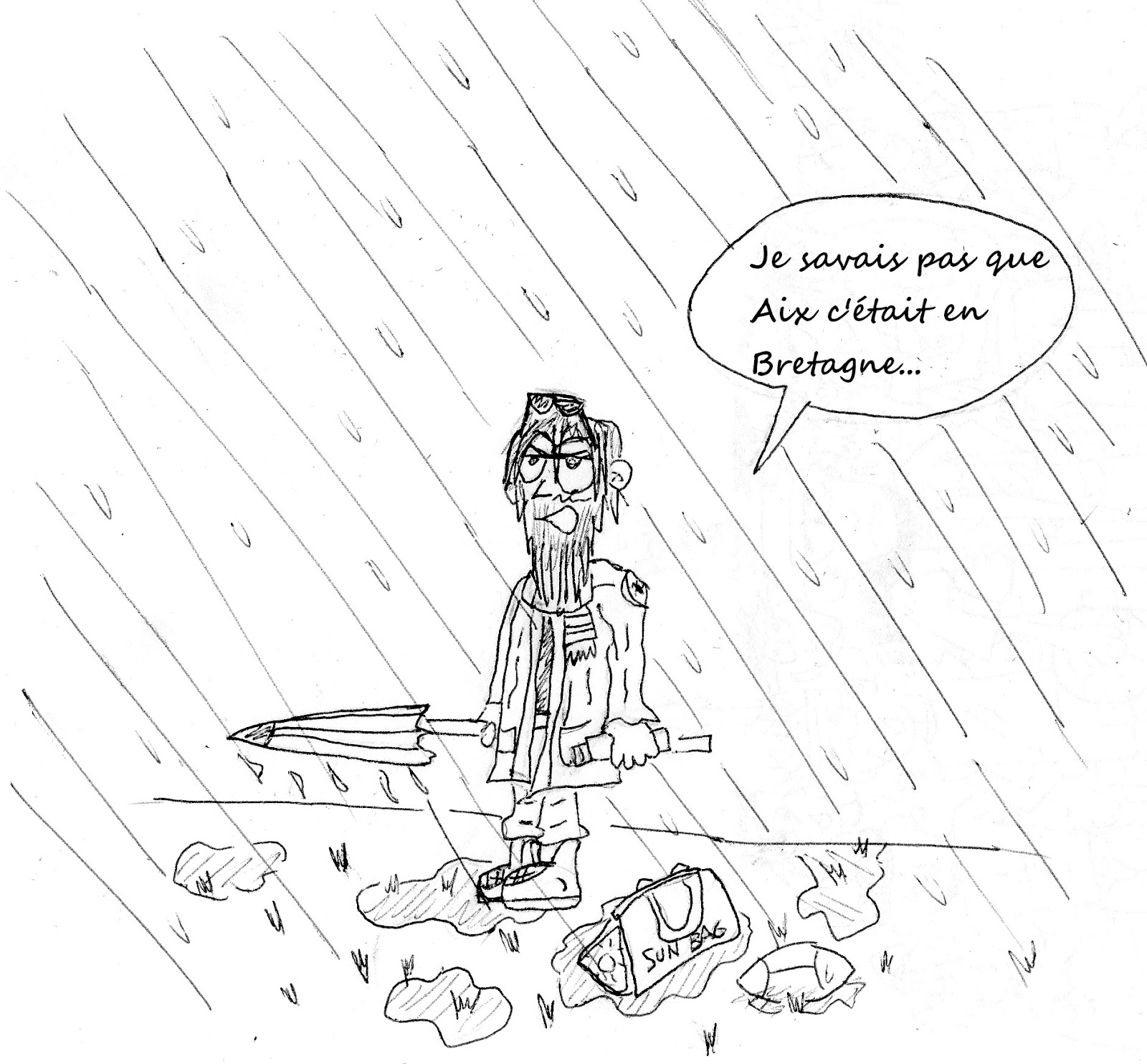
Aix sous la pluie by the artist Barbarion

Aix sous la pluie by the artist Barbarion

But not me.

Today is the English Book Sale, a rare event that I have missed on the last two occasions and I know I don’t need any more books, but I have to go just to see what is on offer and to hang about in the presence of other souls quietly obsessed with books.  You know, that old-fashioned kind, hardcover, softcover, some with post it notes and book marks, one with an attractive business card inside, I left that mystery for the next person to find. And the rain is not keeping people away here; I find the last space left in the car park and join the growing crowd of ex-pats and Anglophones scouting for book treasure.

One of the first books I find is a Virginia Woolf biography by Quentin Bell, and so soon after reading Susan Hill’s Howard’s End is on the Landing, and remembering Valerie’s comment about regretting having released all her Bloomsbury books to a sale, I rescue this volume from its fate and bring it home in readiness for its mate, the diary I will be picking up from Persephone Books on my next London visit.

The next book I purchase for my Dad, whom I will be seeing in exactly one month, in Istanbul. My father is a retired farmer who had a love of horses all his life, they were the main mode of transport around the farm and at the weekends, we would pile into his converted furniture removals truck, horses in the back, to watch him play an unsophisticated, remote countryside, farming people’s style polo. He will enjoy this true story of an equine beauty by Laura Hillenbrand I am sure.
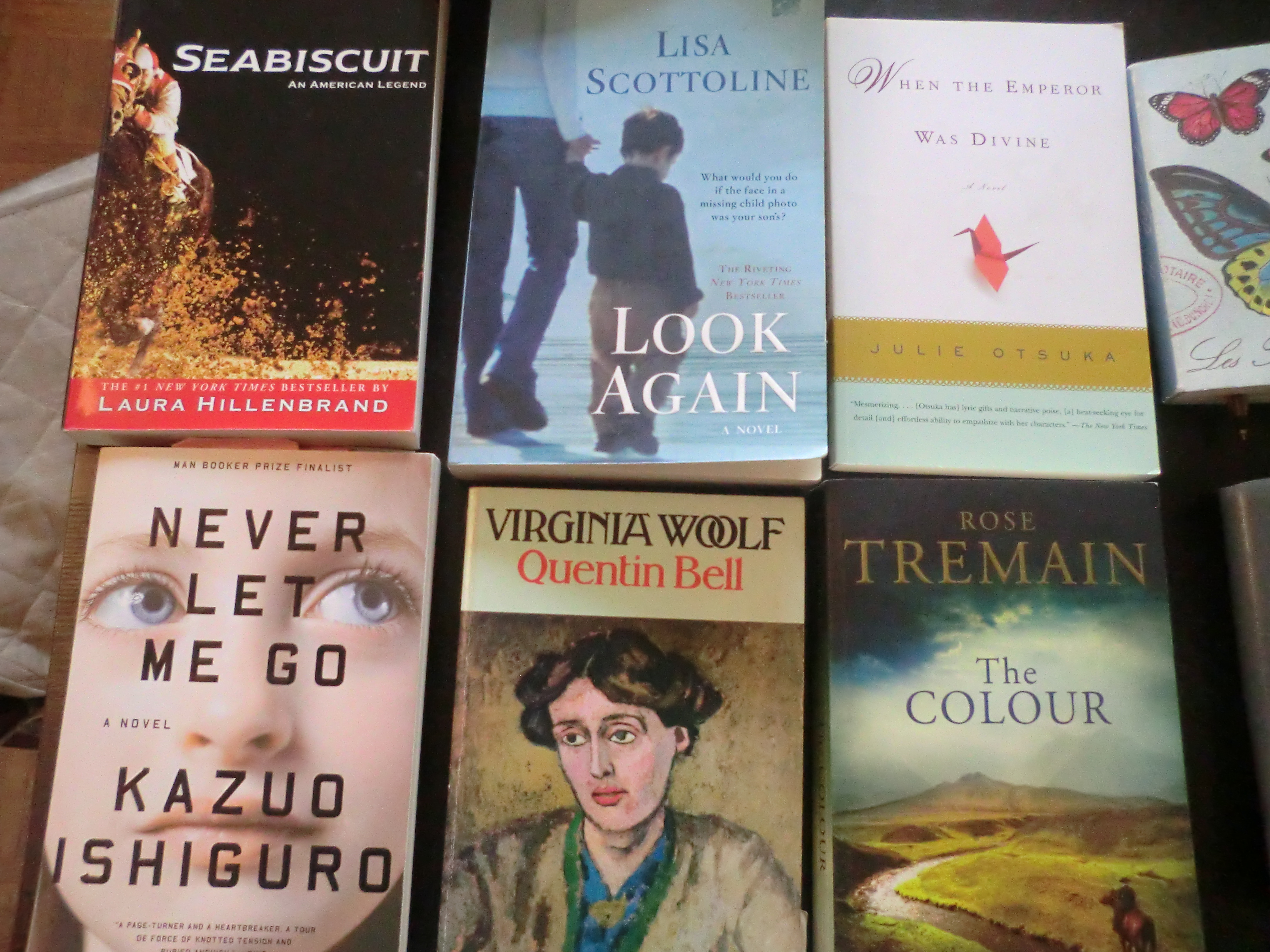
My Booksale Haul

My Booksale Haul

I am detecting a bit of a theme here, I buy this Rose Tremain novel The Colour, because it is set in New Zealand and it has been recommended numerous times and though I have picked it up and even taken it from the library once, I have never read it – and there is something about the cover on this version that makes me want to own it.

Kazuo Ishiguro’s Never Let Me Go I pick up without hesitation, I loved his recent collection of short stories and this one has slipped by unread thus far.

I see a fellow book loving friend who thrusts Lisa Scottoline’s book Look Again into my hands and tells me she stayed up all night last night reading it. It’s disturbing but unputdownable she says. Ok, always room on the shelf for a book that grips one from the first page and perfect holiday reading material, though perhaps not the upcoming Turkish holiday, I don’t want to read about lost children before taking mine to a large unknown city.

The cute little Julie Otsuka novel When the Emperor was Divine, I can’t resist. I want to read The Buddha in the Attic, but this is the book that presents itself first, it’s more of a novella and the seductive testimonial on the front cover is enough to tempt me, one who rarely buys into contrived book cover descriptions, but mesmerising, lyric gifts, narrative poise, a heat-seeking eye for detail, there are enough enticing adjectives in that one blurb for me to appreciate, living in an era of twitter fiction, so I take it.
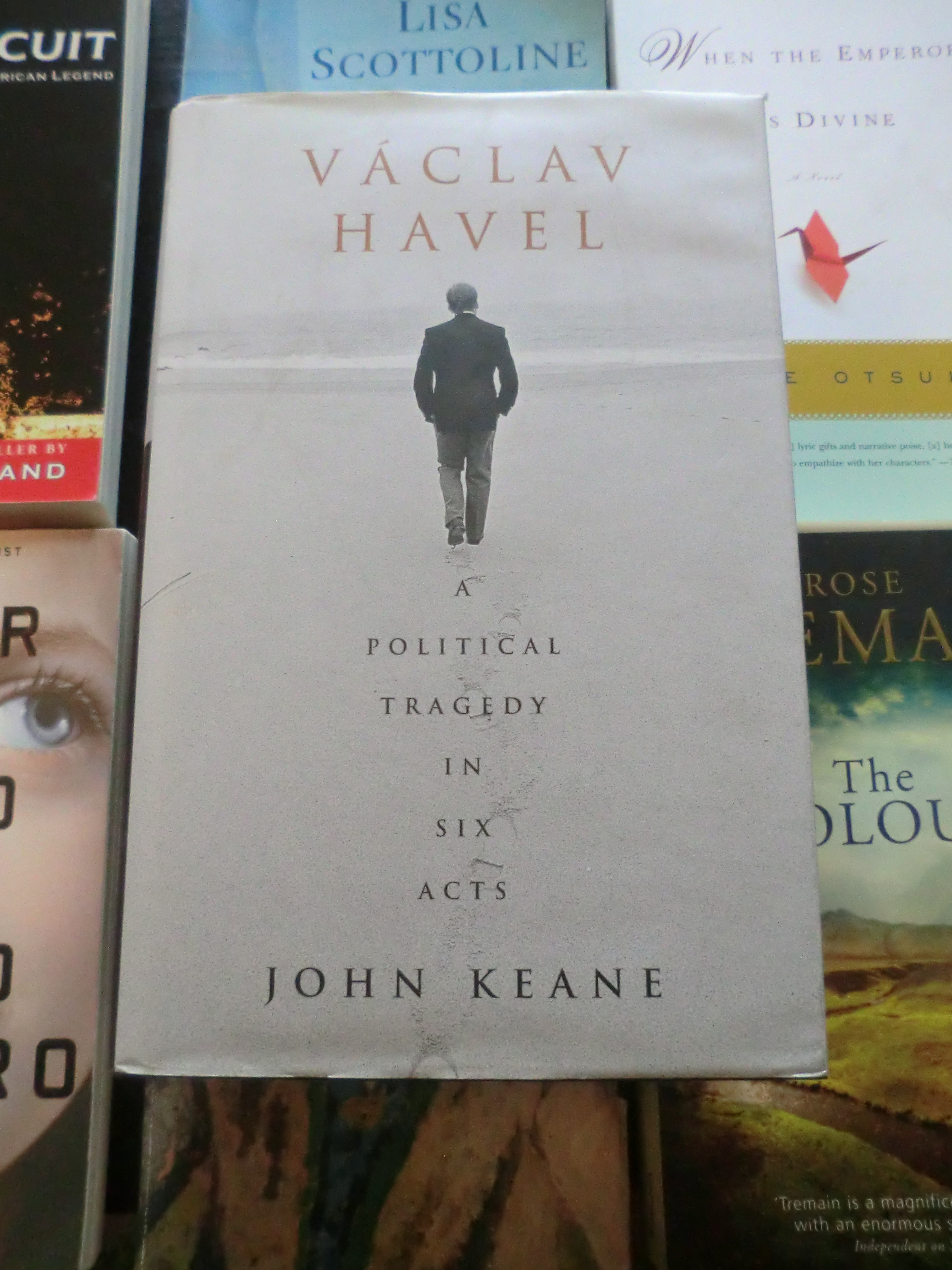
A Political Tragedy in Six Acts

A Political Tragedy in Six Acts

And the pièce de résistance, a hardback, first edition of John Keane’s biography of Václav Havel A Political Tragedy in Six Acts. I don’t know a lot about Havel, he was a renowned playwright turned President of the Czech Republic and a daring dissident in his youth, yet the little I do know of him, makes we want to know a lot more. He died in Dec 2011 but I believe that there are lessons to be learned from the life he lived.

And so, with my arms straining under the load of seven books, I look up to the balcony of my neighbour and tell her to do what I would do if I felt that way about the day, find a good book and escape into it for the afternoon, and don’t worry, the forecast is for sun tomorrow.

At last she smiles, ‘Yes, that I can do’, she says and ‘Bon Livre’ as I disappear inside with my stash of books, a hot roasted chicken, 2 fresh baguettes and 3 chocolate éclairs. Life is good!

Mom & Me & Mom by May Angelou

Maya Angelou starts her conversation book by mentioning something people often ask, how it is that she became the women she is, a question she says she has been tempted to respond to using lines quoted from Topsy, the young black girl in Uncle Tom’s Cabin who said, “I dunno, I just growed.”

Mom Me MomInstead, Angelou has written this thought-provoking tribute, sharing a slew of matriarchal experiences among the many others already shared in her remarkable series of autobiographies, to highlight a little of how she did become that brave, sensitive, adventurous and caring women she is, in part due to the grandmother she loved and the mother she came to adore.

It is a story written with utmost compassion and forgiveness, for this is a woman whose mother admitted when she and her husband separated that she could not mother young children, so sent them to live with their grandmother for ten years. Angelou closes the prologue reminding us that love heals and throughout the book will prove that kindness is the greatest gift we can ever give and foster in others.

Love heals. Heals and liberates. I use the word love, not meaning sentimentality, but a condition so strong that it may be that which holds the stars in their heavenly positions and that which causes the blood to flow orderly in our veins.

Vivian Baxter, Maya Angelou’s mother, was the eldest of a large family of mostly boys, for whom threats, intimidation and violence were a part of their way of their life and this petite force was often at the forefront of their skirmishes. Their father encouraged tough boy talk and tasked his daughter with ensuring the boys didn’t soften. Little wonder that after falling in love, marrying and realising that it was a mistake, they were also unable to agree on who should raise their toddlers, they separated and sent the children to their father’s mother in Stamps, Arkansas. Maya was three and Bailey five-years-old.

Ten years later, when their grandmother felt that Bailey had grown too old for Arkansas, when he had reached a dangerous age for a black boy in the segregated South, it was arranged for them to return to their mother in California. Bailey was enthusiastic, Maya much less so. It would be difficult, but for all her flaws, their mother knew how to communicate with her children and didn’t push her mother status on them. Maya decided she would call her ‘Lady’ and her mother’s response to this is one of many small pleasures Angelou offers up in her book.

Maya has a baby very young, without the foundation of a loving relationship, however with the love and support of her mother, this event in no way prevents her from pursuing her life’s dreams and ambitions.

I thought about my mother and knew she was amazing. She never made me feel as if I brought scandal to the family. The baby had not been planned and I would have to rethink plans about education, but to Vivian Baxter that was life being life.

Some years later deciding to marry Tosh tested the mother daughter relationship, Vivian didn’t try to stop her daughter from making what she thought was a mistake, but she chose to leave San Francisco, not wishing to witness the fallout. Like any young women living off the heady ambiance of newly married love, Maya wished to prove her mother wrong.

To begin with she continued doing all the things she loved, the things that made her Maya Angelou, seeing her friends, attending a dance class, going to church and speaking freely about God. However her activities slowly became issues between the young couple, so she stopped them in an attempt to maintain peace between herself and her husband.

At first the dimness is hardly noticeable but not alarming. Then with a rush, the light is vanquished by darkness.

This gem of a book, complete with gorgeous photos, is a wonderful addition to her already masterful collection of autobiographies and chronicles that one relationship that runs through our entire lives, that with our mother. It may not always be easy, but Angelou shares those moments that tested and ultimately strengthened the love and respect they had for each other. She accomplishes it with incredible honesty and selflessness, something that shines through in the brief interview I have linked here. What a wise and loving soul she is.

Interview – Learning to Love My Mother: Maya talks about her mother with a BBC interviewer.

“Exercise patience with yourself first, so you can forgive yourself for all the dumb things you do. Then exercise patience with your children.”

Buy a Copy of Mom & Me & Mom via Book Depository

Note: The book was an Advance Reader Copy (ARC) provided by the publisher via NetGalley.

Howard’s End is on the Landing, A Writer’s Reading Journey

There is much to love in books about a reading journey, just as there is in an exhibition of a well-known painter’s own personal collection, especially when those collections include the work of their friends and personal anecdotes.

Susan Hill certainly comes up with many personal anecdotes of interactions with some of her favourite writers as well as some ‘I almost met…’ which made me laugh because with each of those non-encounters, she says the same thing, that most likely she would have had nothing to say anyway. I am sure that would not have been the case, being so widely read, she would be able to find common ground with almost any great writer, though ever humble a writer be of their own work perhaps in the presence of an idol.

Susan Hill Reading YearHoward’s End is On The Landing is Susan Hill’s account of a year spent reading from home, her collection easily the size of a small library from the way I read it, one bookshelf alone contains 743 books and this a country house of many rooms where books have snaked their way up the stairs across the walls and had bespoke shelves made to measure for hard to fit nooks and crannies.

At the end of the book, she includes a list of the final forty; it’s a page I refer back to often as her journey of short chapters includes picking up an author’s many works and often struggling to decide which one should go on the list. She loves her Victorians, perhaps more than anything, so Charles Dickens, Thomas Hardy, Anthony Trollope, George Eliot and Emily Bronte are all there.

I have spent a long time among the Victorians this winter but the year is on the turn, the first spring crocuses are pushing up through the grass. It is not yet warm, there are no leaves on the trees but just perceptibly the nights are drawing out.

I am restless for the twentieth century again. Upstairs then, to the landing. Why Forster sits next to Graham Greene, or Anita Brookner is tucked in beside V.S. Naipaul, let alone why they are interspersed with odd volumes of the Finn Family Moomintroll, is one of the mysteries of the reading life.

It doesn’t really matter whether I have read the books or not, it is not only recognition of similar books we may read, it is as much about sharing the joy of reading, its ability to provoke, to uplift, to question. It is the consequence of reading and the confirmation of how different we all are in these observations that continues to prove the reality, that somewhere out there that same book will have been both adored by one person and despised by the next.

Just this morning I read a passionate review by Vishy the Knight of Nicole Brossard’s Yesterday, At the Hotel Clarendon in which he describes the effect of reading prose that to him was sublime, lush, delightful, transcendent, luscious, intoxicating. Well, I don’t know about Brossard’s prose, but I was enjoying Vishy’s. He went on:

After reading a particular passage and falling in love with it, I thought that this was it. Now Brossard will get back to business and get on with the story. And then followed another intoxicating passage. And then another. And another. It was the kind of intoxication that one gets while listening to classical music, the kind which is pleasurable but on which one never gets drunk. Nicole Brossard is also a poet and it shows in her prose. I want to read this novel again just for Brossard’s prose.

Then, at the end of his review, he mentions he was able to find two other reviews of the book in Canadian literary magazines and only one review on Goodreads, which said “I just can’t stand this book anymore.”  Just like films, the only way to really know is to see or read it yourself! And as I alluded to in my previous post, books and reading tell us and others who we really are. As for me, I trust Vishy’s judgement, I love lyrical prose.

Susan Hill’s book is very much influenced by the English tradition and I feel compelled to balance that a little by mentioning another book in a similar vein which I adored, Pat Conroy’s A Reading Life.

Conroy Reading LifeI have only read one of Pat Conroy’s books, The Prince of Tides, but would not hesitate to read more, especially as a summer read –they do tend to be big, bold, compelling books, great for a summer read. His reading life unfolds by the chapter in a mesmerising, delightful way, his storytelling and anecdotes within the book are captivating.

He is loyal to certain influential bookish people in his life and they often reappear throughout the chapters. The chapter on the influence of his mother and references to both the book and film of Gone With the Wind is a great story in itself. But my favourite chapter and one that has stayed with me in the years since I first read this, was Chapter Eleven A Love Letter to Thomas Wolfe, because he is so honest and appreciative, ignoring intellectual snobbery and sharing what he describes as a pivotal event of his life – his reading of Look Homeward, Angel and though not knowing it at the time, entering into “the home territory of what would become my literary terrain”.

I have read very good reviews of Will Schwalbe’s book The End of Your Life Bookclub and know that one day I will venture into its pages, but have been warned, this one is a real tearjerker, so timing is important. There is no rush, just many future reading pleasures that will lead to even more.

And the one stand out book from Susan Hill’s reading year, that made me decide I must have a copy? Well, it’s not even on the list, but that’s because it seems to be permanently at her beside and I see Persephone Books have reissued a copy of it as well. It was Virginia Woolf’s A Writer’s Diary.

I have never exhausted  A Writer’s Diary, and never will.It gave me what I needed at 16, and it continues to give.

Have you read any of these books, or do you have another favourite book of a writer’s reading journey?

The Hare with Amber Eyes, A Hidden Inheritance

The Hare with Amber Eyes

What a story this hare could have told should he have possessed the gift of speech. Instead we see him hunched there, ears pinned back, quivering, stunned by the journey he has taken, the events that have occurred around him, surprised to have survived when so many of his companion artifacts, the more sturdy furnishings, grand paintings and even other ceramics, did not.

The Hare With Amber Eyes is a Japanese netsuke, a miniature sculpture (though they can be wood or ivory) invented in the 17th century, not just as an objet d’art, but a functional kind of toggle to attach to the end of a cord for a pouch that a man might carry, since most of the garments they wore did not contain pockets (the two Japanese characters ne+tsuke mean “root” and “to attach”).

The hare is part of a collection of 264 netsuke purchased by the third son of an aspiring and ambitious Jewish family, Charles Ephrussi (son of Leon).

By 1860 the family had become the greatest grain-exporters in the world. In 1857 the two elder sons were sent out from Odessa to Vienna, the capital city of the sprawling Hapsburg Empire. They bought a huge house in the city centre, and for ten years this was the home to a shifting population of grandparents, children and grandchildren as the family moved backwards and forwards between the two cities. One of the sons, my great-great grandfather Ignace, was tasked with handling Ephrussi business in the Austro-Hungarian Empire from this Vienna base. Paris came next: Leon, the older son, was tasked with establishing the family and business there.

Hare Amber EyesBeing the third son, Charles was spared the obligation of being groomed for the financial sector in the family business (though it may well be he was not cut out for it either as de Waal speculates), preferring to frequent the cafes, salons and a certain boudoir of an older, married woman, attaching himself only ever temporarily to that which he admired – having already lived in three large cities, with his languages, wealth and a passionate interest in the arts, he had plenty of time to indulge his many passions.

It was through his pursuits in the arts, the start of his own collection, mingling with artists, other collectors and art dealers, writers about the arts, that he became interested in Japonisme, a rarity when it began appearing and so desirous. He would purchase a large collection of netsuke from the Parisian art dealer Philippe Sichel who travelled to Japan in 1874.

There is a wonderful connection to Proust throughout this part of the book, one that was a pleasure to discover, without the necessity of having read him, if anything it is an interesting introduction to that group of intellectuals of the 1880’s – 1900’s, Charles Ephrussi himself one of the models for Proust’s depiction of Swann in Swann’s Way.

The author of the book, Edmund de Waal is a descendant of the Ephrussi family and has inherited the 264 netsuke. He is a ceramic potter himself and spent two years studying in Japan, after many years as an apprentice in England. It was in Tokyo, while visiting his Uncle Iggie (another Ignace) that he first laid eyes and hands on the family netsuke that would eventually become his, learning a little of their journey from Paris to Vienna, London and back to Tokyo. Eventually he would spend five years researching what would become this incredible book.

He too, is the third son, though his is no longer a global banking family with the same expectations of its protege. Although he shares similar characteristics to his ancestors, those who did manage to escape the family business and were able to develop that appreciation and eye for a work of art, going beyond casual observation; it is as if he converses with these objects and reads them as if they have living, human qualities.

DeWaalThrough this book, he traces the history of these netsuke and his family, as they rise in ascendancy and are undone by the events leading up to the second world war. We come to know many of the family members and Edmund’s grandmother Elizabeth, a poet and a lawyer is a wonderful woman to learn about, the first woman to receive a doctorate from the University of Vienna and passionate about her poetry, she corresponds regularly with Rilke.

This book was so fascinating and so sensitively handled, it was with an almost palpable sadness that I finished it and felt bereft, wondering where on earth I could go to from here, reading-wise, after such a story.

And then I remembered it has been two years since publication and so I consoled myself with following the work of De Waal, who has been rather prolific since 2010 and I was not surprised to see his recent exhibition A Thousand Hours, showing works behind vitrines, evidence of the longer term effect of his immersion into all that research and study of netsuke and other artifacts his family had preserved.

I leave a link to him commenting on that most recent exhibition and a wonderful article in the Telegraph, in which I learn that De Waal has recently returned from a trip to Jingdezhen, home of the purest clay in China, where porcelain has been made for 1,000 years. This was a research trip for his next book and for a collaboration with the Chinese porcelain collections at the Fitzwilliams Museum for an upcoming exhibition:

De Waal is animated, inspired, gesticulating with his long fingered hands; there is a hum of creativity around him. You can almost see the words fizzing in his head, feel the ideas taking root, springing up out of nothing and arranging themselves in little groups, to form stories, dramas, like his pots.

The Netsukephotos of some of the Ephrussi collection + family pictures

Article Edmund de Waal on his new exhibition, A Thousand Hours by Jessamy Calkin

Video Watch Edmund De Waal transform clay into beautiful works of art

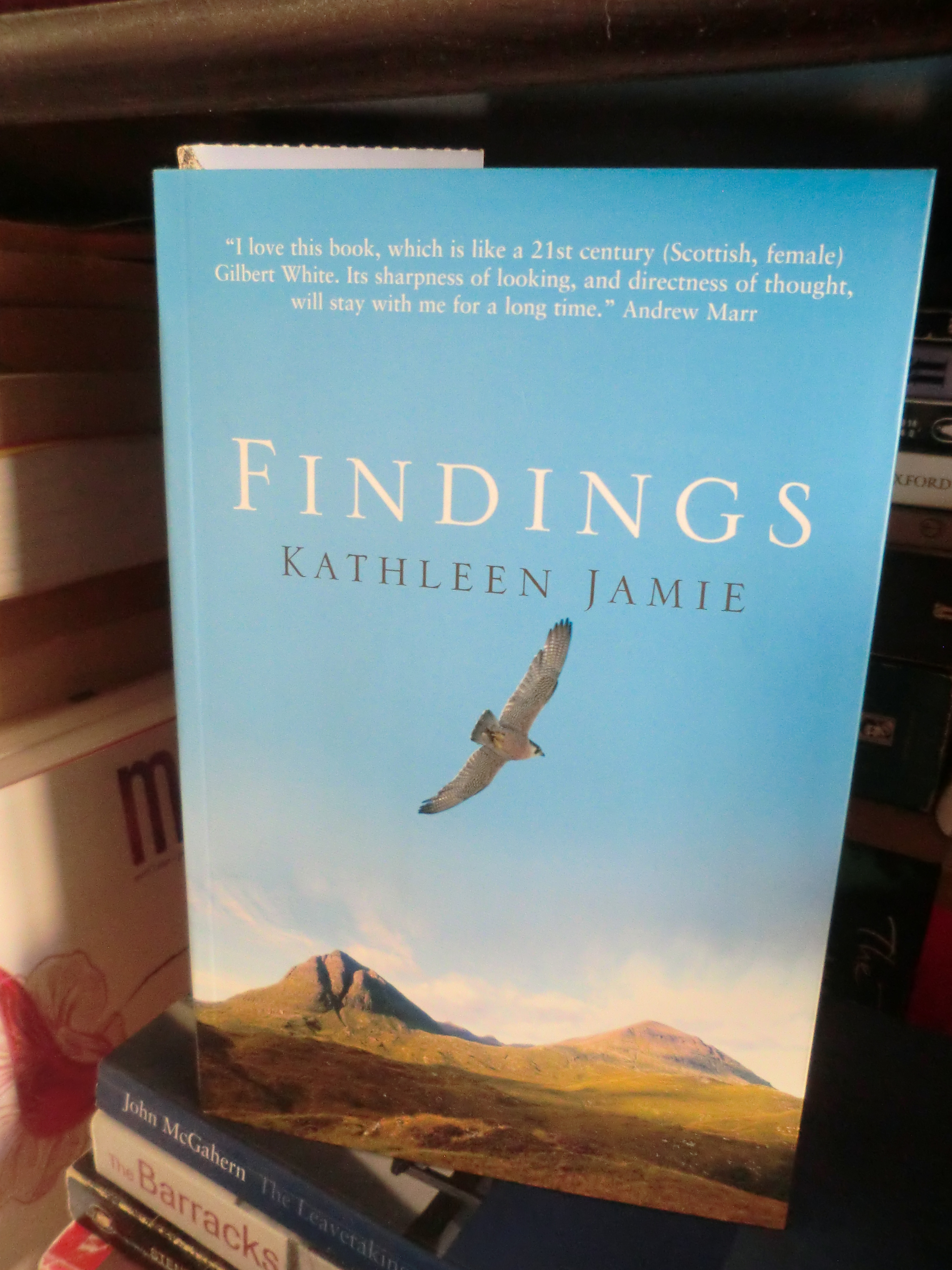
Findings by Kathleen Jamie

FindingsHer latest poetry collection The Overhaul recently won the Costa Prize for poetry, another accolade for this award-winning writer who has found her niche, her publisher previously having had difficulty placing her work in a clear genre.

Findings was, by anyone’s standards, a fiendishly tricky sell. Jamie’s choice of the essay form was unfashionable; her subjects (Orkney in midwinter, a pair of nesting peregrines, 21st-century flotsam on a Hebridean shoreline) were queer and disparate. Her publisher wasn’t even sure how the book should be classified. Travel writing? Not quite: none of the essays took Jamie outside her native Scotland; many were written from her own back door. Autobiography? The book was bewitchingly first-person, but there was no sense of a coherent memoir.

An extract from the Guardian’s Kathleen Jamie – A Life in Writing


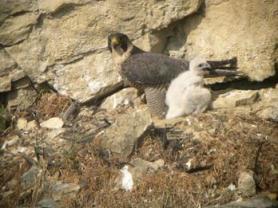
Nesting Peregrine Photo by Christophe Cage, Wikipedia

I see them as wonderful nature essays, a form of creative non-fiction, much more than notes of a nature walk, though they are  inspired by her time on the Hebridean and Orkney Islands and near her home in Fife; but with the purpose of observing and learning to capture in words what she sees, without the need to analyse.  She describes watching ospreys and peregrines and shares her concern over whether they are nesting or not, there having been evidence of only two pair of these birds attempting to nest in the entire country.

She moves away from identifying and labelling what she sees, towards painting a picture with words, a description so apt, it is as if you are there with her as that large unknown bird she describes so vividly traverses the sky overhead.

This is what I want to learn: to notice, but not to analyse. To still the part of the brain that’s yammering, ‘My God, what’s that? A stork, a crane, an ibis – don’t be silly, it’s just a wild heron.’ Sometimes we have to hush the frantic inner voice that says ‘Don’t be stupid,’ and learn again to look, to listen.

Visiting a few of the Scottish Hebridean Islands, Ceann Iar, Coll, meandering along the tide line of inlets, she and her companions find the washed up remains of a small whale, a bit of a plane and other flotsam including seal’s vertebrae, an orange traffic cone, driftwood and plastic garbage.

This is what we take away from Ceann Iar: a bleached whale’s scapula, not the door of a plane: an orb of quartz, not a doll’s head.

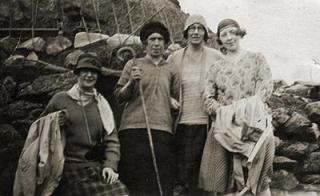
Visiting a Shieling – from Twenty Years of Hebridean Memories (1939) by Emily McDonald

Traces of contemporary life at the water’s edge and higher up in the hills, she walks among remnants of an earlier life, the shielings, now abandoned summer huts made of stone and turf, built in the mountain pastures where girls often spent their summers, grazing the animals, receiving visits once a week to take back the cheese and butter they’d produced and to replenish their food stocks, not to mention the young men who paid calls on them in the evening, the time passing sharing local news, story-telling, fun and laughter.

The top of the year, the time of ease and plenty. The people would come up from the farmsteads below around the beginning of July – ‘the girls went laughing up the glen’ as the poem says – and return at harvest time. Up here, they made milk, butter and cheese, and it was woman’s work. What a loss that seems now: a time when women were guaranteed a place in the wider landscape, our own place in the hills.

Not only does Kathleen Jamie evoke something of the present and the past in her observations of these remote islands, she leaves you reminding yourself to pay more attention, to be mindful, to stop, to listen, to stand and stare, to look up – promising as a reward, a renewed connection to our surroundings and an appreciation of all the species that live and have lived within it.

To read Kathleen Jamie is the next best thing to a slow walk in that great living outdoors, I believe she has found the perfect niche.  I’m already looking forward to her next collection of essays ‘Sightlines‘. Do you have a favourite nature writer?

Brain On Fire – My Month of Madness

Susannah Cahalan was twenty-four-years old when something in the way she perceived things changed. It started with an obsession over bedbugs and descended into hallucinations, seizures and unpredictable acts of bizarre behaviour. Blood tests, scans, numerous procedures, initially all the tests came back negative, her Doctor (a renowned neurologist) insisting it was stress and alcohol consumption. It was neither of those things and if there is one stand-out learning to be gained from this incredible story, it is to ensure always to obtain a second opinion.

Brain on FireThis true story provides a fascinating insight into a rare autoimmune disease which causes the body to attack itself and in this case – the brain. It truly is a story that can and has already changed people’s lives; the writer, a reporter on the New York Post observes her own physical and mental decline and then as her mind descends into chaos, she recalls nothing. Her account is pulled together from interviews, hospital video footage and the journal of her family, until her brain begins to regenerate memory.

It is a path that many will have followed who end up spending the rest of their lives in an institution, if they actually survive it.  Susannah Cahalan, with the help of a supportive and determined family who won’t give up until they find a treatable diagnosis, is fortunate to be seen by the tenacious and talented Dr Najjar, and one final test later, a simple pen and paper exercise, leads him to the all-important diagnosis and her to the path of eventual recovery.

It was his focus on non-psychiatric causes that prevented her from a much more disastrous outcome.  His continuous ground-breaking research posits  that some forms of schizophrenia, bipolar disorder, obsessive-compulsive disorder and depression are actually caused by inflammatory conditions  in the brain.  This research may eventually help to break down barriers between immunology, neurology and psychiatry.

Lower Manhatten from Staten Island Ferry by Diliff

Lower Manhattan from the Staten Island Ferry by Diliff

Before writing this book, the author published an article for the New York Post about her experience, prompting an outpouring from many people who had a family member with an inexplicable brain disease – her case highlights the very real possibility that there are thousands if not more people out there descending into a similar madness.

StrokeHer story reminds me of  ‘My Stroke of Insight’, the extraordinary story of the brain scientist, Jill Taylor’s experience when at 37 years a blood vessel exploded in her brain and she too observed her mind deteriorate to the point where she could not walk, talk, read, write, or recall any of her life. She recovered and used her incredible insight and knowledge to share that experience with the world – creating an important resource for the sufferers and carers of stroke victims. She gives an excellent TED talk on the subject here. Interestingly, she became a brain scientist herself due to her brother’s diagnosis of a brain disorder, schizophrenia.

A gripping, unputdownable memoir that shows how little we really know about the workings of the brain and how difficult it is to diagnose. It’s thanks to books like this that more diagnoses can and are being made helping sufferers to find the right path to recovery.

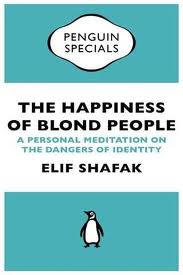
The Happiness of Blond People – A Personal Meditation on the Dangers of Identity by Elif Shafak

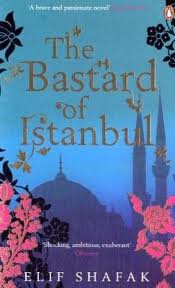
011312_1324_TheTigersWi2.jpgBastard of IStanbulElif Shafak writes great stories and as this essay illustrates, she both lives and has already lived an interesting life between East and West; experiencing different cultures and absorbing the influence of a high achieving, single parent mother and her superstitious, story-telling grandmother in a untypical but enriching, matriarchal upbringing.

ElifShafak Ask EbruBilun Wiki

Elif Shafak, Publicity shot by Ebru Bilun – wikipedia

As a young pupil she learnt what it means to be on the receiving end of prejudiced comments, introducing her to the clichéd stereotypes cast about by those who might never have experienced but seemed “to know” what it meant to be Turkish, that false responsibility, those who leave will all take on, for the actions of government or other citizens, on behalf of their maternal country and people.

Elif Shafak has inherited and nurtured a healthy imagination and studied many of the great philosophers, with a particular interest in Rumi, sometimes witnessed through her novels and now combines her knowledge with first-hand observations of how cultural differences are perceived in this short book.

The title of the essay was inspired by a conversation overheard at the Rotterdam airport in the Netherlands between Turkish fathers, one despairing of the difficulty of living in proximity to his downstairs neighbour.  She developed a habit of calling the police each time his children made too much noise playing in the apartment, causing his family much stress and anxiety, because the police invariably arrived with sirens blazing – makes me wonder what story she told the police, and thankful that my neighbour isn’t so bad after all!

The man finishes by asking his friend in earnest, how it is that blond children are so quiet and well-disciplined, introducing us to Shafak’s reflections on identity, cultural difference and the inherent, almost unavoidable angst of first generation immigrants worldwide.

The immigrant must be prepared to swallow his share of humiliations every day. He has to accept that life will treat him with disrespect and that he’ll be smacked and jostled with undue familiarity.

Happiness of Blond PeopleShe discusses the perception that happiness can be found in the West, less likely to have to deal with war, warlords, tribal conflict, poverty, corruption, human-rights violations or major natural disasters and the equally ingrained counter-assumption that life in the East is more real and less degenerate than in the West: where society is so selfish and individualistic that communal and family ties have virtually disappeared, unable to support a person, especially the elderly, in a time of need.

A secondary-school student I met in Ankara during a literary event put this to me in a slightly different way. “If you are young, it is better to live in the West than in the East,” he said. “But if you are old, then it is better to be in the East than in the West, because we respect our elders, whereas they don’t. In Europe I have seen old ladies in supermarkets buying one courgette, one carrot, one tomato, one bunch of parsley. Have you ever seen a Muslim woman doing that? No! We always buy at least half a kilo, if not more, because we cook for the entire family.”

What seems to be missing in the immigration experience is often lack of community, the lack of acceptance or gesture of kindness and therefore difficulty in integration, families are often not made to feel welcome (except among their own kind) which then encourages them to live separately and to maintain their own traditions and cultural perceptions and habits, rather than merging with the new country and culture. It can also breed resentment, particularly if it wasn’t a mutual decision to leave or even a choice, as in times of war.

It is often true that it must take at least one generation to normalise integration, but in more closed communities whose occupants themselves have little curiosity for the outsider or have not travelled and come to understand how and why things are done differently, with an altogether different logic elsewhere, this separation is at risk of continuing into multiple generations, especially where there are clear physical differences between people that can provoke prejudice, judgement or even worse, racism.

HonourFor me, most of the time I enjoy being confronted with those genuine mind-bending situations that require one to figure out how people came to see or do something in a way so different from our own – with the exception of violent or inhumane acts, but even behind those practices, there is a story to be told and a history to be understood, which doesn’t make it right, but can assist us to at least consider these practices in context, something Elif Shafak explores in her latest gripping novel ‘Honour‘.

An immigrant myself, I understand many of the isolating factors inherent in such a status, especially when it is necessary to learn a new language. Whilst it is not easy to participate in a traditional society with its many rituals and social codes, it is more likely that an immigrant will find success and contentment in creating a business or activity of their own, something unique that is or will be valued, than putting themselves up against their compatriots and being disappointed time after time, especially if living outside the larger multicultural cities.

This is a short read and a refreshing, open-minded perspective, from a woman who interacts with people in both the East and the West, always interesting to read and listen to.

In this life, if we are ever going to learn anything, we will be learning it from those who are different from us. It is in the crossroads of ideas, cultures, literatures, traditions, arts and cuisines that humanity has found fertile grounds for growth.

Episode 10: The Move Down Under and a Shocking Diagnosis

Thinking that a move would give us more family time and offer a less stressful lifestyle, we left London behind and travelled half way around the planet to New Zealand, where most of my family still live today. I had been away for many years and hadn’t expected to return, however now that I was back, everything looked and felt familiar and it wasn’t long before we had moved into a house in the city and I had found a full-time job.

Not quite that large an island, Allia’s interpretation of somewhere very far away.
Putting New Zealand on the Map!

Initially we spent time staying at my parent’s home on the sheep farm they had lived for twenty years. It was wonderful to be there with Allia, for her to spend time around her grandparents and for them to get to know and love her.

Being a long way from the nearest town and a very windy road to get in and out, the forced isolation was a little more difficult for my husband to endure, but he was fascinated by the workings of the farm and in particular the shearing shed when it was in full working motion. Not so for me, years of spending school holidays working in that intense, stinking, hot and competitive environment (shearers get paid per sheep shorn, not by the hour) sweeping away wool, dags (sheep shit) and the occasional maggot were something I felt no nostalgia for at all.

It seemed to be good timing to have returned at this time as my mother was unwell, so I was able to go with her to her appointments and provide support. Good timing was an under-statement; she had lost a lot of weight and was having problems with her balance. She was only 59-years-old but seemed to have entered what looked like old age in an awful hurry.

Of course it wasn’t old age. By the time it was understood that it also wasn’t asthma or some diet related weight loss and she had been for a follow-up MRI scan, we found ourselves sitting in an office, opposite an oncologist who mumbled something that sounded like “three weeks”.

“Excuse me”, what did you say? I blurted out.

“The cancer is in the lungs, but it has spread to the kidneys and other organs and those lumps in the neck and brain are tumours. In the state that your mother is in now, I would say that three weeks is being optimistic.”

“But isn’t there anything we can do?”

“Yes, we can start chemotherapy to try to slow down the rapid advance of the cancer and the radiation treatment should be able to remove those tumours so you should actually start feeling better and get your balance back” he said looking at my mother.

We were both stunned. I wanted to protest and say hey that’s not fair, you can’t wait all this time knowing something isn’t quite right, you know it was more than three weeks that we have been worrying about this and we survived that, only to hand out a three-week life card as if you are prescribing community service. This is an unfair sentence being handed out for absolutely no crime!

Completely and utterly helpless, we sat and listened to what would happen in the next few days. I don’t recall much of what he said, but I remember my mother turning to me with that familiar, uncompromising look in her eye and saying, “I’m going to fight this.”

Yes, she would fight death as she had fought life; like every other great challenge that had faced her, she never gave up without a fight. But I looked at the thin frame of a woman she had become and knew that this was a fight she was not going to win. Not this time.

Next Up: in A Silent Education: Our Quiet Challenge in Provence

Episode 11: Adapting to a New Rhythm and Creating Lasting Memories

Previous Episodes

Episode 9: She Speaks the Language of Birds

Apart from mild surprise when reading my mother’s entries in the baby book she kept for me, which lists the number of words I could say at 12 months and various intervals beyond that, I never really noticed too much that Allia didn’t speak words that could be recognised. Because she talked non-stop. She communicated incessantly with much enthusiasm and wasn’t shy.

She spoke a language tongue that we referred to as bird-talk, it was long streams of dialogue that went up and down in intonation which I was just on the verge of understanding if I listened hard enough, I was sure. Like listening to Italian or Arabic, languages that incorporate much body language and expression which communicate mood, tension and excitement without the need to understand their words.  It was very much like listening to the French language on the television or the radio in my early days of living here – somewhat familiar sounds with that feeling that surely if I did listen hard enough, it was just a matter of time before something in my brain clicked and “poof” I would understand everything.

It wasn’t until her brother arrived on the scene a year later and started using recognisable words in his rambled dialogue very early on that the contrast became noticeable – I think he understood the bird-talk because they would chatter away to each other and to us without hesitation. I wondered then if something was perhaps amiss, I say perhaps, because I am against making comparisons between children, they develop at their own pace and depending on what they are working on developing, other aspects can lag behind.

When people started suggesting we video her speaking like this, I realised it really was a little out of the ordinary, it was almost as if she had her own language, something like a twin language – but no twin. Unlike today when making a piece of film footage is child’s play, I wasn’t comfortable filming her as a kind of spectacle, I was more concerned with just interacting with her and giving her the freedom to express herself, waiting for her language to become something like one of the three languages she was hearing at home.

Next Up: in A Silent Education: Our Quiet Challenge in Provence

Episode 10: The Move Down Under and a Shocking Diagnosis

Previous Episodes

Episode 8: Ten Months of Bliss and Facing a Return to Work

Once over that initial hurdle, Allia blossomed and apart from that long scar, there was nothing to indicate there had ever been a problem. She was a happy, contented baby who loved to smile and engage with those around her, especially the band of eight and nine-year-old girls who lived in our apartment building and were frequent visitors.

For the first ten months I was able to stay at home with her, working a little, practicing aromatherapy, however I knew it was going to be necessary to find another full-time job, living in London demands it, all the more so when there is an extra mouth to feed.

Until this precious little girl came into my life, I never really questioned working long hours or weekends and I had thrived on the opportunity to travel with work. Now, I couldn’t think of anything worse – to leave this child behind, absolutely not, she had extinguished my desire to seek out the unknown, I found myself dreaming of safer pastures, the more familiar.

For the first time in eight years of living in London, the city that I thought had become my second home, I thought the unthinkable – maybe it was time to return to New Zealand?

P.S. This is what Allia came up with when I said this episode was about us having 10 months of fun times hanging out together, going to the park etc, I just love this picture, although my husband says that first one isn’t true! But her imagination is brilliant. Enjoy.

Next Up: in A Silent Education: Our Quiet Challenge in Provence

Episode 9: She Speaks the Language of Birds

Previous Episodes