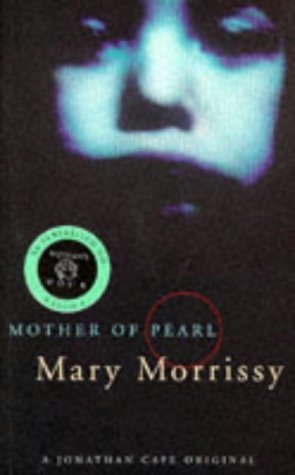
Mother of Pearl by Mary Morrissy

I decided to read Mother of Pearl (1996) as a precursor to Mary Morrissy’s latest novel Penelope Unbound (2023), a re-imagined and slightly changed life of Nora Barnacle (the wife of James Joyce) which I intend to read in 2024. Having enjoyed Nuala O’Connor’s excellent novel Nora, I’ll be curious to see where Morrissy takes her.

It is only now, since the death of Joyce’s grandson Stephen in 2020, one of the most litigious heirs in history, that stories can safely be written about Nora and James Joyce – as Stephen did all he could to prevent access or usage of the family archive, including the destruction of hundreds of letters. James Joyce, a brilliant writer with an overprotective grandson

It seems that Mary Morrissy likes to take inspiration from real life characters or stories, and so it was with Mother of Pearl. A little backstory then before reviewing the novel.

Truth Stranger Than Fiction

A notorious baby-snatching case in 1950’s Ireland was the inspiration for Mary Morrissy’s Mother of Pearl. Re-imagining elements of that story, rather than retelling the facts was a decision she made because the truth would have come across to readers as unbelievable. Morrissy in an article on her website explains:

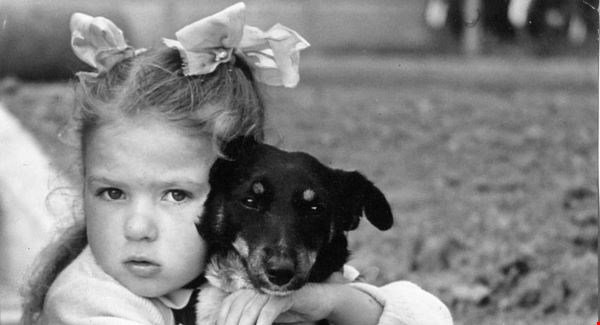
Elizabeth Browne 1950 Dublin kidnap victim

Elizabeth Browne, above, was kidnapped from a pram on Henry Street in Dublin on November 25, 1950. Her kidnapper, Mrs Barbara McGeehan, who lived in Belfast, took her north on the train and passed her off as her own child to her unsuspecting husband.

Four years later – and this is where truth is stranger than fiction – Mrs McGeehan travelled south again and stole another child, this time a boy, Patrick Berrigan, from outside Woolworths on Henry Street. As luck would have it, a fellow passenger on the Belfast train noticed Mrs McGeehan, in particular that she had no milk for her baby, and went to the dining car to get some. Afterwards when the alert was raised about the Berrigan baby kidnap, she remembered this incident and contacted the police.

Mrs McGeehan was traced to her home in the White City estate in Belfast where police found the Berrigan baby and the four-year-old Elizabeth Browne, now renamed Bernadette. In these pre-DNA days, she was identified by a distinctive birth mark, and her parents, news-vendors John and Bridget Browne, travelled to Belfast to claim her.

Identity Trauma

What interested Morrissy in particular, was the identity trauma of a four-year-old being forcibly removed from a loving home and familiar “parents” and being returned to a family, who though biologically related, were strangers to her.

Clearly this was something Elizabeth’s parents thought about or experienced the repercussions of, because there was another twist, a strange fact that once again did not go into the novel. After Mrs McGeehan served her two year jail year sentence for the kidnap, the Browne family contacted her. Following their reconciliation, every year Elizabeth would travel to Belfast to spend a holiday with the very same woman who had kidnapped her.

Though Elizabeth would marry and have her own family, sadly she died at the very young age of 38 years from cancer.

The Novel, A Dark Re-Imagining

A novel in three parts, Mother of Pearl explores perspectives in three women’s lives, the first two will mother the same child, the third is that of the child grown – the consequence of a repressed childhood, of events never talked about, of the effect of those events and years and the suppression of them, on her psyche.

Part 1 – We meet Irene in Granitefield sanotorium, an institution where she spends some years due to having contracted TB. She willingly leaves her family behind and finds some kind of comfort in the hospital environment, electing to remain there as an employee long after she has recovered from her illness and might easily have left.

The operation, they told her, had saved her. But she had lost four of her ribs, cracked open by a giant pair of shears…Without her ribs Irene felt as if part of her protection against the world had been removed.

Standing vigil, she is known to recognise the imminence of death patients. One in particular will be kife changing.

Irene knew the moment she saw Stanley Godwin that he was watching someone beloved die. Healthy people keeping vigil seemed to take on the symptoms of the disease.

This son, who is with his mother, suddenly understands the implications of his mothers death, of the great loss and hole in his life, her absence will mean for him. His attention moves towards Irene.

Inwardly he was quaking. He could comprehend the impending loss; what he couldn’t imagine was his life afterwards. A middle-aged man about to be granted unwanted freedom.

Outside of the institution, longing for a child she knows will not come, brooding on her own losses, Irene succumbs to fantasies and one day indulges her desire, removing a sickly child from a hospital, a baby she names Pearl.

This was her offspring, hers alone, the child of her illness, Irene’s first loss. And she was still out there. Not dead, simply lost. In a hospital ward somewhere, unclaimed, waiting for her mother. This time Irene determined she would tell no one, not even Stanley. She would seek out the child who was rightfully hers, the fruit of Eve’s ribs.

Part 2 – We meet Rita, who becomes Mrs Mel Spain, mother of the baby she had not initially realised how much she wanted, until the day she is taken from her. And the husband Mel, son of an absent father, who feels a yearning to follow in his carefree footsteps.

It didn’t stop Mel wondering, however, how his father had managed the extraordinary trick of disappearing into thin air. He had become invisible by simply walking out of his life. Ten years after the event, as he nursed his fourth drink of the night, Mel finally understood how easy it must have been. It was not, as he had always thought, a daring but calculated move; it was a matter of impulse and extreme selfishness.

Part 3 – we meet the child, a child who remembers little of her early life, who is told stories that don’t resonate with the dream-like memories she has, who feels like an outsider in her family and can not explain to herself why.

Exploring themes of loss, abandonment, denial, Mother of Pearl takes us inside the dysfunction of family, of obsession with and rejection of a child, of the long-lasting impact on those formative years of the compromised adult that will little understand their own inclination(s), as those threads of early development and the scars of traumatic events imprint on their psyche and affect their future selves.

A compelling and thought provoking read that is all the more astounding given the events that propelled the author to recreate such a situation.

Further Reading

The Guardian: Penelope Unbound by Mary Morrissy review – masterly alternative life of Nora Barnacle by John Banville

JSTOR Interview With Mary Morrissy, Studies, An Irish Quarterly Review Vol. 87, No. 347 (Autumn, 1998)

Author, Mary Morrissy

Mary Morrissy was born in Dublin in 1957.  She has published four novels – Mother of Pearl (1995), The Pretender (2000), The Rising of Bella Casey (2013) and Penelope Unbound (2023) and a collection of short stories, A Lazy Eye (1993). 

She won a Hennessy Award for short fiction in 1984 and a prestigious US Lannan Literary Foundation Award in 1995.  Mother of Pearl was shortlisted for the Whitbread/Costa Award and longlisted for the Women’s (Orange)Prize for Fiction (1996) while The Pretender was nominated for the Dublin Impac Award and shortlisted for the Kerry Group Irish Fiction Award. The Rising of Bella Casey was nominated for the Dublin Literary Award.

A member of Aosdána, she is a journalist, a teacher of creative writing and a literary mentor. She blogs on art, fiction and history at marymorrissy.com

“I suppose I explore a female kind of darkness. My characters tend to be very restricted, restricted emotionally, I mean, by fear and guilt and an inability to move in and inhabit the centre of their own lives. And despite all our so-called modernity, I think this still holds true for thousands of women. We may have broken away from the traps of our mothers’ generation, but there is a long way to travel before women have, if I may use the phrase in this context, parity of esteem. - Interview with Mary Morrissy, Studies, An Irish Quarterly Review Vol. 87, No. 347 (Autumn, 1998)

So Late In the Day by Claire Keegan

So Late in the Day (2023) was recently shortlisted for the Irish Book Awards Novel of the Year; it didn’t win that award however Claire Keegan won Author of the Year 2023.

The Literary Withhold

I read So Late in the Day as if it were a kind of literary mystery.

It is so short, (it’s a small square book of 4 chapters, 47 pages, around 11,000 words), that with Keegan’s combination of economy and precision with words, I found I was reading vigilantly between the lines as I went, not being able to stop myself from trying to guess the significance of every utterance and carefully constructed phrase. I mean, right from that opening line…

On Friday, July 29th, Dublin got the weather that was forecast.

…it read to me like something imbued with meaning. Did something or someone get what they deserved, I wondered?

Recalling other stories of Keegan’s, like Foster and Small Things Like These, I would suggest this is a motif of her storytelling, the slow reveal, the building up of a sense of something untold, omitted. The reader can’t help but wonder, question, try and guess as each page reveals a little more, what might be coming, the denouement.

Keegan herself suggested in a recent interview that the book requires a second reading:

So Late in the Day deploys her typically hushed technique to devastating effect; plain sentences unfurl their full implication only on rereading, the narration a veiled disclosure of the protagonist’s poisonous habits of thought.  – extract from Guardian article

Review

A young man, Cathal, is at his workplace on a Friday afternoon and seems very conscious of the time, in the first couple of pages it is mentioned twice, it passes slowly, perhaps excruciatingly. People act on guard around him, they know something we don’t.

It was almost ready (his coffee) when Cynthia, the brightly dressed woman from accounts, came in, laughing on her mobile. She paused when she saw him, and soon hung up.

Photo by R.Esquivel Pexels.com

His boss indicates he needn’t stay the rest of the day, and Cathal is aware of him closing his door softly, all of which makes the reader wonder why, what has happened to this young man that people seem to be treading carefully around him? As he leaves the office at the end of the day and waits for the lift, on hearing someone approach, he pushes open the door to the stairwell.

On the bus ride home, another clue:

He would ordinarily have taken out his mobile then, to check his messages, but found he wasn’t ready – then wondered if anyone ever was ready for what was difficult or painful.

The final clue before the end of the chapter is when a young woman gets on the bus and sits in a vacant seat opposite him. He breathes in her scent…

until it occurred to him that there must be thousands if not hundreds of thousands of women who smelled the same.

A Relationship Unravelled

He returns home, steps over wilted flowers on his doorstep and spends the evening alone, consuming a weight watchers microwave dinner and opens a bottle of champagne.

The four short chapters alternate between the past and the present. When the narrative steps back in time, we learn about his relationship with a half French, half English girl Sabine that he’d met in Toulouse. The dialogue between them reveals a disconnect that goes unnoticed by him and is ignored by her.

It is the discordant undertones within their conversation and his contemptuous observations that reveal the long, dark shadow of influence and inference.

After the reveal, when we learn what has happened to him, who he is, he recalls things about his own mother, his father, things from the past that shaped them, though he does not acknowledge that.

If a part of Cathal now wondered how he might have turned out if his father had been another type of man and had not laughed, Cathal did not let his mind dwell on it. He told himself it meant little, it was just a bad joke.

A Take on Language and Lore

It is a thought-provoking, provocative read, that subtly explores a seismic patriarchal crack in Irish society, one that infiltrates language, habits, behaviours and attitudes.

It is ironic, that the title in English is ‘So Late in the Day‘ compared to the French translated title which was translated or treated as ‘Misogynie‘. One title refers to the actions of the female character while the other refers to the behaviours of the male character. The story is told through the observations of Cathal, so the English language title belongs to his perception of reality, while the French title takes on a more overarching thematic approach.

In the article below, in The Guardian, it was revealed that the American author George Saunders was a fan of the story and recently chose it when invited to pick a favourite New Yorker story to discuss on the magazine’s podcast, but stopped short of reading it, due to one of the words used.

Keegan (who read the story herself, with riveting poise) tells me she respects his reluctance “even though he considered it to be the perfect word – as I do. It’s what Irish men often call women here. Writing the language people use is part of what a writer does to portray the lives we lead, the world we live in.”

Further Reading

The Guardian Interview: Claire Keegan: ‘I can’t explain my work. I just write stories’ by Anthony Cummins

Irish Book Awards Winners 2023

There were lots of winners at the An Post Irish Book Awards in Dublin, there being so many different categories from fiction, non-fiction, popular fiction, crime fiction to newcomer. From a small base of three categories, the awards now include eighteen categories spanning a broad range of literary genres. Thousands of readers vote to select the winners every year.

The Novel of the Year prize for which there were eight worthy contenders on the shortlist, went to the Booker shortlist nominated Paul Murray for his fourth novel, the tragicomedy The Bee Sting. Read a Q & A with the author here.

Set in a town in the Midlands in 2014, at the tail end of the financial crash, the Barnes family has a car dealership – they’ve just about managed to survive until now, but as the novel begins the business is on the brink of going under, and the family may be going down with it. The book navigates a family facing this calamity with irony, panging emotion and existential tones. Described as a masterful tragicomedy of familial chaos and dynamics. 

The one book I was championing (reviewed here), the moving, courageous and inspiring Poor by Katriona O’Sullivan, scooped two awards, Biography of the Year and the Listener’s Choice award.

Mark O’Connell won the Non-Fiction Book of the Year with his profound confrontation of true crime, A Thread of Violence a negotiation with the act of writing about murder, and a navigation of the chasm and interplay between fiction and non-fiction, taking the infamous case of Malcolm Macarthur as its subject, while Liz Nugent took the Crime Fiction Book of the Year for Strange Diamond Sally.

Newcomer of the Year went to rising Irish talent Colin Walsh for Kala, a gripping literary thriller, set in a small Irish town suffocating on its own secrets as three friends reunite in their hometown where their friend Kala disappeared fifteen years ago.

In an interesting and informative Q & A interview for the prize, Walsh was asked:

Q: Ireland is such a literary powerhouse, was it supportive of new writers?

The short answer is yes – and not just new writers. Ireland’s a literary powerhouse precisely because we’ve got an Arts Council-supported infrastructure of journals, festivals, indie publishers, etc. That creates a rich writing ecosystem, which is essential to maintaining individual artists and the wider literary culture. Writing is unpredictable magic on the page, but magic always needs concrete structures within which to thrive – that’s what Ireland provides for writers, and that’s why we punch so far above our weight internationally.

The winners of the individual categories will go forward to compete for the title of the overall Irish Book of the Year.  The winner is decided by the An Post Irish Book of the Year judging panel. Watch this space!

In 2022 Sally Hayden won that award for her incredible work of nonfiction My Fourth Time, We Drowned.
The nominations for Irish Book of the Year are the six titles shown below:

Soldier Sailor by Claire Kilroy

Soldier Sailor is on the shortlist for the Irish Book Awards 2023.

Cathy at 746 Books praised this one, as her pick for Novel of the Year, saying it deserved the award attention, so I decided to read it to find out what that was about.

The Clash of Fierce Love versus Stolen Identity

Irish Book Awards 2023 motherhood literary fiction

So, after an eleven year gap since the publication of her last book, following the birth of her son, Claire Kilroy has overcome her writer’s block and “angry few years”, to produce a piercing, visceral account by the unnamed narrator Soldier ravaged by new motherhood, to the child, Sailor.

Here is how the author describes her book:

Soldier Sailor is a mother talking to her sleeping child explaining what was going on during those years he was too young to understand or remember the events around him. She tells him of her love, but also of how difficult, how isolating she found it when motherhood ended her old life. Nothing much happens; one of the main characters, Sailor, has no dialogue. The whole experience is a non-event from the outside, but when you are that soldier pushing the pram, my, what a psychodrama it is.

The novel as the image depicts, zooms right in to the responsibility, the bond and the practice of being mother to a small child, to how it changes EVERYTHING. From the entering into a relationship like no other that exists and the loss of what came before it; to the very different support that a mother might need, and the unlikely place(s) she might find it.

A Mother’s Instinct to Kill

It is not a reflection, it is an act, you will read it and live it, or relive aspects of it, if you have already been there.

Do you know what I would I do for you? I hope not. What would I not do, is the question. The universe careens around us and I shield your sleeping body with my arms, ready to proclaim to the heavens that I would kill for you: that I would kill others for you, that I would kill myself. I would even kill my husband if it came down to it. I swear every woman in my position feels the same. We all go bustling about, pushing shopping trolleys or whatever, acting like love of this voltage is normal; domestic, even.That we know how to handle it. But I don’t.

Using the second person “you” addressed as a monologue to her baby son, the narrative swings between the emotional peaks of a tireless love, to violent frustration and resentment; from the misleading two second Instagram snaps sent to the elsewhere husband, to her thirty second screaming telephone rages, with only the reader, witness to and understanding the riding crescendo of events that lead from one of those events to the next. A bewildered husband, observing the peaks, oblivious.

Your sleeve is in your dinner, my husband remarked. He wasn’t there but he didn’t have to be there. He was always there when things were going wrong. Yet never there to help. The luxury, the sheer luxury of sending a last-minute message saying you wouldn’t be home that evening. It would be a decade – more – before I could do the same. What does he eat? he had texted me the one time he was left in charge?

Sons and Fathers Take Note

To read this account, especially because of the culture within which it stems from, one that for many years locked up its women who expressed too loudly their discontent, or behaved in ways considered improper, is to understand a little of what was labelled hysteria – one of the natural consequences of needs not being met. Forget the narrative arc, read this and you plunge into the subject, you become it, you feel it, you remember bits of it. The son is warned, made to understand, his future depends on it.

I was firmly in my wrong mind and liable to do anything, so off I went, down the stairs, out the door, up the drive, through the gate, along the road, overcome by a wildness that I needed to convert to movement or else risk doing something stupid, and by stupid I mean destructive because words have many meanings, Sailor, and you must deploy them with care because they can inflict real hurt.

The mother like her infant child, is reborn yet will only realise she has inhabited this new being ‘the mother who birthed‘ when it is too late, when this tiny creature she loves so fiercely and will protect with her life, claims her, and in her most challenging moments, she like him, will feel the desire to scream, to run, to escape or somehow figure out, how to make ‘the other’ understand.

What struck me as the starkest contradiction of all was that, having navigated this much of life – the volatility of youth, of love and loss, the agony and the ecstasy – the closest I had come to losing my mind was during the period known as settling down.

Friendship for Hope and Healing

motherhood Soldier Sailor Claire Kilroy
Photo by Oleksandr P on Pexels.com

This text will not speak of the quiet moments, it is the intersection of all the moments lived, of the brutal awakening that is ‘becoming a mother’ and the warning to ‘the other’ that did not give birth, who is part of the journey, to prepare for this change and get ready to adapt, to support, to listen, to learn to be ‘the friend’ she is going to need.

One day she encounters an old friend, and these follow up meets mark a turning point, to being seen again, to being understood, and something dangerous shifts, quiets. Small gestures, moments of listening, the beginning of a form of solidarity.

We were better together my friend and I. Better parents. I was anyway. I was a better mother to you when I was around my friend. But a worse wife.

We arrive at the end – where she imagines moments years down the road ahead – with a kind of relief, knowing that with age and stage, the distance between those peaks will lessen, the relationships will either adapt or crumble, that true friendships will witness and endure it all.

An utterly compelling read that you won’t want to put down.

Further Reading

The Observer Review: Soldier Sailor by Claire Kilroy review – a mother’s confession after the fight of her life by Stephanie Merritt, 12 June 2023

The Irish Times Review: Soldier Sailor by Claire Kilroy: An astute, provocative, intriguing novel about motherhood – A virtuosic set-piece late on veers so far into nightmare territory, it feels as if we’re reading a thriller by Sarah Gilmartin

Eason Novel of the Year, Interview Q & A With Claire Kilroy

Claire Kilroy, Author

Claire Kilroy is the author of five novels including Soldier SailorAll SummerTenderwire, and The Devil I Know. She was awarded the Rooney Prize for Irish Literature in 2004 and has been shortlisted for many other prizes, including the Irish Novel of the Year and the Kerry Group Irish Fiction Award.

She studied at Trinity College and lives in Dublin.

What do you hope readers will take away from your narrative?

It is so easy to dismiss a mother and her work, and a father and his – one of the main characters is a stay-at-home dad. I had no idea what minding an infant involved and had regarded it as easy, unchallenging (I am mortified to admit that), so I hope I have revealed how demanding it is, but also how rewarding, never mind how important. I hope more fathers will get involved in raising children because it changes you, it remakes you, you become more compassionate. I don’t think Trump and Putin would be the awful tyrants they are had they cared for, well, anyone. It doesn’t have to be a child, just any person or creature who needs care.    

How To Build A Boat by Elaine Feeney

How To Build a Boat is a contemporary Irish novel that deals with people in a community navigating lives complicated by things that have happened or are happening to them, in this case a 13 year old boy Jamie is starting high school and it’s clear he is being singled out by some of the mean boys (and not for his height or bright red hair).

Irish Literature literary fiction Booker Prize longlist 2023

The novel was longlisted for the Booker Prize 2023 and shortlisted for the Irish Book Awards 2023, both of which announce winners in late November.

In a way it reminded me of Sebastian Barry’s Old God’s Time, in the sense that it relates to the power of connections in the community, the unexpected and the previously unknown, that can help pave the way towards healing and the passing through of the tumultuous hallways of grief.

Old God’s Time is more introspective and focused on a single character, while How To Build a Boat gives equal weight to a number of characters, there is more dialogue and a greater sense of place, of the physical environment and dwelling places of its inhabitants.

How can I miss someone I have never met? Jamie said.
Grief was profoundly different for both humans. One felt an intense anger he had never recovered from, the other knew something was missing, a vacuum to where a mother should fit, and he had a fixed determination to fill it.

Jamie’s mother Noelle died post childbirth at the age of 15 and he is being raised by his young father Eoin and grandmother. He takes everything literally and is serious minded and ambitious.

Jamie got it. He just didn’t want to get it. Noelle had never stopped moving from the first minute he had met her on screen. She was in constant and limited motion.

His one resounding ambition is to invent/create a machine that will be in perpetual motion; in his mind it will somehow allow him to remain connected to his mother, who, though he never knew her, he visualises through the one remaining video that is left of her, competing in a swimming gala.

There had been hundreds of clips. Noelle laughing after school. Noelle walking in the woods. Noelle soaked to the skin on a picnic. Noelle pulling faces outside the cinema. Noelle painted like a Dalmatian at Halloween with a black-and-white hair wig. But after a rare night out with the soccer club, Eoin, angry and lonely and drunk in his small, dark living room, deleted the phone’s contents. After which, he placed his phone on the laminate floor of the two-up-two-down and smashed it hard under the heel of his foot. After which, he vomited. After which, he passed out until morning when he woke frantic and pacing about with a dry mouth and a pounding headache, and in a lather of sweat and overwhelmed with the desire to disappear. But Jamie woke, crept downstairs and began asking so many questions that Eoin had no choice but to recover and get on with the getting on a young boy requires. And for years after, Eoin replayed each deleted clip in his mind before he’d fall into a fretful sleep, until the clips grew so hazy and faint and there came a time when Eoin couldn’t visualise Noelle’s face at all,
and though he tried to (re)build it:
smile, red hair, eyes, freckled nose, wide shoulders
parts of her vanished until it was finally impossible to recreate her.

Yusra Mardini Butterfly The Swimmers Elaine Feeney
Photo by Heart Rules on Pexels.com

At the new school he encounters Tess (Mrs McMahon) the English teacher and Taigh (Mr Foley), the woodwork teacher, whose classroom has been built in what was the old swimming pool.

These two are also in the midst of transition; Tess is married to Paul who has little patience or empathy for his wife’s uncertainty. She has come to the end of being able to suppress her feelings and knows that running away is no longer a sustainable solution to her agitated, easily triggered mind.

They were almost a decade married now and to avoid misinterpretations in the way they communicated, they had grown polite and consistent with each other. To Tess, it was as though she had catapulted. She stopped giving Paul her point of view. And Paul stopped worrying about what ailed Tess.

Taigh has left the island where he was raised and keeps his distance from people, avoiding growing close to anyone while he adapts to his newfound independence.

The three are connected through the school and Taigh’s suggestion to Jamie that they build a currach (a traditional Irish boat with a wooden frame, over which animal skins or hides were once stretched, though now canvas is more usual).

It is a school project that a number of the boys work on and commit time to, though not necessarily supported by the very traditional, linear leadership or parents with single-minded expectations of their protege. The project in different ways facilitates consideration of the many pressures weighing on them all.

It is a heart-warming, thoughtful novel of the importance of community interactions and the power of imagination and creativity and teamwork to nurture and heal and progress the journey of everyone involved, when obstacles are removed and the way is cleared for out of the box thinking, support and the healing that can result from going with the flow.

I thought it was an excellent, enjoyable, thought provoking read of hope and optimism.

Further Reading

Elaine Feeney Booker Interview: ‘It’s impossible not to consider pain and loss when writing’

New York Times Review: Grief, Community and Boat Building in a Moving New Novel, In Elaine Feeney’s latest book, a child’s grief-driven engineering dream connects a handful of isolated citizens in a small Irish town by Sophie Ward.

The Guardian: How to Build a Boat by Elaine Feeney review – secret shame and practical woodwork by Killian Fox.

Elaine Feeney, Author

Elaine Feeney is an award-winning poet, novelist, short story writer and playwright from the west of Ireland.

How to Build a Boat, longlisted for the Booker Prize 2023, is her second novel. The 2020 debut, As You Were, was shortlisted for the Rathbones Folio Prize and the Irish Novel of the Year Award, and won the Kate O’Brien Award, the McKitterick Prize, and the Dalkey Festival Emerging Writer Award.

Feeney has published three collections of poetry, including The Radio Was Gospel and Rise, and her short story ‘Sojourn’ was included in The Art of the Glimpse: 100 Irish Short Stories, edited by Sinéad Gleeson. Feeney lectures at the National University of Ireland, Galway.  

” I am constantly imagining and reimagining this place; its socio-economics; geo-political landscape; pagan versus Christian traditions; new cultures; power and who holds it; the post-colonial effect on language, emigration, class and agriculture. Our proximity to the sea seems to energise writers.” Elaine Feeney on Ireland

Poor, A Memoir by Katriona O’Sullivan

Grit, Courage, and the Life-Changing Value of Self-Belief

Poor is the story of a young woman as she looks back at the circumstances of her birth, childhood and younger years, through the lens of having been raised by parents who were addicts. The middle sibling of five children, she would become pregnant at 15, abandoned and homeless. And then things got even worse – until she began to find the support and mentors she needed to begin the long climb out of a destiny she desperately wished to avoid.

It is a riveting read, constructed from the hopeful perspective of having by chance – in the people she met along the way – found support and been shown how to save herself and the path to higher education.

More importantly this book is essential reading for anyone considering working with children, for parents and those in higher education who might have a tendency to favour “the good, the ideal” student, to think about how we might uplift and give hope to those who might not fit that category.

Turning Points In A Life

Irish Book Awards Biography of the Year 2023

Katriona’s story pinpoints the moments in childhood that mark a life, both the good (the teacher who taught her and facilitated her being able to manage her own cleanliness) and the bad (a man her parents left her with), from which there is no turning back, but perhaps with the right resources, there can eventually be a kind of healing.

Being able to look back and identify those moments that shifted her self-worth, while often devastating to relive, enabled her to understand their impact and address them through appropriate methods, and where they were positive shifts, to cultivate gratitude.

It also highlights the many adults that let these children down.

I know my parents let us down, significantly. The blame is with them. Of course it is. But the world around us let us down too, and in a way, that is worse. Because my parents were drug addicts and that is how it all got so bad and messed up. But the people of the world around us – the police, the teachers, the social workers – they were untrustworthy. They pushed us into a corner and frightened us. How could we have grown up to do anything else but bite them back?
My parents let me down, but so did the world. And the world was where I had to live.

She is one of the few who has managed to climb out, to break a cycle; her story is shared in the hope others who identify, might find the motivation to pull themselves towards something that might bring them out of what is almost inevitable if you’ve grown up in such an environment.

I’d take a heroin addict parent over an alcoholic one any day of the week. That may seem surprising but there is a meanness in booze and horrible unpredictability that you just don’t get with heroin addiction.

Photo by Ahmed akacha on Pexels.com

It is also for those who have never known such misery, to refrain from judgement, to be open to understanding what happens to people in these situations, how they got there, the consequences and the ineffectiveness of today’s government policies in properly identifying the cause, creating and applying appropriate, sustainable solutions.

This isn’t a tale of woe is me or blame, and neither is it a story of a one-off. It is a demonstration of the difficulty of these lives, and a desire to want to change the world in a more caring and empathetic way than it is now, to search for and find and fund solutions, so that more might learn how to follow a different path, when similar struggles are present.

My education has taught me that choice is a myth: our path is set by history and it is very rare for someone to change that path. I am one of the lucky few who escaped the destiny set for me by my parents’ addiction.

Inclusivity and Diversity, We Must Do Better

She challenges educational institutions to do more to be inclusive of struggling students, to strive for the value of greater diversity. “Diversity brings power”.

Although the ‘same’ opportunities are open to people of all backgrounds, we live in a system where those coming from stable, secure childhoods do well and there is no allowance for the struggle of those who don’t. We need equity in education, not equality. If someone can’t see straight because the world is falling in around them, we need to raise them up to clearer skies…and the truth is, we are losing some brilliant minds in the trenches of poverty.

In an interview with the Guardian she expresses her fury at the rhetoric around poverty – that if someone is poor, it is their own moral failing, and if only they worked harder, they could drag themselves out of it. It is society that loses, she points out.

“We’re missing talent, vibrancy and creativity. Because I’ve been empowered, I have been able to change my life, my children’s lives. I’m not costly any more to the state. I’m not doing all of the things that happen when you live in poverty. The people who are making decisions are clearly very educated and yet they don’t seem to have the long-term lens on what investing in reducing poverty can do.”

A brilliant and engaging memoir and an important voice in support of educating children out of poverty.

Highly Recommended.

Poor has been shortlisted for two categories in the 2023 An-Post Irish Book Awards for Biography of the Year and for the Listeners’ Choice Award (winners announced 22 November).

Further Reading/Listening

Irish Times :The Women’s Podcast – Poor by Dr Katriona O’Sullivan – in conversation with Róisín Ingle

Dr Katriona O’Sullivans New Podcast POOR discusses issues relating specifically to poor systems, supports, people and process: Episode 1 Intro, Episode 2 But I Think It’s Ok to Say Fuck!

Irish Times Review: Poor by Katriona O’Sullivan, What Will You Do To Change Society For People Like This? by Lynne Ruane

Guardian Interview: Raised by addicts, abused, neglected, broke: how Katriona O’Sullivan escaped her fate by Emine Saner

Katriona O’Sullivan, Author

Dr Katriona O’Sullivan was born in Coventry to Irish parents. In 1998, at 20, she moved from Birmingham to Dublin and subsequently enrolled in the Trinity College access programme. She went on to gain a PhD in psychology from Trinity and joined its staff.

She now works as a senior lecturer in Digital Skills in Maynooth University’s Department of Psychology. She has worked with policy-makers to develop strategies around education and inclusion, and has been an invited speaker at the UN, the World Education Forum, the European Gender Action Workshop on Women and Digitalization.

Most recently, the programme she leads to improve working class girls’ access to education in STEM subjects won the Most Impactful Initiative Award at the Women in Tech Europe Awards in Amsterdam.

She is married with three children and lives in Dublin. Poor is her first book.  

“I needed encouragement to build my life and the tools to give it structure and strength. I needed tools to understand the world and how to think.

I needed an education.” Katriona O’Sullivan

Old God’s Time by Sebastian Barry

I’ve long wished to read a novel by Sebastian Barry and somehow not got to one until now.

Old God’s Time was longlisted for the Booker Prize 2023 and shortlisted for the 2023 Irish Book Awards, Novel of the Year (winner announced 22 Nov).

literary fiction Irish
Book Toothbrush for Livia

This is a slow burn, introspective, literary read, of a man in decline, in the 9th month of his retirement from the Irish police force, now in his late 60’s. He has relocated to the annex of an old castle-like building overlooking the Irish sea and rarely has contact with anyone, though he is aware of his elderly landlord weeding the garden, a young woman with a child in the turret of the same building and a lone, trigger happy cellist.

His thoughts are of his wicker chair, his view, his peaceful existence and the joy of the privilege he has had to love his wife June, who he believed loved him in equal measure.

Over the course of the next week or so he relives memories of being with his wife and we develop a sense that this good fortune was not something either of them expected from life, given their rough beginnings, both abandoned as babies or small children.

His nostalgic meanderings are disturbed by a visit by two young policemen working a case against a priest, and looking into the cold case of another murdered 20 years ago. They want to know what he remembers from that time, as it was a case he worked on. Their arrival also coincides with the beginning of tentative relationships with his neighbours.

What a thing to bring to your old friend’s door. A new peril of cold cases that he had never foreseen. Enough time goes by and it is as if old things never happened. Things once fresh, immediate, terrible, receding away into old God’s time, like the walkers walking so far along Killiney Strand that, as you watch them, there is a moment when they are only a black speck, and then they’re gone. Maybe old God’s time longs for the time when it was only time, the stuff of the clockface and the wristwatch.

old god's time cormorant
Photo by Sindre Fs on Pexels.com

The visits disturb and awaken old memories and feelings, going all the way back to his early days in the army, a year in Palestine and then in Malaya, where he was a sniper and other dark shadows of memories long buried.

The slow revelation of his past, of his job and family, his son and daughter, his wife and their experiences as children create intrigue as he alludes to disturbing events that take time to unveil.

His often-time confused mind sometimes makes those memories feel like events happening in real-time around him; people appear to him who are no longer here. Figments of imagination or angelic attendants preparing him?

Sometimes he awakens and realises it was a dream, other times he realises it was a form of hallucination.

But he was obliged to believe it. Because in the first instance a witness should be believed. A lot of mischief and mischance had arisen from not believing witnesses. Rejecting out of hand. Poor soul standing in front of you, spilling the dreadful beans, and it not sounding likely. But oftentimes the unlikely was the truth, as you might find out, in the end, when it was too late. He felt he should believe – believe himself.

We read and we are in his mind trying to decipher what is real and what is imagined or desired. At a certain point it doesn’t really matter, except that the two young policemen may suspect he is implicated in something.

Far from being depressing or exhausting, given the burden of what he has lived through, there is a sense of gratitude for the gift of a shared love he had with June and pride he has in his children.

Behind the plot is a seething rage at the years long refusal to follow up with child abuses nor charge priests suspected of child abuse, men covering the despicable deeds of other men, of one type of power enabling another, predators against the weak and helpless and the long term psychological distress this trauma has inflicted on hundreds of thousands of children, not talked about but passed on through their own DNA, becoming a form of collective trauma of a generation(s).

The lack of redemption for victims, the theft of their freedom, of their peace of mind, the deep wounds that remain, that continue to fester, to destroy souls.

It was up to him now to know less about times and details and more about the moiling mysteries of the human heart. Things happened to people, and some people were required to life great weights that crushed you if you faltered just for a moment. It was his job not to falter. But every day he faltered. Every day he was crushed, and rose again the following morn like a cartoon figure.

Setting the novel in this man’s twilight years takes a dramatic subject and allows it to be reflected on in slow paced, methodical way that combines the experiences people go through and witness, the effects and consequences that they continue to live with and attempt to overcome or heal from, or take revenge for and the aftermath, what survives.

Brilliantly written and rendered, thought provoking, holding its threads of hope and faith in the power of genuine love. It is a book that is worth immersing in due to its dream-like reality, an ideal weekend read.

Highly Recommended. Have you read any Sebastian Barry novels? Do you have a favourite?

Sebastian Barry, Author

Sebastian Barry is an Irish novelist, playwright and poet, one of a small group of authors to have been nominated for the Booker Prize five times.

The 2018-21 Laureate for Irish Fiction, Barry had two consecutive novels shortlisted for the Booker Prize, A Long Long Way (2005) and the top ten bestseller The Secret Scripture (2008), before Old God’s Time was longlisted for the Booker Prize in 2023.

He has also won the Kerry Group Irish Fiction Prize, the Irish Book Awards Novel of the Year and the James Tait Black Memorial Prize. His novels have twice won the Costa Book of the Year award, the Independent Booksellers Award and the Walter Scott Prize.

Barry was born in Dublin in 1955, and now lives in County Wicklow.  

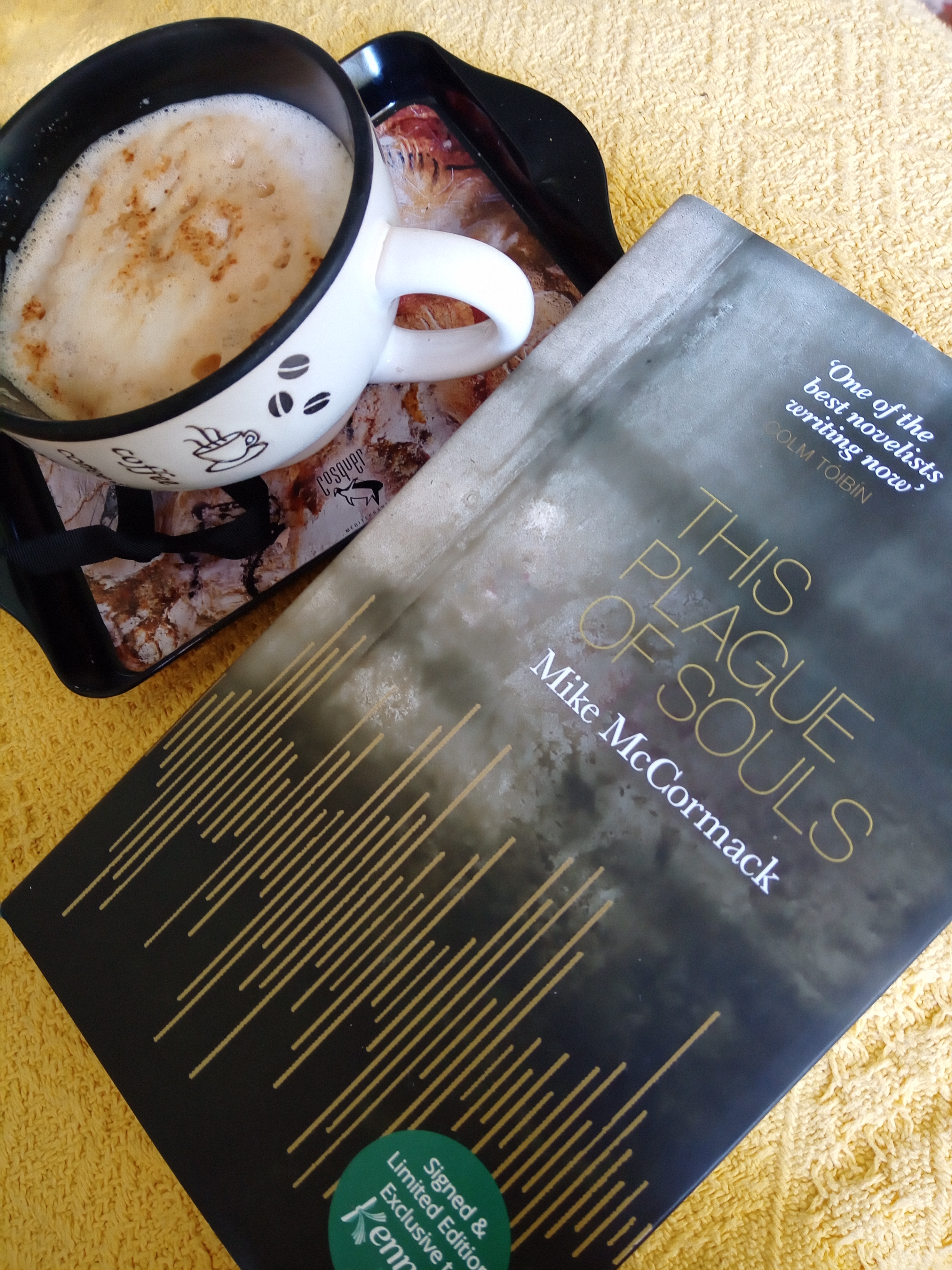
This Plague of Souls by Mike McCormack

Well, that wasn’t what I was expecting. Perhaps the first half, which felt like a different novel, one that felt familiar in an Irish rural novel kind of way, featuring a lonesome protagonist, Nealon, who has returned to the abandoned home and found it empty of his wife Olwyn and child Cuan, who hadn’t waited to hear the outcome of the charges that have kept him in prison the last 10 months.

An Old Irish Cottage of Memories

As he wanders about the house, certain objects awaken memories, of his parents, now long dead and more recently his wife Olwyn, who removed everything in the house that had belonged to them and did him a favour by cleaning and renovating it single-handedly. In protest he drags their old couch into the back lawn and just sits there.

We don’t know why he was imprisoned, what he was charged with, who his wife was, where she is.

Solar Bones Tramp Press Irish experimental fiction

The only evidence of a life or connection outside this empty cottage, is a persistent caller, who calls every day and seems to know everything about his life.

He conveniently repeats to Nealon everything he knows about him, though we don’t know if any of it is true, because the protagonist rejects everything he says, neither accepts or denies and even in the thoughts shared on the page, chooses not to think about (or the writer chooses not to share) any thoughts relating to the activities he describes.

I do not highlight one single passage until page 64 and then it is this I note, words exchanged in one of their cryptic telephone conversations:

‘I’ll tell you this: there is a great shortage of imagination out there, you couldn’t underestimate it.’
‘I wouldn’t know about that. I have noticed that there is no shortage of foolishness.’

An Alternate Reality or A Spark of Imagination?

Finally they will meet and the story becomes more surreal, at this point I thought, this is actually going to be revealed as science fiction, there is probably an alternative reality going on here – isn’t there? Because it’s starting to get kind of frustrating almost boring; but clever yes, the writing is polished, it’s relatively easy to read, but for this reader, there is nothing meaningful or all that intriguing about it, I feel the edge of disappointment ahead of me, as there are so few pages left to read. I start theorising and make up my own story about what is going on (I won’t bore you with that).

As the man says himself articulating both his conundrum and my own :

‘So I understand the architecture of the whole thing, the grandeur and ambition of the entire construct. But not the motive behind it. What is it all about? What does it hope to achieve? Is it some noble enterprise – as I hope it is – or something else entirely? Something squalid and rotten to the core.’

Scattered throughout the text are occasional sentences that hint at Nealon’s understanding, words that come from his ‘now’ wherever that is.

It took him a long time to recognise it as chaos and he wonders now how he could have mistaken it as anything else.

We have learned that in prison there was a complete lack of mind-sharpening engagement that threatened to turn in on itself and close him down, however nothing about the character thus far indicates his capability. He is a loner, just as his name indicates, Nealon – a.l.o.n.e with a capital N.

Curiosity Can Kill the Cat

Ultimately, despite his better judgement, out of curiosity or nothing better to do, or perhaps he really is interested in finding out where his wife and child are, he is lured into meeting the man, and while focusing on not really saying anything, he may have talked himself into a trap.

Photo by Jack Redgate on Pexels.com

As he travels from the West of Ireland towards the city, he becomes aware of some kind of threat looming over the country.

On the edge of insight, when it comes it may be too late. This constant feeling that he is about to realise something drives the novel forward and creates a sort of tension.

In a way, it reminded of the book I just read Margarita Garcia Robayo’s The Delivery, she uses a similar introspective technique to keep the reader from knowing exactly what is going on, however throughout the course of novel, there are many more morsels of humanity, she too is a loner, but life and love push their way in on her – you can’t escape the community.

The author who describes the novel as ‘part metaphysical thriller, part roman noir’ did ask himself the question and was aware he may alienate some readers, as he says in an interview with the Irish Times.

Would it be possible to write a book of which it would be impossible to speak, where I don’t know what happens, and how to make that artistically credible and skilful without it coming across as clueless, as an authorial failure?

Why Did I Read This?

I chose to read this book because of all the good reviews of Solar Bones, which I will still read, and also because Mike McCormack was picked up by Tramp Press, one of my favourite Irish publishers, who also publish my top two Irish authors, Sara Baume and Doireann Ni Ghriofa.

Author, Lisa McInerney’s blurb on the back cover was closest to my reading experience, when she says:

‘A darkly marvellous novel: at once intimate, domestic, and poignant, then speculative and hard-boiled and wild’

Mike McCormack, Author

Mike McCormack’s previous work includes Getting it in the Head (1995), Crowe’s Requiem (1998), Notes from a Coma (2005), which was shortlisted for the Irish Book of the Year Award, and Forensic Songs (2012).

In 1996 he was awarded the Rooney Prize for Irish Literature and in 2007 he was awarded a Civitella Ranieri Fellowship. Solar Bones (Tramp Press, 2016) won the Goldsmiths Prize, the Bord Gáis Energy Irish Book Award for Best Novel and Best Book, and the Dublin International Literary Award (previously known as the IMPAC), and was nominated for the Booker Prize.

Mike McCormack lives in Galway with his family.

Cacophony of Bone by Kerri Ni Dochartaigh

When I saw that Kerri ní Dochartaigh had a new book out, I was intrigued. I read her debut Thin Places  (reviewed here) in 2022, it was a tough read at times, especially as I went into it thinking it might be nature writing akin to others of the genre I’ve read. It was not. It was much darker.

At that time, nature, more than an observation, provided solace to an ever present dread and those thin places were a kind of magical opening and hint of acceptance that kept her here – just. The book trawled through a sombre northern Irish childhood into young adulthood, as the author attempted to rise out of a grasping fog towards finding their place and way in the world. To feel safe, while railing against the after-effects of trauma. From nightmares to numbness, nature was her nurturer.

Cacophony of Bone Thin Places creative nonfiction

While that book was challenging because of all it makes the reader feel, Cacophony of Bone was proof of a move forward, of a shift out of the rawness of her earlier existence and while still in the process of healing, clear signs of hope and progress and development. A relationship that comes across as more anchored and a commitment to sobriety. New circumstances that hold promise.

It began two days
after the winter solstice,
as all stories begin:
with light.

Essentially, it is a beautifully sculpted 12 month hybrid journal/memoir with splashes of poetry. It begins just as she is making a move to a one room very basic railway cottage in the middle of Ireland with her partner/lover, a couple of months before the country/world is going into lockdown. It becomes a year of noticing, of planting, growing, of collecting objects, abandoned nests, bone remnants…

To notice those things and to hold them, give my furry body over to their coming, to stop hurrying through life like a person shamed, by my female body and its traumas, by my past, by what that body could not have, what its parts could not produce.

At the beginning of each chapter before the brief, dated, diary entries, which are short poetic fragments and thoughts, there is a longer text that contemplates – a navigation of layers of loneliness, grief and gratitude, observations of birds and moths, planning, planting and harvesting a garden, recognising the importance of rituals, appreciating the constant and reliable companionship of another human being, developing connections with amazing women she has never met (yet) and embracing the comfort to be found in lines of language, the soothing power of words, the immense power and wonder of books.

Ritual finds form through the assumption that it is a means of really knowing something. Religious ceremony and personal rites of passage fill my thoughts. The gently, insistent act of repeating. How it creates equilibrium between the small and the vast, the seen and the unseen, the self and other, the part and the whole. We build myths (which are really just houses). Dwelling places built of the bones left behind by stories. We fill the gaps in the walls with ritual. We insulate it with objects.

Dreams arrive and motifs return, the days are spent reaching for meaning, walking them through, collecting and abandoning them anew.

I don’t think I have ever read a book that made me stop so often to look up references to predominantly works of creative nonfiction, poetry and memoir. It was a year of isolation, but Kerri ní Dochartaigh was able to read (and reread) from a bountiful collection of stunning literature. I admit to placing two orders with my new favourite Kenny.ie independent bookshop during the week I read the book.

It was no surprise to see mentioned the works of Doireann Ní Ghríofa and Sara Baume, it felt like these women hail from a similar soul group, literary sirens whose words lure readers not to their deaths, but to their visions and streams of conscious thought.

I find myself searching for the words of others as a means to fill the holes that the actions of (other) others have left in me.

We encounter throughout the pages Alice Oswald, Tove Jannsson, Moya Cannon, Annemarie Ni Churreain, Annie Ernaux, Terry Tempest Williams, Karine Polwart, Sarah Gillespie, Ellena Savage, Elizabeth-Jane Burnett, Rebecca May Johnson, Rebecca Solnit, Kathryn Joseph, Anne Carson, Kathleen Jamie, Anne Lamott, Richelle Kota, Alice Vincent, Lauret Savoy, Rebecca Tamas, Tania Tagaq, Emily Dickinson, Louise Erdrich, Colette Fellous, Sinéad Gleeson, Selva Almada, Katherine Mansfield, Virginia Woolf, Nancy Campbell, Elske Rahill, Octavia Bright, Alice Miller, Maggie O’Farrell, Genevieve Dutton and more…

After being alone for a long time, one starts to listen
differently,
to perceive the organic and the unexpected all around,
to brush against all the incomprehensible beauty of the material. Tove Jansson, ‘The Island’

It’s a book that follows the seasons, that reminded me of reading Alice Tucker’s A Spell in the Wild: A Year (and Six Centuries) of Magic and Sara Baume’s A Line Made By Walking, it takes some skill to keep a reader engaged in a form of nature diary, but the blend of personal story, observations of nature, literary references and the curiosity of seeing where the author will end up after the revelations of Thin Places, all made it a compelling read for me, that became increasingly absorbing the further I read.

It’s a heart laid bare, bruised but beating madly with the joy of being alive.

I’m left intrigued and curious about what will come next, although that might be quite obvious, since the end is in effect the dawn of a new beginning. A work in progress.

Highly recommended.

Further Reading

Interview: Writing Between Two Worlds, An Interview with Kerri Ni Dochartaigh

Review: The Guardian Thin Places by Kerri ní Dochartaigh review – a survivor’s story

Kerri ní Dochartaigh, Author

Kerri ní Dochartaigh’s first book, Thin Places, was published in Spring 2021, for which she was awarded the Butler Literary Award 2022, and highly commended for the Wainwright Prize for Nature Writing 2021.

Cacophony of Bone is her second book. She lives in the west of Ireland with her family.

She writes about nature, literature and place for the Irish Times, Dublin Review of Books, Caught by the River and others. She has also written for the Guardian, BBC, Winter Papers.


These Days by Lucy Caldwell

These Days is set over a period of a week in the life of one family with a young son and two daughters, both of whom are at significant turning points in their relationships, just as the Belfast Blitz is about to destroy much of their city.

The precariousness of life pushes both girls out of their everyday lives into confronting the very depths of who they are and what they want from life and whether or not they are prepared to conform or compromise.

Belfast Blitz World War 2

The tension of living with blacked out windows, with their father being an on-call doctor, who must rush to the hospital to deal with the casualties and Emma, a First Aid volunteer also called into the throng of destruction, heightens the situations both girls are in, creating a unique sense of urgency, and yet…

Audrey’s boyfriend, an only son, is also a doctor and the thought of possibly losing her hastens his own decisions, which Audrey responds to in that same atmosphere of heightened tension. But when she returns to work at the tax office and begins to realise how that decision is likely to change her life, she begins to question how much she really wants it. IS what she feels enough?

…She thinks of the Yeats poem: this tumult in the clouds…in balance with this life, this death…and she thinks how strange, how strange it is, the sides on which we find ourselves, the things we, really, have no choice or say in, the ways we blindly go through a life in which the grooves are already set.

Emma spends less time thinking about her decisions and future life, she is more impulsive, reckless even. Just as she is coming to the realisation of how she wants to love and live, that vision of a future life disappears right in front of her. In a cruel twist of fate, she will experience something that her own mother has long lived with, intertwined feelings of love and grief, of love at its inception, turned in an instant to memory, rather than be allowed to flourish.

Their mother too conceals thoughts of a life not quite embarked on, one cut short that re-enters her imagination now and then, that has caused her to stop believing.

But the times we live through, she thinks, as they turn onto Sydenham Avenue, have bred in us all a grim, stoical sort of endurance. After the Great War, and the civil war, and the shattering Troubles of the twenties, those hundreds of people dead…After the unemployment and the riots of the thirties, the sectarian pogroms, the chaos, the roads blockaded, the burning, only half, a quarter of a mile away…You’re not surprised by anything anymore: you shake your head and press your lips and get on with whatever else there is to be doing, make the most of things, make of what you have – what you’re fortunate, and yes, grateful to have – the best you can.

Her latent grief, a feeling that arises then recedes, removes some of the shock of what is happening around them.

It hasn’t surprised her, over the years, she sometimes secretly thinks, that the city around her should periodically erupt into barricades and flames, doesn’t surprise her that it should be obliterated now from above, because that, sometimes, is how a cold small part of her feels – just take it, take all of it, I want none of it, none of this, because none of it – how can it? – none of it matters.

As these women go about these terrible, historical days, encountering both a physical and emotional toll, they will all come to realise what is most important to them, it will mark them and change them.

It will never go away, she wants to say then. None of it does – the real or the imagined. Once you have seen those images, whether with your eyes or or in your mind’s eye, they are etched there – seared into the body. They are there forever and you can’t pretend otherwise. When they rise up, you need to try not to fight them, try not to push them away. You must just focus on the smallest, most incidental thing you can. You must make yourself breathe, and feel the current of breath through your body.

Meticulously researched, the days of the Belfast Blitz and the consequences of families, are brought to life in the pages of this novel, the lost and homeless, the children evacuated, the trauma these days will instill in the genes of future generations, yet unborn. Those familiar with the streets and surrounds of Belfast will imagine it all the more evocatively.

“My grandma didn’t like to talk about the Belfast Blitz: ‘Ach, sure, what do you want to know about all that for?’ Towards the end of her life, wracked with vascular dementia, all questions became traps, and then she couldn’t talk at all. I still wonder, even after years of researching it, what her stories might have been.” Lucy Caldwell 

The Belfast Blitz

Lucy Caldwell These Days

Due to its capacity for shipbuilding and other manufacturing that supported the Allied war effort, Belfast was considered a strategic target by the German Luftwaffe. It was also the most undefended city in Europe.

That threat became a reality in April and May 1941, with four separate attacks, causing a high number of casualties and destruction of the city and residential areas.

On Easter Tuesday, 15 April 1941, 200 Luftwaffe bombers attacked military and manufacturing targets in the city. Some 900 people died as a result of the bombing and 1,500 were injured. 220,000 people fled from the city.

In total over 1,300 houses were demolished, some 5,000 badly damaged, nearly 30,000 slightly damaged while 20,000 required “first aid repairs”.

Lucy Caldwell, Author

Born in Belfast in 1981, Lucy Caldwell is the award-winning author of four novels, several stage plays and radio dramas, and two collections of short stories: Multitudes (2016) and Intimacies (2021).  

These Days (2022) won the 2023 Walter Scott Prize for Historical Fiction.