
“Until the lioness can tell its own story the story of the hunt will always glorify the hunter.” African Proverb
This first of two autobiographies by South African author Sindiwe Magona was initially published in 1990, and the second volume in 1997.
A Lioness Shares Her Story
Frustrated like many, at seeing her country and people portrayed as backward and uncivilised by colonisers, she decided to rectify the balance, a literary scholar, sharing her life and experience first hand, an important and insightful narrative for a wider audience, dedicated to her own children and grandchildren, and perhaps especially for girls, on their path to womanhood.
In a conversation with anthropologist and activist Elaine Salo, Magona said:
I experienced incredible anger about others writing about us, I asked myself, ‘How dare they write about you?’ I told myself that shouldn’t stop me from writing about myself … There is value in those like me writing about our experiences, who did not study apartheid but lived it.
It is authentic experiences like this, that offer a richness in understanding other cultures from the inside, reading the personal experience of one women in her struggle to raise and support her children, understanding how her childhood and upbringing shaped and supported her, enabling her to cope when other societal support structures let her down.
Review
 The slim autobiography shares stories from her childhood up to the age of 23, all of it taking place in South Africa. In her early years, as was customary among amaXhosa people, she lived with her grandparents. It was often the case while parents were trying to earn a living in starting a new life, that the extended family and home community was the safest, most caring environment for young children to be. There was always someone to look after children, they had food, shelter, company and they thrived.
As she explains, looking back it may have been poverty, but that wasn’t something they were aware of; they belonged, were loved and felt secure. There was no awareness of the link between the colour of one’s skin and a difference in lifestyle, until much later, their paths never crossed, outsiders had no impact on their very young lives.
In such a people-world, filled with a real, immediate, and tangible sense of belongingness, did I spend the earliest years of my life. I was not only wanted, I was loved. I was cherished.
The adults in my world, no doubt, had their cares and their sorrows. But childhood, by its very nature, is a magic-filled world, egocentric, wonderfully carefree, and innocent. Mine was all these things and more.
Generations of Storytellers
Not only did they learn and grow from being socialised in these large families, they listened to stories, passed down the generations. There was always one or two in the family, renowned for their storytelling ability, masters in this art and the children revelled in those evenings when they became the audience to them.
Central to the stories in which people featured, was the bond of love with the concomitants: duty, obedience, responsibility, honour, and orderliness; always orderliness. Like the seasons of the year, life was depicted full of cause and effect, predictability and order; connectedness and oneness.
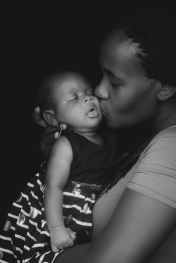
Photo TUBARONES on Pexels.com
In this warm, human environment she spent her first five years, immersed in a group where her place was defined, accepted, giving her all she required and more.
Far from the distant world where white people lived and ruled, busy formulating policies that would soon impact them all, policies that invited in certain immigrants, offering them privileged rights, while denying them of the local black population, restricting their ability to move from one area to another, fracturing families, keeping them in poverty.
Everything changed when her mother left to join her father due to illness, to be near medical support and soon after, her grandmother died, requiring them all to leave and join their parents.
A New Era, Fractured Families and Apartheid
It would be fortuitous timing as a year later, in 1948, the Boers came into power and laws were formulated restricting the movement of Africans. Had her grandmother died later, they may not have legally been able to rejoin them.
The move to live with their parents introduced them to a less harmonious world, one where police raids occurred and crime existed. Within the law or outside the law, there was reason to be more careful and fearful. The importance of attaining an education was the focus, to rise above.
The year I left primary school was the year that education became racially segregated. Hitherto, white pupils, African pupils coloured pupils, and Indian pupils could, theoretically, attend the same school. After 1955, the law forbade that practice. There would be different Departments of Education for the different race groups.
Her years of education were dependent on her attitude, some years she did well, others she lapsed, eventually her focus concentrated on becoming a teacher, though in her initial attempts to secure a position, she would initially be thwarted. Her real life lessons were only just beginning.
Lessons from the Real World
Father began hinting at what might at the root of my problem: I had omitted to offer the Secretary of the School Board “something” and people were telling him it would be donkey’s years before I would get a post if we did not oil this gentleman’s palm.
Though she had done well in her classes, they were inadequate and wholly misleading as to how to prepare to teach children from poor homes, without textbooks, without exercise books, without materials. Trained to teach children from homes where there was a father and a mother, most of her pupils came from women-headed homes. And those women stayed in at their places of employment: busy being smiling servants minding white babies.
Not having books is one of the misdemeanors punishable by corporal punishment. The beatings and probably the sheer embarrassment that must surely accompany the daily proclamation of one’s poverty, prompted a lot of the pupils to pilfer. The very young do not always understand that poverty is supposed to ennobling…
The first class she would teach would have 72 pupils and had all been well, they should have been aged 11 or 12. All was not well however, the children ranged in age from 9 to 19 and the variation in skills just as wide.
Due to her principled stance, that first job would take a while in coming. Unemployed, but desperate to work, she accepted a job at the local fisheries.
Eventually she is offered a teaching job, experiencing the few joys and many disappointments inherent in an unfair, overstretched, oppressive system.
All along, I had known the agony for which some were destined. Such is the design of the government. And such is the abetting by even those of us who regard ourselves as oppressed. Which we are. But we are also called upon to help in that oppression and unwittingly become instruments of it.
A Woman’s Lot
And then comes the intersection of youth with a newly developing career and as a woman, the added risk of pregnancy. Magona’s challenges are only just beginning and her teaching jobs will become continuously thwarted by how society expects women to behave. The arrival of her own children will force her from her role and into domestic service herself, and really open her eyes to how the other live.
What I had not known was that their perception of people like us did not quite coincide with our perception of who we were and what we were about.
More than anything, however, being a domestic servant did more to me than it did for me. It introduced me to the fundamentals of racism.
The different families she would work for, each provide key insights that broaden her understanding and perception of the other groups living within the country and how the system aimed to maintain and strengthen the situation in favour of white people.
As this volume comes to an end, Sindiwe’s situation seems dire, however, she delivers some of the most inspiring passages of the book, in the low place she has arrived at, she suddenly sees all that she is grateful for, all that she has, even the abandonment of a husband who had never supported them, she recognises as a freedom and a significant contribution to her own growth.
It is a wonderful and frank autobiography and introduction to an inspiring woman. I’m looking forward to the sequel, Forced to Grow, the same title as the last chapter in this volume, in which she shares how determination and resourcefulness lead her through and out of those challenges we end with here.
Sindiwe Magona
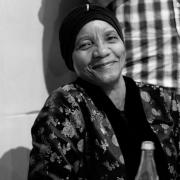 Magona was born in 1943 in the small town of Gungululu near Mthatha, in what was then known as the homeland of Transkei, in the Eastern Cape of South Africa.
She was born five years before colonial Britain handed over power to the Afrikaners. Apartheid was officially introduced in 1948 and with it a series of oppressive and racist laws such as separate living areas and the Bantu education system. It was within this context that Magona grew up.
She is an accomplished poet, dramatist, storyteller, actress and motivational speaker. She spent two decades working for the UN in New York retiring in 2003. Her previously published works include thirty children’s books (in all eleven South African languages), two autobiographies, short story collections and novels.
My writing, on the whole, is my response to current social ills, injustice, misrepresentation, deception – the whole catastrophe that is the human existence. Sindiwe Magona
Further Reading
The Conversation Article: Learning From the Story of Pioneering South African Writer Sindiwe Magona, 5 March, 2021
 Following my

 Non Fiction Memoir



 Immediately removed from everything familiar, home, school, church and community, she is sent in disgrace to her father’s new household and ordered to never go outside or if there was company, to remain in silence upstairs.
 I have had this memoir on my bookshelf for a long time and recall first becoming aware of it when I wrote an article for our a newsletter about a genre in literature I wasn’t familiar with called Creative Nonfiction, sometimes referred to as Literary Nonfiction and here in France as essais or belles-lettres.
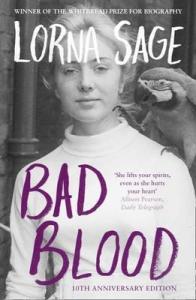 Lorna Sage’s memoir, published in 2001, is an excellent example of literary nonfiction, by the time she wrote it, she had been practicing her ‘creative literary art’ for some time as a literary critic, reviewer, and essay writer, publishing widely on women writers and their work. She wrote books on Angela Carter, Doris Lessing, twelve 20th century women writers, Edwardian writers Violet Trefusis & Alice Keppel and a collection of her journalistic pieces Good As Her Word was compiled posthumously.
 Though childhood takes up much of the book, her teenage years are intriguing, for here the family rises above convention and supports Lorna at a time of great need, in an era when many young women in her position would have been shamed and treated in an inhuman manner, giving rise to more problems and heartache. That she gets through this challenging period in her life, supported by her family and goes on to complete a university education virtually without hindrance, is astounding.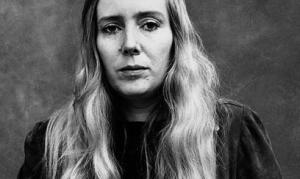
 The first woman who came to mind and whose book I want to recommend is Wangari Maathai’s Unbowed, One Woman’s Story. Kenyan and one of a group of young African’s selected to be part of the ‘Kennedy Airlift’ , she and others were given the opportunity to gain higher education in the US and to use their education to contribute to progress in their home countries. Maathai was a scientist, an academic and an activist, passionate about sustainable development; she started the The Greenbelt Movement, a tree planting initiative, which not only helped save the land, but empowered local women to take charge of creating nurseries in their villages, thereby taking care of their own and their family’s well-being.
 Henrietta Lacks is perhaps one of the most famous women we’d never heard of, a woman who never knew or benefited from her incredible contribution to science and humanity. A young mother in her 30’s, she was diagnosed with an aggressive form of cancer and despite being eligible for and receiving medical care at the John Hopkins hospital in Baltimore, a medical facility funded and founded to ensure equal access no matter their race, status, income or other discriminatory reason, she died soon after.
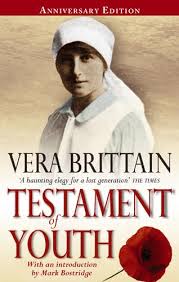 Vera Brittain was a university student at Oxford when World War 1 began to decimate the lives of youth, family and friends around her. It suspended her education and resulted in her volunteering as a VAD (Voluntary Aid Detachment) nurse. Initially based in a military hospital in London, events would propel her to volunteer for a foreign assignment, taking her to Malta and then close to the front line in France for the remaining years of the war.
 Maya Angelou is best known for her incredible series of seven autobiographies, beginning with I Know Why the Caged Bird Sings (1969), narrating her life up to the age of 17. She became a writer after a number of varied occupations in her youth.
 Diana Athill OBE (born 21 Dec 1917) is someone I think of as the ordinary made extraordinary. She was a fiction editor for most of her working life, forced into earning a living due to circumstance, for while her great-grandparents generation had made or married into money, her father’s generation lost it. She clearly remembers her father telling her ‘You will have to earn your living’ and that it was something almost unnatural at the time.
 Before I went to visit and spend two months in Bethlehem, Palestine some years ago, I wanted to read something about the history of the area, not a religious book, but something historical that went beyond the recent familiar history since the British abandoned those residing in these lands to their fate. I wanted to understand the wider context of how people came to be living here and what they’d had to endure to survive.
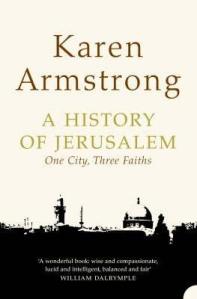 Recently I was recommended a couple more Karen Armstrong books

 which is a mild example of the kind of comportment (at different levels of societal power clearly) that nevertheless can lead to disharmony, conflict, war even, for if there is a conclusion to what Karen Armstrong has learned, it is a lesson she gifts to her readers, known as Hillel’s Golden Rule that all great leaders have taught, Confucius proclaimed it 500 years before him, Buddha and Jesus taught it, it is the bedrock of the Koran:
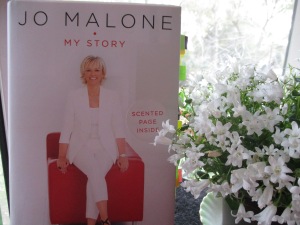 But Jo Malone the girl, wasn’t born into luxury. She was an ordinary girl raised in a family that struggled a bit on the good days, and a lot on the bad days, which were often brought on by her doting father’s gambling inclinations, her mother’s over-spending habit and the pressure to work long hours to keep the family afloat.
 When she really began to play around with fragrance, demand began to rise more than she could cope with, and Gary suggested they embrace the business, move it to its own premise and open a shop. Her business was beginning to overwhelm their living condition, he recognised the potential and offered to commit himself wholeheartedly it. That would be the beginning of Jo Malone, her signature brand.
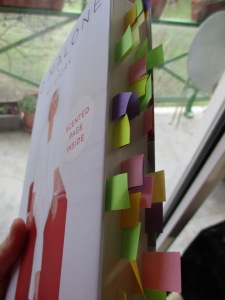 From there, a whirlwind of events follow and she will partner up with a perfume house in Paris, turning her instinct into a viable, enduring product. She tried to put into words her creative process and it is fascinating when she does, for it is something that can’t be copied or cloned, it is an insight into the pure magic of creativity, of how she uses image, colour and experience to create a scent.

 I absolutely loved this book, from it’s at times heartbreaking accounts of struggle in childhood, to the discovery of her passion, the development of her creativity and the strong work ethic that carried her forward, to finding the perfect mate and the journey they would go on together.
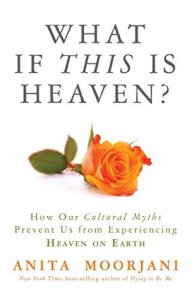 Anita Moorjani wrote her first book Dying to Be Me: My Journey from Cancer, to Near Death, to True Healing after being tracked down by the late Wayne Dyer, who’d come across her story on the internet and wanted to know more about what she had experienced on the day she had been expected to die but miraculously returned from stage four cancer to heal totally and live.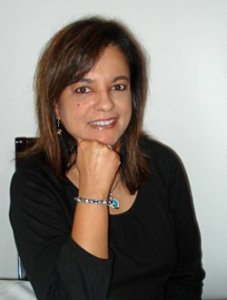
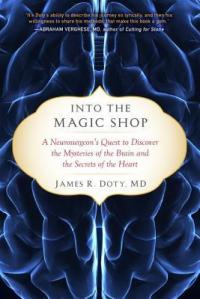 James Doty never really set out to write this book, but he told his story to so many people with whom it resonated and being one of the founding creators of CCARE (The Center for Compassion and Altruism Research) he was eventually convinced how many more people could be inspired by his story and learn about the amazing work being undertaken, that he agreed to share his experience.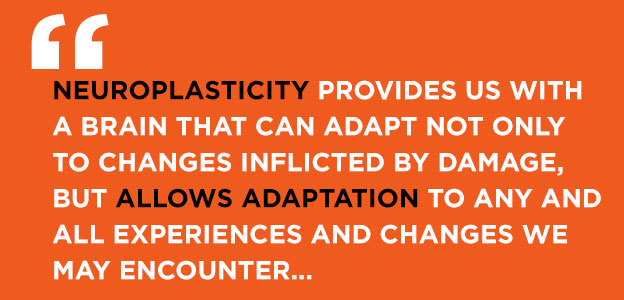
 Word by Word