
Elif Shafak has been an author I have followed for many years now, one of the first authors I encountered before starting to read a lot of women in translation, who came from a non English speaking culture, who wrote stories that came from a cultural understanding that was not British or American, even if that was the audience she hoped to attract.
Since those first novels, she now writes in English and no longer lives in Istanbul. Since moving to London she has become more widely known. This book was shortlisted for the Women’s Prize for Fiction 2022 and the former Costa Novel Award. It is the 5th of her novels I have read. She also writes essay style non-fiction.
Review

In The Island of Missing Trees, she again takes the reader into another culture, to the island of Cyprus; a land with a long history that arrived at a point, where its humans decided to divide on their differences, here it was via origin, Turkish Cypriot or Greek Cypriot.
You belonged to one group or the other and were not supposed to stray. Until they created this divided line, young people would do what is natural for them to do before external influences corrupt their thinking, they develop friendships, they fall in love, they take risks. They get sent away, banned, forbidden from…
Physical Separation denies Ancestral Lineage
The story begins in London, late 2010’s with Ada, a daughter, at school on the last day of term. Ada lives with her father Kostas, her mother Defne has recently passed away. They are given a holiday assignment to write an essay, asked to interview an elderly member, they will be studying migration and generational change.
Ada dropped her gaze. She had never met her relatives on either side. She knew they lived in Cyprus somewhere but that was about the extent of her knowledge. What kind of people were they? How did they spend their days? Would they recognise her if they passed her on the street or bumped into each other in the supermarket?
Ada has never visited Cyprus, her parents only ever made excuses when she asked about family, gradually she would sense that her parents marriage had not been approved by their families. That she too was not approved.
Yet for as long as she was able to, Ada had retained the hopeful belief that if any of her extended family were to spend time with her and her parents, they would forgive them for whatever it was they had not been forgiven for.
Are Trees Conscious? A Fig Gives Voice

Ada’s father digs up and buries their fig tree to protect it from the harsh winter. The fig is not in its natural climate or environment and special measures are required to keep it alive. The tree is given a narrative voice in the novel. It was a sapling from the island, it came from a mother fig that grew in the middle of a tavern, where Ada’s parents used to meet. In this way, the fig is all seeing.
The fig tree is a metaphor for the uprooted, the displaced, for the migrant, for the old ways. It is a symbol for not forgetting. It represents something of the motherland for the migrant and the way it lives through the seasons demonstrates something to humans about how to be.
Arboreal-time is equivalent to story-time – and, like a story, a tree does not grow in perfectly straight lines, flawless curves or exact right angles, but bends and twists and bifurcates into fantastical shapes, throwing out branches of wonder and arcs of invention.
They are incompatible, human-time and tree-time.
After a terrible last day at school, Ada arrives home to learn that her mother’s sister is coming to visit. She rages. She will have the opportunity to address the void within her where it resides.
Half hiding in the shadows, she watched the two adults by the fig tree, drawn to the strangeness of their behaviour but equally detached from them, as if witnessing someone else’s dream.
A Third Culture Kid Awakens
The novel explores what it is to be raised in another culture, severed from one’s own, as if not knowing it is enough to disconnect, as if assimilation is a cure for forgetting one’s past, one’s lineage, one’s identity. It demonstrates the effect of that denial, that severance, the dysfunction that arrives when one is deprived of a connection to one’s roots. And how differently each person deals with grief and loss.
It returns to Cyprus and slowly reveals the story of Ada’s parents that lead up to their separation and reuniting and the impossibility of being able to live there, the sacrifice that leaving demanded of them, the consequence.
A tree is a memory keeper. Tangled beneath our roots, hidden inside our trunks, are the sinews of history, the ruins of war nobody came to win, the bones of the missing.
The story is presented from different perspectives, showing the different realities that life is lived from depending on where one had been planted, uprooted from and replanted. It is a thought provoking read that doesn’t provide answers but offers to expand the reader’s awareness of the complications humans live under when love disrespects the rigid outlook that communities adhere to.
It shows the ripple effect of staying and/or leaving and the strangeness of being the protege of that, growing up in foreign lands that they have then acclimated to, except for the deep unsettled feeling that runs through their veins.
There is a delightful twist at the end that made me remember first encountering Elif Shafak and her describing her own childhood, of the stories her grandmother would tell, the superstitions she held. Here, I thought, is that little girl’s imagination, still going strong, writing novels that go deep into the realities of the human experience but are not above allowing something of the magic and wonder of an unbound imagination to run free.
Further Reading
Interview, Guardian: Elif Shafak: I’ve Always Believed in Inherited Pain
My Reviews of Honour, Three Daughters of Eve, The Happiness of Blond People,
Elif Shafak, Author

Elif Shafak is an award-winning British-Turkish novelist and a champion of women’s rights and freedom of expression. Her books have been translated into fifty-five languages.
Her novels include The Bastard of Istanbul, The Forty Rules of Love, The Architect’s Apprentice, Three Daughters of Eve, Honour, 10 Minutes 38 Seconds in This Strange World, which was a finalist for the 2019 Booker Prize, and The Island of Missing Trees, shortlisted for the Women’s Prize for Fiction 2022.
She is also the author of a memoir, Black Milk: On the Conflicting Demands of Writing, Creativity, and Motherhood.
She is a Vice-President of the Royal Society of Literature. Shafak was awarded the Halldór Laxness International Literature Prize for her contribution to ‘the renewal of the art of storytelling.’ An active political commentator, columnist, and public speaker, she lives in London.


 Whether we are conscious of it or not, we all grow up seeking to affirm our sense of personal and group identity, absorbing those questions of Who am I? Where do I belong? Traditionally, the family and the community reflect that notion and it is not until we step outside those comfort zones that we might question it. But for children growing up among worlds and between cultures the awareness comes much earlier.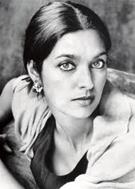
 Word by Word