
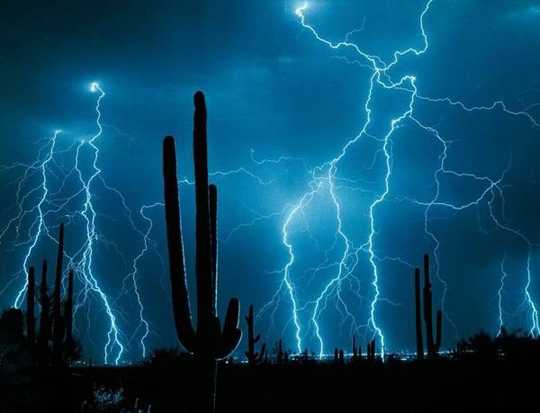
Appreciating the rain is something I have learned relatively recently and how appropriate that I have a vision of it today, accompanied by the growing rumble of distant thunder and the occasional flash of lightning.
Until I lived in the south of France I had never experienced a period of two months continuous sunshine without a drop of rain or threat of a grey cloud on the horizon and so I began to understand and live with the dry and dusty consequence, those vast blue skies compensating for the lack of green, for without moisture there is no grass, no lush green of the variety that grows, horizontal, vertical, almost everywhere in that land of the long white cloud of my past, Aotearoa; growth that without vigilance would suffocate all that man has tried to impose in its place.
 Children here are a reminder of this different relationship to rain, they adore it and can relate to Tess, the protagonist of Karen Hesse’s wonderful children’s book Come on, rain! Tess pleads to the sky as she, her friends, her mother and all the plant life around them swelter and suffer in the interminable heat, hoping for some respite.
I stare out over rooftops,
past chimneys into the way off distance.
And that’s when I see it coming,
clouds rolling in
grey clouds, bunched and bulging
A creeper of hope circles ’round my bones.
“Come on, rain!” I whisper.

The Gift of Rain however is the title of Tan Twan Eng’s debut novel. His second novel The Garden of Evening Mists’ was short listed for the Man Booker Prize this year and after reading a review of that book, it was suggested I should start with his début novel The Gift of Rain, longlisted for the Booker in 2007.
An ancient soothsayer once told Philip Arminius Khoo-Hutton, the half-Chinese, youngest son of a British business man:
You were born with the gift of rain. Your life will be abundant with wealth and success. But life will test you greatly.
Remember – the rain also brings the flood.
She also tells him that his companion Endo-san, his Japanese sensei, a Japanese diplomat, mentor and master of Aikido, that they have a past together in a different time and that they have a greater journey to make after this life. These are words the young man has no wish to hear, nor believes, though they will stay with him and he will see them with greater clarity as an old man, the man we meet in the opening pages in fact, as the story is narrated from dual perspectives, one as an older man recounting his life and relationship with Endo-san to an elderly Japanese widow who once loved Endo-san and has travelled from a small village in Japan to seek him out before her own death, and the second perspective when is that young man.
 As Philip shares his and Endo-san’s story, we meet him as a young man living in Penang, a Malayan country ruled by the British with strong Chinese, Indian and Siamese influences.
His story unfolds in the wake of the Japanese occupation of Malaysia in World War II when Philip finds that his knowledge of Japanese culture and his close friendship with his teacher can be of benefit to protect his family, though that is not how they or many others in this mixed community see his actions and involvement. He is not always convinced of his own argument and there will be much suffering in consequence.
The story navigates a complex web of connections that crosses cultures and countries, tests friendships, loyalties, duty, offers opportunity and witnesses’ betrayals. It will keep you thinking for some time after the last page is turned.
Duty is a concept created by emperors and generals to deceive us into performing their will. Be wary when duty speaks, for it often masks the voice of others.

 Born in 1968, clearly intelligent and showing she had potential from a young age, ironically – getting married at the age of 19 was something of a rebellious act. Nineteen, an age of youthful idealism, where if not wary, we risk being fooled into taking the intensity of our feelings seriously and wind up wed. Or am I being just a tad cynical?
 The death of her mother at 45, knocked her off her straight and wedded course setting her on a side road to self-destruction, though fortunately something inside, perhaps the ever-present loving spirit of her mother (and a few of her sensible genes) mapped out an escape route from her self-destructive self by planning to hike the Pacific Crest Trail (PCT).

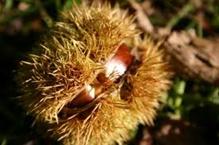
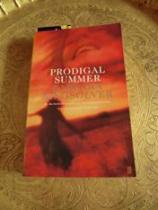 Animal nature, human nature, bugs and insects, forest life, their dependence and interdependence, habits good and bad and how the balance is affected when death, destruction or any kind of change is introduced; how species adapt, how human beings cope – or don’t – all of this we find in the juxtaposition of creatures assembled from the thoughtful poetic pen of Barbara Kingsolver in Prodigal Summer as she weaves three stories variously referred to in three alternating chapter titles, Predators, Moth Love and Old Chestnuts.



 I recognise in the first two paragraphs the allure of melodic sentences, the promise of picturesque phrases that almost make music as they fly off the page like dancing quavers to craft pictures in my mind of that breath-taking, wild and unforgiving Alaskan landscape.
 Word by Word