Soldier Sailor by Claire Kilroy

Soldier Sailor is on the shortlist for the Irish Book Awards 2023.

Cathy at 746 Books praised this one, as her pick for Novel of the Year, saying it deserved the award attention, so I decided to read it to find out what that was about.

The Clash of Fierce Love versus Stolen Identity

Irish Book Awards 2023 motherhood literary fiction

So, after an eleven year gap since the publication of her last book, following the birth of her son, Claire Kilroy has overcome her writer’s block and “angry few years”, to produce a piercing, visceral account by the unnamed narrator Soldier ravaged by new motherhood, to the child, Sailor.

Here is how the author describes her book:

Soldier Sailor is a mother talking to her sleeping child explaining what was going on during those years he was too young to understand or remember the events around him. She tells him of her love, but also of how difficult, how isolating she found it when motherhood ended her old life. Nothing much happens; one of the main characters, Sailor, has no dialogue. The whole experience is a non-event from the outside, but when you are that soldier pushing the pram, my, what a psychodrama it is.

The novel as the image depicts, zooms right in to the responsibility, the bond and the practice of being mother to a small child, to how it changes EVERYTHING. From the entering into a relationship like no other that exists and the loss of what came before it; to the very different support that a mother might need, and the unlikely place(s) she might find it.

A Mother’s Instinct to Kill

It is not a reflection, it is an act, you will read it and live it, or relive aspects of it, if you have already been there.

Do you know what I would I do for you? I hope not. What would I not do, is the question. The universe careens around us and I shield your sleeping body with my arms, ready to proclaim to the heavens that I would kill for you: that I would kill others for you, that I would kill myself. I would even kill my husband if it came down to it. I swear every woman in my position feels the same. We all go bustling about, pushing shopping trolleys or whatever, acting like love of this voltage is normal; domestic, even.That we know how to handle it. But I don’t.

Using the second person “you” addressed as a monologue to her baby son, the narrative swings between the emotional peaks of a tireless love, to violent frustration and resentment; from the misleading two second Instagram snaps sent to the elsewhere husband, to her thirty second screaming telephone rages, with only the reader, witness to and understanding the riding crescendo of events that lead from one of those events to the next. A bewildered husband, observing the peaks, oblivious.

Your sleeve is in your dinner, my husband remarked. He wasn’t there but he didn’t have to be there. He was always there when things were going wrong. Yet never there to help. The luxury, the sheer luxury of sending a last-minute message saying you wouldn’t be home that evening. It would be a decade – more – before I could do the same. What does he eat? he had texted me the one time he was left in charge?

Sons and Fathers Take Note

To read this account, especially because of the culture within which it stems from, one that for many years locked up its women who expressed too loudly their discontent, or behaved in ways considered improper, is to understand a little of what was labelled hysteria – one of the natural consequences of needs not being met. Forget the narrative arc, read this and you plunge into the subject, you become it, you feel it, you remember bits of it. The son is warned, made to understand, his future depends on it.

I was firmly in my wrong mind and liable to do anything, so off I went, down the stairs, out the door, up the drive, through the gate, along the road, overcome by a wildness that I needed to convert to movement or else risk doing something stupid, and by stupid I mean destructive because words have many meanings, Sailor, and you must deploy them with care because they can inflict real hurt.

The mother like her infant child, is reborn yet will only realise she has inhabited this new being ‘the mother who birthed‘ when it is too late, when this tiny creature she loves so fiercely and will protect with her life, claims her, and in her most challenging moments, she like him, will feel the desire to scream, to run, to escape or somehow figure out, how to make ‘the other’ understand.

What struck me as the starkest contradiction of all was that, having navigated this much of life – the volatility of youth, of love and loss, the agony and the ecstasy – the closest I had come to losing my mind was during the period known as settling down.

Friendship for Hope and Healing

motherhood Soldier Sailor Claire Kilroy
Photo by Oleksandr P on Pexels.com

This text will not speak of the quiet moments, it is the intersection of all the moments lived, of the brutal awakening that is ‘becoming a mother’ and the warning to ‘the other’ that did not give birth, who is part of the journey, to prepare for this change and get ready to adapt, to support, to listen, to learn to be ‘the friend’ she is going to need.

One day she encounters an old friend, and these follow up meets mark a turning point, to being seen again, to being understood, and something dangerous shifts, quiets. Small gestures, moments of listening, the beginning of a form of solidarity.

We were better together my friend and I. Better parents. I was anyway. I was a better mother to you when I was around my friend. But a worse wife.

We arrive at the end – where she imagines moments years down the road ahead – with a kind of relief, knowing that with age and stage, the distance between those peaks will lessen, the relationships will either adapt or crumble, that true friendships will witness and endure it all.

An utterly compelling read that you won’t want to put down.

Further Reading

The Observer Review: Soldier Sailor by Claire Kilroy review – a mother’s confession after the fight of her life by Stephanie Merritt, 12 June 2023

The Irish Times Review: Soldier Sailor by Claire Kilroy: An astute, provocative, intriguing novel about motherhood – A virtuosic set-piece late on veers so far into nightmare territory, it feels as if we’re reading a thriller by Sarah Gilmartin

Eason Novel of the Year, Interview Q & A With Claire Kilroy

Claire Kilroy, Author

Claire Kilroy is the author of five novels including Soldier SailorAll SummerTenderwire, and The Devil I Know. She was awarded the Rooney Prize for Irish Literature in 2004 and has been shortlisted for many other prizes, including the Irish Novel of the Year and the Kerry Group Irish Fiction Award.

She studied at Trinity College and lives in Dublin.

What do you hope readers will take away from your narrative?

It is so easy to dismiss a mother and her work, and a father and his – one of the main characters is a stay-at-home dad. I had no idea what minding an infant involved and had regarded it as easy, unchallenging (I am mortified to admit that), so I hope I have revealed how demanding it is, but also how rewarding, never mind how important. I hope more fathers will get involved in raising children because it changes you, it remakes you, you become more compassionate. I don’t think Trump and Putin would be the awful tyrants they are had they cared for, well, anyone. It doesn’t have to be a child, just any person or creature who needs care.    

My Fourth Time, We Drowned by Sally Hayden

Seeking Refuge On the World’s Deadliest Migration Route

Sally Hayden is a correspondent for the Irish Times, who has reported stories across Africa and the Middle East for a wide range of media, including the Guardian, CNN, Al Jazeera, Channel 4 News, the Washington Post and the New York Times.

Earlier this year, I read River Spirit by Sudanese/Scottish author Leila Aboulela and as I was interested to understand a little more of the history of Khartoum, Sudan, I started reading some informative news articles by the Irish correspondent Sally Hayden.

I then discovered she had recently written a book, a very powerful and important book.

A Non-Fiction Tour de Force

Her book My Fourth Time, We Drowned was the winner of the 2022 Orwell Prize for Political Writing, Irish Book Awards Book of the Year 2022, it was shortlisted for the Bailee Gifford Prize for Non-Fiction 2022.

In 2018, Sally was contacted by refugees incarcerated in Libyan migrant detention centres, who were using hidden phones to appeal for help.

“Sister Sally,” a man WhatsApped her in 2018 from a Libyan detention centre for refugees, “we need your help.”

“I had stumbled, inadvertently, on a human rights disaster of epic proportions,” Hayden remembers.

From that day, she became a kind of lifeline to many, staying in contact, travelling across the region verifying facts and keeping a vigilant eye on those she had come to know travelling along the Central Mediterranean migration route, between Libya or Tunisia and Italy or Malta. The UN has called it the deadliest migration route in the world.

A 21st Century Human Rights Scandal

Since 2014, more than 28,200 men, women and children have died or gone missing on the Mediterranean Sea while trying to reach Europe – more than 22,400 of them along this route.

In her book, she documents the messages and traces what happens to some of these people, and referring to a map, focuses on every detention centre and shares the conditions and some of the events that occurred in each of those places. It is a compilation of evidence and an act of ‘seeing’ those individuals whose lives have been demeaned and exposes the reality of unwholesome alliances forged between European leaders with warlords, militias and rebels who profit from the movement of human beings through political funding and extortion.

Returning people to Libya traps them in a cycle that also involves human smugglers. The smugglers work in league with both the coastguard and the detention centre management – this has been documented by an independent UN fact-finding mission, as well as by me. Videos of captives being tortured are even circulated by their families on social media, in a desperate bid to raise ransom money through crowdfundingEritrean journalist Meron Estefanos says around one billion euros in ransoms could have been paid to smugglers in Libya by now. 

The main reason for her focus on the Central Mediterranean route was because of the role and impact of the European Union (EU). A law graduate with a Master’s in International Politics, she would investigate and report on the circumstances that lead to this becoming a major humanitarian crisis, as a result of EU policy, that funded and facilitated thousands of people being captured and forced back to a militia-run state where they were often locked up indefinitely in detention centres.

Each chapter focuses on a different location, sharing the messages from people being held, the dire conditions, the punishments, the ransom demands, the deaths. The ineffectiveness of the UNHCR (United Nations High Commissioner for Refugees), the suggestion of Rwanda as a new route for safety, the trial of known smugglers at Addis Ababa, where Hayden is the only foreign correspondent present. The humanitarian lawyers who made a submission to the International Criminal Court calling for the EU to be charged with crimes against humanity.

She also travels to parts of Africa where some have returned home to, to find out how they are faring, and then the few who made it to a safe country, who ares starting new lives – how it is now for them.

It is difficult to encapsulate the extent of this testament to the experience and situation of a large group of people made to live and die in terrible, inhumane conditions here, but it is an opportunity to avail ourselves of the knowledge of the repercussions of these funding policies and to understand what is behind these so-called solutions to a humanitarian crisis.

“The world will not be destroyed by those who do evil,” wrote one detained Eritrean refugee, “but by those who watch them without doing anything.”

An extraordinary, detailed and condemnatory read. Highly Recommended.

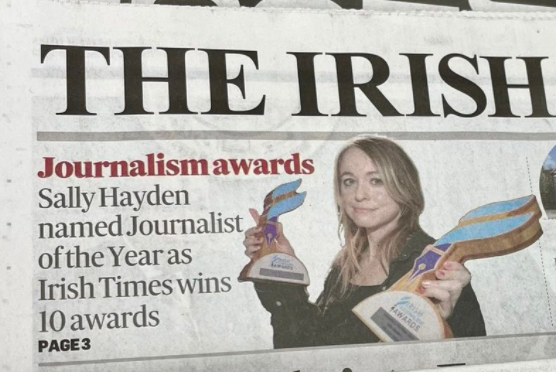
Journalist of the Year, Irish Journalism Awards 2023

Just this week (Nov 15, 2023) Sally Hayden was named journalist of the year at the 2023 Irish Journalism Awards. Hayden also received the award for best foreign coverage for Irish Times articles on famine risks in Somalia, Sudan’s pro-democracy movement and unrest in Sierra Leone over its cost of living crisis.

Further Reading

A Speech Sally Hayden Gave to the European Parliament, 9 Nov, 2023 – on Why People Want to Come to Europe

Irish Times Article: Sally Hayden: ‘You have to be careful not to let your empathy or your humour be torn away’

Interview, Women In Foreign Policy: Sally Hayden on her career as a journalist and reporting on the migration crisis

Sally Hayden, Author

Sally Hayden is an award-winning journalist and photographer focused on migration, conflict and humanitarian crises. She is currently the Africa correspondent for the Irish Times and in 2023 won journalist of the year at the Irish Journalism Awards.

Her writing has been translated into nine languages and she has appeared on national and international media.

David Edgerton, the Chair of Judges for The Orwell Prize for Political Writing 2022, commented:

Hayden’s reporting is an extraordinary exploration of a modern reality using modern means: truly a book of our times. While many people seeking refuge from the terrible logics of repression, war and poverty cannot easily cross frontiers, phone and Facebook messages can. They allow contact with home but are also the means by which ransoms are gruesomely demanded by traffickers. But they are also the way in which Hayden explores the lives of people stuck under the control of traffickers, militias, the UN, and lets them speak to us as full human beings: hungry, ill, and often doomed in their quest for safety. She gets the terrible truth out to a world that has been far too indifferent.

How To Build A Boat by Elaine Feeney

How To Build a Boat is a contemporary Irish novel that deals with people in a community navigating lives complicated by things that have happened or are happening to them, in this case a 13 year old boy Jamie is starting high school and it’s clear he is being singled out by some of the mean boys (and not for his height or bright red hair).

Irish Literature literary fiction Booker Prize longlist 2023

The novel was longlisted for the Booker Prize 2023 and shortlisted for the Irish Book Awards 2023, both of which announce winners in late November.

In a way it reminded me of Sebastian Barry’s Old God’s Time, in the sense that it relates to the power of connections in the community, the unexpected and the previously unknown, that can help pave the way towards healing and the passing through of the tumultuous hallways of grief.

Old God’s Time is more introspective and focused on a single character, while How To Build a Boat gives equal weight to a number of characters, there is more dialogue and a greater sense of place, of the physical environment and dwelling places of its inhabitants.

How can I miss someone I have never met? Jamie said.
Grief was profoundly different for both humans. One felt an intense anger he had never recovered from, the other knew something was missing, a vacuum to where a mother should fit, and he had a fixed determination to fill it.

Jamie’s mother Noelle died post childbirth at the age of 15 and he is being raised by his young father Eoin and grandmother. He takes everything literally and is serious minded and ambitious.

Jamie got it. He just didn’t want to get it. Noelle had never stopped moving from the first minute he had met her on screen. She was in constant and limited motion.

His one resounding ambition is to invent/create a machine that will be in perpetual motion; in his mind it will somehow allow him to remain connected to his mother, who, though he never knew her, he visualises through the one remaining video that is left of her, competing in a swimming gala.

There had been hundreds of clips. Noelle laughing after school. Noelle walking in the woods. Noelle soaked to the skin on a picnic. Noelle pulling faces outside the cinema. Noelle painted like a Dalmatian at Halloween with a black-and-white hair wig. But after a rare night out with the soccer club, Eoin, angry and lonely and drunk in his small, dark living room, deleted the phone’s contents. After which, he placed his phone on the laminate floor of the two-up-two-down and smashed it hard under the heel of his foot. After which, he vomited. After which, he passed out until morning when he woke frantic and pacing about with a dry mouth and a pounding headache, and in a lather of sweat and overwhelmed with the desire to disappear. But Jamie woke, crept downstairs and began asking so many questions that Eoin had no choice but to recover and get on with the getting on a young boy requires. And for years after, Eoin replayed each deleted clip in his mind before he’d fall into a fretful sleep, until the clips grew so hazy and faint and there came a time when Eoin couldn’t visualise Noelle’s face at all,
and though he tried to (re)build it:
smile, red hair, eyes, freckled nose, wide shoulders
parts of her vanished until it was finally impossible to recreate her.

Yusra Mardini Butterfly The Swimmers Elaine Feeney
Photo by Heart Rules on Pexels.com

At the new school he encounters Tess (Mrs McMahon) the English teacher and Taigh (Mr Foley), the woodwork teacher, whose classroom has been built in what was the old swimming pool.

These two are also in the midst of transition; Tess is married to Paul who has little patience or empathy for his wife’s uncertainty. She has come to the end of being able to suppress her feelings and knows that running away is no longer a sustainable solution to her agitated, easily triggered mind.

They were almost a decade married now and to avoid misinterpretations in the way they communicated, they had grown polite and consistent with each other. To Tess, it was as though she had catapulted. She stopped giving Paul her point of view. And Paul stopped worrying about what ailed Tess.

Taigh has left the island where he was raised and keeps his distance from people, avoiding growing close to anyone while he adapts to his newfound independence.

The three are connected through the school and Taigh’s suggestion to Jamie that they build a currach (a traditional Irish boat with a wooden frame, over which animal skins or hides were once stretched, though now canvas is more usual).

It is a school project that a number of the boys work on and commit time to, though not necessarily supported by the very traditional, linear leadership or parents with single-minded expectations of their protege. The project in different ways facilitates consideration of the many pressures weighing on them all.

It is a heart-warming, thoughtful novel of the importance of community interactions and the power of imagination and creativity and teamwork to nurture and heal and progress the journey of everyone involved, when obstacles are removed and the way is cleared for out of the box thinking, support and the healing that can result from going with the flow.

I thought it was an excellent, enjoyable, thought provoking read of hope and optimism.

Further Reading

Elaine Feeney Booker Interview: ‘It’s impossible not to consider pain and loss when writing’

New York Times Review: Grief, Community and Boat Building in a Moving New Novel, In Elaine Feeney’s latest book, a child’s grief-driven engineering dream connects a handful of isolated citizens in a small Irish town by Sophie Ward.

The Guardian: How to Build a Boat by Elaine Feeney review – secret shame and practical woodwork by Killian Fox.

Elaine Feeney, Author

Elaine Feeney is an award-winning poet, novelist, short story writer and playwright from the west of Ireland.

How to Build a Boat, longlisted for the Booker Prize 2023, is her second novel. The 2020 debut, As You Were, was shortlisted for the Rathbones Folio Prize and the Irish Novel of the Year Award, and won the Kate O’Brien Award, the McKitterick Prize, and the Dalkey Festival Emerging Writer Award.

Feeney has published three collections of poetry, including The Radio Was Gospel and Rise, and her short story ‘Sojourn’ was included in The Art of the Glimpse: 100 Irish Short Stories, edited by Sinéad Gleeson. Feeney lectures at the National University of Ireland, Galway.  

” I am constantly imagining and reimagining this place; its socio-economics; geo-political landscape; pagan versus Christian traditions; new cultures; power and who holds it; the post-colonial effect on language, emigration, class and agriculture. Our proximity to the sea seems to energise writers.” Elaine Feeney on Ireland

Old God’s Time by Sebastian Barry

I’ve long wished to read a novel by Sebastian Barry and somehow not got to one until now.

Old God’s Time was longlisted for the Booker Prize 2023 and shortlisted for the 2023 Irish Book Awards, Novel of the Year (winner announced 22 Nov).

literary fiction Irish
Book Toothbrush for Livia

This is a slow burn, introspective, literary read, of a man in decline, in the 9th month of his retirement from the Irish police force, now in his late 60’s. He has relocated to the annex of an old castle-like building overlooking the Irish sea and rarely has contact with anyone, though he is aware of his elderly landlord weeding the garden, a young woman with a child in the turret of the same building and a lone, trigger happy cellist.

His thoughts are of his wicker chair, his view, his peaceful existence and the joy of the privilege he has had to love his wife June, who he believed loved him in equal measure.

Over the course of the next week or so he relives memories of being with his wife and we develop a sense that this good fortune was not something either of them expected from life, given their rough beginnings, both abandoned as babies or small children.

His nostalgic meanderings are disturbed by a visit by two young policemen working a case against a priest, and looking into the cold case of another murdered 20 years ago. They want to know what he remembers from that time, as it was a case he worked on. Their arrival also coincides with the beginning of tentative relationships with his neighbours.

What a thing to bring to your old friend’s door. A new peril of cold cases that he had never foreseen. Enough time goes by and it is as if old things never happened. Things once fresh, immediate, terrible, receding away into old God’s time, like the walkers walking so far along Killiney Strand that, as you watch them, there is a moment when they are only a black speck, and then they’re gone. Maybe old God’s time longs for the time when it was only time, the stuff of the clockface and the wristwatch.

old god's time cormorant
Photo by Sindre Fs on Pexels.com

The visits disturb and awaken old memories and feelings, going all the way back to his early days in the army, a year in Palestine and then in Malaya, where he was a sniper and other dark shadows of memories long buried.

The slow revelation of his past, of his job and family, his son and daughter, his wife and their experiences as children create intrigue as he alludes to disturbing events that take time to unveil.

His often-time confused mind sometimes makes those memories feel like events happening in real-time around him; people appear to him who are no longer here. Figments of imagination or angelic attendants preparing him?

Sometimes he awakens and realises it was a dream, other times he realises it was a form of hallucination.

But he was obliged to believe it. Because in the first instance a witness should be believed. A lot of mischief and mischance had arisen from not believing witnesses. Rejecting out of hand. Poor soul standing in front of you, spilling the dreadful beans, and it not sounding likely. But oftentimes the unlikely was the truth, as you might find out, in the end, when it was too late. He felt he should believe – believe himself.

We read and we are in his mind trying to decipher what is real and what is imagined or desired. At a certain point it doesn’t really matter, except that the two young policemen may suspect he is implicated in something.

Far from being depressing or exhausting, given the burden of what he has lived through, there is a sense of gratitude for the gift of a shared love he had with June and pride he has in his children.

Behind the plot is a seething rage at the years long refusal to follow up with child abuses nor charge priests suspected of child abuse, men covering the despicable deeds of other men, of one type of power enabling another, predators against the weak and helpless and the long term psychological distress this trauma has inflicted on hundreds of thousands of children, not talked about but passed on through their own DNA, becoming a form of collective trauma of a generation(s).

The lack of redemption for victims, the theft of their freedom, of their peace of mind, the deep wounds that remain, that continue to fester, to destroy souls.

It was up to him now to know less about times and details and more about the moiling mysteries of the human heart. Things happened to people, and some people were required to life great weights that crushed you if you faltered just for a moment. It was his job not to falter. But every day he faltered. Every day he was crushed, and rose again the following morn like a cartoon figure.

Setting the novel in this man’s twilight years takes a dramatic subject and allows it to be reflected on in slow paced, methodical way that combines the experiences people go through and witness, the effects and consequences that they continue to live with and attempt to overcome or heal from, or take revenge for and the aftermath, what survives.

Brilliantly written and rendered, thought provoking, holding its threads of hope and faith in the power of genuine love. It is a book that is worth immersing in due to its dream-like reality, an ideal weekend read.

Highly Recommended. Have you read any Sebastian Barry novels? Do you have a favourite?

Sebastian Barry, Author

Sebastian Barry is an Irish novelist, playwright and poet, one of a small group of authors to have been nominated for the Booker Prize five times.

The 2018-21 Laureate for Irish Fiction, Barry had two consecutive novels shortlisted for the Booker Prize, A Long Long Way (2005) and the top ten bestseller The Secret Scripture (2008), before Old God’s Time was longlisted for the Booker Prize in 2023.

He has also won the Kerry Group Irish Fiction Prize, the Irish Book Awards Novel of the Year and the James Tait Black Memorial Prize. His novels have twice won the Costa Book of the Year award, the Independent Booksellers Award and the Walter Scott Prize.

Barry was born in Dublin in 1955, and now lives in County Wicklow.  

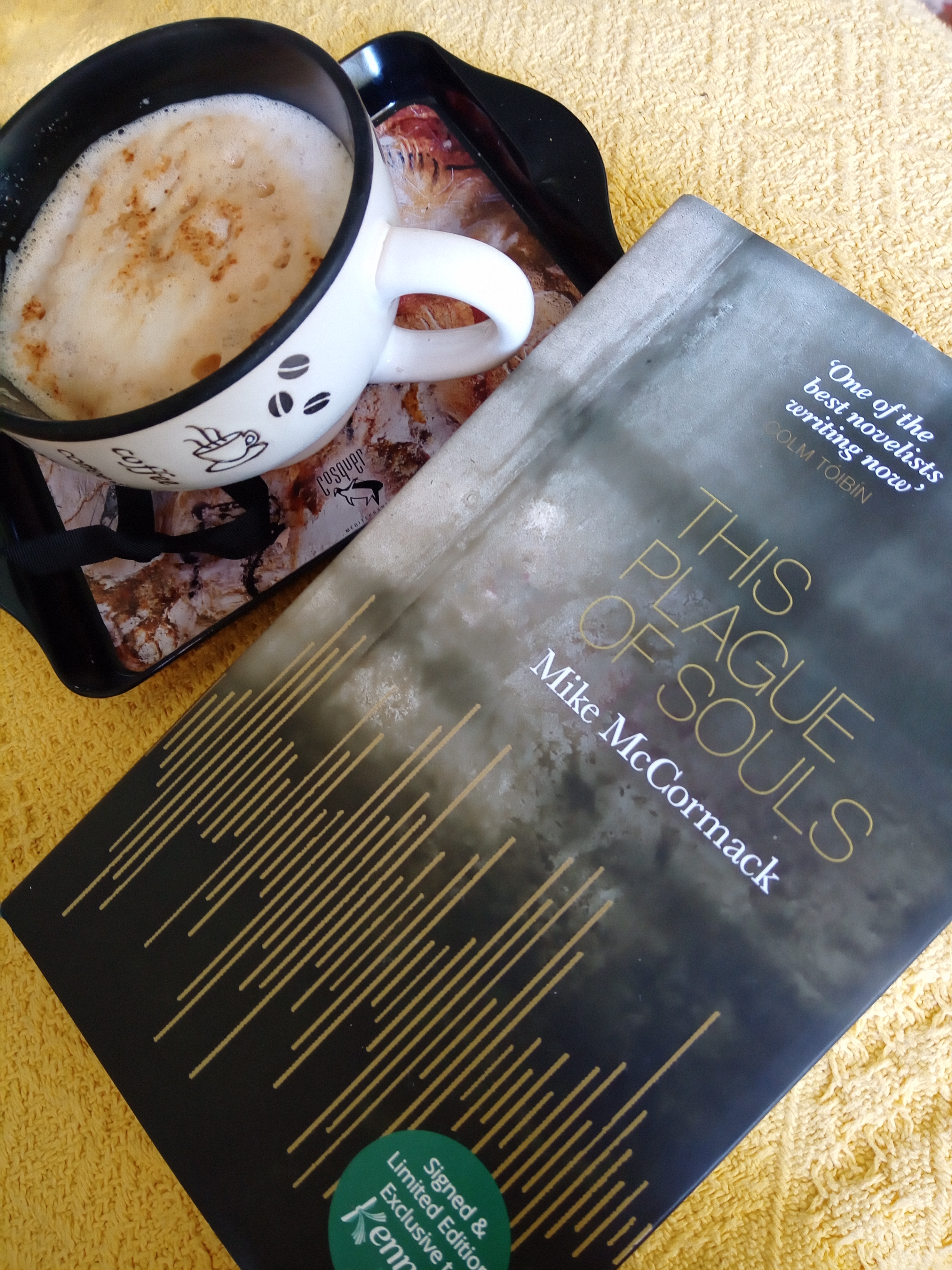
This Plague of Souls by Mike McCormack

Well, that wasn’t what I was expecting. Perhaps the first half, which felt like a different novel, one that felt familiar in an Irish rural novel kind of way, featuring a lonesome protagonist, Nealon, who has returned to the abandoned home and found it empty of his wife Olwyn and child Cuan, who hadn’t waited to hear the outcome of the charges that have kept him in prison the last 10 months.

An Old Irish Cottage of Memories

As he wanders about the house, certain objects awaken memories, of his parents, now long dead and more recently his wife Olwyn, who removed everything in the house that had belonged to them and did him a favour by cleaning and renovating it single-handedly. In protest he drags their old couch into the back lawn and just sits there.

We don’t know why he was imprisoned, what he was charged with, who his wife was, where she is.

Solar Bones Tramp Press Irish experimental fiction

The only evidence of a life or connection outside this empty cottage, is a persistent caller, who calls every day and seems to know everything about his life.

He conveniently repeats to Nealon everything he knows about him, though we don’t know if any of it is true, because the protagonist rejects everything he says, neither accepts or denies and even in the thoughts shared on the page, chooses not to think about (or the writer chooses not to share) any thoughts relating to the activities he describes.

I do not highlight one single passage until page 64 and then it is this I note, words exchanged in one of their cryptic telephone conversations:

‘I’ll tell you this: there is a great shortage of imagination out there, you couldn’t underestimate it.’
‘I wouldn’t know about that. I have noticed that there is no shortage of foolishness.’

An Alternate Reality or A Spark of Imagination?

Finally they will meet and the story becomes more surreal, at this point I thought, this is actually going to be revealed as science fiction, there is probably an alternative reality going on here – isn’t there? Because it’s starting to get kind of frustrating almost boring; but clever yes, the writing is polished, it’s relatively easy to read, but for this reader, there is nothing meaningful or all that intriguing about it, I feel the edge of disappointment ahead of me, as there are so few pages left to read. I start theorising and make up my own story about what is going on (I won’t bore you with that).

As the man says himself articulating both his conundrum and my own :

‘So I understand the architecture of the whole thing, the grandeur and ambition of the entire construct. But not the motive behind it. What is it all about? What does it hope to achieve? Is it some noble enterprise – as I hope it is – or something else entirely? Something squalid and rotten to the core.’

Scattered throughout the text are occasional sentences that hint at Nealon’s understanding, words that come from his ‘now’ wherever that is.

It took him a long time to recognise it as chaos and he wonders now how he could have mistaken it as anything else.

We have learned that in prison there was a complete lack of mind-sharpening engagement that threatened to turn in on itself and close him down, however nothing about the character thus far indicates his capability. He is a loner, just as his name indicates, Nealon – a.l.o.n.e with a capital N.

Curiosity Can Kill the Cat

Ultimately, despite his better judgement, out of curiosity or nothing better to do, or perhaps he really is interested in finding out where his wife and child are, he is lured into meeting the man, and while focusing on not really saying anything, he may have talked himself into a trap.

Photo by Jack Redgate on Pexels.com

As he travels from the West of Ireland towards the city, he becomes aware of some kind of threat looming over the country.

On the edge of insight, when it comes it may be too late. This constant feeling that he is about to realise something drives the novel forward and creates a sort of tension.

In a way, it reminded of the book I just read Margarita Garcia Robayo’s The Delivery, she uses a similar introspective technique to keep the reader from knowing exactly what is going on, however throughout the course of novel, there are many more morsels of humanity, she too is a loner, but life and love push their way in on her – you can’t escape the community.

The author who describes the novel as ‘part metaphysical thriller, part roman noir’ did ask himself the question and was aware he may alienate some readers, as he says in an interview with the Irish Times.

Would it be possible to write a book of which it would be impossible to speak, where I don’t know what happens, and how to make that artistically credible and skilful without it coming across as clueless, as an authorial failure?

Why Did I Read This?

I chose to read this book because of all the good reviews of Solar Bones, which I will still read, and also because Mike McCormack was picked up by Tramp Press, one of my favourite Irish publishers, who also publish my top two Irish authors, Sara Baume and Doireann Ni Ghriofa.

Author, Lisa McInerney’s blurb on the back cover was closest to my reading experience, when she says:

‘A darkly marvellous novel: at once intimate, domestic, and poignant, then speculative and hard-boiled and wild’

Mike McCormack, Author

Mike McCormack’s previous work includes Getting it in the Head (1995), Crowe’s Requiem (1998), Notes from a Coma (2005), which was shortlisted for the Irish Book of the Year Award, and Forensic Songs (2012).

In 1996 he was awarded the Rooney Prize for Irish Literature and in 2007 he was awarded a Civitella Ranieri Fellowship. Solar Bones (Tramp Press, 2016) won the Goldsmiths Prize, the Bord Gáis Energy Irish Book Award for Best Novel and Best Book, and the Dublin International Literary Award (previously known as the IMPAC), and was nominated for the Booker Prize.

Mike McCormack lives in Galway with his family.

Cacophony of Bone by Kerri Ni Dochartaigh

When I saw that Kerri ní Dochartaigh had a new book out, I was intrigued. I read her debut Thin Places  (reviewed here) in 2022, it was a tough read at times, especially as I went into it thinking it might be nature writing akin to others of the genre I’ve read. It was not. It was much darker.

At that time, nature, more than an observation, provided solace to an ever present dread and those thin places were a kind of magical opening and hint of acceptance that kept her here – just. The book trawled through a sombre northern Irish childhood into young adulthood, as the author attempted to rise out of a grasping fog towards finding their place and way in the world. To feel safe, while railing against the after-effects of trauma. From nightmares to numbness, nature was her nurturer.

Cacophony of Bone Thin Places creative nonfiction

While that book was challenging because of all it makes the reader feel, Cacophony of Bone was proof of a move forward, of a shift out of the rawness of her earlier existence and while still in the process of healing, clear signs of hope and progress and development. A relationship that comes across as more anchored and a commitment to sobriety. New circumstances that hold promise.

It began two days
after the winter solstice,
as all stories begin:
with light.

Essentially, it is a beautifully sculpted 12 month hybrid journal/memoir with splashes of poetry. It begins just as she is making a move to a one room very basic railway cottage in the middle of Ireland with her partner/lover, a couple of months before the country/world is going into lockdown. It becomes a year of noticing, of planting, growing, of collecting objects, abandoned nests, bone remnants…

To notice those things and to hold them, give my furry body over to their coming, to stop hurrying through life like a person shamed, by my female body and its traumas, by my past, by what that body could not have, what its parts could not produce.

At the beginning of each chapter before the brief, dated, diary entries, which are short poetic fragments and thoughts, there is a longer text that contemplates – a navigation of layers of loneliness, grief and gratitude, observations of birds and moths, planning, planting and harvesting a garden, recognising the importance of rituals, appreciating the constant and reliable companionship of another human being, developing connections with amazing women she has never met (yet) and embracing the comfort to be found in lines of language, the soothing power of words, the immense power and wonder of books.

Ritual finds form through the assumption that it is a means of really knowing something. Religious ceremony and personal rites of passage fill my thoughts. The gently, insistent act of repeating. How it creates equilibrium between the small and the vast, the seen and the unseen, the self and other, the part and the whole. We build myths (which are really just houses). Dwelling places built of the bones left behind by stories. We fill the gaps in the walls with ritual. We insulate it with objects.

Dreams arrive and motifs return, the days are spent reaching for meaning, walking them through, collecting and abandoning them anew.

I don’t think I have ever read a book that made me stop so often to look up references to predominantly works of creative nonfiction, poetry and memoir. It was a year of isolation, but Kerri ní Dochartaigh was able to read (and reread) from a bountiful collection of stunning literature. I admit to placing two orders with my new favourite Kenny.ie independent bookshop during the week I read the book.

It was no surprise to see mentioned the works of Doireann Ní Ghríofa and Sara Baume, it felt like these women hail from a similar soul group, literary sirens whose words lure readers not to their deaths, but to their visions and streams of conscious thought.

I find myself searching for the words of others as a means to fill the holes that the actions of (other) others have left in me.

We encounter throughout the pages Alice Oswald, Tove Jannsson, Moya Cannon, Annemarie Ni Churreain, Annie Ernaux, Terry Tempest Williams, Karine Polwart, Sarah Gillespie, Ellena Savage, Elizabeth-Jane Burnett, Rebecca May Johnson, Rebecca Solnit, Kathryn Joseph, Anne Carson, Kathleen Jamie, Anne Lamott, Richelle Kota, Alice Vincent, Lauret Savoy, Rebecca Tamas, Tania Tagaq, Emily Dickinson, Louise Erdrich, Colette Fellous, Sinéad Gleeson, Selva Almada, Katherine Mansfield, Virginia Woolf, Nancy Campbell, Elske Rahill, Octavia Bright, Alice Miller, Maggie O’Farrell, Genevieve Dutton and more…

After being alone for a long time, one starts to listen
differently,
to perceive the organic and the unexpected all around,
to brush against all the incomprehensible beauty of the material. Tove Jansson, ‘The Island’

It’s a book that follows the seasons, that reminded me of reading Alice Tucker’s A Spell in the Wild: A Year (and Six Centuries) of Magic and Sara Baume’s A Line Made By Walking, it takes some skill to keep a reader engaged in a form of nature diary, but the blend of personal story, observations of nature, literary references and the curiosity of seeing where the author will end up after the revelations of Thin Places, all made it a compelling read for me, that became increasingly absorbing the further I read.

It’s a heart laid bare, bruised but beating madly with the joy of being alive.

I’m left intrigued and curious about what will come next, although that might be quite obvious, since the end is in effect the dawn of a new beginning. A work in progress.

Highly recommended.

Further Reading

Interview: Writing Between Two Worlds, An Interview with Kerri Ni Dochartaigh

Review: The Guardian Thin Places by Kerri ní Dochartaigh review – a survivor’s story

Kerri ní Dochartaigh, Author

Kerri ní Dochartaigh’s first book, Thin Places, was published in Spring 2021, for which she was awarded the Butler Literary Award 2022, and highly commended for the Wainwright Prize for Nature Writing 2021.

Cacophony of Bone is her second book. She lives in the west of Ireland with her family.

She writes about nature, literature and place for the Irish Times, Dublin Review of Books, Caught by the River and others. She has also written for the Guardian, BBC, Winter Papers.


The Booker Prize Longlist 2023

The Booker Prize longlist has been announced, featuring books from four continents, representing seven countries – Scotland, England, Ireland, Canada, America, Nigeria and Malaysia and includes four Irish writers plus four debut novelists.

You can read more about the history of the prize here.

The Judges

Novelist Esi Edugyan, twice-shortlisted for the Booker Prize, is the chair of the 2023 judging panel. She is joined by actor, writer and director Adjoa Andoh; poet, lecturer, editor and critic Mary Jean Chan; Professor of English and Comparative Literature at Columbia University and Shakespeare specialist James Shapiro; and actor and writer Robert Webb

The judges are looking for their perceived best sustained work of long-form fiction written in English, selected from entries published in the UK and Ireland between October 1, 2022 and September 30, 2023.

The Booker Dozen

The longlist of 13 books was announced on August 1, 2023 ; the shortlist of six books will follow on September 21 and the winner of the £50,000 prize will be announced on November 26, 2023.

Photo by lil artsy on Pexels.com

The 13 longlisted books explore universal and topical themes: from deeply moving personal dramas to tragi-comic family sagas; from the effects of climate change to the oppression of minorities; from scientific breakthroughs to competitive sport.

The list includes: 

  • 10 writers longlisted for the first time, including four debut novelists 
  • Three writers with seven previous nominations between them 
  • Writers from seven countries across four continents  
  • Four Irish writers, making up a third of the longlist for the first time 
  • A novel featuring a neurodiverse protagonist, written from personal experience 
  • ‘All 13 novels cast new light on what it means to exist in our time, and they do so in original and thrilling ways,’ according to Esi Edugyan, Chair of the judges
fiction

The House of Doors – by Tan Twan Eng

Based on real events, Tan Twan Eng’s masterful novel of public morality and private truth examines love and betrayal under the shadow of Empire

It is 1921 and at Cassowary House in the Straits Settlements of Penang, Robert Hamlyn is a well-to-do lawyer, his steely wife Lesley a society hostess. Their lives are invigorated when Willie, an old friend of Robert’s, comes to stay.   

Willie Somerset Maugham is one of the greatest writers of his day. But he is beleaguered by an unhappy marriage, ill-health and business interests that have gone badly awry. He is also struggling to write. The more Lesley’s friendship with Willie grows, the more clearly she see him as he is – a man who has no choice but to mask his true self.  

As Willie prepares to face his demons, Lesley confides secrets of her own, including her connection to the case of an Englishwoman charged with murder in the Kuala Lumpur courts – a tragedy drawn from fact, and worthy of fiction.  

The Bee Sting by Paul Murray (Ireland)

A patch of ice on the road, a casual favour to a charming stranger, a bee caught beneath a bridal veil – can a single moment of bad luck change the direction of a life?

Dickie’s once-lucrative car business is going under – but rather than face the music, he’s spending his days in the woods, building an apocalypse-proof bunker. His exasperated wife Imelda is selling off her jewellery on eBay while half-heartedly dodging the attentions of fast-talking cattle farmer Big Mike.  

Meanwhile, teenage daughter Cass, formerly top of her class, seems determined to binge-drink her way to her final exams. And 12-year-old PJ, in debt to local sociopath ‘Ears’ Moran, is putting the final touches to his grand plan to run away. 

Yes, in Paul Murray’s brilliant tragicomic saga, the Barnes family is definitely in trouble. So where did it all go wrong? And if the story has already been written – is there still time to find a happy ending? 

Western Lane by Chetna Maroo (Kenya/London)

Chetna Maroo’s tender and moving debut novel about grief, sisterhood, a teenage girl’s struggle to transcend herself – and squash

Eleven-year-old Gopi has been playing squash since she was old enough to hold a racket. When her mother dies, her father enlists her in a quietly brutal training regimen, and the game becomes her world.  

Slowly, she grows apart from her sisters. Her life is reduced to the sport, guided by its rhythms: the serve, the volley, the drive, the shot and its echo. But on the court, she is not alone. She is with her pa. She is with Ged, a 13-year-old boy with his own formidable talent. She is with the players who have come before her. She is in awe.  

Skilfully deploying the sport of squash as both context and metaphor, Western Lane is a deeply evocative debut about a family grappling with grief, conveyed through crystalline language which reverberates like the sound “of a ball hit clean and hard…with a close echo”

In Ascension by Martin MacInnes (Scotland)

Exploring the natural world with wonder and reverence, this compassionate, deeply inquisitive epic reaches outward to confront the great questions of existence, while looking inward to illuminate the human heart

Leigh grew up in Rotterdam, drawn to the waterfront as an escape from her unhappy home life. Enchanted by the undersea world of her childhood, she excels in marine biology, travelling the globe to study ancient organisms.  

When a trench is discovered in the Atlantic Ocean, Leigh joins the exploration team, hoping to find evidence of Earth’s first life forms. What she instead finds calls into question everything we know about our own beginnings, and leaves her facing an impossible choice: to remain with her family, or to embark on a journey across the breadth of the cosmos. 

In this strange and wonderful world, every outward journey – whether to space or the depths of the ocean – is an inward one, as Leigh seeks to move beyond her troubled childhood. In Ascension is a Solaris for the climate-change age.

Prophet Song by Paul Lynch (Ireland)

A mother faces a terrible choice, in Paul Lynch’s exhilarating, propulsive and confrontational portrait of a society on the brink

On a dark, wet evening in Dublin, scientist and mother-of-four Eilish Stack answers her front door to find the GNSB on her doorstep. Two officers from Ireland’s newly formed secret police want to speak with her husband.  

Things are falling apart. Ireland is in the grip of a government that is taking a turn towards tyranny. And as the blood-dimmed tide is loosed, Eilish finds herself caught within the nightmare logic of a collapsing society – assailed by unpredictable forces beyond her control and forced to do whatever it takes to keep her family together.

Paul Lynch’s harrowing and dystopian Prophet Song vividly renders a mother’s determination to protect her family as Ireland’s liberal democracy slides inexorably and terrifyingly into totalitarianism. Readers will find it timely and unforgettable. It’s a remarkable accomplishment for a novelist to capture the social and political anxieties of our moment so compellingly.

All the Little Bird-Hearts by Viktoria Lloyd-Barlow (England)

Viktoria Lloyd-Barlow’s lyrical and poignant debut novel offers a deft exploration of motherhood, vulnerability and the complexity of human relationships

Sunday Forrester does things more carefully than most people. On quiet days, she must eat only white foods. Her etiquette handbook guides her through confusing social situations, and to escape, she turns to her treasury of Sicilian folklore. The one thing very much out of her control is Dolly – her clever, headstrong daughter, now on the cusp of leaving home.  

Into this carefully ordered world step Vita and Rollo, a charming couple who move in next door.

Written from the perspective of an autistic mother, All the Little Bird-Hearts is a poetic debut which masterfully intertwines themes of familial love, friendship, class, prejudice and trauma with psychological acuity and wit.

Pearl by Siân Hughes (England)

Siân Hughes contemplates both the power and the fragility of the human mind in her haunting debut novel, which was inspired by the medieval poem of the same name

Marianne is eight years old when her mother goes missing. Left behind with her baby brother and grieving father in a ramshackle house on the edge of a small village, she clings to the fragmented memories of her mother’s love; the smell of fresh herbs, the games they played, and the songs and stories of her childhood.  

As time passes, Marianne struggles to adjust, fixated on her mother’s disappearance and the secrets she’s sure her father is keeping from her. Discovering a medieval poem called Pearl – and trusting in its promise of consolation – Marianne sets out to make a visual illustration of it, a task that she returns to over and over but somehow never manages to complete.  

Tormented by an unmarked gravestone in an abandoned chapel and the tidal pull of the river, her childhood home begins to crumble as the past leads her down a path of self-destruction. But can art heal Marianne? And will her own future as a mother help her find peace?

Pearl, an exceptional debut novel, is both a mystery story and a meditation on grief, abandonment and consolation, evoking the profundities of the haunting medieval poem. The degree of difficulty in writing a book of this sort – at once quiet and hugely ambitious – is very high. It’s a book that will be passed from hand to hand for a long time to come.

This Other Eden by Paul Harding (USA)

Full of lyricism and power, Paul Harding’s spellbinding novel celebrates the hopes, dreams and resilience of those deemed not to fit in a world brutally intolerant of difference

Inspired by historical events, This Other Eden tells the story of Apple Island: an enclave off the coast of the United States where castaways – in flight from society and its judgment – have landed and built a home.  

In 1792, formerly enslaved Benjamin Honey arrives on the island with his Irish wife, Patience, to make a life together there. More than a century later, the Honeys’ descendants remain, alongside an eccentric, diverse band of neighbours.  

Then comes the intrusion of ‘civilization’: officials determine to ‘cleanse’ the island. A missionary schoolteacher selects one light-skinned boy to save. The rest will succumb to the authorities’ institutions – or cast themselves on the waters in a new Noah’s Ark… 

Based on a relatively unknown true story, Paul Harding’s heartbreakingly beautiful novel transports us to a unique island community scrabbling a living. The panel were moved by the delicate symphony of language, land and narrative that Harding brings to bear on the story of the islanders.

How to Build a Boat by Elaine Feeney (Ireland) (Read my review here)

With tenderness and verve, Elaine Feeney tells the story of how one boy on a unique mission transforms the lives of his teachers, and brings together a community

Jamie O’Neill loves the colour red. He also loves tall trees, patterns, rain that comes with wind, the curvature of many objects, books with dust jackets, cats, rivers and Edgar Allan Poe.  

At the age of 13, there are two things he especially wants in life: to build a Perpetual Motion Machine, and to connect with his mother Noelle, who died when he was born. In his mind, these things are intimately linked.  

And at his new school, where all else is disorientating and overwhelming, he finds two people who might just be able to help him. 

The interweaving stories of Jamie, a teenage boy trying to make sense of the world, and Tess, a teacher at his school, make up this humorous and insightful novel about family and the need for connection. Feeney has written an absorbing coming-of-age story which also explores the restrictions of class and education in a small community. A complex and genuinely moving novel.

If I Survive You by Jonathan Escoffery (USA)

An exhilarating novel-in-stories that pulses with style, heart and barbed humour, while unravelling what it means to carve out an existence between cultures, homes and pay checks

In 1979, as political violence consumes their native Kingston, Topper and Sanya flee to Miami. But they soon learn that the welcome in America will be far from warm.    

Trelawny, their youngest son, comes of age in a society that regards him with suspicion and confusion. Their eldest son Delano’s longing for a better future for his own children is equalled only by his recklessness in trying to secure it.  

As both brothers navigate the obstacles littered in their path – an unreliable father, racism, a financial crisis and Hurricane Andrew – they find themselves pitted against one another. Will their rivalry be the thing that finally tears their family apart?

An astonishingly assured debut novel, lauded by the panel for its clarity, variety and fizzing prose. As the stories move back and forth through geography and time, we are confronted by the immigrants’ eternal questions: who am I now and where do I belong?

Study for Obedience by Sarah Bernstein (Canada/Scotland)

In her accomplished and unsettling second novel, Sarah Bernstein explores themes of prejudice, abuse and guilt through the eyes of a singularly unreliable narrator

A woman moves from the place of her birth to a ‘remote northern country’ to be housekeeper to her brother, whose wife has just left him. Soon after she arrives, a series of unfortunate events occurs: collective bovine hysteria; the death of a ewe and her nearly-born lamb; a local dog’s phantom pregnancy; a potato blight.  

She notices that the community’s suspicion about incomers in general seems to be directed particularly in her case. She feels their hostility growing, pressing at the edges of her brother’s property. Inside the house, although she tends to her brother and his home with the utmost care and attention, he too begins to fall ill… 

Study for Obedience is an absurdist, darkly funny novel about the rise of xenophobia, as seen through the eyes of a stranger in an unnamed town – or is it? Bernstein’s urgent, crystalline prose upsets all our expectations, and what transpires is a meditation on survival itself.

Old God’s Time by Sebastian Barry (Ireland) (Read my review here)

In his beautiful, haunting novel, in which nothing is quite what it seems, Sebastian Barry explores what we live through, what we live with, and what may survive of us

Recently retired policeman Tom Kettle is settling into the quiet of his new home, a lean-to annexed to a Victorian Castle overlooking the Irish Sea. For months he has barely seen a soul, catching only glimpses of his eccentric landlord and a nervous young mother who has moved in next door.  

Occasionally, fond memories of the past return – of his family, his beloved wife June and their two children. But when two former colleagues turn up at his door with questions about a decades-old case, one which Tom never quite came to terms with, he finds himself pulled into the darkest currents of his past. 

A Spell of Good Things by Ayọ̀bámi Adébáyọ̀ (Nigeria/Norwich)

A dazzling story of modern Nigeria and two families caught in the riptides of wealth, power, romantic obsession and political corruption

Ayọ̀bámi Adébáyọ̀’s breathtaking novel shines a light on the haves and have-nots of Nigeria, and the shared humanity that lives in between.  

Eniola is tall for his age, a boy who looks like a man. His father has lost his job, so Eniola spends his days running errands, collecting newspapers and begging – dreaming of a big future.  Wuraola is a golden girl, the perfect child of a wealthy family, and now an exhausted young doctor in her first year of practice. But when sudden violence shatters a family party, Wuraola and Eniola’s lives become inextricably intertwined…

A Spell of Good Things is an examination of class and desire in modern-day Nigeria. While Eniola’s poverty prevents him from getting the education he desperately wants, Wuraola finds that wealth is no barrier against life’s harsher realities. A powerful, staggering read.

* * * * * * * * * *

Have you read any of these novels, or are you tempted by any? A great many unknown authors here, which is exciting, it will be interesting to see how their stories are received by readers.

I haven’t read any of the books mentioned and I have only read two of the nominated authors, Ayọ̀bámi Adébáyọ̀’s Stay With Me which I really enjoyed and Tan Twan Eng’s The Gift of Rain and The Garden of Evening Mists.

I’m always interested in new Irish fiction, so I’ll be taking a good look at those titles and plan to read at the very least, Old God’s Time and How To Build A Boat.

Grand: Becoming My Mother’s Daughter by Noelle McCarthy

A thought provoking memoir that won the Best First Book in the General Nonfiction category of the New Zealand Book Awards 2023, ‘Grand’ is a reference to the good old Irish vernacular, a bit like the way others use the word ‘fine’, when it covers a multitude of sins, lies, omissions – a word that sums up an aspect of societal tendency, used to avoid expressing what is actually occurring.

Grand Becoming My Mothers DaughterGrand, tells the story of Noelle McCarthy’s growing up in Hollymount, County Cork and the highs and lows of being around a mother, who had already lost two children before she was born and was herself never comforted by her own mother. Seeking to self-regulate through the effect of alcohol, Grand demonstrates numerous effects of having been raised under those circumstances and how a multi-faceted generational trauma passes down.

McCarthy finishes university and after a chance encounter with a New Zealander in a cafe where she worked, decides to travel to New Zealand and finds herself propelled into a media career after a stint in student radio, then becoming a sought after broadcaster and interviewer.

Though it does wonders for her freelance prospects and professional reputation, the lifestyle also pushes her deeper into addictive tendencies, denial and dysfunctional relationships, until the day arrives when she knows she has to change.

She doesn’t hold back from sharing the increasingly ugly detail of late nights, memory lapses and destructive episodes. She notices her inability to schedule morning appointments, in anticipation of planned hangovers and realises it is not normal.

I do not know, at this point, how the people I work with are able to ignore the general air of chaos that surrounds me.

There is a moment in a conversation with an experienced friend, while contemplating whether or not to attend meetings, she is confronted with a moment of choice.

I ask her: ‘What will happen if I go back to the meetings, but I’m not really an addict or an alcoholic?

She shrugs her narrow shoulders. ‘I don’t know. I guess you go for a while, and then stop because you don’t need to be there? Not that big a deal really.’

A pause. ‘ And what if I am an alcoholic, and I don’t go? What will happen then?’

She moves her spoon to one side, picks up a pair of chopsticks delicately. ‘It will get worse. Addiction is progressive.’

The feeling better part after having given up alcohol takes some time to manifest and is beautifully described in one scene by simple observations through the window of a bus. As the vehicle picks up speed, she is filled with “a fierce, clean joy that comes out of nowhere”. She is nearly 31 years old and her life is beginning anew.

The bushes that line the road are full of passionfruit vines and spiky, colourful bird-of-paradise flowers. I watch the kids in their school uniforms chugging Cokes, women at the bus stop, just normal workers going about their business, and I don’t hate them the way I used to. I am just a person among people, no better and no worse. I am nearly six months sober.

The memoir tracks her path to sobriety and to a coming to terms with who her mother is and was, and to her own ‘becoming a mother’.

Noelle McCarthy Grand

Photo by Doug Brown on Pexels.com

It’s interesting that subtitle, because to me she doesn’t “become” her mother’s daughter, if anything that is who and what she is fated to be, without healing or recognition of the generational trauma that lead to her addiction. What she does “become” is’ a mother to her own daughter’, the one role where there is an opportunity to heal from the past and choose to do things differently, to learn how to self regulate her own distorted central nervous system, in order to nurture her daughter in a way that will mitigate what they have all inherited.

It is a compelling read, a deeply honest and vulnerable account of a women in self-imposed exile, trying to live differently, dealing with her own inner demons and having a kind of love/hate relationship with her mother.

The thing that really stood out to me, something that isn’t exactly written, but that is understood, was that Noelle McCarthy was the first child, her mother was able to keep. Though she struggles as a mother, Caroline kept that daughter and loved her fiercely, so this daughter, though she has to deal with the effects of her mother’s alcoholism, she has not inherited the complex-PTSD that babies who were not ‘kept‘ are cruelly gifted with. Ironically, it appears that the mother suffered this neglect, it being suspected that her own mother, most likely suffering from post natal depression, never or rarely held her own daughter.

I want to tell her then, about the study I read about baby monkeys. The ones that don’t get touched and cuddled as much, don’t grow as well, physically or mentally.

Though the relationships are a challenge to navigate, there is a sense of knowing, a sense of belonging to both that family, those siblings and the place she grew up, that leaves the reader appreciating the importance these things contribute to the wholeness of a life.

A compelling memoir and an important contribution to literature that captures the chaos, pain and steps towards healing from alcoholism and addiction.

Noelle McCarthy, Author

Noelle McCarthy Author MemoirNoelle McCarthy is an award-winning writer and radio broadcaster. Her story ‘Buck Rabbit’ won the Short Memoir section of the Fish Publishing International Writing competition in 2020 and this memoir Grand won the Best First Book General Nonfiction Award at the NZ Book Awards 2023.

Since 2017, she and John Daniell have been making critically acclaimed podcasts as Bird of Paradise Productions.  She has written columns, reviews, first-person essays and features for a wide range of media in New Zealand including Metro, The NZ Herald and Newsroom. In Ireland, she’s provided commentary for radio and written for The Irish Times, The Independent and The Irish Examiner.

She lives in the New Zealand countryside with her husband and their daughter, and she misses Irish chocolate.

Grand Becoming my mother's daughter

A World of Love by Elizabeth Bowen

I read A World of Love by Elizabeth Bowen for Reading Ireland Month 2023, during the week of Classics at Cathy’s 746Books.

O’Brien versus Bowen, A Fair Comparison?

A World of Love Elisabeth BowenHaving just read and loved Edna O’Brien’s trilogy The Country Girls, written a mere 5 years later than this novella, I thought I would easily get through this. They lived in the same country and both wrote in the English language, however they were worlds apart in their use of language, their choice of protagonist and place.

There is a 30 year difference in age, but while O’Brien writes with lucidity and frankness (too frank for many, thus her work was initially banned) Bowen writes with unfathomable verbiage that obfuscates the narrative and left me wondering what this had been about.

A World of Love? I think not.

War Changes Everything

A young man who would have owned a grand Anglo-Irish house, inconveniently dies in World War I, leaving a fiance Lilia, who sadly has no status having not yet married him, and a cousin Antonia, who will inherit the mansion. Needing a farm worker to run the place and perhaps feeling sorry for Lilia, Antonia brings these two together, they marry and have two girls, Jane and Maud.

One summer 20-year-old Jane pokes around the attic and discovers a bundle of letters folded into an old dress. There are a few conversations that circle the letters, though rarely address them – which is a little like the tone of the novel, people speak and avoid all the issues.

The Importance of Community

Postcard Stories Jan Carson Ireland

Photo by Y. Koppens on Pexels.com

There is an annual festival, which should be a day of excitement, and for Jane it is, but it is the only community event the family ever participate in, they are isolated and out of touch with the everyday reality of other lives, living in the shadow of the past, of a future that never manifested.

Ultimately, we learn that this family, like the muslin dress and the letters folded away in it, are living a life suspended between the past and the present, one that Jane, who is in the peak of her youth, clearly wants to bust out of. Her finding the dress and the letters is a sign of much needed change, something that disrupts the stagnant air of an old house, arrested in time.

Times Pass, Youth Reinvents the Present

When Jane descends wearing the musty, antique dress, a symbol of the past, Antonia gestures for it to be taken away, while Jane insists the presence of the sachets suggest it was meant to be worn again.

‘No, on the contrary – no, it had had its funeral. Delicious hour for somebody, packing away her youth. Last looks at it, pangs, perhaps tears even. Then down with the lid!’

‘What, does youth really end with a bang, like that?’

‘It used to. Better if it still did.’

Antonia, as so often, spoke into nothing – for Jane, not awaiting the answer to her idle question, had got back up and gone to the looking-glass. There she stood, back turned to the bed, searching impersonally for the picture Antonia had failed to care to find or for the meaning of the picture, without which there could be no picture at all. ‘What egotists the dead seem to be,’ she said. ‘This summery lovely muslin not to be worn again, because she could not? Why not imagine me?’  She stepped back on to a flounce of the hem, which tore. ‘Who’d  she have been? she wondered, roping the fullness round her to see the damage.

Old fashioned manor house novel boarding house

Photo by Skitterphoto on Pexels.com

In the last two pages, there is the arrival of a guest at the airport, an indicator that change is afoot.

It has taken me a few days to sit with this novella and reflect on what it might have been about, to be able to write anything about it.

For me the characters were under developed, not much of note or intrigue happened, and though there was this theme of stagnation and the dying out of a breed versus the presence of youth that wants to break through all of that, there were too many unnecessary words used to describe that which does occur, that made for a frustrating reading experience.

The Rebel Protagonist

It reminded me a little of a similar feeling I had reading another Anglo-Irish novel set in a big house, Molly Keane’s Good Behaviour, it seems I don’t particularly enjoy reading novels about misanthropes sitting around in big manor houses.

I admit that classics I do enjoy, tend to feature more rebellious protagonists, like Colette’s Claudine at School, Claudine in Paris, Claudine Married and Claudine and Annie or Françoise Sagan’s Bonjour TristesseNella Larsen’s Passing and Quicksand, and Jane Bowles Two Serious Ladies and the excellent Fire in the Blood by Irène Némirovsky.

Do you have any favourite classics of a certain type?

Reading Ireland 2023

This week, its contemporary fiction for Reading Ireland and I’m planning to read Louise Kennedy’s Trespasses, which was the winner of the 2022 An Post Irish Book Awards Novel of The Year and was just longlisted for the Women’s Prize for Fiction 2023.

Irish Literature Classic Contemporary Nonfiction

The Country Girls Trilogy by Edna O’Brien

This week for Reading Ireland Month 23 the theme is classics. Edna O’Brien’s The Country Girls is part of the Irish literary canon, a novel (and trilogy) it was an international bestseller when first published in 1960, that initially provoked controversy in Ireland.

Irish Literature classic Women

More than a Trilogy, A Pillow Book

The trilogy consists of three novels: The Country Girls (1960), The Lonely Girl (1962), and Girls in Their Married Bliss (1964). It was re-released in 1986 in a single volume including a revised ending to Girls in Their Married Bliss and the addition of an epilogue.

While it recounts the three phases in the girls’ lives, childhood, young adult and married women; it is also a commentary on how childhood pain and deprivation can arrest an individual’s development, turning life into a series of repetitive unresolved patterns that mimic the past, rather than providing opportunity for learning, improvement and positive change that new experiences can bring. All this within the context of moving from girl to womanhood in Ireland.

It takes the particular role and perspective of women, who dream of romance, independence and freedom, and then encounter selfish male desire, religious restriction and judgement and oppressive cultural conditioning that deepen the wounds and further diminish hope of rising above them. Through their marginalization, it explores themes of loss, identity and loneliness.

I have depicted women in lonely, desperate, and often humiliated situations, very often the butt of men and almost always searching for an emotional catharsis that does not come. This is my territory and one that I know from hard-earned experience. Edna O’Brien (Roth, 1984, p. 6)

A Transgression of Boundaries, Daring to Expose Home Truths

In the course of creating a frank narrative that mines the girls naivety, flaws and failed attempts to find love and happiness, O’Brien presents her characters openly and honestly, unveiling how situations occur and who is complicit, something the literary establishment and the state abhorred, for Ireland has a history of blaming and incarcerating girls and women for many of her evils. The book(s) risked undermining the nation’s ideal perception of innocent and pious Irish girlhood. They were punished.

book bans censorship

Photo by Lerone Pieters Pexels.com

The Country Girls was the first of six of O’Brien’s novels that the Irish Censorship Board would judge “indecent and obscene under section 7(a) of the Censorship of Publications Act, 1946.”  It would also be banned in Australia and New Zealand, but was nevertheless enthusiastically received elsewhere in the Anglophone world. The book has never been out of print.

The novellas are semi-autobiographical.  Edna O’Brien grew up on a farm in County Clare. Her alcoholic father drank away the farm and the family’s money.

Her ambition to write was scorned by her husband, Ernest Gebler, an older screenplay writer and documentary filmmaker. There have been comparisons made to the French author Colette, not least due to the similarity in spousal attitude – initially O’Brien’s husband believed he deserved credit for helping her become an accomplished writer, intensely jealous of her success, Gébler came to believe he was the author of O’Brien’s books.

While in no way salacious, the novels are unsparing in their depiction of cruelty, privation, filth, misery, exploitation, and violence, creating a tapestry of themes for future scholars to delve into, for book clubs and readers groups to discuss, in search of answers to questions of the Irish psyche, identity and inter-generational trauma.

Book #1 The Country Girls

Classic Irish Literature 1960Childhood in the west Irish countryside, early adulthood in a boarding house in Dublin, marriage in London; the three books follow the lives of two girls Caithleen (Kate) and Bridget (Baba), who were neighbours, school friends and boarding house room mates. Though they were not girls who had much in common personality wise, they had a shared history; without that connection, their lives might have been much worse.

She had been nice to me for several weeks since Mama died, but when there were other girls around she always made little of me.

Caitheen loses her mother early on, in a drowning accident and spends time at her friend Baba’s house, due to the drunken binges her father goes on, his erratic behaviour causing them to lose their home and their financial security.

I was never safe in my thoughts, because when I thought of things I was afraid. So I visited people every day, and not once did I go over the road to look at our own house.

A scholarship helps her to attain an education, but Baba’s idea to get them expelled so they can be free, cuts short any opportunity Cait may have had to rise above the shop girl she will become. Though she had the capacity for higher learning, no one encouraged it.

Baba’s home life had been more carefree, her father was the local vet, her mother laid back. She yearned not for much, was used to home comforts and getting her own way. She could be unkind and had little empathy for others, she happily insulted her friend, was shallow, manipulative, less intelligent and avoided trouble unless using it for a specific outcome. She wanted to have fun and be entertained, free of consequence. She was a brazen character that had no issue subverting protocol, religious values and hypocrisy. A ruthless entitled survivor.

Dublin initially provides the girls freedom and excitement, a neon fairyland, it promises much to look forward to.

Forever more I would be restless for crowds and lights and noise. I had gone from sad noises, the lonely rain pelting on the galvanized roof of the chicken house; the moans of a cow in the night, when her calf was being born under a tree.

The first book is their coming-of-age, into this atmosphere of loss arrives one overly friendly neighbour Mr Gentleman, a married man who inappropriately eyes up the vulnerable young Caithleen, offering her a ride into town, buying her lunch, indulging her with first time experiences that attempt to make up for the loss and lack of love she has felt, not realising she is prey, knowing only how the attention makes her feel. It is the beginning of a pattern of disappointments concerning men in her life.

The girls move to Dublin marks the beginning of their search for love, a husband; with little or no guidance or protection than each other, they venture forth like lambs to the patriarchal slaughter.

Book #2 The Lonely Girl

The Lonely Girl Edna OBrienCaithleen meets Eugene, something about him (half foreign, older man) reminds her of Mr Gentleman, whom she hasn’t seen for two years. The girls now live in Joanna and Gustav’s boarding house and become like family in this house, sometimes confiding in Joanna, who struggles to maintain rules and boundaries with the girls.

For once I was not lonely, because I was with someone I wanted to be with.

They have one rough friend Body, who is one of the few they can rely on to escort them to dances. Neither of them are in relationships, but Caithleen yearns for the enigmatic Eugene. News of this ‘dangerous man’ travels to her father in an anonymous letter.

One sadness recalls another: I stood there beside the new, crumpled coat and remembered the night my mother was drowned and how I clung to the foolish hope that it was all a mistake and that she would walk into the room, asking people why they mourned her. I prayed that he would not be married.

He brings her home and she is forced to have an audience with the bishop – to encounter a divorced man is the worst kind of  ‘fall’ from grace, thus all kinds of terrible things are going to befall her in the afterlife.

“Divorce is worse than murder,” my aunt had always said- I would never forget it; that and their staring disapproval.

Running towards Eugene brings out all her insecurities and yearnings, her lack of purpose. His age, his independence, career, worldliness, his friends – all are far from her reality. She finds some kind of comfort in his detached way of caring for her. In her immaturity, she desires to be pursued by him, as if to prove his love. It backfires, she will again feel the wound of abandonment, having acted out its consequence, the clingy holding on, the fear of disconnection and imagining potential threats to their relationship. In her pain and deepest wish, she leaves him – wishing to be pursued – only to re-experience rejection inherent in abandonment.

Baba tells Caithleen she is leaving for London, Baba has always been loved, but she does not use this strength to foster good in her relationships. She exhibits an emotional superiority that has inflated her self-esteem. Easily bored she entertains herself through extrovert behaviour and belittling others, she is decisive because she rarely compromises.

Book #3 Girls in Their Married Bliss

The Country Girls TrilogyAgain time passes, so that when we encounter the girls next, they are on the cusp of marriage. Caith (now Kate) will marry the one who abandoned her and Baba, a man who can provide for her in the manner she  craves. One desires love, the other security. Sadly, there’s not much in the way of bliss.

The third book has a different feel as it is the only one narrated by Baba, so there is more of distance from Kate, who we view in the third person.

She had plans for them both to leave their husbands one day when they’d accumulated furs and diamonds, just as once she had planned that they would meet and marry rich men and live in houses with bottle of grog opened, and unopened, on silver trays.

The girls drift away from each other and then come back as their lives hit various ups and downs. To some extent Kate is fulfilled by her son, but the disintegration of the relationship with her husband sets up more loss and abandonment in her life.

These are novels written in 1960’s that hold nothing back, they explore the psychological depths of these two young women who grew up in a conservative Ireland, with its social problems and moral expectations, which little equipped young women pushed from the nest into the world of destructive vice and little virtue, in their arrested development.

She said it was the emptiness that was the worst, the void.

I really enjoyed them all and find it astounding that they were banned, they provide such a rich foundation for discussion and understanding the very slowly evolving situation for young women growing up in Ireland.

Edna O’Brien, Author

Edna OBrien authorEdna O’Brien was born in December 1930 in Tuamgraney, County Clare. She has written over 20 works of fiction.

In addition to The Country Girls trilogy, her novels include A Pagan Place (1970), the story of a girl growing up in rural Ireland, winner of the Yorkshire Post Book of the Year Award; Zee & Co (1972); Johnny I Hardly Knew You (1977), a story of love, murder and revenge; Time and Tide (1992), winner of a Writers’ Guild Award, the story of a young wife who faces a crisis when she leaves her husband and is forced to fight for the custody of her sons.

She is the author of a trilogy of novels about modern Ireland: House of Splendid Isolation (1994), she writes about Irish nationalism and sectarian violence; Down by the River (1996), based on the true story of a young Irish rape victim forced to travel to England for a legal abortion; and Wild Decembers (1999), about a farmer, Joseph Brennan, and his sister, Breege, living in an isolated rural community. In the Forest (2002), is based on the true story of a disturbed, abused young man who murdered a young mother, her infant son and a Catholic priest in the west of Ireland in the early 1990s. The Light of Evening (2006) and Byron in Love (2009), Haunted (2010), The Little Red Chairs (2016), Girl (2020), Joyce’s Women (2022).

She wrote Mother Ireland (1976), a travelogue with photographs by Fergus Bourke, and a biography of James Joyce, published in 1999. She is the author of several plays. In 2021 she was awarded the French Ordre des Arts et Des Lettres. She has lived in London for many years.

“I wanted to write from as far back as I can recall. Words seemed and still seem an alchemy, and story the true conductor of life, of lives.”