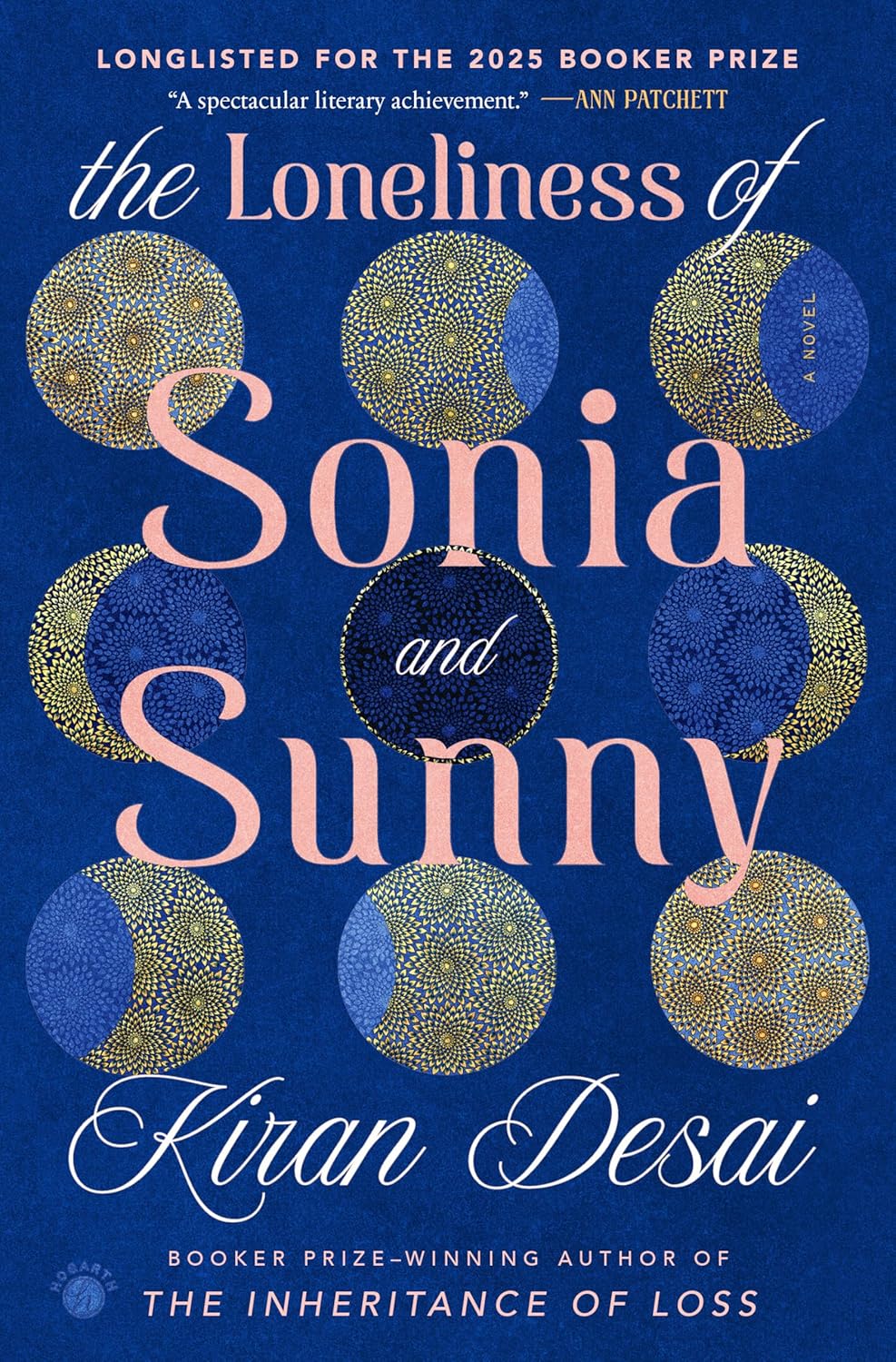
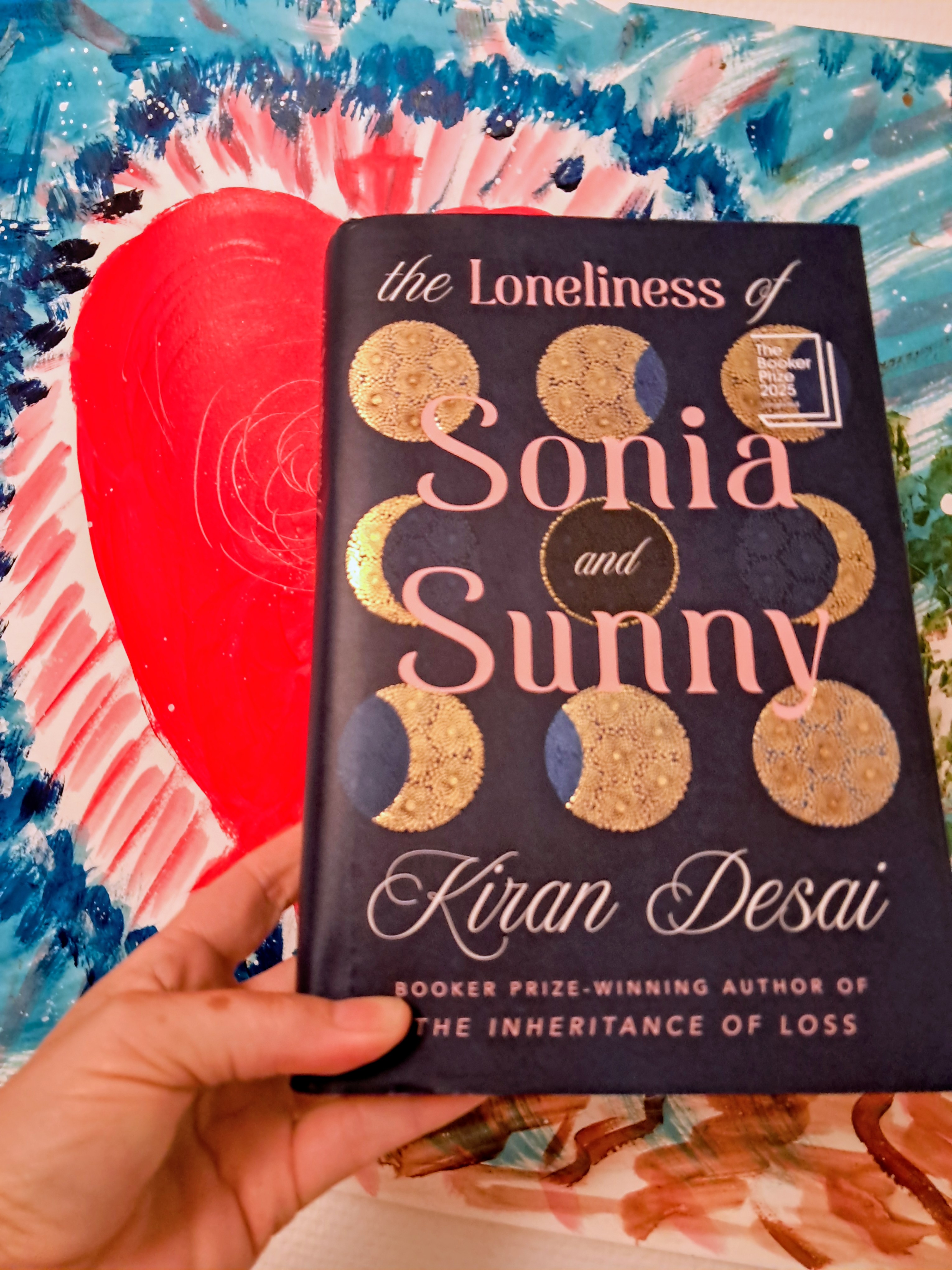
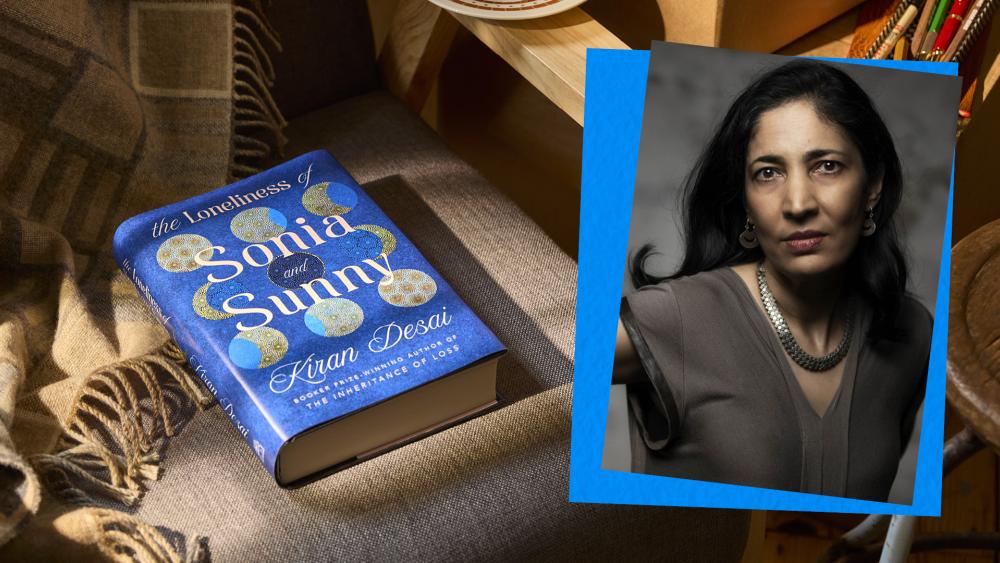
It has been twenty years since Kiran Desai published her Booker Prize winning The Inheritance of Loss, so this latest novel has been much anticipated by many.
It was one of two Booker shortlisted novels this year that I was interested to read, because of their cross-cultural settings, the other being Flashlight by Susan Choi, set in Japan, US and North Korea.
Character led New Generation Indian Drama
At 670 pages, I had to be sure about Desai’s novel before committing to read it, an immersive Indian family saga sounded promising, then the author’s intention to write ‘a present-day romance with an old-fashioned beauty’ sealed it for me.
It was everything I hoped and more. All the old fashioned values and dilemmas of an India of the past and then the mix of young people sent abroad for an American education, isolated from their home culture and influences, while both benefiting from, and coping with the effect of a western education and so-called freedoms as they try to find their place in the world.
We also bear witness to the imbalance in power in a co-dependent and coercive relationship of a manipulative and emotionally abusive man over a young woman, who struggles to see what is happening to her and yet knows it is not right.
The Loneliness of Winter in a Foreign Country
In this modern day Indian family chronicle, we meet aspiring novelist, freelance writer Sonia in the snowy mountains of Vermont, and Sunny a struggling journalist now in New York.
Unable to return home during the holidays, having been in America for three years and not returned to India for two, Sonia complains to her family.
“Lonely? Lonely?”
In Allahabad they had no patience with loneliness. They might have felt the loneliness of being misunderstood; they might know the sucked-dead feeling of Allahabad afternoons, a tide drawn out perhaps, never to return, which was a kind of loneliness: but they had never slept in a house alone, never eaten a meal alone, never lived in a place where they were unknown, never woken without a cook bringing tea or wishing good morning to several individuals.
In Vermont working on campus in the library over the two month winter closure, with two foreign students, one day she encounters a much older man Ilan de Toorjen Foss, who invites her to dine, promises to find an internship for her. He takes something from her that becomes one of the core threads of the story, the thing that will bring Sonia and Sunny’s fates full circle.
Her colleagues in the library are suspicious.
“I still don’t understand who this person is and why he is here in the dead of winter. It doesn’t add up. Where is his family?”
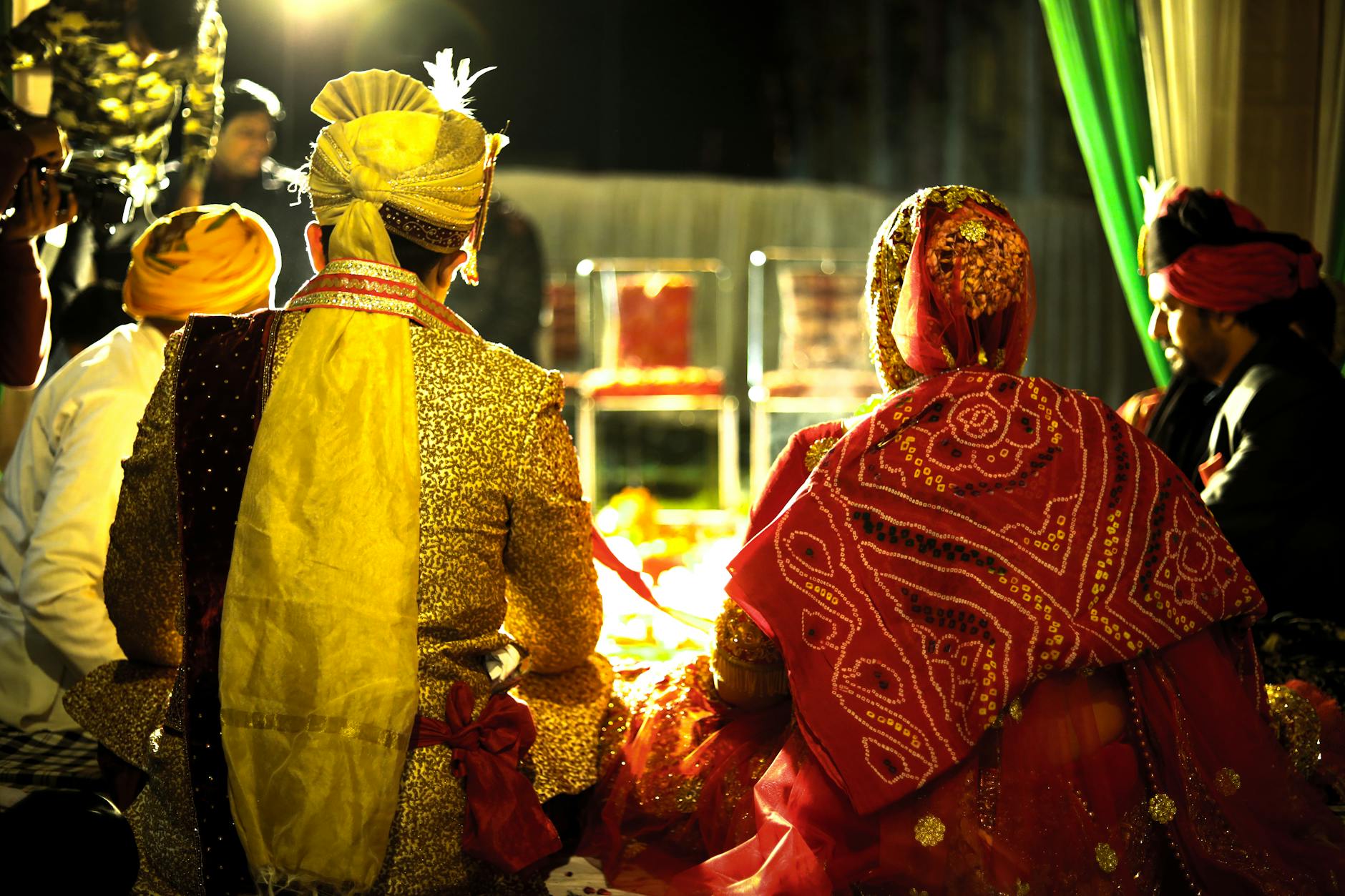
When Sunny’s American girlfriend Ulla opens a letter from his mother with a photo of Sonia inside, he tries to downplay the foreign custom it refers to. She is suspicious.
“There’s nothing sinister about the letter,” he said. “Everyone gets these at my age, forwarded by relatives, friends, people who’ve never set eyes on you – a great pile arrives when you finish college, and the flood continues until everyone is settled. Then there is a lull before they begin marrying off the progeny of these mishaps, each generation lesser than what came before, because what hope can you have from such a process?”
Sunny avoids answering his mother’s calls and now his girlfriend suspects this custom might be the real reason he is reluctant to tell his family about their relationship. He finds it increasingly difficult to navigate his relationship, discovering there are as many pressures and expectations, with little understanding of the rules. He seeks an escape.
An Arranged Marriage? Not Likely!
Neither Sonia or Sunny are thinking about marriage according to the cultural traditions of their parents generation; they are too swept up dealing with their current circumstances. The letters they received were a response to a letter in India, sent from one family to the other, suggesting a match, inferring but never outright stating, a kind of favour that might balance out an old grievance these families had faced a decade ago, after an investment turned sour.
It was essential to remain close to those who had caused you harm so that the ghost of guilt might breathe through their dreams, that their guilt might slowly mature to its fullest potential. Not that Dadaji had thought it through – it never worked to consciously plot, to crudely calculate – and he himself was astonished at the possibility of what was unfolding. Even now it would never do to name this liability. The Colonel would not allow his grandson to bear the burden of his grandfather’s mistake. Dadji and Ba may simply suggest a desirable match between the grandchildren, two America-educated individuals, two equals, two people who naturally belonged together because of where they came from and where they were going. Without either of them mentioning it, the obligation might be beautifully unravelled.
The intended match fizzles out without Sonia or Sunny meeting, neither are interested, both already in romantic connections they are attached to but not entirely happy in.
However their paths will cross, igniting intrigue, but again they separate, as they struggle to find their place in the world and in themselves and overcome the mistakes they have made on the way, which have nothing to do with each other.
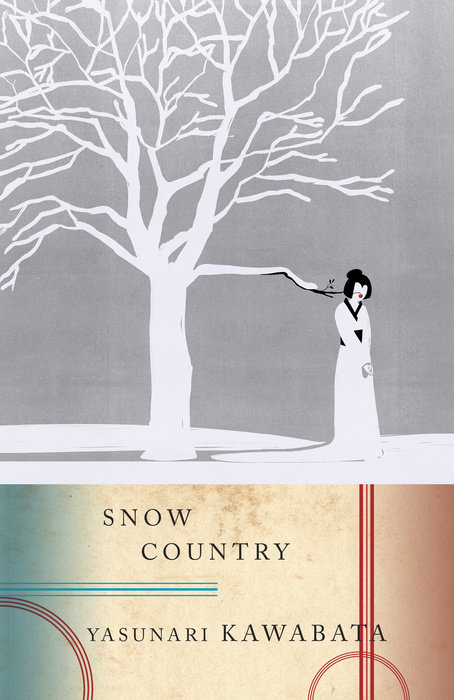
He passed a young woman sitting cross-legged staring at the rain. By her side was a book. Because Sunny couldn’t abide passing a book whose title he could not read, he walked by again and saw she had a face planed like a leopard, long lips, and watchful eyes, hair in a single oiled braid, but he still couldn’t see the title. So he passed by again. And one more time before he detected it: Snow Country by Kawabata.
Ultimately the two young people flee their present and go into a period of self imposed reflection, Sonia retreating to her mother’s house in the mountains, where she has mystical revelations that she decides not to be frightened of, but to look for simpler meaning from; while Sunny finds solace in nature and human rhythms in a village on the coast of Mexico, blending in with locals and receiving a visit from his friend Satya who is having his own realisations, seeking apology and reconciliation.
There is so much to navigate and nothing mentioned gives anything away, just an idea of the journey these two will go on as they seek a solution to their loneliness, a confrontation with themselves, in various parts of the world.
I was hoping for an immersive, character led Indian novel and this was everything I hoped for and more. It had all the old fashioned values and dilemmas of an India of the past and then the interesting blend of young people sent abroad for an education, isolated from their culture and influences, experimenting with the new and forbidden, benefiting from and coping with the effect of a western education and freedoms, while trying to understand themselves and their place in the world.
Though there were aspects that were deeply troubling, like the grooming of a young foreign student by a much older man, they are sadly relevant to the situation an isolated young woman without family around, might encounter abroad.
At the same time there were generational threads and mystical elements that disturb the equilibrium; there are parasitic entities met on their paths that cause them to learn, to suffer and grow, requiring surrender and courage. Everyone, young and old alike, must deal with their situation in order for any kind of balance to be regained.
I found the novel thoroughly entertaining and engaging, the mix of traditional and contemporary attitudes, the facing up to change and resistance against old roles. To a certain extent, as outsiders to the culture, we rely on authors to represent it authentically, but here we have characters that have been influenced and educated outside their own culture from within privileged families, which makes them neither one thing nor the other.
Loved all of it, did not want it to end, the ending was perfect.
Kiran Desai was born in New Delhi, India, was educated in India, England and the United States, and now lives in New York.
She is the author of Hullabaloo in the Guava Orchard, which was published to unanimous acclaim in over 22 countries, and The Inheritance of Loss, which won the Booker Prize in 2006, as well as the National Book Critics Circle Award, and was shortlisted for the Orange Broadband Prize for Fiction. Her third novel, The Loneliness of Sonia and Sunny, was shortlisted for the Booker Prize 2025.
In 2015, the Economic Times listed her as one of 20 most influential global Indian women.
In the past of my parents, and certainly my grandparents, an Indian love story would mostly be rooted in one community, one class, one religion, and often also one place. But a love story in today’s globalised world would likely wander in so many different directions. My characters consider: Why this person? Why not as easily someone else? Why here, not there? In the past people were always where they had to be. My indecisive lovers, Sonia and Sunny, meet and part across Europe, India and America, their idea of themselves turning ever more fluid.
I began seeing reviews about When I Hit You, Or, A Portrait of the Writer as a Young Wife late in 2017, most were stunned by this novel, obviously by the subject, a woman writing about the experience of domestic violence and abuse, herself a victim of it within marriage; but also the analysis of her response to what was happening. This was a highly educated, intelligent and articulate young woman writing. It nudged preconceived ideas about victims of domestic abuse.
The reviews made me wish to read it, but the subject prevented me from picking it up sooner. And then it made the long list of the Women’s Prize for Fiction 2018. I relented.
While it genuinely deserves to be on the list for its literary uniqueness and merit, it’s also relevant given we are in an era where the silencing, harassment and abuse of women is reaching a tipping point, in the West at least. The author now lives in London, however this story takes place in contemporary India, where she grew up.
The statistics on domestic violence in India are appalling, violence by husbands against wives is widespread, nearly two in five* (37 %) married women have experienced some form of physical or sexual violence by their husband, and while the statistics vary according to the number of years of education men or women have acquired, 12% of married women with 12 or more years of education have experienced spousal violence, compared with 21 percent of married women whose husbands have 12 or more years of education.
This is one aspect that surprises some Western readers, that highly educated women, married to highly educated men (the husband in this book is a university professor) while less likely to suffer, are not immune. No one is.
The title is a reference to James Joyce’sPortrait of the Artist as a Young Man his debut novel about a young man growing up, (essentially, his alter-ego). In the same way we see the character of this novel traverse the early months of a new marriage, as a young wife.
Meena Kandasamy
Meena Kandasamy has created an artwork, carefully sculpted, observed and understood from different angles, a work that endures over four months, like acts in a play, before the master stroke, a line she drew, that when her husband crossed, would signal to her the moment to leave. It is written by an unnamed narrator in a first person voice that moves from reflective to urgent, from a place of detached distance to a disturbing sense of present danger.
The novel begins in the period after she has escaped her marriage, in recounting the things her mother says to people, it is five years since her daughter left the marriage and the story has mutated and transformed into something the mother can more easily digest as she narrates.
So, when she begins to talk about the time that I ran away from my marriage because I was being routinely beaten and it had become unbearable and untenable for me to keep playing the good Indian wife, she does not talk about the monster who was my husband, she does not talk about the violence, she does not even talk about the actual chain of events that led to my running away. That is not the kind of story you will be getting out of my mother, because my mother is a teacher, and a teacher knows that there is no reason to state the obvious. As a teacher, she also knows that to state the obvious is , in fact, a sure sign of stupidity.
When she tells the story of my escape, she talks of my feet.
The way the story begins, hearing her mother’s voice with hindsight, introduces the subject with a dose of irony. It is a lead up to the author introducing herself as the writer that she is, and sharing the lessons she has acquired through this writing project.
Much as I love my mother, authorship is a trait that I have come to take very seriously. It gets on my nerves when she steals the story of my life and builds her anecdotes around it. It’s plain plagiarism. It also takes a lot of balls to do something like that – she’s stealing from a writer’s life – how often is that sort of atrocity even allowed to happen? The number one lesson I have learnt as a writer: Don’t let people remove you from your own story. Be ruthless, even if it is your own mother.
She continues with narrating the story, and seeing it as if she is playing a role in a drama.
And in some ways, that is how I think of it: it is easier to imagine this life in which I’m trapped as a film; it is easier when I imagine myself as a character. It makes everything around me seem less frightening; my experiences at a remove. Less painful, less permanent. Here, long before I ever faced a camera, I became an actress.
The husband, a Marxist who considered himself a revolutionary, a comrade, using communist intellectual ideas and his activities to elevate his self aggrandisement, detests the idea of his wife’s being a writer, an attitude that pushes her to want to antagonise him. The more he wishes to silence her, the stronger is her will to write, to imagine, to create, to express herself.
Being a writer is now a matter of self-respect. It is the job title that I give myself…
But it’s not just about antagonizing him. There is a distasteful air of the outlaw that accompanies the idea of a writer in my husband’s mind. A self-centredness about writing that doesn’t fit with his image of a revolutionary. It has the one-word job description: defiance. I’ve never felt such a dangerous attraction towards anything else in my life.
Given how prevalent it is, it is a brave and courageous feat for the author to have penned this work and for it to be recognised and appreciated in this way, deservedly so. In an interview with The Wire, (linked below) Meena Kandasamy said:
“I will write in the same way in which I lived through all of this: carrying myself with enormous, infinite grace.”
It is an incredible work of creativity, working through the post-trauma of domestic violence.
Meena Kandasamy has taken charge of her story, she retells it in exactly the form(s) that she desires, and I am sure she will move on and create more great works of art, in literary form.
This is not a work to shy away from, especially not now, in these times where women are being supported when they choose to express these narratives, in order to move on from the trauma, because no one wants these stories to define their lives or to be who they are. Healing might come slowly, but I hope it does indeed come, that people like Meena Kandasamy can share their version of resilience and acts of moving forward and on, for the sake of themselves and others like them, albeit never forgetting.
I finish with one more of the many quotes I highlighted from reading:
I remind myself of the fundamental notion of what it means to be a writer. A writer is the one who controls the narrative.
I have put myself in a dangerous situation with this marriage, but even in this complicated position, I’m finding plot points. This is the occupational hazard of being a writer-wife.
Neelima Vinod is a poet whose work I have enjoyed reading online at Neel The Muse for a while, so I was intrigued to read her novella when learning that she had been published, wondering how a poet might fill the page when the words and sentences were required to touch both margins of the page continuously. Curious too, as it delves into the supernatural within the context of the story telling heritage of southern India, not quite the same as that contemporary foray into what is we refer to as the paranormal.
Being a novella, it is a relatively quick read and starts out as a love story, or its anti-thesis as it is clear that the relationship between the couple is being threatened by perceived jealousy. To heal their relationship Divya and Raghav seek out the services of Dr Ray, a yogi.
The Doctor sends them on a quest, to retrieve the ancient Scrolls of Love from an old abandoned house about which many stories have been told and which no one wishes to enter, in fear of what it is said to be possessed by. The Doctor’s motives do not appear to be entirely altruistic, a twist in the story that was almost too subtle and had me rereading passages to observe him more closely than I did the first time through.
“It is in the one hundred-roomed mansion at Cherakad that the Scrolls of Love were buried during the terrible floods. It nearly wiped the village off the map centuries ago. No one has confirmed it though.
Archaeologists I have talked to have told me that the house lies abandoned. Any one in possession of the Scrolls would understand love’s true secret-folklore at its best.”
Parallel to the contemporary love story, we read a tale of the Royal Court poet Shankara, banished from the kingdom of Cherakad five centuries ago after falling out of favour with one of the King’s concubines Meenakshi. Shankara roams the land in confusion and without purpose until he encounters a woman in white, Thathri, the same woman Divya has been dreaming of, whose story she had been told by her Grandmother when she was a child.
As the book progresses, connections between the tales arise as the mystery unravels, the past and the present become entwined as the couple attempt to conquer their quest and resurrect their struggling relationship.
Well written, it’s an enjoyable read and one that requires careful attention in order to make the connections clear. I am sure there are things I was not aware of, I even wondered if Shankara was based on a real poet and whether this fable had connection to stories already told and passed down through families and villages. Sadly, it is a dying art, the gift of oral story telling, threatened more than ever by the technology of today’s modern world.
Its title might suggest romance, but the dark and foreboding cover and spectre like presence within suggest it may be more of an alternative ghost story. Unsettling indeed.
Thank you Neelima for sending me a copy of your e-book.
If you are interested in reading it, you can find a copy at the Indireads Book Store.

 I began seeing reviews about When I Hit You, Or, A Portrait of the Writer as a Young Wife late in 2017, most were stunned by this novel, obviously by the subject, a woman writing about the experience of domestic violence and abuse, herself a victim of it within marriage; but also the analysis of her response to what was happening. This was a highly educated, intelligent and articulate young woman writing. It nudged preconceived ideas about victims of domestic abuse.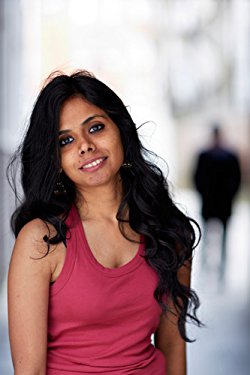
 Meena Kandasamy has taken charge of her story, she retells it in exactly the form(s) that she desires, and I am sure she will move on and create more great works of art, in literary form.


 Word by Word