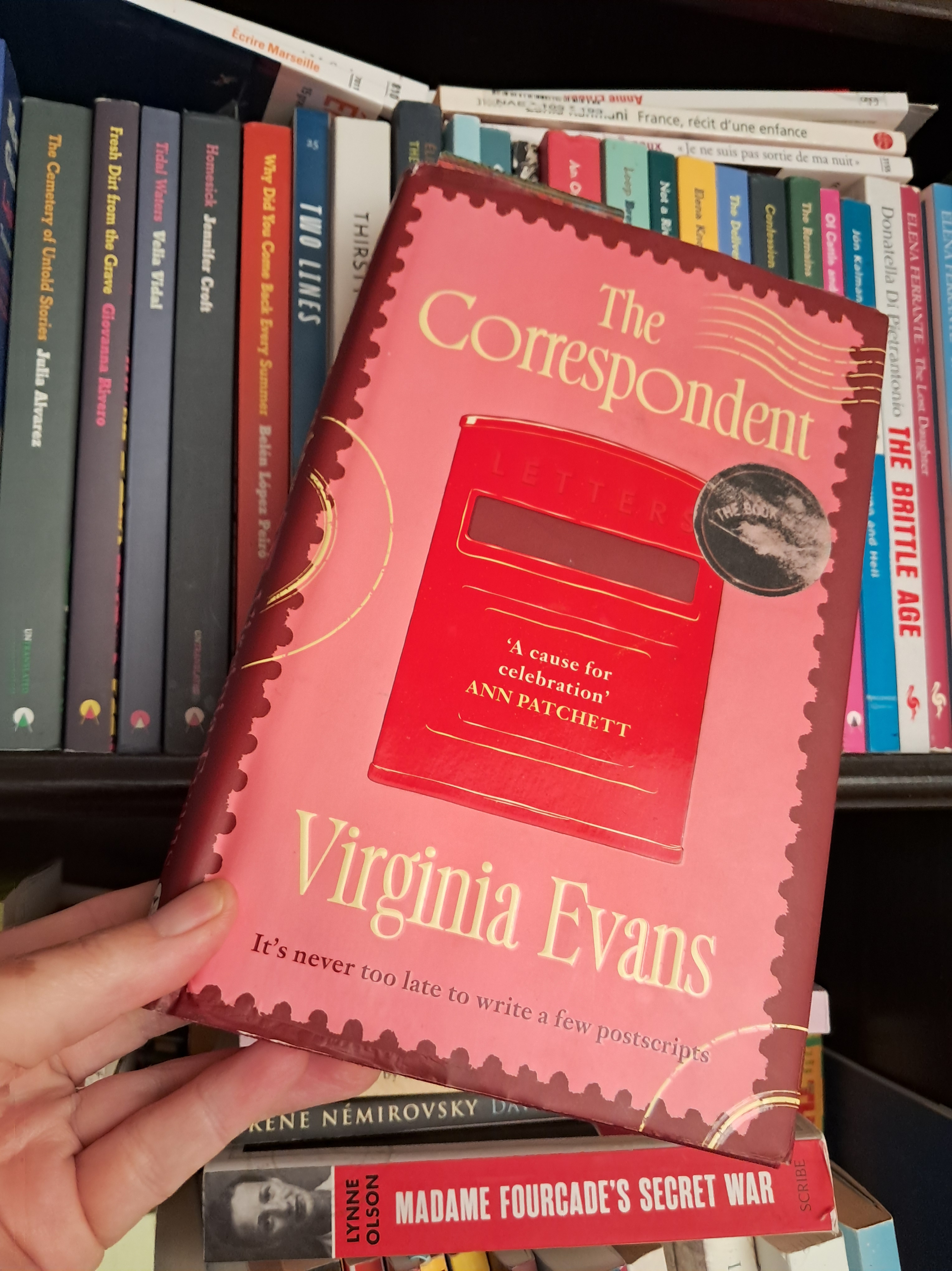
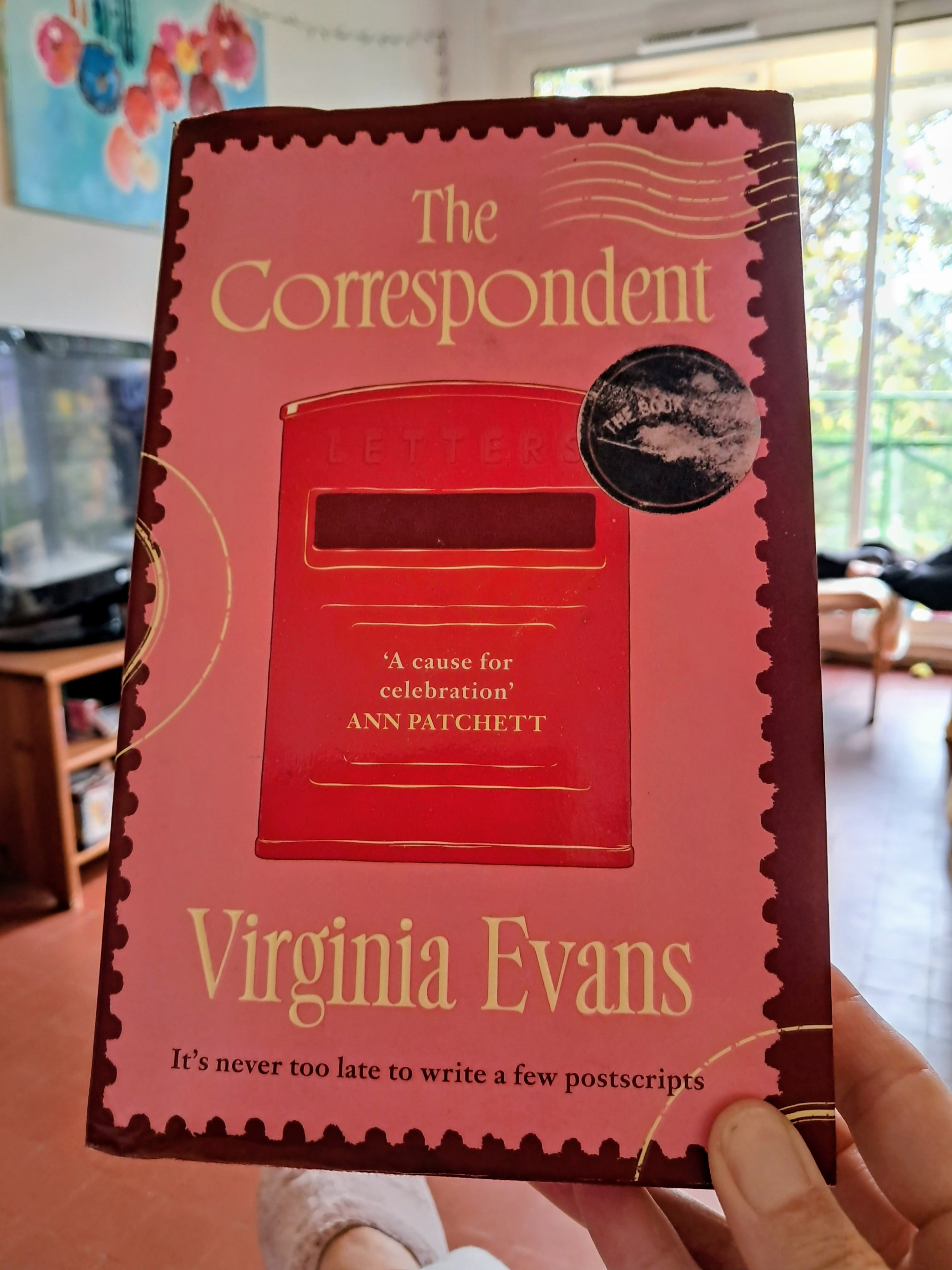
The Correspondent by Virginia Evans

This book is one of those word of mouth sensations that people recommend and then it takes off. I had seen it reviewed a little earlier in the year, then a friend bought a copy and devoured it over the summer telling me this was the book, we were all going to have to read, to have that collective pleasure of knowing that people close to you, but who don’t necessarily live near you, can be on the same wavelength about a book.

One of the first things I say to reader friends who do live nearby, or visit here often and know, is that the first letter is written to the protagonist’s brother and he lives in Gordes!

How often do we encounter a book written in English that features a local postcode? Almost never! Well, only the letters travel to Gordes, but before sharing more about a book, here’s a little more about Gordes.

A Letter to Gordes
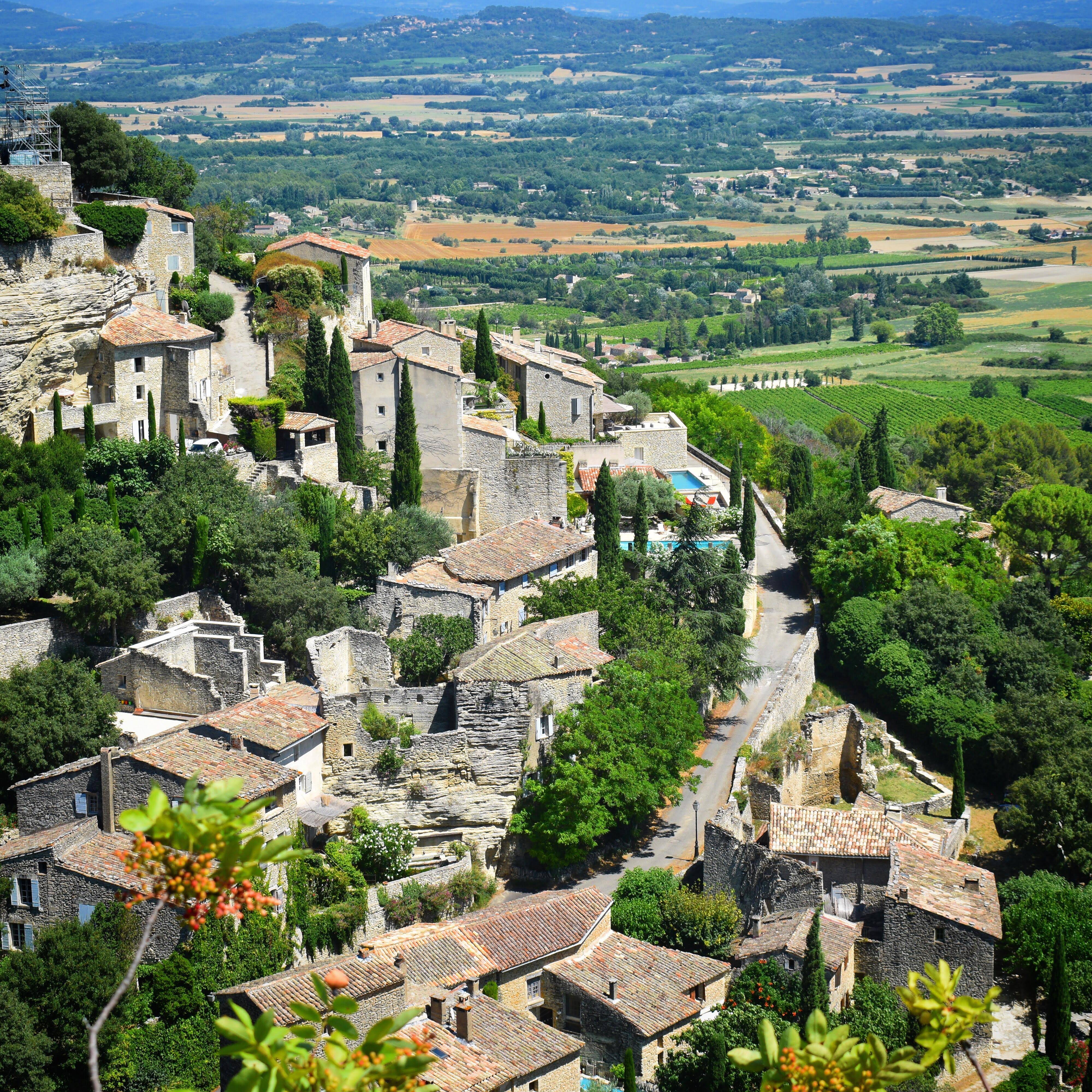
The village of Gordes France in the address of a letter to her brother Felix The Correspondent Virginia Evans

So for those who don’t know Gordes is a pretty hilltop village in Provence, in the north Luberon area that is popular in summer with tourists for its summer market, restaurants and local produce, outstanding views, lovely walks and very beautiful old streets. Also a location for a few films.

When you stay longer in Provence and get to know some of its hidden aspects, its wonderful, cultural gems often arise unexpectedly, when you least expect it. As this one did.

Victor Vasarely and Gordes

A few years ago I watched a documentary (probably on ARTE) about Gordes and how it was stumbled upon in 1948 by the French-Hungarian graphic artist Victor Vasarely (1906-1997), who had a ‘coup de foudre‘ for the village, he fell under the charm of its architecture, colours and shapes, the light and luminosity.

He would spend many summers in a very basic shepherd’s cottage 2-3 kilometres from the village, reproducing some of its shapes, feeding into the inspiration for much of his abstract creative work with shape, form and optical illusion. From the inspiration of a small window in that cottage in differing light, he would produce many works, many of them suspended tapestries, little acknowledged at the time, but today housed in the Musée Vasarely, in Jas de Bouffan, Aix en Provence.

Musée Vasarely Aix en Provence graphic art optical illusion inspiration Gordes
Vasarely Musée, Aix en Provence

In effect, as his grandson Pierre Vasarely said, referring to his grandfather’s oeuvre, if there was not (the inspiration of) Gordes, there would not be (the museum of works) Aix-en-Provence.

The Correspondent, A Novel

Back to the novel, The Correspondent is a heart-warming novel told through the collection of letters, hand-written notes, emails, any and every type of correspondence that Sybil Van Antwerp (her married name thanks to her Belgian husband now living back in Brussels) writes in her seventy -third year.

Every morning at half past ten Sybil sits at her desk to deal with her correspondence, tackling it like a job, except with much more pleasure, her years as the assistant to the Judge giving her the discipline, intellectual acuity, at times a sharp tone and years of a certain type of wisdom she uses to her advantage.

So Much to Write About and Address

There are a number of threads, correspondents, favorite topics, institutions to harass, family dramas to navigate, interested or prospective men to consider or keep at a distance, an ex-husband who is not well, a best friend who likes to read, a daughter she doesn’t see eye to eye with.

Ten Years of Correspondence
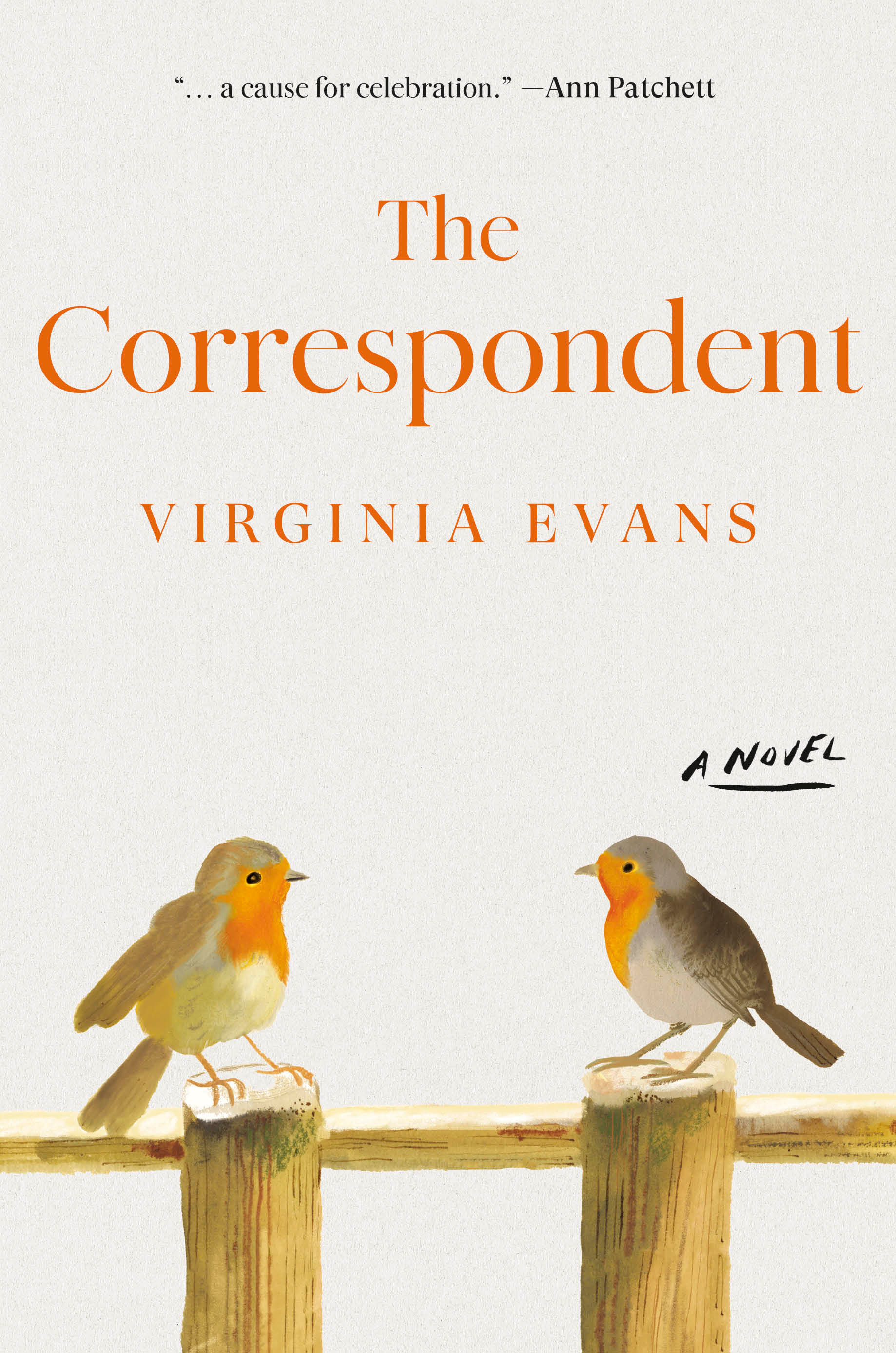
The epistolary novel The Correspondent by Virginia Evans US book cover

The narrative begins in June 2012 with that letter to Felix, about whose life we also have a little drama and it does seem to be affected by Syblil’s input, and ends in January 2022.

There are also a few letters from the 1950’s when she was a child that her best friend Rosalie sends her, these two have corresponded for many years and keep each other informed about their lives and sometimes they even fall out with each other, creating periods of silence and atonement.

Authors and Book Recommendations

Sybil and Rosalie always tell each other what they are reading and I began to note down these books in a list. Sybil never hesitated to write to authors, and had a particular fondness for writing to Joan Didion, author of The Year of Magical Thinking and Blue Nights. Her letters to Didion are the most intimate of all, showing part of her character, feeling more able to open up to a stranger with whom she feels an affinity than to her best friend, children, or either of the men she is sort of interested in.

They read Ann Patchett’s State of Wonder, Abraham Verghese’s Cutting for Stone, Agatha Christie’s Murder on the Orient Express, another classic novel of letters 84 Charing Cross Road by Helene Hanff, Lonesome Dove by Larry McMurtry and many more.

In the letters from the 1950’s the girls were reading C.S. Lewis’s Space Trilogy and Isaac Asimov.

Like the heroine of “The Correspondent,” Evans is a correspondent in the old-fashioned sense. For years she has been writing letters, mainly in longhand, to friends, family and writers she didn’t expect to hear back from, such as Joan Didion and Larry McMurtry. After reading Ann Patchett’s 2016 novel “Commonwealth,” Evans wrote to the author to tell her how much she liked it. Patchett wrote back. 

I couldn’t help noticing that I had read many of the books mentioned and laughed when I read this quote above in an interview, as a friend gave me Commonwealth a week ago. Now I’m curious, a potential Christmas read perhaps.

Intimate With Strangers
Epistolary novel The Correspondent Virginia Evans word of mouth sensation

In addition to opening up to Didion, Sybil becomes very familiar with the Admin person from the Kindred Project after receiving a not particularly wanted gift of a DNA search. She asks multiple questions, not all of them concerning herself and ignores the fact that the responses seem standardised. She can be very insistent and often gets her own way, even with complete strangers, shades of her law career, her persistence and not always keeping terribly good boundaries.

However, there is a menace present, someone perhaps from her past, a legal case that sits in the back of her mind that she can’t quite recall, something she has pushed down, but senses with a tinge of regret. That needs addressing. She hasn’t told anyone about this; it adds an element of foreboding to her otherwise, in control, life.

When I play it all back I am ashamed, and yet I cannot imagine having done any other thing. Grief shared, I think, can produce two outcomes. Either you bind yourselves together and hold on for dear life, or you let go and up goes a wall too high to be crossed. For us it was the latter.

Does Persistence Pay Off?

Sybil likes learning and has been taking a university literature class for at least nine years before they found a loophole to exclude her. Now she is hellbent on retrieving that place, because she does not like being excluded from anything she did not decide to exclude herself by choice. And so we have the back and forth correspondence, until finally something must actually be done about it.
old handwritten letters
Photo by Pixabay on Pexels.com

Even when Sybil acts, we know about events from follow up correspondence and yet when you finish reading the novel, it almost doesn’t seem like it has all been told through letters, as the story telling is comprehensive, the characters are well rounded and even the drama brilliantly captured.

As Sybil’s sight is failing and there arrives a kind of crescendo in her life where the mundane will no longer do, it becomes time to engage with what has been ignored or suppressed and own her part in it, we witness her own transformation having seen that of those around her through her interactions with them.

This was entertaining, heartfelt, empathetic and fun while dealing with issues around friendship, sibling relationships, mother daughter dynamics, old regrets, grief and reconciliation. And the mystery of one very long unsent correspondence, a need to reckon with a loss she has kept close to her chest these past thirty years.

A beautiful, thought provoking read, especially if you’ve had to deal with any of the issues our protagonist struggles with. An ideal Christmas gift novel for anyone who loves books and letters!

Highly Recommended.

Getting to your questions about the letter writing. I’ll start by saying your note heartened me because here is a secret: my letters have been far more meaningful to me than anything I did with the law. The letters are the mainstay of my life, where I was only practicing law for thirty years or so. The clerkship was my job; the letters amount to who I am.

Further Reading

Interview: Washington Post – The story behind the feel-good novel of the year, Nov 26, 2025

It would not be a spoiler to say that though “The Correspondent” offers solace, the story is both happy and sad. As Sybil, an opinionated retired lawyer, interacts with various people — a customer service agent, her children, her best friend, her ex-husband and more — readers come to see the complexity of her experience and choices, and how they have informed her sometimes cantankerous attitude.

Author, Virginia Evans

Virginia Evans is from the East Coast of the US. After starting a family she returned to school for her Master’s of Philosophy in creative writing at Trinity College in Dublin, Ireland. She lives in North Carolina.

Tidal Waters by Velia Vidal (Colombia) tr. Annie McDermott

Women in Translation

Tidal Waters is my first August read for #WIT month. Reading Women in Translation.

What an original, good-hearted, open, vulnerable read. I’m not sure whether what I read was fictional or not, because much of what is described in the ‘letters to a close friend’ coincides with elements in the author bio inside the front cover of the book and the main character is Vel.

The Epistolary Novel

epistolary novel of letters, reading, literacy, poverty, Afro Colombian

An epistolary narrative, it is about the return to a place and finding new purpose, along with the motivation to pursue it and taking others with you – told through a correspondence that bears witness and though we don’t see the replies, we can tell that they encourage and support both the idea(s) and the woman pursuing it.

I don’t know if I mentioned this specifically, perhaps not in a letter, though maybe when we met up before I left to come and live here here for good, but part of what pushed me to make this radical life change was the need to feel that my existence had meaning, that I was spending each day doing something I cared about and could feel proud of at the end of my life. And that’s just what I found in being Seño Velia, the woman who has meetings with people about books, who tries to motivate children to love reading and books as much as she does, and who supports the teachers.

Finding Purpose and Motivation, In Community

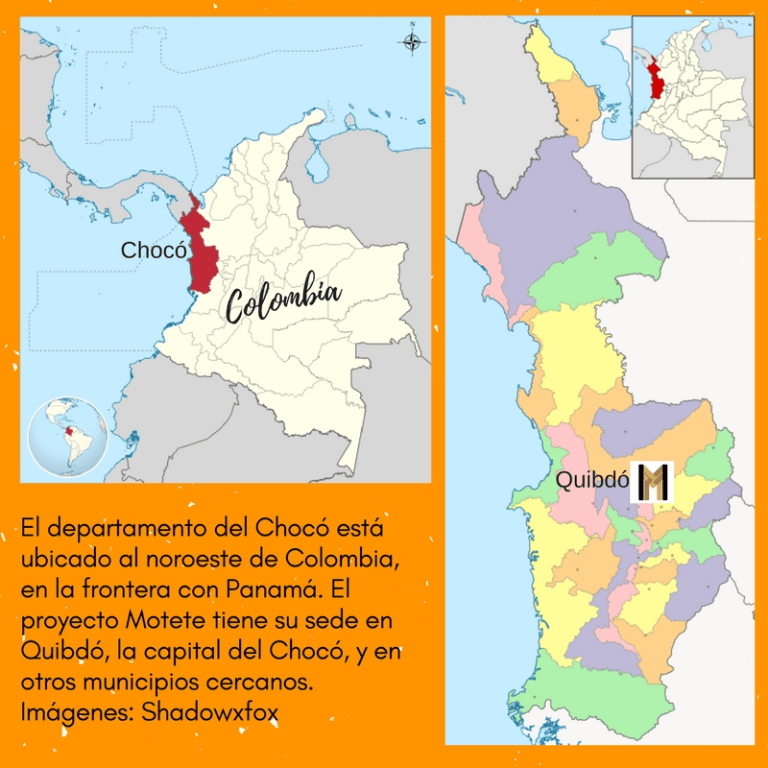
The letters span 3 years from May 2015 and they track a significant change in Vel’s life as she decides to return to Choco (to the Afro-Colombian community she was raised in) to start a new venture to bring reading, literacy and a love of books to it. The correspondence exhibits the growth and expansion of her writing, the letter becomes a safe harbour and she tests it by taking her writing to another level, stretching into a more personal yet contained arena.

Tomorrow I start a diploma in reading promotion, and with it my project, Motete. We’ve chosen three areas of Quibdo where I’ll start running the workshops.

She is taking a risk starting a new venture, but believes in it and is surrounded by extended family and connections, which facilitate her ability to reach out even further into the community and invite everyone in, to be part of or benefit from her shared love of reading.

And so this project is coming together. This basket, this Motete, is filling up. The slogan for my project is ‘Contenidos que tejen’ – contents that weave – and every day I like it more. Every day I realise that these contents are weaving fulfillment and happiness within me…

The thing is, motetes have been used to carry food for the body: plaintains, bushmeat, fish. Our is to fill them with food for the soul: art, culture, books. And just as motetes are woven by hand, I thought these new contents would also form a fabric: the fabric of society, of community, the fabric of souls.

Letter Writing

Her unnamed friend that she writes to is someone she hasn’t known long, he occupies a space between the familiar and the unfamiliar that she claims as a freedom to express herself, to be vulnerable and open, someone who has mentored and shown her how to get funding. The range of things she will write to him of, span a wide spectrum.

We never see the replies but the continuation of her own correspondence displays her life, her dealing with health problems, the double bind of her wounding and love, of being raised by doting grandparents, while having complicated relationships with a teenage mother unable to mother her and an emotionally absent father. Her later sadness and depression, helped through therapy, tears and conversations, to ways of coping and healing. Her optimism for her venture, and the community connections she creates keep her going.

I grew a lot. I learned. But most of all I tried to weave a new way of relating to my father that hurt as little as possible.

The Sea, The Sea

One of the themes is the sea, the absence of sea, the way the river meets the sea and her relationship to it. She yearns for it when it has been absent for some time, just as she yearns for the letter writer and the relief that comes in the act of writing to him.

She describes herself in her current role as being like the sea at that place where it meets the river.

I’m like the Pacific Ocean, pressing at the river with its tides to make it flow the other way, or lapping at the land when its waters rise, when it feels like gaining inches of new ground. You need strong motivation to stick to this way of life, which isn’t exactly a fight against the world, but rather the certainty of forging your own path.

An Homage to Correspondence

I loved this slender book, it’s project and generosity, its intimate sharing and platform for expanding and learning and having the courage to venture into new areas. It made me think of an exquisite title I’d forgotten about, Leslie Marmon Silko’s slim book of correspondence The Delicacy and Strength of Lace: Letters Between Leslie Marmon Silko and James Wright.

That correspondence was written when Silko was 31 years old and Wright 51. They had planned to meet in the Spring of 1980, mentioned in letters of Oct/Nov of the previous year, not knowing he would be gone before then.

They discuss her novel, his poetry, language, his travels, her adventures with animals, their speaking engagements, their mutual challenges and experiences as university professors, and soon began to share more personal feelings, as she acknowledged the tough time she was having and he shared his own experience, expressing empathy.

Velia Vidal dedicates her book:

To my recipient,
simply for being there.

and when I read about her own projects in society, her love of the sea and shared readings and efforts to help move children and young adults out of poverty, it is all the more inspirational to read these letters, understanding the difference a letter can make, to see someone take a risk and pursue something that will help others from her community, while fulfilling her own dreams and aspirations.

Highly Recommended.

Velia Vidal, Author

Velia Vidal (Bahía Solano, Colombia, 1982) is a writer who loves the sea and shared readings. In 2021 she was a fellow at Villa Josepha Ahrenshoop, in Germany.

For her book Tidal Waters she won the Afro-Colombian Authors Publication Grant awarded by Colombia’s Ministry of Culture. She is the co-author of Oír somos río (2019) and its bilingual German-Spanish edition.

She is the founder and director of the Motete Educational and Cultural Corporation and the Reading and Writing Festival (FLECHO) in Chocó, one of the most isolated, complex and neglected regions in Colombia with the highest afro-descendant population density in the country.

Vidal graduated in Afro-Latin American Studies and has a Masters in Reading Education and Children’s Literature. She is also a journalist and specialist in social management and communication. In 2022 she was included in the list of 100 most influential and inspiring women in the world by the BBC.

She writes children’s literature, fiction and non-fiction, and poetry. Her work has been translated into German, English and Portuguese.

Swimming Lessons by Claire Fuller

swimming-lessonsSwimming Lessons is an evocative, thought-provoking novel that begins with an intriguing mystery, evolving into melancholy as the events before and during Ingrid’s marriage, the wife of Gil and mother of two young girls who disappeared 12 years before, are revealed.

The novel begins with Gil standing inside a second hand bookstore, having found a scrap of paper within a books’ pages, moving closer to the window to try and read it. The letter is dated 2 July 1992;  his attention is diverted when he glances out the window and sees a woman in a coat who he believes is Ingrid, who had been missing, presumed drowned for twelve years now.

When chapter two begins with a letter addressed to Gil from his wife dated one month earlier, on 2nd June 1992, a quick scan ahead reveals the novels pattern, alternate chapters, one set in the present around Gil and his daughters Flora and Nan, the other a chronological revelation of the letters his wife wrote to him over that month before she disappeared, each letter placed inside one of the many books that sat on the shelves of their seaside, island home. Twelve years later, he appears to have just (or finally) discovered one of these letters within the pages of a book in the local second hand bookshop. An extraordinary and brilliant concept, it opens the novel with the maximum intrigue and desire to know what went on between these two.

Dear Gil, Of course I couldn’t write the story of a marriage in one letter. It was always going to to take longer. After I finished my first letter I meant to send it straight away. I found an envelope from an old electricity bill in the kitchen table drawer, and thought I’d walk to the postbox as the sun came up before I could change my mind. But perched on the arm of the sofa in the dark with the pen in my hand there was a noise from the girl’s room (the squeak of bedsprings, the creak of the door), and without thinking I grabbed a book from the nearest shelf, shoved the letter inside and pushed it back into place.

swimmingAfter Gil’s sighting, events bring the family together, highlighting their similarities and differences, exposing various family secrets and lies and all the while, each letter like a dripping tap, one by one revealing more of the relationship between Ingrid, the young Norwegian university student and Gil, her literature professor and the very different path her life would take once their lives intertwined.

The letter’s are her story of a marriage, told to him (and the reader) as if he were an outsider, much of the dialogue she recounts is written in the form of conversations they had as she recalls them. She reminds him how they met, portraying herself throughout as a passive participant, her rare challenges of his behaviour ineffectual. Her rebellion or escape, an activity she indulged often, was to abandon the home, walk to the sea, strip and swim out as far as possible, becoming at one with the sea, giving in to its allure.

Ingrid’s story focuses on the marriage, without straying into her past, her home country, her own ambitions or desires. Those omissions create a presence that is never mentioned, that weigh on the reader, who on reading begins to feel the futility of her existence, she is isolated, without friends or family and struggling as a mother, she has forsaken all on a whim, fulfilling desires of a man whose star is in decline, while hers will be extinguished before it has a chance.

allure-of-the-sea

Image from film The Whale Rider based on the novel by Witi Ihimaera

She survives as long as she does thanks to the pull, the allure of the sea, the pull to the sea is as strong as any bond she with any of the people around her, and just as she is sometimes abandoned by Gil for the city, so she abandons the home for the pull of the sea.

Swimming Lessons is an incredibly accomplished novel with well drawn characters, including that of ‘the marriage,’ perhaps the chief protagonist itself, as the letters reveal more of ‘the marriage’ than of Ingrid herself.

It is something of an homage to books, readers and writing as they are all given important roles in providing clues and holding secrets of this marriage.

It is a book that invites discussion and would be a provocative novel for a bookclub, there is so much that invites discussion and would likely bring out quite different points of view.

Intriguingly, my copy of the book also had something old slipped between the covers, not a letter, but an old black and white photograph of ‘The Lake’, Alexander Park, yet another intrigue within the intrigue, I’m still wondering where that came from and whose handwriting is on the back and what story that photo could talk, if it could give up more than just a still, lifeless image.

Highly Recommended.

Click to Buy a Copy of Swimming Lessons