House of Splendid Isolation by Edna O’Brien

Back to the final days of Reading Ireland Month 2025, this week I slowly read Edna O’Brien’s political novel House of Splendid Isolation, the first of the Modern Ireland Trilogy, books written in the 1990’s that depict significant events in modern Ireland. The other two novels in that series are Down By the River and Wild Decembers.

Incarceration, Idealism and Ignorance, An Irish Story

Modern Ireland trilogy Edna O'Brien a political novel of the 1990's

House of Splendid Isolation is a story of one event and incidents involving a community, over a few days as a man involved in murderous events is on the loose and actively being hunted.

It is also a book of parts and voices, a child’s voice, the past, the present, a woman Josie who returns to Ireland after a period of youth in Brooklyn, her disappointing yet predictable marriage, an impossible affair and violent retribution, an accident, people who drop by, whose good deeds lead to violent consequences, friendships that hide betrayal, communities that breathe suspicion, harbour fear and occasionally a fugitive.

I hear stories. It could be myself telling them to myself or it could be these murmurs that come out of the earth. The earth so old and haunted, so hungry and replete. It talks. Things past and things yet to be. Battles, more battles, bloodshed, soft mornings, the saunter of beasts and their young. What I want is for all the battles to have been fought and done with. That’s what I pray for when I pray. At times the grass is like a person breathing, a gentle breath, it hushes things.

A Not So Quiet Last Act

Josie is now a lone widow in a big old house that she came to inhabitant through marriage, she did not wish to die in a Home, she has returned. A nurse visits occasionally and her grocery order is delivered. Memories still haunt her.

The nurse muses why, the older they get, the madder they are for talk; their past, their present, their futures, anything, everything, afraid of death too as if she was not afraid of it herself.
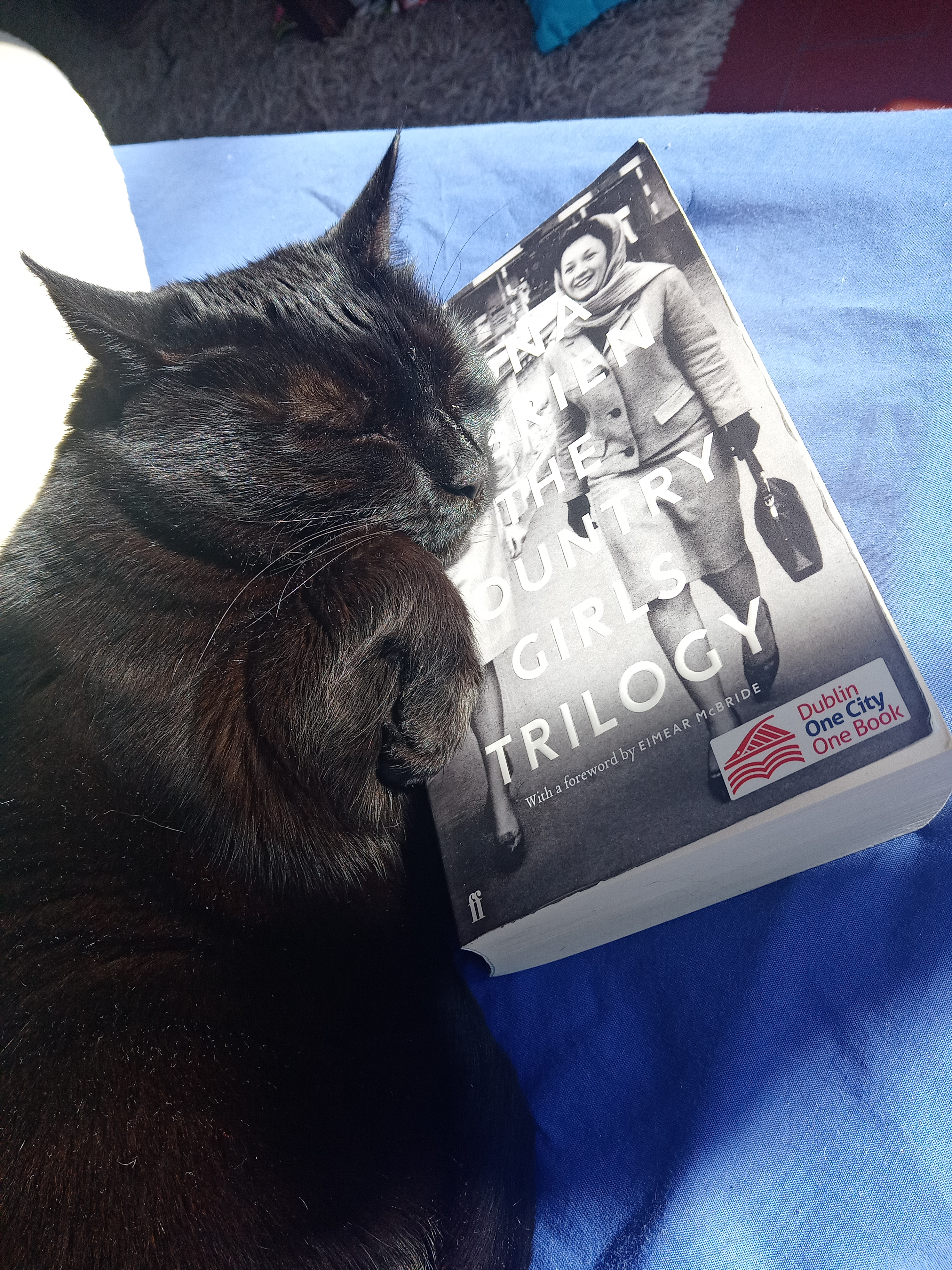
Edna O'Brien The Country Girls The House of Splendid Isolation

Into her last solitary days arrives this unwelcome visitor on the run, they play cat and mouse, wary of each other, challenging each other, co-existing nevertheless, never quite knowing if one can trust the other, providing each other something they need for a brief moment, while the world outside goes mad in their paranoia, the rumour-mill running rampant, suspicions gone mad.

The grass smells good to him and after three months cooped up in a house in a town, he’s tuned to the smell of grass and the fresh smell of cow-dung, to the soft and several lisps of night. He knows his country well, McGrevvy does, but only in dark. The dark is his friend. Daylight his enemy. Who set him up. Who can he trust, not trust.

The Grass Was Never Greener

While their words and worlds would never align, there is something in the brief respite one provides the other in this house of Splendid Isolation, before they each face the inevitable that awaits them; capture or death, peace no longer an option. Here the first confrontation.

‘There’s myself and my maker,’ she says quietly. So this is how it happens, this is how a life is suborned, one’s insides turned to whey, an opening door, a man, hooded, with not a lax muscle in his being, a loaded rifle and outside crows cawing with the same eventide fussiness and no one any the wiser that her time is up.

A novel of many layers and consequences revealed of humans wronged, who know not how to seek healing or harmless resolution, whose path leads to occasional respite en route to destruction.

It brilliantly depicts two faces of a staunchly divided territory, their failed attempts to escape their destiny, a brutal confrontation and a land that continues to absorb the repercussions.

Forward, back, slow, quick, slow

The writing moves from poetic, contemplative reflection to rapid, coarse dialogue to action oriented tension as the slow hours spent in captivity contrast with the build up externally as the police net closes in on the fugitives location. At times the prose is sparse, and other times it shifts as our protagonist loses her grip on reality and shifts into past memories or present situations that confuse her.

It’s not a straight forward read, as it navigates and holds all these time frames, but it propels forward at a good pace and leaves the reader with much to reflect on.

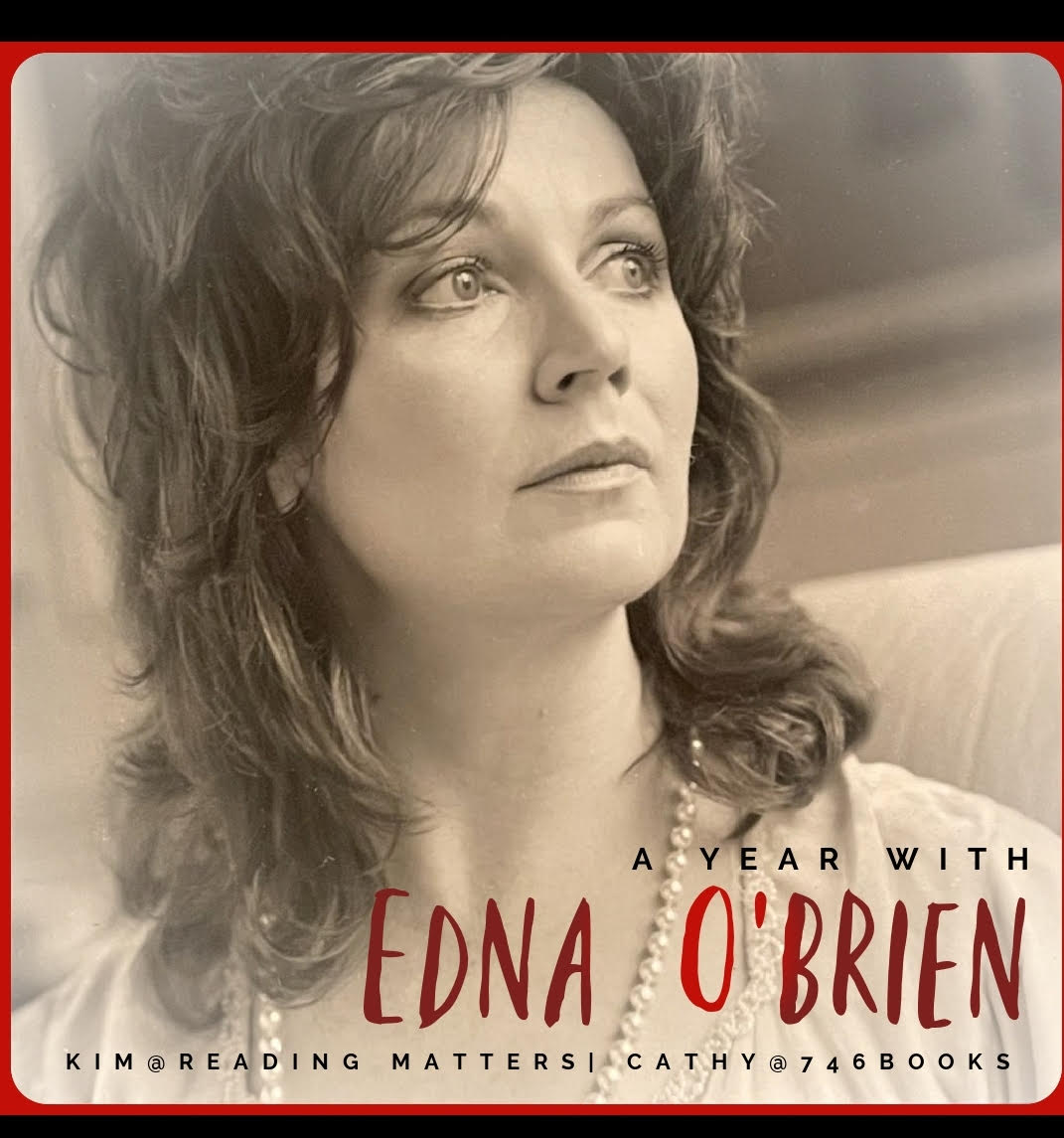
A Year With Edna O’Brien

I read this for Reading Ireland Month 2025 with Cathy at 746Books and also for Cathy and Kim’s A Year With Edna O’Brien which they are doing in 2025. Kim will be reading another of the Modern Ireland trilogy novels, Wild Decembers in August.

Further Reading

My review of Edna O’Brien’s renowned Country Girls Trilogy (initially banned in Ireland due to its bold faced portrayal of a young woman’s quest for independence and awakening sexuality) consists of three novels: The Country Girls (1960), The Lonely Girl (1962), and Girls in Their Married Bliss (1964). It was re-released in 1986 in a single volume including a revised ending to Girls in Their Married Bliss and the addition of an epilogue.

Author, Edna O’Brien

Edna O’Brien was born in December 1930 in Tuamgraney, County Clare. She died in 2024, having written over 20 works of fiction, known to provoke, dissect and dig into social, cultural and religious issues deep in the fabric of Irish society.

In addition to The Country Girls trilogy, her novels include A Pagan Place (1970), the story of a girl growing up in rural Ireland, winner of the Yorkshire Post Book of the Year Award; Zee & Co (1972); Johnny I Hardly Knew You (1977), a story of love, murder and revenge; Time and Tide (1992), winner of a Writers’ Guild Award, the story of a young wife who faces a crisis when she leaves her husband and is forced to fight for the custody of her sons.

She is the author of a trilogy of novels about modern Ireland: House of Splendid Isolation (1994), she writes about Irish nationalism and sectarian violence; Down by the River (1996), based on the true story of a young Irish rape victim forced to travel to England for a legal abortion; and Wild Decembers (1999), about a farmer, Joseph Brennan, and his sister, Breege, living in an isolated rural community. In the Forest (2002), is based on the true story of a disturbed, abused young man who murdered a young mother, her infant son and a Catholic priest in the west of Ireland in the early 1990s. The Light of Evening (2006) and Byron in Love (2009), Haunted (2010), The Little Red Chairs (2016), Girl (2020), Joyce’s Women (2022).

She wrote Mother Ireland (1976), a travelogue with photographs by Fergus Bourke, and a biography of James Joyce, published in 1999. She is the author of several plays. In 2021 she was awarded the French Ordre des Arts et Des Lettres.

“I wanted to write from as far back as I can recall. Words seemed and still seem an alchemy, and story the true conductor of life, of lives.”

Reading Ireland Month 2025

Reading Ireland Month 2025

March is Reading Ireland month, an initiative created by Cathy at 746 Books and it is simply a way of being in community, while reading anything written by Irish authors or that relates to Ireland, there are no fixed rules, just the intention to Read Ireland, whatever that means to you! There’s even a Spotify playlist if you’re interested in a bit of musical culture.

Getting a Jump Start

For me that means reading more Irish authors from my bookshelves. I did read two in January, in fact my first read of 2025 was Donal Ryan’s Irish Book Award 2024 winning, heart, be at peace, a novel about multiple characters in a rural town in County Tipperary facing the different issues that face them a decade or so on from his debut novel The Spinning Heart.

Then I picked up a beautiful second hand hardback Water by John Boyne on holiday, and read it on my flight home. It is the first of four novellas in his The Elements series and now I want to read the next three, Earth, Fire and the final one Air due out in May 2025. But not yet, I’m prioritising what I already have!

Reading From the Shelves

A selection of books to read during Reading Ireland month of March

So here is the pile from my bookshelves, from which I will be choosing what to read in March 2025.

There are also three titles languishing on my kindle, which doesn’t get as much attention as it should, because out of sight is out of mind when it comes to reading. So I’m jogging my memory and will try to read at least one of these e-books.

On the kindle I have Listening Still by Anne Griffin, The Quiet Whispers Never Stop by Olivia Fitzsimons and Quickly, While They Still Have Horses by Jan Carson. In physical print I have another Carson The Raptures, that I picked up at the annual Ansouis vide grenier in September 2024.

Audrey Magee’s The Colony (2022) was longlisted for the Booker Prize, shortlisted for the Orwell Prize for political fiction and the Kerry Group Irish Novel award, so it gained a lot of attention and I have been keen to read it.

When Fiction Reminds Us of Those Who’ve Passed

I really enjoyed Sebastian Barry’s Old God’s Time (2023) and want to read more of his work, so I chose his Dunne Family trio of books, Annie Dunne (2002), A Long Long Way (2005) and On Canaan’s Side (2011) to delve more into his storytelling. I am part way through reading these now.

I love that this collection of novels and the play that was the first in the series, were all inspired by characters from his own ancestral lineage. That inspired me too.

After reading A Long Long Way, I became curious, as I too have an ancestor, born in the same year as his character Willie Dunne (1896), who like Willie, went to France in World War I, was in an Irish regiment and did not return. My ancestor Edmund Costley died on 9 April 1916, in Ypres, West Flanders, Belgium at the age of 19. I’ll be writing a post about him in April.

Historical Re-Imaginings, True Crime, Women’s Lot

I have read two novels by Mary Morrissey, Mother of Pearl (1995) and Penelope Unbound (2023). Morrissey tends to take historical stories and/or characters and re-imagine their lives. Mother of Pearl was inspired by a notorious baby-snatching case in 1950’s Ireland, that she chose to fictionalise, having said that the truth would have come across to readers as unbelievable; while Penelope Unbound re-imagines the life of Nora Barnacle, if in Trieste, Italy, when James Joyce made her wait all day outside a train station for him, she decides to leave.

This year I’m going to read her imagined autobiography, The Rising of Bella Casey (2013); she was the sister of the acclaimed playwright Sean O’Casey, and it is set at the turn of the century Dublin, a social commentary on the lives of women in that era.

Then there is Maggie O’Farrell’s The Marriage Portrait (2022), another historical re-imagining, this time of the short life of Lucrezia de’ Medici, a sixteenth century member of the renowned aristocratic House of Medici in Italy. I enjoyed O’Farrell’s riveting memoir I Am, I Am, I Am – Seventeen Brushes With Death (2017), the first of her works I read, and then the multiple award-winning, Hamnet (2020) and The Hand That First Held Mine (2010), so I’m looking forward to immersing in this one.

Irish Non-Fiction

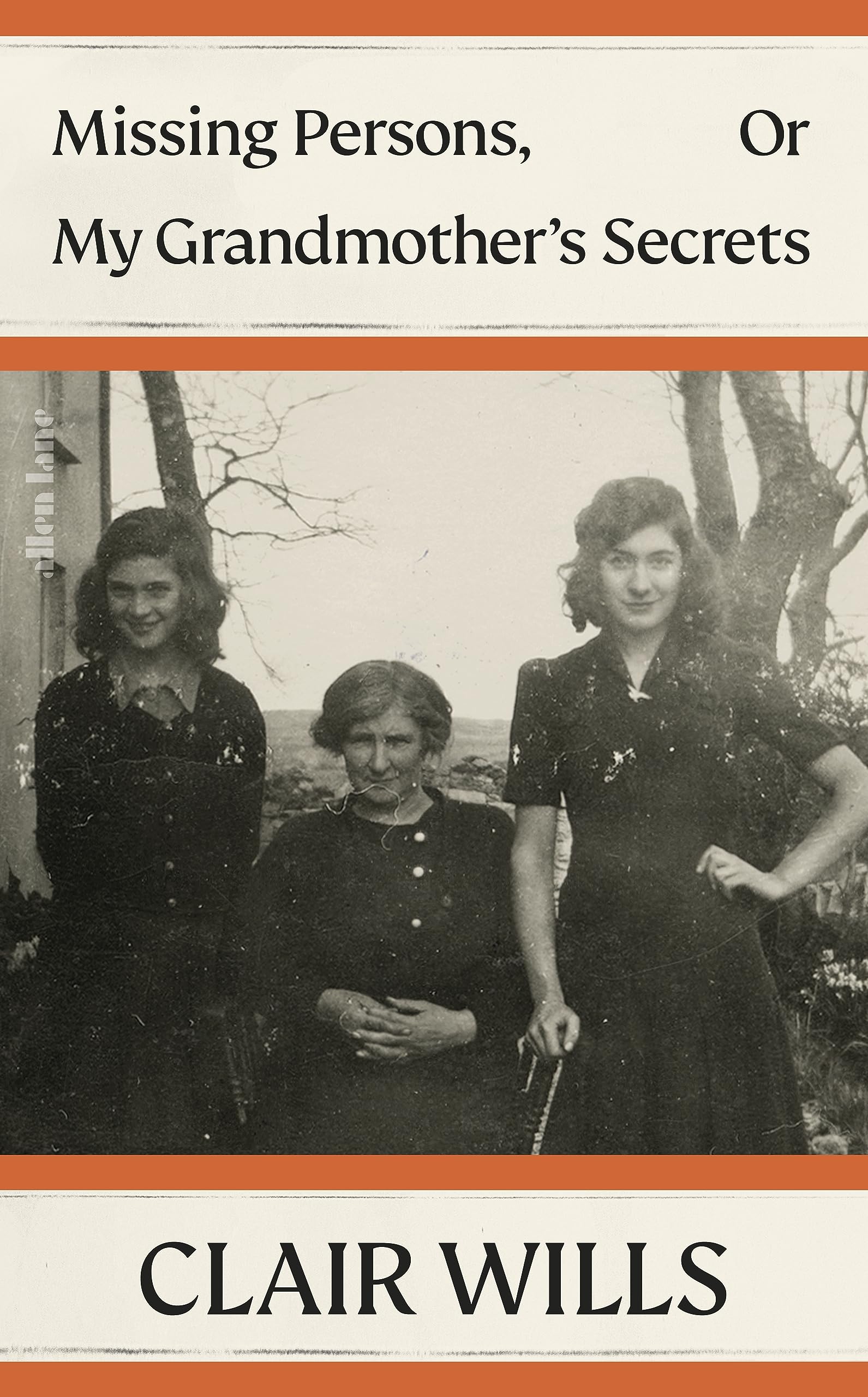
missing persons or my grandmothers secrets unmarried mothers in ireland nonfiction memoir that excavates the truth about silence

There are two non-fiction titles on my pile, Missing Persons, Or My Grandmother’s Secrets by Claire Wills, author, critic and cultural historian, winner of the Irish Book Award for non-fiction, who has written a family history that blends memoir with social history. She explores the gaps in that history, brought about by Ireland’s brutal treatment of unmarried mother’s and their babies, and a culture of not caring, not looking into or asking questions, rolling back a dark period of its history of loss and forgetting.

The second non-fiction title is the candid Fierce Appetiteslessons from my year of untamed thinking, also subtitled, Loving, Losing and Living to Excess in my Present and in the Writings of the Past by medieval historian Elizabeth Boyle.

The title is a reference to Vivian Gornick’s memoir Fierce Attachments, which is part of what intrigued me, but also the uniqueness of someone finding sense of three dramatic events in their life through medieval literature.

Every day a beloved father dies. Every day a lover departs. Every day a woman turns forty.All three happening together brings a moment of reckoning.

Boyle writes on grief, addiction, family breakdown, the complexities of motherhood, love and sex, memory, class, education, travel (and staying put), with unflinching honesty,deep compassion and occasional dark humour.

Remembering Edna O’Brien (15 December 1930 – 27 July 2024)

Edna O'Brien The Country Girls The House of Splendid Isolation

I couldn’t read Ireland without adding a title from Edna O’Brien, who died in 2024 at the age of 93. In 2023, I read The Country Girls trilogy, made up of three stories The Country Girls (1960), The Lonely Girl (1962), and Girls in Their Married Bliss (1964) released in 1986 in a convenient single volume.

Credited with breaking the silence on issues young girls faced growing up in Ireland, it was a subject she would often return to. She was punished for it, but lead the way for others to eventually follow.

O’Brien described her work in this way:

I have depicted women in lonely, desperate, and often humiliated situations, very often the butt of men and almost always searching for an emotional catharsis that does not come. This is my territory and one that I know from hard-earned experience. Edna O’Brien (Roth, 1984, p. 6)

Cathy at 746 Books and Kim at Reading Matters are spending a year reading Edna O’Brien and are reading Country Girls in February, you can see their reading schedule for the year if you go to their blog.

I have decided to read one my shelf, The House of Splendid Isolation (1991), the first book in her Modern Ireland trilogy, a political novel, depicting the relations of an Irish Republican Army terrorist and his hostage, an ageing Irish widow, in a house that represents the troubled nation.

Suggestions, Recommendations?

That’s the selection I have made, no guarantees on what I’ll get through, but I’m looking forward to the immersion. Have you read and enjoyed of the titles I mention above?

Are you going to read any Irish literature in March? Let me know in the comments below.

The Country Girls Trilogy by Edna O’Brien

This week for Reading Ireland Month 23 the theme is classics. Edna O’Brien’s The Country Girls is part of the Irish literary canon, a novel (and trilogy) it was an international bestseller when first published in 1960, that initially provoked controversy in Ireland.

Irish Literature classic Women

More than a Trilogy, A Pillow Book

The trilogy consists of three novels: The Country Girls (1960), The Lonely Girl (1962), and Girls in Their Married Bliss (1964). It was re-released in 1986 in a single volume including a revised ending to Girls in Their Married Bliss and the addition of an epilogue.

While it recounts the three phases in the girls’ lives, childhood, young adult and married women; it is also a commentary on how childhood pain and deprivation can arrest an individual’s development, turning life into a series of repetitive unresolved patterns that mimic the past, rather than providing opportunity for learning, improvement and positive change that new experiences can bring. All this within the context of moving from girl to womanhood in Ireland.

It takes the particular role and perspective of women, who dream of romance, independence and freedom, and then encounter selfish male desire, religious restriction and judgement and oppressive cultural conditioning that deepen the wounds and further diminish hope of rising above them. Through their marginalization, it explores themes of loss, identity and loneliness.

I have depicted women in lonely, desperate, and often humiliated situations, very often the butt of men and almost always searching for an emotional catharsis that does not come. This is my territory and one that I know from hard-earned experience. Edna O’Brien (Roth, 1984, p. 6)

A Transgression of Boundaries, Daring to Expose Home Truths

In the course of creating a frank narrative that mines the girls naivety, flaws and failed attempts to find love and happiness, O’Brien presents her characters openly and honestly, unveiling how situations occur and who is complicit, something the literary establishment and the state abhorred, for Ireland has a history of blaming and incarcerating girls and women for many of her evils. The book(s) risked undermining the nation’s ideal perception of innocent and pious Irish girlhood. They were punished.

book bans censorship

Photo by Lerone Pieters Pexels.com

The Country Girls was the first of six of O’Brien’s novels that the Irish Censorship Board would judge “indecent and obscene under section 7(a) of the Censorship of Publications Act, 1946.”  It would also be banned in Australia and New Zealand, but was nevertheless enthusiastically received elsewhere in the Anglophone world. The book has never been out of print.

The novellas are semi-autobiographical.  Edna O’Brien grew up on a farm in County Clare. Her alcoholic father drank away the farm and the family’s money.

Her ambition to write was scorned by her husband, Ernest Gebler, an older screenplay writer and documentary filmmaker. There have been comparisons made to the French author Colette, not least due to the similarity in spousal attitude – initially O’Brien’s husband believed he deserved credit for helping her become an accomplished writer, intensely jealous of her success, Gébler came to believe he was the author of O’Brien’s books.

While in no way salacious, the novels are unsparing in their depiction of cruelty, privation, filth, misery, exploitation, and violence, creating a tapestry of themes for future scholars to delve into, for book clubs and readers groups to discuss, in search of answers to questions of the Irish psyche, identity and inter-generational trauma.

Book #1 The Country Girls

Classic Irish Literature 1960Childhood in the west Irish countryside, early adulthood in a boarding house in Dublin, marriage in London; the three books follow the lives of two girls Caithleen (Kate) and Bridget (Baba), who were neighbours, school friends and boarding house room mates. Though they were not girls who had much in common personality wise, they had a shared history; without that connection, their lives might have been much worse.

She had been nice to me for several weeks since Mama died, but when there were other girls around she always made little of me.

Caitheen loses her mother early on, in a drowning accident and spends time at her friend Baba’s house, due to the drunken binges her father goes on, his erratic behaviour causing them to lose their home and their financial security.

I was never safe in my thoughts, because when I thought of things I was afraid. So I visited people every day, and not once did I go over the road to look at our own house.

A scholarship helps her to attain an education, but Baba’s idea to get them expelled so they can be free, cuts short any opportunity Cait may have had to rise above the shop girl she will become. Though she had the capacity for higher learning, no one encouraged it.

Baba’s home life had been more carefree, her father was the local vet, her mother laid back. She yearned not for much, was used to home comforts and getting her own way. She could be unkind and had little empathy for others, she happily insulted her friend, was shallow, manipulative, less intelligent and avoided trouble unless using it for a specific outcome. She wanted to have fun and be entertained, free of consequence. She was a brazen character that had no issue subverting protocol, religious values and hypocrisy. A ruthless entitled survivor.

Dublin initially provides the girls freedom and excitement, a neon fairyland, it promises much to look forward to.

Forever more I would be restless for crowds and lights and noise. I had gone from sad noises, the lonely rain pelting on the galvanized roof of the chicken house; the moans of a cow in the night, when her calf was being born under a tree.

The first book is their coming-of-age, into this atmosphere of loss arrives one overly friendly neighbour Mr Gentleman, a married man who inappropriately eyes up the vulnerable young Caithleen, offering her a ride into town, buying her lunch, indulging her with first time experiences that attempt to make up for the loss and lack of love she has felt, not realising she is prey, knowing only how the attention makes her feel. It is the beginning of a pattern of disappointments concerning men in her life.

The girls move to Dublin marks the beginning of their search for love, a husband; with little or no guidance or protection than each other, they venture forth like lambs to the patriarchal slaughter.

Book #2 The Lonely Girl

The Lonely Girl Edna OBrienCaithleen meets Eugene, something about him (half foreign, older man) reminds her of Mr Gentleman, whom she hasn’t seen for two years. The girls now live in Joanna and Gustav’s boarding house and become like family in this house, sometimes confiding in Joanna, who struggles to maintain rules and boundaries with the girls.

For once I was not lonely, because I was with someone I wanted to be with.

They have one rough friend Body, who is one of the few they can rely on to escort them to dances. Neither of them are in relationships, but Caithleen yearns for the enigmatic Eugene. News of this ‘dangerous man’ travels to her father in an anonymous letter.

One sadness recalls another: I stood there beside the new, crumpled coat and remembered the night my mother was drowned and how I clung to the foolish hope that it was all a mistake and that she would walk into the room, asking people why they mourned her. I prayed that he would not be married.

He brings her home and she is forced to have an audience with the bishop – to encounter a divorced man is the worst kind of  ‘fall’ from grace, thus all kinds of terrible things are going to befall her in the afterlife.

“Divorce is worse than murder,” my aunt had always said- I would never forget it; that and their staring disapproval.

Running towards Eugene brings out all her insecurities and yearnings, her lack of purpose. His age, his independence, career, worldliness, his friends – all are far from her reality. She finds some kind of comfort in his detached way of caring for her. In her immaturity, she desires to be pursued by him, as if to prove his love. It backfires, she will again feel the wound of abandonment, having acted out its consequence, the clingy holding on, the fear of disconnection and imagining potential threats to their relationship. In her pain and deepest wish, she leaves him – wishing to be pursued – only to re-experience rejection inherent in abandonment.

Baba tells Caithleen she is leaving for London, Baba has always been loved, but she does not use this strength to foster good in her relationships. She exhibits an emotional superiority that has inflated her self-esteem. Easily bored she entertains herself through extrovert behaviour and belittling others, she is decisive because she rarely compromises.

Book #3 Girls in Their Married Bliss

The Country Girls TrilogyAgain time passes, so that when we encounter the girls next, they are on the cusp of marriage. Caith (now Kate) will marry the one who abandoned her and Baba, a man who can provide for her in the manner she  craves. One desires love, the other security. Sadly, there’s not much in the way of bliss.

The third book has a different feel as it is the only one narrated by Baba, so there is more of distance from Kate, who we view in the third person.

She had plans for them both to leave their husbands one day when they’d accumulated furs and diamonds, just as once she had planned that they would meet and marry rich men and live in houses with bottle of grog opened, and unopened, on silver trays.

The girls drift away from each other and then come back as their lives hit various ups and downs. To some extent Kate is fulfilled by her son, but the disintegration of the relationship with her husband sets up more loss and abandonment in her life.

These are novels written in 1960’s that hold nothing back, they explore the psychological depths of these two young women who grew up in a conservative Ireland, with its social problems and moral expectations, which little equipped young women pushed from the nest into the world of destructive vice and little virtue, in their arrested development.

She said it was the emptiness that was the worst, the void.

I really enjoyed them all and find it astounding that they were banned, they provide such a rich foundation for discussion and understanding the very slowly evolving situation for young women growing up in Ireland.

Edna O’Brien, Author

Edna OBrien authorEdna O’Brien was born in December 1930 in Tuamgraney, County Clare. She has written over 20 works of fiction.

In addition to The Country Girls trilogy, her novels include A Pagan Place (1970), the story of a girl growing up in rural Ireland, winner of the Yorkshire Post Book of the Year Award; Zee & Co (1972); Johnny I Hardly Knew You (1977), a story of love, murder and revenge; Time and Tide (1992), winner of a Writers’ Guild Award, the story of a young wife who faces a crisis when she leaves her husband and is forced to fight for the custody of her sons.

She is the author of a trilogy of novels about modern Ireland: House of Splendid Isolation (1994), she writes about Irish nationalism and sectarian violence; Down by the River (1996), based on the true story of a young Irish rape victim forced to travel to England for a legal abortion; and Wild Decembers (1999), about a farmer, Joseph Brennan, and his sister, Breege, living in an isolated rural community. In the Forest (2002), is based on the true story of a disturbed, abused young man who murdered a young mother, her infant son and a Catholic priest in the west of Ireland in the early 1990s. The Light of Evening (2006) and Byron in Love (2009), Haunted (2010), The Little Red Chairs (2016), Girl (2020), Joyce’s Women (2022).

She wrote Mother Ireland (1976), a travelogue with photographs by Fergus Bourke, and a biography of James Joyce, published in 1999. She is the author of several plays. In 2021 she was awarded the French Ordre des Arts et Des Lettres. She has lived in London for many years.

“I wanted to write from as far back as I can recall. Words seemed and still seem an alchemy, and story the true conductor of life, of lives.”