
I recall stumbling across Chalk the Sun and reading many of the posts, Julie had read many books I loved and many more that I aspired to read. The first review I read there was The Buddha in the Attic, the first time I had heard of both the book and its author Julie Otsuka. Since then, I have been an avid follower of Chalk the Sun. Not only is Julie a talented, observant, evocative writer and reader, she is working on her own book set in France, which many of us are waiting to read!
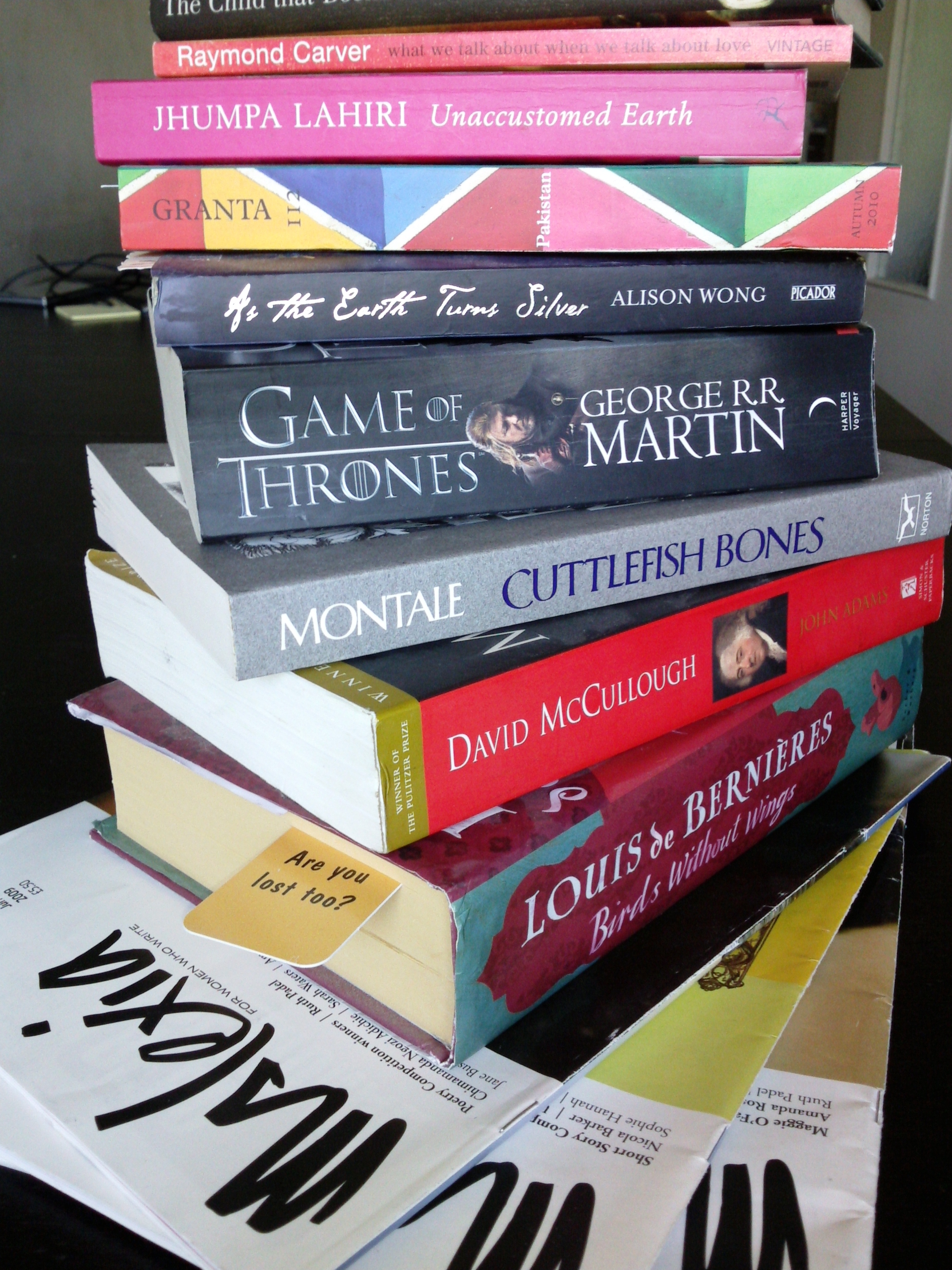 Julie tagged me in the Five Favourite Reads challenge, a near impossible task, so I will share 5 favourites that come to mind spontaneously.
Kimberly, a Bostonian writer living in Rome, also nominated me in the Happy Booker Alternative Book Award and since she’s stretched the rules to choose outside the 2012-2013 year, I’m going to combine these two awards and exercise freedom in choosing.
Whenever I visit Kimberly’s blog, she’s either reading, visiting a European city (known to be inspired to write a short story as a result), winning prizes for those excellent short stories, or planning to go to the Women’s Fiction Festival in Matera, Italy. This is a blog to linger in and be inspired by.
Thanks also to writer Deborah Brasket of Living on the Edge of the World for nominating this blog for the Inspiring blog Award and to Red Headed Stitcher who has nominated me in the past for the Sisterhood of Bloggers award and more recently the Liebster Award. I’m not too good at participating in awards, but thank you to all those who passed them on to me, I appreciate every gesture.
First, five out of too many bloggers whose posts I look forward to reading, whose exchanges I appreciate and whose favourite books I’d love to know (no obligation though):
Five Great Blogs
ReadEng Didi’s Press – lives and works in the north of France, loves books and the English language, sound familiar?
Three Hundred Sixty Five – it’s an ambitious challenge guaranteed to improve your writing skills and Fransi is doing it, I’m reading it in awe.
JoV’s Book Pyramid – reading around the world, across genre, an eclectic collection of book gems to be found here.
PB Writes – poet, writer doing the NaMeSitDifStarDaiWri(expletive)Po check her out and be inspired, I was, I wrote 2 poems this week, first in 2 years!
Books Can Save a Life – thoughts on books and how they make us who we are, with an emphasis on the personally meaningful.
My Five Great Fiction Reads
 The Industry of Souls, Martin Booth My first read on 2013 was a reread one of my all-time favourite books and one that has stayed with me over the years and stood the test of time. He wrote one other novel Islands of Silence which I also loved and a memoir which I have still to read, Gweilo: Memories Of A Hong Kong Childhood. Sadly, he died in 2004 just after finishing this memoir. My recent review here.
 Astonishing the Gods, Ben Okri This was a real favourite from my twenties, when life was full of indecision and anything was possible. I love a good fable and this small volume was a surprise read after struggling through Okri’s more infamous, head spinning work The Famished Road.
 Birds Without Wings, Louis de Bernières When this book was published Loius de Bernières had not published a book for 10 years, so it arrived amidst significant intrigue. He is something of a hit or miss author, Captain Corelli’s Mandolin was a word of mouth sensation, even if was a struggle to get into, however this is his masterpiece. Birds without Wings is a book to read slowly and savour each word, each character, each facet of that tragic and bitter struggle between the Greeks and the Turks during the collapse of the Ottoman Empire. Epic and profoundly humane.
 Hummingbird, James George In 2006, three New Zealand writer’s, Elisabeth Knox, James George and Vincent O’Sullivan visited Aix-en-Provence and I listened to them read. I had read Knox’s Vintner’s Luck, I knew of Vincent O’Sullivan’s work, but wasn’t familiar with James George. He read from his book Hummingbird and I was entranced. Just those few pages and I knew it was a book I had to read.
Three strangers arrive at a camping ground on a part of the barren, isolated Ninety Mile Beach. They are a former prostitute, a young man just released from prison, and a retired Cambridge don, former Battle of Britain pilot and veteran of the Battle of Crete. Slowly we learn their stories as the author examines their past, lost souls who find solace in this endless sea, sand and sky. It is an incredibly moving, lyrical work from a little known but exceptionally talented writer and poet.
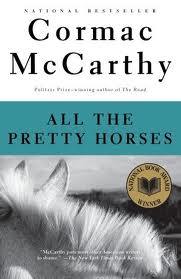 All the Pretty Horses, Cormac McCarthy I picked this up in the library, not realising it was the first in The Border Trilogy, and what a thrill it was to discover that McCarthy, though bleak in his subject writes such pure, lyrical prose.
This coming of age novel and it’s sequel The Crossing are something of the best a book can offer someone like me, a great story, exceptional visual writing, inspiring awe. It’s like unlocking another door to that mystery of what makes us tick, it remains something of a mystery true, but I know that Cormac McCarthy’s way of expressing and describing in words is one of my keys.
So, what are the first books that spontaneously come to mind as your favourites?
 Mexico to find work where they endure numerous perilous adventures including prison, first love, betrayal and death. Quite possibly the least bleak of McCarthy’s work, which may account in part for why I enjoyed it so much, but even his more downbeat work has much that I admire linguistically.
 The first trip he attempts to return an injured, pregnant wolf he has trapped. Rather than kill her, he tries to return her to the mountains where she came from. The second journey with his brother Boyd is an attempt to retrieve stolen horses and the final crossing Billy makes alone
  to find his missing brother and bring him home.
 within reach of his homestead and away from the troubles that lie in wait of the restless, idealistic man on a dubious if well-intended mission.
 Word by Word