Time of the Flies by Claudia Piñeiro tr. Frances Riddle

Women in Translation Month

15 years after killing her lover Ines is released from prison. A dark, intelligent mystery with a surprise collective voice

I read Claudia Piñeiro’s latest novel for #WITMonth. It is from the Charco Bundle 2024, a subscription where they send you nine titles, the best of contemporary Latin American fiction they are publishing throughout the year. It’s one of my absolute favourite things, an annual literary gift to me, surprise books that I haven’t chosen myself. And they are so good!

Also, it’s August. Women in Translation month. So I’m prioritising books in that category, another of my favourite things. World travel and storytelling through literature.

Claudia Piñeiro is fast becoming one of my favourite Latin American authors. This is her third book I have read. Elena Knows was Shortlisted for the International Booker Prize 2022; it was intriguing, but the next one, A Little Luck was even better. More engaging emotionally, full of suspense, an immersive read.

Review

Time of the Flies has it all. The more I consider it, I find it is literary brilliance.

A past crime, a slow burning mystery, a complicated mother daughter relationship, a developing friendship between women who are used to not trusting anyone, unwanted motherhood, a dilemma that might be an opportunity or a trap. A sociological commentary on the lives, loves, wrath and resentments of women and thought provoking references to other works of literature, from classic mythology to contemporary feminism.

Female Friendships, Fumigations and Investigations

Inés, the mother of Laura ( a role she is trying now to deny) has been released from prison 15 years after killing her husband’s lover. She has set up a pest fumigation and private investigation business with fellow friend and ex inmate Manca.

FFF (flies, females and fumigations) a business run by women for women. Non-toxic pest control.

The two friends and business partners work separately but they consult each other when a case requires it, although Inés knows more about autopsies, fingerprints, and criminal profiles than Manca does about cockroaches.

A new client makes Inés an offer that might be an opportunity or a trap, she considers whether to pursue the opportunity and Manca, her friend and business partner investigates the client and becomes suspicious when she finds there is a connection between this woman and someone Inés knows.

She curses her fate and whatever recommendation or flyer that landed her at Susan Bonar’s house in the first place to be confronted by a part of her past that she does not deny but prefers to forget.

The Collective Voice, And Medea

Then there is a collective voice of feminist disharmony that enters the narrative every few chapters to opinionate on what just happened, if there is an issue that women might have an opinion on.

It’s never a consensus, it illustrates the difficulty of any collective voice that doesn’t resonate together, and demonstrates the aspects being considered on a topic. Other voices are quoted that challenge:

“There are many kinds of feminism in the world, many different political stances within the social movement and different critiques of our culture.” Marta Lamas Acoso. I don’t agree. Me neither. I do.

Each of these chapters begins with an epigram from Medea by Euripides (a Greek tragedy/play from 431 BC), that sets the tone for the theme that will be discussed. Like our protagonist Inés, Medea too, took vengeance against her philandering husband Jason, by murdering his new wife and worse, her own two sons.

This quote below precedes a discussion on the issue of one woman killing another woman, whether that is femicide. Equally interesting quotes from Rebecca Solnit and Toni Morrison are also referred to in the text.

Medea by Euripides A Greek Tragedy, Time of the Flies Claudia Pineiro Collective voice of women feminist issues

Chorus:

‘Unhappy woman, 

Feu, feu [Ah, ah] unhappy for your miseries.

Where will you turn? To what host for shelter?’

Once you realise what the collective voice is doing, it provides a pause in the narrative and allows other voices to engage with the reader. In case you missed that a significant issue had just appeared in the text you’re going to be confronted with it here. It doesn’t distract from the story (well, yes it does initially), however the chapters are only a couple of pages long. It adds depth to the narrative making this more of a literary novel, it pushes the reader to consider the issues, which some readers may not appreciate, but it is likely they will remember.

What About Those Flies

Inés sees a fly. In her eye. It comes and goes, it is a part of her. The doctor has checked it out and explained it away, but for her, it is significant. She understands the brain’s suppression mechanism that will make it disappear.

If she had to define it, she’d say it’s the feeling that there’s something fluttering around her head that she can’t catch, that there’s something right in front of her eyes that she can’t see. But it’s definitely not a fly.

Flies ascend in the narrative, they have a champion in Inés and we will even come across numerous literary references to them, some that hold them more in esteem than others. They are also that niggle that she feels, something that wants attention that she is not seeing.

Even Manca made a contribution to my literary education. IN her efforts to encourage me to write, she gave me a novel (I don’t read novels Manca); Like Flies from Afar, by one Kike Ferrari. Manca doesn’t read either, not even the instructions on how to use her appliances, but she went to the bookstore and asked for ‘one about flies’, and the bookseller said: ‘The fly as a methaphor, right? I’ll bring you one of the best crime novels of the year.’

(…)
(…)
The novel has its central mystery that is slowly unravelled, while it explores the complexity of the mother daughter relationship, the effect of abandonment and absence and the promise that a new generation can bring to old wounds.
(…)
(…)
(…)

So, Those Ellipsis’s

Though it was a slow read for me, it really got me in its grip and there was so much to consider beyond the mystery, like the collective voice, which makes the reader consider issues from different points of view.

Then there are the ellipsis’s. The pause, things left out, the reader’s imagination engaged, what are they? Pause for thought indeed. Usually present when there is dialogue, they make the reader consider why they are there. Are parts of the dialogue unimportant? Are they an invitation to imagine what was said in between? Whatever the intention of the author, the effect is to awaken the reader to their presence and make you think about the why.

By the time I finished this, I absolutely loved it, for everything. For its central storytelling, its reflective invitation, the literary references, the collective voice and its ability to keep me entertained and interested and intrigued. A quirky, enticing, novel that praises flies and finds all these intriguing literary references to them. It is a cornucopia of elements amidst great storytelling.

Further Reading

Read an Extract of Time of the Flies by Claudia Piñeiro

Actualidad Literatura: The Time of the Flies <<El tiempo de las moscas>> reviewed by Juan Ortiz

Author, Claudia Piñeiro

Born in Burzaco, Buenos Aires in 1960, Claudia Piñeiro is a best-selling author, known internationally for her crime novels.

She has won numerous national and international prizes, including the Pepe Carvalho Prize, the LiBeraturpreis for Elena Knows and the prestigious Sor Juana Inés de la Cruz Prize for Las grietas de Jara (A Crack in the Wall). Many of her novels have been adapted for the big screen, including Elena Knows (Netflix).

Piñeiro is the third most translated Argentinean author after Jorge Luis Borges and Julio Cortázar. She’s also a playwright and scriptwriter (including popular Netflix series The Kingdom). Her novel Elena Knows was shortlisted for the 2022 International Booker Prize.
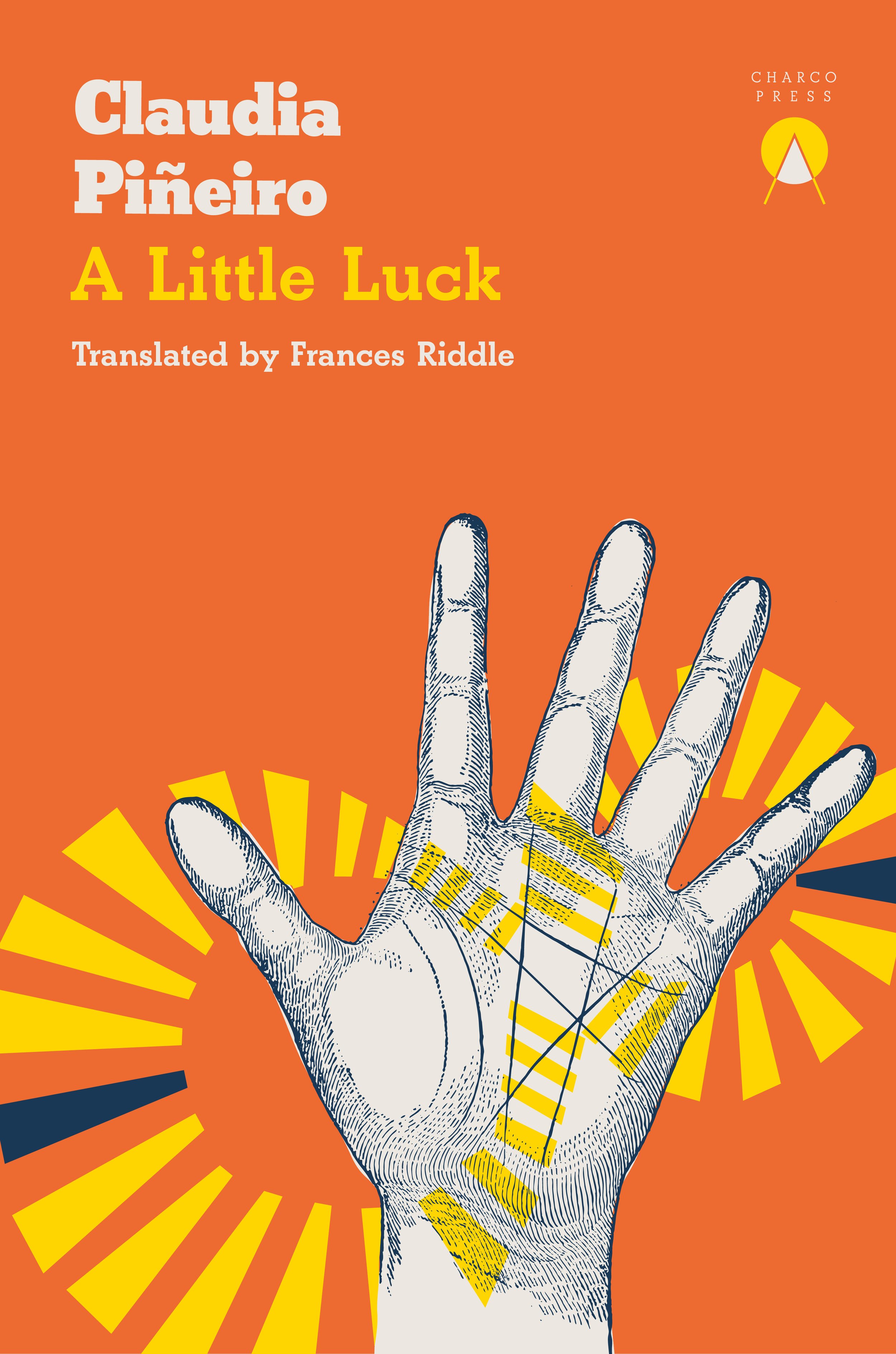
A Little Luck by Claudia Piñeiro tr. Frances Riddle

women in translation argentinian literature crime fiction literary fiction

Stunning.

This was a heart-racing, thrilling and moving read that begins mysteriously as a woman returns to her home country (Argentina) following some kind of event 20 years earlier that we don’t fully learn of until almost halfway into the novel. 

Though she lived most of her early life there, her physical appearance is so radically different, no one recognises her – yet.

We are made aware, though it takes a while to reveal, that she is anxious about the possibility of seeing someone connected to that past event, that sent her into self-imposed exile.

I should have said no, that I couldn’t go, that it would have been impossible for me to make the trip. Whatever excuse. But I didn’t say anything. Instead I made excuses to myself, over and over, as to why, even though I should’ve said no, I agreed in the end. The abyss calls to you. Sometimes you don’t even feel its pull. There are those who are drawn to it like a magnet. Who peer over the edge and feel a desire to jump. I’m one of those people. Capable of plunging headlong into the abyss to feel – finally – free. Even if it’s a useless freedom, a freedom that has no future. Free only for the brief instant that the fall lasts.

rail crossing train barrier A Little Luck
Photo Tim Dusenberry Pexels.com

As the mystery unravels, the tension mounts. Each new chapter begins with part of the backstory, then stops, this is used as a kind of repetition, as the narrator acquires the courage to reveal the full extent of the backstory.

The constant repeating of this text adds to the volume of its impact on the reader and the sense of suspense and intrigue.

The barrier arm was down. She stopped, behind two other cars. The alarm bell rang out through the afternoon silence. The red lights below the railway crossing sign blinked off and on. The lowered arm, the alarm bell, and the red lights all indicated that a train was coming.

As these events of the past some into clarity, in the present day this woman is booking into a motel, arranging to visit the school that she will consider for accreditation, we encounter the mndane reason for her visit and the extraordinary motivation behind it.

Photo by Y. Shuraev Pexels.com

Simultaneously we follow a small sub-plot drama featuring a bat. And a theme of entrapment. The story of the bat corresponds to our protagonists state of mind and how it evolves over the course of the novel. Once again she must make a life or death decision.

I’m still trapped. I must now decide whether to go out and face the task at hand or stay here and wait for the poison to kill me or the smoke to force me out.

Ultimately, it explores many themes, in a profound way, of motherhood, of domination, community judgement, condemnation and gas-lighting, of the effect of undermining a person’s self-worth, of twin aspects of abandonment, of why it might be deemed necessary and the effect it has on the one abandoned.

Do I deserve to explain why? What I mean is, do I have that right? The right to unburden myself and expect someone to listen?

Claudia Piñeiro’s Elena Knows (see my review here) I found curious; there is a similar feeling of mysteriousness as the author withholds telling all, drawing the reader in – however, in A Little Luck, she plummets the mind of the protagonist, letting us into her thoughts, showing us the events and enabling the reader to witness the reactions – allowing us to see the patterns, those all too familiar ways of subjugating a person, of the desire to blame, the withdrawal, the disappearance.

A Little Luck is also a story of healing, of kindness and finding the one person who puts the right thing in one’s way that will lead to release. In this story, a kind man finds the right stories that assist a woman to express and release suppressed emotions. And sends her on a trip.

I began to list the questions that I’d asked myself while reading Alice Munro’s story, questions posed in her words. ‘Is it true that the pain will become chronic? Is it true that it will be permanent but not constant, that I won’t die from the pain? Is it true that someday I won’t feel it every minute, even though I won’t spend many days without it?

Brilliantly conceived, after a few chapters, I absolutely could not put it down, I highlighted so many passages, and it had a surprising though satisfying, tear-jerking conclusion, definitely one of my top fiction reads of 2023. I read this in October, but found it hard to describe the intense reading experience, but I’m sharing my thoughts now, before my end of year review, where it will feature!

Highly Recommended, another fabulous title from Charco Press!

Claudia Piñeiro, Author

As an author and scriptwriter for television, Claudia Piñeiro has won numerous national and international prizes, among them the renowned German LiBeraturpreis for Elena Knows and the prestigious Sor Juana Inés de la Cruz Prize for Las grietas de Jara (A crack in the wall).

She is best known for her crime novels which are bestsellers in Argentina, Latin American and around the world. Many of her novels have been adapted for the big screen. According to the prestigious newspaper La Nación, Claudia Piñeiro is the third most translated Argentinean author, after Borges and Cortázar.

More recently, Piñeiro has become a very active figure in the fight for the legalisation of abortion in Argentina and for the legal recognition of writers as workers. Her fiction (as shown with Elena Knows) is stemmed in the detective novel but has recently turned increasingly political and ideologically committed, reflecting the active role she plays in the fight for the legalisation of abortion in Argentina and Latin America, and for the recognition of employment rights for writers..

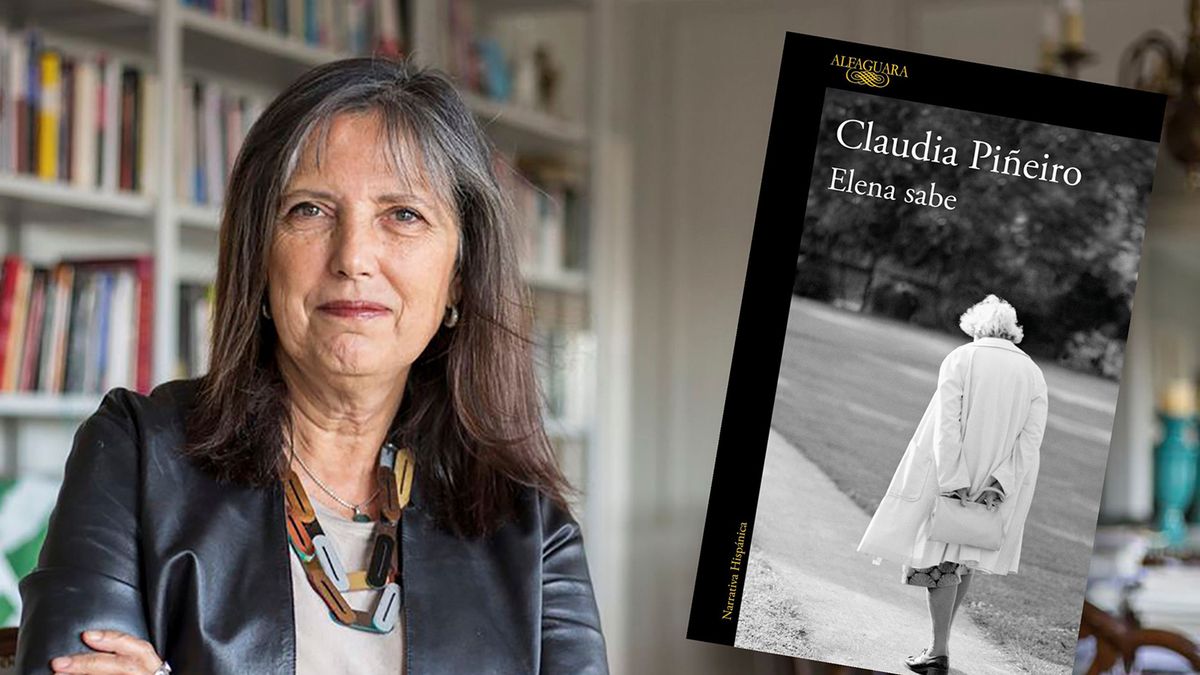
Elena Knows by Claudia Piñeiro tr. Frances Riddle

With A Little Luck now available in English, I’m catching up by reading the word of mouth sensation Elena Knows, which was shortlisted for the International Booker Prize in 2022 and won the Premio Pepe Carvalho Prize for crime fiction in 2019. According to the newspaper La Nación, Claudia Piñeiro is the third most translated Argentinean author, after Borges and Cortázar.

Claudia Piñeiro does seem like an interesting author to watch, taking the convention crime fiction genre and giving it a shake up by focusing on social issues and ethical questions, in particular related to the way women’s bodies have been and are used and abused.

Also reading this for #20booksofsummer23 and getting a head start on August’s #WITMonth, reading women in translation, because that’s my favourite corner of the reading world to be looking for literary gems!

What Does Elena Know That No One Else Seems to?

Elena has just learned her daughter Rita is dead. That it occurred on the same afternoon she booked Elena into her boyfriend’s mother’s salon for “the works”.

It was a rainy afternoon and this is the main reason Elena knows there was foul play. Because her daughter was afraid of lightning and because a mother just knows.

No one knows as much about her daughter as she does, because she’s her mother, or was her mother. Motherhood, Elena thinks, comes with certain things, a mother knows her child, a mother knows, a mother loves.That’s what they say, that’s how it is.

A Rigid Point of View

We see everything from her ‘eyes cast downward’ viewpoint, as she heads out one day to get answers from someone she hasn’t seen in 20 years.

Elena’s body is debilitated by Parkinson’s, so in between pills, she can move more easily.

Photo by RAFAEL QUATY on Pexels.com

Rita was there when he first explained the disease. Rita, who’s now dead. He told them that Parkinson’s was degradation of the cells of the nervous system. And both she and her daughter disliked that word. Degradation.And Dr Benegas must’ve noticed, because he quickly tried to explain. And he said, an illness of the central nervous system that degrades, or mutates, or changes, or modifies the nerve cells in such a way that they stop producing dopamine. And then Elena learned that when her brain orders her feet to move, for example, the order only reaches her feet if the dopamine takes it there. Like a messenger, she thought that day. So Parkinson’s is Herself and dopamine is the messenger.

The novel is told over the course of one day, in three sections: Morning (second pill), Afternoon (third pill) and Evening (fourth pill). The absence of the first pill in the narrative is a reminder as to how dependent she is on the medication and how controlling it is over her every movement, how it restricts her freedom, her vision, her ability to do anything. She is enslaved to those pills and that body.

As the pill begins to wear off, the risk of her becoming stuck increases, as her body becomes less manageable, there is no room for error or miscalculated judgement, if she is to make the journey she has planned. There are moments when she has to wait for the pill to take effect, these must be carefully timed.

Proprietary Attitudes Over Humans

She is off to get help in her attempt to investigate her daughter’s death, thinking she can use the ‘able body’ of someone she sets out on this day to meet. There is a reason why she believes that this person will help her, where no other can, and she will go to all kinds of lengths, despite the debilitating obstacles of her own body, in order to have an audience with them.

She won’t be able to do it by herself because she doesn’t have a body. Not now that the dethroned king and Herself are in charge. Even if she uses all the tricks in the book, she won’t be able to uncover the truth unless she recruits another body to help her. A different body that can act in her place. That can investigate, ask questions, walk, look directly into people’s eyes. A body that will obey Elena’s orders.

The novel explores this idea of how people impose or claim agency over another’s body and what they sentence them to, in so doing; or how they believe they “know” another just because they gave birth to or mothered them, or that God gave them some kind of right to be so knowing.

Elena’s body is in the end stages, but in her mind, she is still coming-of-age.

Claudia Piñeiro, Author

Claudia Piñeiro is best known for her crime novels, which are bestsellers in Argentina, Latin America and around the world. Four of her novels have been adapted and made into films.

As an author and scriptwriter for television, Piñeiro has already won numerous national and international prizes, among them the renowned German LiBeraturpreis for Elena Knows and the prestigious Sor Juana Inés de la Cruz Prize for Las grietas de Jara (A Crack in the Wall).

Her 8 episode series The Kingdom (2021) currently showing on Netflix, sparked controversy in 2021 for its portrayal of the Evangelical church in Argentina.

More recently, Piñeiro has become a very active figure in the fight for the legalisation of abortion in Argentina and for the legal recognition of writers as workers. Her fiction stems from the detective novel but has recently turned increasingly political, taking a broader, more critical gaze at corruption, injustice, community divisions and other dysfunctions of contemporary society. 

Further Reading

What’s On My Bookshelf: Claudia Piñeiro talks of books that inspired her career including The Little Virtues by Natalia Ginzburg, Fierce Attachments by Vivian Gornick, The Story of a Shipwrecked Sailor by Gabriel García Márquez, To the End of the Land by David Grossman, A Room of One’s Own by Virginia Woolf and The Buenos Aires Affair by Manuel Puig.

International Booker Prize Interview: Claudia Piñeiro, ‘I’ve always been very rebellious’

“I always begin writing my books with an image that acts like a trigger. I allow this image to steep in my mind, the characters then begin to speak, to reveal their conflicts. It’s like a tangled ball of wool that I unwind bit by bit. In the case of Elena Knows this image was a woman, a woman in her kitchen at home, sitting bent over in a chair waiting for the pill she’s taken to take effect so she can get up. This was the trigger image. I should also acknowledge that this diseased body of the character Elena is inspired by the body of my mother, who suffered from the same illness, Parkinson’s.  Claudia Piñeiro