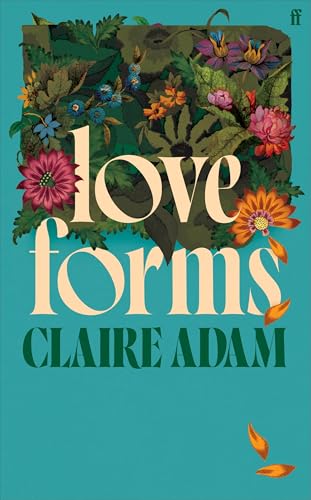
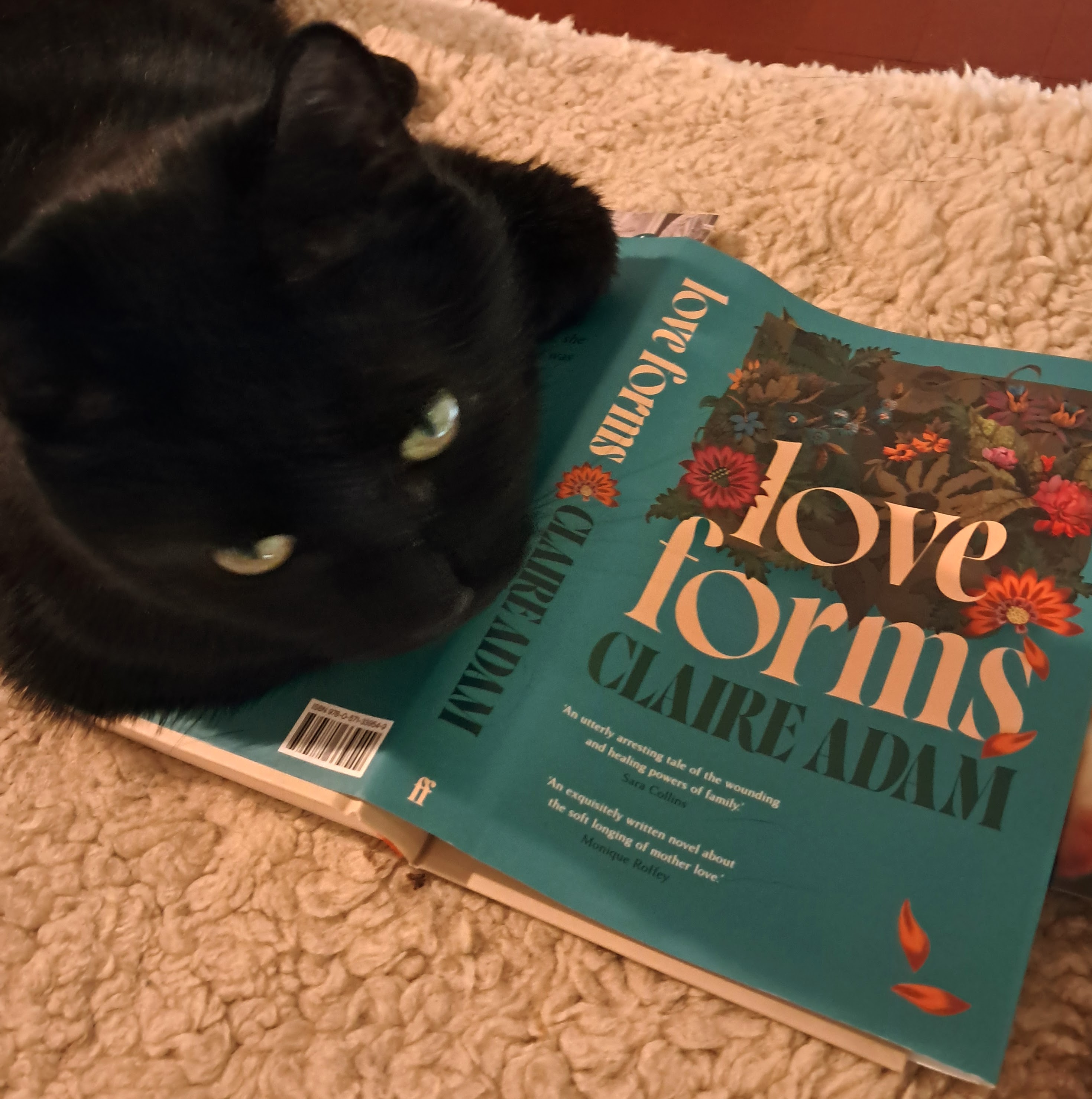
Love Forms by Claire Adam (Trinidad & Tobago)

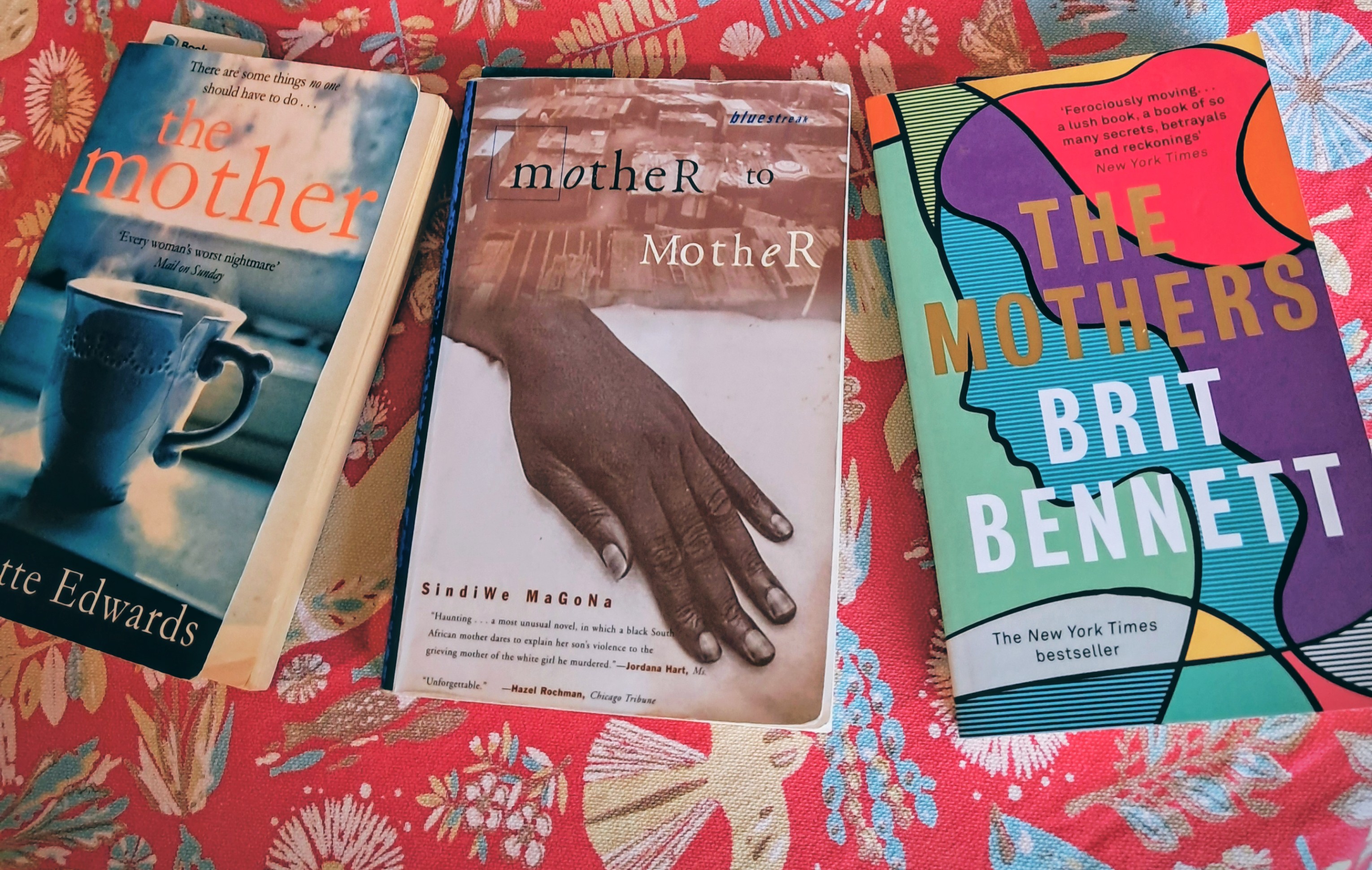
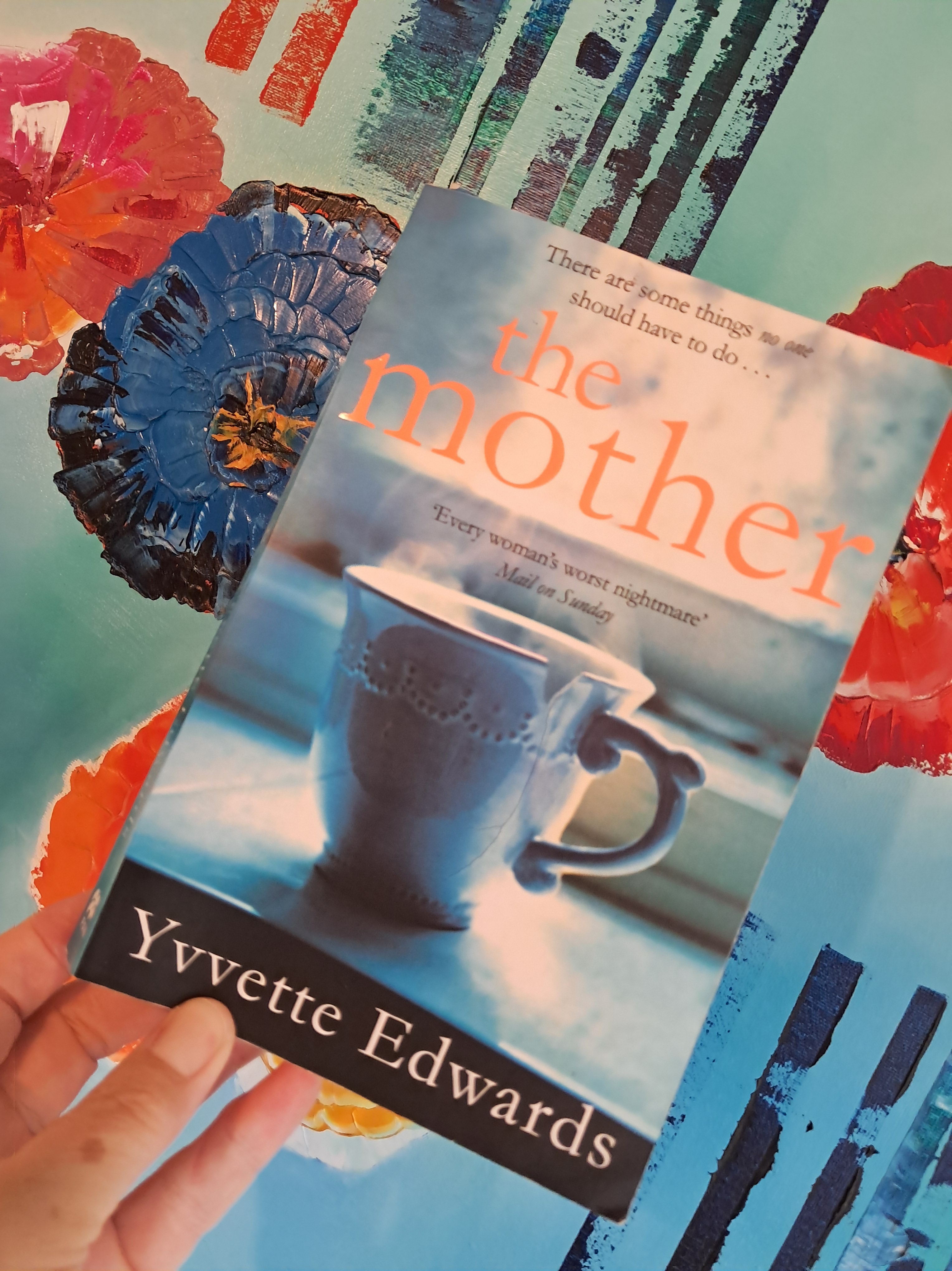
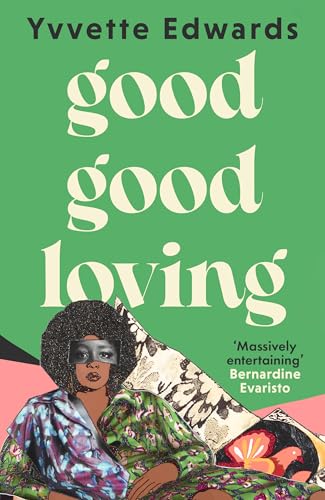
I first heard this recommended on the Irish Times Women’s podcast summer reads of 2025 and shortly after that it was longlisted for the Booker Prize 2025. It didn’t make the shortlist, but it was the novel I was most drawn to, given the adoption theme, but coming from a different culture than that we usually hear from.

Love

forms in the human body

Louise Glück ‘The Fortress’

Forced Relinquishment Across Seas

Love FOrms by Claire Adams longlisted Booker Prize 2025 Trindad & Tobago

A 16 year old living in relative privilege in Trinidad, has one crazy night out at carnival and months later is clandestinely bundled into various transportations, made to wait at different locations, never told where she is going, crossing the water to a hideaway in neighbouring Venezuela, where she will stay a while, give birth to her baby and return alone.

It was my father who made the arrangements. My uncle helped, since he lived down south, where all this kind of business is carried out. I’m talking south-south : down past the airport, past the swamp, past the oilfields, everything. Way down at the bottom of the island, down where Columbus landed, long ago.

Years later, 58 years old, living alone in London, unable to pick up her career in medicine, two grown sons, divorced, her family still in Trinidad, she begins to search for her lost daughter, with very little knowledge, except that memory of the trip in the dark. The rest must be imagined.

I’ve spent many hours trawling through images online, trying to find this place again.But Venezuela is a big country…Even now, over forty years later, I still don’t know exactly where I was.

Gone But Never Forgotten

Photo by W. Fortunato Pexels.com

The novel explores a certain way of living in Trinidad, a daughter made to feel shame, an event unspoken of for more than a decade, a self-exile imposed. A child never forgotten, forever part of her, out of reach.

Over the years, I’ve come across a few photos in magazines and newspapers that I’ve cut out and kept, because they look the way I imagine her to look. I have them in different ages.

Though she maintains contact with her family, there is more than just physical distance between them. There’s a loss of intimacy, of trust, a love that overnight became conditional, an imposed silence that is easier to bear from afar.

I do love my mother dearly, despite everything, but this particular issue is fraught for us. If she and I were to start talking, and I were to finally tell her the honest truth about everything I’ve felt over these past forty years? Well, I couldn’t do something like that – not now, at her stage of life.

There’s A Community Out There

Not until she begins her search and becomes familiar with the experiences of others like her, of children like the one she abandoned, does she begin to be able to understand what it is she has been feeling, a life long loss, momentarily offered the promise of being filled, as each potential contact (a woman her daughter’s age searching for their mother) raises that hope. She confides in a work colleague, a safe stranger.

‘I wasn’t going to tell you,’ I said. ‘But I guess, why not. Another person has been in touch. A girl. I mean, a woman. From the websites. As a possible, you know. Match.

He was watching me closely, and I tried to take on the right manner. Steady and controlled, hopeful but in a measured way. With a hint of detachment, as if I were talking about something at a much greater remove, of academic interest. I said she was in Italy, a town in the north, and that she was a professional person, a biochemist with a pharmaceutical company.

This was a compelling read that would create interesting discussions, with its deeply flawed characters, many terribly inhumane behaviours and the life long wounding adults commit, who care more for status and reputation than the damage heaped on women and children for being in the too common situation of being pregnant, or birthed, unwanted. It’s a conversation and narrative that has for too long been dominated by one side, so it is good to see it being explored through fiction.

This kind of story comes in so many varieties and though this one is unique, again it is driven by the shame and blame of young women, without consideration for those whose consent is never given, those future adults severed from the natural maternal bond and their lineage, conditioned into false belonging.

On the return journey, in the jeep and then in the dented, rattling airplane, I felt as if something had changed, although I couldn’t, at that stage, have fully articulated what it was. Pieces were beginning to settle in new patterns. Maybe my story wasn’t: Dawn, who made a mistake and brought shame to her family. Maybe its: Dawn, mortal woman, who took a wrong turn in life and got lost.

One of the most hopeful parts of this novel for me, was the knowledge that this character and this author, read the forums and the stories of the many humans born into this paradigm who write of their shared, common experience of how that separation affects a child, their life, their future relationships, which helps dispel the myth, that it’s a good or right thing to do, to sever any baby from its mother.

The Politics of Adoption and the Privilege of American Motherhood

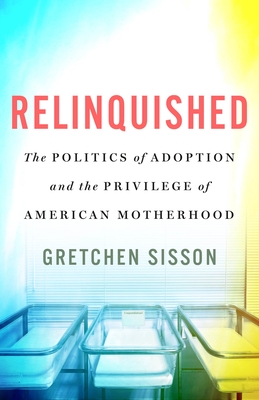
Last year, I read the book Relinquished by Gretchen Sisson, a non fiction work that was the result of ten years of interviews, research and analysis of young women who had given up their babies, looking back at the impact of those decisions.

If you have any interest in the subject of family preservation, and creating conditions where families are supported not separated, read this. If you want to know the truth behind the experience of relinquishing a child (a lifelong trauma), not to mention the impact that has on the child (loving family or not), become more well informed by reading this excellent work.

Further Reading

Read an Extract from the novel ‘Love Forms’ by Claire Adam

Guardian Review: Love Forms by Claire Adam, reviewed by Julie Myerson, June 2025

Recommended Resources : Adoptee Documentaries, Adoptee Podcasts, Adoptee Books

Recent Research: Relinquished: The Politics of Adoption and the Privilege of American Motherhood by Gretchen Sisson (2024)

Claire Adam, Author

Novelist Claire Adam was born and raised in Trinidad. She was educated in the United States, where she studied Physics at Brown University, and now lives in London with her husband and two children.

Her first novel, Golden Child, published in 2019, won the Desmond Elliott Prize, the McKitterick Prize, the Authors Club Best First Novel Award and was named one of the BBC’s ‘100 Novels that Changed the World’. Adam’s second novel, Love Forms, was longlisted for the Booker Prize 2025

I wanted to explore the bond between mothers and their children. On one hand, it’s the most ordinary, mundane, taken-for-granted thing in the world… on the other hand, it’s deeply mysterious. In the case of a mother and child who’ve been separated since birth, for example, often there is a pull towards each other that lasts a whole lifetime. These are people who don’t know each other, who’ve basically never ‘met’ – and yet they yearn to be together. Why is that? Claire Adam

Brandy Sour by Constantia Soteriou (Cyprus) tr. by Lina Protopapa

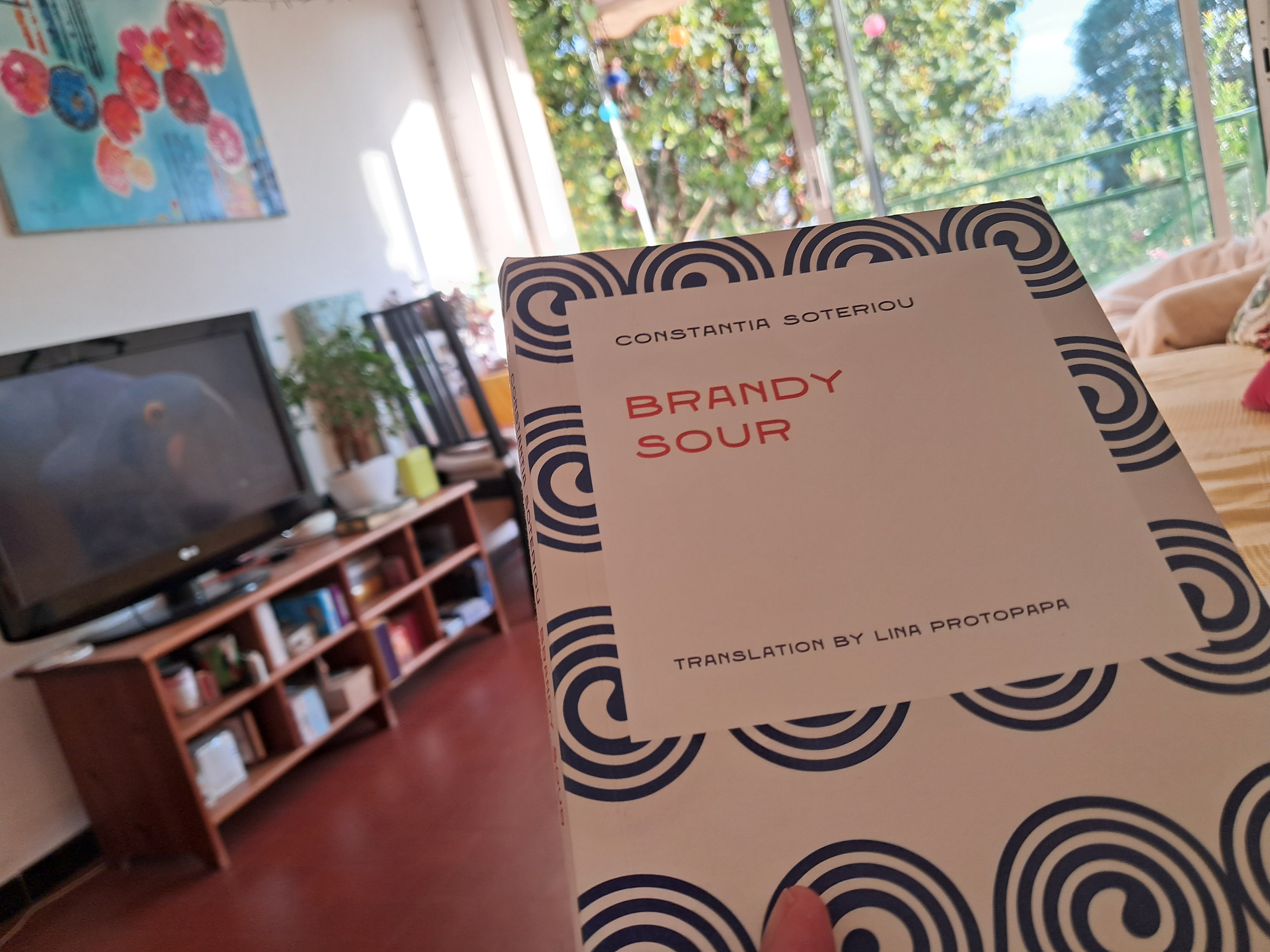
Brandy Sour is a novella length book by the Cypriot author Constantia Soteriou, translated from Greek by Lina Protopapa. It won the 2023 National Book Prize in Cyprus and the author won the 2019 Commonwealth Short Story prize.

Foundry Editions, A Love of Mediterranean Literature

It was the first book published in the Foundry Editions collection of Mediterranean fiction back in 2024. This independent press was created out of a desire to discover and share new voices from the Mediterranean and the people and lands around it.

I heard about them after reading an excellent article in the Guardian entitled ‘Huge scars’: novelist finds a fractured Spain in its half-built houses about the book Far by Rosa Ribas (my review) translated by Charlotte Coombe. I sent a copy of it to a good friend in New Zealand and read it myself and loved it. I started seeing reviews for other Foundry Editions works and now I’m following their list closely.

A Turbulent History Told Through Hotel Beverages

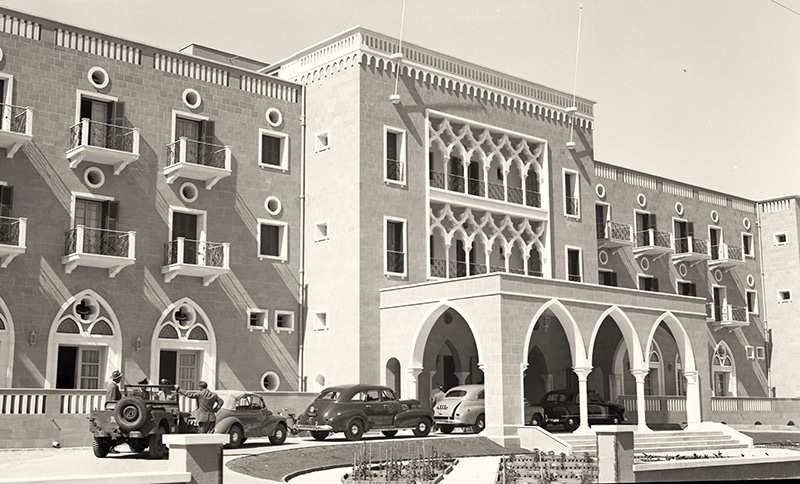
Brandy Sour is set in the emblematic Ledra Palace Hotel, established in 1949 on Nicosia’s UN-controlled buffer zone, the Green Line that, since 1964, has divided the island into Greek Cypriot and Turkish Cypriot sectors.

It has been witness to some of the country’s significant historical events and can be considered an integral part of Cyprus’ cultural heritage and difficult past.

“The Palace was the epicentre of the island’s recent history. It was built as the promise of a new era; a haven for all nationalities, all communities. It drew people from all backgrounds: the wealthy bourgeoisie who lounged by its cerulean pool; the poorer working classes who made its beds – and its Brandy Sours…

But in 1974, it became the site of the worst battle of the war; a symbol of all that could not be allowed to fall. After the division, it was the endpoint of student demonstrations, the gathering place for those who mourned their missing.

And when the barriers finally opened, the Palace once more became a symbol of hope. Of promises that were given, but never kept. Of wounds that ran very, very deep.” Constantia Soteriou, Cyprus Mail

The book is made up of twenty two vignettes or short character studies that form an interlinked slice of life of the hotel and the many characters who have had connections to it.

From Brandy Sour to Rosebud Tea to Grape Molasses

Each character is represented by a beverage starting with the Brandy Sour : The King. Much is revealed in the opening line.

They say a barman invented the cocktail for King Farouk of Egypt in the 40’s – a dark time for the king, who is already grown and in trouble, no longer the handsome, athletic boy charming Europe with his Western manners but a heavy middle aged man facing all kinds of political headaches in Egypt – and elsewhere too – who has to conceal his fondness for alcohol.

The King asks for something that doesn’t look like a drink, with that good brandy and the lemons he likes, and the barman obliges creating a cocktail worthy of a king that wishes to deceive people, with lemonade to sweeten him and the lemons to remind him of his sorrows in a tall glass that resembles an iced tea.

We learn of the tastes of local ladies and English ladies, of the maid, the cleaner, a guerilla fighter and with every consumer of a beverage, an important anecdote relating to their predilection.

City people think that roses are only good for looking at. Village people know that flowers are also good for eating. Especially roses – those tiny pink roses, the hundred-petal roses called damask roses, the ones that climb and spread their thorns across fences and hedges.

The Doorman likes his infusion of rosebud tea in his tin mag and when he starts work at the Big Hotel he takes his tin mug and the root of a damask rose and secretly plants it in the hedge. They must be picked in August with the morning dew, or risk a bitter infusion; it helps digest the indigestible.

Coffee and How War Changes Everything

Photo by Samer Daboul Pexels.com

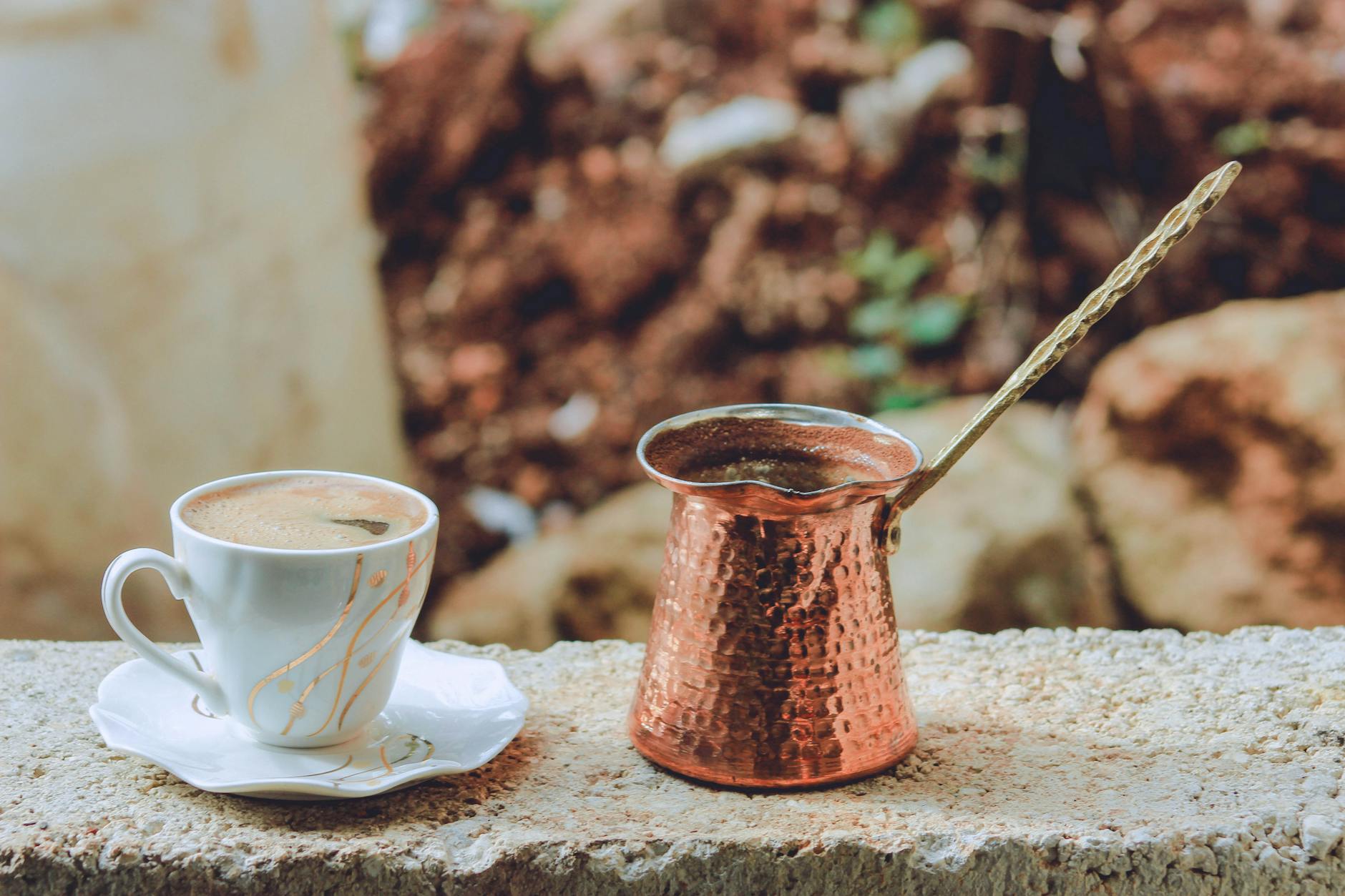
He always wakes at dawn and he goes to the kitchen to have his coffee prepared the way he likes it. The only coffee of the day. With lots of kaymak and no sugar. Turkish coffee – Greek coffee, he always corrects himself – with sugar is an absolute waste of coffee. It needs to be bitter. There’s no point otherwise.

After the morning ritual of the maître’d, we learn of his role as the first shots are fired and he brings the foreigners down to the basement for protection. He returns home and anxiously watches the fighting on his TV, he meets his former colleagues in a coffee shop, the maid, the cleaning lady and the doorman.

He’s taken to drinking coffee in the afternoon now, too – no sugar the way it befits funerals and grief and tragedy and death. That kind of coffee. He takes his coffee with thick kaymak and no sugar. Coffee needs to be bitter – there’s no point otherwise.

The Builder and the Grape Molasses

One of the more moving stories near the end is that of the sensitive builder who gets mouth sores when he is stressed. He can’t eat or drink, there is no medicine that can help him.

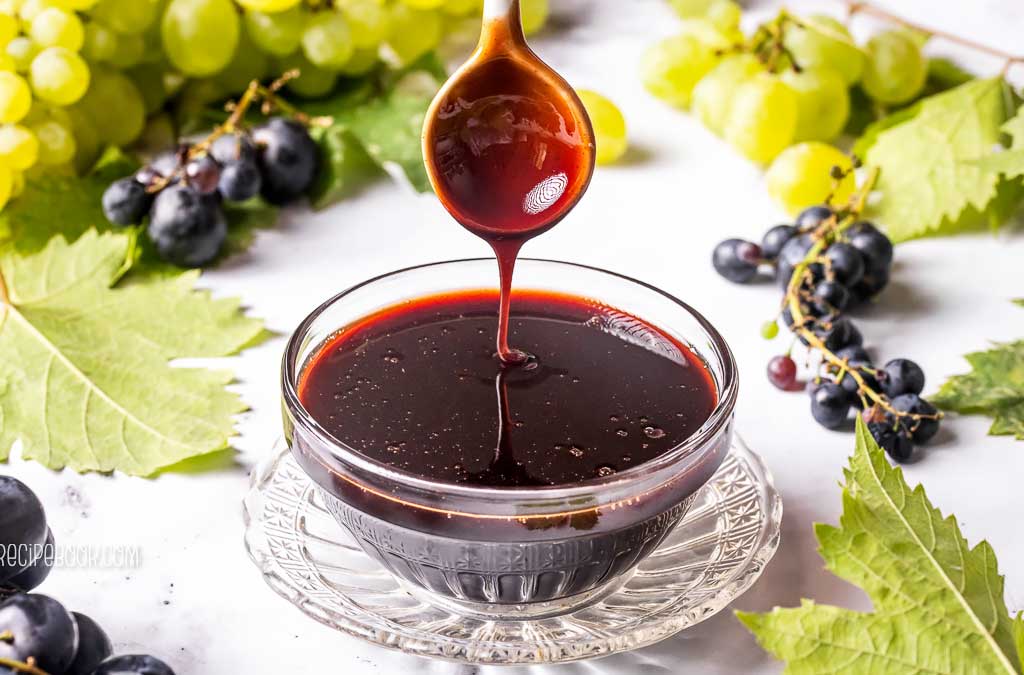
The only thing that seems to make a difference is the grape molasses an old lady whose house he fixes gives him. Grape juice molasses that you boil for hours and hours, that you boil and boil until the liquid turns thick like honey – you dab it on your lips and on your gums and it’s the only thing that can cure mouth ulcers, those little holes in your mouth.

We learn the reason for his sensitivity, for only a few have the skills he does, who know old architecture like he does, how to repair the ancient materials in the foundations, to feel and understand old houses.

Ritual, Repetition and Reassurance

In each story there is often repetition, of that which is important to the character, like the ritual of the beverage, something that is repeated, that is part of a way of life. In the same way language repeats and reassures, building connection between the ritual and the meaning and importance it brings to the community, something to be cherished. The reader too is reminded of that meaning for that character and is moved by it.

I read the book without referring to the history, but on finishing it, I wanted to know more and went looking for the wider context, as we sense the changes occurring through each character and their habits, how the hotel itself somehow embodies the collective memory of a history. Over time, it is occupied by different kinds of guests, welcome and unwelcome, civilian and military and the local people who try to accommodate them and stay safe and adjust to the new paradigm of a post-colonial, independent country and then the destabilising effect of the coup in 1974 that created a separation and dividing line between Turkish and Greek Cypriots.

It’s a beautiful, evocative tribute to a culture, a heritage and the people that have populated and passed through it, that gives pause for thought, of the essence of ritual, of the importance of even the most simple traditions and need for humans to satiate a thirst, a soulful desire.

Highly Recommended.

Further Reading

Review, Cyprus Mail: A brandy sour at the Ledra Palace by Alix Norman

Article: The Ledra Palace Hotel and the ‘difficult history’ of modern Cyprus, Cambridge University Press, Dec 2022 by Antigone Heraclidou & Theopisti Stylianou-Lambert

Have you read any of the Mediterranean fiction published by Foundry Editions? If so, do tell us about it in the comments below.

The Song of Youth by Montserrat Roig tr. Tiago Miller

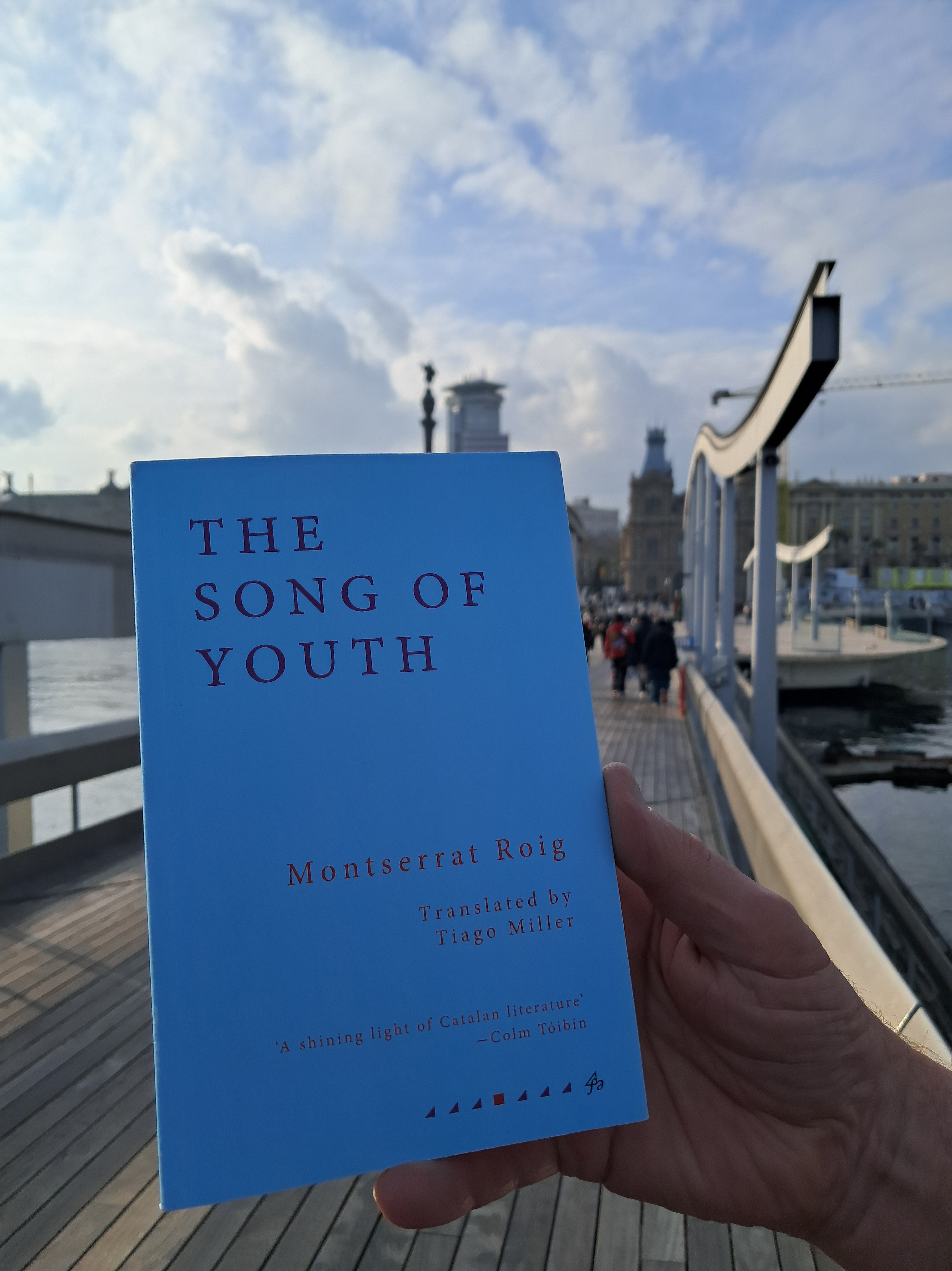
The Song of Youth ‘el cant de la joventut’ is a slim collection of short stories written by Montserrat Roig translated by Tiago Miller, published in English in 2022 by fum de stampa press (originally published in Catalan in 1989).

It was shortlisted for the 2022 Republic of Consciousness Prize, (now rebranded the Queen Mary Small Press Fiction Prize) that rewards ‘bold and innovative’ literary fiction by small presses publishing 12 or fewer titles a year that are independent of any other commercial financial entity.

The winner of that prize in 2025 was There’s a Monster Behind the Door by Gaëlle Bélem (Ile de Reunion), translated from French by Karen Fleetwood and Laëtitia Saint-Loubert and in 2024 Of Cattle and Men (reviewed here) by Brazilian writer Ana Paula Maia, translated by Zoë Perry, published by Charco Press.

Finding and Reading Catalan literature in Catalonia

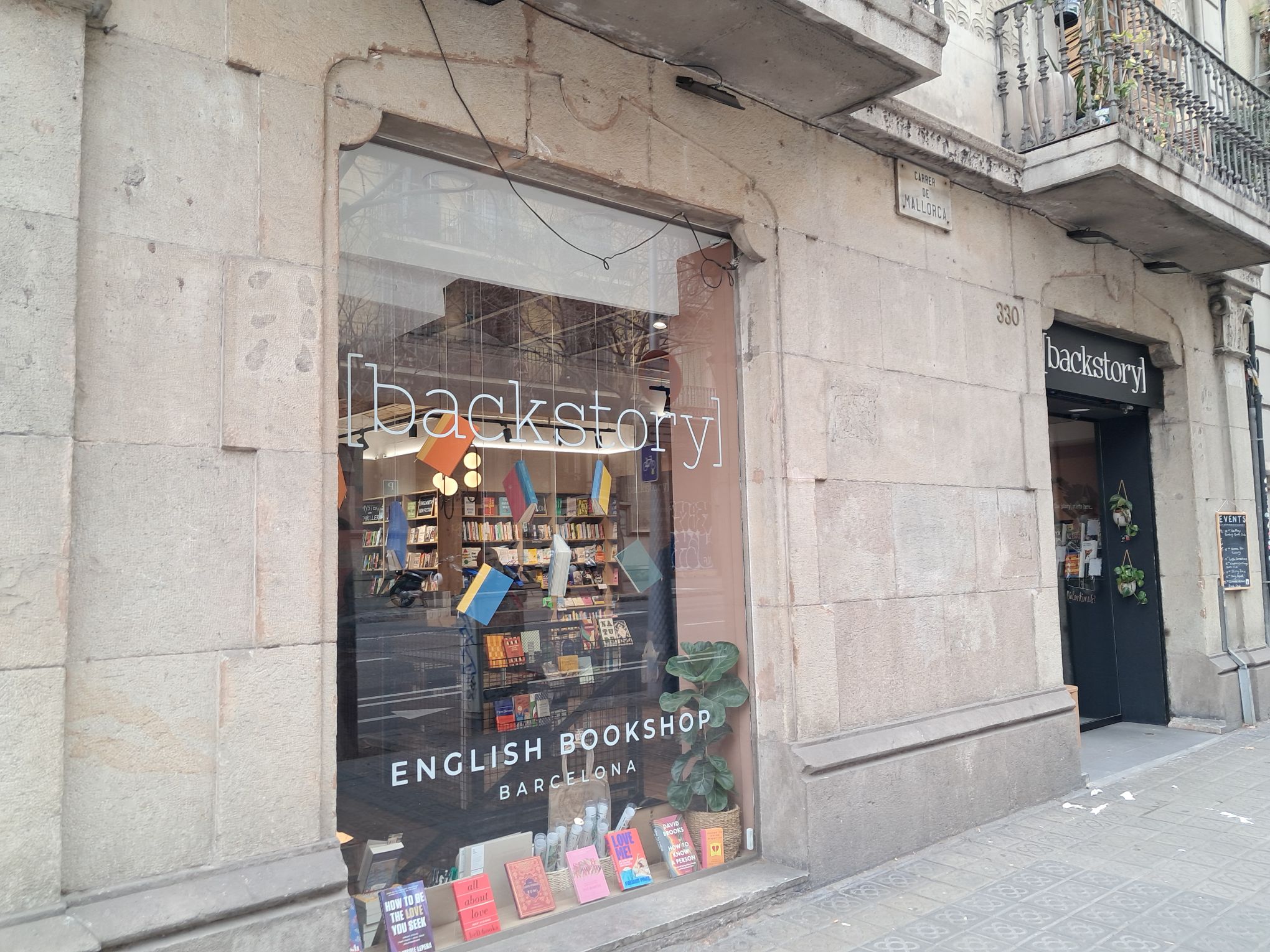
Backstory Bookstore Barcelona

When I visited the Backstory Bookshop in Barcelona, I was interested in and looking for Catalan literature that embraced something of its history in some way.

Monserrat Roig (1946-1991) was a novelist, short story writer, investigative journalist and feminist activist widely regarded as forming a central part of the Catalan canon, inspiring many other Catalonian writers to seek the intimate, personal testimonies of ordinary people, within a wider version of history guided by a strong sociopolitical engagement.

One of Roig’s many literary strengths was creating and placing subversive characters in deeply philosophical and provocative narratives, and bringing out their flawed, tender and very real aspects. It is helpful to consider this when reading her bold collection of short stories.

I’m going to mention two out of the collection that really stayed with me, The Song of Youth and Mar. Love and Ashes packs a punch, but is so short, it need not be described here.

The Song of Youth

I found it helpful to be reminded of this context, written on the back of the book.

In The Song of Youth, Montserrat Roig boldly presents eight remarkable stories that use language as a weapon against political and social “dismemory.” Her powerful and striking prose allows the important stories of those silenced by the brutal Franco regime to, at last, come to the fore. The Song of Youth is undoubtedly feminist and deeply critical but, as always, Roig’s lyrical writing gives shape, depth, and significance to the human experience.

This is how author Eva Baltasar described the collection:

The Song of Youth represents an array of lagoons in which Montserrat Roig’s most extraordinary flowers lay their roots.”

The short story collection by Montserrat Roig The Song of Youth Catalan literature translated fiction

After the first reading of each story, I felt like I was sitting at the edge of one of those lagoons, firstly appreciating the flowers, though not always seeing those roots in the deep, dark depths. And so I went back and reread them. I wrote on and around the pages, and looked up the poetic literary references and was in awe.

The opening story, The Song of Youth, reread a few times, revealed its many layers with each reading. It is magnificent. I think it is a story that needs to read quietly to concentrate, like contemplating a work of art, it won’t reveal itself at a first glimpse. However, it is perfect as it is. A celebration of dying moments and the power of memory, of a life lived courageously.

I turn my face from the ominous day,
Before it comes, everlasting night,
So lifeless, it’s long since passed away.

But shimmering faith renews my fight,
And I turn, with joy, towards the light,
Along galleries of deepest memory.
JOSEP CARNER, Absence

A woman lying prone in hospital with her eyes closed, near the end of her life, observes the white coat of the Doctor and has flashbacks to her youth, a stranger in a white shirt walked into the bar where she sat with her parents, with a decisive air. A transgression.

The men who came from the war didn’t have that air.

She opens her eyes, she is still alive. Everything as it was when she closed them. She knows the sounds. The sounds that keep them alive and the sounds that warn of encroaching death.

“They all died at daybreak. Just like the night.”

She is defiant. She is determined to remember a word. She succeeds.

It’s not easy to describe, this too is a story that needs to be experienced, to read the clues and the disjointed moments of the present and past that create the whole.

Death, Memory and Friendship

To Montserrat Blanes

Life has taught me to think but thinking has not taught me to live. HERZEN

The story MAR is the hardest hitting and most powerful – about a woman befriended, a relationship, admiration, of two people who are unalike but drawn towards each other, who go their own ways; until an accident changes everything.

…it never once occurred to me to give a name to that period of silence, madness and noise, to those moments when the hours would melt into timelessness and our intellectual friends, while watching us, would frown or raise an eyebrow.
“They’ve got some nerve,” said their suspicious eyes while they stared, unaware of their own fear.

The time they are together changes the one telling the story, she is an intellectual, always analysing everything, living in a world of opinions and judgments. While in this friendship, something shifts, changes her. The presence of this unconventional friend disturbed others, messing up the carefully compiled archives on their minds. From vastly different worlds, they each gain something powerful from being in each other’s lives. Something that unsettles others.

We hardly said a word, we certainly didn’t reinvent anything, but it was only with her that I lost my fear, the fear of revealing who I believe myself to be, that little girl I keep hidden in the deep, damp depths of my inner self.

A friendship of silences, commotion and madness

A tribute to friendship, this story originally published in 1989, was celebrated in December 2021 when a documentary was produced about Montserrat Roig and Montserrat Blanes friendship of silences, commotion and madness.

The audiovisual is made up of two narratives, the one in the short story and that told through the live voice and presence of Montserrat Blanes speaking from experience, memory and remembrance.

If you understand Catalan, you can watch and listen to the recording of “Roig i Blanes. Una amistat de silencis, enrenou i bogeria” on Youtube here.

Overall a powerful and thought provoking collection that makes me keen to read her longer fiction.

Further Reading

Biography: Amb uns altres ulls (With Other Eyes) by Betsabé Garcia (2016)

Article: Montserrat Roig : Up-close and from afar by Mercè Ibarz

“And when cancer attacked her, the hour of relentless truth that is illness brought out the self-portrait that the public persona had been hiding: a lucid, serene, combative writer and an excellent reader, who was cognisant of the fact that Franco’s dictatorship had pulled literary training up at its roots and who was, therefore, all too aware of her limits to that point and the power that, despite her illness, journalistic prose could give her.” Mercè Ibarz

Author, Montserrat Roig

Montserrat Roig (Barcelona, 1946-1991) was an award-winning writer and journalist, and the recipient of numerous prestigious prizes including the Premi Víctor Català and the Premi Sant Jordi.

Her journalistic work focused on forging a creative feminist tradition, and on recovering the country’s political history.

Her novels take similar stances, reflecting on the need to liberate women who were silenced by history.

Ghost Wall (2018) by Sarah Moss

In 2020 I read the novel Summerwater by Sarah Moss after having listened to the author speak about her work. I didn’t review it because it didn’t work that well for me, but when I saw this slim novella at a book sale I thought I’d try again. It had been longlisted for the Women’s Prize in 2019.

Family Memory or Normalising Terror

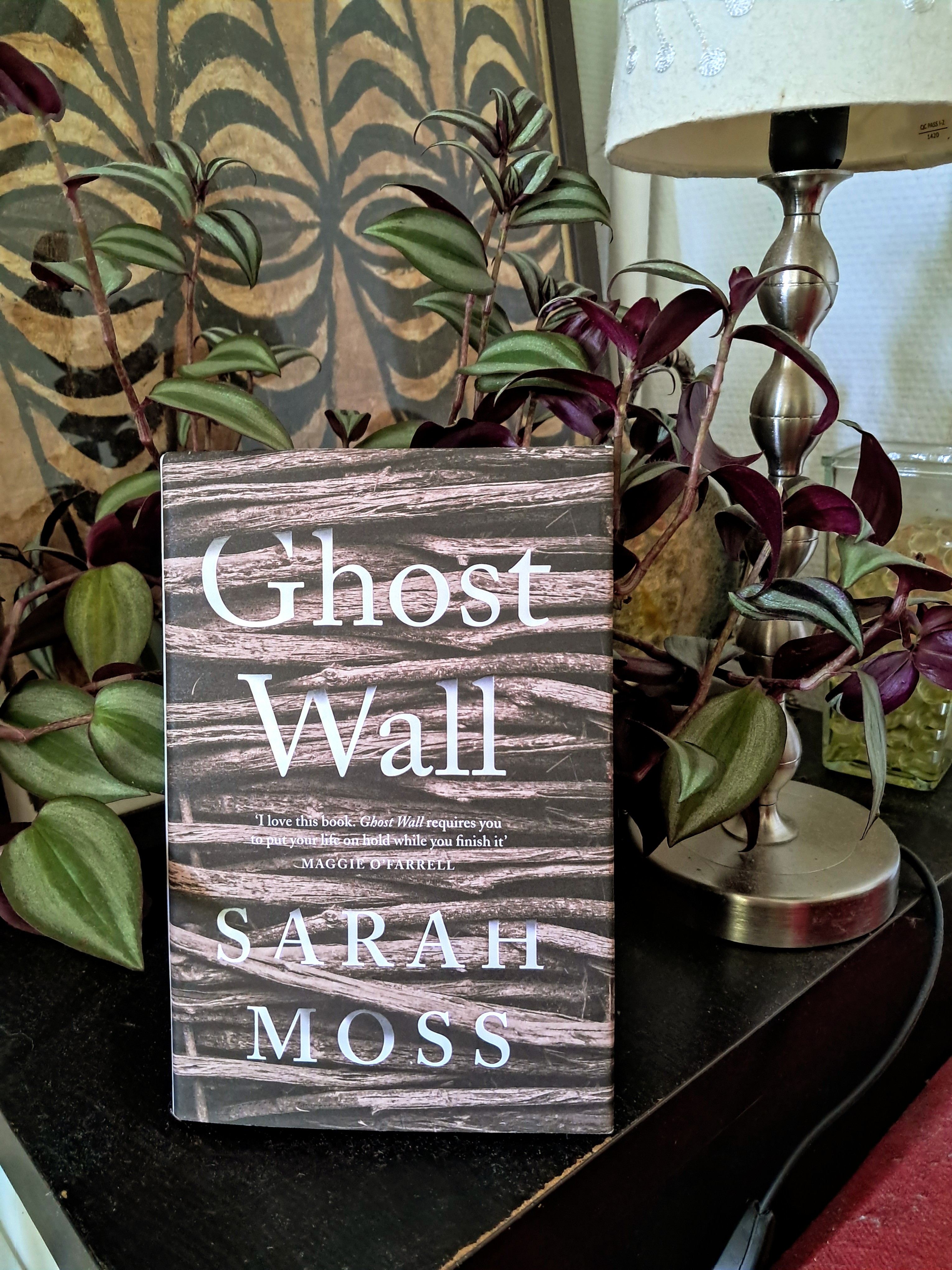
Book cover of novella Ghost Wall by Sarah Moss. The cover shows woven wood that might have been used to recreate an Iron Age hut.

Interestingly, Summerwater was an ‘on-holiday’ novel, a rain soaked 24 hours in the Scottish Highlands, of families stuck in their cabins, inspired by the author’s two week stay under similar conditions, while Ghost Wall is also a tale of a less than salubrious summer holiday.

Teenage Silevia is spending time with her family in an Iron Age re-enactment hut in Northumberland, experiencing what it might have been like to live as they did. There is a Professor and his students also present, whereas Silvie and her father are there because her father, a bus-driver is passionate to the point of obsession about the history of this period.

We were sleeping in the roundhouse, my parents and I. The students had built it earlier in the year, as part of a course on ‘experiential archaeology’, but they had been firmly resistant to my father’s view that everyone should sleep in it together.

The point of the experience was to have a flavour of Iron Age life, a period around 800 BC when people learned how to use iron, which subsequently shifted the way they lived. Still very basic, so much of the holiday is spent foraging for food and for Silvie’s mother, preparing it.

Re-enactment not Reality

Silvie befriends one of the students Molly, who isn’t taking the experience as seriously as the others, who brings a reminder that life is not like this today and challenges some of the things that they do. Silvie admires her rebellious spirit, but is too fearful of her coercive father to defy his requests, finding it impossible to say no and seeing how little it takes for her mother to be punished.

I sometimes think I can tell when two pieces from the same site were made by the same prehistoric person, because the way my hands move is the same. I shivered. Of course, that was the whole point of the re-enactment, that we ourselves became the ghosts, learning to walk the land as they walked it two thousand years ago, to tend out fire as they tended theirs and hope that some of their thoughts, their way of understanding the world, would follow the dance of muscle and bone.

Photo by E. Laperriere Pexels.com

Underlying her experience and in the opening three pages, is the experience of the bog girl who was sacrificed, a story that as we read those pages, it is not clear whether this is a foreshadowing of something that is going to occur, or something from the past that she can imagine and feel, but whatever it is, it starts to feel real, even when she says otherwise.

Silvie, she said, you’re really OK with this, the ghost wall? It’s interesting, I said, I didn’t think it would be but it is. You’re not scared she said. I shrugged. Of what, bones? Of people, she said.

Passion or Persuasion

Photo by Petra Nesti on Pexels.com

The novella is atmospheric and becomes increasingly alarming as Silvie gets swept up in the passion of her father and the history professor, who have convinced themselves that there’s nothing wrong with taking the way these people used to live further. Despite her unwillingness, Sylvie also recognises her father isn’t academic like the rest of the team and part of her wants to support him.

It’s slightly terrifying the further things goes and the ending might have been a little abrupt, but then often conclusions are dramatic when an intervention is required, rather than the ideal of thoughtfully addressing real concerns.

Interviewed for the Women’s Prize for Fiction 2019, Sarah Moss, on her inspiration for the novel shared:

I had a writing residency for the Hexham Book Festival, and became fascinated by Hadrian’s Wall and prehistoric arts and crafts. We think of Hadrian’s Wall as the boundary between England and Scotland but neither of those entities existed then; it was the boundary between the Roman empire and the barbarians. There was and is plenty of reason to be thinking about the borders between civilisation and barbarity, nature and culture, insiders and outsiders.

Further Reading

A Q & A with Sarah Moss: On Iron Age re-enactment camps, barbarity and civilisation and Brexit’s impact on writers

Guardian: Ghost Wall by Sarah Moss review – back to the iron age

Author, Sarah Moss

Sarah Moss has published eight novels, two memoirs, numerous essays, and academic work on Romanticism, travel, food and gender. Her work has been listed for prizes including the Women’s Prize for Fiction, the Royal Society of Literature Ondaatje Prize and the Wellcome Prize.

Her novels are SummerwaterCold EarthNight WakingBodies of Light, Signs for Lost Children, The Tidal Zone, Ghost Wall and Ripeness (2025). A memoir of her year living in Iceland, Names for the Sea, was shortlisted for the RSL Ondaatje Prize and another My Good Bright Wolf (2025) is about growing up in the 1970’s and how excess self-control affects her early adulthood.

Madame Sosostris & the Festival for the Broken-Hearted by Ben Okri

I haven’t read a Ben Okri novel for a long time. He is well known for his third novel, the 1991 Booker Prize winning The Famished Road, the story of Azaro, a spirit child around the time of Nigerian independence; a challenging novel to read as it slips in and out of reality, and one the writer recalls being spooked by, as those spirits he wrote about crashed into his dreams.

There were times, writing at night, when the story I was telling would spook me. Those where nights when I feared for my sanity. I couldn’t shake the feeling that when people read the novel they’d think something was wrong with me. It must have taken a species of madness to write The Famished Road. It certainly took a stronger psyche than I realised I had to work on that taboo-breaking material, and to withstand the horrors involved. Writing about the spirit world at night, for a long period, is dangerous if you come from a land that believes in them. Spirit children, born several times to the same mother, have a special mythology about them, part dread, part magic.

Booker Prize Winner 1991 for The Famished Road Ben Okri Madame Sosostris homage to T.S. Eliot The Waste Land she  can be perceived as the central consciousness of the tale

There is something alluring about Ben Okri’s work, the way he seeks to portray a cultural inner authenticity that embraces the ordinary, the mythical, the poetic and the mysterious. It can feel slightly beyond reach, and then there are moments of universal resonance. A wonderful, considered author, who embraces all literature and forms.

For some time I had known that there is no objective reality that is true for everyone. There is only the reality perceived through culture, traditions, education, consciousness. We don’t see what is there. We see what we are taught to see. Our reality is a product of culture and consciousness. 

After the challenge of The Famished Road, I remember picking up the slimmer Astonishing the Gods, a beautiful fable-like story about being invisible and having the courage to go forth anyway; a man finds himself among invisible beings who live by one principle ‘to repeat or suffer every incident until we experience it properly or fully’ – the sort of book that was ideal to read in youth, one I loved for its magical element and transformative power when I read it in my 20’s.

Madame So So Sad, Sorceress or Alter Ego

ASo where does Madame Sosostris and the Festival for the Broken-Hearted fit? More along the lines of Astonishing the Gods for sure, with a nod in homage to T.S. Eliot’s (1888-1965) character in his epic poem The Waste Land, who may be perceived as this tale’s central consciousness. She comes from the first phase of that poem ‘The Burial of the Dead’, with its themes of sorrow and disappointment, of April and the cruelty in the coming of Spring. Eliot too, is said to have been referencing a character from Aldous Huxley’s Crome Yellow.

Madame Sosostris, famous clairvoyante,

Had a bad cold, nevertheless

Is known to be the wisest woman in Europe,

With a wicked pack of cards. 

The Novel

Okri’s Madame Sosostris is a modern fable, with a touch of cynisism and humour, it is about two upper-class power couples, one of the women has the idea to create a festival for those who have suffered loss but are never acknowledged, the brokenhearted. It has been 20 years since her own major heartbreak.

A Touch of Theatre

Much of this novella length story is dialogue and I couldn’t help but feel like I was watching a play, even the voices seemed louder as if projected out to an audience more so than to each other. We get the feeling that these people don’t much like each other and have long ago left their more authentic aspects of themselves behind.

We spend our lives trying to become ourselves. Few people ever succeed.

Photo by G. PITOIS Pexels.com

The festival will be a masked, costumed event, an idea they hope will allow people to reconnect with something more authentic, since no one will know who they are. This will prove strange to Viv, a member of the House of Lords, who is not used to being encountered by people who do not who she is or the position she holds in society.

But she soon realised that the things they were saying were genuine, that they wanted nothing from her, and had no idea who she was. This was disquieting and charming in equal measure. Disquieting because she was used to people reacting to her because of her money. She was used to the influence of her position in society, the power it gave her. Being liked without that power was new to her. But it did not alter her anxiety.

A Sacred Space in Nature to Unmask

A sacred forest in the south of France, Sainte Baume

It will be for one night only, abroad, in a sacred forest in the south of France. The special invitee is Madame Sosostris, whom they have come across once in the House of Lords (where one of the women works) who will do readings for each guest.

They had come to her weighed down with the dark burdens of their unendurable agonies. They left with a streak of light in their eyes. They were people who had chewed their innards and devoured their own hearts. They were locked in the narrow space of their beings. They were imprisoned for long periods of time in the hell of their own minds, turning over their agonies till they grew and filled their world. What most of them needed was a glimpse beyond themselves, a glimpse of something real, something with the texture of dry bone, the fragrance of a dead beetle, the roughness of a cement wall.

When plans go awry, it becomes necessary to adapt and step out of comfort zones. Some will rise to the occasion, others will be destabilised by it. Ultimately, the couples all experience moments of consciousness raising and are changed in some way by their encounter.

The novel explores identity and personality and how society reinforces these constructs which move further and further away from the authentic, creating a mirage masking the true self. It demonstrates how a shift in perspective and stepping outside oneself can be beneficial to the psyche.

It’s an entertaining read, that plays around with what is real, what is seen and unseen, thought provoking in a theatrical sense and ready for the stage in my humble opinion.

Further Reading/Listening

An Interview: Ben Okri – How The Famished Road was Written on a Magic Tide of Freedom

Listen To: Ben Okri Talking About T.S. ELiot and The Waste Land (16mins)

Guardian: Madame Sosostris & the Festival for the Broken-Hearted by Ben Okri review – a slender fable

Ben Okri, Author

Sir Ben Okri was born in Minna, Nigeria. His childhood was divided between Nigeria, where he saw first-hand the consequences of war, and London.

His writing has used magic realism to convey the social and political chaos in the country of his birth, however no two books are the same exploring themes of reality, unreality, society, storytelling, freedom, magic, consciousness, history, politics, justice.

His books include The Last Gift of the Master Artists (2022), The Freedom Artist (2019); the short story collection Prayer for the Living (2019); the prose-poetry hybrids Tales of Freedom (2009) and A Time for New Dreams (2011); the long poem Mental Fight (1999); the essay collection A Way of Being Free (1997); the poetry collection An African Elegy (1992); and the Booker Prize-winning novel The Famished Road (Anchor, 1991).

He has won many awards over the years, including the Booker Prize for Fiction and is also an acclaimed essayist, playwright, and poet. In 2019 Astonishing the Gods was named as one of the BBC’s 100 Novels That Shaped the World. In June 2023 he was awarded a knighthood in the King’s official birthday honours.

Booker Prize 2025

The longlist for the Booker Prize 2025 will be announced on Tuesday, 29 July 2025. The shortlist of six books will be announced on 23 September and the winner will be announced on 10 November.

Have you read any Ben Okri books? Let us know in the comments below?

N.B. This book was an ARC (Advance Reader Copy) kindly provided by the publisher via NetGalley.

This Is Happiness (2019) by Niall Williams

Irish literature portrait of a community Faha Kerry Novel Historical fiction

I decided to read Niall William’s This Is Happiness, when I saw that he had won the 2025 Kerry Group Irish Novel of the Year Award with his latest novel Time of the Child.

That was the novel I wanted to read, but when I learned that it was a story set in the village of Faha and that an earlier novel preceded it, I decided I would read them both. This is Happiness was longlisted for the Walter Scott Prize for Historical Fiction (2020). The prize that year was won by another Irish author Christine Dwyer Hickey for The Narrow Land, an exploration the marriage of artists Edward and Jo Hopper.

I was curious to see how it would be to read a Niall Williams novel today, remembering the utter pleasure of reading Four Letters of Love in London in 1997, the inaugural book of the first book club I ever joined.

Certain Past, Uncertain Future

I didn’t pay too much attention to this passage on page 3 when I read it, but now that I’ve finished and contemplating why I highlighted so many excellent passages and loved the storyline, somehow this didn’t grip me, I find a clue in this early revelation. When a story is told in the distant past, it brings with it for me, an element of negative nostalgia, because I know this is done, there is little possibility for transformation, it is missing the element of the great unknown, the limitless potential for things to be different.

I myself am seventy-eight years old and telling here of a time over six decades ago. I know it seems unlikely that Faha then might have been the place to learn how to live, but in my experience the likely is not in God’s lexicon.

So we meet our protagonist Noel Crowe reflecting back to when he was 17 years old and had been sent to Faha, County Clare; initially we know not what for, just that something has happened in his life and it had been seen fit for him spend time living with his grandparents.

I had come down from Dublin on the train, not exactly in disgrace – my grandparents, Doady and Ganga were too contrary and crafty for that – but certainly distant from grace, if grace is the condition of living your time at ease on the earth.

Lifting of the Clouds, Coming of the Light

Photo by T. Bernard Pexels.com

The first thing that happens is that it stopped raining. And even though it initially went unnoticed, it became a non-event of significance in that spring of 1958. The second thing was that electricity was to be installed in the area for the first time since the villagers filled in forms a few years before.

Consider this: when the electricity did finally come, it was discovered that the 100-watt bulb was too bright for Faha. The instant garishness was too shocking. Dust and cobwebs were discovered to have been thickening on every surface since the sixteenth century. Reality was appalling…

In the week following the switch-on, Tom Clohessy couldn’t keep mirrors in stock, had a run on hand-, oval-round- and even full-length as people came in from out the country and brought looking glasses of all variety, wet home, and in merciless illumination endured the chastening of all flesh when they saw what they looked like for the first time.

This brought the arrival of the second main character, 60 year old lodger Christy, whom Noel would come to know.

I thought he must be travelling man, there were many at the time, not just the whitesmiths and pot-menders but people adrift in the country generally, for all the reasons known to man unmoored from family or home and making a kind of living from wares carried in cases and opened like miniature theatres to display whatever was newest in the larger world.

Love’s Beginning, Affection’s Endurance

Accompanying world-travelled Christy, Noel was intrigued by his subtle enquiries, indicating past connections in Faha.

I chose Ganga’s method for dealing with catastrophe and pretended nothing had happened. It wasn’t so easy. The scene not only stayed with me, it grew larger for not being spoken and proved perhaps the theorem of imaginary numbers by showing that imagination is many times the size of reality.

When he learns of that history and his intentions, Noel makes a judgement and can’t help himself from interfering, trying to hasten an outcome, until he too experiences the fickleness of youthful desire, the power and impenetrability of the class system and feelings of regret.

A Portrait of A Community in Changing Times

There’s much about this novel I really enjoyed, lots of great passages and the way it tells 17 year old Noe’s perspective and experience, as he spends time with his grandparents, alongside Christy, friend and elder, bringing light to most but not all of the village of Faha, while seeking to atone for past events.

Perhaps it was the slow pace of village life, but the dwelling and description, which often I love, slowed down the narrative and had me less inclined to pick it up.

It could be that I had unrealistic expectations, but also it feels less contemporary than other Irish lit I’ve been reading like Elaine Feeney’s Let Me Go Mad In My Way, where characters are beginning to confront that repressed traditional way of being, while this novel is narrated by a now aged man looking back to that time from the perspective of a younger and older man, where if carried a feeling of foregone conclusions. And knowing that a young person, I felt exactly the opposite to this quote below: the unlived and unknown life in front of me was precisely what made life bearable.

There was every reason to feel natural joy in the world, but for the one that makes it accessible. When your spirit is uneasy, stillness can be a kind of suffering. And when you’re young, the unlived life in front of you, all that future, urgent and unreachable, can be unbearable.

Shortlist of Kerry Group Irish Novel of the Year 2025 won by Niall Williams for Time of the Child Donal Ryan Joseph O'Connor Colm Toibin Christine Dwyer Hickey
Kerry Group Irish Novel of the Year Shortlist 2025

I do recommend it and having noted the book has a significant number of 5 star reviews, I’m clearly in the minority. I will be interested to see how I find The Time of the Child, but I need a break from Faha for the moment, so my next stop is a translated novel set in Mexico City and Aix-en-Provence!

Further Reading

New York Times review: Once Upon a Time In Ireland by Elizabeth Graver

“This Is Happiness” is as full of detours and backward glances as it is of forward motion and — as befits a novel narrated by an old man who comments that “as you get toward the end, you revisit the beginning” — is centrally preoccupied with time itself. NYT

Have you read a recent novel by Niall Williams? Let us know in the comments below.

Let Me Go Mad In My Own Way (2025) by Elaine Feeney

Electra Sophles Anne Carson Annie Ernaux Shame Intergenerational inheritance Ireland

Back in 2023 Irish author Elaine Feeney’s novel How To Build a Boat (my review) was longlisted for the Booker Prize and shortlisted for the Irish Book Awards. That was a bumper year for Irish novelists with four of them on the longlist and Paul Lynch’s Prophet Song winning the prize.

How to Build a Boat was a great read with interesting, memorable characters, about an oppressive school and a free spirit whose presence disturbed the controlling order and rigidity of the institution by making a boat inside the school walls.

When I saw she had another book out with a provocative title like this, I decided to dip in and see what it was about.

French and Greek Literary References, The Female Voice

If the title isn’t a giveaway to reclaiming and redefining madness, a convenient label historically used to oppress women and have them incarcerated in the past, the epigram from Annie Ernaux’s novella Shame further reminds us of the often silenced, lived experience of women and girls, peeling back social shame, intergenerational violence and little recognised, inherited trauma that continues to reverberate and affect current behaviours and relationships.

This can be said about shame: those who experience it feel that anything can happen to them, that the shame will never cease and that it will only be followed by more shame. Annie Ernaux, Shame

A Story In a Title

The title of Feeney’s book is a powerful statement from the ancient Greek playwright Sophocles. The line appears in his play Electra, translated as: “I ask this one thing: let me go mad in my own way.” In the play, the main character, overwhelmed by grief, injustice and familial violence, demands to grieve and rage on her own terms. It is a cry for the right to express and feel one’s own emotional suffering and pain, in the way it is desired, needed.

“Don’t tell me how to feel or how to react, let me experience my madness as I must.”

Elaine Feeney said in an interview that she encountered the phrase in Anne Carson’s translation of Electra and immediately felt its resonance, both personally and within her book’s themes.

Going Mad or Getting to Grips With the Past

irish literature contemporary fiction

Her novel is about an Irish woman named Claire O’Connor who had been living in London with her boyfriend Tom Morton, unravelling after the death of her mother. Unable to cope, she breaks up with Tom and returns to the West of Ireland, initially to care for her father.

Back living in the family home awakens memories and issues for Claire and her two brothers, who are more used to avoiding and ignoring past and present bad behaviours.

The unexpected arrival of Tom and new friends Claire makes at her new university job, create a situation that brings people together that wouldn’t ordinarily meet.

Choosing to Live Differently

This new dynamic challenges some of those repressed feelings and the characters will either continue to deny or choose to grow.

‘There’s land here, isn’t there?’ He was playing with me now. ‘They’re not making any more of it – I’ll bet they don’t teach you that inside in the universities.’

I wanted to say that none of us wanted his land, full of rock, thistles and furze bushes. That it was a noose. I wanted to say the land was never mine. I knew well enough to know that.

Generational Influence

The story is told in different timelines, in the first person present, when Claire is an adult and has returned to Ireland, in 2022 and then there are chapters about the family from 1920, events around the old abandoned house at the back their property.

The O’Connor’s were good tenant farmers and had then been given this small handsel of land, a slight acreage of a holding from the Estate in the Land Commission’s Exchange for compliance. They had, until this, been generations of shepherds. Mostly, too, they were emigrants. A compliant people who believed in God being good and work being eventually rewarded for all eternity.

1920 was a period when there was unsettling violence from the Black and Tan Forces in East Galway around the Irish War of Independence, cultivating an atmosphere of fear and violence and an era where there was little escape, and few and far opportunities. Though 100 years in the past, undercurrents of that violent era continue to pump through the veins of this family.

Then there is Claire’s childhood memory of a Hunt Day in 1990, when the Queen of England was looking for a black mare for the Household Cavalry. Flashes of memory bring it all back as Claire confronts the past in order to better create any chance she might have of a better future.

Great Storytelling and Thought Provoking Depth

It is a thought provoking novel rooted in personal, collective and inherited memory, that deals with ‘the home‘ as the institution that requires dismantling, and it is the coming together of family, friends and the new relationships in Claire’s life that will facilitate the change that can redefine what home can become.

It’s also a novel that is entertaining with or without the layers of meaning that come from the references, but it is one that I have enjoyed all the more for understanding more about the motivations of the author and the literary influences she has referenced and talks about in the following interview.

And speaking of the Booker Prize, the longlist for 2025 will be announced on Tuesday 29 July 2025. This year’s Chair of Judges is an author who has never been in a book club, Roddy Doyle, who is joined by Booker Prize-longlisted novelist Ayọ̀bámi Adébáyọ̀; award-winning actor, producer and publisher Sarah Jessica Parker; writer, broadcaster and literary critic Chris Power; and New York Times bestselling and Booker Prize-longlisted author Kiley Reid.

Further Reading or Listening

An Interview by Bad Apple, Aotearoa: Ash Davida Jane interviews Elaine Feeney

Listen to Elaine Feeney read an extract from her novel Met Me Go Mad In My Own Way

Elain Feeney, Author

Elaine Feeney is an acclaimed novelist and poet from the west of Ireland. Her debut novel, As You Were, was shortlisted for the Rathbones Folio Prize and the Irish Novel of the Year Award, and won the Kate O’Brien Award, the McKitterick Prize and the Dalkey Festival Emerging Writer Award. How to Build a Boat was also shortlisted for Irish Novel of the Year, longlisted for the Booker Prize, and was a New Yorker Best Book of the Year.

Feeney has published the poetry collections Where’s Katie?The Radio Was GospelRise and All the Good Things You Deserve, and lectures at the University of Galway.

The Seven Moons of Maali Almeida by Shehan Karunatilaka

The Seven Moons of Maali Almeida by Sri Lankan author Shehan Karunatilaka won the Booker Prize in 2022. It wasn’t on my radar, probably because it seemed to me like it was trying to be too many things, but when I saw a hardcover copy on sale at the annual Ansouis vide grenier last September, I decided to delve into it and see for myself.

Outstanding Sri Lankan Literature

I knew that it was about the civil war era in Sri Lanka and I have read some excellent novels that are set in those difficult times, most recently the novel that won the Women’s Prize for Fiction in 2024 Brotherless Night by V.V. Ganeshananthan (see my review here), but my favourite novel set in that country is Naomi Munaweera’s Island of a Thousand Mirrors (my review here), winner of the Commonwealth Writer’s Prize in 2013.

Munaweera writes exquisitely of the island of Sri Lanka, in lyrical prose that takes the reader inside the family experiences, evoking all the senses, the aroma of the cuisine, the fear and excitement of young, forbidden love, the pain of heartbreak, the palpable tension as sisters walk to school, sometimes witnessing images that will stain their minds and revisit their dreams for years.

Mystery, Satire, Historical Fiction and Magical Realism in One

Booker Prize Winner 2022 Sri Lankan literature magic realism afterlife noir

Seven Moons is a literary mystery about the life and death of Maali Almeida, who from the opening pages, in a second person narrative, turns up dead and from the In Between, that place between life and the afterlife that he now inhabits, proceeds to uncover the mystery of his death.

Set in 1990 Colombo, Maali was a war photographer, a promiscuous gay man, sometimes gambler and seeker of the next photograph that will show the dark and gruesome elements of those in power, a witness to crimes he believes can bring down governments, stop wars.

The In Between, Down Below and The Light

When he arrives at the In Between, he and others like him are told they have seven moons, seven nights to meet the criteria to enter The Light. As they queue and ask questions about their deaths, Maali hopes he is about to wake up from a dream.

The swarm of souls presses closer, berating and badgering the woman in white. You gaze upon the pallid faces, sunken eyes in broken heads, squinted in rage and pain and confusion. The pupils are in shades of bruises and scabs. Scrambled browns, blues and greens – all of which disregard you. You have lived in refugee camps, visited street markets at noon, and fallen asleep at packed casinos. The heave of humanity has never been picturesque. This heave throngs towards you and heaves you away from the counter.

metaphysical thriller civil war Sri Lanka supernatural

Every soul has those seven moons to wander around the In Between, to recall past lives, and to forget.

While he should be completing the tasks to get to The Light, instead he shifts from The In Between back to the present, the Down Below and observes the aftermath of his death.

He tries to direct those close to him towards his most incriminating photographs in order to achieve which he was not able during life. He doesn’t understand quite how these shifts happen, and neither does the reader, making it somewhat confusing to keep up with this trippy journey.

Here’s what you remember from two nights ago: (a) visiting the Leo casino, (b) drinking at the bar, (c) eating the buffet, (d) fooling around with the bartender. here’s what you don’t remember: (a) sitting with a suddha (b) being thrown to your death.

Conversations With the Dead

As well as investigating his own murder, along the way he has conversations with a dead athiest, a dead revolutionary, lawyer, bodyguard, priest, dogs and more. He observes the number of spirits hanging on to the living whispering their ears.

You’ve always thought the voice in your head belonged to someone else. Telling you the story of your life as if it had already happened. The omniscient narrator adding a voiceover to your day. The coach telling you to stop feeling sorry and do what you’re good at. Which was winning at blackjack, seducing young peasants and photographing scary places.

Moons, Chapters and Beats

On his motivation for writing this novel, the author had this to say:

‘I began thinking about [Seven Moons] in 2009, after the end of our civil war, when there was a raging debate over how many civilians died and whose fault it was. A ghost story where the dead could offer their perspective seemed a bizarre enough idea to pursue, but I wasn’t brave enough to write about the present, so I went back 20 years, to the dark days of 1989.’

Not just an author of fiction, Shehan Karunatilaka has also written rock songs and speaks of his work in terms of beats and rhythm, infused with supernatural folklore, ghost stories and history.

It’s a long novel that for me held my interest in parts and then lost me as it shifted, but each time that began to annoy me and slow me down, the narrative would shift back to something of interest and so I persevered, however, I did find it overly long in its digressions, drifting in and out of reality. It’s an undeniably clever, erudite novel, unique in its conception that reminded me a little of the surreal experience of reading David Mitchell’s Cloud Atlas.

The Judges on A Metaphysical Thriller Winner

In addition to praising its ambitious scope and hilarious audacity of narrative techniques, the Booker judges had this to say of the metaphysical thriller:

‘Life after death in Sri Lanka: an afterlife noir, with nods to Dante and Buddha and yet unpretentious. Fizzes with energy, imagery and ideas against a broad, surreal vision of the Sri Lankan civil wars. Slyly, angrily comic.’

‘This is a metaphysical thriller, an afterlife noir that dissolves the boundaries not just of different genres, but of life and death, body and spirit, east and west. It is an entirely serious philosophical romp that takes the reader to ’the world’s dark heart’ — the murderous horrors of civil war Sri Lanka. And once there, the reader also discovers the tenderness and beauty, the love and loyalty, and the pursuit of an ideal that justify every human life.’

Have you read The Seven Moons of Maali Almeida? Share your thoughts in the comments below.

Further Information

Read an Interview With the author Shehan Karunatilka

Click here to read an extract from the first section of the novel – Read an Extract from The Seven Moons of Maali Almeida

By the Sea (2001) by Abdulrazak Gurnah

By the Sea begins as a compelling narrative and mystery of a man who arrives at Gatwick airport from Zanzibar without a visa and refuses to speak English, until the crucial moment where he is about to be deported and he utters the words that will change his trajectory.

Refugee. Asylum.

Old Scores Revisited

Nobel Prize for Literature 2021 Zanzibar Tanzania witing about immigration culture refugees requesting asylum

In trying to locate someone to translate for him, Latif is contacted and the two men realise there is a connection, a history that has perpetuated with major gaps on either side of their understanding, voids often filled by those wishing them ill.

Their story began by the sea and concerned a fragrance Ud-al-qamari, and would be retold far away where few understood the nature of their feuds and punishment, of corruption and power, petty rivalries over debts, possessions, and influences that could drive a man to flee for his life.

The man I obtained the ud-al-qamari from was a Persian trader from Bahrain who had come to our part of the world with the musim, the winds of the monsoons, he and thousands of other traders from Arabia, the Gulf, India and Sind, and the Horn of Africa. They had been doing this every year for at least a thousand years. In the last months of the year, the winds blow steadily across the Indian Ocean towards the coast of Africa, where the currents obligingly provide a channel to harbour. Then in the early months of the new year, the winds turn around and blow in the opposite direction, ready to speed the traders home.

Time Dismembers, Perceptions Unremembered

Told in three parts, the first two focus on each of these characters and their early life in Zanibar and something of their present, while the third part is a kind of oral storytelling as the two meet and their intertwined story is retold from start to finish until a different connection emerges, as they find themselves newly isolated in this place around people uninterested in their journey.

So time dismembers the images of our time. Or to put it in an archaeological way, it is as if the details of our lives have accumulated in layers, and now some layers have been displaced by the friction of other events, and bits of contingent pieces still remain, accidentally tumbled about.

A drama of disappointment, self-deception and renewal, the novel explores both the double bind of the known culture that entraps, and the unknown culture that frees but isolates the individual, for their betterment, yet never quite attaining an imagined, desired status.

Like Admiring Silence, an excellent, astute read by an accomplished author.

Further reading

My review of Admiring Silence (1996)

Nobel Prize Interview with Abdulrazak Gurnah

Article Guardian on Winning the Nobel Prize

New York Times: Abdulrazak Gurnah Refuses to Be Boxed In: ‘I Represent Me’

Abdulrazak Gurnah, Author

Abdulrazak Gurnah was the Winner of the Nobel Prize for Literature in 2021 for

‘his uncompromising and compassionate penetration of the effects of colonialism and the fate of the refugee in the gulf between cultures and continents’,

He was born in 1948 and grew up on the island of Zanzibar in the Indian Ocean, arriving in England as a refugee at the end of the 1960s. After the liberation from British colonial rule in December 1963 Zanzibar went through a revolution which led to oppression and persecution of citizens of Arab origin; massacres occurred. Gurnah belonged to the victimised ethnic group and after finishing school was forced to leave his family and flee the country, by then the newly formed Republic of Tanzania. He was eighteen years old. Not until 1984 was it possible for him to return to Zanzibar, allowing him to see his family shortly before the father’s death.

Themes of Refugee Disruption

Gurnah’s writing is from his time in exile but pertains to his relationship with the place he had left, which means that memory is of vital importance for the genesis of his work. 

The theme of the refugee’s disruption runs throughout his work. His novels depict a culturally diversified East Africa. His dedication to truth and aversion to simplification are striking. It can make the work bleak and uncompromising, however he follows the fates of characters with great compassion and unbending commitment.

His novels include Paradise (1994), which was shortlisted for both the Booker and the Whitbread Prize; By the Sea (2001), which was longlisted for the Booker and shortlisted for the Los Angeles Times Book Prize; and Desertion (2005), shortlisted for the Commonwealth Writers’ Prize. His most recent novel Theft (2025) is the story of the intertwined lives of three young people coming-of-age in postcolonial East Africa, selected as a book to look out for in 2025 by the GuardianObserverIrish Times and BBC.

Until his retirement he had been Professor of English and Postcolonial Literatures at the University of Kent in Canterbury, focusing principally on writers such as Wole Soyinka, Ngũgĩ wa Thiong’o and Salman Rushdie.

The Emperor of Gladness by Ocean Vuong

The hardest thing in the world is to live only once.

But it’s beautiful here, even the ghosts agree.

literary fiction Oprahs bookclub immigrant experience fiction Vietnam Lithuania the eldery the disenfranchised marginalised

Ocean Vuong’s latest novel begins with a chapter that stands apart from the rest of the novel, a lyrical description of the New England town of East Gladness, that sits in a valley that when the prehistoric glaciers melted and the river dried up, left a silvery trickle along the basin called Connecticut : Algonguin for ‘long tidal river’.

The chapter ends with the arrival of a nineteen year old boy named Hai, crossing a bridge in September 2009 and climbing the railings.

Though it was true the boy had run out of paths to take, out of ways to salvage his failures, he never planned on jumping off King Philipp’s Bridge that evening. It was only when he glimpsed, between the rail ties, the river swirling so massive below, a place you could slip clean into, that something in him both jolted and withered at once.

Young and Old On the Margins of Society Take Centre

Hearing a voice shouting at him, he encounters 84-year-old Grazina, a Lithuanian widow drifting in and out of the grip of dementia, trying to stay in her home and keep the hallucinations at bay.

Photo by T.Constant Pexels.com

Hai is the son of a first generation Vietnamese immigrant, entrapped in recurring cycles of illusion, failing to achieve promises he made to his mother, leading him deeper into despair.

When these two characters paths cross, it marks the beginning of a shape shifting, temporarily life-altering bond and uplifting experience in both their lives, as together they attempt to navigate the unsustainable circumstances they are desperately confronted with.

The novel traverses a season in the lives of these two, intimately demonstrating the beautiful supporting effect two strangers can have on each other’s lives, when their closer familial ties are unable to.

When the Past Emerges into the Present

Hai is given refuge and in return he monitors Grazina’s medication, he inserts himself in her hallicinatory episodes, gently accompanying her back to safety, while learning something of the traumatic earlier years she has navigated, that return to haunt her.

She stared out the window as he read the first few paragraphs from the story of a man wandering the warscape of his mind after the wars of his body. When he finished, she looked at him from beneath her glasses and said only, “Very well, then.” He was about to say something about the book when the cuckoo clock on the wall behind him went off, the wooden owl shooting out to nod along to a jagged tune spinning in its broken gears. Her eyes lit up. “Ah, 6.43, the hour Vilnius fell to Stalin.” She crossed herself, shut her eyes, and said a prayer under her breath.

The Circumstantial Family

He reaches out to an estranged family member and gets a job in a fast food restaurant and quickly becomes part of a team that are all shouldering their own struggles and dreams and together they become something that extends beyond the comradeship of colleagues, the circumstantial labour family created through simultaneous work shifts; who take risks, find humour and support each other for a brief chapter in each others lives.

It was in these moments that he thought this new life, if you could call it that, wasn’t so bad. That he could bide his time until something ahead of him lifted, like the mist rising each morning above the river outside his window, revealing what was always there. But he was wrong.

The characters of Hai and Grazina are flawed and unforgettable, they are vulnerable, disillusioned and in perfect alignment as they keep each other as stable as possible, until the external world inevitably interferes.

When Kindness and Care Lead

immigrant american culture, chosen family, kindness of strangers

I was reminded a little of the reading experience of Barbara Kingsolver’s Demon Copperhead, only I loved this even more, because of the added multicultural layer that came from these characters having connections to another culture and way of being in the world, while trying to survive against the odds in the United States.

They are having to cope with and navigate for one, the effects of ageing and the other, the allure of addiction to regulate an overwhelmed nervous system. The support and consistency they stumble across in each other, shines a ray of light in an otherwise dark and lonely existence.

I really enjoyed this novel, even more than his accomplished debut novel On Earth We’re Briefly Gorgeous. There’s so much more to gain from this novel, but I urge you to read it for yourself and gift yourself that experience.

Highly Recommended.

How strange to feel something so close to mercy, whatever that was, and stranger still that it should be found in here of all places, at the end of a road of ruined houses by a toxic river. That among a pile of savaged trash, he would come closest to all he ever wanted to be: a consciousness sitting under a lightbulb reading his days away, warm and alone, alone and yet, somehow, still somebody’s son.