I thought I still had quite a few pages left in my current notebook until I opened it just now to discover 20 pages of predatory animals and prehistoric looking reptiles wreaking havoc across the lines. Trying to keep an energetic 11-year-old amused in a waiting room, I lent him my notebook and black pen for a short period and this is a sample of what now intersperses my less animated prose. And I see his sister has been in here as well, quite different styles.
So with Spring well and truly here, it is time to start afresh, so a new notebook seems appropriate.
But back to my unadorned scribble within, now transferred to the screen.
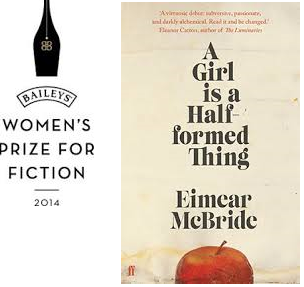
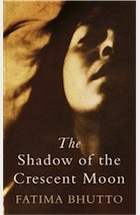
 This novel was longlisted for the Baileys Women’s Prize for Fiction and it was a title I had not heard of, but a name that looked familiar. Which it is, the Bhutto family name is renowned in Pakistan politics as is its tragic link with political assassination. Fatima Bhutto is part of that family, though she has said she is not interested in pursuing a political career, preferring to express herself in poetry and now this, her first novel.
It wasn’t the blurb so much that drew me to the book, it was that unique perspective that can be present in someone who has lived across different cultures and is equally at home in the East and in the West for example the Turkish writer Elif Shafak.
Fatima Bhutto was born in Afghanistan, raised in Syria, educated in the US and now lives in Pakistan. The kind of cultural traversing of frontiers that could potentially give a writer a unique perspective, no? And didn’t she once date George Clooney? Okay, not relevant, but then maybe it is.
Set in a town called Mir Ali, the story takes place over a period of three and a half hours and the chapters are labelled 9.00, 9.25, 9.53 and so on until Noon. The prologue is at 8.30am in a white house in Mir Ali on the day of the festival of Eid (the end of Ramadan). The bazaar is opening, rain threatens and a fog blankets the rooftops.
Three brothers live with their widowed mother, one of whom is married and lives on the upper floor. The brothers are Aman Erum the eldest and most recently returned home from studying in the US after the death of their father, Sikander, the middle married brother who is a doctor and Hayat, the youngest who attends meetings and seems uncertain of himself.
“Most Pakistanis thought of Mir Ali with the same hostility they reserved for India or Bangladesh; insiders – traitor – who fought their way out of the body and somehow made it on their own without the glory of the crescent moon and the star shining overhead.
But the shadow of that moon never faded over Mir Ali. It hung over its sky night after night, condemning the town to life under its shadow.”
Over breakfast, they discuss where they will each separately pray that day, not wishing to be at the same mosque should there be any danger, the first time they have done this.
“No one prays together, travels in pairs, or eats out in groups. It is how they live now, alone.”
The chapters alternate between the three brothers following their movements or reflecting on their recent past although this wasn’t clear until the end when I went back to try to understand why I felt after reading the entire book, I didn’t know the youngest brother at all and could make such little sense of the other two.
 The character who stood out the most for me was Sikander’s wife Mina who rescues the narrative with her odd behaviour of looking up public notices of funerals and making her way to the homes of the grieving families. Something is wrong here and Bhutto has the reader in the palm of her hand teasing out what is going on with Mina and the reluctance of her husband to intervene.
Despite the format of alternative chapters for each brother, Hayat’s are very short and of little depth, which may be deliberate, but this has the effect of making him an inconsequential participant in the narrative. The first chapter on Aman makes up 20% of the novel and I almost gave up here due to the style of telling, the introduction of his childhood sweetheart Samarra providing some relief.
It was when we met Sikander that the pace picked up and the characters became more real and interesting, due in part to the odd behaviour of his wife.
The novel was heading for Noon while filling in back story and narrating an extraordinary event that Sikander and his wife encounter; the reader is anticipating something about to happen and the use of the clock is like the count down and I turn the page anticipating… well not anticipating…
Acknowledgements. The End.
I really wanted to enjoy this book, as I did with Elif Shafak’s Honour, The Forty Rules of Love and The Bastard of Istanbul , as she seamlessly traverses the East West cultural divide, but I found it lacked too many essential elements that I was unable to ignore and played into too many post 9/11 clichés, leaving little room for hope or healing.






 Word by Word