After looking at the novels on the shortlist for the Women’s Prize for Fiction 2024, I decided to read two of them, Enter Ghost (set in Palestine) and Brotherless Night (set in Sri Lanka) mainly because in addition to enjoying works by women in translation, I also enjoy novels in English set in other countries, written by people who have had some experience of that culture.
Enter Ghost is as much a semi-lived experience as it is a story to be read and understood. I don’t know if every reader will experience it that way, but for me, many of the places that the novel takes place in, elicited memories of being there, travelling [the 5 hr scenic route (irony)] between Bethlehem and Ramallah, visiting a countryside village outside of it, spending a day in Jerusalem (finding someone who had permission to enter the city to accompany me). A day(s) in the life of an ordinary (is there such a thing) Palestinian.
I expected them to interrogate me at the airport and they did.
This novel brings alive the sense of place and the many difficult and challenging encounters local people have to navigate, in trying to travel from one place to another. For some, like the elderly, it is best not to even try.
Sonia Nasir is one of the semi-privileged, she is able to fly into the country. That is, she is does not have to travel overland via Jordan and cross the Allenby/King Hussein Bridge to enter Palestine, as many do.
Enter Ghost is a story of youth, about a desire to stage a play in one of the most difficult places you might try to do that.
People who live in different parts of Palestine, with different ID’s and therefore different freedoms, different fears, vastly different experiences. Gazan’s, West Banker’s and what they refer to as 48’ers. It is as if they are from different countries, how different their lives are based on the geography of birth.
Sonia is half Dutch, half Palestinian and lives in London where she is a successful stage actor. She is connected to Palestine, through family summer holidays spent in Haifa (a Northern coastal town). While visiting her sister Haneen, she meets her friend Mariam, who asks her to fill in for a couple of characters in the play she is staging, while she searches for suitable replacements. They are staging an Arabic version of Hamlet.
The novel depicts the process of rehearsing and pushing actors to develop into the roles they are playing, while navigating an environment where even theatre is seen as a possible revolutionary act. All the while they rehearse, they are never quite sure if they can pull this off, nor are they even sure of whether they can trust each other.
As well as navigating their own relationships, there is an incident at the Al-Aqsa Mosque which further complicates their ability to move about.
Throughout the obstacles, Sonia is coming to terms with her recent past in London, the fraught relationship she has with her sister and with her ancestral home.
The day Michael, the movement director, joined rehearsals, he had examined my body like a tailor; told the directors to leave the room, and proceeded to lecture me about the importance of motivation.
‘Every person,’ he said, looking away, absorbed by his words, ‘every body moves differently from the next person’s body when their mind goes through something. When you’re sad, you,’ he pointed, ‘are going to move differently from the way I move when I’m sad. I can still read your movements, but they’re not going to be the same as mine. But if you make a straight line from emotion to movement – your emotion, your movement – then the audience will not only read you, they will feel you.’
She is 38 years old, mature in one sense and an established actor, and yet it is something of a coming-of-second-age novel, as both the play and the new relationships and the place all act on her and transform her.
As the time this novel was shortlisted for the Women’s Prize, the HOME venue in Manchester, UK cancelled then reinstated (after nearly 100 artists protested and began to remove their work from an exhibition there) a Palestinian theatre performance of Voices of Resilience.
There is reference too in the novel, to a turning point in Palestinian theatre history, the staging of Al-Atmeh, ‘Darkness’, a play which as it begins the lights go out – actors are part of the audience and play out all the elements of dealing with this one of many regular occurrences of life under occupation, trying to fix it.
The titular darkness allows the actors to discuss the darknesses of various interrelated forms of oppression—occupation, social backwardness, patriarchy—and the play ends with the cast and audience holding candles to collectively illuminate the stage. It was a raging hit. The audiences had seen nothing like it and they were ecstatic.
The version of Hamlet that is staged is based on a translation by Jabra Ibrahim Jabra translated back into English for the novel, and the language used and those who use it and how they use it is as important as the text itself.
I am not well versed in the play Hamlet, but the parts of the play that are shared in the novel and the context within which they are staged don’t require that the reader be too familiar with it, but no doubt if you are familiar with Hamlet, it will add another layer of understanding.
I particularly enjoyed it also for the understanding it brought to the process of developing a troupe of actors for a play and how the author captured these performances and the emotion they elicited (or didn’t). That is powerful, dedicated and practiced writing.
Overall, as I said in the beginning, I felt like I lived through this novel, which was exhausting at times, but wholeheartedly worth it.
Tender, nostalgic vignettes of a childhood growing up in Gaza, often told from the perspective of the twenty-something narrator looking back from the present, now living in exile in London. She is constantly longing for old places while finding new ones, the past never far from being elicited by the present.
Each new chapter has an associated song, vignettes accompanied by a playlist.
The image of the sambac, the tree that filled our back yard with its sweet, creamy scent, appears in my narrator’s attempts to create life where this shrub doesn’t naturally thrive.
The little stories are so compelling, I finished them in one sitting and was left wanting to read more. I sincerely hope the author is writing more stories, preserving important memories, while there is a terrible war raging in her home town.
These stories are the anti-thesis of that violent incursion, they speak of family outings to the sea, of friendships, of Aunties, though so many are tinged with reminders that it is almost never without some reference to loss.
As the narrator grows into unlikely circumstances away from Gaza, memory is her greenhouse; her way to bring back the voice of the girl who was sacrificed and born in the hands of her identity. At her desk in a flat in Southeast London, she writes of what makes her soul flicker: community love, especially the kind embodied by circles of women and girls.
Guns and Figs
In this vignette, our narrator shares a childhood memory of driving along the Gaza coast with her parents, beside the Mediterranean, in her favourite place, by the window facing the sea, window down, sea breeze rushing in, an unchanging view for the duration of the 20 minute drive.
My brother and I each had assigned places in the car, until our little sister grew old enough to claim her window-seat rights. Then the rotation became tricky, involving fights that mostly ended with my brother crying in the middle.
I usually sat by the window, facing the sun and the sea, breathing the salty, creamy air and occasionally eating grapes and figs: the ultimate Mediterranean snack.
These drives all felt the same, until the last one.
At a checkpoint, a soldier indicates they should pull over, “I’ll just be a minute” says her father. An hour later he returns, the Friday barbecue trips end indefinitely that day, though she is never told why.
I started to notice Baba paying more attention to the road; it seemed like he was avoiding certain checkpoints. Every so often, he would point out something ahead and wonder aloud whether it was a checkpoint or a fruit cart. As Fairuz sang from the cassette player, Baba drove on, trying to guess the difference between guns and figs.
Friendship, Fear and Foreign Places
Other stories ‘Ask Me Anything’ tell of school days interrupted by explosions, of friendships interrupted by disappearances, ‘A Carry-On Full Of Pictures and Letters’.
We were never trained for emergencies at school. We just knew what to do. We would sit on the floor under our tables each time we heard the recurrent loud explosions – ignore the first two, exchange a few nervous looks, and then, in one swift move, we’d all be in our places by the third. That consistency was comforting. The fact that we had survived the first two was a good enough sign that it’d be worth shielding ourselves from the rest.
In an attempt at reassurance, our teacher would remind the class: ‘The one you hear isn’t the one that kills you.’
One day her best friend Lubna leaves Gaza without telling anyone. She had visited the Al-Shifaa hospital after breaking her arm and never returned.
When she was ten, Lubna’s dad had been one of seven people martyred after the occupation forces targeted a car in the middle of a busy street. She’d been planning her exit for years; I just didn’t think it was really going to happen.
Three years later, she visits her friend in Amsterdam where she now lives.
That day feels like the oldest memory I have. Yet somehow I can barely remember it at all, or the person I was when I hadn’t yet imagined what it meant to leave.
‘I love my mother, but she couldn’t protect me. I love you, but you couldn’t either. I’m a lot better now, you see?’ She waves her hand in the air, and I look around and nod.
In this vignette, we first hear that our narrator has been kicked out of her flat after secretly hosting an Airbnb guest to help pay the rent. Homeless, she moves into the office where she works and takes on additional responsibilities.
Sometimes, I even feel content in my windowless bunker, stealing bits of people’s lunches from the common lounge – not the entire meal. As I look up flats in my small college town, I think of my first big move.
Here, we learn of when our narrators parents leave the family home, the summer she turns six, after problems around inheritance became intolerable. Their last day living in an apartment above her grandmother Sitti, arrives:
Moving out of the family house was never a casual affair, but rather a statement. It’s like leaving home for the first time – making a point that it’s time to move on. Changes like these usually carried an undertone of wives taking their husbands away from their families and keeping them for themselves.
The move also meant that no one was going to interfere in how to raise us, except for my parents. It was a bit of a slap in the face, especially for Sitti. But I was excited about it; I wanted to be like my other cousins who visited only on Fridays and wore something new each time: a little bag or a hair tie, or even a completely different hairstyle. I was ready to rebel with my parents and become the daughter of a mean woman. I started to imagine what I would wear the next Friday.
Some years later, she visits her grandmother in Belgium, where she now lives and finds her safe, but malcontent.
Seventy years since her birth,our Grandma is in a French-speaking town, barely able to move, again a refugee. She tells me she didn’t want to leave Gaza, and that she regrets it.
‘Who leaves at this age?’ she says, slightly ashamed of her attempt at survival. As though there were an age limit to craving life, or to that quiet longing older folks back home often fear expressing.
It is a wonderful collection, that preserves childhood memories and shares with the rest of us, a slice of life for a member of a Palestinian family in Gaza, where growing up is fraught with uncertainty, trauma and nothing can be taken for granted.
From afar, the beauty of family and fragmented moments of friendship gain additional significance, as a way of life is slowly and methodically destroyed.
A must read, excellent portrayal of a lonesome yearning for home.
Heba (she/they) is a London-based, Gaza-raised Palestinian author, creative and facilitator. She completed an MFA in Creative Writing at Miami University, Ohio, and studied for an MA in Social Anthropology at SOAS University of London.
Rooted in anti-nation-state, decolonial, queer, Afrikan feminist thought, Heba’s work navigates topics such as disposability, Global South solidarity movements, land justice, Palestinian drill music, and more.
Heba’s first book, Sambac Beneath Unlikely Skies, won the Creative Award in the 2022 Palestine Book Awards and was chosen as a 2021 Book of the Year by TheWhite Review, Middle East Eye and The New Arab.
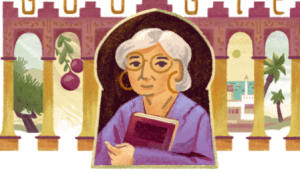
Radwa Ashour (1946 – 2014) was a highly acclaimed Egyptian writer and scholar who after studying a BA and MA in Comparative Literature in Cairo, went on to do a PhD in the US in African-American Literature.
As a university student in her native Cairo in the early 1970s, says Ashour, she’d found no one who considered writers in the African diaspora worthy of study. But in 1973, a joyfully-cultivated friendship with Shirley Graham Du Bois world traveler, litterateur, and widow of W.E.B.du Bois led Ashour to UMass. Madame Du Bois, as the école-educated Ashour still calls her late liaison to Amherst, was living in Cairo at the time, and pointed the young Egyptian toward the then-infant Afro-American Studies department here.
Her interest in African-American literature was due to her view that “works on oppression and the overcoming of oppression speak deeply to readers in the Arab world.” She was passionate about social justice, evident in her writing, which sought to personalise the lives and conditions of marginalised groups.
Throughout her career she wrote more than fifteen works of fiction, memoir and criticism, including the novels Granada and Spectres.
The Woman From Tantoura
The more I read, the more this novel got its hooks into me. After a while, a pattern begins to emerge, one that is universal. To find a place where one can live authentically, and be at home.
Because of the initial setting, a fishing village in Tantoura, Palestine, in 1948 – the year of ‘The Nakba‘ I expected it was going to be traumatic, it’s the part we don’t wish to linger in, to be witness to the horrific expulsion of families from their homes, of the disappearance of sons and fathers, the rest either becoming refugees in their own country or fleeing to find refuge elsewhere.
Even if we know it can’t begin well, sometimes, we need to read through, to follow the life of a thirteen year old girl into womanhood, in the hope that we see her find solace, to have empathy for her worry and anxiety for her own children and husband after all she has witnessed.
The story begins with Ruqaya standing on the seashore, seeing a young man come out of the sea as if he were of it, as if the waves released him on to land. She is mesmerised. The man will become her fiance, though they will never marry. It is the end of her childhood, the end of blissful days on that shoreline, though memories and the scent of it will stay with her forever, through all the moves that follow. And the key to the old house.
Later on I would learn that most of the women of the camp carried the keys to their houses, just as my mother did. Some would show them to me as they told me about the villages they came from, and sometimes I would glimpse the end of the cord around their necks, even if I didn’t see the key.
The novel is narrated by her 70-year-old self, pushed into writing down and describing the many experiences and turning points in her life, by her middle son.
It’s not only the story I’m interested in, I’m after the voice, because I know its value and I want others to have the chance to hear it.
A reluctant narrator, the timeline moves back and forth, less a chronology events than a response to emotions that arise that provoke the memory. It’s a recollection of a life lived in the wake of tragedy, of determination and survival, of not forgetting, maintaining a connection to a culture and values as best one can.
There was no acceptable or reasonable answer for the question for “why?” however much it rose up, loud and insistent. I did not ask “why”. I mean I didn’t ask the word, and perhaps I was not conscious that it was there, echoing in my breast morning and evening and throughout the day and night. I didn’t say a thing; I fortified myself in silence.
While her mother uses imagination to create a vision of what happened and where the missing are, Ruqayya’s advances then retreats, as the present awakens the past, rarely does she dwell in an idealised future.
Am I really telling the story of my life or am I leaping away? Can a person tell the story of his life, can he summon up all its details? It might be more like descending into a mine in the belly of the earth, a mine that must be dug first before anyone can go down into it.Is any individual, however strong or energetic, capable of digging a mine with their own two hands?
Seeking Refuge
To see them seek refuge in another country, where a similar tragedy can happen, one understands what it must feel like to feel that no place is safe, and then when she finds a ‘safe place’ with her high achieving son, the culture shock is too much to bear, bringing to mind the memoir of the Palestinian intellectual Edward Said’s Out of Place.
There is no place that quite replaces the childhood environment and home, except perhaps to create one’s own family, and this Raqayya will do, with her son’s and the daughter, a girl Maryam her husband brings home one day from the hospital, adopting her as their own. And in growing things, not the almond tree or the olives, but flowers, a thing of beauty, the damask rose, the bird of paradise.
I found similarities in reading this novel, to the feeling evoked in reading Nella Larsen’sQuicksand, her constant search too, for the place where she could be herself, though her search was all the more elusive and complex, there being no place or people who accepted her rootlessness, her mixed blood, something that the clannishness of many ‘peoples’ reject.
“In Egypt, we have a flag, an airline of our own, we are an independent country,” she said. “But there is this feeling we are not free to be who we are in the new world order.” I am always conscious I’m a person from the Third World. I’m an Egyptian, an Arab, and an African all in one. Also, I’m a woman. I know to be all these things is to be particularly conscious of constraint.” Radwa Ashour
The Woman From Tantoura is my first read for #WITMonth, reading Women in Translation.
Salt Houses is a novel that eventually comes full circle, as it follows the female members of a Palestinian family as they flee, move, marry and cope with constantly being and feeling outside where they belong, including between generations and even between siblings.
Each chapter is titled with the name of one of the family, beginning with Salma, the mother of Alia, in Nablus, Palestine, the town she and her husband Hussam and their children fled to in 1948, following the Nakba (catastrophe). Alia is a child of war, barely three years old when they had to flee.
The opening lines are an indication of what is to come and intrigue us to want to know more, they remind me of a visit to Palestine where I first heard about this cultural divination practice, Tasseography, the art of reading coffee grinds, a ritual that dates back thousands of years.
“When Salma peers into her daughter’s coffee cup, she knows instantly she must lie.”
Alia’s older sister is married and lives in Kuwait, a land Alia is reluctant to visit, but when she does in 1967, finds she is unable to return to Palestine due to “the Setback” (the Six-Day-War), thus her children will know a home and culture, even though connected to her heritage, very different from her own.
As each generation makes a move, Hala Alyan takes the reader on an emotional journey of perseverance and loss, against a background of political manoeuvring. While the narrative avoids the conflict and brutality of war and deplacement, we become witness to the separation of a family from its roots, its culture, its land, and in particular the effect on a Palestinian family of the founding of Israel and the conflicts that followed that caused them to become refugees, firstly in their own country and latterly in neighbouring countries.
The separation is not just from their land and traditions, but between perceptions, as family members find it difficult to understand the yearnings of their elders and parents find it difficult to understand the foreigners their have become to them. Fortunately, like with many families, solace can sometimes be found for a child with their grandparent, those who have seen too much to be surprised by anything anymore, who have arrived at acceptance without judgement.
Salt is referred to throughout, invoking memories of family living near the sea displaced inland; fathers who “salted everything after that, even his water,” houses lost, eroded like salt; lives soothed by and almost taken by immersion in salt water. It is everpresent.
“The porcelain surface of the teacup is white as salt; the landscape of dregs, violent.”
Through it all Alia’s husband harbours a secret that torments him, one that he lives with by regularly writing letters that are never sent, seeking atonement.
The novel traverses with diligence a difficult period in the history of Palestine and the Middle East, demonstrating the resilience of humanity to survive, the sacrifices that are made and the cultural poverty that is experienced giving rise to the insatiable desire for families to remain connected, not just to each other but to the small yet important things, the traditional rice dishes, the olive, the orange tree, the desire to keep flowers blooming, no matter where they find themselves.
Their homes may crumble, but their spirits continue to reignite and flourish, wherever their heads may lie.
Hala Alyan is a Palestinian-American author, poet and practicing clinical psychologist living in Brooklyn, who spent her childhood moving between the Middle East and the US. Salt Houses is her debut novel and is inspired by some of her own extended family experiences.
“I definitely think there was an intergenerational trauma that went along with losing a homeland that you see trickle down through the different generations” Hala Alyan, NPR interview.
Further Reading:
Dreams, Displacement & DNA: Talking With Hala Alyan About ‘Salt Houses’ What happens when displacement enters your DNA? by Kristin Iversen · May 9, 2017
Note: This book was an ARC (advance reader copy) provided by the publisher via NetGalley. I originally reviewed this book for Bookbrowse.


 The more I read, the more this novel got its hooks into me. After a while, a pattern begins to emerge, one that is universal. To find a place where one can live authentically, and be at home.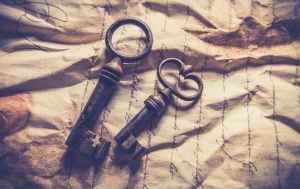
 While her mother uses imagination to create a vision of what happened and where the missing are, Ruqayya’s advances then retreats, as the present awakens the past, rarely does she dwell in an idealised future.
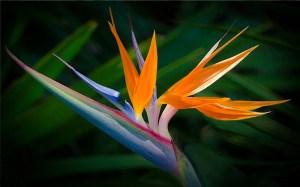 There is no place that quite replaces the childhood environment and home, except perhaps to create one’s own family, and this Raqayya will do, with her son’s and the daughter, a girl Maryam her husband brings home one day from the hospital, adopting her as their own. And in growing things, not the almond tree or the olives, but flowers, a thing of beauty, the damask rose, the bird of paradise.
 Salt Houses is a novel that eventually comes full circle, as it follows the female members of a Palestinian family as they flee, move, marry and cope with constantly being and feeling outside where they belong, including between generations and even between siblings.
 “The porcelain surface of the teacup is white as salt; the landscape of dregs, violent.”
 Hala Alyan is a Palestinian-American author, poet and practicing clinical psychologist living in Brooklyn, who spent her childhood moving between the Middle East and the US. Salt Houses is her debut novel and is inspired by some of her own extended family experiences.
 Word by Word