

The Little Virtues is a collection of 11 short essays by the Italian author Natalia Ginzburg, written between 1944 and 1960, originally published in 1962 as Le Piccole Virtú.
Some of the reflections were previously published in Italian newspapers and magazines. Being spread over twenty years, they span her life post-war from her late twenties until her mid 40’s, through motherhood, widowhood and her growth as a writer.
They capture reflections on life in different places she lived and visited, like the Italian countryside where she and her husband spent time while Italy was under fascist rule, to her visits to London, which she can’t help but see through a critical cultural lens and the more accepting memories of Rome and Turin.
In a way, these essays are more revealing of the character of Ginzburg than Family Lexicon (my review) her autobiography, in which she plays a lesser role to that of the greater family, one overshadowed by an opinionated father. The youngest in the family, a quiet observer and astute note-taker, Natalia once out of the shadow of that household, finds her voice and unique style, seen changing from the bucolic monotony of an Abruzzi winter, the last season of wonder before the terrible death of her husband at the age of 34 years in Rome, to her more confident final essay on those little virtues and the education of children.
An Italian Voice of Note Rediscovered

Natalia Ginzburg wrote dozens of essays, plays, short stories and novels, including Voices in the Evening, All Our Yesterdays and the autobiographical Family Lexicon, for which she was awarded the prestigious Strega Prize in 1963.
Though popular in Italy, her work was under the radar in the UK, until Daunt Books reissued this 1962 collection of essays and her autobiography, and subsequently her novels.
Her work explored family relationships, politics and philosophy during and after the Fascist years, World War II. Modest and intensely reserved, Ginzburg never shied away from the traumas of history, whether writing about the Turin of her childhood, the Abruzzi countryside or contemporary Rome—approaching those traumas indirectly, through the mundane details and catastrophes of personal life.
She was involved in political activism throughout her life and served in the Italian parliament between 1983 to 1987. Animated by a profound sense of justice, she engaged with passion in various humanitarian issues, such as the lowering of the price of bread, support for Palestinian children, legal assistance for rape victims and reform of adoption laws.
She died in Rome in 1991 at the age of seventy-five.
Notes and Quotes From A Few Essays
I read this collection back in April, as a group read, always enjoying the knowledge that others are reading the same book at the same time and sharing their feedback. I had a bit of a lull in posting reviews as I was working on another writing project, but I kept a few notes and quotes, that I’ll share here, that give a flavour of the collection.
Winter in the Abruzzi (1944) and Worn Out Shoes (1945)

It’s hard not to read these essays without considering the context, that time in Abruzzi before her husband made a prisoner of war by the Nazi’s, not knowing the beauty of that exile, these essays published in the wake of his death in February 1944. That significant absence in some way replaced by her dedication to writing and her three young children.
There is a kind of uniform monotony in the fate of man. Our lives unfold according to ancient, unchangeable laws, according to an invariable and ancient rhythm. Our dreams are never realised and as soon as we see them betrayed we realise that the intensest joys of our life have nothing to do with reality. No sooner do we see them betrayed than we are consumed with regret for the time when they glowed within us. And in this succession of hopes and regrets our life slips by.
On England, Eulogy & Lament (1960, 1961)
Eulogy and Lament (1961) is an interesting observation of cultural and geographic differences seen from the author’s Italian perspective. Some are poignant, like a tree in blossom on a street that reveals a precise plan versus the memory of a surprising random tree in Italy. Others tell of a sense of melancholy, sadness, conventionality, lack of surprise, desolation. A lack of the familiar, present in Italy, that kind of impression that one often hears from anyone visiting another country for the first time, a heightened sense of difference, of what is missing.
A timid person stays timid, an unsociable person stays unsociable. And over this initial timidity and unsociableness spreads the great, English melancholy, like an endless moor in which the eyes can find no landmark.
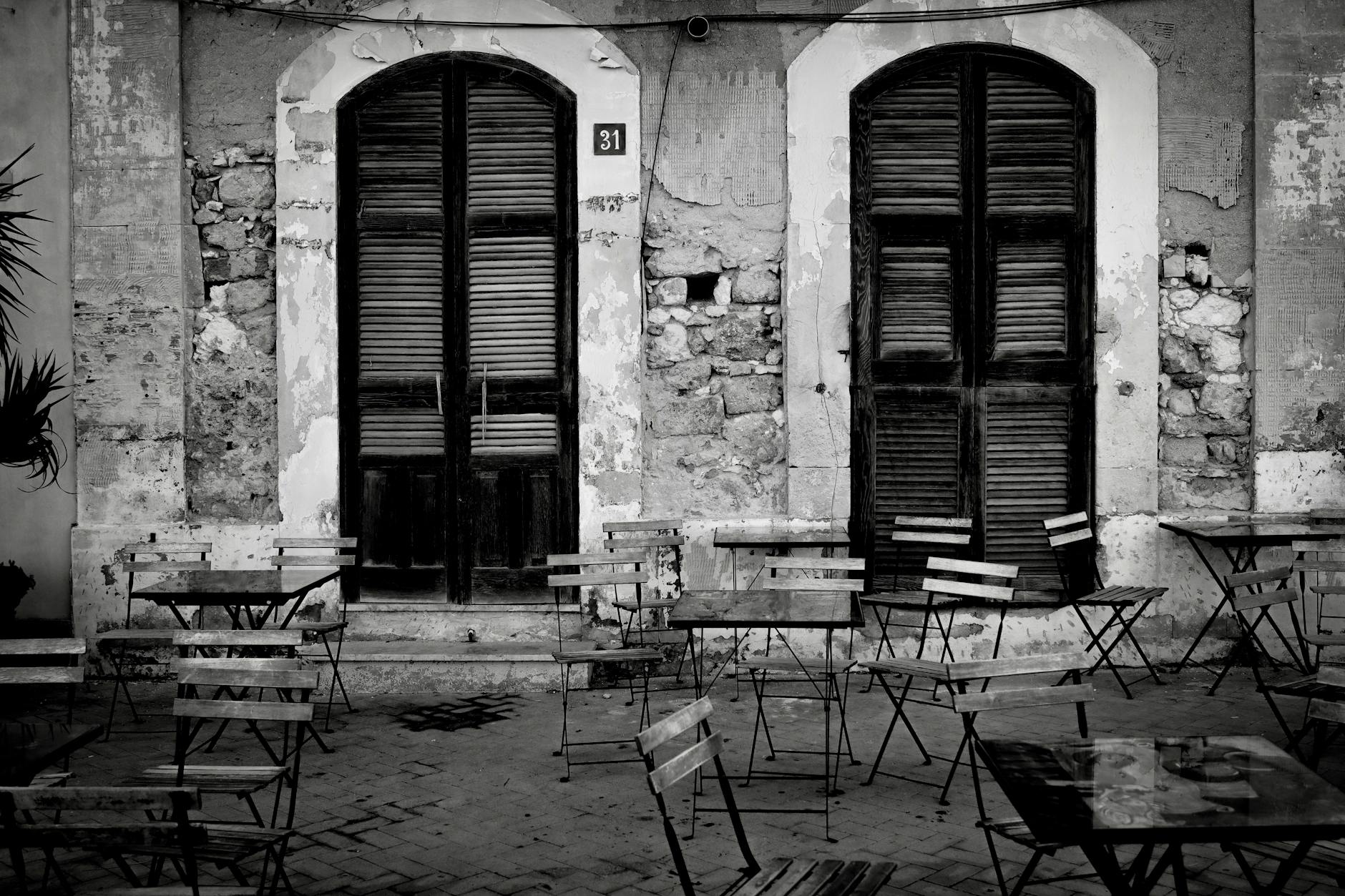
La Maison Volpé (1960): An abandoned place in London that doesn’t reveal its past, so the author imagines what it might have been and remembers other places that offer temptation, yet disappoint within. Of restaurants, food, lack of inspiration.
I have a feeling that when I remember London and the time I have spent here, those syllables will echo in my ear, and all London will be summed up for me in that Parisian name.
Human Relationships
Portrait of a Friend (1957) is a beautiful, sad, reflection and honour to their friend from Turin, the poet and translator Cesare Pavese, who took his own life in 1950.
And now it occurs to us that our city resembles the friend whom we have lost and who loved it; it is, as he was, industrious, stamped with a frown of stubborn, feverish activity; and it is simultaneously listless and inclined to spend its time idly dreaming. Wherever we go in the city that resembles him we feel that our friend lives again; on every corner and at every turning it seems that we could see his tall figure in its dark half-belted coat, his face hidden by the collar, his hat pulled down over his eyes.
He and I (1962): to me this reads as a portrait of an ill-fitted relationship. A collection of characteristics of two opposite people that shows their interests and lack of, and how they manage them. She relents, he insists. He travels, she follows. He gets what he wants, she compromises. A singular memory of a conversation long ago. An ironic portrayal of a second marriage that leaves a bitter taste.
My tidiness and untidiness are full of complicated feelings of regret and sadness. His untidiness is triumphant.
On Writing
My Vocation Contemplating “writing” as the one thing she is truly good at, she recalls how it developed from childhood observations and the earliest stories. The lack inherent in being happy when it comes to writing, how suffering brand mood affect the process. A contempt for the vocation when children enter her life, then the carving out of space and place for it. Transition from wanting to write like a man, the vocation as cruel master, one that has no sympathy.
My vocation has always rejected me, it does not want to know about me. Because this vocation is never a consolation or a way of passing the time. It is not a companion.
The Little Virtues (1960)
“As far as the education of children is concerned I think they should be taught not the little virtues but the great ones. Not thrift but generosity and an indifference to money; not caution but courage and a contempt for danger; not shrewdness but frankness and a love of truth; not tact but love for one’s neighbor and self-denial; not a desire for success but a desire to be and to know.”

This is how the essay opens and in it she takes on the little virtues and the great virtues and the effect of authoritarian parenting on the next generation of parents, the relationship to money that causes scarcity consciousness, an invitation to indifference, reward and punishment, homework and daydreaming, resisting hope and embracing what is, a balance between silence and words.
“And if we ourselves have a vocation, if we have not betrayed it, if over the years we have continued to love it, to serve it passionately, we are able to keep all sense of ownership out of our love for our children. But if on the other hand we do not have a vocation, or if we have abandoned it or betrayed it out of cynicism or a fear of life, or because of mistaken parental love, or because of some little virtue that exists within us, then we cling to our children as a shipwrecked mariner clings to a tree trunk.”
Overall, it is a remarkable collection that drops in on these passages of time throughout those two decades, showing us a little of how life was, what perceptions were held and charting the growth of an extraordinary writer who thought herself most ordinary.
Further Reading
My reviews of the novels The Dry Heart (1947), Valentino (1957), Sagittarius (1957).
Jacqui’s Review of The Little Virtues
Reading Women In Translation
August is the annual Women in Translation month, and I have one more novel by Natalia Ginzburg on my shelf, All Our Yesterdays, which I hope to read then.
Do you have a favourite Natalia Ginzburg or any sitting unread on your shelf to read in August? Let us know in the comments below.
 Word by Word
Natalia Ginzburg has been on my ‘must-read’ list for an age. This post may have got me finally to take a grip and do something about it.
LikeLiked by 1 person
It’s #WITMonth, jump in and try a Natalia Ginzburg, I’d recommend a novel to start with, maybe The Dry Heart or Valentino.
LikeLiked by 1 person
I’ll certanly give it a go, but reading ANYTHING just now is a challenge: grandchildren here!
LikeLiked by 1 person
Yes, my favourites is All our Yesterdays, sitting waiting for you on your shelf.
LikeLiked by 1 person
I’m so looking forward to it!
LikeLike
Thank you for this great review
LikeLiked by 1 person
Always a pleasure. Thank you for reading, it was a long one, but all necessary!
LikeLike
I like what she says about the education of children. Schools are all about teaching values, and yet (here in Australia, at least), it’s often the ‘little’ values that make it into the marketing for private and religious schools.
LikeLiked by 1 person
So true Lisa.
LikeLike
Thanks for the recommendation, it’s on my reading list now.
LikeLiked by 1 person
I hope you get to read one of Natalia Ginzburg’s books soon.
LikeLike
Oh this sounds fab. I’d love to read the essay about Cesare Pavese as I’ve read a couple of his novels in recent years and found them beautiful, thought provoking stories.
As to my favourite Ginzburg book, I’ve read four (so far) and think Valentino is the one I enjoyed most.
LikeLiked by 1 person
Oh what works of Pavese have you read? His story is so sad, no doubt
contributing to his talent.
LikeLike
The House on the Hill, which is a fascinating account of a school teacher who socialises with partisans but is too lazy/self interested to join their cause, and The Beautiful Summer, about a teenage girl who is charmed by a group of bohemians. I loved both of them.
LikeLike
I’ve read quite a lot of Ginzburg’s fiction but must get round to reading this. I loved All Our Yesterdays – in fact, it might be my favourite of hers.
LikeLike
I’m so happy I have that one to read this summer.
LikeLike
I haven’t read this one yet, so far I’ve read the same three as you, and I love her direct style which comes across so clearly in your quotes ,from The Little Virtues especially.
LikeLiked by 1 person
I’ve really enjoyed her novels and the autobiography which was unique, these essays are all the better I think for understanding a little of the context of her life and those in it though her perspective on London must be taken with a grain of salt 🙂
LikeLiked by 1 person
I loved ‘The Little Virtues” and I agree with you re: how the essays bring context to her life. I’m a fan of Ginzburg’s novels as well, especially ‘Happiness as Such.’
LikeLiked by 1 person
I believe you were one of the first people to champion Natalia Ginzburg to me Deborah, I remember that quite distinctly, it was before Daunt Books started publishing her in the UK. I’m happy I still have more to read, including this one you mention.
LikeLike
As a curious aside, it was a teacher of Italian literature who read my short story collection and suggested I read “The Little Virtues,” particularly because of the essay, “Worn-Out Shoes.” So it goes with symbols and metaphors in both fiction and nonfiction. “Valentino and Sagittarius” is next in my Ginsburg TBR.
LikeLiked by 1 person
Great review, Claire – it brings these insightful essays rushing right back! Thanks again for linking to my review of this one, so kind of you, and apologies for my last reply. It’s been a challenging few weeks, but I think I’ve got to the bottom of my eye problems now, which is a big relief – for now, at least.
It’s so interesting to read what you’ve said about these essays revealing more of Ginzburg’s character than her autobiographical novel, Family Lexicon. Funnily enough, FM is the only Ginzburg in translation I’ve yet to read. (In a way, I’ve been saving it till last as it seems so highly regarded, but maybe I need to go in with more measured expectations, given your comments.)
I found the opening essays in this collection very poignant. As you say, her husband’s internment and subsequent death during WW2 provide crucial context…
LikeLike
I’m so glad to hear that good news about your eye problems Jacqui, long may they continue to improve and heal, and know that no one expects quick replies, well not me anyone, I remove that pressure from myself too.
Oh you must read Family Lexicon, it’s so interesting and very different to her other work. She worked so hard at her writing, a real labour and I enjoyed the additional insights we get from these essays, which focus more on her character and opinions and the company she kept.
LikeLike