
A Poet Writing Nature Essays
Kathleen Jamie is a poet and writer of creative nonfiction about nature. She has written three wonderful collections that I have adored. Findings (2005), my favourite, included essays about the Hebridean and Orkney Islands near her home in Fife and Peregrines nesting; Sightlines (2012) covers a fascinating archaeological dig, tales of more birds on lonely, windswept islands and a visit to the Arctic and finally Surfacing (2019) which I review here in Surfacing 1 and Surfacing 2.
Making Ripples at 60

In Cairn, we find a collection of writings, fragments, observations and memories. Sometimes an individual observation and other times a collective witnessing of changes in the local environment. Of migratory patterns disrupted, of things once common on the horizon, now departed.
As she arrives at her 60th year, she begins to ask different questions, about the next generation and the one after that, if there will indeed be one as children question whether to bring another generation into this vastly changing world.
There is less a note of wonder and more a tone of trepidation at the precarious situation of the natural world and those being born into what will continue after we have left.
The Bass Rock and Bird Flu
It’s a while since we could turn to the natural world for reassurance, since we could map our individual lives against the eternal cycles of the seasons, our griefs against the consolation of birds, the hills. Instead there’s the sense that things are breaking, cracking like a parched field. There they are, the seabird people, among their beloved birds at the height of the breeding season, wearing hazmat suits as they pile corpses into bin bags.

Like a cairn, these short prose pieces are markers, memories, memorials or perhaps even metaphorical or literary burial mounds, tracking the thoughts and observations of an observer over the years of the natural environment, of change in both the natural surroundings and humanity. Testimonies.
‘Stones propose another sense of time, whereby the past, the deep past of the plant, proffers a meagre yet massive support to acts of human resistance…’ John Berger
A thought-provoking collection.
Further Reading
The Guardian: Cairn by Kathleen Jamie review – a wry SOS for the world
The Caught by the River Book of the Month: July 2024 Cairn by Kathleen Jamie – With its bursts of beautiful brilliance, it is something akin to lightning, writes Annie Worsley
The Guardian: Scotland’s Bass Rock: world’s largest colony of northern gannets – in pictures
Author, Kathleen Jamie
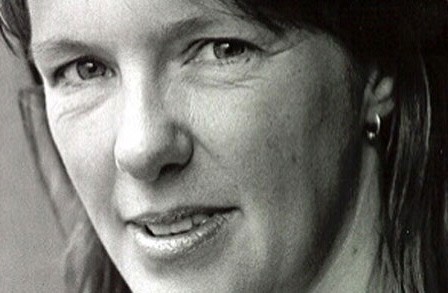
Kathleen Jamie is one of Britain’s foremost writers. In 2021 she was appointed Makar, Scotland’s national poet.
Jamie resists being identified solely as a Scottish poet, a woman writer, or a nature poet. Instead, she aims for her poetry to “provide a sort of connective tissue”. Influenced by Seamus Heaney, Elizabeth Bishop, John Clare, and Annie Dillard, Jamie writes musical poems that attend to the intersection of landscape, history, gender, and language.
Her groundbreaking works of prose – Findings (2005), Sightlines (2012) and Surfacing (2019) – are considered pioneers and exemplars of new nature writing. She lives in Fife.
 Word by Word
I’ve read Jamie’s three previous collections (my personal favourite is Sightlines) and will read this, although I gather from reading a number of reviews of it that it’s more fragmentary than the others, which doesn’t appeal as much (I love a long essay!)
LikeLiked by 1 person
Yes, it is not at all like her trio of essay collections, which I prefer and have stayed with me longer than I think these fragments will.
LikeLiked by 1 person
It’s dreadful to confess, but I don’t really get on too well with Jamie. I think I don’t really take the time to let her get under my skin. Must Try Harder.
LikeLiked by 1 person
I think I have valued her work most in the depth of winter, when her images of old ways on islands and bird sightings are easier to immerse in, than other times of the year when there needs to be more going on in my reading than a poets view of ancient rock colonies.
LikeLiked by 1 person
Fair point! Mind you, it’s winter here in England now …
LikeLiked by 1 person
Oh dear yes, but not real, cosy, inviting winter, this one is the unwelcome interloper surely. 🌧️
LikeLiked by 1 person
You bet.
LikeLike
I keep meaning to pick up one of Kathleen Jamie’s books as I know you’re a big fan of her work. She sounds like a very thoughtful writer, always observing, always reflecting. I recently turned 60 myself, so Cairn might be a good place for me to start. Beautiful review as ever, Claire. Thank you for this.
LikeLiked by 1 person
I think her practice as a poet with words combined with her patience in deep observation of nature and interest in the origin of things shines through Jacqui. I think Findings is probably my favourite, perhaps for my own first encounter with her work and the quiet voyage she takes the reader on, to places where little happens, but so much has already passed.
LikeLike