
 This novel La Tresse by Laetitia Colombani was a birthday gift from a friend, at the time I was given it, it wasn’t available in English, however it has since been translated and published in 2019, available under the title The Braid.
It tells the stories of three women living different lives in three countries, each facing a monumental change, each determined to confront that change in their own way, once they overcome the obstacle that stands in their way, and the discrimination that exists in their society, that causes some not to support their efforts.
It’s written in simple language and has the air of a story being told, almost one I can imagine listening to, or watching on film, rather than being lived in the moment.
There is little description, little of the mundane, there is a superficiality to it – almost fable-like, they don’t seem like real lives, there’s an element of cliché in what they each represent. There is a symmetry to the stories, a correlation that creeps up on the reader as we become aware of the pattern that makes these three situations similar and the ‘tresse’ that will create a connection between them.
India – we meet Smita, a young mother from the lowest caste, who is determined that her daughter will not follow in her footsteps, in the disgusting job she and her mother before her have had to do, she has a plan to enable her daughter to obtain an education, that confronts the expectations of her caste.
Sicilie – Guilia left school at 16 to work in her father’s atelier, as he lies unconscious in hospital she discovers he was hiding something from them and it is she who must save the day – through an arranged marriage as her mother suggests – or by stepping up and being courageous, helped by an outsider the community doesn’t accept.
Canada – Sarah is an ambitious lawyer and mother, her private life exists behind a wall of her own making, one she attributes her success to, a wall that comes crumbling down when an illness breaks through it and exposes her.
All three women take on their respective challenges despite the discrimination and obstacles and each will find solace in something unexpected.
 I hesitated to read this for some time, just because it was in French, but I was pleasantly surprised by how easy it was to read and how little I had to look up new vocabulary. I enjoyed it when I did as I discovered new words and scribbled them in pencil in the margins. And then how I come across those words in the external world, resulting in me thinking I really would enjoy to read more of these works that are available in French but not yet in English.
Despite the satisfactory linguistic journey, I’m not sure it is a book I would have picked up normally. It touches on subjects that warrant further exploration, that are a little too conveniently side-stepped or imagined to be easily resolved, which left a quiet discomfort in accepting the outcomes proposed. The author chooses not to delve into the significant issues raised and instead provides this three pronged tale that ties things up a little too neatly at the end.
Any one of these stories could have been developed, their issues explored to raise awareness and encourage discussion; ignoring them feels like a mild form of cultural appropriation. I tried to find out whether the author had a personal connection to any one of the cultures she uses in the novel, but apart from visiting the countries, there doesn’t appear to be.
Yesterday I was in Marseille and visited a number of fabulous exhibitions in the MuCem (Museum of Civilisations of Europe and the Mediterranean) and was inspired by what I encountered there to wish to read more French books, like Frères Migrants by Patrick Chamoiseau, La pesanteur et la grâce by Simone Weil though they may challenge my comprehension. It is a city with a rich history and a wonderful cultural offering that I shall explore more. Perhaps I may try to share some of that here.
Buy a Copy of Laetitia Colombani’s book in French or English
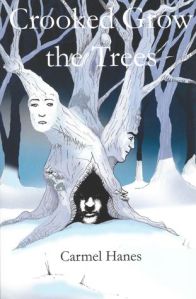 Crooked Grow the Trees is an engaging, insightful and well-informed read that I remain in awe of since I finished reading it. I bought it not long after an online group conversation on Goodreads with Carmel Hanes about Bernice L. McFadden’s

 It’s a captivating read, enriched by experience that succeeds in presenting multiple moral viewpoints, forcing the reader to indulge and reflect on all perspectives and attitudes in the various conflicts. The conversations with each of the boys and the situations they respond to are brilliantly depicted, the dilemma feels real, the reader desperately wants them to succeed in being transformed.
 Jokha Alharthi, the first female Omani novelist to be translated into English, is the first author from the Arabian Gulf to win the prize. A Professor with a PhD in Classical Arabic Poetry, she is author of two other novels, two collections of short fiction and a children’s book, her work has been published in English, German, Italian, Korean, and Serbian. An award-winning author, she has been shortlisted for the Sahikh Zayed Award for Young Writers and won the 2010 Best Omani Novel Award for Celestial Bodies.
 A reader picking up this book will be absolutely entranced by this new world of human experience that it opens up. This books tells us about the extreme complexity of the emotional relationships that we have and our engagement with history. We were very impressed by the subtlety of the style and the depth of the writing, its intellectual reach. But also its ability to flex moral muscle. It is a precise and also lyrical translation, and it brings in the music of everyday speech and the music of the poetry that it draws in. The extraordinary thing about this book is it talks of a world in transition, philosophically, politically, intellectually, socially, and that is the age that we live in now.
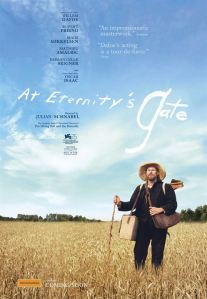 “In his letters to his brother Theo, he said drawing helped him combat his depression. He knew, as we do, that working en plein air, we are able to capture light and images more quickly and from that create our interpretation.”
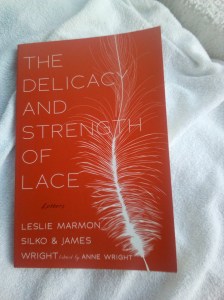 Letters Between Poets
 Leslie Marmon Silko is a poet, essaysit and novelist. James Wright won the Pulitzer Prize in 1972 for his “Collected Poems.” Above the River: The Complete Poems appeared more than a decade after his death.
 Having recently read Leslie Marmon Silko’s memoir
  A book that needs no introduction, a woman unanimously loved from where I sit and yet one who was exposed to the full spectrum of opinions about her, requiring an inordinate amount of resilience. Interestingly, there had not been universal admiration for her by some prior to reading the book, a reflection of how much influence the media has on our perceptions of people, both positive and negative.
 But what a sacrifice really, despite the perception of it being glamorous and of course privileged. What a relief to get some semblance of a life back, I hope so anyway. Their celebrity status will likely never change, but as she shares in the opening pages, she is at least able to do some things unobserved, to open a window, listen to birdsong and dogs barking, feel more like a human being again.
 The Silence of the Girls by Pat Barker
 My Sister, the Serial Killer by Oyinkan Braithwaite
 Milkman by Anna Burns
 Ordinary People by Diana Evans
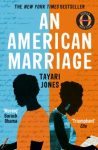 An American Marriage by Tayari Jones
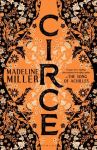 Circe by Madeline Miller
 Word by Word