
 Today the short list was announced for the woman’s prize for fiction. From the longlist of 13 books, six books have been chosen.
The Chair of Judges Sarah Sands had this to say:
“The shortlist was chosen without fear or favour. We lost some big names, with regret, but narrowed down the list to the books which spoke most directly and truthfully to the judges. The themes of the shortlist have both contemporary and lasting resonance encompassing the birth of the internet, race, sexual violence, grief, oh and mermaids. Some of the authors are young, half by Brits and all are blazingly good and brave writers.”
I’ve actually read and reviewed three of the six chosen titles, all of which I really enjoyed, and I would like to read Sight and The Mermaid, so overall I think it’s an impressive list, even though the prize completely ignored the outstanding novel Kintu by Jennifer Nansubuga Makumbi.
The shortlist is as follows, beginning with the three I’ve read, then the two I’d like to, all six revealed here in biscuit form, made by @BiscuiteersLtd :

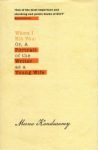 Meena Kandasamy, When I Hit You: Or, A Portrait of the Writer as a Young Wife – my review here
- a literary artwork, a portrait of a writer suffering in a four-month marriage, surviving through writing, her imagination and now looking back and turning what could have destroyed her into a blazing, unforgettable novel.
 Kamila Shamsie, Home Fire – my review here
- a heartbreaking tragic work, a modern retelling of Sophocles’ 5th century BC play Antigone, an exploration of the conflict between those who affirm the individual’s human rights and those who protect the state’s security, set in London, told through an immigrant family struggling to distance themselves from the patterns of their ancestral past.
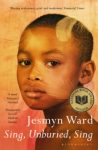 Jesmyn Ward, Sing, Unburied, Sing – my review here
- narrated from three points of view, 13-year-old Jojo, his mother Leonie and the spectre of a young man Richie, it’s a coming-of-age story about surviving a dysfunctional family, haunted by the past, and spirits that won’t rest.
 Imogen Hermes Gowar, The Mermaid and Mrs Hancock
- Historical fiction with a splash of magic realism, a merchant and a celebrity courtesan brought together by the arrival of a mermaid in Georgian London, 1785 – a debut novel inspired by a “real mermaid” in the British Museum.
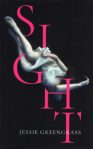
Jessie Greengrass, Sight
- a woman recounts her progress to motherhood, remembering the death of her mother, and the childhood summers she spent with her psychoanalyst grandmother – alongside events in medical history – emerging into a realisation.

Elif Batuman, The Idiot
- a campus novel, reflecting on how culture and language shape who we are, how difficult it is to be a writer, and how baffling love is.
***
Of the three I’ve read, I think Meena Kandasamy’s stood out the most for me, in particular because I initially avoided it, and then was blown away by how the subject was so uniquely and adeptly handled. It’s a form of autobiographical fiction, some debating whether it is indeed a novel, being based in part on the author’s life.
So what do you think of the list, do you have a favourite, or one you really want to read?
 Described as The Turkish Raid or Tyrkjaránið, the inspiration for the novel is based on the invasion of Iceland in 1627 by pirates from Algeria and Morocco, also known as Barbary pirates (a reference to the Barbary coast, a term used by Europeans in the 16th century, referring to the coastal aspect of the collective lands of the Berber people of North Africa). They were lead by the ambitious and cunning Dutch captain Jan Janszoon van Haarlem, commonly known as Murat Reis the Younger, himself captured and “turned Turk”.
 The Sealwoman’s Gift follows one family, Ólafur the local pastor, his relatively younger wife Asta and two of their children, all of whom are abducted, the mother due to give birth, which she does on the ship. Initially Ólafur is herded onto a different ship, perhaps due to his advanced age, however he manages to fight his way to his wife and children, allowed to do so while others are struck down for such defiance, when his ability to calm the captives is noted by the Captain.
 Overall, this story provides a thrilling depiction of the terror of a pirate invasion that changed the lives of 400 islanders from Iceland, their journey across seas to Algiers, the slave markets and fates of those who survived, their children and an imagining of how they may have coped as they watched their youth grow up and become part of another culture and way of life, while older Icelanders struggled with what they retained within them of their past and the changes that would envelope them in the years that followed, in a strange new land, one that despite their suffering, also offered opportunities they would never have encountered at home.
 Word by Word