Leila Aboulela awarded PEN Pinter Prize 2025

Freedom to Write, Freedom to Read

Leila Aboulela winner of English Pen Prize 2025

Leila Aboulela, the Sudanese author who now lives in Scotland has won the English PEN Award 2025, a prize established in homage to Harold Pinter, the British playwright, screenwriter, director and actor and the 2005 Nobel Laureate for Literature:

“who in his plays uncovers the precipice under everyday prattle and forces entry into oppression’s closed rooms”

Judges praised Aboulela, the author of six novels, for her ‘nuanced and rich perspectives on themes that are vital in our contemporary world: faith, migration, and displacement’, calling her writing ‘a balm, a shelter, and an inspiration’.

The author responded:

‘I am honoured to win a prize established in memory of Harold Pinter, a great writer who continues to inspire so much loyalty and consistent high regard. For someone like me, a Muslim Sudanese immigrant who writes from a religious perspective probing the limits of secular tolerance, this recognition feels truly significant. It brings expansion and depth to the meaning of freedom of expression and whose stories get heard.’

One of the judges, novelist Nadifa Mohamed added:

Leila Aboulela is an important voice in literature, and in a career spanning more than three decades her work has had a unique place in examining the interior lives of migrants who chose to settle in Britain. In novels, short stories and radio plays she has navigated the global and local, the political with the spiritual, and the nostalgia for a past home with the concurrent curiosity and desire for survival in a new one. Aboulela’s work is marked by a commitment to make the lives and decisions of Muslim women central to her fiction, and to examine their struggles and pleasures with dignity. In a world seemingly on fire, and with immense suffering unmarked and little mourned in Sudan, Gaza, and beyond, her writing is a balm, a shelter, and an inspiration.’

The prize is awarded annually to writers resident in the UK, Ireland, the Commonwealth or the former Commonwealth. 

Former winners of the PEN Pinter Prize are Arundhati Roy (2024), Michael Rosen (2023), Malorie Blackman (2022), Tsitsi Dangarembga (2021), Linton Kwesi Johnson (2020), Lemn Sissay (2019), Chimamanda Ngozie Adichie (2018), Michael Longley (2017), Margaret Atwood (2016), James Fenton (2015), Salman Rushdie (2014), Tom Stoppard (2013), Carol Ann Duffy (2012), David Hare (2011), Hanif Kureishi (2010) and Tony Harrison (2009).

Three Novels By Leila Aboulela I Recommend

Bird Summons (2019)

Bird Summons is an excellent novel about three Muslim immigrant women living in Scotland, from different countries, who set off on a short holiday in the Scottish Highlands, to pay homage to Lady Evelyn Murray Cobbold, the first British woman convert to Islam who performed Hajj, the spiritual pilgrimage to Mecca.

Taken further outside of their comfort zones, the trip is a kind of reckoning for each of the women, a little like a road trip novel, they are stuck with each other, their forced isolation in the Highlands brings out the best and worst in each other and will leave them each transformed by the experience.

The Kindness of Enemies (2015)

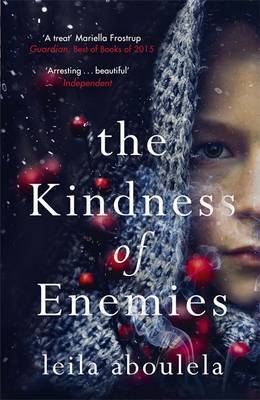
The Kindness of Enemies, is a dual narrative set in modern day Scotland and mid 1800’s Russia and the Caucasus. The contemporary character is Natasha Wilson (born to a Russian mother and Sudanese father, whose mother marries a Scot), a Scottish university lecturer whose research concerns the life of Caucasian Highlander, Shamil Imam.

The novel moves between the issues facing Natasha in her life, and the ancient conflict between Highlander mountain men lead by Shamil Imam as they resisted Tsarist Russia from expanding into their territory.

River Spirit (2023)

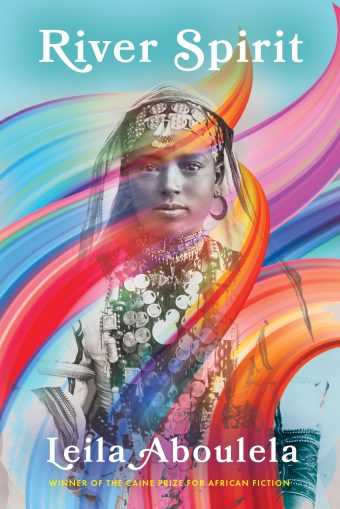
River Spirit is historical fiction set in 1890’s Sudan, at a turning point in the country’s history, as its population began to mount a challenge against the ruling Ottoman Empire, only the people were not united, due to the opposition leadership coming from a self-proclaimed “Mahdi” – a religious figure that many Muslims believe will appear at the end of time to spread justice and peace.

The novel tells the story of orphan siblings, Akuany and Bol, and their young merchant friend Yaseen, the friend of their father who made a promise to protect them, forever connecting them to his life. It is also a story of the Nile, of the White Nile and the Blue Nile, a symbol of twin selves, one free, one enslaved, of twin occupying forces, the Ottoman and British Empires and of the many aspects in the story where twin forces clash, mix and become something new.

Aboulela’s other novels are The Translator (1999), Minaret (2005), Lyrics Alley (2010) all three of which were longlisted for the Women’s Prize for Fiction (Orange Prize) and she has also published a short story collection Elsewhere, Home (2018).

Have you read any works by Leila Aboulela? Let us know in the comments below.

Photo by Gabriela Palai on Pexels.com

Further Reading

World Literature Today Interview: Writing as Spiritual Offering: A Conversation with Leila Aboulela by  Keija Parssinen

Guardian article: Leila Aboulela wins PEN Pinter prize for writing on migration and faith

JSTOR: Leila Aboulela and the Ideology of Muslim Immigrant Fiction by Waïl S. Hassan

Leila Aboulela, Author

Leila Aboulela grew up in Khartoum and has been living in Aberdeen since 1990. She is the author of six novels among them River SpiritThe TranslatorMinaret and Lyrics Alley, Fiction Winner of the Scottish Book Awards. Leila was the first ever winner of the Caine Prize for African Writing and her story collection, Elsewhere, Home won the Saltire Fiction Book of the Year Award.

Her books have been translated into fifteen languages, and she has also written numerous plays for BBC Radio. She is Honorary Professor of the WORD Centre at the University of Aberdeen and a Fellow of the Royal Society of Literature. 
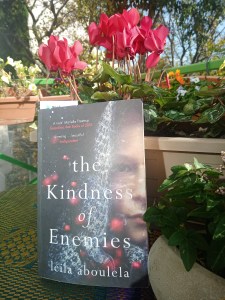
The Kindness of Enemies by Leila Aboulela (2015)

Earlier this year I read my first book by Leila Aboulela Bird Summons (2019), a wonderful novel about three immigrant women, born in different countries but living in Scotland, setting off on a holiday in the Highlands, to pay homage to Lady Evelyn Cobbold, the first British woman convert to Islam to perform the pilgrimage to Mecca.

I really enjoyed it for many reasons, confirming I wished to read more of her work, thus I chose The Kindness of Enemies as her next book to read, one I have had my eye on for some years, having refused to buy earlier because of the dreadful cover. That may sound whimsical, but I think that earlier cover does this book a great disservice, the way it turns readers away.

Being Muslim and an Academic in 21st century Scotland

Hadji Murad Tolstoy Leila AboulelaI was completely drawn into the dual narrative story and loved both parts of it, modern day Scotland and mid 1800’s Russia and the Caucasus.
The contemporary story centres around Natasha Wilson (born Natasha Hussein to a Russian mother and Sudanese father, themselves the product of a Russian university education, her name is changed when her mother marries a Scot). A university lecturer in Scotland, her research concerns the life of the Caucasian Highlander, Shamil Imam.

Natasha is friends with Malak, of Russian/Persian parentage; her son Oz, is in her class and they possess a historical artefact belonging to Shamil Imam, due to an ancestral connection. Natasha is in their home when Oz is arrested for downloading  materials related to jihad and she too comes under suspicion, her telephone and laptop seized.

“I was seeing in these awkward composites my own liminal self. The two sides of me that were slammed together against their will, that refused to mix. I was a failed hybrid, made up of unalloyed selves. My Russian mother who regretted marrying my Sudanese father. My African father who came to hate his white wife. My atheist mother who blotted out my Muslim heritage. My Arab father who gave me up to Europe without a fight. I was the freak. I had been told so and I had been taught so and I had chewed on this verdict to the extent that, no matter what, I could never purge myself of it entirely.”

Meanwhile, in Sudan, her father whom she hasn’t seen for 20 years is dying and there is pressure for her to go and see him, along with feelings of resentment and ill-will, demanding her to stand up for herself and her existence, a daughter of mixed heritage, living a life she has created for herself.

“It was an effort formulating this summary, explaining myself. I preferred the distant past, centuries that were over and done with, ghosts that posed no direct threat. History could be milked for this cause or that. We observed it always with hindsight, projecting onto it our modern convictions and anxieties.”

Being Muslim and a Caucasian Highlander in the 19th century

Interwoven between chapters of Natasha’s story, we are transported to the Caucasus territory in the 1850’s, to a period during the conflict between the Highlander mountain men lead by Shamil Imam who were resisting Tsarist Russia from expanding into their territory.

Shamil Imam, the Chieftan of Dagestan, led an armed resistance for thirty years, he appears in Leo Tolstoy’s classic posthumous novella Hadji Murad.  Through imagination and historical fact, Leila Aboulela enters his territory and home, bringing us a view from the spaces women and children inhabit, not just that of men, as Tolstoy does.

Caucasus Pricess Anna of Georgia kidnap

In earlier years, to settle a conflict, Shamil was only able to negotiate peace by surrendering his son Jamaleldin, who for the next ten years or so was raised as part of the Tsar’s family (as his godson). Now Shamil’s men have captured the  Russian Princess Anna (previously of Georgia – her grandfather Gregory XI, the last King of Georgia, ceded the territory to Russia), her French governess and two children Alexander and Lydia.

“Nothing has caused me so much pain as treachery. If the Russians would fight me honourably, I would not mind living the rest of my life in a state of war. But they tricked me; in Akhulgo they treated me like a criminal, not a warrior, and they sent my son far away to St Petersburg.”

The Kindness of Enemies follows these stories and although one carries the heavyweight magnitude of a well-known story of significant characters in history, the foreshadowing of it by a modern story, brings to light the many aspects of the past, whose threads might be seen as being current today.

Kindness and Empathy, Another Perspective

Much of the literature of the Caucasus in the literary imagination is told from the Russian perspective, by grand novelists like Tolstoy and Pushkin, whereas Leila Aboulela, by setting this historical period during the time of the Princess’s capture, takes us on that journey, re-imagining events that took place, understanding better the complicated and mixed sympathies of Princess Anna, a young mother, exploring her loss and how those eight months in captivity might have changed her.

The Kindness of Enemies Leila Aboulela The Queen's Gambit

Photo by Charlie Solorzano on Pexels.com

She also presents the perspective of young Jamaleldin in another light, how his childhood memories lie dormant yet present, his mixed feelings of the return, his strange and estranged reality of feeling part of himself belonging to both worlds, the Highlands and to St Petersburg.

There was a time when it had all been much simpler. He rescued from the wild, Nicholas the benevolent godfather. He the pet, Nicholas the mighty. He the puppet, Nicholas the conductor, the thrower of crumbs, the arranger of roles, the changer of destinies. Jamaleldin the chess piece, and now Shamil had changed the rules of the game.

In the contemporary world, Natasha experiences something of the same, born of culturally different parents, spending her childhood in one country, her adulthood in another. She must create her own sense of belonging, to find peace of mind somehow. Being neither one thing or the other, having no one place called home, hers, by necessity is a spiritual journey, determined by the need for the soul to find home, rather than body or mind.

“I said that I was not a good Muslim but that I was not a bad person. I said I had a brother that I wanted to keep in touch with. I said that I wanted to give up my share of the inheritance to him. Apart from my father’s Russian books and Russian keepsakes, I wanted nothing. I said that I did not come here today to fight over money or for the share of a house. I came so that I would not be an outcast, so that I would, even in a small way, faintly, marginally, tentatively, belong.”

Highly Recommended.

My Reviews of Interest

Bird Summons by Leila Aboulela

Zuleikha by Guzel Yakhina tr. Lisa Hayden

Eugene Onegin by Alexander Pushkin

There Once Lived A Girl Who Seduced Her Sister’s Husband, And He Hanged Himself, Love Stories by Ludmilla Petrushevskaya

Further Reading/Watching

Interview: Leila Aboulela Discusses The Kindness of Enemies The Arab Weekly

Review: For the Joy of Reading: The Kindness of Enemies by David Kenvyn

Documentary: Mountain Men and Holy Wars – film-maker Taran Davies traces the life and legacy of Shamil Imam

Article: Why do we Continue to Use the Word Caucasian? by Yolanda Moses, Professor of Anthropology