A Truce That is Not Peace by Miriam Toews

Life and Death So Far, A Search for Meaning

“…we might remember the dead without being haunted by them, give to our lives a coherence that is not ‘closure,’ and learn to live with our memories, our families, and ourselves amid a truce that is not peace.” – Christian Wiman

A truce that is not peace Life and Death So Far memoir by Miriam Toews

I’ve been tempted but never read any of Miriam Toews novels, so this might not be the best place to start, this being the first time she has written about her own life in non-fiction (Swing Low: A Life she wrote about her father in 2000). Hoever, I was intrigued and it was available to read on Netgalley so I jumped in to learn more about the source(s) of her inspiration.

While her novels are not autobiographies, they address the emotional, spiritual, and political terrain of her life – her Mennonite upbringing and their lack of voice, her family’s struggles with mental illness and the burden of communal silence. 

A Truce That Is Not Peace makes those long-standing concerns fully explicit, acknowledging the reality behind those themes in her novels, exploring the writing life, family tragedies and day to day obsessions with grace, humour and bite.

Fragments of Memory, Flashes of Reality

The memoir is written in a fragmented journal entry style, one that continued to visit and revisit a number of current obsessions and memories she kept going back to, things from the past that haunted her, her father and sister’s suicides, their long periods of silence, their incessant need to write, her conversations and the questions asked by a Jungian therapist, who she reassures each visit that she is not suicidal (having read that is the greatest fear therapists have of their clients), though it is all she talks about.

It then switches into current desires, a wind museum idea, how to negotiate getting her royalties back from her ex-husband, and repeated attempts to answer the question Why Do I Write?, as the Conversación Comité who invited her to respond to that question, in anticipation of participating in a conversation in Mexico City, keeps rejecting her submissions as being not altogether what they were looking for, while attempts to rewrite it have her dreaming about her Wind Museum.

Creativity, the Messiness and Musings of Lives

Various quotes, letters, emails, dreams, nightmares; musings and memories litter the text as the author grapples with what presents itself in her life, and then the words of others arrive as if to provide validation or a way to get to that truce she seeks.

“Punishment, perhaps, or some contagion of fate, finds her here, her hair shorn, both wrists wrapped, her eyes open, pondering the parable of perfect silence.” – Christian Wiman
Photo by Mat Brown on Pexels.com

The text is interrupted by grandchildren activities, worries about biting habits, by questions she asks her mother, by the antics of family gatherings, of things falling apart in the house, the river that runs beneath it, a skunk with distemper that keeps trying to return to the now renovated back deck and falling into the window well. A close encounter with a plane in a blizzard on a highway, all while trying to find a way to navigate this life, this ‘truce that is not peace’.

It reminded me of reading Terry Tempest Williams When Women Were Birds: Fifty-four Variations on Voice, another memoir that circles a writer’s many obsessions as she struggles to find a connection. Her list of things she wrote of were: Great Salt Lake, Mother, Bear River Bird Refuge, Family, Flood, Cancer, Division of Wildlife Resources, Mormon Church, subjects that resided within her, evolving and changing shape like a murmuration.

When Miriam Toews makes her list she writes: Wind Museum, Deranged Skunk, North-west quadrant with ex, Conversacion in Mexico City, Neighbours.

I found the style confusing at first, but then because she returns to the same subjects, I started seeing the pattern. She mixes heavy subjects with the mundane of everyday life, and shares pockets of humour and tenderness amid the pain. The presence of children and noise and problems that need to be dealt with keep them all grounded and present and observant, there is inspiration everywhere, even in the most mundane.

While it may have helped had I read her other work, it is not necessary.

“When I started writing, the work was an act of rebellion. An act of subversiveness. But also a philosophical one. The humor, the writing, the taking note of absurdity. A rebelliousness against life. That’s how Camus felt too. That it is absurd. That there is no meaning. That there’s no reason to this crazy place of pain and ridiculousness. And yet, it’s what we have. So let’s be in it.” Miriam Toews

Further Reading

The Yale Review: Shakespeare & Company interview Miriam Toews on how writing resembles loss, Adam Biles

The Guardian: ‘My sister, my God. It’s a visceral pain that never goes away’: Miriam Toews on a memoir of suicide and silence by Hannah Kingsley-Ma

Author, Miriam Toews

Miriam Toews is a Canadian novelist and writer born in 1964 in Steinbach, Manitoba, a small, conservative Mennonite town that profoundly shaped her life and work.

Toews is best known for her darkly comic, deeply compassionate novels that explore themes of Mennonite culture, female autonomy, family bonds, mental illness, and the struggle for personal freedom. Her internationally acclaimed books include A Complicated Kindness (2004), All My Puny Sorrows (2014), and Women Talking (2018), the last of which was adapted into an Oscar-nominated film.

Much of Toews’s writing is informed by her own experiences, including the suicides of her father and sister, and her complicated relationship with the Mennonite community in which she was raised. Her memoir, A Truce That Is Not Peace, addresses these influences directly. She lives in Toronto.

“The book is about my attempt to find connection, to really meet my sister, in the spaces between words, in the silence. And my inability to do that, my reluctance to go there. There’s just such a huge abyss between the pain of the feelings and the articulation of that pain, whether it’s manifested in silence or whether it’s manifested in writing a story. It’s that time in between. I think that’s where I can maybe meet her in my mind.” interview with Adam Biles, Shakespeare & Company, Paris

N.B. This book was an ARC kindly provided by the publisher, 4th estate, via NetGalley.

A Woman on the Edge of Time: A Son’s Search for His Mother by Jeremy Gavron

img_0485A Woman on the Edge of  Time is a memoir that reads like a mystery, as Jeremy Gavron, a journalist, interviews family, old school friends, neighbours and colleagues of his mother Hannah Gavron, whom he has little memory of.
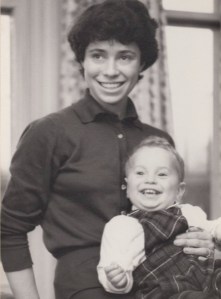
It documents his long-delayed search for a greater understanding of why she took her own life at 29 years of age, a married, working mother of two boys aged four and seven, living in Highgate, London.

It was 1965, she had been on the cusp of publishing a manuscript encapsulating the findings of her sociology research into the conflicts faced by young housebound mothers in North London, The Captive Wife. It was two years since another mother of two young children Sylvia Plath, had done the same thing.

Hannah Gavron was an out-going, confident child, an accomplished, confident teenager, popular and desirous of growing up. She wanted to do something with her life, to share her views with the world, but she also wanted freedom, to leave the constraints of family, to be in love, to claim her place in a rapidly changing society. She married at 18, went to RADA drama school for a year, quit, had two children, then realising her prospects were limited, went back to university to study sociology, attained a PhD and then a teaching post at the “iconic British art institute”, renowned for its experimental and progressive approach, Hornsey College of Art.

It seemed she had everything going for her, and yet at that tender age of 29, when her youngest son Jeremy, was 4 years old, she took her own life, shocking everyone around her.

Now the father of two girls himself, having previously just accepted the subject of his mother was a taboo subject never raised, he is seized by an urgency to know and understand the mystery, for how could it happen that a woman with so much going for her, two small children and a manuscript about to heighten her career, could suddenly end it all?

He interviews an extraordinary number of people and succeeds in recreating the jigsaw of Hannah’s life in incredible detail and begins to understand the multiple forces that may have played a part in leading up to that tragic decision.

As gripping as any mystery, it reads like a pageturner providing an interesting insight into the subject Hannah Gavron wrote her thesis about, ‘The Captive Wife’ and the struggle of women in the early 1960’s, a period just prior to the second wave of feminism, an era whose attitudes and dilemmas were encapsulated in Doris Lessing’s powerful account of a woman searching for her personal and political identity, The Golden Notebook, published in 1962.


Looking back from our own times, the subject seems an obvious one, still relevant today, but in 1960 it was neither obvious nor easy for her to get past her academic supervisors. For all the advances gained by the suffragette movement, and the opportunities the war had given woman to work and experience life beyond family,  the woman’s movement was in retreat in the 1950’s and early 1960’s. in the post-war period, emphasis had been put on the role of motherhood in rebuilding Britain. The Beveridge Report, the basis for social reforms, spoke of how ‘housewives as mothers have vital work to do in ensuring the adequate continuance of the British race and of British ideals in the world’.

A woman attempting to forge an academic career in sociology at the time and proposing studies which focused on women as the subject, was provocative and a gesture not ready to be accepted by many in power in academia.

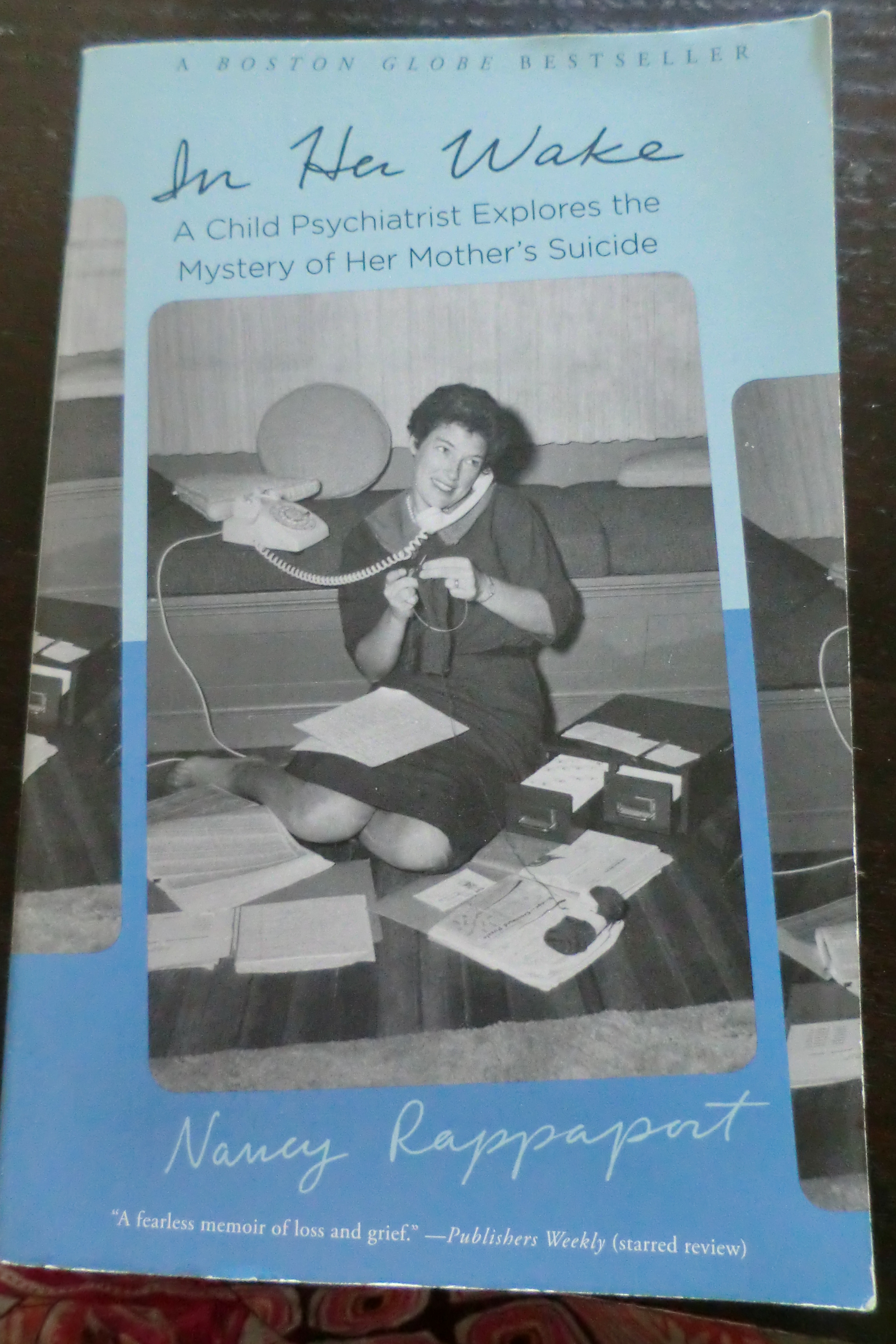
In Her Wake, Nancy Rappaport

In Her Wake, Nancy Rappaport

It reminded me of reading Nancy Rappaport’s In Her Wake: A Child Psychiatrist Explores the Mystery of Her Mother’s Suicide, she too was 4 years old when her mother, who was raising a large family as well as being involved in organising society events and political campaigning, suddenly committed suicide. That drama took place in 1963 in Boston.

They are tragic stories and serve to create a more substantial memory for the authors, piecing together the lives of these woman who should have been able to contribute so much more than they did.

It left me wondering about the author himself, as he keeps himself well out of the narrative, not shining any light on how it had been for him to grow up under this shadow, this absence. How was it for him to accept the love of another mother, how might this turning point have influenced who he would become. Rather he shines his light outward and builds an incredibly detailed vision of his mother, leaving just a hint of suggestion that within her, we may also finds parts of him.

Further Reading

The Guardian, Nov 2015 – Jeremy Gavron: ‘My mother was a woman who looked for solutions. Suicide was a solution’

The Guardian, Apr 2009 – ‘Tell the Boys I Loved Them’

Buy a Copy of A Woman on the Edge of Time Here


In Her Wake, Nancy Rappaport – exploring the mystery of a mother’s suicide #memoir

In 1963, Nancy Rappaport was 4 years old and the youngest of six children when her mother, an ambitious woman who balanced raising a large family, organising regular society events and political campaigning, committed suicide in the wake of a heart-wrenching custody battle.

Nancy now has three grown children of her own and has written this book both as a daughter needing to find answers and as a professional child psychiatrist, bringing together her education, experience, the wisdom of years and a compassionate perspective to narrate this compelling memoir of an extraordinary life whose end was sad and tragic.

From a childhood in which the nurturing love of a mother was ruptured so abruptly, through adolescence and early adulthood where the subject of her mother appears to have been taboo, it is extraordinary and something of a blessed gift that Nancy comes across a trunk of belongings that has virtually been in hiding or at best forgotten all these years. It is a credit to her father and stepmother that it wasn’t destroyed and so Nancy in her quest to know her mother better, gains access to lists, notes, notebooks, a journal and astonishingly, the manuscript of a complete novel. At last, she begins to gain a first-hand insight into who her mother really was, aside from all that had been written publicly and most importantly she begins to piece together how her mother was thinking in the time leading up to her death.

Rappaport follows leads like a master sleuth hesitating to question herself only briefly in pursuing her mother’s former lover, an estranged best friend and a former confidante of her grandmother, to unearth as much information surrounding the events of that period during her parents’ marriage and subsequent divorce. Little by little, she draws back the carefully drawn veil of secrecy, though not entirely without getting her fingers burnt.

It’s tempting to search for the villain and it could be said that each of the main characters in this true story are tried out and tested in that role, but none endure. Such is the faculty of being human, perhaps we all have the potential if pushed sufficiently but here we find few heroes or villains, just victims, bystanders and those trying to do their best under the circumstances.

It is a bold move to publish a family story when so many are touched by past events and family ties remain tenuous. Nancy suffers the expected consequences to a certain extent though she tries to navigate her way with compassion and empathy as much as she can. It’s a difficult and interesting topic, to write a version of the truth that recalls the faded memories of real life characters, while respecting those who wish to remain silent.

In my reading of this courageous memoir, some of the lessons come not from digging in the past or even from the professional perspective, but from Nancy’s own children, who are a constant reminder of the present that we live in and the role and responsibility of a mother to her children, doing her best, learning as she goes, loving them above all so that they have the best chance to be loving, caring and successful people themselves and that no matter what anyone says or does or whatever the circumstances, a mother will maintain that role whether she is fulltime, part time, at a distance or just a faded memory.