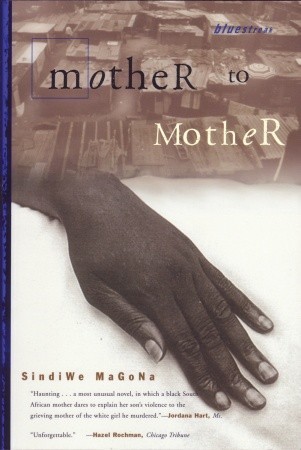
Mother to Mother by Sindiwe Magona

Mother to Mother is the second novel in my reading about the complexity of motherhood from three different perspectives, from within London’s Caribbean diaspora in The Mother by Yvvette Edwards, apartheid-era South Africa in Mother to Mother, and contemporary Black America in Brit Bennett’s The Mothers.

Making Sense of a Tragedy
 Sindiwe Magona decided to write this novel when she discovered that Fulbright Scholar Amy Biehl, who was set upon and killed by a mob of black youth in August 1993, died just a few yards away from her own permanent residence in Guguletu, Capetown.

She then learned that one of the boys held responsible for the killing was in fact her neighbor’s son. Magona began to imagine how easily it might have been her own son caught up in the wave of violence that day.

The outpouring of grief, outrage, and support for the Biehl family was unprecedented in the history of the country. Amy, a white American, had gone to South Africa to help black people prepare for the country’s first truly democratic elections. Ironically, therefore, those who killed her were precisely the people for whom, by all subsequent accounts, she held a huge compassion, understanding the deprivations they had suffered.

Mother to Mother, A Novel

When there are tragedies such as what happened here, usually and rightly, a lot is heard about the world of the victim, their family, friends, achievements and aspirations. The Biehl case was no exception.
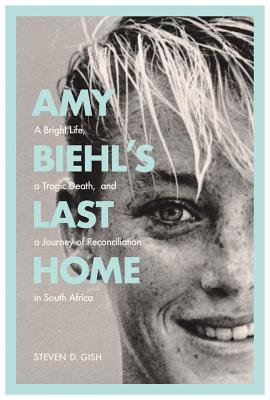
Amy Biehl’s Last Home: A Bright Life, a Tragic Death, and a Journey of Reconciliation in South Africa by Steven D. Gish

Sindiwe Magona reflects and asks; are there no lessons to be had from knowing something of that other world, the opposite environments to those that grow and nurture the likes of Amy Biehl; to grow up under the legacy of apartheid, a society where you were born a second-class citizen, a system that relegated black people to the periphery and treated them as sub-human.

What was the world of this young woman’s killers, the world of those, young as she was young, whose environment failed to nurture them to the higher ideals of humanity and who, instead, became lost creatures of malice and destruction?

In reality, there were four young men, in the novel there is just one. Through the mother’s narrative of her life raising her children in this oppressive environment, through her memories, we come to understand a number of factors that contributed to the continuing dehumanisation of a population that became more and agitated as the little they had was taken from them, destroyed, bulldozed over and opportunities few and far between and one race of privileged people responsible.

Mandisa’s Lament

Mandisa, bewildered and grief-stricken, on learning the news of her son’s involvement in this terrible tragedy, mines her memory and reflects on the life her son has lived, that brought them to this moment. In looking for answers she paints a vision of her son and his world, the world she has inhabited and done her best to navigate and lead her children through, as if in conversation with that other mother, the one who has lost a daughter, forever.

Forced Removals

What began as a rumour, that the government was going to forcibly remove all Africans from numerous settlements to a common area set aside for them all was initially laughed off, not believed. Everyone talked about it, but not with concern, it was impossible.

There were so many of us in Blouvlei, a tin-shack location where I grew up, Millions and millions. Where would the government start? Who could believe such a thing?

The sea of tin shacks lying lazily in the flats, surrounded by gentle white hills, sandy hills dotted with scrub, gave us (all of us, parents and children alike) such a fantastic feeling of security we could not conceive of its ever ceasing to exist. This, convinced of the inviolability offered by our tremendous numbers, the size of our settlement, the belief that our dwelling places, our homes, and our burial places were sacred, we laughed at the absurdity of the rumour.
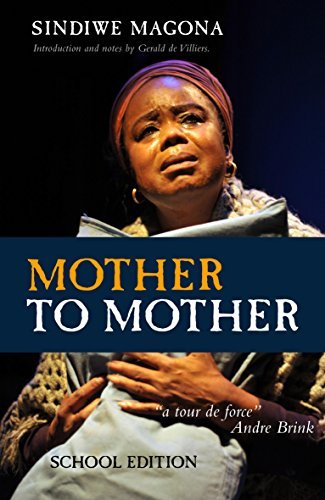
Mother to Mother by Sindiwe Magona "a tour de force" Andre Brink

But the government was not laughing. When the rumour paled and was all but forgotten, one day if returned with a deafening roar, as an aeroplane dropped flyers warning them all of the impending deadline, that they would be forcibly removed. To Guguletu.

A grey, unending mass of squatting structures. Ugly. Impersonal. Cold to the eye. Most with their doors closed. Afraid.

Oppressed by all that surrounds them…by all that is stuffed into them…by the very manner of their conception. And, in turn, pressing down hard on those whom, shameless pretence stated, they were to protect and shelter.

Segregation was enforced and black people were removed from their settlements, from suburbs where only white people would now live, pushed into a place and among people they did not know, in challenging conditions and the need to find work.

On A Dark Day, Resentments Build

The narrative is written in two timelines, the day of the protest, when Mandisa is sent home early from her job as a cleaner in a white woman’s home, due to the unrest – interspersed with memories of how their lives came to arrive at this point. She waits and waits for her son to come home and becomes increasingly concerned at his lack of appearance.

10.05 PM – Wednesday 25 August 1993

…where was Mxolisi? Not for the first time, I asked myself what it was that made him so different from the other two children… What had made Mxolisi stop confiding in me? And when had that wall of silence sprung between us? I couldn’t remember. He used to tell me everything…and then, one day I woke up to find I knew almost nothing about his activities or his friends.

As the family circumstances are shared and the life of this mother is revealed, I am reminded of the two autobiographies I have read, of the similarly challenging life and raising of her own children the author in similar circumstances. Although this is fiction, there is resemblance to her own circumstances, no doubt the reason why she understands this could so easily have been any one of those mothers in their neighbourhood.

The story leads up to the actual event, to what occurred on that day, the clash, the terrible crossing of paths, of being in the wrong pace at the wrong time, the burning hatred of an oppressor, the innocent face of one who looked like them, the dark desire of a race seeking revenge, the deep resentment of decades expressing itself in rage.

My son, the blind but sharpened arrow of the wrath of his race.

Your daughter, the sacrifice of hers. Blindly chosen. Flung towards her sad fate by fortune’s cruellest slings.

It is a courageous attempt to present a community in the grip of violent rage, to allow the voice of a mother to speak and share the growth of a family, the intense pain of all touched by a tragedy, to consider a path of redemption, to learn something from it. There may not be any conclusions, but perhaps we are all, all the better for being open to listen to the mothers, to find empathy for people doing the best they can in challenging circumstances. A thought provoking, powerful read.

Restorative Justice

In a final end piece to the story of Amy Biehl, after four men were convicted and given 18 -year prison sentences, there was in July 1987, an appearance before the Truth and Reconciliation Commission’s amnesty committee to argue for their release from prison, due to the politically motivated nature of the crime.

The parents, the Biehl’s attended the trial and shook hands with the parents of all four men. They understood the context of the South African struggle better than many South Africans.
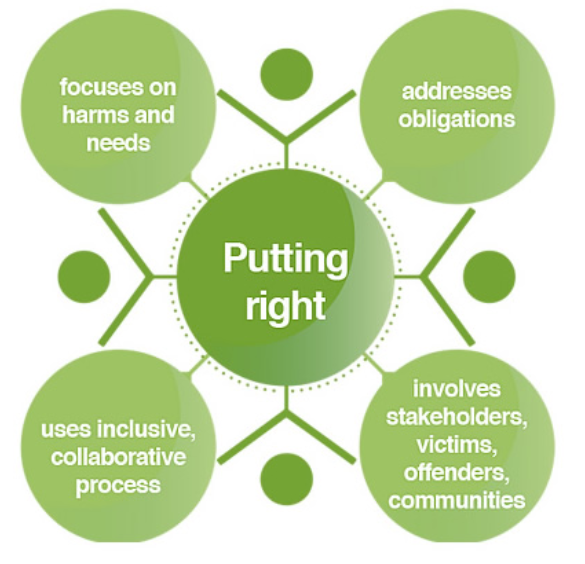
Restorative justice communities of care and reconciliation, victim reparation, offender responsibility and accountability

The men spoke and asked for forgiveness. After consideration, all four were pardoned and the Biehl family supported their release.

Linda and Peter Biehl created a humanitarian organisation, the Amy Biehl Foundation Trust to develop and empower youth in the townships, in order to discourage further violence.

Two of the men who had been convicted of her murder went on to work for the foundation as part of its programs.

Further Reading

Amy Biehl’s Last Home: A Bright Life, a Tragic Death, and a Journey of Reconciliation in South Africa by Steven D. Gish

South African Press Association: Excerpts from SAPA Coverage of Biehl Amnesty Trials

Author, Sindiwe Magona
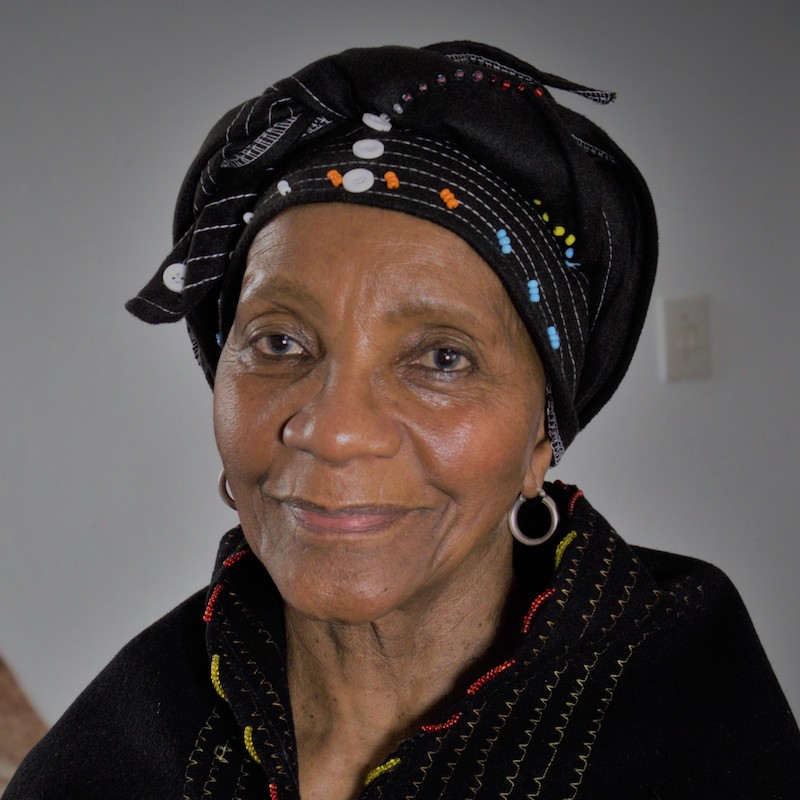
Sindiwe Magona (born.1943) a graduate of Columbia University, is an author, poet, playwright, storyteller, actor, and inspirational speaker. Magona retired from the United Nations, where she worked in the Anti-Apartheid Radio Programmes until June 1994 and UN Film Archives till her retirement. After twenty-five years in New York, she relocated to her home country, South Africa.

Her writings include To My Children’s Children and Forced to Grow (autobiography); Living, Loving, and Lying Awake at Night and Push-Push and Other Stories (short stories).

Her novels are When the Village Sleeps, Mother to MotherBeauty’s GiftLife is a Hard but Beautiful Thing (YA) and Chasing the Tails of My Father’s Cattle! Please, take photographs! a book of poetry, Modjaji Books and Awam Ngqo,(short stories) and Twelve Books of Folktales – written in both English and Xhosa.

Magona has written over a 120 children’s books, including: The Best Meal Ever and Skin We Are In and Her awards include include Honorary Doctorates from Hartwick College, USA; Rhodes University; and Nelson Mandela University; and the Order of iKhamanga.

My writing, on the whole, is my response to current social ills, injustice, misrepresentation, deception – the whole catastrophe that is the human existence. Sindiwe Magona

Next Up, the third novel : The Mothers by Brit Bennett
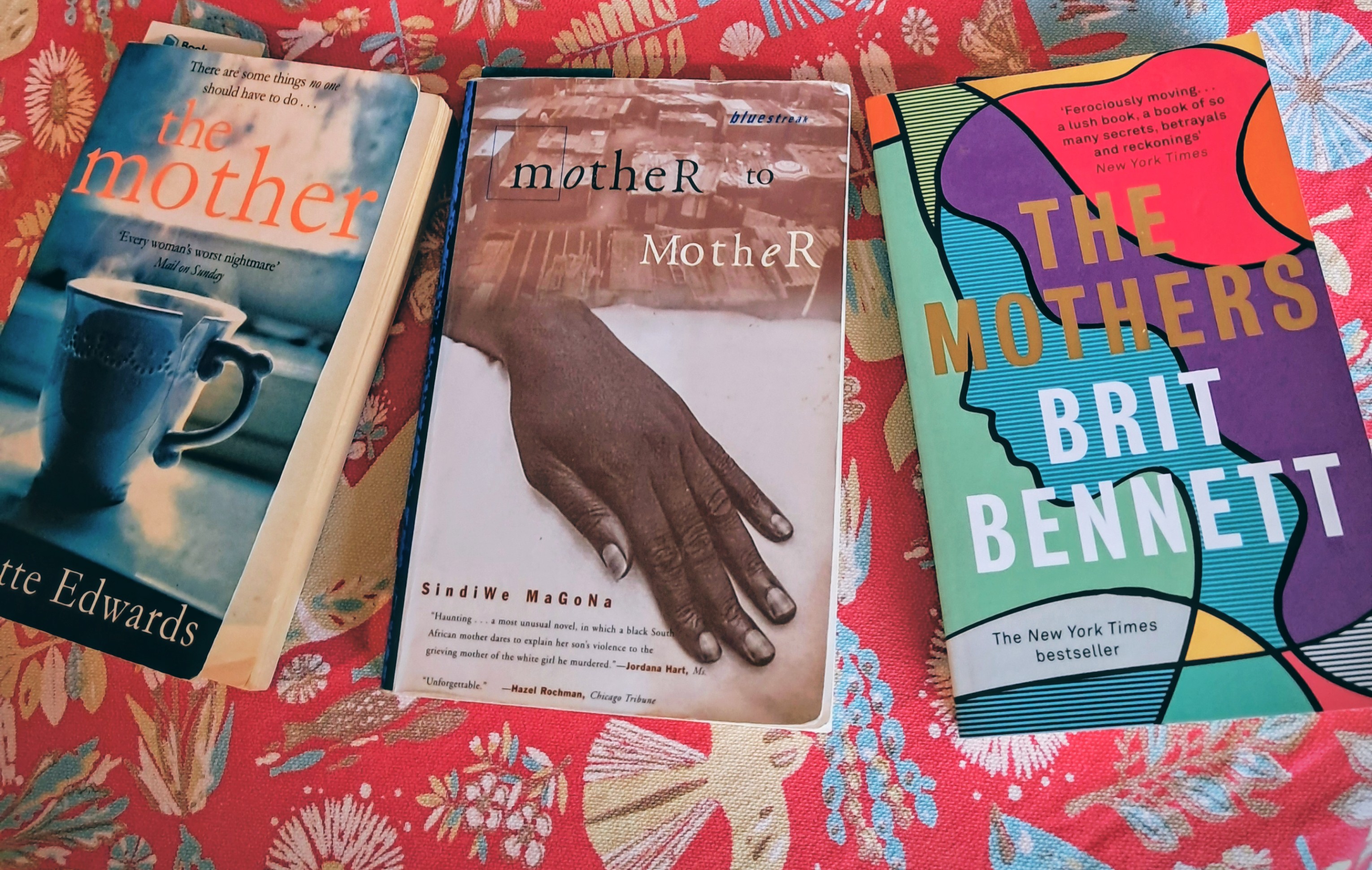
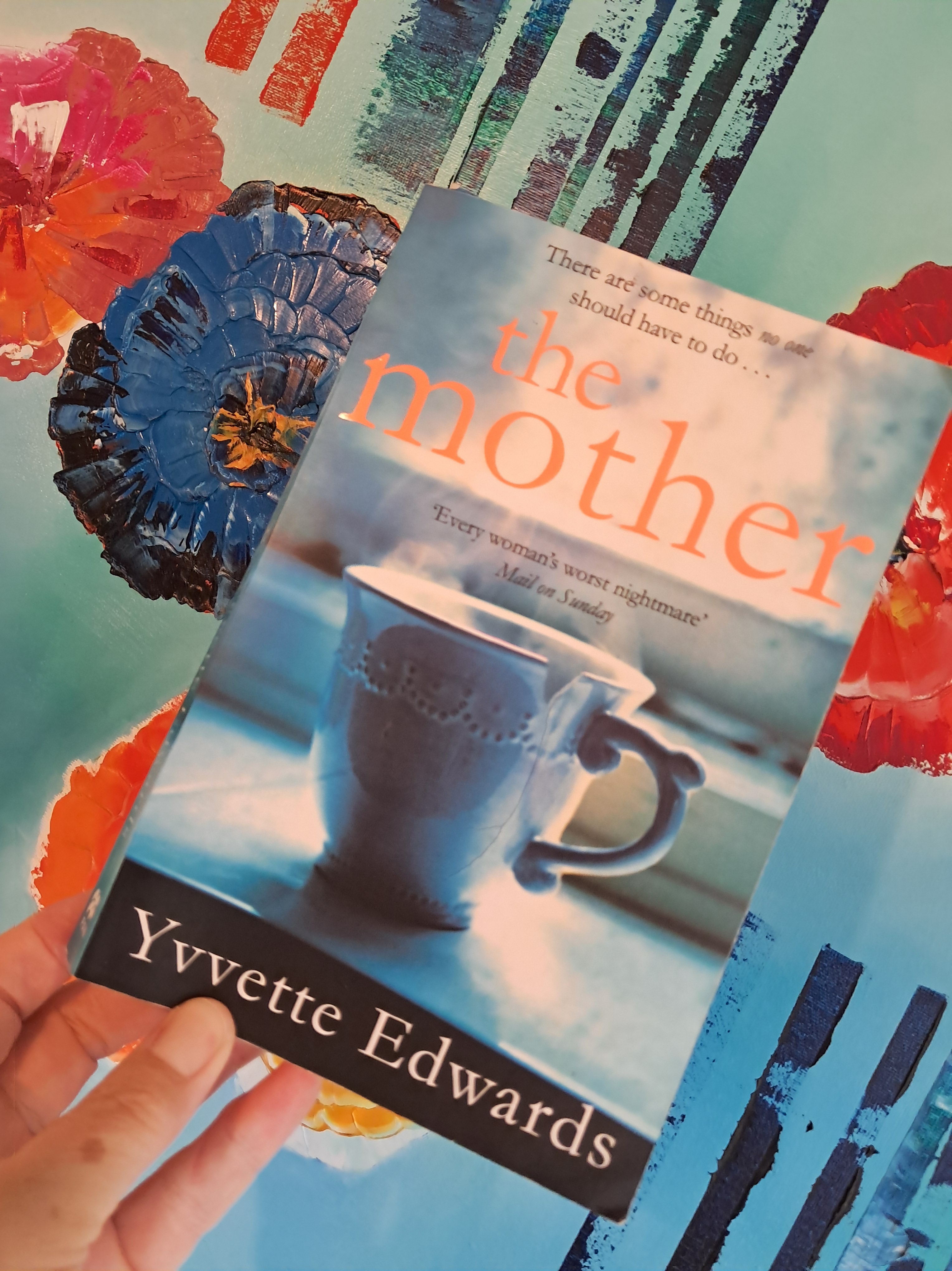
The Mother by Yvvette Edwards

Mothers in Literature

I had long wished to read Yvvette Edwards second novel, The Mother (2016) after very much enjoying her Booker longlisted A Cupboard Full of Coats (2011). I decided to read it alongside two novels on my shelf with similar themes of the bonds, burdens and breakthroughs of motherhood.

The three novels I chose are set in different countries and contexts: The Mother by Yvvette Edwards (UK) is set in London’s Caribbean community, Mother to Mother by Sindiwe Magona is set in apartheid-era South Africa, and The Mothers by Brit Bennett is set in contemporary Black America.

Sindiwe Magona has written numerous novels; however I have read and reviewed her autobiographies To My Children’s Children (1990) and Forced to Grow (1992), while Brit Bennett is well known for her novel that addresses the theme of passing, The Vanishing Half (2020).

The Complexity of Motherhood

All three novels expose motherhood as fraught with social pressure, moral judgment, and emotional complexity. Despite the different settings, they collectively form a global conversation about motherhood, resilience, and the human cost of structural and racial inequality.

3 novels of mothers and motherhooh The Mother Yvvette Edwards Mother to Mother Sindiwe Magona The Mothers Brit Bennett

In The Mother, Marcia grapples with grief and guilt after the murder of her son.

In Mother to Mother, Mandisa reflects on her life while writing to the mother of the girl her son has murdered.

And The Mothers, focuses on young women (and a collective “we” voice of church “mothers”) navigating the expectations of womanhood, including unwanted pregnancy.

The Mother by Yvvette Edwards

The Mother is the story of a mother’s struggle to come to terms with understanding her teenage son’s violent death, it is both a courtroom drama following the murder of Marcia and Lloydie’s 16-year-old son Ryan and a story of transformation and healing through grief.

I used to be good at making decisions, took it for granted completely, imagined it was one of those things that because I’d always been good at it, I would continue to be good at it, and then something like what happened to Ryan comes along and you realise some things are just temporary gifts granted for part of your life only, like the headful of hair you imagined would be yours forever that you went to sleep with one night and as usual but woke the following morning to find gone, clean gone.

Suffering Together, Drifting Apart – the Complexity of Grief

The Mother by Yvvette Edwards courtroom drama in London youth stabbing gang culture

Marcia wants to be present every day at court, her husband Lloydie does not. Increasingly emotionally estranged, she does not understand what he does all day, where he goes. Their habits are changing and they seem to be leaving each other behind, dealing with the loss in completely different ways, on their own.

Lloydie is putting my cup of tea on the side when I return to the bedroom. He looks slightly sheepish, is probably annoyed with himself for the mistiming that has meant he has found himself alone with me when we are both awake and alert. He looks at me without speaking.

‘Aren’t you going to ask how it went?’ I say.

It’s not the question I intended; too in-your-face, accusatory. I didn’t want to start the discussion here but it’s out now, I can’t take it back.

His tone is dutiful. ‘How did it go?’

‘It was hard. Listening. Seeing that boy, his mother. Very hard.’

The Need to Understand

Marci is determined to be present every day, to understand why this happened and comes to realise that there may be things about her son that she did not know.

Understanding has been my problem from the start. How is it possible that my son was doing all the right things, that as parents, Lloydie and I, we were doing all the right things, and yet still Ryan is dead?

The novel follows the case and outside the court other events begin to shed light on the situation, Marcia’s beliefs and assumptions are challenged. In her need to know, she becomes reckless.

She observes the boy who is being charged, his fixed stare and has already decided his fate.

…he stares ahead as if it is all beneath him, and as usual I find it unnerving. I have to say that single quality in him is enough to convince me that he did it, that he’s guilty because he has something in his aura of the type of person who could kill someone at six thirty, then stroll home, have dinner and a hot bath, followed by an early night of unbroken sleep.

Edwards is adept at tapping into the realms of Ryan’s peers and the insidious, threatening world of youth gang culture, which comes into full view through he character of Sweetie, the girl caught between the earnest world of Ryan and the manipulative obedience she has to Tyson Manley and his type.

It is a thought provoking story of complicated parenting and motherhood highlighting effects of judgment, truth seeking, and the social forces that shape personal and family outcomes, while reflecting on the particular role of mother. Motherhood becomes a lifelong, consuming identity, the loss of a child, in this case, destabilising her sense of self.

Author, Yvvette Edwards

Yvvette Edwards is a British East Londoner of Montserratian origin and author of two novels, A Cupboard Full of Coats (2011) nominated for The Hurston-Wright Legacy Award and longlisted for the Booker Prize, and The Mother (2016). Her short stories have been published in anthologies and broadcast on radio.

She is interested in writing that challenges the single narrative, giving voice to characters who are absent or under-represented in contemporary fiction.

An Upcoming Novel in March 2026

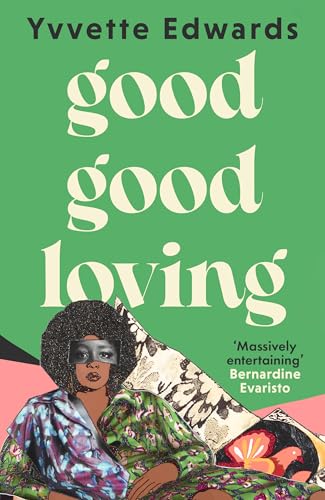
Good Good Loving, Yvvette Edwards first book in almost a decade, will be published in March 2026 by Virago. The synopsis reads:

Good Good Loving Yvvette Edwards a multi-generational British-Caribbean family across five decades

“Ellen’s big, beautiful family are gathered around her hospital bed as she prepares to slip away… her children have chosen now of all times to have a never-ending discussion about all her failings. Every single tiny thing they think she’s done wrong over the years – and the one big thing too. Even after everything, after all the sacrifices Ellen has made for every last ungrateful one of them, they still all take their father’s side. If only they knew the whole story.

“Moving backwards in time through all the decisive moments that have shaped Ellen’s life – the disasters, celebrations and surprises, the revelations, confrontations and betrayals – Good Good Loving is the vibrant story of a multi-generational British-Caribbean family across five decades.”

Next up is Sindiwe Magona’s Mother to Mother :

Forced to Grow by Sindiwe Magona (1992)

A Second Autobiography, From Disempowered to Empowered

After reading the first volume of her autobiography To My Children’s Children, this second volume covers South African writer, teacher and facilitator Sindiwe Magona’s life, from the age of 23 to 40, from the lowest point in her life, to one of the highest. The last chapter of the first volume Forced to Grow, becomes the title of this wonderful book.

Sindiwe MagonaFinding herself unemployed and pregnant with her third child after being pushed out of a teaching job – her husband’s parting shot as he abandons his young family, to inform her employer of his disapproval (a husband’s approval was required for a married (black) woman to be eligible to work) – she reinvents herself, creating her own work (selling sheep heads (cooked) she’d bought on credit) initially to survive, determined to reinstate herself back into the teaching profession, to extend and elevate her education and move beyond surviving to thriving.
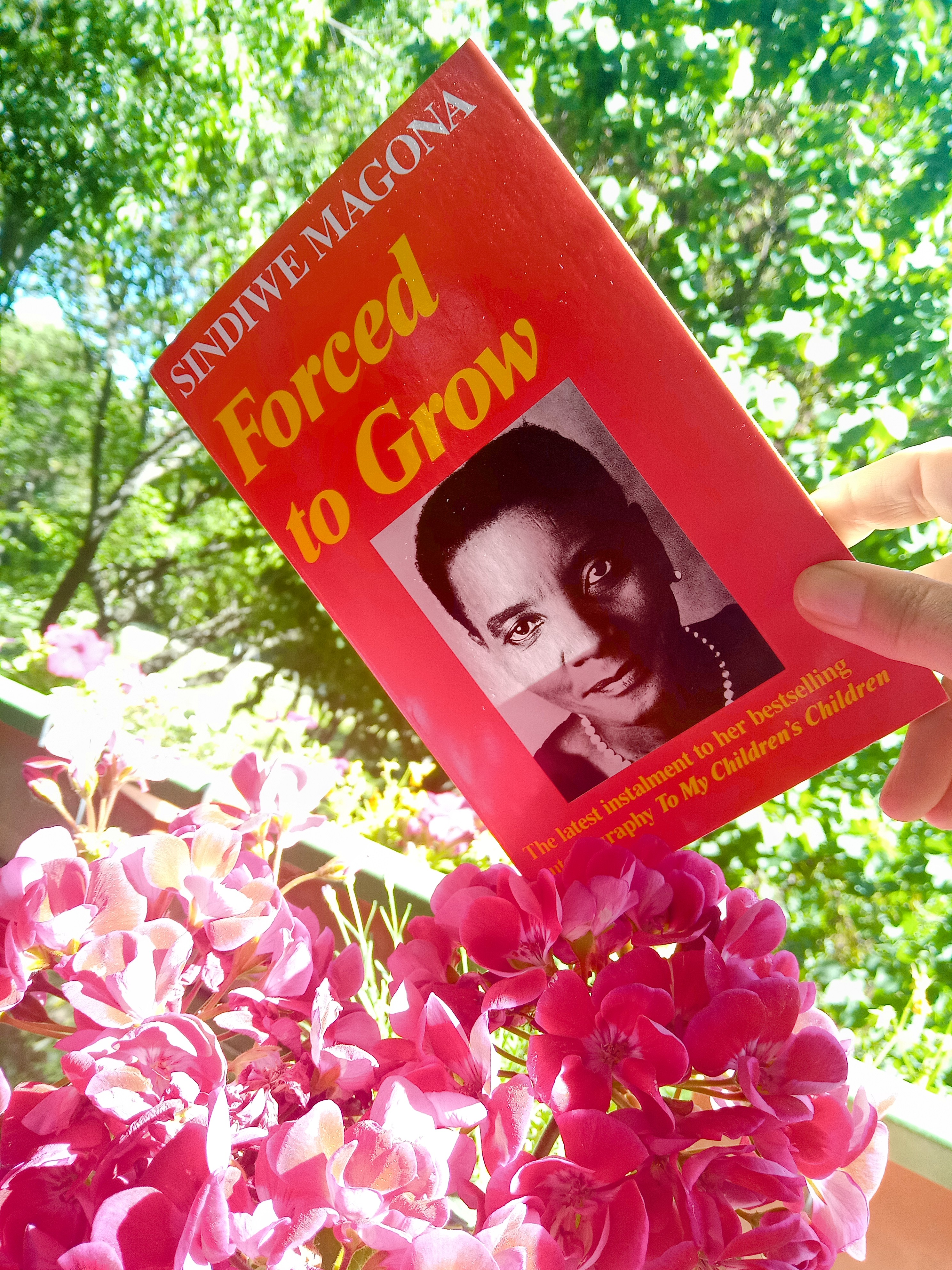
From poverty and struggle to a job offer with the UN in New York, this second volume of autobiography was hard to put down.

Overcoming Fear Through Perseverance and Self-Belief

Though she had a legal certificate to teach, she would spend four years working as a domestic servant in white women’s homes, because she was not a “breadwinner”, she had a husband. Unmarried, childless women enjoyed preferential hiring, as long as they retained that status. Ironically, she would find a way back into teaching when two unmarried teachers were forced to resign their posts, due to being “in the family way”.

I have this fear that if I ever believe that others wield power over my destiny, that I am so vulnerable, I might as well abdicate control of my life. For if I accept that, what is to stop me attributing to others all the setbacks I encounter? And once that happens, why would I do anything to get back on my own two feet? I would be virtually saying that it was beyond me to reclaim myself. I would be accepting absolute lack of control. And the Good Lord knows, I had very little control over my life as it was.

This fear, this need to go on believing I am in the driver’s seat, may be the one ingredient in my make-up I will not find easy to relinquish.

Therefore, with everything I cherished taken, broken or out of reach, I resolved I would become self-sufficient. I would work hard. I would study. I would pull myself up by my bootstraps. Yes, even though I had still to acquire the boots.

wp-1621263406986..jpgPursuing a higher level of education to offset so much else that set her back, fed into Magona’s ambition; as she achieved, her self belief grew and she pushed herself further, while assuming the role of both parents.

Moving from teaching into administration she witnessed how the country’s racist policies affect families, joining SACHED (South African committee for Higher Education) widened her circle of contact, connection, perspective & confidence.

What an inspiration Sindiwe is and what a gift to have witnessed her journey through reading; her perseverance and determination to make something more of herself, while trying to raise her children in a way to overcome the societally perceived disadvantage of being without the support or presence of the children’s father.

She sees the gift inherent in his abandonment, which is an example of how strong her mind is, she rewrites the narrative of her own life and how it will be. An errant husband is one thing, trying to create a career and attain a higher education while living within a system of apartheid and not being recognised as a citizen of your own country is impossible to imagine.

We are all the more fortunate to have been given such an insight into this personal and collective struggle and one courageous woman’s ability to work through and overcome it, in defiance of what the govt of the time wanted for the local African population.

Women Cooperating in Partnership

This volume too is an affirmation of the power and support made possible when women work in partnership, in collaboration, in community for a higher good.

The various groups she becomes part of that bring women together from different races, social classes and backgrounds and the facilitated discussions they have, both bring out her natural ability as a facilitator and leader and create a safe place for all them to develop empathy, to know each other, hear differing perspectives, challenge them, look for ways to resolve problems and how to put pressure where things need to change.

Invited to attend a meeting of a group of women who wanted change, it would create a pivotal turning point in her career.

As might be surmised, CWC (Church Women Concerned) was multi-racial, multi-denominational, inclusive of all faiths. It had members from the Christian faith, the Islamic faith and the Jewish faith. The primary objective was to build bridges, to effect reconciliation, to attempt to live lives that projected well into the future, to a time when the laws that separated us according to skin colour would be no more.

It was a fond dream put forward as a testimony of faith. We truly believed the possibility existed for apartheid to be dismantled. Therefore, it behoved us to hasten the process by living the future now.

How domination and partnership shape our brains lives and futureI was reminded of my recent read of Riane Eisler and Douglas Fry’s Nurturing Our Humanity: How Domination and Partnership Shape Our Brains, Lives, and Future, and the pockets of a Partnership System approach to living and being they promote and suggest already exist; something women are naturally capable of creating if given a chance, or are bold enough to go ahead and create these circles of connection and support anyway, as Sindiwe Magona and others did, despite the risks.

“Humans are capable of living in egalitarian social systems where neither dominates the other, where violence is minimized, and where prosocial cooperation and caring typify social life. This image is not a utopian fantasy but rather a set of potentials, if not inclinations, stemming from our evolutionary heritage.” Riane Eisler

A Third Volume of Autobiography Please

Oh I wish there was a third volume, I do hope she might be writing one, covering the last 30 years. However I also understand why since her retirement she has been writing children’s books, creating a necessary resource for children in her country and around the world, to learn, be entertained and create understanding, hope and belief in the ability for situations to change.

Highly Recommended.

To My Children’s Children by Sindiwe Magona (1990)

“Until the lioness can tell its own story the story of the hunt will always glorify the hunter.” African Proverb

This first of two autobiographies by South African author Sindiwe Magona was initially published in 1990, and the second volume in 1997.

A Lioness Shares Her Story

Frustrated like many, at seeing her country and people portrayed as backward and uncivilised by colonisers, she decided to rectify the balance, a literary scholar, sharing her life and experience first hand, an important and insightful narrative for a wider audience, dedicated to her own children and grandchildren, and perhaps especially for girls, on their path to womanhood.

In a conversation with anthropologist and activist Elaine Salo, Magona said:

I experienced incredible anger about others writing about us, I asked myself, ‘How dare they write about you?’ I told myself that shouldn’t stop me from writing about myself … There is value in those like me writing about our experiences, who did not study apartheid but lived it.

It is authentic experiences like this, that offer a richness in understanding other cultures from the inside, reading the personal experience of one women in her struggle to raise and support her children, understanding how her childhood and upbringing shaped and supported her, enabling her to cope when other societal support structures let her down.

Review

Autobiography South Africa WomenThe slim autobiography shares stories from her childhood up to the age of 23, all of it taking place in South Africa. In her early years, as was customary among amaXhosa people, she lived with her grandparents. It was often the case while parents were trying to earn a living in starting a new life, that the extended family and home community was the safest, most caring environment for young children to be. There was always someone to look after children, they had food, shelter, company and they thrived.

As she explains, looking back it may have been poverty, but that wasn’t something they were aware of; they belonged, were loved and felt secure. There was no awareness of the link between the colour of one’s skin and a difference in lifestyle, until much later, their paths never crossed, outsiders had no impact on their very young lives.

In such a people-world, filled with a real, immediate, and tangible sense of belongingness, did I spend the earliest years of my life. I was not only wanted, I was loved. I was cherished.
The adults in my world, no doubt, had their cares and their sorrows. But childhood, by its very nature, is a magic-filled world, egocentric, wonderfully carefree, and innocent. Mine was all these things and more.

Generations of Storytellers

Not only did they learn and grow from being socialised in these large families, they listened to stories, passed down the generations. There was always one or two in the family, renowned for their storytelling ability, masters in this art and the children revelled in those evenings when they became the audience to them.

Central to the stories in which people featured, was the bond of love with the concomitants: duty, obedience, responsibility, honour, and orderliness; always orderliness. Like the seasons of the year, life was depicted full of cause and effect, predictability and order; connectedness and oneness.

grayscale photo of woman kissing child

Photo TUBARONES on Pexels.com

In this warm, human environment she spent her first five years, immersed in a group where her place was defined, accepted, giving her all she required and more.

Far from the distant world where white people lived and ruled, busy formulating policies that would soon impact them all, policies that invited in certain immigrants, offering them privileged rights, while denying them of the local black population, restricting their ability to move from one area to another, fracturing families, keeping them in poverty.

Everything changed when her mother left to join her father due to illness, to be near medical support and soon after, her grandmother died, requiring them all to leave and join their parents.

A New Era, Fractured Families and Apartheid

It would be fortuitous timing as a year later, in 1948, the Boers came into power and laws were formulated restricting the movement of Africans. Had her grandmother died later, they may not have legally been able to rejoin them.

The move to live with their parents introduced them to a less harmonious world, one where police raids occurred and crime existed. Within the law or outside the law, there was reason to be more careful and fearful. The importance of attaining an education was the focus, to rise above.

The year I left primary school was the year that education became racially segregated. Hitherto, white pupils, African pupils coloured pupils, and Indian pupils could, theoretically, attend the same school. After 1955, the law forbade that practice. There would be different Departments of Education for the different race groups.

Her years of education were dependent on her attitude, some years she did well, others she lapsed, eventually her focus concentrated on becoming a teacher, though in her initial attempts to secure a position, she would initially be thwarted. Her real life lessons were only just beginning.

Lessons from the Real World

Father began hinting at what might at the root of my problem: I had omitted to offer the Secretary of the School Board “something” and people were telling him it would be donkey’s years before I would get a post if we did not oil  this gentleman’s palm.

Though she had done well in her classes, they were inadequate and wholly misleading as to how to prepare to teach children from poor homes, without textbooks, without exercise books, without materials. Trained to teach children from homes where there was a father and a mother, most of her pupils came from women-headed homes. And those women stayed in at their places of employment: busy being smiling servants minding white babies.

Not having books is one of the misdemeanors punishable by corporal punishment. The beatings and probably the sheer embarrassment that must surely accompany the daily proclamation of one’s poverty, prompted a lot of the pupils to pilfer. The very young do not always understand that poverty is supposed to ennobling…

The first class she would teach would have 72 pupils and had all been well, they should have been aged 11 or 12. All was not well however, the children ranged in age from 9 to 19 and the variation in skills just as wide.

Due to her principled stance, that first job would take a while in coming. Unemployed, but desperate to work, she accepted a job at the local fisheries.

Eventually she is offered a teaching job, experiencing the few joys and many disappointments inherent in an unfair, overstretched, oppressive system.

All along, I had known the agony for which some were destined. Such is the design of the government. And such is the abetting by even those of us who regard ourselves as oppressed.  Which we are. But we are also called upon to help in that oppression and unwittingly become instruments of it.

A Woman’s Lot

And then comes the intersection of youth with a newly developing career and as a woman, the added risk of pregnancy. Magona’s challenges are only just beginning and her teaching jobs will become continuously thwarted by how society expects women to behave. The arrival of her own children will force her from her role and into domestic service herself, and really open her eyes to how the other live.

What I had not known was that their perception of people like us did not quite coincide with our perception of who we were and what we were about.

More than anything, however, being a domestic servant did more to me than it did for me. It introduced me to the fundamentals of racism.

The different families she would work for, each provide key insights that broaden her understanding and perception of the other groups living within the country and how the system aimed to maintain and strengthen the situation in favour of white people.

As this volume comes to an end, Sindiwe’s situation seems dire, however, she delivers some of the most inspiring passages of the book, in the low place she has arrived at, she suddenly sees all that she is grateful for, all that she has, even the abandonment of a husband who had never supported them, she recognises as a freedom and a significant contribution to her own growth.

It is a wonderful and frank autobiography and introduction to an inspiring woman. I’m looking forward to the sequel, Forced to Grow, the same title as the last chapter in this volume, in which she shares how determination and resourcefulness lead her through and out of those challenges we end with here.

Sindiwe Magona

My Childrens Children Memoir Autobiography South AfricaMagona was born in 1943 in the small town of Gungululu near Mthatha, in what was then known as the homeland of Transkei, in the Eastern Cape of South Africa.

She was born five years before colonial Britain handed over power to the Afrikaners. Apartheid was officially introduced in 1948 and with it a series of oppressive and racist laws such as separate living areas and the Bantu education system. It was within this context that Magona grew up.

She is an accomplished poet, dramatist, storyteller, actress and motivational speaker. She spent two decades working for the UN in New York retiring in 2003. Her previously published works include thirty children’s books (in all eleven South African languages), two autobiographies, short story collections and novels.

My writing, on the whole, is my response to current social ills, injustice, misrepresentation, deception – the whole catastrophe that is the human existence. Sindiwe Magona

Further Reading

The Conversation Article: Learning From the Story of Pioneering South African Writer Sindiwe Magona, 5 March, 2021