Let Me Go Mad In My Own Way (2025) by Elaine Feeney

Electra Sophles Anne Carson Annie Ernaux Shame Intergenerational inheritance Ireland

Back in 2023 Irish author Elaine Feeney’s novel How To Build a Boat (my review) was longlisted for the Booker Prize and shortlisted for the Irish Book Awards. That was a bumper year for Irish novelists with four of them on the longlist and Paul Lynch’s Prophet Song winning the prize.

How to Build a Boat was a great read with interesting, memorable characters, about an oppressive school and a free spirit whose presence disturbed the controlling order and rigidity of the institution by making a boat inside the school walls.

When I saw she had another book out with a provocative title like this, I decided to dip in and see what it was about.

French and Greek Literary References, The Female Voice

If the title isn’t a giveaway to reclaiming and redefining madness, a convenient label historically used to oppress women and have them incarcerated in the past, the epigram from Annie Ernaux’s novella Shame further reminds us of the often silenced, lived experience of women and girls, peeling back social shame, intergenerational violence and little recognised, inherited trauma that continues to reverberate and affect current behaviours and relationships.

This can be said about shame: those who experience it feel that anything can happen to them, that the shame will never cease and that it will only be followed by more shame. Annie Ernaux, Shame

A Story In a Title

The title of Feeney’s book is a powerful statement from the ancient Greek playwright Sophocles. The line appears in his play Electra, translated as: “I ask this one thing: let me go mad in my own way.” In the play, the main character, overwhelmed by grief, injustice and familial violence, demands to grieve and rage on her own terms. It is a cry for the right to express and feel one’s own emotional suffering and pain, in the way it is desired, needed.

“Don’t tell me how to feel or how to react, let me experience my madness as I must.”

Elaine Feeney said in an interview that she encountered the phrase in Anne Carson’s translation of Electra and immediately felt its resonance, both personally and within her book’s themes.

Going Mad or Getting to Grips With the Past

irish literature contemporary fiction

Her novel is about an Irish woman named Claire O’Connor who had been living in London with her boyfriend Tom Morton, unravelling after the death of her mother. Unable to cope, she breaks up with Tom and returns to the West of Ireland, initially to care for her father.

Back living in the family home awakens memories and issues for Claire and her two brothers, who are more used to avoiding and ignoring past and present bad behaviours.

The unexpected arrival of Tom and new friends Claire makes at her new university job, create a situation that brings people together that wouldn’t ordinarily meet.

Choosing to Live Differently

This new dynamic challenges some of those repressed feelings and the characters will either continue to deny or choose to grow.

‘There’s land here, isn’t there?’ He was playing with me now. ‘They’re not making any more of it – I’ll bet they don’t teach you that inside in the universities.’

I wanted to say that none of us wanted his land, full of rock, thistles and furze bushes. That it was a noose. I wanted to say the land was never mine. I knew well enough to know that.

Generational Influence

The story is told in different timelines, in the first person present, when Claire is an adult and has returned to Ireland, in 2022 and then there are chapters about the family from 1920, events around the old abandoned house at the back their property.

The O’Connor’s were good tenant farmers and had then been given this small handsel of land, a slight acreage of a holding from the Estate in the Land Commission’s Exchange for compliance. They had, until this, been generations of shepherds. Mostly, too, they were emigrants. A compliant people who believed in God being good and work being eventually rewarded for all eternity.

1920 was a period when there was unsettling violence from the Black and Tan Forces in East Galway around the Irish War of Independence, cultivating an atmosphere of fear and violence and an era where there was little escape, and few and far opportunities. Though 100 years in the past, undercurrents of that violent era continue to pump through the veins of this family.

Then there is Claire’s childhood memory of a Hunt Day in 1990, when the Queen of England was looking for a black mare for the Household Cavalry. Flashes of memory bring it all back as Claire confronts the past in order to better create any chance she might have of a better future.

Great Storytelling and Thought Provoking Depth

It is a thought provoking novel rooted in personal, collective and inherited memory, that deals with ‘the home‘ as the institution that requires dismantling, and it is the coming together of family, friends and the new relationships in Claire’s life that will facilitate the change that can redefine what home can become.

It’s also a novel that is entertaining with or without the layers of meaning that come from the references, but it is one that I have enjoyed all the more for understanding more about the motivations of the author and the literary influences she has referenced and talks about in the following interview.

And speaking of the Booker Prize, the longlist for 2025 will be announced on Tuesday 29 July 2025. This year’s Chair of Judges is an author who has never been in a book club, Roddy Doyle, who is joined by Booker Prize-longlisted novelist Ayọ̀bámi Adébáyọ̀; award-winning actor, producer and publisher Sarah Jessica Parker; writer, broadcaster and literary critic Chris Power; and New York Times bestselling and Booker Prize-longlisted author Kiley Reid.

Further Reading or Listening

An Interview by Bad Apple, Aotearoa: Ash Davida Jane interviews Elaine Feeney

Listen to Elaine Feeney read an extract from her novel Met Me Go Mad In My Own Way

Elain Feeney, Author

Elaine Feeney is an acclaimed novelist and poet from the west of Ireland. Her debut novel, As You Were, was shortlisted for the Rathbones Folio Prize and the Irish Novel of the Year Award, and won the Kate O’Brien Award, the McKitterick Prize and the Dalkey Festival Emerging Writer Award. How to Build a Boat was also shortlisted for Irish Novel of the Year, longlisted for the Booker Prize, and was a New Yorker Best Book of the Year.

Feeney has published the poetry collections Where’s Katie?The Radio Was GospelRise and All the Good Things You Deserve, and lectures at the University of Galway.

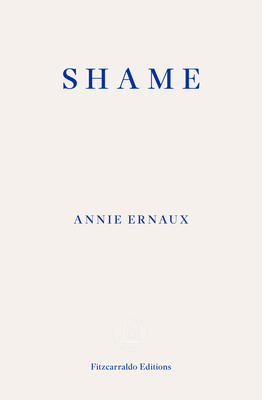
Shame (1997) by Annie Ernaux, tr. Tanya Leslie

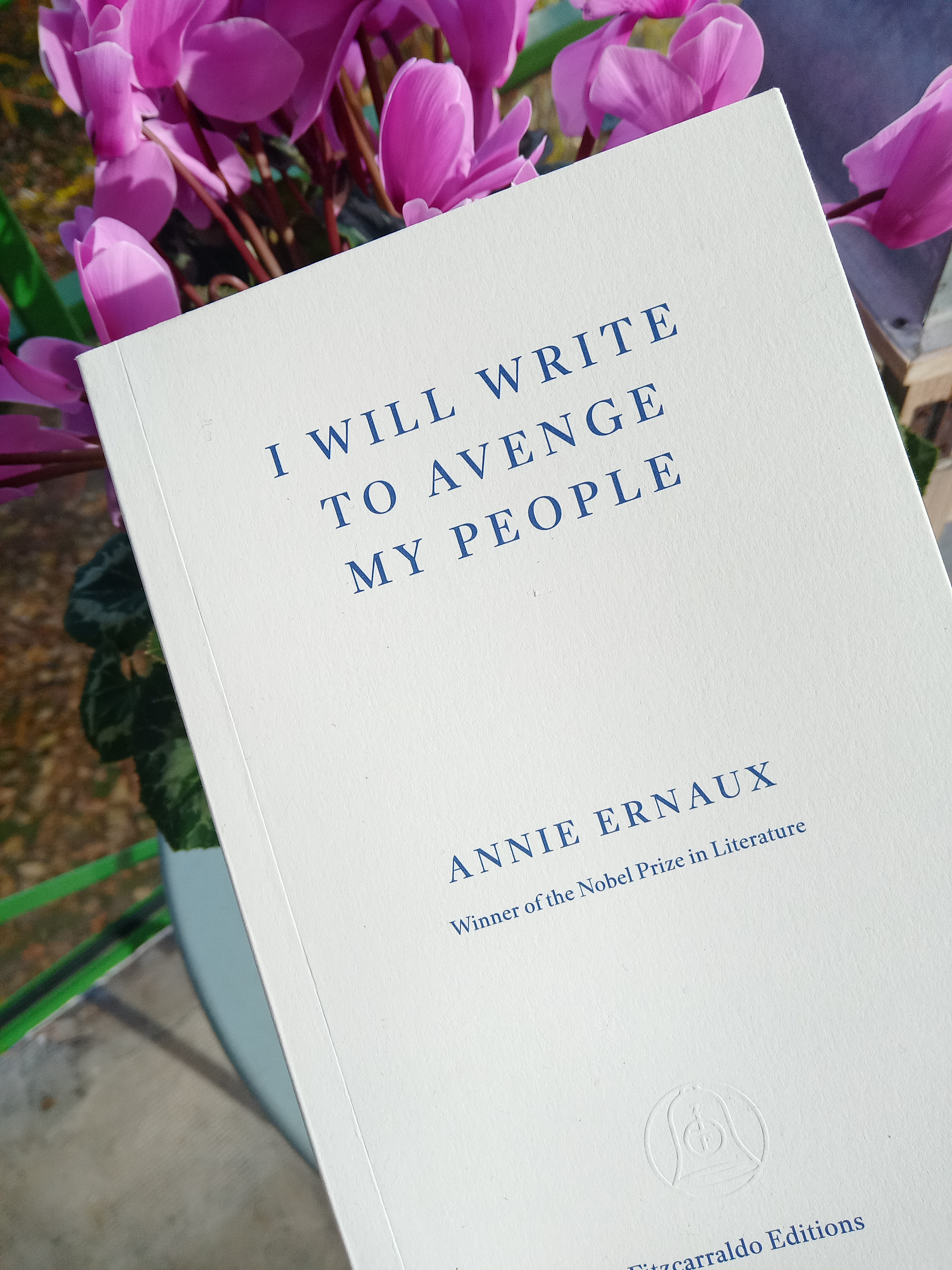
In her 2022 nobel prize lecture, I Will Write to Avenge My People, Annie Ernaux shares her motivation for writing in the particular way that is unique to her, telling us how it is at odds with the way she taught.

I had to break with ‘writing well’ and beautiful sentences – the very kind I taught my students to write – to root out, display and understand the rift running through me.

So it with this understanding, that I picked up Simple Passion (my review here) and now Shame, works of non-fiction that explore how certain pivotal events in her life affected her, by noticing her actions and reactions, how her own behaviour or perception changed.

The Origin of Shame

The book opens with a quote from Paul Auster‘s The Invention of Solitude:

Language is not truth.

It is the way we exist in the world.

The opening line begins with the pivotal event, shortly before her 12th birthday:

My father tried to kill my mother one Sunday in June, in the early afternoon.

and then describes everything she remembers about that day in a page of detail.

It was 15 June 1952. The first date I remember with unerring accuracy from my childhood. Before that, the days and dates inscribed on the blackboard and in my workbooks seemed just to drift by.

These words were written 45 years later, around 1997, when this book was first published in French, words that she tells the reader were impossible to write about, even in a personal diary, before then.

Silence Esteemed, The Seed of Unworthiness

I considered writing about it to be a forbidden act that would call for punishment. Not being able to write anything else afterwards for instance. (I felt a kind of relief just now when I saw that I could go on writing, that nothing terrible had happened). In fact, now that I have finally committed it to paper, I feel that it is an ordinary incident, far more common among families than I had originally thought. It may be that narrative, any kind of narrative, lends normality to people’s deeds, including the most dramatic ones.

Ernaux looks back at the origin of her experience of shame, awakened to it by certain moments, exploring the change(s) as she is made to feel them, in the many areas of her life within which it dwelt, sometimes just hidden behind a door, always at risk of being discovered by others.

From then on, that Sunday was like a veil that came between me and everything I did. I would play, I would read, I would behave normally but somehow I wasn’t there.

Beginning with that traumatic event, she observes the lingering effect it had on her, the strong presence it maintained, despite the fact that no one ever talked (to her) about it.

She revisits photos and news archives from that day, that time, trying to find something.

Writing an Ethnological Study of Self

While she rejects the idea of traditional therapy, it could be said that she has created her own form of it, by bringing her deepest shame to the page, as if in doing so, she is somehow sending it away, banishing it to readers.

I expect nothing from psychoanalysis or therapy, whose rudimentary conclusions became clear to me a long time ago – a domineering mother, a father whose submissiveness is shattered with a murderous gesture. To state it’s ‘childhood trauma’ or ‘that day the idols of childhood were knocked off their pedestal’ does nothing to explain a scene which could only be conveyed by the expression that came to me at the time: ‘gagner malheur‘, to breathe disaster. Here abstract speech fails to reach me.

Photo Pavel Danilyuk @ Pexels.com

This text she describes as carrying out an ethnological study of herself.

Like Simple Passion, written in short fragments, it is an engaging read that centres around the year 1952, living by the rules and codes of her world, which usually required unquestioning obedience, without any knowledge that there may be others.

The more I retrace this world of the past, the more terrified I am by its coherence and its strength. Yet I am sure I was perfectly happy there and could aspire to nothing better. For its laws were lost in the sweet, pervasive smells of food and wax polish floating upstairs, the distant shouts coming from the playground and the morning silence shattered by the tinkling of a piano – a girl practicing scales with her music teacher.

A brilliant depiction of a shattering of illusion and the origins of one girls perception of unworthiness.

As the book closes, and the year 1952 ends, her attention is caught by a film/book release.

In his novel, Fires on the Plain, published in 1952, the Japanese author Shōhei Ōoka writes: ‘All this may just be an illusion but all the same I cannot question the things I have experienced. Memories too belong in that category’.

Highly Recommended.

Author, Annie Ernaux

Born in 1940, Annie Ernaux (née Duchesne) was born in Lillebonne and grew up in Yvetot, Normandy, where her parents ran a café-grocery store in the spinning mill district.

She was educated at a private Catholic secondary school, encountering girls from more middle-class backgrounds, and experiencing shame of her working-class parents and milieu for the first time.

After a brief stint in Finchley, London, cleaning houses all morning and reading from the library all afternoon, she returned to France to study at the University of Rouen. Obtaining a degree in modern literature, she became a school teacher. From 1977 to 2000 she was a professor at the Centre National d’Enseignement par Correspondance.

Her books, in particular A Man’s Place (La Place) and A Woman’s Story (Une femme) have become contemporary classics in France. These books marked a break from the definitive novelistic form, she would continue teaching in order to never depend on commercial success.

One of France’s most respected authors, she has won multiple awards for her books, including the Prix Renaudot (2008) for The Years (Les Années) and the Marguerite Yourcenar prize (2017) for her entire body of work. The English translation of The Years (2019) was shortlisted for the Man Booker prize International and won the Warwick Prize for Women in Translation (2019).

The main themes threaded through her work over more than four decades are: the body and sexuality; intimate relationships; social inequality and the experience of changing class through education; time and memory; and the overarching question of how to write these life experiences.