
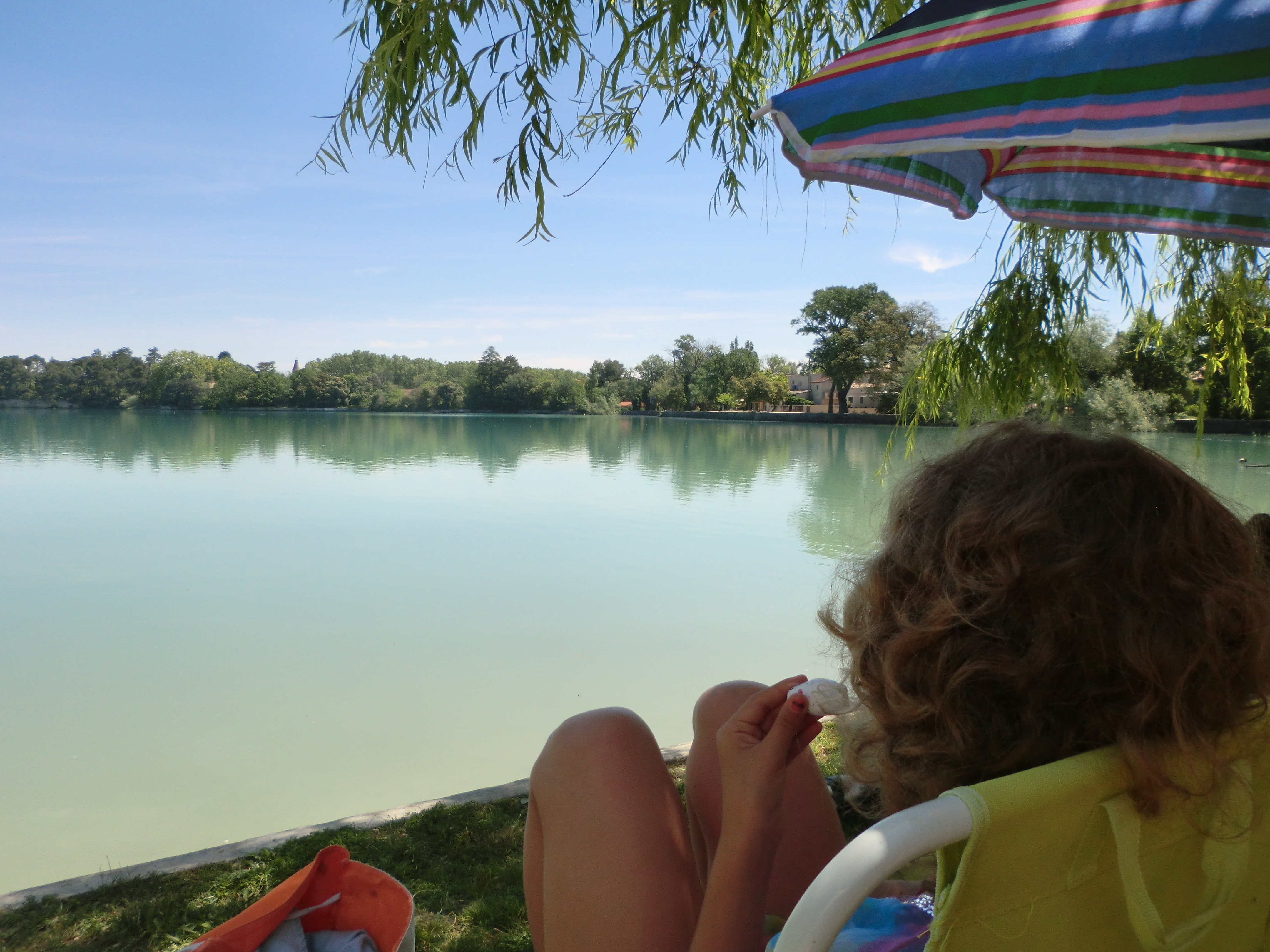
 I read most of Diana Athill’s book in two afternoons, sitting under a willow tree beside the lake L’étang de la Bonde as the children swam continuously, refusing to get out until it was time to leave. Despite the fact that we were outdoors, I felt as if I had just spent two days in Athill’s living room, listening to her share this particular segment of her life, that as Editor at André Deutsch, the publishing house where she worked for four decades.
Stet is not a common word and I am perhaps only familiar with it because, back in the old days, when I was a 23-year-old Market Research Assistant without typing skills, I used to write reports and had a secretary to type them. I even had my own office with a door that could be closed. Using the word stet meant I’d changed my mind after I’d crossed something out, wanting it left in. The Concise Oxford Dictionary tells us :

Not the first of Athill’s memoirs, but the one I was attracted to, since it offers a glimpse inside an Editors office. I had already read and reviewed Betsy Lerner’s The Forest For the Trees, which this book made me recall, you could say they complement each other in a certain respect, though they are very different books, as one might expect when comparing the perspective of an English Editor to that of an American Editor. Both equally interesting and insightful in their own way.
In Part One, Athill shares how she fell into publishing as a career, knowing she would have to find a job, while her great-grandparents generation had made or married into money, her father’s generation had lost it and she talks about many aspects of the job, the decisions that were made, the dramas that were lived and worked through.
“The story began with my father telling me: ‘You will have to earn your living.’ He said it to me several times during my childhood (which began in 1917), and the way he said it implied that earning one’s living was not quite natural. I do not remember resenting the idea, but it was slightly alarming…Daughters would not, of course, have to earn their livings if they got married, but (this was never said) now that they would have to depend on love unaided by dowries, marriage could no longer be counted on with absolute confidence.”

Diana Athill
The start to her career was disrupted by the onset of the Second World War, however she was fortunate to have a friend working in the recruitment office of the BBC and found an information/research position in the Overseas News Department. She and a friend lived in a small apartment in London and had a good social life, at one of the parties she met the young Hungarian intellect André Deutsch, the start of a lifelong friendship and she would eventually leave her job to join him as a shareholder and working Director when he decided to start his own publishing firm.
Not the easiest of employers, Athill shares some interesting insights about working for an often disagreeable and intolerant man whom she respected despite his deficiencies. She is also quick to point out her own flaws and it is perhaps the counterbalance of their personalities that made them such a successful pair and helped keep the publisher in business for as long as it was able. She also shares her continued love of literature, reading and writing.
“They brought home to me the central reason why books have meant so much to me. It is not because of my pleasure in the art of writing, though that has been very great. It is because they have taken me so far beyond the narrow limits of my own experience and have so greatly enlarged my sense of the complexity of the life: of its consuming darkness, and also – thank God – of the light which continues to struggle through.”

In Part Two, she expounds on her relationship with a small selection of writers, providing a chapter each and very frank accounts of what transpires between Athill, the publishing house and the following authors: Mordecai Richler and Brian Moore, Jean Rhys, Alfred Chester, V.S.Naipul and Molly Keane. One is left with the impression that there was a lot more drama and pandering to personalities in the past than there can be in today’s less nurturing publisher – author relationships. Eye opening indeed!


As I mentioned in the Man Booker Prize longlist post, Diana Athill won the Costa Prize for her most recent memoir Somewhere Near the End in 2009, which she wrote in her nineties, a book which is sure to be equally enlightening and one I look forward to indulging, knowing as I did with this book, it is bound to offer delightful company for future afternoon reading.
 Reading books on writing is a little like panning for gold. Most of what we read washes away, some of it is interesting to consider but doesn’t necessarily gel and then occasionally we find a gem.
 ‘The Forest for the Trees’ was recommended on writer
  If you are looking for a tongue in cheek attempt at writer’s psychological profiles, interesting and funny anecdotes and an inside look at one editor’s career path, then this will entertain. We can also learn much about the industry by keeping up with writer’s blogs and online communities, which without a doubt reflect the situation of writers today, whether persevering towards it or already succeeding to be published.
 Word by Word