
Formative Years Bring a Taste of Freedom
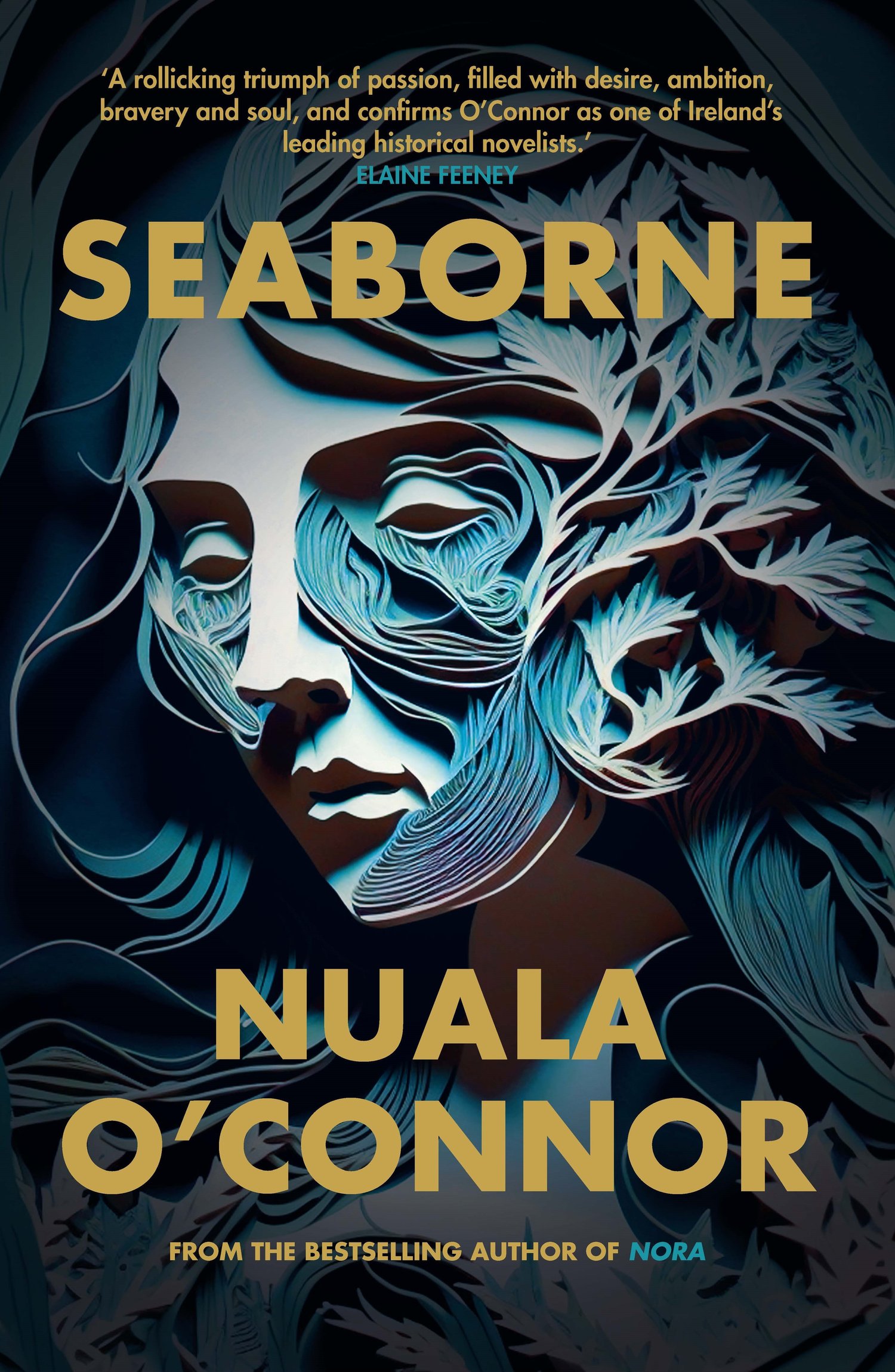
Seaborne is an adventure story about a young girl born in Kinsale, Cork to a maid, who, in order to keep her with her, styles her as a boy growing up, so she can stay in her father’s house (a local lawyer) and be apprenticed to him.
Anne becomes Anthony in her childhood and loves nothing more than going out on the boat with her father, being at sea.
Eventually, in order that her parents can be together, the man abandons his wife and family, and travels with Anne and her mother to the Carolina’s where he will run a plantation.
Life As A Girl is Restricted
But Anne having had significant freedom as a boy is none too pleased by the restrictions and rules that presenting as a girl puts upon her.
‘Three times trouble, girl, with your red hair, and your forward manner, and your obsession with water and boats. For a lady, one is ill luck and the others are ill conduct. The three do not match well.’
And I give my ever honest reply. ‘They match the finest with me, Father.’
Finding a Way to Seascape
She finds solace and much more, with her friend and servant Bedelia and finds a way to have the occasional sea journey thanks to a young man they hear of, Gabriel Bonny, who for a few coins will take a person to sea. At first he declines to take her, she will visit a tailor and have a set of clothes made, more suitable for seafaring, eventually she wins him over, he can not refuse her.
I woke this day knowing only one thing: I wanted to hire a boat, row it out, and feel saltwind about my face and hair. I desired to have nothing but the sway of the sea under my body and I determined to make that happen.
Seeing him as a way to escape her destiny and to a life at or near the sea, she elopes with him, taking Bedelia with her.
Passion, Piracy and Plunder

In the town where they settle Anne discovers that her husband isn’t so keen to let her pursue her dream to be at sea. She becomes restless and rebels against the wifely life and in her restless wanderings, she comes across someone who will.
Captain Calico Jack will allow her to follow him and his crew into dangerous territory and a life she had never imagined but finds passion and excitement in.
I crave a chance to wave my sword, to fire a shot. I want to know how it feels to own such power. And I think of the riches that await us, and the wandering sea-life Jack and I will have when we have plenty of money.
They will sail around the islands of the Caribbean, looking for opportunity, trying to avoid those in service to Governor Rogers, a man with a mission to suppress piracy and protect trade, who was hell bent on apprehending the infamous pirate and his men.
A Maverick Maiden
Set in the 1700’s, Anne Bonny is a real character, though much about her is legendary and not easily verifiable. Nuala O’Connor has familiarised herself with facts and read the fictions and re-imagined a version of a deeply unconventional life for Anny Bonny, told in a lilting, of its era prose.
It is narrated in a way that allows the reader to easily visualise the life and surroundings she inhabits and the high sea adventures she participates in, even if they are shortlived. It’s a fun, imaginative read, of a woman before her time, who gave herself freedoms and lived fearlessly, despite the era she lived in and the culture she came from.
Further Reading
Irish Daily Mail: I’m Always Willing to follow a historical female maverick to see where her story leads me
RTE Radio 1 Interview: 39th Cúirt International Festival of Literature
Author, Nuala O’Connor

Nuala O’Connor is a novelist, short story writer and poet, and lives in County Galway with her family.
She is the author of four previous novels, including Nora: A Love Story of Nora and James Joyce (2021), Becoming Belle (2018) and Miss Emily (2015), a reimagining of the life of Emily Dickinson, and six short story collections, her most recent being Joyride to Jupiter (2017) and Birdie (2020).
She has won many prizes for her short fiction including the Francis MacManus Award, the James Joyce Quarterly Fiction Contest and the UK’s Short Fiction Journal Prize and been nominated for numerous prizes including the Edge Hill Short Story Prize, the Kerry Group Irish Novel of the Year Award, the Irish Book Awards Novel of the Year and the International Dublin Literary Award. Nora was shortlisted for the 2021 An Post Irish Book Awards RTÉ Audience voice Award. She is editor-in-chief at flash e-zine Splonk.


 Word by Word