Women’s Prize for Fiction Shortlist 2024

The Women’s Prize for Fiction have announced their shortlist of six novels. You can view the entire longlist here.

Identity, Resilience, Migrant Experiences, Family Relationships

Many of the books depict characters who are navigating seismic changes in their identity, undergoing a process of self-reckoning and self-acceptance, with several dealing with the inheritance of trauma and the resilience of women overcoming the weight of the past.

Half of the books in this year’s shortlist explore the migrant experience through different lenses, offering moving, distinct, explorations of race, identity and family, of the West’s false promise and the magnetism of home.

The shortlist encompasses stories that both focus on intimate family relationships, as well as those that convey a sweep of history, always with an eye on the particularity of women’s experience, whether in the home or in the context of war and political upheaval.

The Shortlist

Below are descriptions of the individual titles, along with a quote from a judge, to help you discern if they might be of interest:

The Wren, The Wren by Anne Enright (Ireland) published by Jonathan Cape, 283 pgs

A psychologically astute examination of family dynamics and the nature of memory. Enright’s prose is gorgeous and evocative and scalpel sharp.
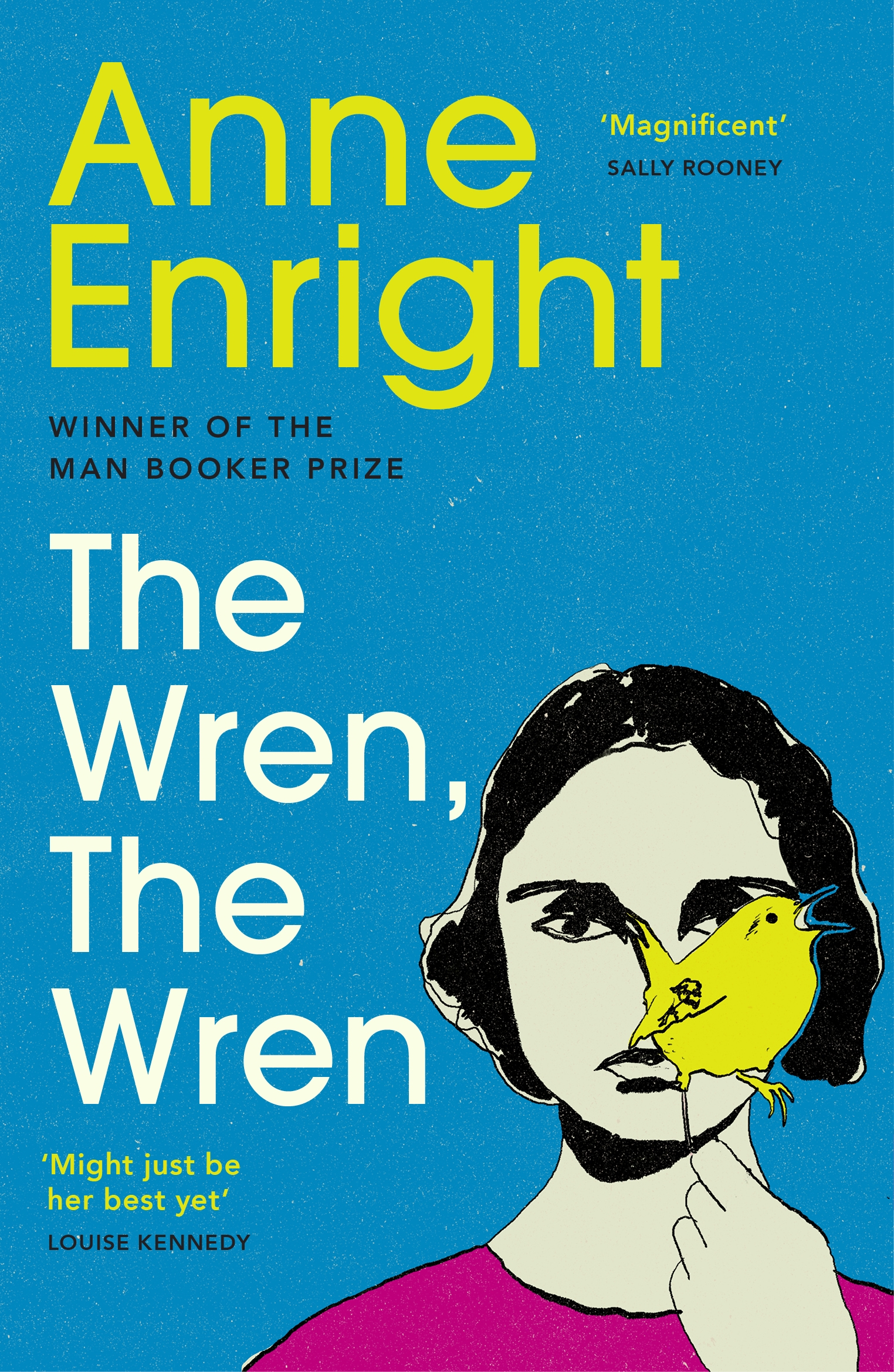
Nell – funny, brave and much loved – is a young woman with adventure on her mind. As she sets out into the world, she finds her family history hard to escape. For her mother, Carmel, Nell’s leaving home opens a space in her heart, where the turmoil of a lifetime begins to churn. Across the generations falls the long shadow of Carmel’s famous father, an Irish poet of beautiful words and brutal actions.

A consideration of love: spiritual, romantic, darkly sexual or genetic. A generational saga tracing the inheritance of trauma and wonder, it is a testament to the resilience of women in the face of promises, false and true. An exploration of the love between a mother and daughter – sometimes fierce, often painful, always transcendent.

Brotherless Night by V. V. Ganeshananthan (Sri Lanka), published by Viking, 348 pgs (see my review here)

Visceral, historical, emotional. It is 300 pages of must-read prose. A powerful book that has the intimacy of memoir, the range and ambition of an epic, and tells a truly unforgettable story about the Sri Lankan civil war.

Sixteen-year-old Sashi wants to become a doctor. But over the next decade, as a vicious civil war subsumes Sri Lanka, her dream takes her on a different path as she watches those around her, including her four beloved brothers and their best friend, get swept up in violent political ideologies and their consequences. She must ask herself: is it possible for anyone to move through life without doing harm?

Restless Dolly Maunder by Kate Grenville (Australia), published by Canongate Books, 256 pgs

[It] follows the life of Dolly, who really is restless. It begins in the 1880s in rural Australia, and it follows Dolly’s ambitions to live a bigger life than the one she’s been given.

Dolly Maunder is born at the end of the 19th century, when society’s long-locked doors are just starting to creak ajar for determined women. Growing up in a poor farming family in rural New South Wales, Dolly spends her life doggedly pushing at those doors. A husband and two children do not deter her from searching for love and independence.

Restless Dolly Maunder is a subversive, triumphant tale of a pioneering woman working her way through a world of limits and obstacles, who is able – despite the cost – to make a life she could call her own.

Enter Ghost by Isabella Hammad (Britain/Palestine), published by Jonathan Cape, 336 pgs (see my review here)

How can a production of Hamlet in the West Bank resonate with the residents’ existential issues? Enter Ghost is a beautiful, profound meditation on the role of art in our society and our lives.

After years away from her family’s homeland, and reeling from a disastrous love affair, actress Sonia Nasir returns to Haifa to visit her sister Haneen. While Haneen made a life here commuting to Tel Aviv to teach at the university, Sonia remained in London to focus on her acting career and now dissolute marriage. On her return, she finds her relationship to Palestine is fragile, both bone-deep and new.

When Sonia meets the charismatic, candid Mariam, a local director, she joins a production of Hamlet in the West Bank. Soon, Sonia is rehearsing Gertrude’s lines in classical Arabic with a dedicated group of men who, in spite of competing egos and priorities, all want to bring Shakespeare to that side of the wall. As opening night draws closer and the warring intensifies, it becomes clear just how many obstacles stand before the troupe. Amidst it all, the life Sonia once knew starts to give way to the daunting, exhilarating possibility of finding a new self in her ancestral home.

Timely, thoughtful, and passionate, Isabella Hammad’s highly anticipated second novel is an exquisite story of the connection to be found in family and shared resistance.

Soldier Sailor by Claire Kilroy (Ireland), published by Faber & Faber, 233 pgs (my review)

A full-bodied, remorseless, visceral deep dive into the maternal mind. It is ultimately a love story between Soldier, the mother, and Sailor, the son.

In her acclaimed new novel, Claire Kilroy creates an unforgettable heroine, whose fierce love for her young son clashes with the seismic change to her own identity.
As her marriage strains, and she struggles with questions of autonomy, creativity and the passing of time, an old friend makes a welcome return – but can he really offer her a lifeline to the woman she used to be?

River East, River West by Aube Rey Lescure (France/China), published by Duckworth, 352 pgs

Set in Shanghai in the 2000s, it’s a novel about reinvention. It’s original, it’s funny, and it’s sometimes heartbreaking as well.

A mesmerising reversal of the east–west immigrant narrative set against China’s economic boom, River East, River West is an exploration of race, identity and family, of capitalism’s false promise and private dreams.

Shanghai, 2007: feeling betrayed by her American mother’s engagement to their rich landlord Lu Fang, fourteen-year-old Alva begins plotting her escape. But the exclusive American School – a potential ticket out – is not what she imagined.

Qingdao, 1985: newlywed Lu Fang works as a lowly shipping clerk. Though he aspires to a bright future, he is one of many casualties of harsh political reforms. Then China opens up to foreigners and capital, and Lu Fang meets a woman who makes him question what he should settle for.

The 2024 Winners

The winner of both the Women’s Prize for Fiction and the inaugural Women’s Prize for Non Fiction will be announced on June 13th, 2024.

I have only read one from the list, Claire Kilroy’s excellent Soldier, Sailor. I’m most interested in reading V.V. Ganeshananthan’s Brotherless Night and Isabella Hammad’s Enter Ghost and am reminded that a friend recommended her debut The Parisian back in 2019 (but you know, 700+ pages).

Have you read any of these from the shortlist? Let us know what you thought in the comments below.

The Autobiography of my Mother by Jamaica Kincaid

Jamaica Kincaid’s The Autobiography of my Mother is a book that was being discarded from our local English library that I pounced on when I discovered it in the collection of books that hadn’t been borrowed for years and therefore must make way for others.

The 7 books I rescued from the Annual Library Sale!

The 7 books I rescued from the Annual Library Sale!

I already have two slim novellas by the same author that sit unread, but something about this novel, for it is fiction, despite the playful title, insisted it should be read at once. Not just a fabulous cover, which is repeated inside as chapter headings, each chapter reveals a section of the photo, until the last one revealing the entire portrait – but the comments from various publications and writers who sang its praise back in 1996 when it was first published.

“Writing in precise, lyrical prose that uses the repetition of images and words to build a musical rhythm, Jamaica Kincaid conjures up the world of Dominica in all its beauty and casual cruelty, a world in which the magical coexists with the mundane, a world in which the ghosts of colonialism still haunt the relationships between men and women. In doing so she has written a powerful and disturbing book.” NEW YORK TIMES

And let me say from the outset, I absolutely loved this book, its language, its voice, its poetry, the complexity of its narrator, who could be so distant yet simultaneously get so under your skin. There is a raw but brutal honesty to it, that disturbs and is to be admired at the same time, it is so full of contrasts and so compelling and beats its rhythm so loud, I almost can’t describe it.

Now that I have finished it, I want to read more by Kincaid and just now before writing this review I looked up a little about the author’s own life, and now I am even more intrigued, what an amazing story and experiences which are often at the heart of what she channels through her stories. A unique voice indeed.

So for those who, like me, knew little about this author, a little background before talking about the novel.

Jamaica Kincaid was born Elaine Potter Richardson in the capital city of St. John’s, Antigua in 1949.  Antigua is a small island in the West Indies (a region of the Caribbean basin), colonised by the British in 1632 that became independent in 1981.

Caribbean


Her mother was from Dominica and her biological father, a West Indian chauffeur, whom she didn’t meet until her thirties.  Kincaid was an only child until she was nine, when the first of her three brothers was born. Until then she’d had the sole attention of her mother, so life changed dramatically thereafter and at 17 she left for America, severing ties with her family and did not return to Antigua for 20 years, though it resonated deep within her creativity.

She still lives in the US today and teaches at Claremont McKenna College in Claremont, California. Her most recent novel See Now Then was published in 2013 after a 10 year absence, depicting in her original style the unravelling of an interracial marriage.

Autobiography MotherIn the autobiography of my mother, we encounter Xuela Claudette Richardson, who narrates her life looking back over seventy years, though the sense of her life reads as if it is being lived in the present, so vivid are the memories, so visceral the experiences. Her mother died in child birth and her father left her with his laundry woman until she was seven, when he remarried and came back for her.

She recalls the moment vividly through the senses and how it made her feel.

“I thanked Eunice for taking care of me. I did not mean it, I could not mean it, I did not know how to mean it, but I would mean it now. I did not say goodbye; in the world that I lived in then and the world that I live in now goodbyes do not exist, it is a small world. All my belongings were in a muslin knapsack and he placed them in a bag that was on the donkey he had been riding. He placed me on the donkey and sat behind me. And this was how we looked as my back was turned on the small house in which I spent the first seven years of my life…”

Through the narrator looking back over years and at events that she re-experiences as she recalls them, we see how it was then, that something, whether it is the lack of maternal love or the makeup of this character, nature or nurture, contributes to her way of being in the world in an emotionally detached way. She responds to instincts and observes acutely her own responses and is able to look back on them and describe and account for them, but there is a sense of something missing, that appears through the recurring dream of a mother climbing up and away from her and the questions she asks herself throughout her life.

“Who was my father? Not just who was he to me, his child – but who was he? He was a policeman, but not an ordinary policeman; he inspired more than the expected amount of fear for someone in his position…At the time I came to live with him, he has just mastered the mask that he wore as a face for the remainder of his life: the skin taut, the eyes small and drawn back as though deep inside his head, so that it wasn’t possible to get a clue to him from them, his lips parted in a smile. He seemed trustworthy.”

Yet nothing is ever as it seems and she depicts her father as dishonest and grows up in a culture and environment of distrust, discouraged from making friendships, made to see that no one can be trusted.

“We were not friends; such a thing was discouraged. We were never to trust each other. This was like a motto repeated to us by our parents; it was a part of my upbringing, like a form of good manners: You cannot trust these people, my father would say to me, the very words the other children’s parents were saying to them, perhaps even at the same time. That “these people” were ourselves, that this insistence on mistrust of others – that people who looked so very much like each other, who shared a common history of suffering and humiliation and enslavement, should be taught to mistrust each other, even as children, is no longer a mystery to me. The people we should naturally have mistrusted were beyond our influence completely; what we needed to defeat them, to rid ourselves of them, was something far more powerful than mistrust. To mistrust each other was just one of many feelings we had for each other, all of them the opposite of love, all of them standing in the place of love.”

Her father’s wife who is resentful toward Xuela and reminds her often that she can’t be her father’s daughter, soon bears two children, a boy and a girl. Though there is no love between them, Xuela doesn’t hate her, she has sympathy for her.

“Her tragedy was greater than mine; her mother did not love her, but her mother was alive, and every day she saw her mother and every day her mother let her know she was not loved. My mother was dead.”

At 15, her father removes her from his home and takes her to live with a business partner and his wife as a boarder. She develops a close friendship with the wife, Madame LaBatte, observing with the same acuity their relationship and way of living and enters womanhood herself, observing and experiencing changes in her own body and the effect it elicits in others.

She makes decisions about her own womanhood, about her body, about mothering. And she lives her life in accordance with those decisions. She marries, she discovers love and seems never to lose that ability to see through the illusions that surround all those things without sacrificing pleasure and contentedness.

“And this man I married was one of the victors, and so much a part of him was this situation, the situation of the conqueror, that only through a book of history could he be reminded of a time when he might have been something other, something like me, the vanquished, the defeated. When he looked at the night sky, it was closed off; so, too, was the midday sky, closed off; the seas were closed off, the ground on which he walked was closed off. He did not have a future, he had only the past, he lived in that way; it was not a past he was responsible for all by himself, it was a past he had inherited. He did not object to his inheritance; it was a good one, only it did not bring happiness; and his reply to such an assertion would be the correct one: What can bring happiness? At the moment the conqueror asks such a question, his defeat is secure.”

And at the end I ask, who is writing this story? Who is this mother who had no mother and no children? And in the dying pages, she will answer the question and we may realise we knew it all along.

the autobiography of my Mother plumbs the depths of maternal love and its lack, mother daughter relationships, self-love, absent fathers and the latent influences of enslavement and occupation, how they continue to distort reality even when they are no longer present.

I find it almost impossible to describe the reading experience, except that it left me asking “How did I not know about this book?” The voice is so unique and powerful and much more than an imagination, it is rooted in something strong and yet transparent and is utterly compelling.  Don’t read this for story, this is about writing and thus reading through the senses, Jamaica Kincaid creates prose that inhabits them all.

A 5 star read for me!

Click Here to Buy a Copy of The Autobiography of My Mother Now!


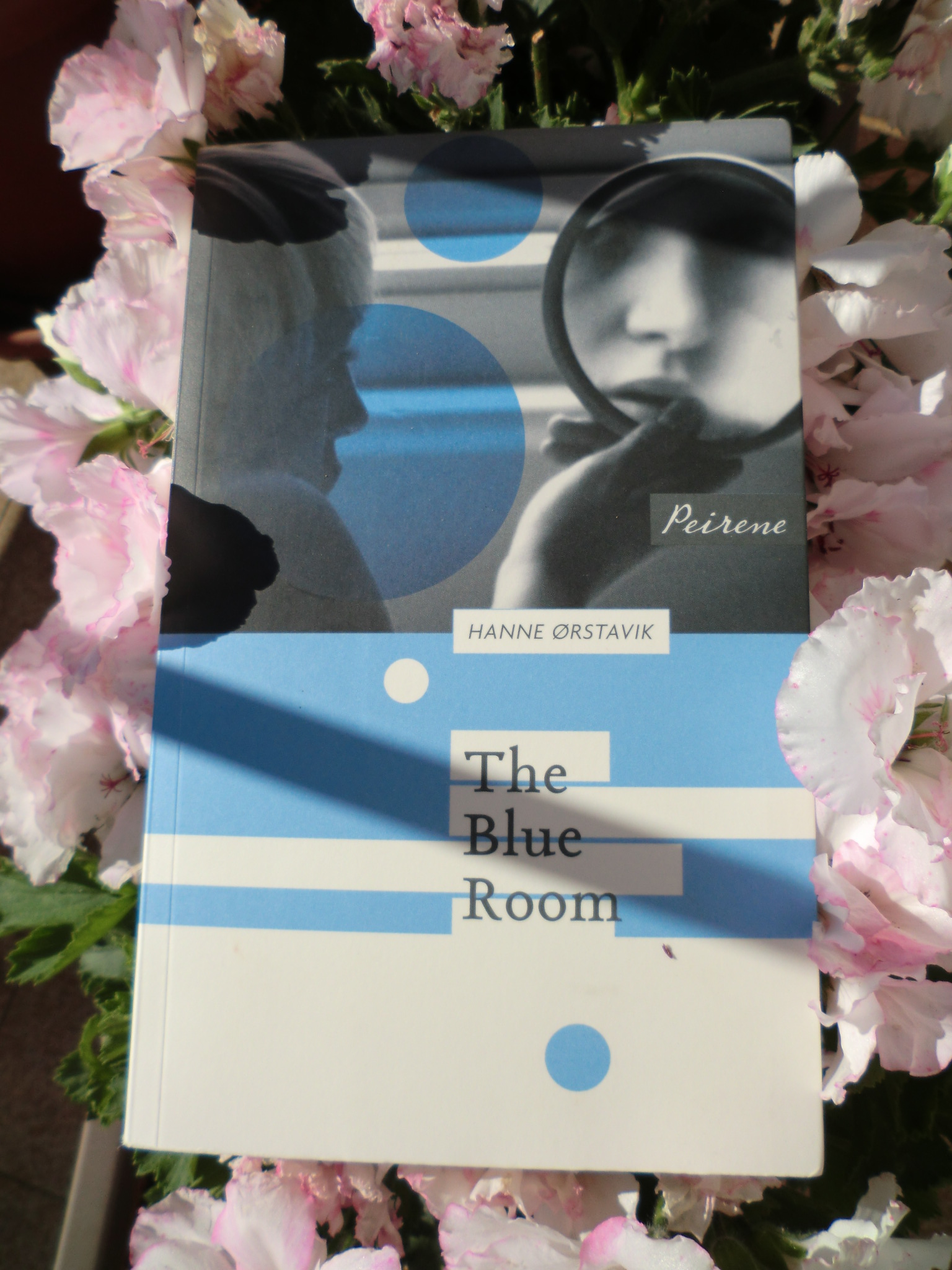
The Blue Room by Hanne Ørstavik

Blue Room2The Blue Room is the latest novella from Peirene Press, a publishing concept I wrote about here.

Peirene’s novellas always promise something a little different, a mix of women and men authors, all of them originating in a language other than English and sometimes writers whose work is being translated into English for the first time.

Perhaps the only positive aspect of there being so little fiction of foreign origin translated into English (4-5%), is the grand opportunity that awaits publisher’s like Peirene Press and Gallic Books to discover true gems of literature to share with the English reading world.

Story telling is universal and equally engaging no matter where it comes from. Just like travel, literature in translation can offer insights into another culture and perspective.

June’s coming-of-age novella, The Blue Room by Hanne Ørstavik translated by Deborah Dawkin, is already well-known in Norway and internationally; she has written numerous books which have been translated into 18 languages, though not until now, into English. The recipient of literary awards in Norway including the Doblou Prize for her entire literary output, she is one of the most admired  authors in contemporary Norwegian literature.

Provoking readers with her large, bold font message on the opening page, Meike Zeirvogel says of The Blue Room:

“Everyone who has read Fifty Shades of Grey should read this book. Why?

The Blue Room holds up a mirror to a part of the female psyche that yearns for submission. The story shows how erotic fantasies are formed by the relationship with our parents. It then delves further to analyse the struggle of women to separate from their mothers – a struggle that is rarely addressed in either literature or society.”

Making us wonder what revelations might unfold.

Johanne lives with her mother in a small apartment, she occupies the only bedroom, her mother hangs a curtain in the living room and sleeps there. The story starts on the day Johanne is due to leave for America with her boyfriend Ivar. She wakes to find the door to her bedroom locked and no response from the other side.

As she spends the day in her room, musing on the likely action and varying theoretical states of mind of Ivar, who would have waited for her and come to his own conclusions concerning her absence, she also thinks back over the past two weeks since she first met him at the university canteen, in between her lectures on psychology, some of which she shares with us, creating a bland kind of irony; the reader can’t help but read significance into the lessons she is learning in class as events play out in her life, where she discovers the essence of her slumbering sexuality, awakened in the shadow of her mother’s history, coming to us in flashes.

BlueFrom the first pages, I recognise it as a slow read, sentences that beg to be read twice, thoughts expressed that benefit from quiet reflection and words that hum from the page in clandestine harmony.

“Suddenly it came over me again and I started to cry. No sobbing, just tears. Water, I thought, nothing but salt water, dropping onto the paper, making minuscule white suns. Clearly the slat had an effect on the colours, erasing them. I didn’t understand what was happening inside me. Then it passed, like a rain cloud, drifting away.”

Although it wouldn’t be called a mystery or suspense novel, there exists all through the pages a sense of foreboding and it was almost with relief that I turned the last pages, half expecting something more sinister to await me or perhaps that was the latent effect of the suspense novel that I did read before embarking on this.

It captures the natural evolution of innocence and like the allure of watching two colours mix on a canvas to see what shade it will yield, first it is necessary to know one’s own true colour before we can observe or understand the effect when it combines with another.

An alluring read, that captivates as it reveals.

Looking forward to the next in the series!