
Health and Well-Being
Our bodies are affected by what we eat, the air we breathe, how much we move and the strength of our immune systems. When these things are in balance they have a positive effect on the mind.
When we are told to stay at home, whether that’s due to recovering from an ailment or like now, to protect us from one, we risk becoming out of balance, physically and mentally.
We are discovering alternative ways to continue activities in unique ways, whether learning, exercising, preventing boredom or coping with the effect of the over abundance of panic/fear inducing news stories out there.
 Some are creating suggestions for the #StayAtHome period, so when Paula at Book Jotter in her Winding Up the Week post asked if anyone was creating therapeutic reading lists, I thought I might create a few, I have shared a few of these titles with people already this week, being worthy titles that might assist or entertain us during this crisis.
I believe that what we consume affects our state of mind and that applies to our reading material as much as food. In order to bring balance, we can refer to books that have a positive effect on the mind, that allow us to stay in a calm, neutral state, an antidote to the excess of material and media that triggers fear, panic and other states of disequilibrium.
So over the next few days, I’ll be making a few suggestions from books I’ve read, according to the following themes, which I’ll link back to this page:
Top 5 Spiritual Well-Being Reads
- books that suggest how to move to a perspective that fosters calm, helps prevents trigger inducing states, moves us out of drama and protects us from negative energies. And how to have fun doing it.
Top 5 Nature Inspired Reads
- since we can’t all go there, these books put you in nature and allow you to appreciate it, going to places you’ll probably never visit, bought alive and evoking the senses without ever getting bored.
Top 5 Uplifting Reads
– they are few and far between in my opinion, books that actually make you laugh or feel good about humanity, the no drama, no trauma zone, feel good factor.
Top 5 Translated Fiction
– a sample from the millions that we’ll never read, the few that have made it through to be translated into English, providing us a glimpse into storytelling from parts of the world we probably don’t even know how to ‘Hello’ in.
Top 5 Memoirs
– Not the rich or famous, just glimpses into a slice of life of someone who has experienced something that gave them an interesting insight into life.
Top 5 Popular Fiction
– just a really good unputdownable read.
For today, I’m going to share the Top 5 Books on my TBR (To Be Read) across different genres and themes, which at the moment changes daily!
Top 5 Books On My TBR
 1. Courageous Dreaming – How Shamans Dream the World Into Being (Spiritual) by Alberto Villoldo – I’ve read 3 or 4 books by Villoldo and loved them all, a psychologist and medical anthropologist who studied the spiritual practices of the Amazon and the Andes, he shares more of these ancient wisdom teachings. You can read my reviews of his other works here.
I’ve already read each of the opening chapter quotes, which I find reminiscent of our times, Chapter One, Escaping The Nightmare begins with the following thought-provoking epigram:
“I believe in looking reality straight in the eye and denying it.”
GARRISON KEILLOR
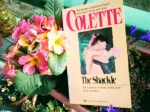 2. The Shackle by Colette (Fiction) – I LOVE Colette, my favourite French classic author, a woman with attitude, totally outside her time, read Introduction to Colette (my review)here. I bought this novella because Vivian Gornick discusses The Shackle and The Vagabond in her new book Unfinished Business – Notes of a Chronic Re-Reader. I can’t read that till I’ve at least read The Shackle!
I have also read The Complete Claudine, (my review) a series of four novellas that can be read as one and I have Earthly Paradise, a selection of extracts from her memoirs, notebooks, and letters which together provide an insight into her life.
 3. The Book of Harlan by Bernice L. McFadden (Historical Fiction)– Last year I read Praise Song for the Butterflies,(my review) my first novel by McFadden and it was excellent. She seems to write well researched, easy reading novels that teach us something interesting, that earlier novel was inspired by a tale told her by two women she met when visiting Ghana concerning a practice called trokosi.
The Book of Harlan is historical fiction set during WWII about black American musicians in Paris invited to perform in a Montmartre, affectionately referred to by them as “The Harlem of Paris”. Also based on extensive research, it blends the stories of her actual ancestors and imagined characters.
 4. Surfacing by Kathleen Jamie (Nature Essays) – One of my favourite nature essayists, Kathleen Jamie is a poet and an astute observer of sensory detail no matter what she is studying. Surfacing is her latest blend of memoir, cultural history, and travelogue of her visits to Alaska, Orkney and Tibet. From the thawing tundra linking a Yup’ik village in Alaska to its hunter-gatherer past to the shifting sand dunes of the preserved homes of neolithic farmers in Scotland, she explores the natural world, considering that which surfaces and that which connect us with the past.
My reviews of her debut collection Findings and Sightlines here.
 5. Plainsong by Kent Haruf (Fiction) – There’s nothing like a good trilogy and I’ve read a couple of excellent ones, such as Sandra Gulland’s excellent historical fiction of the life of Josephine Bonaparte: The Many Lives & Secret Sorrows of Josephine B, Tales of Passion – Tales of Woe, The Last Great Dance on Earth and Nancy E Turner’s memoirs of her great grandmother Sarah Prine, an astonishing, willful, unforgettable pioneering woman who seeks a living in the harsh, untamed lands of the Arizona Territory circa late 1800’s, These is My Words, Sarah’s Quilt, A Star Garden.
Kent Haruf’s Plainsong trilogy follows the lives of a cast of characters in a small farming town in Colorado.
Ursula K. Le Guin said when he passed away in 2014 that Haruf’s
“courage and achievement in exploring ordinary forms of love – the enduring frustration, the long cost of loyalty, the comfort of daily affection – are unsurpassed by anything I know in contemporary fiction”.
I’ve just finished Octavia E. Butler’s excellent novel Kindred, so tonight I’ll start one of these. Watch this space!
Please take care everyone, don’t take unnecessary risks, stay at home and be safe.
What exciting read do you have on your TBR to read next?
 The Art of Personal Narrative
 We are in the presence, in each instance, of a mind puzzling its way out of its own shadows – moving from unearned certainty to thoughtful reconsideration to clarified self-knowledge. The act of clarifying on the page is an intimate part of the metaphor.
 A Memoir of Finding Home Across the World
 Eventually she finds a way to navigate the two selves by turning the focus outward, towards helping others, addressing the ache of having had to suppress her true self for so long.
 Immediately removed from everything familiar, home, school, church and community, she is sent in disgrace to her father’s new household and ordered to never go outside or if there was company, to remain in silence upstairs.
 A book that needs no introduction, a woman unanimously loved from where I sit and yet one who was exposed to the full spectrum of opinions about her, requiring an inordinate amount of resilience. Interestingly, there had not been universal admiration for her by some prior to reading the book, a reflection of how much influence the media has on our perceptions of people, both positive and negative.
 But what a sacrifice really, despite the perception of it being glamorous and of course privileged. What a relief to get some semblance of a life back, I hope so anyway. Their celebrity status will likely never change, but as she shares in the opening pages, she is at least able to do some things unobserved, to open a window, listen to birdsong and dogs barking, feel more like a human being again.
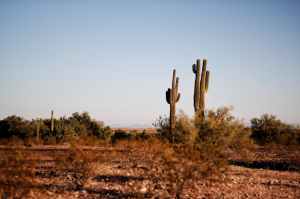
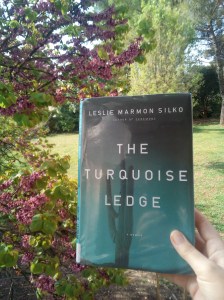 I loved this book. I chose it because I wanted to visit the natural landscape of Tucson through the eyes and insights of a lyrical nature writer. I was also looking for the perfect birthday present for someone who knows that landscape well, to transport them back there, reignite something without having to travel.
 “We learn to ignore the discrepancies between our memory of an event and a sister’s memory. We can’t be certain of anything.
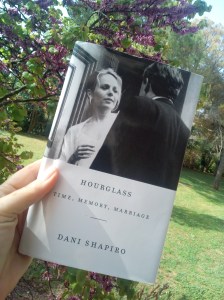 I’ve not read any of Dani Shapiro’s previous works, this short book was passed to me by a friend and read in an afternoon. I enjoyed reading it, though I couldn’t say I related to it. It’s a very personal observation of a marriage, of the passage of time, a woman observing herself change, reflecting on her inclinations and trying to understand herself, her husband and their evolving relationship. As the title indicates, it’s a reflection on time passing, on memory and on marriage.
It’s full of nostalgia for moments passed, brought back to life as she picks up journals from girlhood and her earlier life and quotes from them, in particular, from her honeymoon spent in France. She wonders about the woman she was then.
She worries about the lack of a plan, despite being in her fifties and her husband almost sixty. She shares these anxious moments, as she begins to lose a little faith in the words her husband has uttered in the past, words that gave her reassurance “I’ll take care of it”.
Anyone who has lived with that kind of comfort will likely relate, but inherent within it lies a deep vulnerability, a fissure, a unassuageable fear of loss. It is here her words pierce the fabric of living, when they illuminate the cracks in the facade, opening a small window into that anxiety-inducing perception of reality that sees itself as separate.
It is that undercurrent of misplaced fear that disconcerts me, for there is no hint of resolution, little evidence of a desire to go within and face the abyss, to heal it. She remains focused on that which is external and therein perhaps lies the problem. Maybe that is a memoir still to come, when she will embark on the inner journey and learn to listen to her own guidance, to the whispers of her soul that are capable of reassuring her more than anyone or anything on the outside. Something that marriage appears to protect us from, at least until menopause, a subject she doesn’t mention but one that can also unravel our perceptions of the life structures we’ve created in our minds.
I’ve not read any of Dani Shapiro’s previous works, this short book was passed to me by a friend and read in an afternoon. I enjoyed reading it, though I couldn’t say I related to it. It’s a very personal observation of a marriage, of the passage of time, a woman observing herself change, reflecting on her inclinations and trying to understand herself, her husband and their evolving relationship. As the title indicates, it’s a reflection on time passing, on memory and on marriage.
It’s full of nostalgia for moments passed, brought back to life as she picks up journals from girlhood and her earlier life and quotes from them, in particular, from her honeymoon spent in France. She wonders about the woman she was then.
She worries about the lack of a plan, despite being in her fifties and her husband almost sixty. She shares these anxious moments, as she begins to lose a little faith in the words her husband has uttered in the past, words that gave her reassurance “I’ll take care of it”.
Anyone who has lived with that kind of comfort will likely relate, but inherent within it lies a deep vulnerability, a fissure, a unassuageable fear of loss. It is here her words pierce the fabric of living, when they illuminate the cracks in the facade, opening a small window into that anxiety-inducing perception of reality that sees itself as separate.
It is that undercurrent of misplaced fear that disconcerts me, for there is no hint of resolution, little evidence of a desire to go within and face the abyss, to heal it. She remains focused on that which is external and therein perhaps lies the problem. Maybe that is a memoir still to come, when she will embark on the inner journey and learn to listen to her own guidance, to the whispers of her soul that are capable of reassuring her more than anyone or anything on the outside. Something that marriage appears to protect us from, at least until menopause, a subject she doesn’t mention but one that can also unravel our perceptions of the life structures we’ve created in our minds.


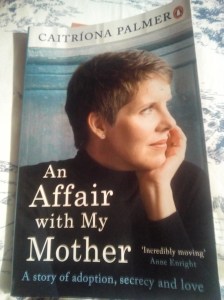 It’s set in Ireland, a country reluctant to let go of old ways, still in throe to a traditional family culture that shamed, blamed and punished young women for being the life-bearers they are – insisting they follow a code of moral behaviour documented by a system of domination, upheld by the church, supported by the state – a system that bore no consequence on men – young or old – who were equally responsible for the predicament of women.

 An Unnatural History of Family and Place
 Birds are entwined with local folklore, the Californian gull rescuing the Mormons in 1848 from losing their crops to crickets. They still gather to tell this story.
 As the Great Salt Lake continues to rise, a deep sadness washes over her that all has been lost.
 I have had this memoir on my bookshelf for a long time and recall first becoming aware of it when I wrote an article for our a newsletter about a genre in literature I wasn’t familiar with called Creative Nonfiction, sometimes referred to as Literary Nonfiction and here in France as essais or belles-lettres.
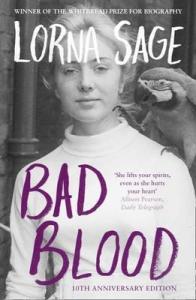 Lorna Sage’s memoir, published in 2001, is an excellent example of literary nonfiction, by the time she wrote it, she had been practicing her ‘creative literary art’ for some time as a literary critic, reviewer, and essay writer, publishing widely on women writers and their work. She wrote books on Angela Carter, Doris Lessing, twelve 20th century women writers, Edwardian writers Violet Trefusis & Alice Keppel and a collection of her journalistic pieces Good As Her Word was compiled posthumously.
 Though childhood takes up much of the book, her teenage years are intriguing, for here the family rises above convention and supports Lorna at a time of great need, in an era when many young women in her position would have been shamed and treated in an inhuman manner, giving rise to more problems and heartache. That she gets through this challenging period in her life, supported by her family and goes on to complete a university education virtually without hindrance, is astounding.
 Word by Word